
Shoulder Pain
Shoulder Pain


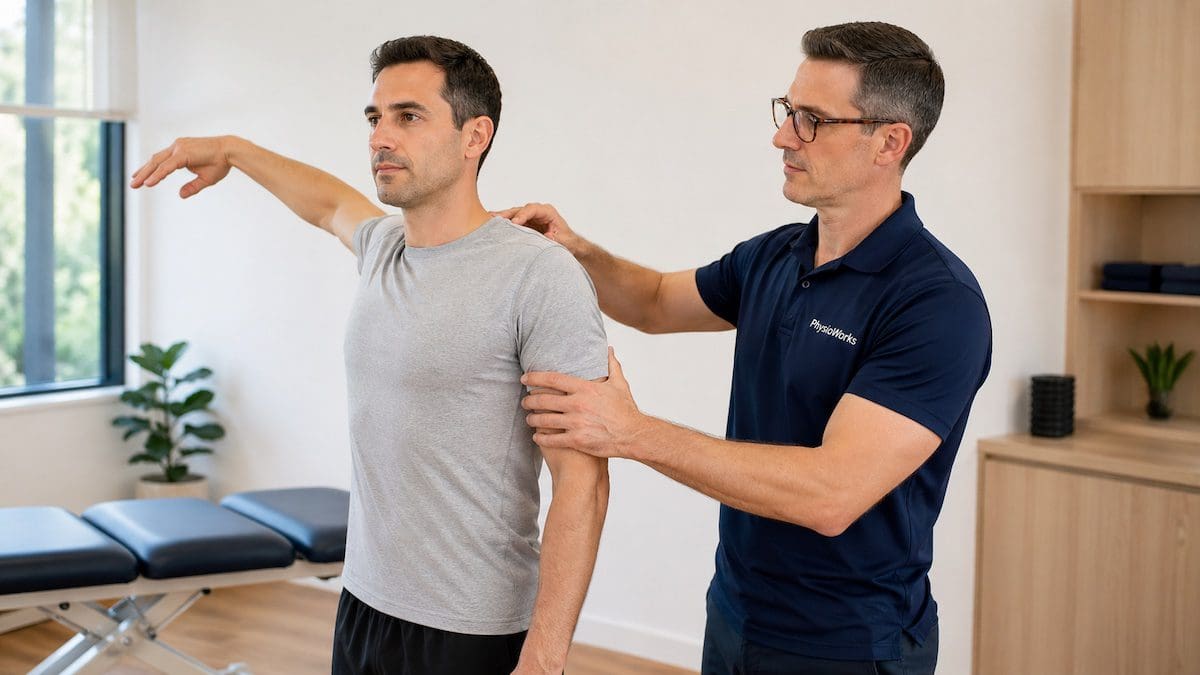
A shoulder assessment helps identify the movements, structures and loads linked to your pain.
Shoulder pain can affect lifting, reaching, dressing, sleep, work, gym training and sport. It may begin after an injury or build gradually as the shoulder becomes overloaded, stiff or weak.
Where Should You Start?
Mild recent pain
Modify the aggravating activity and continue gentle, comfortable shoulder movement.
Pain affecting sleep or lifting
Arrange a physiotherapy assessment and begin a structured rehabilitation plan.
Sudden injury or weakness
Seek prompt assessment, particularly when you cannot raise your arm normally.
What Is Shoulder Pain?
Shoulder pain is discomfort felt around the shoulder joint, upper arm, collarbone or shoulder blade. It may feel sharp, dull, aching, stiff, weak or unstable.
The shoulder has a large range of movement. Its tendons, muscles, bursae, ligaments, capsule and joints must work together to control the arm. Pain may develop when one or more of these tissues become irritated, injured, stiff or unable to tolerate the required load.
What Are Common Shoulder Pain Symptoms?
Symptoms vary according to the underlying problem. Common signs include:
- pain when reaching, lifting or moving the arm overhead;
- night pain or difficulty lying on the affected side;
- weakness when carrying, pressing, pulling or throwing;
- stiffness or reduced shoulder movement;
- clicking, catching, slipping or apprehension;
- pain around the upper arm, collarbone or shoulder blade; and
- difficulty dressing, washing your hair or reaching behind your back.
A symptom pattern can guide an assessment, but it cannot confirm a diagnosis by itself. Our shoulder pain symptoms guide provides a broader explanation of common patterns.
What Causes Shoulder Pain?
Shoulder pain may come from tendons, bursae, the joint capsule, the labrum, ligaments, the acromioclavicular joint or the main shoulder joint. Pain may also be referred from the neck.
Common causes include:
- rotator cuff-related shoulder pain;
- rotator cuff tears;
- shoulder bursitis;
- shoulder impingement symptoms;
- frozen shoulder;
- shoulder instability;
- shoulder dislocation;
- shoulder labrum injury;
- biceps tendinopathy;
- AC joint injury; and
- shoulder arthritis.
Read about the common causes of shoulder pain when you need a more detailed symptom comparison.
Which Shoulder Pain Pattern Sounds Familiar?
Pain when lifting
Rotator cuff irritation, bursitis, stiffness or weakness may cause pain through part of the lifting range.
Pain with marked stiffness
Frozen shoulder or arthritis may restrict reaching, rotation and movement behind your back.
Clicking or slipping
Instability or a labrum injury may cause apprehension, catching or a sense that the joint is moving excessively.
Pain on top of the shoulder
An AC joint problem may hurt after a fall, during pressing or when reaching across your body.
Pain at the front
Biceps tendon irritation may hurt during lifting, pulling or resisted elbow bending.
Pain travelling down the arm
Neck-related pain becomes more likely when symptoms include neck stiffness, numbness or pins and needles.
Why Does Your Shoulder Hurt When You Lift Your Arm?
Pain during lifting often occurs when the rotator cuff, bursa, capsule and shoulder blade muscles do not share load comfortably. Tendon irritation, bursitis, stiffness, weakness or altered movement control can make reaching overhead painful.
Some people experience a painful arc through the middle of the movement. Others mainly notice weakness above shoulder height or soreness after work, gardening, swimming, gym training or throwing.
Can Shoulder Pain Come From Your Neck?
Yes. The neck can refer pain into the shoulder blade, shoulder, upper arm or hand. Neck-related symptoms may include pins and needles, numbness, neck stiffness or pain that changes when you move your neck.
See our guide to neck and arm pain when symptoms travel below the shoulder or include altered sensation.
Why Does Shoulder Pain Hurt at Night?
Night pain may increase when the shoulder stays in one position or becomes compressed while you lie on it. Tendon pain, bursitis and frozen shoulder may also become more noticeable after a physically demanding day.
Try sleeping on the opposite side or on your back. Supporting the affected arm with a pillow may reduce strain. Persistent night pain still warrants assessment, particularly when it occurs with weakness or loss of movement.
How Is Shoulder Pain Diagnosed?
A physiotherapist usually assesses your history, symptom behaviour, movement, strength, joint range and shoulder blade control. Testing may include reaching, resisted movements and tasks linked to work, exercise or sport.
Scans are not always required during early management. Imaging may be useful after trauma, sudden weakness, suspected fracture or tear, unusual symptoms or limited progress. Your physiotherapist may recommend review by your GP or another medical practitioner when imaging or further investigation is appropriate.
The NCBI Bookshelf provides further background on shoulder anatomy and common sources of shoulder pain.
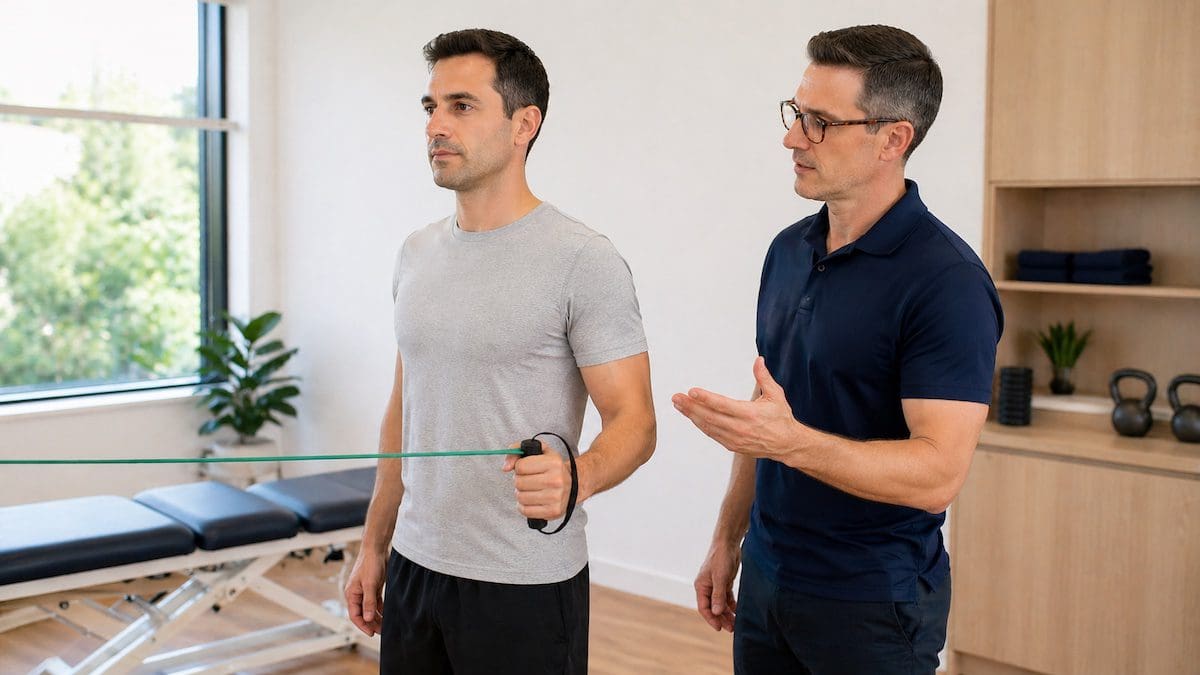
Guided loading can help rebuild shoulder strength, control and tolerance.
What Is the Best Treatment for Shoulder Pain?
The most suitable treatment depends on the diagnosis, symptom severity, movement restriction, strength, daily demands and personal goals. Most non-surgical plans combine activity changes with progressive movement and strengthening.
Your treatment plan may include:
- load management to reduce repeated aggravation without unnecessary complete rest;
- mobility exercises to restore comfortable reaching and rotation;
- rotator cuff strengthening to improve load tolerance;
- shoulder blade exercises to improve arm control;
- manual therapy when it helps pain or movement;
- movement coaching for lifting, pressing, swimming, throwing or work tasks; and
- graded return planning for work, gym training and sport.
Useful exercise pathways include our guides to shoulder exercises, rotator cuff exercises and scapular stabilisation exercises.
How Can Physiotherapy Help Shoulder Pain?
Physiotherapy can help identify the main factors contributing to your pain and match treatment to your movement, strength, goals and symptom sensitivity.
A plan may combine education, exercise, activity modification, manual therapy, home rehabilitation, gym progressions and return-to-sport or work planning. Read more about physiotherapy for shoulder pain.
Should You Rest or Exercise With Shoulder Pain?
Most shoulder problems require relative rest rather than complete rest. Temporarily reduce movements that clearly aggravate symptoms, but continue comfortable movement where possible.
-
Settle the flare
Reduce heavy, repetitive or sharp-pain movements for a short period.
-
Keep moving comfortably
Use gentle movement to reduce stiffness and maintain confidence.
-
Rebuild shoulder capacity
Progress strength and load gradually as symptoms become more manageable.
Stop and seek advice when an exercise causes sharp pain, repeated catching, increasing weakness or a sustained worsening of symptoms.
Common Shoulder Conditions
Choose the pattern that best matches your symptoms. An assessment remains important when your diagnosis is uncertain.
When Should You Seek Help for Shoulder Pain?
Arrange an assessment when shoulder pain:
- persists or keeps returning;
- disturbs sleep;
- limits work, exercise, sport or daily activity;
- causes increasing stiffness or loss of movement;
- comes with clear weakness; or
- does not improve with sensible activity changes.
Book sooner after a fall, collision, dislocation, sudden loss of movement or rapid change in strength.
How Long Does Shoulder Pain Take to Improve?
Recovery depends on the cause, severity, duration and demands placed on the shoulder. A mild overload may improve within days or several weeks. Tendon problems, instability, frozen shoulder, arthritis and rotator cuff tears may require longer rehabilitation.
Many strengthening programs progress over at least six to twelve weeks. However, this is not a fixed recovery promise. Stiff, traumatic or complex shoulder problems may take longer and sometimes require medical or surgical review.
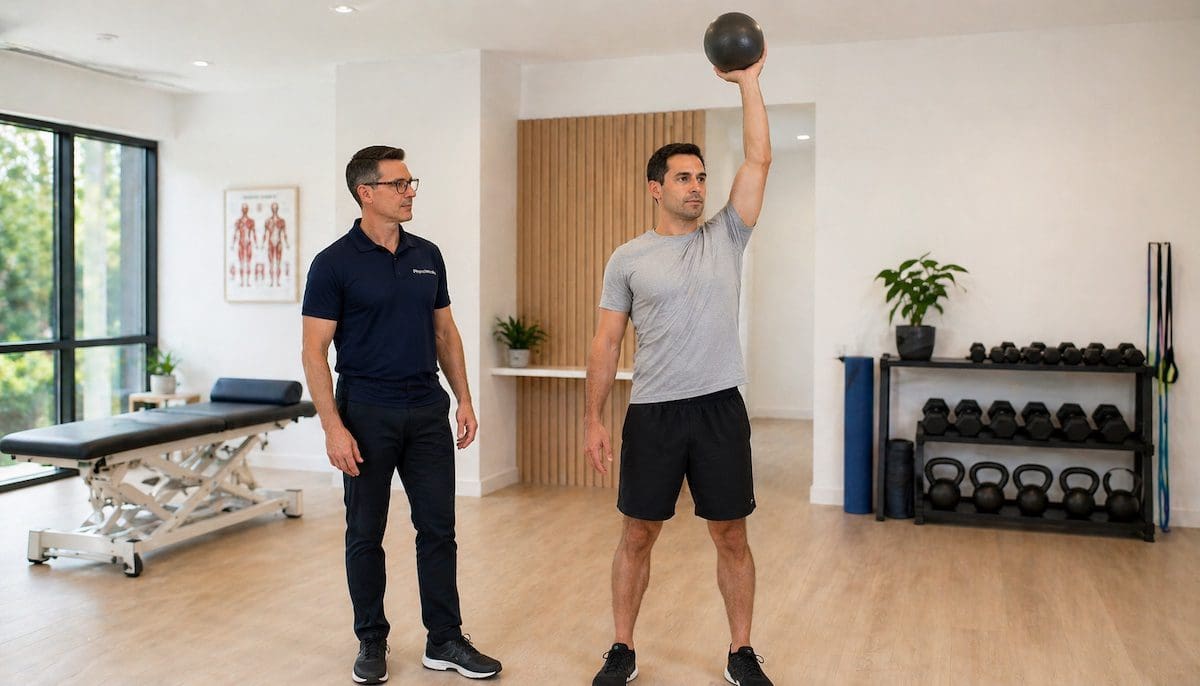
Shoulder rehabilitation aims to restore confident reaching, lifting and daily movement.
Shoulder Pain FAQs
Why does my shoulder hurt when I lift my arm?
Pain during lifting may come from the rotator cuff, bursa, joint capsule or shoulder blade muscles. Stiffness, weakness, tendon injury and altered movement control can also contribute. An assessment helps identify which factors are most relevant.
Can shoulder pain come from the neck?
Yes. Neck-related pain may spread into the shoulder blade, shoulder, upper arm or hand. Neck stiffness, pins and needles, numbness or symptoms that change with neck movement make referral from the neck more likely.
What can I do for shoulder pain now?
Reduce movements that clearly aggravate your symptoms, but continue gentle and comfortable shoulder movement. Avoid forcing painful ranges or testing the shoulder repeatedly. Seek assessment after trauma, marked weakness, worsening symptoms or ongoing loss of function.
Should I rest or exercise with shoulder pain?
Most shoulder problems respond better to relative rest and graded movement than complete rest. Temporarily reduce heavy or painful tasks, then rebuild movement and strength at a tolerable level.
Why does shoulder pain hurt at night?
The shoulder may become painful when it is compressed or held still for too long. Tendon irritation, bursitis and frozen shoulder commonly affect sleep. A pillow supporting the arm may help, although persistent night pain should be assessed.
When should I see a physiotherapist for shoulder pain?
Arrange an assessment when pain persists, recurs, disturbs sleep, limits lifting or comes with weakness or reduced movement. Seek help sooner after a fall, dislocation, sporting injury or sudden loss of function.
Choose your clinic and appointment pathway
Select a PhysioWorks clinic to continue to live booking, an appointment request or reception assistance.
Shoulder Products
These shoulder products are commonly used by our physiotherapists to improve strength, posture, movement, plus assist home exercise programs.
-
 Ice & Heat, Pain Management, Uncategorized
PhysiPak Universal Heat pack
$79.00Select optionsQuick View -
-
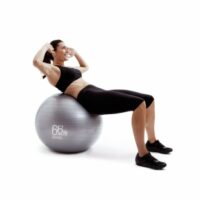 Exercise Balls, Back, Exercise Equipment, Knee, Shoulder
66fit Exercise Balls | Core & Rehab Stability Ball
$32.00 – $57.00Select optionsQuick View -

-

- EMS Machines, Pain Management, TENS Machine, TENS Machine & EMS
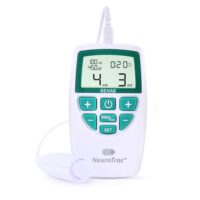
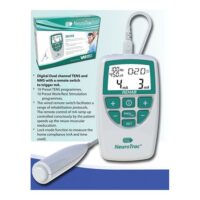
NeuroTrac Rehab (TENS Machine + EMS)
$285.00Add to cartQuick View -

-
-

-

-

- Liniments & Gels, Massage Liniments, Pain Management
Fisiocrem
$16.95 – $39.95Select optionsQuick View -
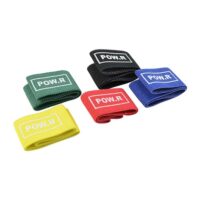 Exercise Equipment, Knee, Resistance Band
POW.R Fabric Mini Loop Bands
$12.00 – $55.00Select optionsQuick View -

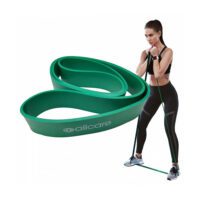 Exercise Equipment, Resistance Band
AllCare Powerloop Bands
$24.95 – $79.95Select optionsQuick View -





References
- Desmeules F, Dubé MO, Lewis J, et al. Rotator cuff tendinopathy diagnosis, nonsurgical medical care and rehabilitation: a clinical practice guideline. Journal of Orthopaedic & Sports Physical Therapy. 2025.
- Lowry V, Lavigne P, Zidarov D, Matifat E, Cormier AA, Desmeules F. A systematic review of clinical practice guidelines on the diagnosis and management of various shoulder disorders. Archives of Physical Medicine and Rehabilitation. 2024;105(2):411–426. doi:10.1016/j.apmr.2023.09.022.
- Silveira A, Roy JS, Dionne CE, et al. Shoulder-specific exercise therapy is effective in reducing pain in adults with rotator cuff-related shoulder pain. British Journal of Sports Medicine. 2024.
- American Academy of Orthopaedic Surgeons. Management of rotator cuff injuries: clinical practice guideline. Published 18 August 2025.
