FAQs

Frequently Asked Questions


Balance Exercises

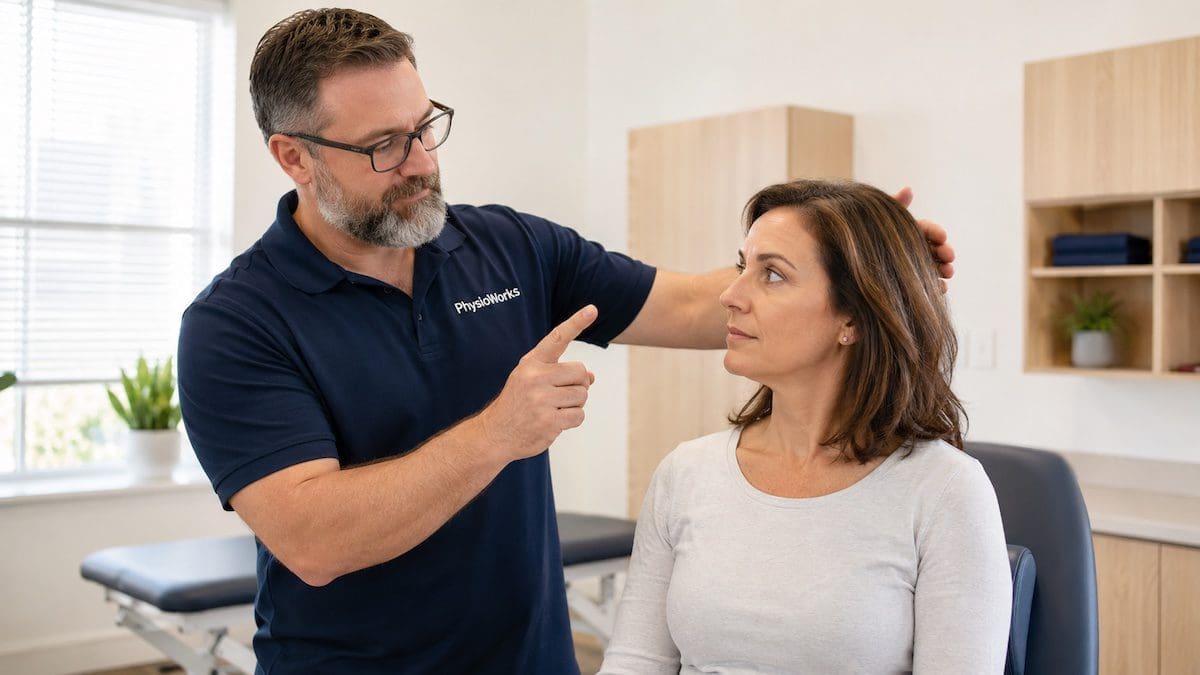
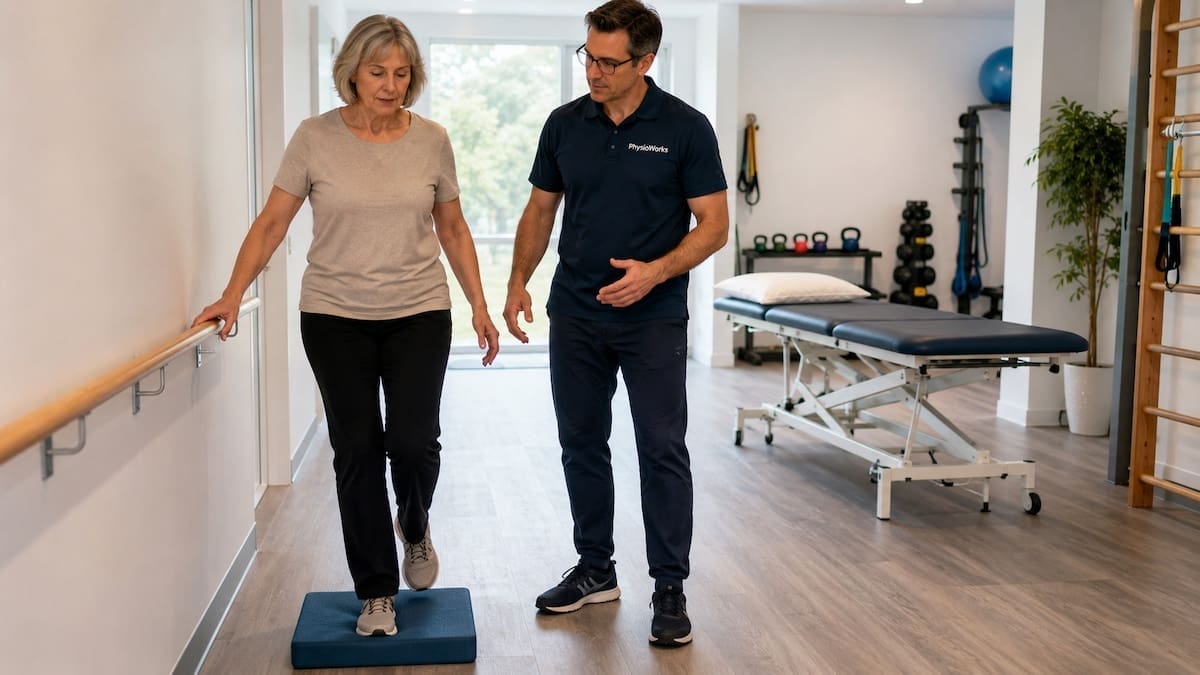
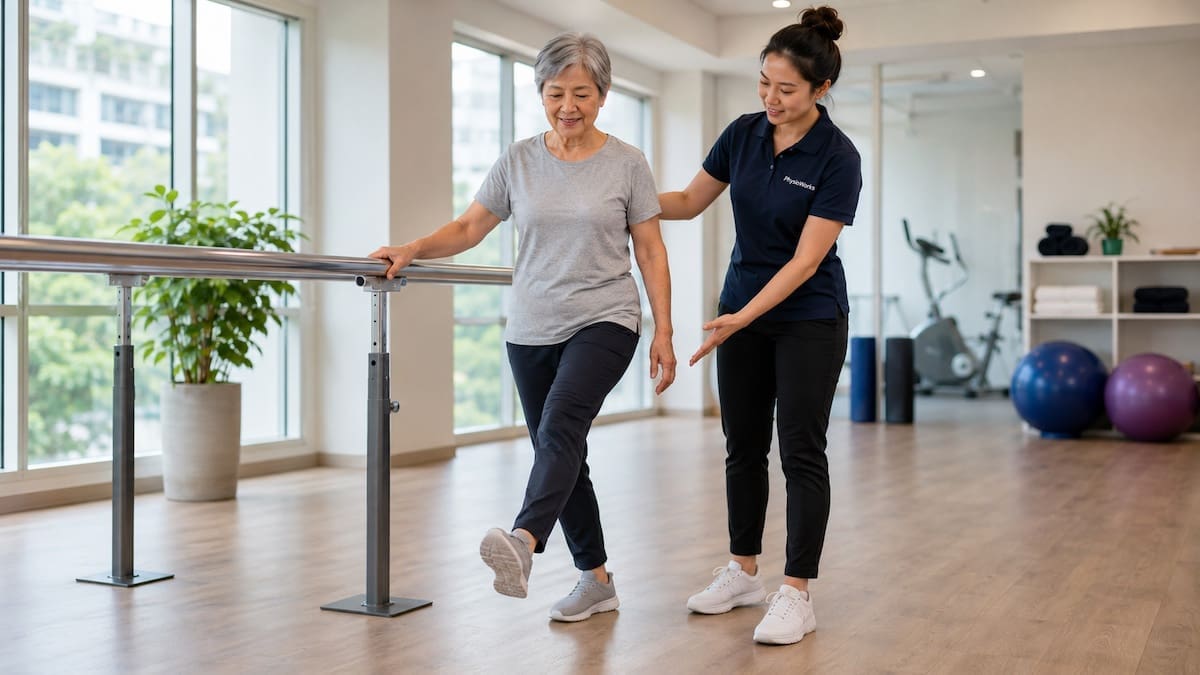
Balance exercises step-and-reach control for falls prevention training

Guided balance work can build control and trust.

Balance exercises help you stay steady while you stand, walk, turn or reach. They may help with balance training, falls risk, sport rehab and return after a leg injury.

A physio can help you start in a safe way, find why you feel less steady and build the right plan for you.

Quick answer: Balance work trains your body to stay steady as you move.

  • It may help control and quick steps.
  • It often helps after ankle, knee or hip pain.
  • It works best when the task gets harder in small steps.
  • It is stronger when paired with leg strength work.

What Are Balance Exercises?

Balance exercises are simple tasks that make your body stay steady. They train your legs, trunk, eyes, inner ear and brain to work as a team.

Most plans start with easy standing drills. They may then move to one-leg stands, steps, reaches, turns and harder floor tasks.

  • Stand with better control
  • Feel safer with stairs and turns
  • Rebuild trust after an injury
  • Lower falls risk when mixed with strength work

Who May Get Help?

Balance work may help older adults, active adults and people who feel less steady after a strain, sprain or fall.

It is often used after ankle sprains, knee injury and dizzy spells. It can also form part of a broader physio care plan.

If you have near-falls or feel less sure when you walk, a balance check can help find the cause.

Common Types of Balance Work

A physio may choose drills based on your health, past injury and goals.

Two-Foot Stance Drills

These drills start with both feet on the ground. You may narrow your stance, stand heel-to-toe or shift weight side to side.

One-Leg Balance

Standing on one leg trains your ankle, knee, hip and trunk. It helps with leg rehab and sport prep.

Step and Reach Drills

Step and reach drills train you to move while you stay steady. They help with daily tasks such as turning, stairs and uneven ground.

Wobble Board or Balance Pad Work

These drills train joint sense and foot control. They are often used in injury prevention programs and ankle rehab.

Why Can Balance Feel Worse?

Balance can change for many reasons. It may relate to weak legs, slow steps, stiff joints, pain, reduced foot sense, medicine effects or inner ear issues.

If dizzy spells are part of the problem, read more about vertigo and dizziness.

Do Balance Exercises Help Prevent Falls?

Balance exercises may help cut falls risk, mainly when they are paired with leg strength work and done often.

This is useful if you feel unsafe on stairs, rough ground or fast turns. Healthdirect also explains broader falls prevention steps.

If falls are your main concern, see our guide on fall prevention or the Balance & Falls Prevention Class.

How Do You Start Safely?

Start with a task that suits your current level. Practise near a bench, rail or wall.

You can make it harder by changing foot stance, adding arm movement, using less hand support or adding steps.

A physio may change your plan if you have joint pain, nerve signs, dizzy spells, a recent fall or low trust in your balance.

Book a check sooner if you notice:

  • recent falls or near-falls
  • new dizzy spells or loss of trust
  • poor balance on stairs, rough ground or turns
  • balance trouble after an ankle, knee, hip or head injury
  • symptoms that limit work, sport or daily life

When Should You See a Physio?

See a physio if you have fallen, avoid tasks, feel unsafe on stairs or feel less steady when walking.

A check can help work out if strength, joint control, pain, the inner ear or more than one factor is involved.

Balance Exercises FAQs

What is the best balance exercise to start with?

Start with a simple standing task near firm support. Try feet-together stance, heel-to-toe stance or small weight shifts. The right choice depends on how steady you feel.

How often should you do balance exercises?

Short practice, done often, can work well. Many people do a few short sessions each week. Your physio can guide the dose.

Can balance exercises help after an ankle sprain?

Yes. They can help rebuild joint sense, quick steps and leg control. They are often paired with strength work and a staged return to activity.

Are balance exercises only for older adults?

No. They can help older adults, athletes and people after injury. They are often used to improve how you move and lower re-injury risk.

Can balance exercises help dizziness?

They may help some people, but dizzy spells need assessment first. The cause may involve the inner ear, neck, nerves, medicine or other health issues.

How long does it take to improve balance?

Some people feel better within a few weeks. Others need longer. It depends on the cause, your practice and how the tasks are progressed.

Related Information

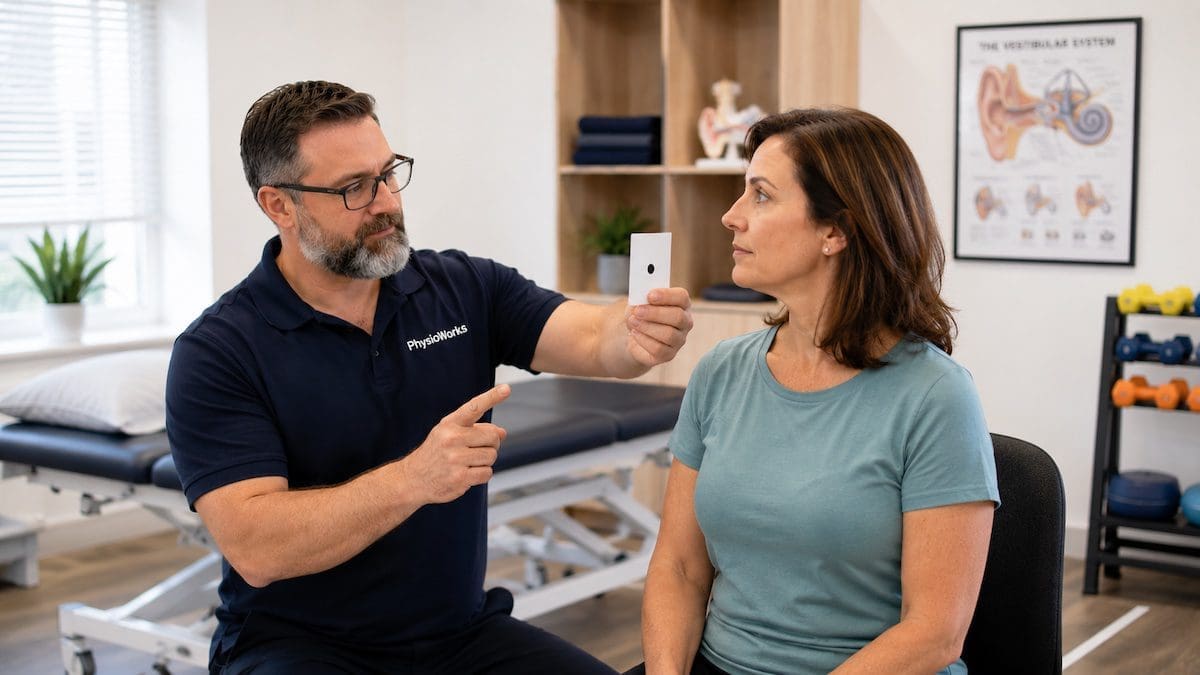
Balance exercises step-and-reach control for falls prevention training

Step and reach drills can build trust with turns and daily tasks.

What To Do Next

If you want to feel safer and move with more trust, start with an assessment.

A physio can test your balance, find the key issues and give you a plan that suits your goals.

Book your appointment – 24/7

Choose your preferred PhysioWorks clinic and book online.

Follow PhysioWorks

Get free physiotherapy tips, exercise videos, recovery advice, and blog updates.

Facebook Instagram YouTube B X Email PhysioWorks

References

  1. Sherrington C, Fairhall NJ, Wallbank GK, et al. Exercise for preventing falls in older people living in the community: an abridged Cochrane systematic review. Br J Sports Med. 2020;54(15):885-891. doi:10.1136/bjsports-2019-101512
  2. Sluga SP, Kozinc Ž. Sensorimotor and proprioceptive exercise programs to improve balance in older adults: a systematic review with meta-analysis. Eur J Transl Myol. 2024;34(1):12010. doi:10.4081/ejtm.2024.12010
  3. Cui Z, Xiong J, Li Z, Yang C. Tai chi improves balance performance in healthy older adults: a systematic review and meta-analysis. Front Public Health. 2024;12:1443168. doi:10.3389/fpubh.2024.1443168

What Is a Balance Assessment and When Do You Need One?

A balance assessment checks how steady you are when you stand, walk, turn, step, and change path.

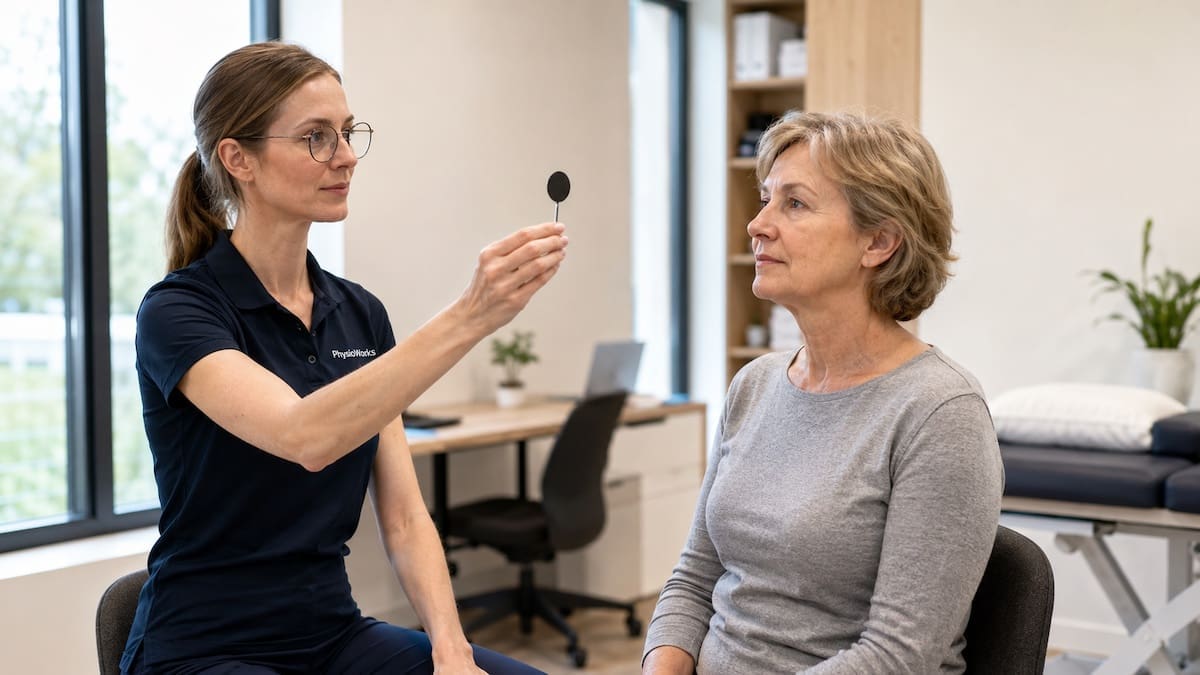
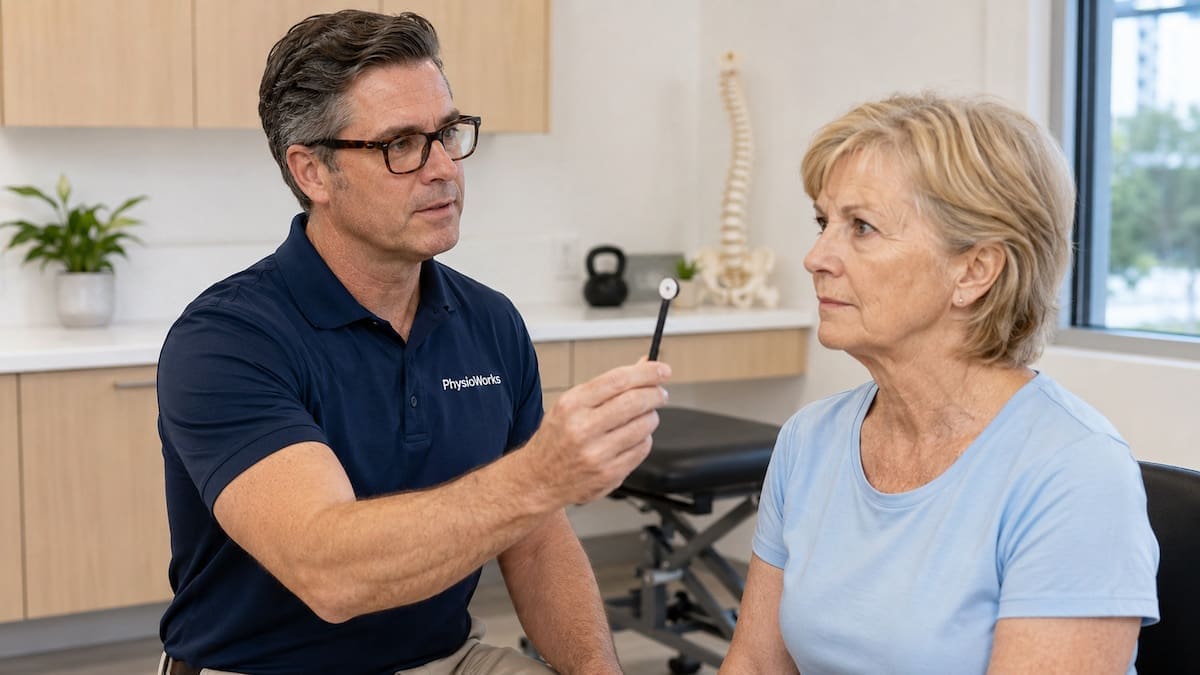
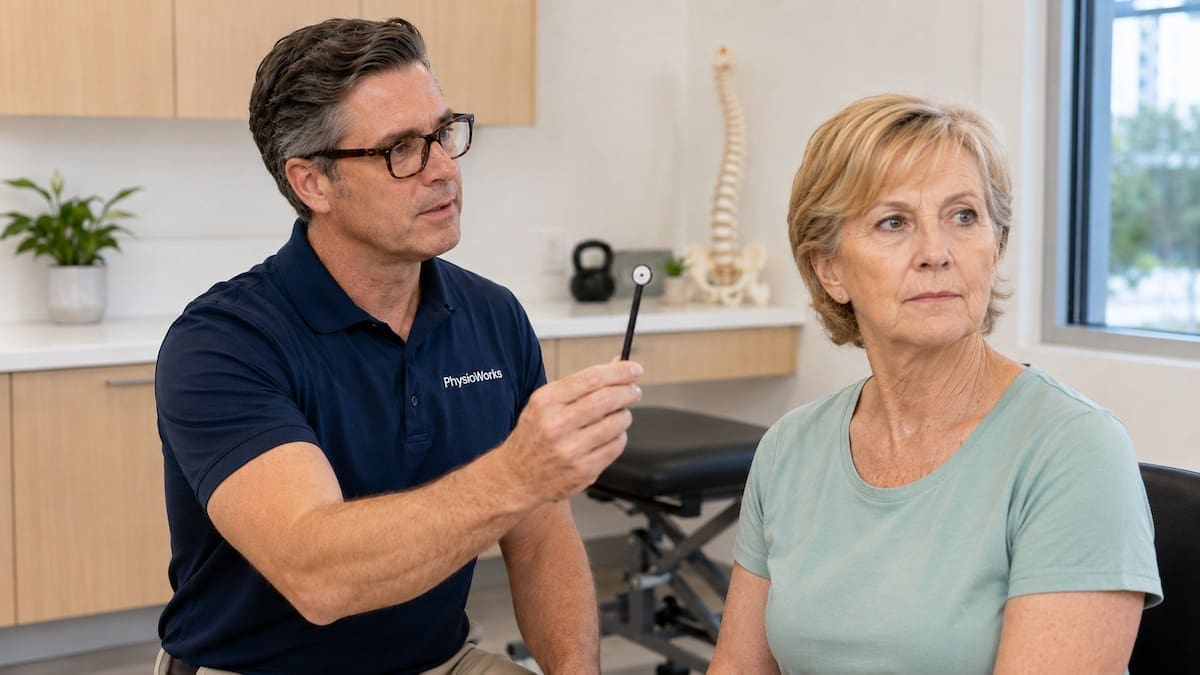
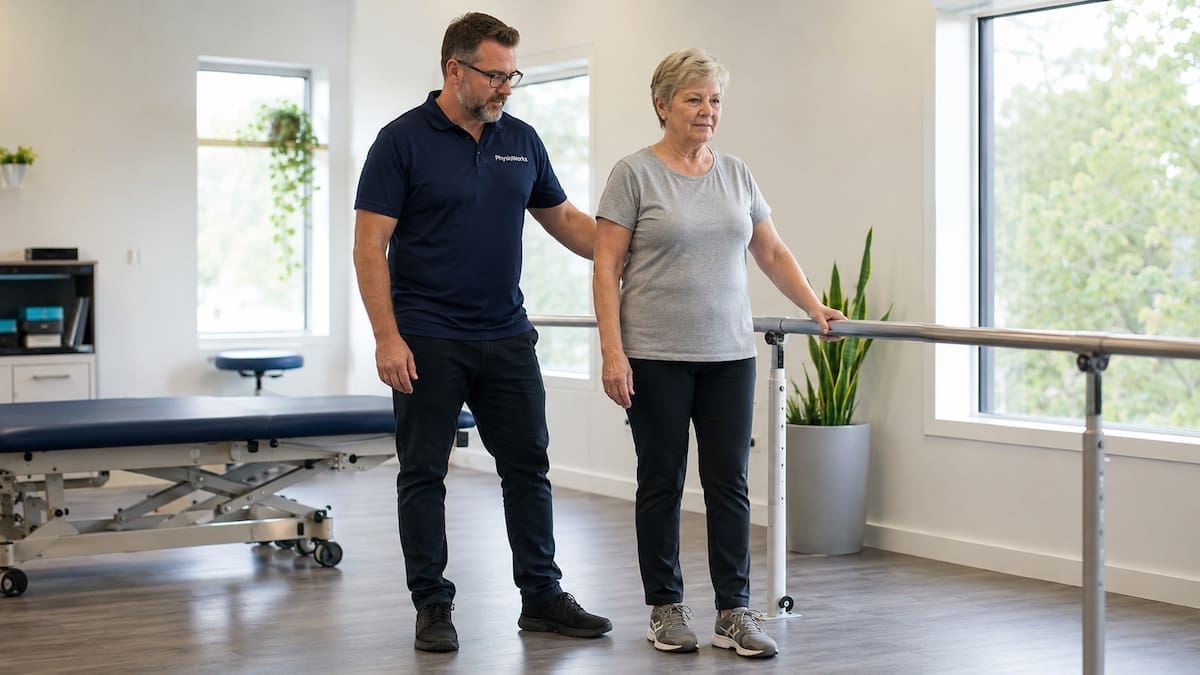
Balance assessment checking feet, ankles, knees and hips during standing control
Assessing balance control and falls risk.

It can help explain why you feel wobbly, have fallen, or avoid tasks because you do not feel safe.

It also helps your physio plan the right balance training and falls prevention pathway. The plan may include home drills, walking work, strength work, or class support.

Quick Answer

A physio uses a balance assessment to check steadiness, leg strength, walking, step control, foot and ankle control, and trust in your movement.

The results guide a safe plan that suits your home, health, daily tasks, and goals.

When Is a Balance Assessment Useful?

A balance assessment may help if you have had a fall, feel unsure on stairs, feel wobbly when turning, or have lost trust in walking outside.

It can also help after a leg injury, an operation, dizzy spells, or a long break from exercise.

Some people book because they feel unsafe. Others book because they want to walk better, return to sport, or lower their fall risk.

What Does a Balance Check Involve?

Your physio may watch how you stand, step, walk, turn, and recover when you feel off-centre.

They may also check leg strength, joint control, foot and ankle use, and how you cope when the floor or light changes.

The session may include questions about recent falls, near-falls, shoes, drills, meds, and dizzy spells. This links the test results to real tasks such as stairs, outdoor walks, shops, garden work, or sport.

Why Is Balance Testing Useful?

Poor balance can limit daily life. Some people stop walking outdoors, avoid stairs, hold a bench at home, or move less because they worry about falling.

Over time, this can reduce leg strength and trust in movement. A clear check can find the main reasons for poor balance. It may also support useful fall-prevention steps.

Falls guidance supports exercise plans that include balance and strength work for older adults at higher fall risk. World falls prevention guidelines also support a tailored approach.

How Can Physio Help Balance?

Physio may help by finding the main causes of poor balance, then building a plan for those causes.

Common areas include strength, step speed, walking control, and body sense. Most plans start with safe drills. Then they move to useful tasks such as stepping, turning, reaching, stairs, and rough ground.

You can also read more about balance improvement programs.

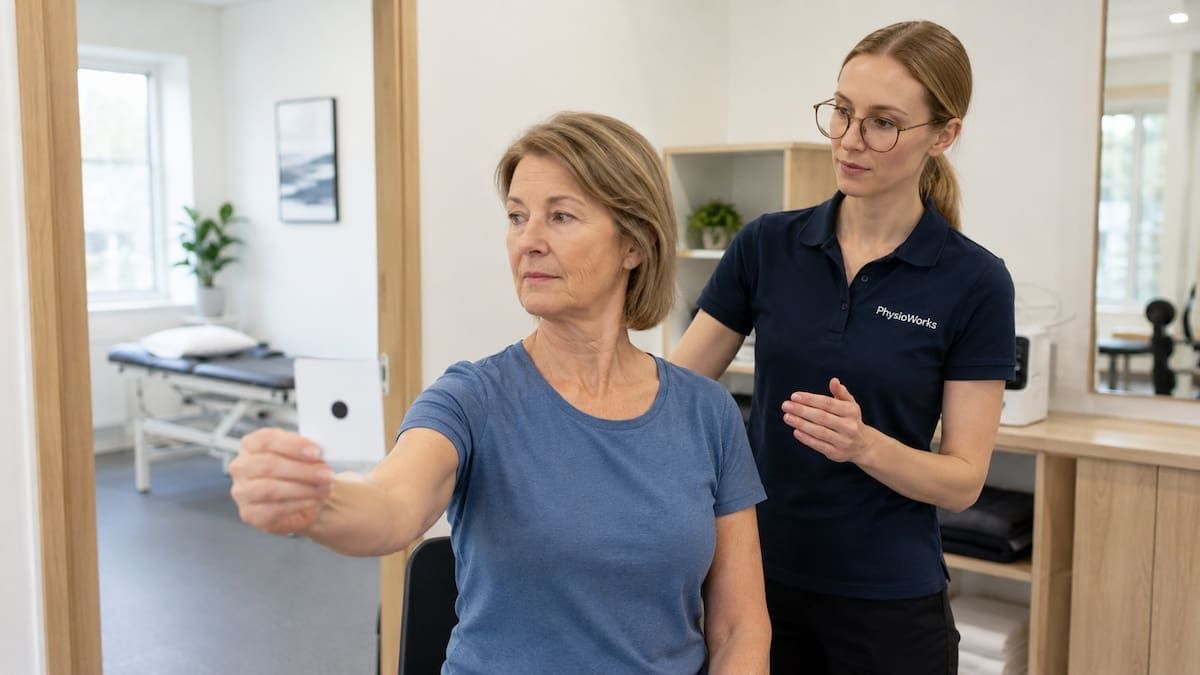
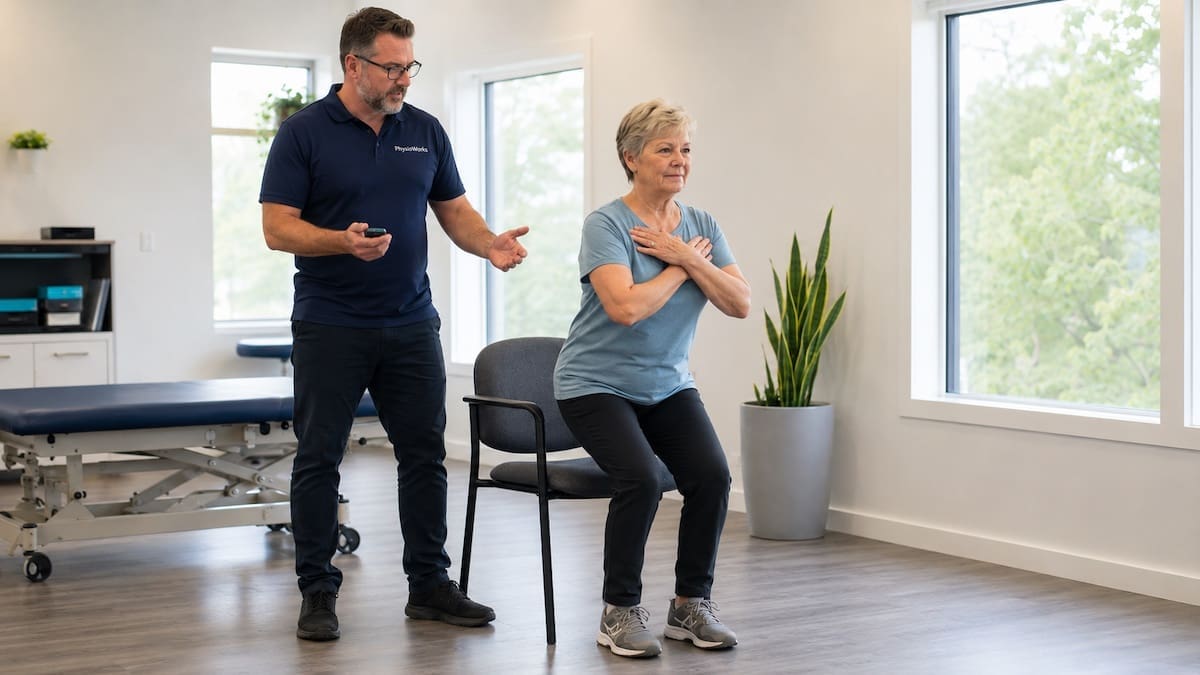
Balance assessment sit-to-stand test checking feet, ankles, knees and hips
Checking balance through sit-to-stand control.

Common Balance Tests Physios May Use

Physios may use simple tests such as a timed chair rise, one-leg stand, walking with turns, or a Timed Up and Go test.

Some people may also need a Berg Balance Scale, gait index, or another test that suits their goals.

These tests help show your start point. They also help track change over time.

What Do the Results Mean?

Test results show what needs work. You may need more leg strength, faster steps, better ankle control, safer turns, or more trust with head turns.

Your physio can then set a simple plan with clear goals. For example, your goals may include safer stairs, steadier walking, fewer near-falls, or a return to sport.

What Should You Bring?

Bring your usual shoes, any walking aid you use, and a list of meds if needed.

Also note any falls or near-falls, including when they took place and what you were doing at the time.

This saves time and helps your physio tailor the session to your needs.

Safe Checks You Can Try Before Your Visit

You may try sit-to-stand from a sturdy chair or a short walk with slow turns.

Keep a stable support nearby. Stop if you feel unsafe, dizzy, or unsure.

Do not test your balance alone if you have had recent falls or feel at high risk.

When Should You Book a Balance Assessment?

Book a balance assessment if you have had a recent fall, feel wobbly when turning, avoid walking because you feel unsafe, or worry about stairs and rough ground.

You may also benefit if you are going back to activity after injury and want safe steps forward.

For group support, see the Balance and Falls Prevention Class.

Related Information

Balance Assessment FAQs

What is a balance assessment?

A balance assessment is a physio check that looks at how well you stay steady during standing, walking, turning, stepping, and path changes.

When should you get a balance assessment?

Think about a balance assessment if you feel wobbly, have had a fall or near-fall, feel less sure when walking, notice weakness after injury or an operation, or feel dizzy.

What happens during a physio balance check?

Your physio may check standing control, walking, turning, step reactions, leg strength, foot and ankle control, and trust in movement.

Can physio help improve balance?

Physio may help improve balance with drills that build strength, step speed, walking control, and body sense.

What balance tests do physios often use?

Common tests include the Timed Up and Go, Berg Balance Scale, gait index, timed chair rise, and walking tasks with turns.

Are balance checks only for older adults?

No. Balance checks can also help younger people after ankle, knee, hip, or back injuries, an operation, dizzy spells, or sport issues.

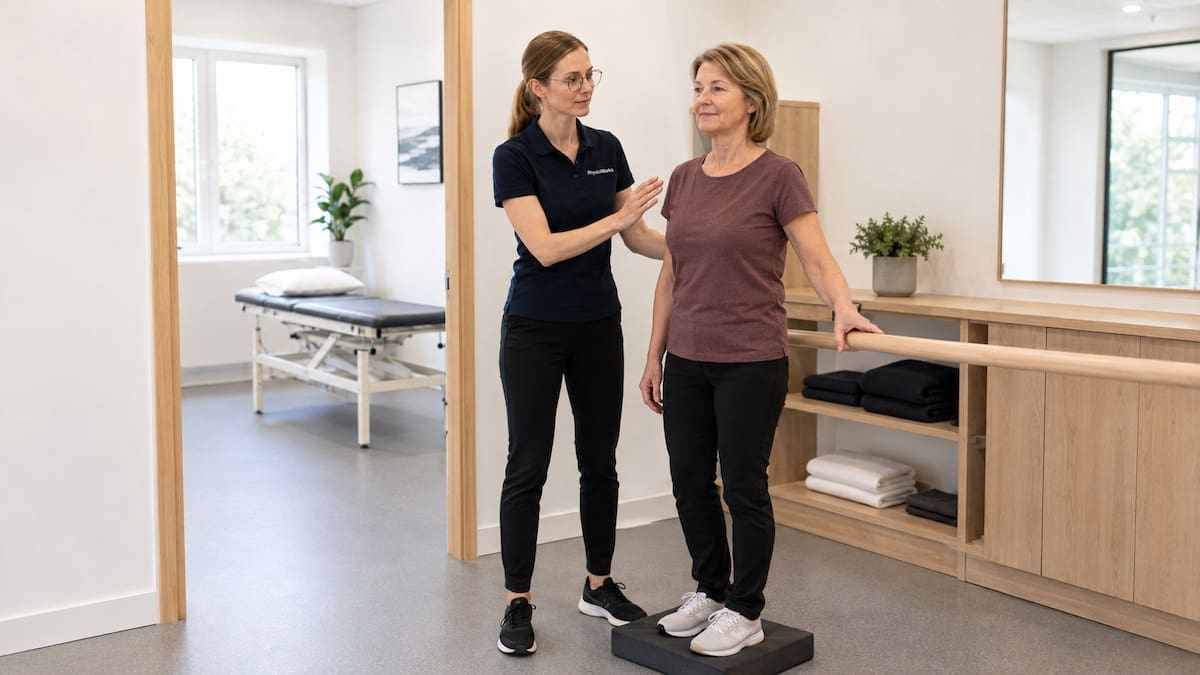
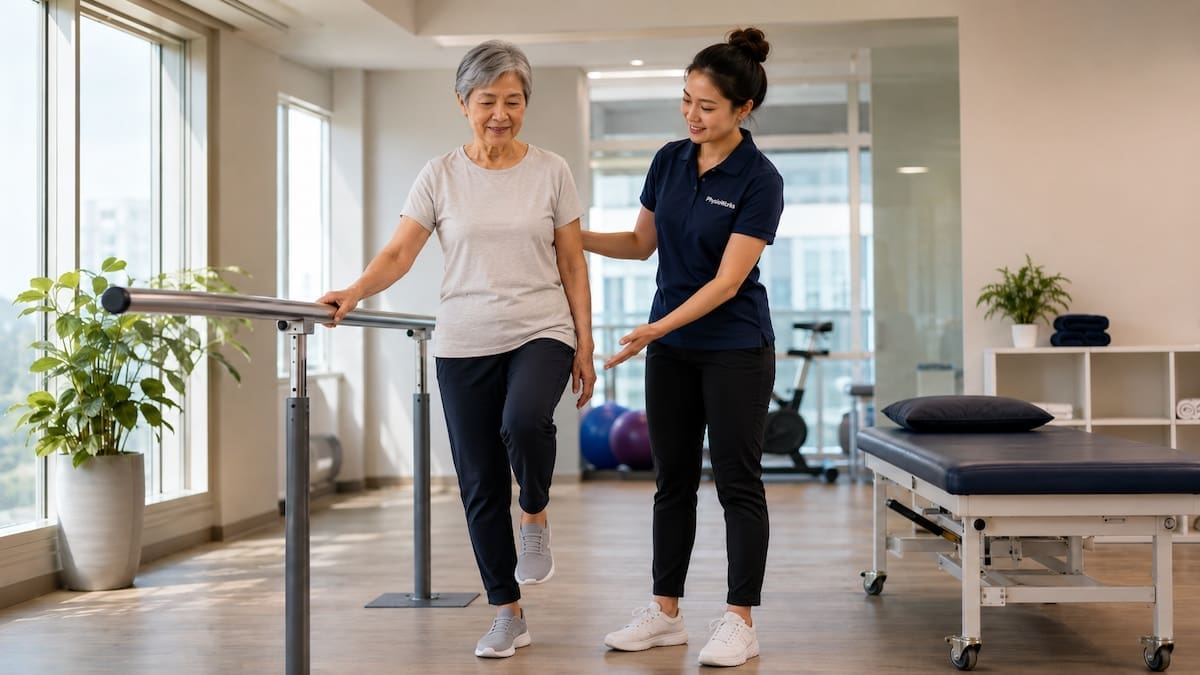
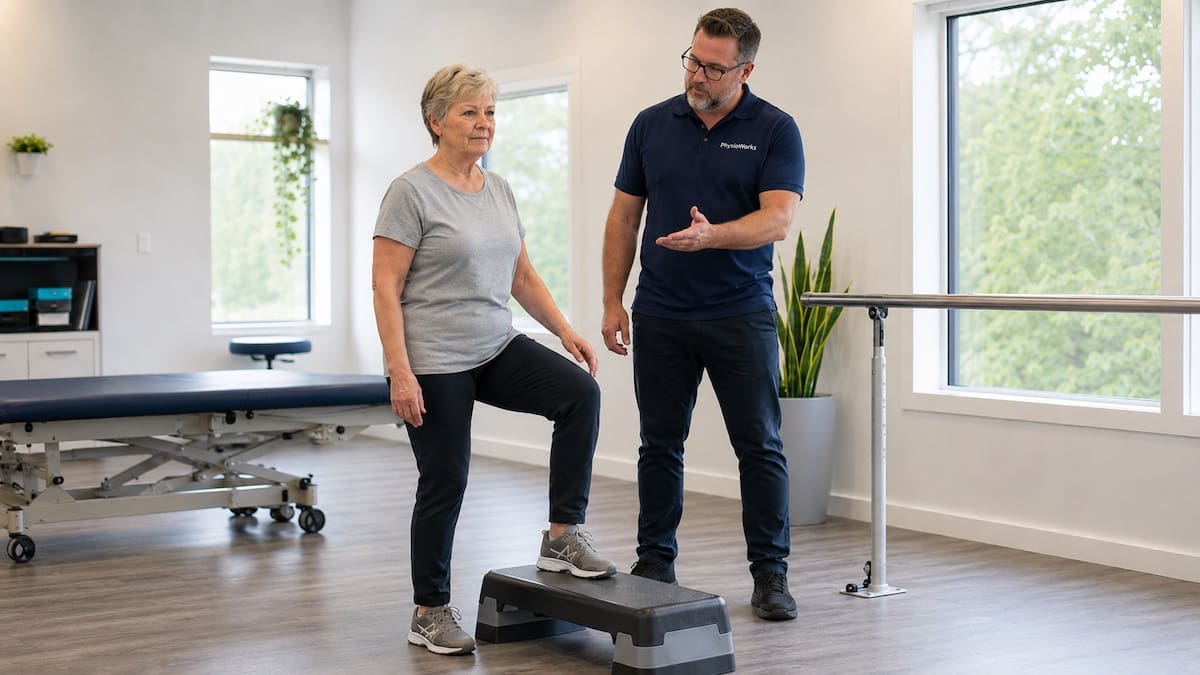
Balance assessment step-and-reach drill checking feet, ankles, knees and hips
Building balance confidence with supervised training.

What to Do Next

If you feel wobbly, your next step is a physio check.

Your physio can check your balance, explain the main factors, and plan safe drills that match your home, health, and goals.

Book your appointment – 24/7

Choose your preferred PhysioWorks clinic and book online.

Balance Products

These balance products are commonly used by our physiotherapists to improve strength, balance, prevent injuries falls or injuries, plus assist home exercise programs.

View all balance products

Follow PhysioWorks

Get free physiotherapy tips, exercise videos, recovery advice, and blog updates.

Facebook Instagram YouTube B X Email PhysioWorks

References

  1. Sherrington C, Fairhall NJ, Wallbank GK, et al. Exercise for preventing falls in older people living in the community: an abridged Cochrane systematic review. Br J Sports Med. 2020;54(15):885-891. doi:10.1136/bjsports-2019-101512
  2. Montero-Odasso M, van der Velde N, Martin FC, et al. World guidelines for falls prevention and management for older adults: a global initiative. Age Ageing. 2022;51(9):afac205. doi:10.1093/ageing/afac205
  3. Strini V, Schiavolin R, Prendin A. Fall risk assessment scales: a systematic literature review. Nurs Rep. 2021;11(2):430-443. doi:10.3390/nursrep11020041
Article by John Miller & Erin Runge

What Is a Physiotherapy Exercise Program?

A physiotherapy exercise program is a tailored plan designed to improve movement, build strength, restore control, and support recovery after pain, injury, surgery, or physical deconditioning. Rather than handing out generic stretches, a physiotherapist matches exercises to your diagnosis, current ability, goals, and stage of healing. For a broader overview of how tailored programs work, visit our exercise programs page.

In many cases, the right exercises help you load healing tissues safely, regain confidence, and reduce the risk of doing too much too soon. Just as importantly, a good physiotherapy plan gives you a clear path forward instead of guesswork.

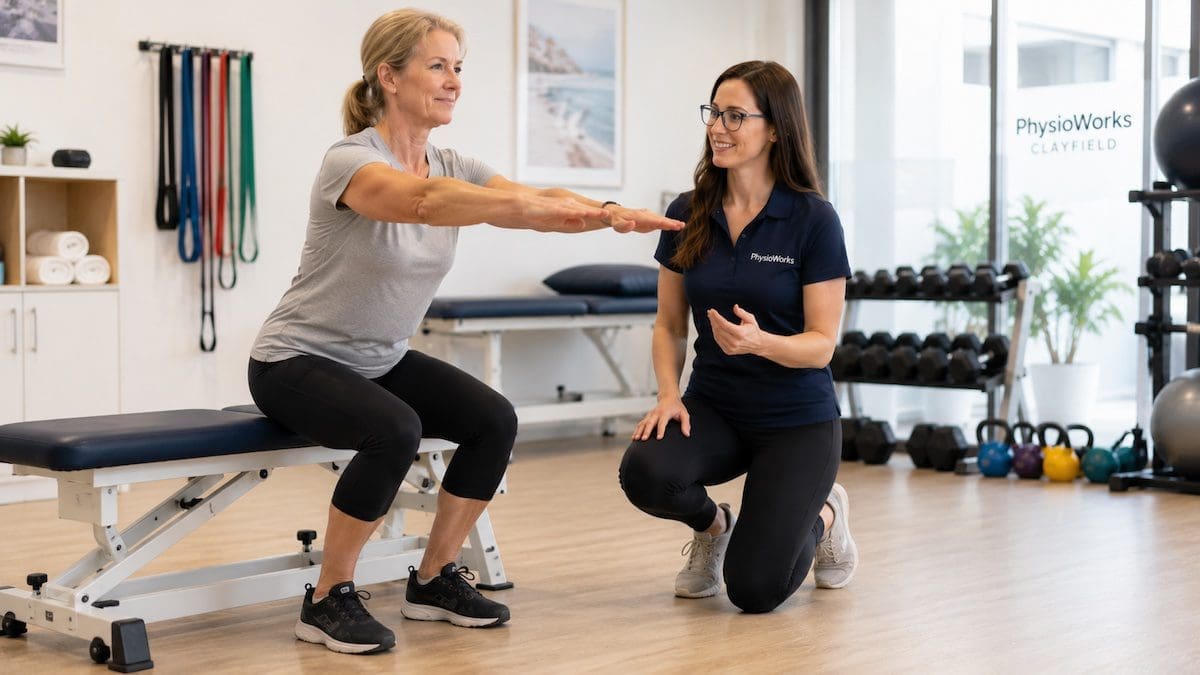
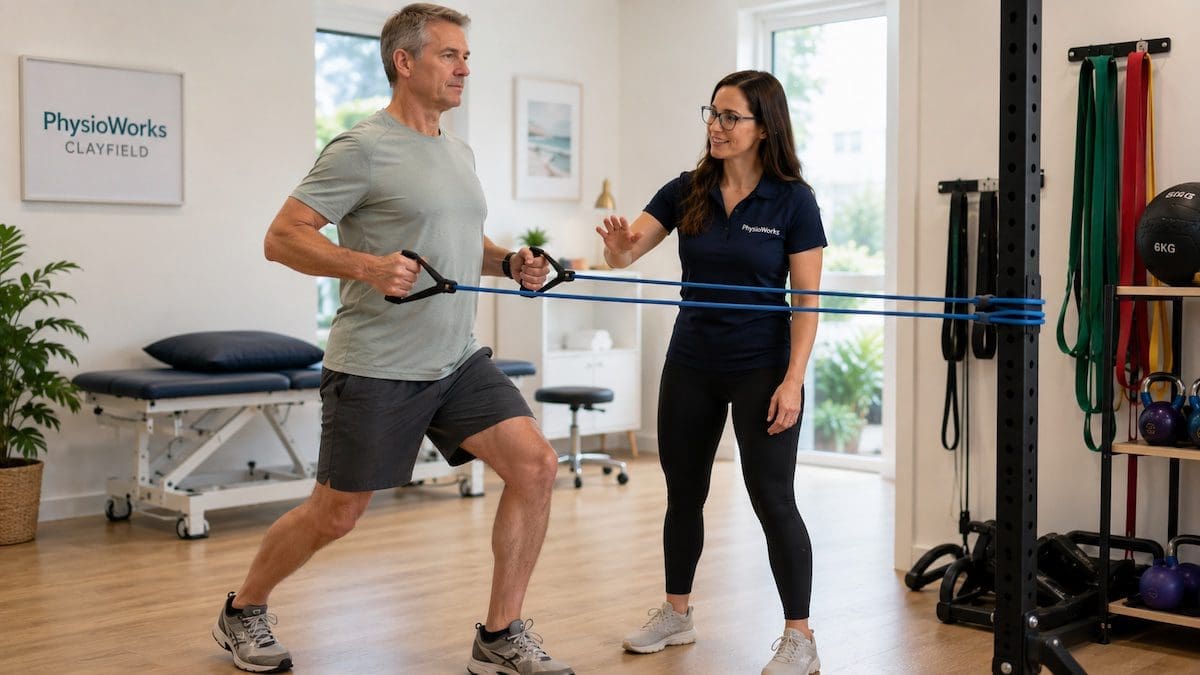
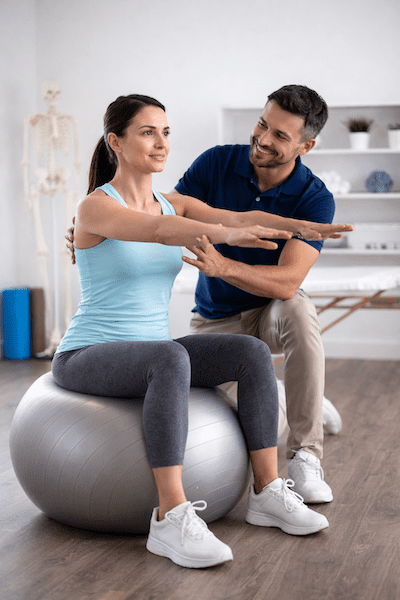
Physiotherapist in navy polo supervising rehabilitation exercise program in clinic
A physiotherapist supervising a patient performing a rehabilitation exercise program in the clinic.

Short Answer

A physiotherapy exercise program is a structured set of exercises chosen to suit your body, symptoms, and recovery stage. It may include mobility work, muscle activation, strength retraining, balance drills, and return-to-function progressions. The aim is not simply to “exercise more”, but to do the right work at the right time. For the full treatment overview, see exercise programs.

Why Do Physiotherapists Prescribe Specific Exercises?

Firstly, different injuries need different loading strategies. A painful tendon often needs a different plan from a stiff joint, weak muscle, irritated nerve, or post-operative repair. Therefore, your physiotherapist selects exercises that match the problem rather than using a one-size-fits-all routine.

Secondly, your starting point matters. Age, fitness, pain levels, work demands, confidence, balance, and medical history all influence what is appropriate. A well-planned physiotherapy exercise program considers these factors so that the exercises challenge you without flaring symptoms unnecessarily.

Why a Physiotherapy Exercise Program Is Specific

A good physiotherapy exercise program usually progresses through stages. Early on, the goal may be pain-free movement, swelling control, or restoring basic muscle activation. After that, the focus often shifts to strength training, endurance, coordination, and functional tasks such as walking, lifting, squatting, climbing stairs, or returning to sport.

This is why “copying someone else’s rehab” often falls short. Even with the same diagnosis, two people may need different exercises, different dosage, and different pacing. Some people begin with gentle stretching exercises or mobility work, while others are ready for resistance-based progressions such as resistance band exercises.

Should Exercises Hurt?

Not always. Some exercises should feel easy and controlled, especially in the early stages. Others may feel challenging as strength and tolerance improve. However, severe pain, sharp pain, or lingering aggravation after exercise can suggest that the load, range, speed, or technique needs adjustment.

In practice, many people do best when their physiotherapy exercise plan builds steadily. That approach tends to improve confidence and consistency, which often matters just as much as the exercise itself. For some conditions, careful progressions such as eccentric strengthening may also be useful.

What Happens If You Stop Doing Them?

When you stop your exercises too early, weak or poorly coordinated muscles may stay that way. As a result, irritated tissues can remain overloaded, and nearby joints or muscles may start compensating. That can slow recovery and sometimes contribute to recurrent pain.

Of course, not every exercise program needs to continue forever. Yet many people benefit from continuing at least part of their physiotherapy exercise routine until they have rebuilt enough strength, movement, and control for daily life, work, or sport.

When Assessment May Help

An assessment may help if you are unsure which exercises are safe, if symptoms keep returning, or if online exercises have not matched your needs. It can also help after surgery, after a significant flare-up, or when you feel weak, stiff, unstable, or de-conditioned.

Your physiotherapist can then refine your physiotherapy exercise plan by changing the movement, dosage, support, or progression. Sometimes a small tweak makes an exercise far more comfortable and useful. Where balance or falls risk is part of the picture, specific balance training may also be appropriate.

Activity and Load Still Matter

Exercises work best when they sit alongside sensible load management. For example, you may need to adjust walking volume, gym training, running, work tasks, or sitting time while tissues settle and capacity improves. In other words, the physiotherapy exercise itself is only one part of the plan. Matching it to your weekly load is what often makes the program practical and sustainable.

As your capacity improves, the program may progress towards more functional strength, control, and sport-specific tasks. For active people, this can include staged drills such as agility exercises or higher-level strengthening patterns built on a foundation of core exercises.

What This Means for You

If you have pain, weakness, stiffness, balance loss, or delayed recovery, a tailored physiotherapy exercise program may help clarify what to do next. The key is to match the right exercise to the right stage, then progress it gradually. Assessment can help you avoid overdoing it, underloading it, or wasting time on exercises that do not suit your problem.

Related Information

Book your appointment – 24/7

Choose your preferred PhysioWorks clinic and book online.

Follow PhysioWorks

Get free physiotherapy tips, exercise videos, recovery advice, and blog updates.

Facebook Instagram YouTube B X Email PhysioWorks

Strength Products

These strength products are commonly used by our physiotherapists to improve strength, controlled movement, plus assist home exercise programs.

View all strength products

References

  1. Hayden JA, Ellis J, Ogilvie R, Malmivaara A, van Tulder MW. Exercise therapy for chronic low back pain. Cochrane Database Syst Rev. 2021;9(9):CD009790. Available from: https://pubmed.ncbi.nlm.nih.gov/34580864/
  2. De la Corte-Rodriguez H, Sanchez-Romero EA, Fernandez-Carnero J, et al. The role of physical exercise in chronic musculoskeletal pain: state of the art and future perspectives. Curr Pharm Des. 2024;30(6):381-393. Available from: https://pubmed.ncbi.nlm.nih.gov/38255129/
  3. Arora NK, Donath L, Miller C, et al. Exercise for chronic musculoskeletal pain: time to prescribe with precision. BMJ Open Sport Exerc Med. 2025;11(4):e003076. Available from: https://pubmed.ncbi.nlm.nih.gov/41334242/
For research summaries and management pathways, visit our main condition page: Exercise Programs

What Exercise Ball Size Should I Use?

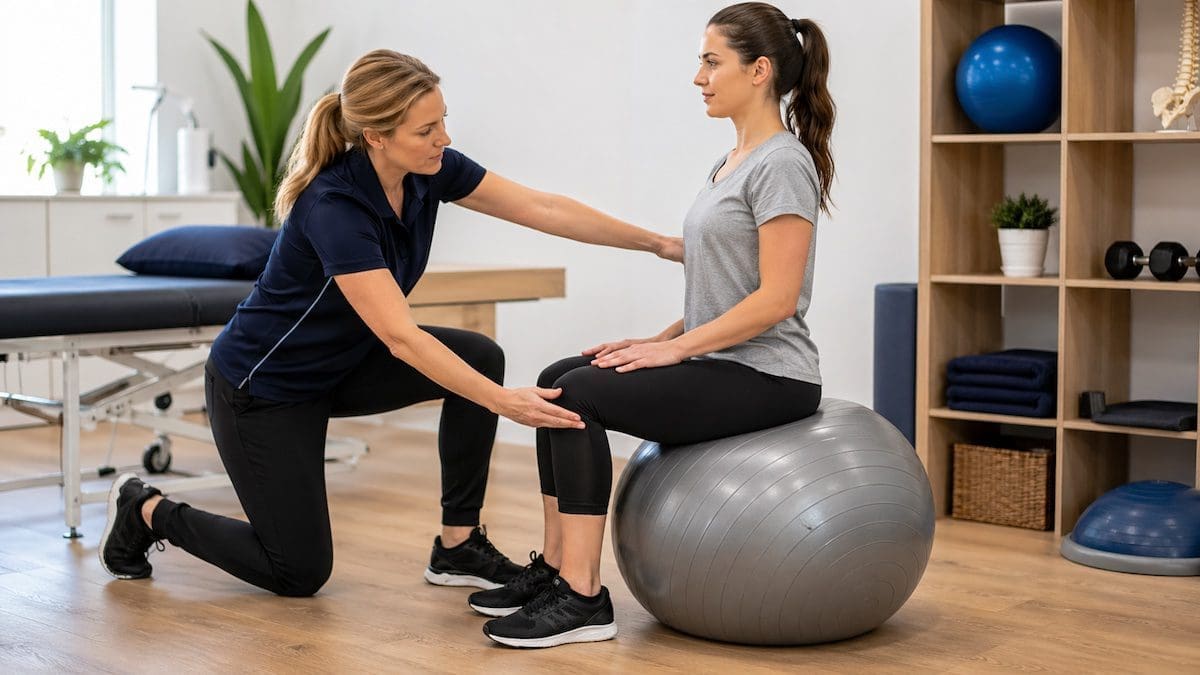
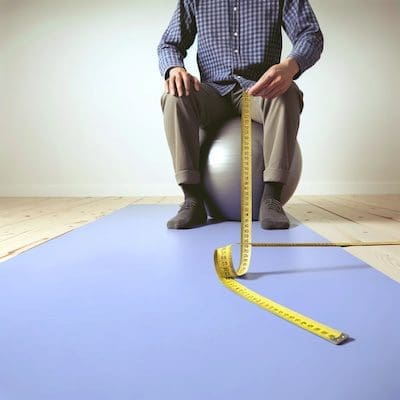
physiotherapist checking exercise ball size with seated knee and hip alignment

Correct exercise ball size keeps your hips slightly higher than your knees.
The right exercise ball size depends mainly on your height, leg length and how you plan to use it. Most adults suit a 55 cm or 65 cm ball. When seated, your feet should stay flat and your hips should sit slightly higher than your knees.

Choosing the correct exercise ball size can improve comfort, posture and control during sitting, balance work and core stability training. If you use a ball for back exercises or desk sitting, fit matters more than the label on the box.

Quick Exercise Ball Size Guide

  • 137–152 cm → 45 cm ball
  • 155–173 cm → 55 cm ball
  • 175–188 cm → 65 cm ball
  • 190–200 cm → 75 cm ball
  • 200 cm+ → 85 cm ball

How Do You Choose the Correct Exercise Ball Size?

Match your height to the ball diameter, then test your seated position. Your knees should sit just below hip height, your feet should stay flat, and your spine should feel relaxed rather than slumped.

If you are between sizes, choose the larger ball for sitting or workstation use. Choose the smaller ball for controlled exercise, balance drills or early-stage back exercises.

Exercise Ball Size Chart

Ball Diameter Recommended Height Common Use
45 cm 137–152 cm Smaller users / rehab
55 cm 155–173 cm Most shorter to average users
65 cm 175–188 cm Most average to taller users
75 cm 190–200 cm Tall users / sitting
85 cm 200 cm+ Very tall users

Before You Buy: Quick Checklist

  • ✔ Check your height against the size chart
  • ✔ Sit on the ball before regular use where possible
  • ✔ Confirm hips sit slightly above knees
  • ✔ Choose larger for sitting and smaller for controlled exercise
  • ✔ Inflate the ball firmly, without making it hard or unstable
ball chair height should be at least the height of your your thigh when seated.

Check seated knee height to confirm your ideal ball size.

Should I Use a Bigger or Smaller Exercise Ball?

Use a bigger exercise ball if your hips drop below your knees when sitting. Use a smaller ball if you need better control during exercise, especially for balance, beginner core work or gentle movement after lower back pain.

Common Exercise Ball Size Mistakes

  • Choosing a ball that is too small for sitting
  • Using a soft or under-inflated ball
  • Ignoring leg length and desk height
  • Using one ball for every exercise
  • Sitting on a ball for too long without posture breaks

Physio Tips for Safe Exercise Ball Use

Start with short sessions. Keep both feet flat, move slowly, and use the ball on a non-slip surface. If you feel unstable, dizzy, sore or unsafe, stop and use a more supported option.

Exercise balls may suit gentle back pain exercises, posture work and balance training when used well. However, they are not ideal for every person or every stage of recovery.

Choose the Right Exercise Ball

Use the guide above to select your likely size, then choose a ball that suits your goal. A better fit can make sitting, balance work and controlled exercise feel safer and easier.

Book your appointment – 24/7

Choose your preferred PhysioWorks clinic and book online.

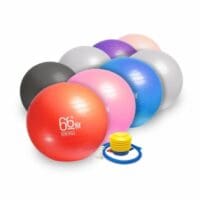
Exercise Ball Products

These exercise balls are commonly used by our physiotherapists to improve strength, balance, posture, and home exercise programs.

View all exercise ball products

What to Do Next

Most adults suit either a 55 cm or 65 cm exercise ball. If your hips sit below your knees, move up a size. If you cannot control the ball during exercise, move down a size or use a more stable option.

If you plan to use a ball for pain, rehab, posture or workstation support, a physiotherapist can help match the ball size to your body, goals and exercise program.

Exercise Ball Size FAQs

What size exercise ball should I use for my height?

Most people between 155–173 cm use a 55 cm exercise ball. People between 175–188 cm usually suit a 65 cm ball. Taller users may need a 75 cm or 85 cm ball, depending on leg length and how they plan to use it.

How do I know if my exercise ball fits?

Sit on the ball with your feet flat on the floor. Your hips should sit slightly higher than your knees, and your spine should feel upright and relaxed. If your knees sit higher than your hips, the ball is probably too small.

Should I go bigger or smaller with an exercise ball?

Go bigger if you are using the ball for sitting, especially at a desk. Go smaller if you need more control during exercise. Between sizes, your purpose matters: sitting needs height, while exercise often needs stability and control.

Can an exercise ball help posture?

An exercise ball may help posture by encouraging upright sitting and gentle core activity. However, it should not replace regular movement breaks, workstation setup or strength work. For desk comfort, also consider a full ergonomic workstation assessment.

Can I use an exercise ball for back pain?

Some people use an exercise ball for gentle movement, core control and supported back exercises. However, back pain has many causes. If pain worsens, spreads into your leg, or affects daily function, seek guidance before progressing exercises.

How firm should an exercise ball be?

The ball should feel firm but still give slightly when you sit on it. If it collapses heavily under your weight, it may be under-inflated or too small. Always follow the manufacturer’s inflation and safety instructions.

When should I avoid using an exercise ball?

Avoid using an exercise ball if you feel unsafe, dizzy, unstable or unable to control your balance. You should also seek advice before using one after surgery, a recent injury, a fall, or significant back or pelvic pain.

Is an exercise ball better than a chair?

An exercise ball is not automatically better than a chair. It can be useful for short posture or movement breaks, but long sitting still needs variation. For desk use, alternate between a supportive chair, standing, walking breaks and targeted exercise.

Follow PhysioWorks

Get free physiotherapy tips, exercise videos, recovery advice, and blog updates.

Facebook Instagram YouTube B X Email PhysioWorks

Benefits of Using a Ball Chair

Article by John Miller & Erin Runge
Office worker sitting on an exercise ball at a computer workstation

Ball chair benefits can include more movement, better posture awareness, and a simple way to break up long periods of static sitting. However, a ball chair is not a magic fix for back pain. It usually works best as one option within a broader plan that includes good posture habits, a suitable ergonomic workstation setup, regular movement breaks, and the right exercise program.

If you already have stiffness, back pain, neck pain, or sciatica, a ball chair may help some people but aggravate others. That is why it makes sense to match the chair to your body size, symptoms, and work setup rather than using it all day as a full replacement for a supportive office chair.

Ball Chair Quick Guide

  • May help: posture awareness, active sitting, stiffness from long desk work
  • Works best: in short blocks, with a correct ball size and desk setup
  • Not ideal for: all-day sitting, poor balance, dizziness, recent surgery, severe pain
  • Most useful when combined with: movement breaks, exercise, and good workstation habits

Are ball chairs good for posture and back pain?

A ball chair may improve posture awareness and reduce stiffness for some people because it encourages small movements through the pelvis and trunk. Even so, research findings are mixed, and prolonged sitting on a ball can also increase discomfort or fatigue in some users. Many people do best when they use a ball chair for short periods alongside a supportive desk chair and regular walking breaks.

More recent research supports the broader idea of dynamic sitting and regular postural shifts rather than proving that a ball chair is the best option for every worker. In practice, the biggest benefit often comes from reducing static sitting, changing positions often, and matching your workstation to your body.

What Is a Ball Chair?

A ball chair uses a Swiss exercise ball, Pilates ball, or physio ball as the main sitting surface. Some people use the ball on its own, while others use a framed ball chair with a base, castors, or low back support. Because the surface moves, it can encourage subtle trunk activity and position changes while you work.

That extra movement can be useful if you tend to sit still for long periods. Still, a ball chair should sit alongside sensible workstation setup, regular breaks, and exercises such as back exercises or core exercises for lower back pain, rather than replacing them.

Potential Benefits

  • More movement during desk work: a ball chair allows small changes in position instead of one rigid sitting posture.
  • Posture awareness: many users notice that they slouch less when they first start using a ball chair.
  • Low-level trunk activation: balancing on the ball may increase activity in the muscles that help control the trunk and pelvis.
  • Dual-purpose equipment: one ball can support active sitting, home exercise, and Pilates-based back rehabilitation.

Limits and Cautions

  • Not a stand-alone fix: a ball chair does not reliably solve ongoing pain by itself.
  • Can increase fatigue: prolonged sitting on a ball may overload spinal muscles.
  • Not ideal for everyone: poor balance, dizziness, recent surgery, and severe pain may make a stable chair safer.
  • Desk setup still matters: poor screen or keyboard height can still worsen posture and symptoms.

Even with these possible benefits, a ball chair does not reliably fix ongoing pain on its own. If your symptoms relate to back pain causes and treatment, neck pain, or sciatica, you usually need a broader plan than simply changing chairs.

Who Might Benefit from a Ball Chair?

A ball chair may suit you if you feel stiff during long desk sessions, want a change from static sitting, and can safely balance on the ball with both feet flat on the floor. It can also suit people who already use an exercise ball for mobility, posture, and strength work and want an occasional active sitting option during the day.

Some people use a ball chair well as part of chronic symptom management, especially when they also follow advice for recurrent back pain, desk ergonomics, and exercise progression. The chair tends to work better as a short-burst tool than as an all-day workstation solution.

When Should You Be Cautious Using a Ball Chair?

A ball chair is not ideal for everyone. If you have poor balance, dizziness, recent surgery, severe pain, or a high falls risk, a stable chair is usually the safer option. You may also struggle if your desk height, screen position, or keyboard setup forces you into poor posture no matter what you sit on.

People with acute back pain, significant nerve symptoms, or pain that worsens quickly with sitting should be careful. In these cases, it is often better to address the main issue first and then decide whether a ball chair fits your recovery plan.

How Do You Use a Ball Chair Safely?

The safest way to use a ball chair is to treat it as an occasional active sitting option rather than your only chair. Short, controlled use is usually more helpful than sitting on the ball all day.

1. Choose the Right Size

Your hips should sit slightly higher than your knees when seated in the middle of the ball. For sizing help, see our exercise ball size guide.

2. Set Up Your Desk

Keep elbows around 90 degrees, wrists neutral, and the screen near eye level. See our workplace wellness and ergonomics advice.

3. Start with Short Blocks

Many people do well with 15 to 30 minutes once or twice a day. Increase gradually only if you stay comfortable.

4. Keep Moving

Stand up every 30 to 60 minutes, walk regularly, and mix in mobility or strengthening exercises through the day.

ball chair height should be at least the height of your your thigh when seated.

Ball size matters. The right height helps support better sitting posture and more comfortable active sitting.

People Also Ask About Ball Chairs

Is sitting on a ball chair good for posture?

Sitting on a ball chair may improve posture awareness because it encourages small adjustments through your trunk and pelvis. That can help some people notice when they start to slump. However, it is not a guaranteed posture fix, and it still needs a suitable desk setup, regular movement, and a supportive chair for longer tasks.

Can a ball chair replace my office chair?

No. A ball chair is usually better as one sitting option rather than your only chair. Most people cope better when they alternate between a ball chair, a supportive ergonomic chair, standing, and walking breaks. Full-day ball-chair use can lead to fatigue, discomfort, or reduced concentration.

How long should I sit on a ball chair each day?

A practical starting point is 15 to 30 minutes once or twice a day. From there, increase gradually only if you stay comfortable and your posture remains controlled. If you feel sore, tired, or unstable, reduce the time and return to a more supportive seat.

Does a ball chair help back pain?

A ball chair may help some people feel less stiff because it reduces static sitting and encourages movement. However, it can also aggravate symptoms in others, especially if they already have pain, nerve irritation, or poor workstation setup. It is usually best used as one part of a broader back pain management plan.

What size ball chair should I use?

The right size allows your hips to sit slightly higher than your knees with both feet flat on the floor. That position generally helps you stay upright without excessive strain. If the ball is too small or too large, your posture and comfort can worsen quickly.

Can a ball chair strengthen your core?

A ball chair may increase low-level trunk muscle activity because you need to control your position on a moving surface. Even so, it is not a substitute for a proper strengthening program. You will usually get better results from targeted core, hip, and spinal exercises than from passive sitting alone.

Can a ball chair make back pain worse?

Yes, it can. A ball chair may increase discomfort if you sit on it too long, choose the wrong size, or already have significant back, neck, or nerve pain. If symptoms flare when you use it, switch back to a supportive chair and seek advice before continuing.

Is a ball chair safe for everyone?

No. Ball chairs are less suitable for people with poor balance, dizziness, recent surgery, severe pain, or a higher risk of falling. They can still be useful for some people, but safety and comfort should come first. If you are unsure, ask a physiotherapist before changing your workstation.

Should You Try a Ball Chair?

  • Worth trying: if you want short periods of active sitting and tend to get stiff at your desk
  • Use caution: if you already have neck pain, sciatica, severe back pain, or balance issues
  • Best results: when combined with posture advice, exercise, and regular movement breaks
  • Get help: if symptoms worsen or your workstation still feels uncomfortable

Related Articles

  1. Ergonomics – Improve your workstation so your chair choice supports better posture.
  2. Good Posture – Practical ways to sit, stand, and move more comfortably.
  3. What Exercise Ball Size Should I Use? – Match the ball height to your body and desk setup.
  4. Back Exercises – Mobility and strength exercises that support healthier sitting.
  5. Pilates for Back Pain – A structured approach to trunk control and posture support.
  6. Recurrent Back Pain – Why symptoms keep returning and what to do next.

What to Do Next

If you are thinking about trying a ball chair, start with the correct size, use it in short blocks, and keep a supportive office chair available for longer tasks. Pay attention to how your back, neck, and hips feel rather than assuming the chair is automatically better.

If sitting still is difficult, your posture breaks down quickly, or your pain keeps returning, a physiotherapist can assess your workstation, movement habits, and symptom drivers. That often gives you a better long-term result than changing one piece of equipment in isolation.

Book your appointment – 24/7

Choose your preferred PhysioWorks clinic and book online.

Exercise Ball Products

These exercise balls are commonly used by our physiotherapists to improve strength, balance, posture, and home exercise programs.

View all exercise ball products

Follow PhysioWorks

Get free physiotherapy tips, exercise videos, recovery advice, and blog updates.

Facebook Instagram YouTube B X Email PhysioWorks

References

  1. Channak S, Speklé EM, van der Beek AJ, Janwantanakul P. The effectiveness of a dynamic seat cushion in preventing neck and low-back pain among high-risk office workers: a 6-month cluster-randomized controlled trial. Scand J Work Environ Health. 2024;50(7):555-566.
  2. Channak S, Speklé EM, van der Beek AJ, Janwantanakul P. Effectiveness of a dynamic seat cushion on recovery and recurrence of neck and low back pain in office workers: a secondary analysis of a randomized controlled trial. BMC Musculoskelet Disord. 2024;25(1):850.
  3. Kumahara H, Taniguchi T, Aoyagi Y, et al. Comparison of energy metabolism and muscular activity between sitting on a stability ball and office chairs: A pilot study. Physiol Behav. 2025;292:114841.
  4. Elliott TLP, Snow M, Harrington A, Barry C, Maher C, Smeathers JE. The effect of sitting on stability balls on nonspecific lower back pain, disability, and core endurance: a systematic review. J Can Chiropr Assoc. 2016;60(1):14-24.

Are Anti-Burst Exercise Balls Safe?

Anti-burst exercise balls safety is a common concern for home workouts, gym sessions, and physiotherapy exercise programs. These balls are designed to reduce the risk of a sudden “pop” by deflating slowly if punctured. Even so, safety still depends on choosing the right ball, inflating it correctly, and using it in a sensible way.

Anti-burst exercise balls safety during supervised core stability physiotherapy
Physiotherapist supervising core stability exercises using an anti-burst exercise ball in clinic.

Short answer: anti-burst exercise balls safety

Yes, anti-burst exercise balls are generally safe when you select the correct size, inflate to the recommended diameter, and use them on an appropriate surface. Their anti-burst design aims to reduce sudden collapse risk compared with cheaper, thin-walled balls. For ball options and sizes, start with our main hub: Exercise Balls.

Anti-burst exercise balls safety: how they reduce risk

Anti-burst balls use reinforced materials designed to release air gradually if the surface is damaged. That slow deflation can reduce the chance of a sudden fall during seated exercises, balance drills, or rehabilitation movements. Many models also list high load ratings (often 300 kg or more), although those ratings apply under controlled conditions and do not guarantee safety in every setting.

In practice, the biggest safety issues come from avoidable factors: overinflation, sharp objects, uneven flooring, and incorrect size. A ball can still fail if it is cut, used on rough surfaces, or stored in heat that damages the material over time.

What to check before you use an anti-burst ball

  • Size: Your hips and knees should sit near 90 degrees when seated. Use our guide: What exercise ball size should I use?
  • Inflation: Inflate to the correct diameter, not “as firm as possible”. If you need guidance, follow: How to correctly inflate an exercise ball
  • Surface: Use a flat, non-slip surface and keep it away from sharp edges, pet claws, and rough concrete.
  • Use case: Start with controlled exercises before advanced balance tasks or external loads.
  • Condition of the ball: Replace the ball if you see cracking, thinning, or valve issues.

Can anti-burst exercise balls still pop?

They can. “Anti-burst” usually means the ball should deflate slowly after a puncture rather than bursting instantly. However, large tears, severe damage, incorrect inflation, or poor-quality materials can still lead to rapid failure. For people with balance concerns, a cautious approach matters more than marketing claims.

A physiotherapist’s perspective

A physiotherapist may use an exercise ball to build trunk control, balance, posture awareness, and graded strength. That approach often works best when exercises match your current ability and progress steadily over time. If you’re using a ball for back comfort or core control, this related FAQ may help: Exercise ball for lower back pain: can it improve core stability?

What to do next

If you want to add a ball to your training or rehab, focus on the basics: correct sizing, correct inflation, and a stable environment. Next, choose exercises that suit your goals and current control. If pain, dizziness, or instability is part of the picture, book a physiotherapy appointment so your program matches your needs and stays safe.

Related information

Book your appointment – 24/7

Choose your preferred PhysioWorks clinic and book online.

Follow PhysioWorks

Get free physiotherapy tips, exercise videos, recovery advice, and blog updates.

Facebook Instagram YouTube B X Email PhysioWorks

How to Inflate an Exercise Ball Safely

Inflating an exercise ball correctly means filling it to the recommended diameter, not simply making it feel firm. Correct inflation helps the ball support your body safely, improves comfort, and reduces the risk of overinflation, instability, or early wear.

Many people accidentally overinflate their exercise ball or use it too early, which can lead to instability, discomfort, or early failure.

Whether you use an exercise ball for core exercises, back support, posture training, or flexibility work, safe inflation matters. If you also need help choosing the right diameter, see our exercise ball size guide.

Physiotherapist inflating an exercise ball with a foot pump in clinic

A physiotherapist inflates an exercise ball safely using a foot pump.

Quick Exercise Ball Inflation Checklist

  • Warm the ball to room temperature before final inflation.
  • Use a hand pump, foot pump, or low-pressure compressor.
  • Inflate to the labelled diameter, not to maximum firmness.
  • Inflate to about 80%, then wait up to 24 hours before finishing.
  • Stop if the ball feels overly hard or loses shape.

Why Should You Inflate an Exercise Ball Correctly?

Correct inflation helps your exercise ball provide stable support and reduces the chance of slips, falls, or bursting. It also helps the ball reach its intended diameter, which affects your sitting posture, exercise setup, and load tolerance.

If your ball is too soft, you may sink too low and lose control. If it is too hard, it may feel unstable and place extra stress on the material. For spine-related exercise ideas, see our back pain FAQ guide.

How to Inflate Your Exercise Ball Safely

You can inflate most exercise balls with the hand pump supplied with the ball. A suitable foot pump, air mattress pump, bike pump with an adapter, or low-pressure compressor may also work. Avoid high-pressure tools that inflate too quickly.

1. Choose the Right Air Pump

Choose a pump with a nozzle that fits the valve snugly. A loose nozzle can leak air and make inflation harder. Keep the valve clean and free from dust so the plug seals properly after inflation.

2. Avoid Full Inflation in Cold Temperatures

Do not fully inflate your exercise ball if the room temperature is below 20 degrees Celsius. Let the ball warm to room temperature first. This helps the material stretch safely and reduces the risk of the ball becoming too firm or stressed.

For extra safety advice, read our anti-burst exercise ball safety tips.

3. Inflate Based on Diameter, Not Pressure

Measure the ball’s diameter rather than relying on air pressure. Pump pressure varies between devices, while diameter directly affects your posture and exercise position. Use the manufacturer’s guide or our exercise ball sizing chart.

4. Inflate in Stages

Inflate the ball to about 80% of its final size first. Then wait up to 24 hours before finishing inflation. This staged approach lets the material stretch gradually and reduces stress on the seams. Avoid using the ball during this first settling period.

5. Check the Final Size

Place two boxes the correct distance apart and roll the ball between them. If both sides of the ball touch the boxes, the diameter is close to correct. When sitting on the ball, your hips should sit slightly higher than your knees.

What Are the Key Tips for Exercise Ball Inflation?

The key tips for exercise ball inflation are to choose the right pump, inflate slowly, measure diameter, and avoid extreme temperatures. These simple steps can help reduce overinflation, improve posture, and extend the life of your ball.

Once your ball is inflated correctly, you can use it for strengthening exercises, balance drills, and guided Swiss ball programs. If you use the ball for rehabilitation, ask your physiotherapist which exercises suit your body and goals.

Research Insight

Research suggests that stabilisation exercises using an exercise ball may help improve deep trunk muscle activation, functional strength, and low back pain outcomes. If you plan to use the ball for rehab, see our guide to exercise balls for lower back pain and core stability.

When Should You Replace an Exercise Ball?

Replace your exercise ball if you notice cracks, thinning material, seam damage, punctures, or repeated air loss. Also replace it if it has been stored in heat, exposed to sharp objects, or no longer holds its correct diameter.

What to Do Next

If you are buying a new ball, choose the correct size first, then inflate it slowly and check the final diameter. If you use an exercise ball for back pain, balance, or rehabilitation, your physiotherapist can help match the ball setup to your exercise program.

If your exercise ball is causing discomfort or you’re unsure about setup, a physiotherapist can help you choose the right size and inflation level.

Find the Right Exercise Ball for Your Body Size

Book your appointment – 24/7

Choose your preferred PhysioWorks clinic and book online.

Exercise Ball Products

These exercise balls are commonly used by our physiotherapists to improve strength, balance, posture, and home exercise programs.

View all exercise ball products

Exercise Ball Inflation FAQs: Size, Pump & Safety Tips

How do I know if my exercise ball is fully inflated?

Check the ball’s diameter with a tape measure or box method. When you sit in the centre, your hips should sit slightly higher than your knees. The ball should feel firm but still have a small amount of give.

Can I overinflate an exercise ball?

Yes. Overinflation increases the risk of bursting and reduces the ball’s ability to absorb load. Inflate only to the recommended diameter and avoid heat, sharp objects, and direct sunlight during inflation.

Do I need a special pump for an exercise ball?

Most exercise balls come with a hand pump. A foot pump, air mattress pump, bike pump with an adapter, or low-pressure compressor may also work. Inflate slowly and check the diameter often.

Why does my exercise ball feel soft after a few days?

New balls often stretch slightly during the first few uses, so a small drop in firmness is normal. Temperature changes can also affect air volume. Top up the air as needed to maintain the correct diameter.

Why inflate an exercise ball in stages?

Staged inflation lets the material stretch gradually before full use. This reduces stress on seams and helps the ball reach its final size more safely. Inflate to about 80%, wait up to 24 hours, then finish inflation.

Can you use a bike pump to inflate an exercise ball?

Yes, but you may need a nozzle adapter. Inflate slowly and stop once the ball reaches the recommended diameter. Avoid forcing extra air into the ball once it reaches the correct size.

How long does a good exercise ball last?

Most anti-burst exercise balls last several years with normal home use. Replace the ball if you notice cracks, thinning material, valve leaks, or visible wear near the seams.

Where should I store my exercise ball?

Store your exercise ball in a cool, dry place away from sharp items and direct sunlight. Heat can change air volume and may affect the ball’s material over time.

Recommended Resources

  1. How to Use an Exercise Ball for Core Workouts
  2. Exercise Ball Safety Tips
  3. Exercise Ball Sizing Chart
  4. Benefits of Using a Ball Chair
  5. Back Pain Prevention Tips

Buy an Exercise Ball Today – Fast Delivery Australia-Wide

Follow PhysioWorks

Get free physiotherapy tips, exercise videos, recovery advice, and blog updates.

Facebook Instagram YouTube B X Email PhysioWorks

References

  1. Bliven KCH, Anderson BE. Core stability training for injury prevention. Sports Health. 2013.
  2. Escamilla RF, et al. Core muscle activation during Swiss ball and traditional abdominal exercises. J Orthop Sports Phys Ther. 2010.
  3. Frizziero A, et al. Core stability and chronic low back pain. Sports. 2021.
  4. Chung SH, et al. Effects of stabilisation exercise using a ball on multifidus cross-sectional area in patients with chronic low back pain. J Sports Sci Med. 2013.

Check If You’re Covered by Sports Injury Insurance

Physiotherapist explaining sports injury treatment and insurance options during consultation

Clear plan and guidance during your physiotherapy consultation

Sports injury insurance physiotherapy may help cover treatment costs after an injury during training or competition. However, cover varies between sporting bodies, insurers, benefit limits, and claim rules. If you are unsure where to begin, start with our broader Funding & Insurance guide and sports injuries hub.

If you play organised sport in Brisbane, the best next step is usually simple: check your club or association policy, confirm whether physiotherapy is included, and book early if you need assessment or treatment. Early care can help clarify your diagnosis, plan rehab, and support the paperwork often needed for a claim.

Quick Answer: Are You Covered by Sports Injury Insurance?

Often, yes. Many Australian sporting associations include some level of personal injury cover with registration. Even so, the amount payable, the treatment types covered, and the documents required can differ from one policy to another.

  • Many sports insurance policies include physiotherapy for eligible sports injuries.
  • Cover usually depends on your club, association, or insurer.
  • You may need claim forms, receipts, referral details, or injury reports.
  • Early assessment can help guide treatment and support your claim process.

Does Sports Injury Insurance Cover Physiotherapy?

Sports injury insurance often contributes to physiotherapy after an eligible sport-related injury. It is most relevant when the injury happened during organised training, competition, or an approved club activity. Some policies also set excess payments, treatment caps, waiting periods, or exclusions.

If your injury is recent, you may also find our sports physiotherapy page and Acute Sports Injury Clinic helpful for your next steps.

How to Check If You’re Covered

Start with the policy linked by your club, school, league, or sporting association. Then confirm whether the policy applies to your specific injury, whether physiotherapy is included, and what documentation you need before treatment or reimbursement.

Simple cover checklist

  1. Confirm your club or association insurance provider.
  2. Check whether your injury happened during an eligible activity.
  3. See whether physiotherapy is listed as a covered service.
  4. Review benefit limits, exclusions, and any excess.
  5. Check what forms, reports, or receipts you must submit.

What Documents Might You Need?

Most claims are easier when you keep your paperwork from the start. Depending on the insurer, you may need your registration details, injury date, claim form, treatment receipts, referral information, and a clinical assessment report. If you are unsure, ask the insurer what they require before you submit anything.

If you also want to compare other payment pathways, see our Funding & Insurance hub and Private Health Insurance Rebates page.

When Should You Book Sports Physiotherapy?

Book early if you have significant pain, swelling, bruising, instability, reduced range of motion, or trouble loading the injured area. Prompt assessment may help clarify the injury, start the right treatment early, and guide safer decisions about rest, training, and return to sport.

If your goal is to get back to training or competition safely, our return to sport testing guide explains how progression and decision-making are usually managed after sports injuries.

Is Sports Massage Covered Too?

Sometimes, but not always. Sports injury insurance is more commonly linked to physiotherapy and other approved treatment pathways. If recovery massage forms part of your broader plan, check whether your insurer lists it specifically. You can also explore sports recovery massage if you want to discuss whether it may suit your situation.

Is This Right for You?

This page is useful if you have been injured during organised sport and want to know whether insurance may help with your physiotherapy costs. It is also useful if you are unsure whether to book now or wait until your claim is clarified.

In most cases, it is better to check your cover early and get timely advice rather than delay treatment. Early assessment often helps you understand the injury, protect your training goals, and avoid unnecessary setbacks.

More Helpful Sports Links

What Should You Do Next?

If you think your injury may be claimable, confirm your insurer, note the injury details, and book your initial physio assessment today. We can assess your injury, explain the likely rehab pathway, and help you understand what documentation may support your claim.

If your injury is severe, unusual, or worsening, seek prompt medical care. For general public guidance on injuries and when to seek further help, Healthdirect’s advice on accidents and injuries is also useful.

FAQs About Sports Injury Insurance

Do all sports registrations include injury insurance?

No. Many do, but not all. Cover depends on the sporting body, policy, and registration level, so it is worth checking your club or association details rather than assuming you are included.

Do I need a referral before physiotherapy?

Not always. Some policies allow you to book directly, while others may ask for claim paperwork or supporting documents first. Check the insurer requirements before your first appointment if you are unsure.

Can I still book before my claim is approved?

Yes, in many cases you can still start treatment. However, reimbursement rules vary, so confirm whether pre-approval, receipts, or extra documentation are required if you want to claim costs back later.

What if my claim is rejected?

You can ask the insurer why the claim was declined and whether more information is needed. Sometimes the issue is documentation rather than treatment eligibility. You can also discuss other payment pathways through private health, self-funding, or other approved schemes where relevant.

How long do sports insurance claims usually take?

Claim timing varies. Some insurers process simple claims relatively quickly once the paperwork is complete, while others take longer if more reports or supporting documents are needed. Delays are more likely when forms are incomplete or the injury details are unclear.

What injuries are usually excluded from sports injury insurance?

Exclusions vary by policy, but they may include non-approved activities, pre-existing problems, some overuse conditions, or injuries outside organised club events. Always check the policy wording because the exact rules, limits, and definitions can differ between insurers.

Book your appointment – 24/7

Choose your preferred PhysioWorks clinic and book online.

Our Brisbane Sports Physiotherapists

Our Brisbane sports physiotherapists regularly assess and manage training and competition injuries. We can help guide early treatment, rehabilitation planning, and return-to-sport decisions after many common sporting injuries.

Follow PhysioWorks

Get free physiotherapy tips, exercise videos, recovery advice, and blog updates.

Facebook Instagram YouTube B X Email PhysioWorks

References

  1. Australian Institute of Health and Welfare. Sports injury in Australia: sports participation and injury rates. Updated July 30, 2025. Accessed April 14, 2026.
  2. Healthdirect Australia. Accidents and injuries. Accessed April 14, 2026.

How Do You Find Trusted Health Information Online?

Trusted health information usually comes from qualified authors, recognised organisations, current evidence, and balanced advice. In contrast, poor online health content may exaggerate claims, skip key safety details, or promote treatment without proper evidence. If you are researching pain, injury, or recovery, it also helps to compare what you read with guidance from a physiotherapist or other registered healthcare professional.

Using reliable health websites can help you ask better questions, avoid misinformation, and make more informed treatment decisions. That matters when you are comparing diagnoses, rehabilitation options, or trying to work out whether you need a professional assessment.

Quick Trust Checklist

  • Check who wrote the content and whether they are suitably qualified
  • Look for recent updates and references to evidence or guidelines
  • Be cautious of “miracle cures”, one-sided claims, or sales-heavy advice
  • Compare what you read with trusted medical or allied health sources

Why Trusted Health Information Matters

Reliable health information can help you better understand symptoms, likely causes, and the range of treatment options that may be appropriate. It can also help you prepare for an appointment, whether you are booking for treatment planning, checking whether symptoms need review, or deciding what questions to ask.

However, online information should support your decisions, not replace individualised care. Two people with similar pain may still need different advice based on their goals, work demands, sport, health history, and recovery stage.

What Makes a Health Website Credible?

A credible health website usually explains who created the content, what evidence supports it, and when it was last reviewed. Good websites also discuss benefits, risks, limitations, and when you should seek further help, rather than pushing one simple answer for everyone.

As a practical rule, trustworthy websites usually have most of these features:

  • Content written or reviewed by qualified healthcare professionals
  • Clear authorship, editorial standards, or institutional backing
  • References to research, guidelines, or recognised medical sources
  • Balanced wording rather than exaggerated claims
  • Advice that encourages professional assessment when appropriate

Which Websites Provide Trusted Health Information?

The following organisations are commonly used for reliable, evidence-based health information:

How Do You Spot Low-Quality Health Advice?

Be cautious if a website promises fast fixes, guaranteed outcomes, or dramatic claims without evidence. The same applies if the page is mainly selling a product, gives no author details, or ignores warning signs that need medical review.

Low-quality health advice can delay the right treatment. Some painful or persistent problems need a more detailed assessment, especially if they are worsening, keep recurring, or interfere with work, sleep, sport, or daily activities. If you are unsure, it may help to review how care should be reassessed when progress falls short.

How Should You Use Online Health Information?

Good online information works best as a guide, not a diagnosis. Use it to understand possible causes, learn common management options, and prepare useful questions for your appointment.

For example, if you are reading about pain, rehabilitation, or treatment options, you may also find these pages helpful: What Is Pain?, Common Physiotherapy Treatment Techniques, and How Much Treatment Will You Need?. Reading related pages can help you compare general education with advice that is more relevant to your symptoms and goals.

Frequently Asked Questions

How do you know if health information online is trustworthy?

Health information is more trustworthy when it comes from recognised medical, government, university, hospital, or professional association websites. You should also check who wrote it, whether it cites evidence, and whether the content has been reviewed or updated recently.

What are the best websites for reliable health information?

Reliable health information often comes from government health departments, professional bodies, major hospitals, and peer-reviewed medical journals. Examples include the Australian Government Department of Health, the Australian Physiotherapy Association, the AMA, BMJ, Mayo Clinic, and Johns Hopkins Medicine.

Can online health information replace a healthcare assessment?

Online health information can be helpful for education, but it cannot replace an individual assessment. Your symptoms, medical history, activity level, and goals all affect what advice is most appropriate for you.

Why should you avoid websites that promise quick cures?

Quick-cure websites often simplify complex health problems and may not discuss risks, limitations, or alternative options. This can lead to poor decisions, delayed care, and unrealistic expectations about recovery.

Should health websites include research references?

Not every page needs a long reference list, but reliable health websites should still show where their advice comes from. Good sources often refer to research, clinical guidelines, professional standards, or clear editorial review.

When should you seek personalised advice instead of searching online?

You should seek personalised advice if symptoms are severe, worsening, recurring, or affecting your function, work, sport, sleep, or daily life. Personalised care is also important when self-management is not helping or the diagnosis is unclear.

What to Do Next

If you are researching a painful condition, rehabilitation plan, or treatment option, use trusted health information to guide your questions rather than trying to self-diagnose. Then compare what you read with advice tailored to your symptoms and goals.

If you need help deciding what type of care is appropriate, a PhysioWorks clinician can assess your presentation, explain your options clearly, and guide the next step. You may also wish to review how much treatment you may need before booking.

Book your appointment – 24/7

Choose your preferred PhysioWorks clinic and book online.

Follow PhysioWorks

Get free physiotherapy tips, exercise videos, recovery advice, and blog updates.

Facebook Instagram YouTube B X Email PhysioWorks
You've just added this product to the cart: