Exercise Ball Inflation FAQs
How much should I inflate an exercise ball?
Inflate your exercise ball to its recommended diameter, not maximum firmness. The ball should feel firm, support your weight, and still compress slightly when you sit on it.
How much should I inflate an exercise ball?
Inflate your exercise ball to its recommended diameter, not maximum firmness. The ball should feel firm, support your weight, and still compress slightly when you sit on it.
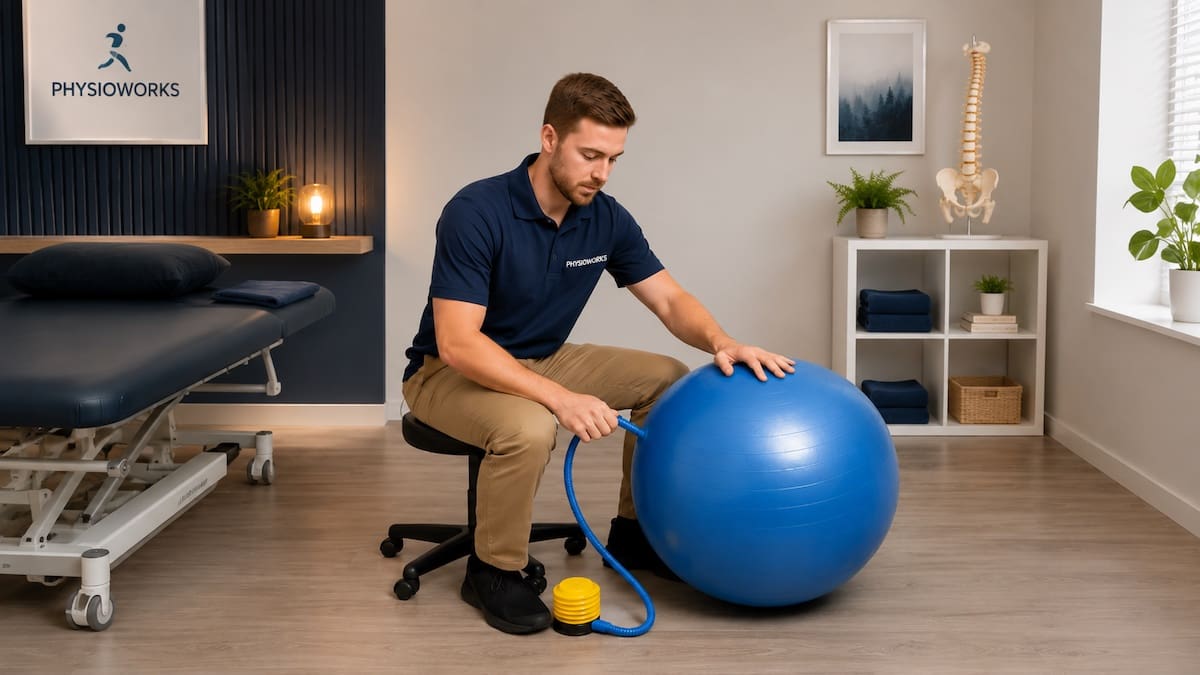
Exercise ball inflation should match the ball’s recommended size, not maximum firmness. A correctly inflated ball feels firm, but still has a little give. It should support you without feeling hard, stretched or unstable.
Many people overinflate their exercise ball. Others use it before the ball has had time to settle. Both can make the ball harder to control.
Use this guide before sitting, stretching or doing core exercises on your ball. If you are unsure which ball size to buy, check our exercise ball size guide first.
Your exercise ball is full enough when it reaches its listed size. Do not keep pumping air in just to make it harder.
Safe inflation helps the ball support your body. It also helps your posture, balance and control during exercise.
If the ball is too soft, you may sink too low. If it is too hard, it may feel unstable. It may also place more strain on the ball material.
For broader advice about back care, see our back pain FAQ guide.
Use a hand pump, foot pump or low-pressure pump. Some bike pumps may work if they have the right nozzle. Pump slowly and check the ball often.
Let the ball sit at room temperature before you finish inflating it. This matters more in cold rooms.
Cold ball material can feel stiff. A warm ball stretches more evenly.
Start by filling the ball to about 80% of its final size. Then leave it to settle.
This gives the material time to stretch before you add the last amount of air.
For a new exercise ball, wait up to 24 hours before final inflation. Do not use the ball during this first settling period.
After the ball has rested, add air slowly until it reaches the right size.
Do not rely on pump pressure. Different pumps feel different.
Measure the ball’s size instead. You can use a tape measure or place two boxes the correct distance apart and roll the ball between them.
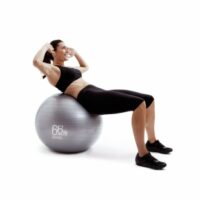
Sit in the middle of the ball. Your hips should usually sit a little higher than your knees.
Your feet should rest flat on the floor. You should feel steady, not wobbly or tense.
Yes. Overinflation can make the ball too hard. It can also place extra strain on the ball material.
Stop when the ball reaches its listed size. Do not add extra air to make it feel firmer.
For more safety tips, read our anti-burst exercise ball safety guide.
The ball should feel firm, but not rock-hard. It should keep its shape when you sit on it. It should still compress a little under your body weight.
A very firm ball is not always better. A slightly softer ball may feel safer when you are learning balance or starting new exercises.
Replace your ball if you notice cracks, thinning, seam damage, punctures or repeated air loss.
Also replace it if it has been stored in heat, left in direct sun or used near sharp objects. Do not use a damaged ball for exercise.
An exercise ball can add balance challenge to some exercises. It may suit simple strengthening exercises, balance drills and guided core work.
Start with slow and controlled exercises. If you use the ball for back pain or rehab, ask your physiotherapist which exercises suit your body.
You can also read our guide to exercise balls for lower back pain and core stability.
Simple safety rule: If the ball feels hard, slippery, unstable or damaged, stop using it and check the size, surface and condition before you continue.
Measure the ball’s size. When you sit in the centre, your hips should usually sit a little higher than your knees. The ball should feel firm, but not hard.
Yes. Overinflation can make the ball too hard and may strain the material. Inflate only to the listed size.
No. Many exercise balls come with a hand pump. You can also use a foot pump or bike pump with the right nozzle.
New balls can stretch a little after first inflation. Temperature changes can also affect firmness. Add a small amount of air if the ball drops below the right size.
Staged inflation lets the material stretch slowly. This can help the ball settle before you use it.
Yes, if the nozzle fits. Pump slowly and stop when the ball reaches the right size.
Many exercise balls last for several years with normal home use. Replace the ball sooner if it leaks, cracks or loses shape.
Store it in a cool, dry place. Keep it away from heat, direct sun, pets and sharp items.
Choose the right size first. Then inflate the ball slowly and check the final size before you use it.
If the ball feels unsafe, causes discomfort or you are unsure which exercises suit you, a physiotherapist can help you set it up and choose a safe plan.
Select a PhysioWorks clinic to continue to live booking, an appointment request or reception assistance.
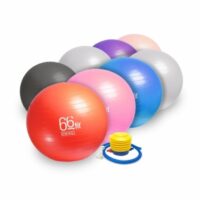
These exercise balls are commonly used by our physiotherapists to improve strength, balance, posture, and home exercise programs.