
Tendinopathy
Tendon pain, stiffness and reduced load tolerance can often improve with the right loading plan.


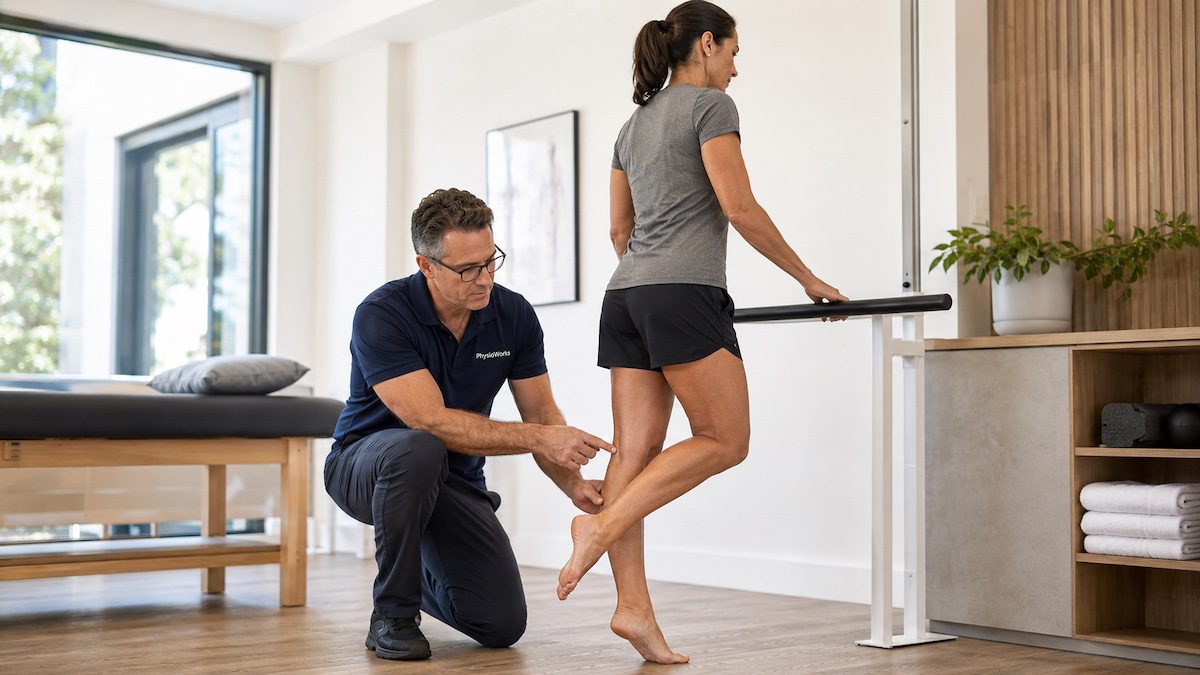
Assessing tendon pain and load tolerance
What is tendinopathy?
Tendinopathy is a tendon condition caused by repeated or excessive loading that exceeds the tendon’s current capacity. It often affects active people and commonly develops around the shoulder, elbow, hip, knee, ankle, and wrist. Symptoms usually include load-related pain, morning stiffness, and reduced tolerance for exercise, sport, work tasks, or repeated daily activity.
Tendinopathy is one of several soft tissue injury conditions. It may affect the Achilles tendon, the patellar tendon, the rotator cuff, the gluteal tendons, or the wrist tendons.
People still use terms such as tendonitis, tendinitis, tenosynovitis, and tendinosis. However, tendinopathy is now the preferred umbrella term because persistent tendon pain is not always driven by inflammation alone.
Tendinopathy at a Glance
- Main issue: tendon pain linked with reduced load tolerance.
- Common pattern: pain during activity, morning stiffness, then soreness after loading.
- Common sites: Achilles, patellar, rotator cuff, gluteal, elbow, and wrist tendons.
- Key management goal: rebuild tendon capacity with graded loading.
- When to act: if pain keeps returning, limits activity, or reduces strength.
Common signs of tendinopathy
- Pain during or after loading
- Morning stiffness or “warm-up” pain
- Tenderness over the tendon
- Reduced strength or spring
- Lower tolerance for sport, exercise, work, or repeated tasks
Where does tendinopathy occur?
Tendon problems usually develop in one of three locations. They may involve the tendon insertion where the tendon attaches to bone, the mid-tendon region, or the musculotendinous junction where muscle meets tendon. The irritated structure and its stage help guide treatment choices and loading progressions.
Common causes of tendinopathy
Tendons transmit force from muscle to bone. Pain often builds when tendon load rises faster than the tissue can adapt. This may follow a jump in training volume, repeated gripping or lifting, a return to sport after time off, reduced recovery, or a mismatch between tendon capacity and the demands placed on it.
Training load matters. Repetitive overload injuries often improve when you balance effort, recovery, and progression rather than simply stopping all activity. A page such as Tendon Healing: Best Physio Tips for Recovery may help explain this broader load-versus-capacity concept.
Risk factors that may increase tendon pain
- Sudden increases in training or workload
- Reduced recovery or sleep
- Biomechanical overload patterns
- Diabetes
- Post-menopausal hormonal change
- Higher central adiposity
How does tendinopathy develop?
Tendons respond to loading in predictable stages. Clear staging helps you choose the right activity modification and loading strategy.
Why the Stage Matters
A reactive tendon often needs short-term load reduction and calmer loading. A more persistent tendon problem usually needs a longer strengthening plan.
This is why tendon rehabilitation should match the tendon’s irritability, strength, and response after activity.
1. Reactive tendinopathy
- Short-term response to increased load
- Tendon structure is largely preserved
- Often settles well with early load adjustment
2. Tendon dysrepair
- Healing struggles to match repeated demand
- Early structural changes may develop
- Usually improves with well-graded rehabilitation
3. Degenerative tendinopathy
- Long-standing overload and reduced tendon capacity
- Load tolerance is lower
- There may be a higher risk of partial tearing
4. Partial tear or rupture
- More significant structural failure
- Noticeable loss of strength and function
- Further imaging or medical review may be needed
Why does tendinopathy hurt in the morning or after exercise?
Many people with tendinopathy notice morning stiffness, pain at the start of activity, or soreness after exercise. This pattern reflects a tendon with reduced load tolerance rather than a simple one-off strain. Symptoms may ease as you warm up, then return later if the tendon has been overloaded.
Common symptoms of tendinopathy
- Localised tendon pain during or after activity
- Morning stiffness
- Reduced strength, jumping power, or grip tolerance
- Tenderness when pressing on the tendon
- Occasional swelling or tendon thickening
Symptoms can overlap with bursitis, joint irritation, nerve pain, or a nearby muscle injury. That is why a good clinical assessment matters.
How is tendinopathy diagnosed?
A physiotherapist will assess your symptom pattern, loading history, training changes, strength, movement, and the exact structure involved. This helps identify whether the tendon is reactive, more chronic, or complicated by another issue.
Imaging such as ultrasound or MRI may be helpful when symptoms persist, a tear is suspected, or the diagnosis remains unclear. The 2024 Achilles tendinopathy clinical practice guideline also supports staged assessment and progressive management based on presentation.
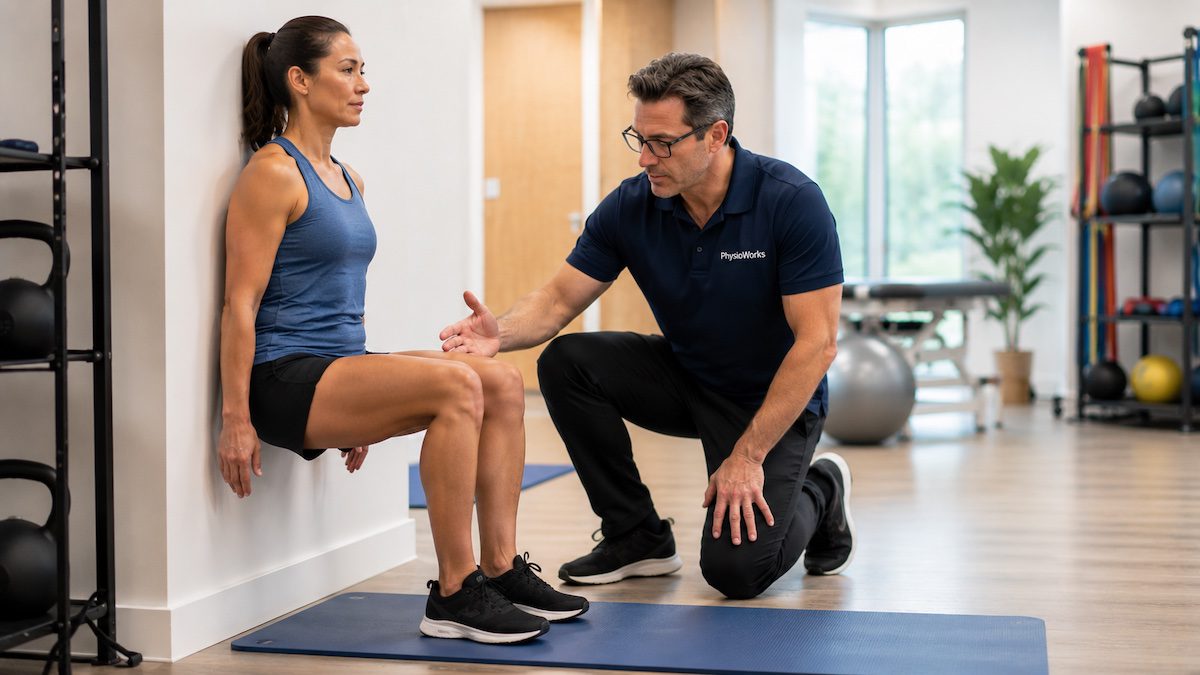
Building tendon load tolerance
Tendinopathy treatment options
Most people improve with structured rehabilitation. Treatment usually focuses on calming pain, restoring tendon capacity, and gradually building tolerance for the activities that matter to you. Your plan may include activity modification, targeted strengthening, movement retraining, and return-to-sport or return-to-work progressions.
Physiotherapy for tendinopathy often starts with load reduction to a tolerable level, then progresses through isometric work, slow heavy strengthening, tendon-specific loading, and functional retraining. This staged approach aims to rebuild tendon capacity without flaring symptoms unnecessarily.
- Graduated loading exercises matched to irritability
- Temporary activity and training modification
- Strength and kinetic-chain retraining
- Addressing movement, footwear, or technique factors
- Return-to-sport or return-to-work planning
You may also find these pages useful: Why Rest Isn’t Always Best for Tendons, Acute Soft Tissue Injury, and Soft Tissue Injury Healing.
Early self-care for tendon pain
- Reduce activities that clearly aggravate pain
- Keep moving within a tolerable range
- Use short-term ice if the tendon feels reactive and it helps
- Avoid testing the tendon repeatedly just to “see if it still hurts”
- Avoid sudden spikes in training, running, jumping, gripping, or lifting
Returning to sport or activity
Return to activity depends more on tendon capacity than on the calendar. A physiotherapist may guide your progression using pain response, strength, jumping or grip tolerance, and recovery between sessions rather than time alone.
A good return-to-activity plan usually progresses from pain-controlled loading to heavier strengthening, then faster or more sport-specific loading once the tendon can tolerate it.
How can you help prevent tendinopathy?
- Build training loads gradually
- Allow enough recovery between harder sessions
- Maintain lower-limb, hip, or shoulder strength as relevant
- Address technique, footwear, or equipment issues
- Act early if stiffness or load pain keeps returning
Frequently Asked Questions About Tendinopathy
What is tendinopathy?
Tendinopathy is tendon pain linked with reduced load tolerance. It commonly causes pain during or after activity, morning stiffness, tenderness over the tendon, and reduced strength or performance. It can affect many tendons, including the Achilles, patellar, rotator cuff, gluteal, elbow, and wrist tendons.
Is tendonitis the same as tendinopathy?
Not exactly. Tendonitis suggests inflammation, while tendinopathy covers the broader picture of tendon pain, load intolerance, and structural change. That is why clinicians now prefer the broader term for many ongoing tendon problems.
Why does tendinopathy hurt in the morning?
Morning stiffness often occurs because the tendon has reduced load tolerance. Symptoms may ease once you move, then return later if the tendon has been overloaded. This warm-up pattern is common in many tendon problems.
Should I stop exercise if I have tendon pain?
Complete rest is not always the right answer. Many tendon problems respond better to modified activity and carefully graded loading. The aim is to reduce aggravating load while keeping enough safe movement to rebuild tendon capacity.
How long does tendinopathy take to improve?
Recovery varies. Reactive tendon pain may settle within weeks when load is adjusted early. More persistent or degenerative tendon pain often takes several months of steady rehabilitation, especially if strength, sport, work, or running demands need to be rebuilt.
Can tendinopathy lead to rupture?
Sometimes. Long-standing degenerative tendon change can increase the risk of partial tearing or rupture, especially when the tendon is exposed to a sudden high load after a period of overload, deconditioning, or persistent symptoms.
Prognosis
Reactive tendon pain may settle within weeks when load is adjusted early. More persistent or degenerative cases often take longer and may need several months of steady rehabilitation. Good outcomes are common when the program matches the tendon stage and your real activity demands.
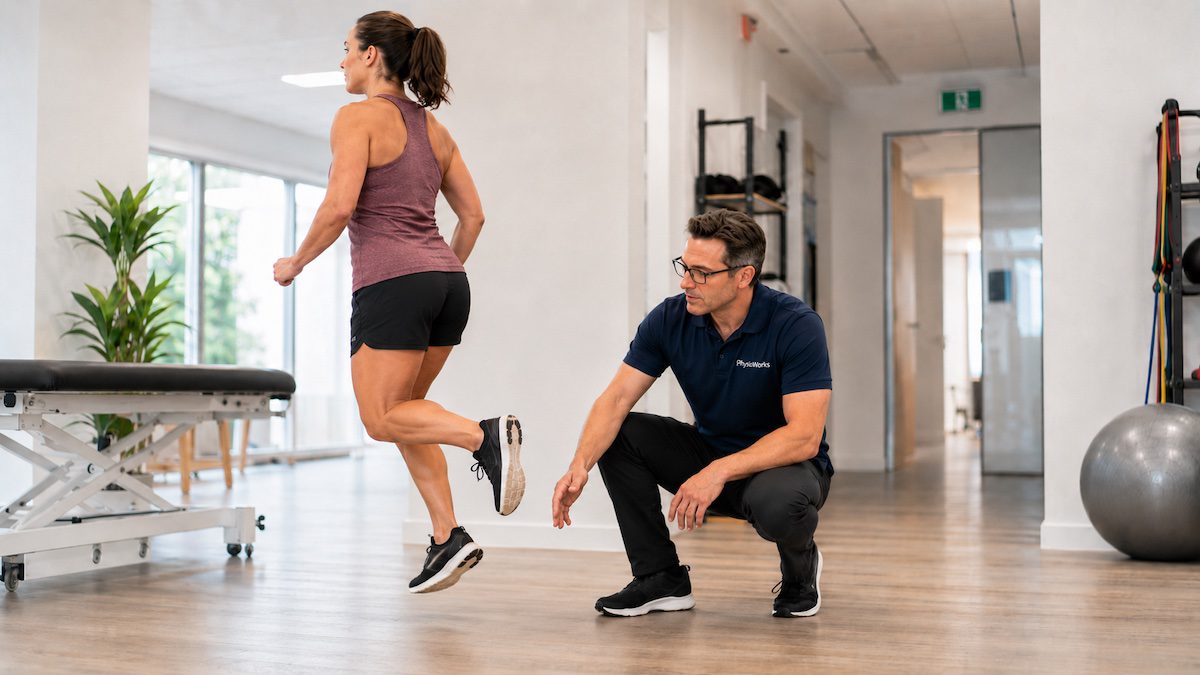
Progressing tendon strength and spring
What to do next
If your tendon pain is limiting training, work, or daily activity, or if it keeps returning, a physiotherapy assessment may help identify the tendon involved, the likely stage, and the loading errors driving the problem.
A clear rehabilitation plan can help you progress with more confidence and less guesswork, while reducing the risk of flare-ups or a more significant tendon injury.
Choose your clinic and appointment pathway
Select a PhysioWorks clinic to continue to live booking, an appointment request or reception assistance.
Muscle & Soft Tissue Products
These muscle and soft tissue products are commonly used by our physiotherapists to relax or loosen muscles, improve strength, comfort, flexibility, and home exercise programs.
-
-
-
- EMS Machines, Pain Management, TENS Machine, TENS Machine & EMS
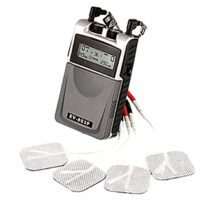
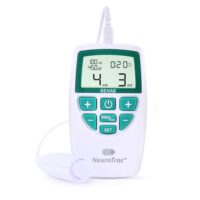
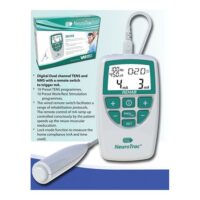
NeuroTrac Rehab (TENS Machine + EMS)
$285.00Add to cartQuick View - Liniments & Gels, Massage Liniments, Pain Management
Fisiocrem
$16.95 – $39.95Select optionsQuick View -
 Exercise Equipment, Resistance Band
AllCare Powerloop Bands
$24.95 – $79.95Select optionsQuick View -
-
-
-
 Exercise Balls, Back, Exercise Equipment, Knee, Shoulder
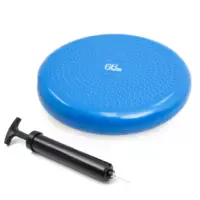
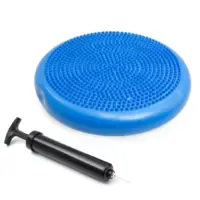
66fit Exercise Balls | Core & Rehab Stability Ball
$32.00 – $57.00Select optionsQuick View -
-
-
-
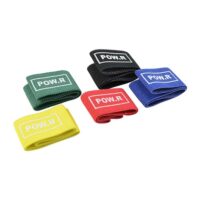 Exercise Equipment, Knee, Resistance Band
POW.R Fabric Mini Loop Bands
$12.00 – $55.00Select optionsQuick View








Related articles
- Common Tendinopathies
- Achilles Tendinopathy
- Patellar Tendinopathy
- Rotator Cuff Tendinopathy
- Gluteal Tendinopathy
- Proximal Hamstring Tendinopathy
- Wrist Tendinopathy
- Soft Tissue Injury Care
References
- Chimenti RL, Cuddeford T, Houck J, et al. Midportion Achilles Tendinopathy Revision 2024: Clinical Practice Guideline. J Orthop Sports Phys Ther. 2024;54(11):CPG1-CPG64. doi:10.2519/jospt.2024.0302.
- Pavlova AV, Scott A, Docking SI, et al. Effect of resistance exercise dose components for tendinopathy management: a systematic review with meta-analysis. Br J Sports Med. 2023;57(20):1327-1334. doi:10.1136/bjsports-2022-106671.
- Maetz R, Steele JR, Hoher J, et al. Systematic Review and Meta-analyses of Randomized Studies of Exercise Loading Protocols for Midportion Achilles Tendinopathy. Orthop J Sports Med. 2023;11(6):23259671231176240. doi:10.1177/23259671231176240.
- Challoumas D, Clifford C, Kirwan P, Millar NL. Management of patellar tendinopathy: a systematic review and network meta-analysis of randomised studies. BMJ Open Sport Exerc Med. 2021;7(4):e001110. doi:10.1136/bmjsem-2021-001110.
- Singh HP, Jenkins PJ, Selfe J, et al. BESS patient care pathway: Tennis elbow. Shoulder Elbow. 2023;15(4):431-446. doi:10.1177/17585732231171260.
