
Rotator Cuff Tendinopathy
Rotator Cuff Tendinopathy
Shoulder tendon pain can affect lifting, reaching, sleep, work, gym training and sport.


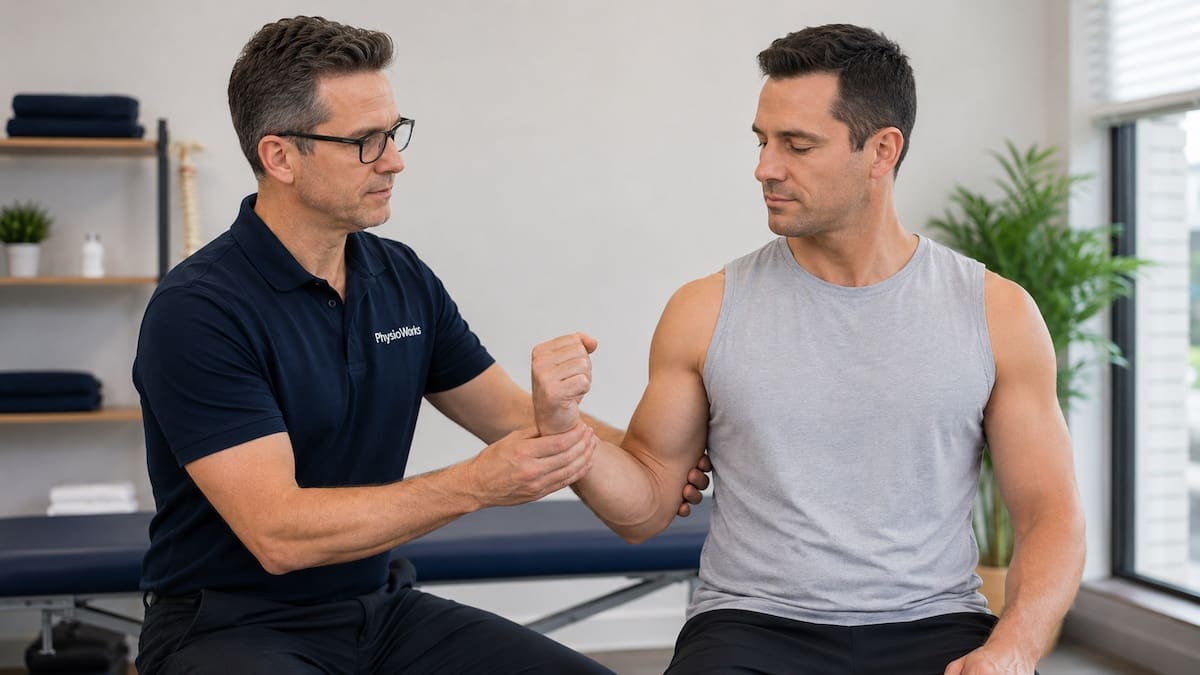
Rotator cuff tendinopathy can cause shoulder pain, weakness and discomfort with lifting or reaching. Many people notice night pain, trouble sleeping on the sore side or pain through part of an overhead movement.
Symptoms often build over time or flare after a change in gym training, work, DIY tasks, swimming, tennis, throwing or other repeated shoulder activity. For a broader overview, start with our shoulder pain guide.
Rotator cuff tendinopathy does not automatically mean that you have torn a tendon. However, symptoms can overlap with rotator cuff tears and shoulder bursitis, so a clear assessment can help identify the most useful next step.
What Is Rotator Cuff Tendinopathy?
The rotator cuff is a group of muscles and tendons that helps control the shoulder joint. These muscles work when you lift, reach, push, pull and rotate your arm.
Rotator cuff tendinopathy describes tendon-related shoulder pain and reduced tolerance to load. The tendon may become sensitive when activity increases faster than the shoulder can adapt.
Tendinopathy is different from a complete tendon tear. Your symptoms, strength, movement, activity history and response to loading all help guide assessment.
What Are the Symptoms of Rotator Cuff Tendinopathy?
Symptoms vary, although common patterns include:
- pain when lifting the arm to shoulder height or above
- night pain or pain when lying on the affected shoulder
- weakness or fatigue when lifting
- pain through part of an overhead movement
- pain reaching behind your back or putting on a jacket
- pain during swimming, tennis, throwing or gym exercises
- shoulder pain after repeated work or household tasks
Some people describe a painful arc, where the shoulder hurts through one part of the movement and then becomes more comfortable as the arm moves higher or returns to the side.
Neck pain, pins and needles, numbness or symptoms travelling well down the arm may suggest that your neck or nerves also need assessment.
Why Does Rotator Cuff Tendinopathy Happen?
Rotator cuff symptoms often develop when shoulder load rises faster than the tendon and surrounding muscles can adapt.
Common triggers can include:
- a sudden increase in overhead work, painting, lifting or shelving
- increased gym volume or heavier shoulder exercises
- a change in swimming, tennis, throwing or other overhead sport
- returning to demanding shoulder activity after a quieter period
- repeated shoulder loading without enough recovery
- age-related tendon changes that reduce tolerance to some activities
There is rarely one single cause. Strength, movement, sleep, work demands, sport, general health and recent changes in activity can all influence symptoms.
When Should You Get Shoulder Pain Checked?
Arrange an assessment if shoulder pain is not settling, keeps returning or is affecting sleep, work, exercise, sport or normal daily tasks.
How Is Rotator Cuff Tendinopathy Diagnosed?
A physiotherapist will usually start with your history. They may ask when your pain started, what movements provoke it, whether you have night pain and how your shoulder affects work, exercise and daily life.
Your assessment may include shoulder movement, strength testing, resisted movements, overhead tasks, shoulder blade control and functional activities such as lifting or reaching. Your neck and nerves may also be checked when symptoms suggest another possible pain source.
No single shoulder test confirms every case. Instead, your physiotherapist combines the history and examination findings to identify the most likely source of symptoms and guide management.
Do You Need a Scan for Rotator Cuff Tendinopathy?
Not always. Many people can start appropriate management after a clinical assessment without early imaging.
Ultrasound or MRI may be useful when symptoms persist, significant weakness raises concern about a tendon tear or the presentation is unusual. X-rays can help identify arthritis, calcification or other bony changes when these are relevant.
Read more about when a physiotherapist may recommend an X-ray or scan.
If calcium deposits in a rotator cuff tendon are suspected, see our guide to rotator cuff calcific tendinopathy.
How Is Rotator Cuff Tendinopathy Treated?
Management usually focuses on reducing unnecessary irritation while keeping the shoulder active and progressively rebuilding its capacity. Your program should match your symptoms, strength, goals and usual activities.
-
Adjust the activities that are flaring your shoulder
You usually do not need to stop everything. Instead, temporarily reduce the range, load, volume or frequency of movements that repeatedly increase your pain.
-
Keep comfortable shoulder movement going
Gentle movement helps maintain confidence and mobility. If stiffness is a major problem, your physiotherapist may initially place more emphasis on restoring comfortable range.
-
Rebuild rotator cuff and shoulder blade strength
Progressive exercise is commonly used to improve shoulder capacity. The starting load should be manageable, then increase as pain, strength and function improve. See our rotator cuff exercises and scapular stabilisation exercises.
-
Progress back towards work, gym or sport
Your rehabilitation should gradually reflect the activities that matter to you. This may include lifting, reaching, carrying, swimming, throwing or gym exercises. Athletes may also need a planned sports physiotherapy return-to-training progression.
-
Use other treatment only when it adds value
Hands-on treatment may provide short-term symptom relief for some people, but it should support rather than replace active rehabilitation. Medication or injection options may occasionally be discussed with your GP when pain remains difficult to manage. Read about cortisone injections for rotator cuff pain and bursitis.

For another plain-language overview of rotator cuff problems, see the MedlinePlus rotator cuff guide.
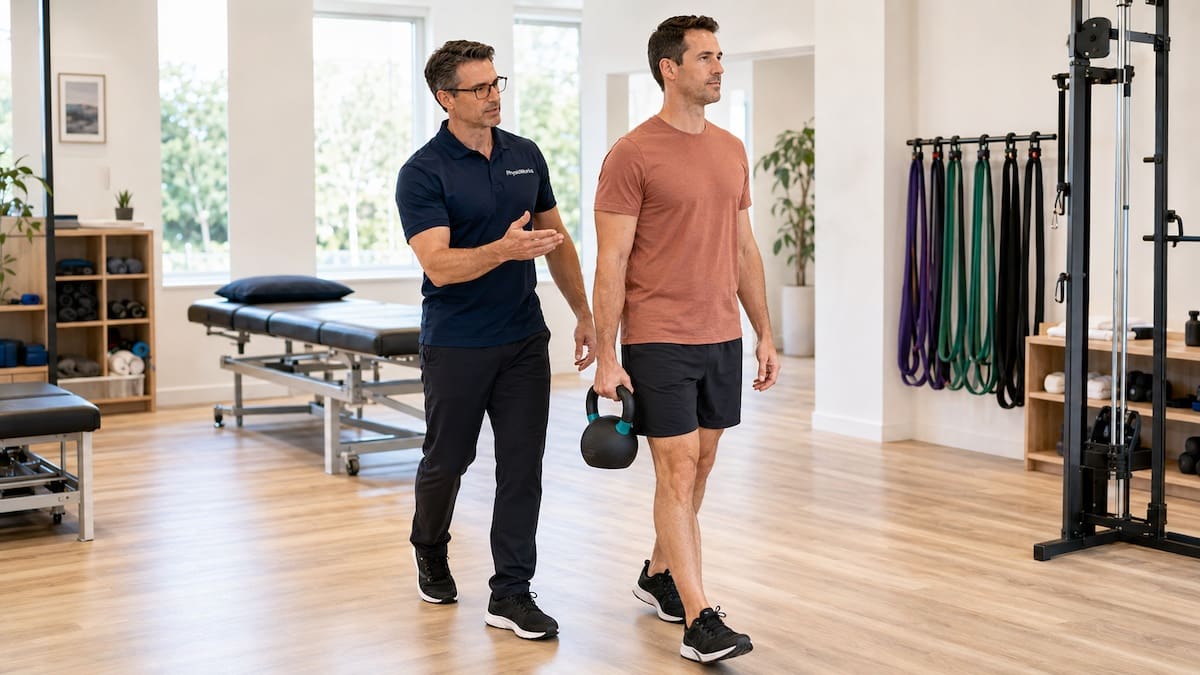
Can You Keep Exercising With Rotator Cuff Tendinopathy?
Often, yes. The aim is to find a level of movement your shoulder can tolerate while avoiding repeated large flare-ups.
Mild discomfort that settles
A small amount of discomfort during strengthening may be acceptable when it settles soon afterwards and your shoulder is not clearly worse the next day.
Pain clearly worsens
Sharp pain, catching, sudden weakness or increased night pain suggests that the exercise range, load or volume needs to be reduced and reviewed.
Strength and function improve
When symptoms remain settled and tasks feel easier, gradually increase resistance, range or activity and retest the movements that matter to you.
There is no single pain rule that suits everyone. Your response during exercise, later that day and the following day helps guide the next progression.
Rotator Cuff Tendinopathy FAQs
What is rotator cuff tendinopathy?
Rotator cuff tendinopathy describes tendon-related shoulder pain and reduced tolerance to load. Symptoms commonly occur with lifting, reaching, sleeping, gym work or repeated overhead activity.
How long does rotator cuff tendinopathy take to improve?
Recovery time varies. Some people improve over several weeks, while longer-standing symptoms may take several months. Your starting strength, symptom duration, sleep, health, work demands and ability to progress exercise can all affect the timeframe.
Should I stop all exercise if my shoulder hurts?
Usually not. Complete rest can reduce shoulder strength and capacity. Instead, reduce the activities that repeatedly flare your pain and keep movements that remain comfortable or manageable.
Is it safe to exercise with some shoulder pain?
Mild discomfort can be acceptable for some people during rehabilitation if it settles and does not cause a clear later or next-day flare-up. Sharp pain, sudden weakness or worsening night pain means the exercise should be reduced or reviewed.
Do I need a scan for rotator cuff tendinopathy?
Not always. A physiotherapist can often assess rotator cuff tendinopathy from your history, movement and strength testing. Imaging may be useful when symptoms persist, a significant tear is suspected or the presentation is unusual.
Can rotator cuff tendinopathy turn into a tear?
Tendinopathy does not automatically progress to a tendon tear. Tendon changes and even some tears can also appear on scans without causing major symptoms. Sudden weakness after a pop, fall or heavy lift should be assessed because an acute tear may require different management.
What to Do Next
If your shoulder pain is not settling, keeps waking you at night or limits work, exercise, sport or everyday tasks, consider a physiotherapy assessment.
Your physiotherapist can assess the likely source of pain, check movement and strength, help you modify aggravating activity and build a progressive rehabilitation plan towards the activities that matter to you.
Choose your clinic and appointment pathway
Select a PhysioWorks clinic to continue to live booking, an appointment request or reception assistance.
Shoulder Products
These shoulder products are commonly used by our physiotherapists to improve strength, posture, movement, plus assist home exercise programs.
-
 Exercise Balls, Back, Exercise Equipment, Knee, Shoulder
66fit Exercise Balls | Core & Rehab Stability Ball
$32.00 – $57.00Select optionsQuick View -
-
-
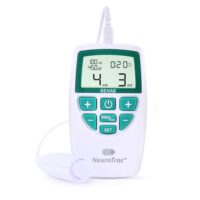
- EMS Machines, Pain Management, TENS Machine, TENS Machine & EMS
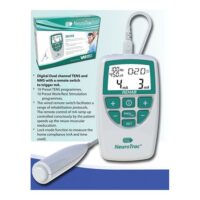
NeuroTrac Rehab (TENS Machine + EMS)
$285.00Add to cartQuick View -
-
-
 Ice & Heat, Pain Management, Uncategorized
PhysiPak Universal Heat pack
$79.00Select optionsQuick View -

-
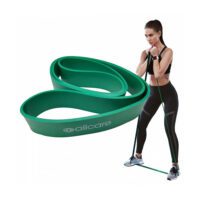 Exercise Equipment, Resistance Band
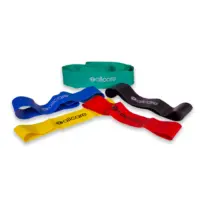
AllCare Powerloop Bands
$24.95 – $79.95Select optionsQuick View -
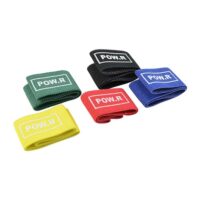 Exercise Equipment, Knee, Resistance Band
POW.R Fabric Mini Loop Bands
$12.00 – $55.00Select optionsQuick View -

- Liniments & Gels, Massage Liniments, Pain Management
Fisiocrem
$16.95 – $39.95Select optionsQuick View -

-



References
- Lowry V, Lavigne P, Zidarov D, Matifat E, Cormier AA, Desmeules F. A systematic review of clinical practice guidelines on the diagnosis and management of various shoulder disorders. Arch Phys Med Rehabil. 2024;105(2):411-426. doi:10.1016/j.apmr.2023.09.022.
- Desmeules F, Roy JS, Lafrance S, et al. Rotator cuff tendinopathy diagnosis, nonsurgical medical care and rehabilitation: a clinical practice guideline. J Orthop Sports Phys Ther. 2025;55(4):235-274. doi:10.2519/jospt.2025.13182.
- Lafrance S, Charron M, Roy JS, et al. Diagnosing, managing, and supporting return to work of adults with rotator cuff disorders: a clinical practice guideline. J Orthop Sports Phys Ther. 2022;52(10):647-664. doi:10.2519/jospt.2022.11306.
- Lafrance S, et al. The efficacy of exercise therapy for rotator cuff-related shoulder pain: a systematic review and meta-analysis. J Orthop Sports Phys Ther. 2024.
- Wu D, et al. Specific modes of exercise to improve rotator cuff-related shoulder pain: systematic review and meta-analysis. Front Public Health. 2025.
