Foot, Ankle & Heel Pain FAQs
Find the most useful PhysioWorks information for foot, ankle, heel, Achilles or shin pain based on where your symptoms occur and how they started.


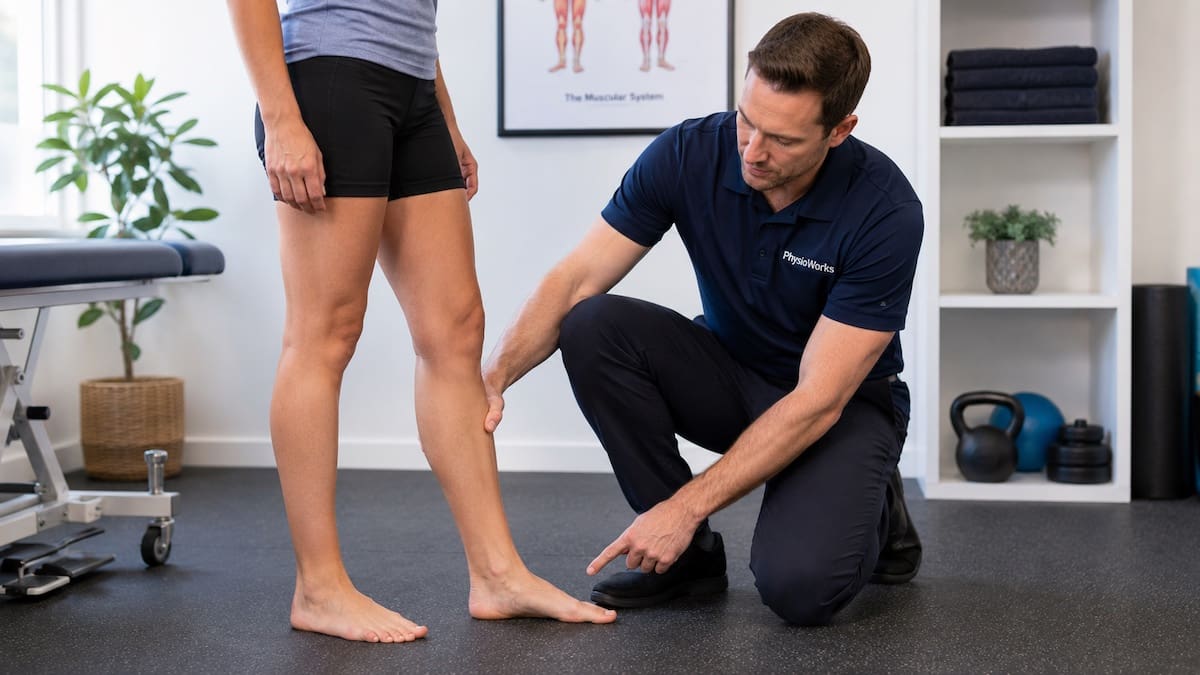
Where should you start?
Begin with the pathway that best matches your main symptom location. These links provide general guidance and cannot confirm a diagnosis.
Pain under the heel or arch
Start with plantar fasciitis information if pain is strongest under the heel, through the arch or during your first steps after rest.
Pain behind the heel
Read about Achilles tendinopathy if pain sits through the tendon at the back of the heel and worsens with running, hills or jumping.
Outer ankle pain after a twist
Start with sprained ankle information if pain, swelling or bruising followed a rolling or twisting injury.
General ankle pain or swelling
Use the ankle pain guide if symptoms are broad, developed gradually or do not clearly match a recent ligament injury.
Pain through the foot or forefoot
Visit the foot pain hub for symptoms through the toes, forefoot, midfoot or arch, particularly when standing or walking aggravates pain.
Shin pain during exercise
Read about shin splints if pain develops along the shin during or after running, jumping or a recent increase in training.
Heel pain in a child
Start with Sever’s disease information when an active child or teenager develops heel pain during running, jumping or sport.
Repeated ankle rolling or poor balance
Explore balance improvement when an ankle repeatedly gives way or confidence remains reduced on stairs or uneven surfaces.
What causes foot, ankle and heel pain?
Foot, ankle and heel pain may develop after a sudden injury or build gradually as tissues become overloaded. Common contributing factors include an ankle twist, a rapid increase in activity, reduced strength, limited movement, repeated impact, footwear changes, growth-related stress and poor balance.
Sometimes one obvious incident causes the symptoms. In other cases, walking, running, hills, jumping or sport gradually places more demand on a structure than it can currently tolerate.
Common examples include a sprained ankle, plantar fasciitis, Achilles tendinopathy and shin splints.
Healthdirect also provides general information about foot care and common foot problems.
Which foot pain guides are most useful?
Start with the foot section when pain sits in the arch, forefoot, midfoot or toes, or when standing and walking provoke symptoms more than ankle twisting does.
Common causes of foot pain
Review common sources of foot pain and the clues that may help separate them.
Foot pain treatment
Learn how assessment, activity changes, exercise and other treatment options may assist.
Plantar fasciitis
Explore common features of pain beneath the heel and through the plantar fascia.
Barefoot running
Consider potential benefits, limitations and loading issues before changing running footwear.
Which ankle injury guides should you read?
The ankle section is most useful when you have swelling, bruising, a recent twist, pain with weight-bearing or repeated episodes of the ankle giving way.
Common causes of ankle pain
Compare common injuries and other conditions that may cause ankle pain or swelling.
Ankle ligament injuries
Learn about the ligaments commonly injured during an ankle roll or twisting incident.
Sprained ankle recovery
Review assessment, rehabilitation and return-to-activity considerations after an ankle sprain.
Ankle strapping
See how ankle taping may provide short-term support during selected activities or recovery stages.
What details help narrow the cause?
Location matters
Pain under the heel, behind the heel, through the forefoot or around the ankle may point towards different structures.
How it started matters
A sudden twist, fall or impact requires a different assessment pathway from pain that gradually builds with activity.
Function matters
Difficulty weight-bearing, marked swelling, repeated instability or declining walking ability deserves closer assessment.
Where should you start for heel, Achilles or shin pain?
Heel, Achilles and shin symptoms often relate to repeated loading during walking, running, hills, sprinting or jumping. The exact location and behaviour of the pain can help guide your next reading.
Causes of heel pain
Review common causes of pain beneath, behind or around the heel.
Heel spurs and plantar fasciitis
Learn why a heel spur on an X-ray does not always identify the main source of pain.
Treating Achilles tendinopathy
Explore common management principles for pain and reduced capacity through the Achilles tendon.
Shin splints
Review activity-related shin pain, common contributing factors and rehabilitation options.
What about children, balance and recurrent ankle rolling?
Children and teenagers may require a different pathway because growth-related heel and leg pain are common. Balance retraining can also be important when an old ankle injury continues to affect confidence or stability.
Sever’s disease
Read about growth-related heel pain commonly seen in active children and teenagers.
Kids’ leg pain
Explore common activity-related leg complaints that can affect children during sport and growth.
Growing pains
Learn about typical growing-pain patterns and symptoms that may need further assessment.
Balance assessment
Understand how balance, coordination and falls risk may be assessed.
When should you seek prompt medical assessment?
Arrange a physiotherapy or medical assessment when symptoms persist, repeatedly return, affect normal walking or prevent work, exercise or sport.
Common foot, ankle and heel pain FAQs
Is foot, ankle or heel pain always caused by an injury?
No. Symptoms can develop through overload, stiffness, tendon irritation, unsuitable footwear, training errors, balance problems, growth-related issues or an old injury that never fully recovered. Sometimes repeated stress matters more than one traumatic event.
What causes heel pain during the first steps of the morning?
First-step heel pain commonly occurs with plantar fascia irritation. Achilles tendon problems and other heel structures can also contribute. Symptoms may feel stronger after rest because tissues have temporarily stiffened before loading resumes.
How do you know if an ankle sprain needs treatment?
An ankle sprain may need assessment when swelling, bruising or pain limits weight-bearing, or when confidence and stability do not return. Guided rehabilitation is particularly useful when symptoms persist or the ankle repeatedly gives way.
Can children get heel pain?
Yes. Active children can develop growth-related heel pain, including Sever’s disease. Symptoms commonly appear during running, jumping or sport and may improve with appropriate load modification and rehabilitation.
Can physiotherapy help foot, ankle and heel pain?
Physiotherapy may help identify likely contributing structures, improve movement and strength, guide activity progression and support a return to walking, work or sport. Treatment may also include footwear advice, taping, balance retraining and progressive exercise.
What should you do if the pain keeps returning?
Recurring symptoms may mean that strength, load tolerance, balance or movement control has not fully recovered. Repeated ankle sprains, persistent heel pain or ongoing Achilles symptoms should be assessed more closely.
What should you do next?
Helpful supports and self-management options
Choose your clinic and appointment pathway
Select a PhysioWorks clinic to continue to live booking, an appointment request or reception assistance.
Ankle Products
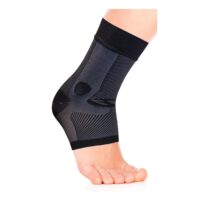
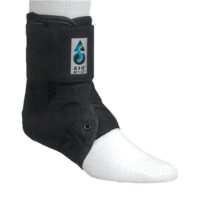
These ankle products are commonly used by our physiotherapists to improve ankle pain, strength, balance, proprioception, endurance and flexibility, plus assist home exercise programs.
-
-
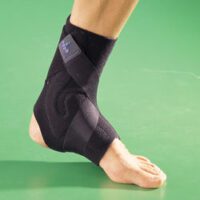 Ankle, Braces & Supports, Foot
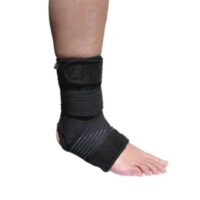
Ankle Support with Plastic Stay – OPPO 1109
$52.00Select optionsQuick View -

-
- EMS Machines, Pain Management, TENS Machine, TENS Machine & EMS
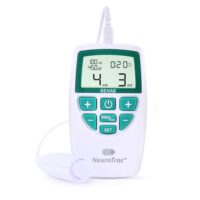
NeuroTrac Rehab (TENS Machine + EMS)
$285.00Add to cartQuick View -
-
- Liniments & Gels, Massage Liniments, Pain Management
Fisiocrem
$16.95 – $39.95Select optionsQuick View -
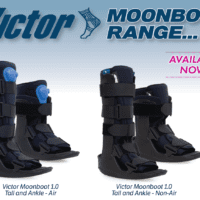
 Ankle, Braces & Supports, Foot, Walking
Victor Moonboot 1.0 Air or No Air
$77.00 – $79.00Select optionsQuick View -
-


-
-

-
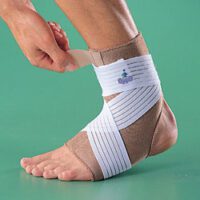 Ankle, Braces & Supports, Clearance Sale
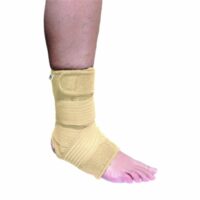
Ankle Support with Strap – OPPO 1003
$42.00Select optionsQuick View -
-






References
- Martin RL, Davenport TE, Paulseth S, et al. Ankle stability and movement coordination impairments: lateral ankle ligament sprains revision 2021. J Orthop Sports Phys Ther. 2021;51(4):CPG1-CPG80. doi:10.2519/jospt.2021.0302
- Koc TA Jr, Bise CG, Neville C, Carreira D, Martin RL. Heel pain—plantar fasciitis: revision 2023. J Orthop Sports Phys Ther. 2023;53(12):CPG1-CPG39. doi:10.2519/jospt.2023.0303
- Pillay J, Riva JJ, Squires JE, et al. Falls prevention interventions for community-dwelling older adults: systematic review and meta-analysis of benefits, harms, and patient values and preferences. Syst Rev. 2024;13(1):289. doi:10.1186/s13643-024-02681-3