
Muscle Strain


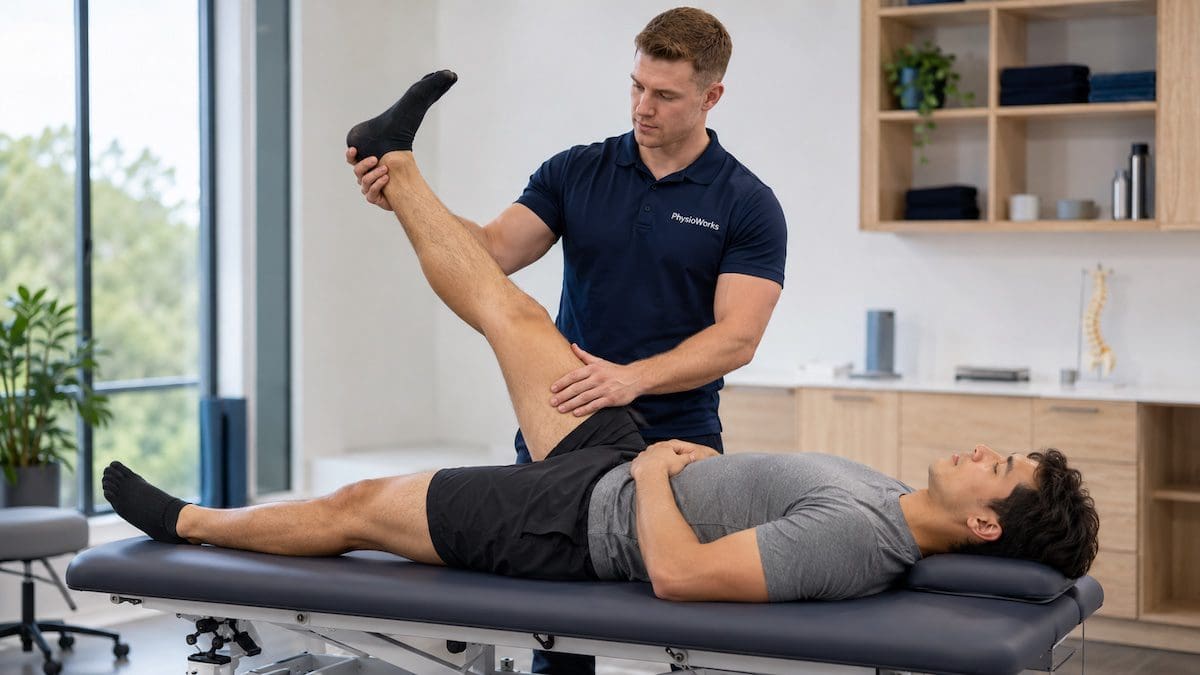
Physiotherapist assessing a hamstring muscle strain using a straight leg raise test.
Muscle strain physiotherapy may help reduce pain, restore strength, and guide a safer return to sport or work. A muscle strain, sometimes called a pulled muscle or muscle tear, usually happens when a muscle faces more load, speed, or stretch than it can manage. Common examples include hamstring strain, thigh strain, calf strain or tear, groin strain, and pulled back muscle.
However, not all muscle pain is a true tear. Tendon overload, joint irritation, nerve sensitivity, and DOMS can feel similar early on. These injuries also sit within the broader soft tissue injuries group. For that reason, an assessment can help clarify what tissue is most likely involved, how irritable it is, and what to do next.
Quick summary:
- A muscle strain happens when muscle fibres overload or partially tear.
- Common signs include sudden pain, tightness, weakness, and pain with stretching or loading.
- Mild strains may settle in a few weeks, while larger tears often take longer.
- Early management usually includes relative rest, compression, and staged reloading.
- Physiotherapy may help guide strength rebuilding and return to sport or work.
What is a muscle strain?
A muscle strain occurs when muscle fibres overload, overstretch, or develop small tears. This can happen in one moment, such as sprinting, kicking, slipping, or lifting, or it can build over time when fatigue reduces control and tissue capacity.
Fatigue-related muscle strains
Not every strain happens during sport. Sustained positions, repeated lifting, awkward postures, and long days at work can overload muscles as well. For instance, prolonged sitting, driving, or screen time may contribute to back, neck, and shoulder fatigue. One modern example is text neck, where neck and shoulder muscles work harder to hold the head forward.
Overuse soreness vs a strain
After a hard or unfamiliar workout, you may feel delayed soreness instead of a tear. Delayed onset muscle soreness (DOMS) often peaks 24 to 72 hours later and feels stiff, achy, and widespread. In contrast, a strain more often feels sharp or sudden and may reduce strength or movement straight away. Repeated workplace or training loads can also lead to overuse problems such as RSI.
What does a muscle strain feel like?
A muscle strain usually feels like a sudden pull, sharp pain, or tight catching sensation during activity. Symptoms often increase when you stretch, contract, or load the injured muscle.
Common symptoms of a muscle strain include:
- Sudden sharp pain or a clear “pull” during activity
- Tightness, cramping, or protective spasm
- Pain when stretching the muscle
- Pain when contracting or loading the muscle
- Weakness or reduced power
- Bruising or swelling, sometimes appearing later
- Difficulty walking, running, lifting, or changing direction
Muscle strain grades
Many clinicians describe strains using a simple three-grade system:
- Grade 1: mild overload or small fibre injury with mild pain and minimal strength loss
- Grade 2: partial tear with clearer weakness, pain, and movement restriction
- Grade 3: severe tear or rupture with major loss of function
Even so, symptoms do not always perfectly match the exact tissue picture. A physiotherapist can assess irritability, strength, flexibility, and function to guide the safest progression.
What causes a muscle strain?
A muscle strain often happens when demand exceeds the muscle’s current capacity. This can occur during a sudden high-force movement or after repeated loading when fatigue reduces control.
Common contributors include:
- Sprinting, jumping, kicking, or sudden acceleration
- Lifting or twisting under load
- Poor recovery between sessions
- Fatigue and reduced coordination
- Rapid training load increases
- Reduced strength, flexibility, or control
- Returning to sport too soon after a previous strain
Should You Rest or Keep Moving With a Muscle Strain?
Complete rest usually slows confidence, fitness, and tissue recovery. On the other hand, pushing through sharp pain can aggravate the injury. A more useful middle ground is relative rest from the provoking activity while keeping comfortable movement going.
In many cases, short walks, gentle range exercises, and light muscle activation can help you stay moving without overloading the strain. Use your symptoms over the next 24 hours to guide whether the load was suitable.
| Symptom response | Best next step |
|---|---|
| Mild tightness that eases as you move | Continue gentle activity and monitor symptoms. |
| Sharp pain during loading | Stop that activity and reduce load. |
| Pain or stiffness worse the next day | Step back the intensity, speed, or volume. |
| Improving comfort, strength, and control | Progress gradually with staged strengthening. |
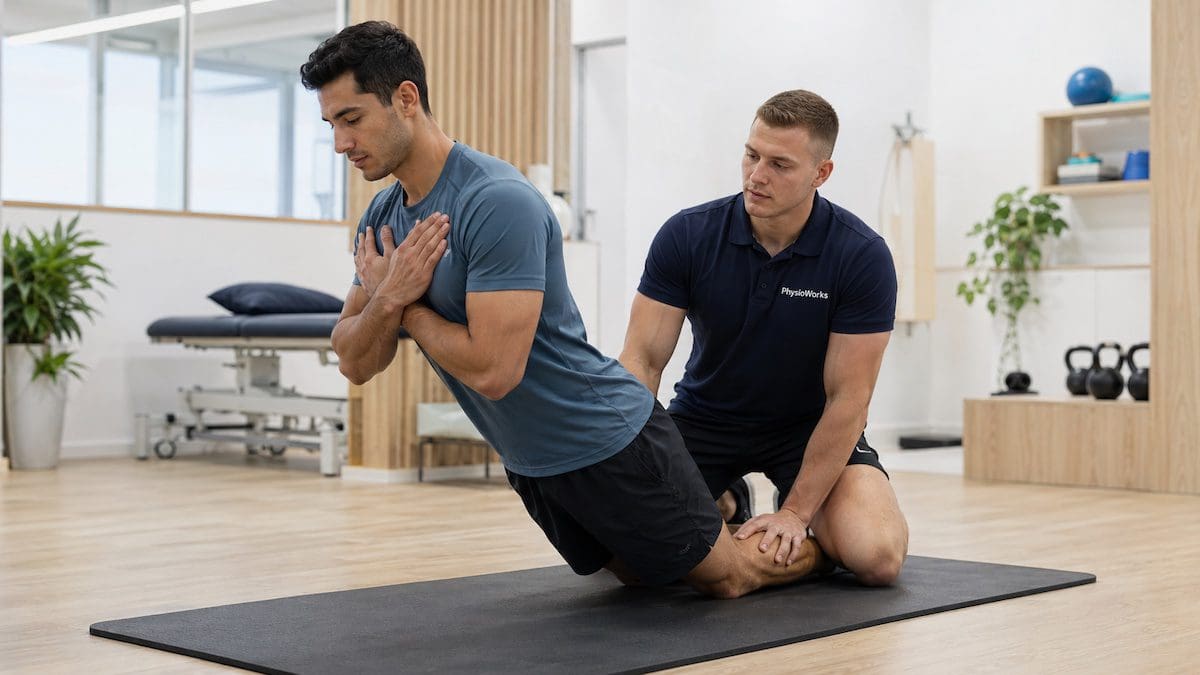
Nordic hamstring strengthening after muscle strain.
How do you treat a muscle strain?
Muscle strain treatment depends on the muscle involved, the severity of the injury, and the activities you need to return to. Early management should reduce irritation while keeping safe movement going where possible.
Early on, many people use these practical steps:
- Reduce or stop the painful activity for a short period
- Use compression if swelling is present or the muscle feels unsupported
- Keep gentle movement going if it stays comfortable
- Elevate the area if swelling is obvious
- Use supports or crutches if walking is painful
If you are unsure how to manage the first few days, see acute soft tissue injury for early management principles. After that, most rehabilitation plans move into staged strengthening, lengthening, control work, and gradual return to speed or work demands.
How physiotherapy may help
A physiotherapist may help identify the injured structure, monitor healing signs, guide loading, and build a staged plan that matches your goals. Treatment may include education, activity modification, exercise progression, movement retraining, and return-to-sport or return-to-work planning.
Return to sport or work after a muscle strain
Return to sport can be straightforward or more complex depending on the muscle and the demands of your activity. Hamstring, groin, thigh, and calf strains can recur if you return before strength, control, and speed are restored. A physiotherapist may use tests such as single-leg strength, hopping, running progressions, and sport-specific drills to guide timing.
If your job involves lifting, carrying, climbing, or sustained postures, your plan should also rebuild tolerance for those tasks. That often means progressive strengthening, graded exposure to work movements, and pacing so that symptoms settle rather than flare.
Return-to-activity checklist
Before increasing speed, load, or sport demands, aim for steady progress across these signs:
- walking feels comfortable and controlled
- strength is improving without next-day flare-up
- stretching creates mild tension rather than sharp pain
- running, lifting, or sport drills can progress gradually
- confidence is returning during the movement that first caused pain
When should you seek help for a muscle strain?
Book an assessment sooner if your pain is severe, your walking pattern changes, bruising spreads quickly, or you need a reliable return-to-work or return-to-sport plan. Early advice can reduce guesswork and help you avoid jumping back into high-load activity too quickly.
Seek help sooner if:
- You cannot walk normally
- Bruising spreads quickly
- Swelling is significant
- Pain remains high after a few days
- You felt a sudden pop and lost function
- You need a reliable return-to-work or return-to-sport plan
Related articles
- Muscle Pain – Causes, symptoms, and practical treatment options.
- DOMS (Delayed Onset Muscle Soreness) – How to tell soreness from injury.
- Hamstring Strain – Assessment and rehab steps.
- Calf Strain or Tear – Symptoms, recovery, and return-to-run tips.
- Groin Strain – Common triggers and strengthening progressions.
- RSI (Repetitive Strain Injury) – Overuse signs and prevention strategies.
- Acute Soft Tissue Injury – Early management and safe progressions.
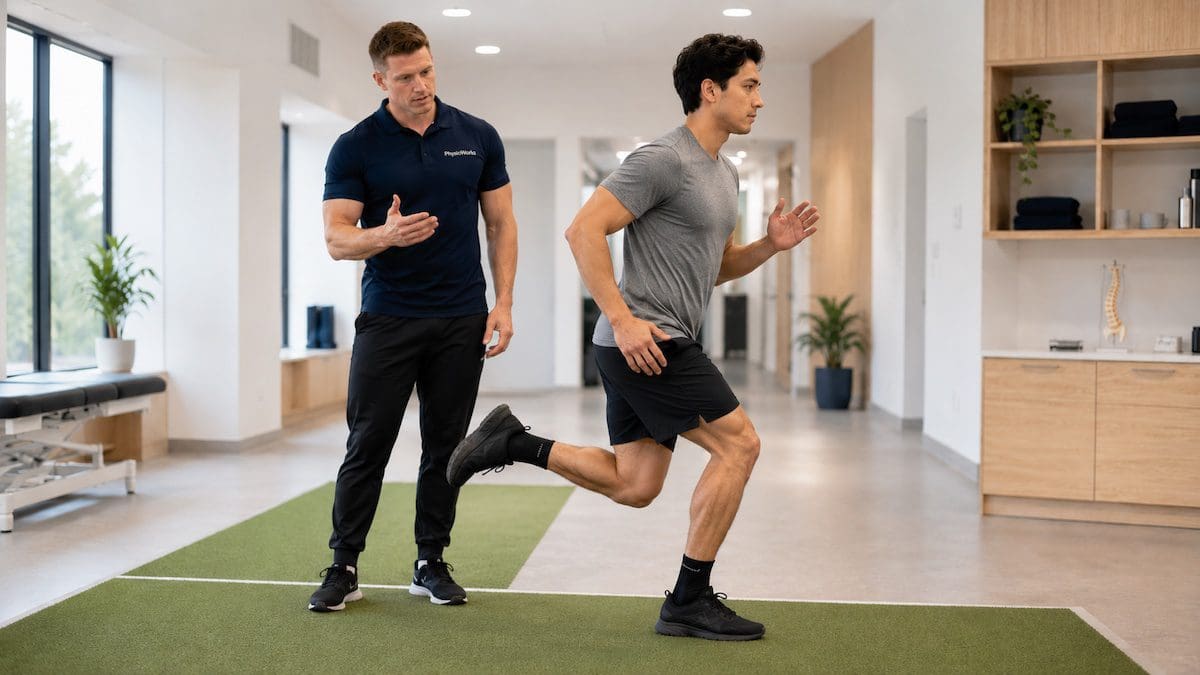
Guided return-to-running after muscle strain.
What to do next
If your muscle strain is mild and improving, keep activity comfortable and rebuild strength gradually over the next 2 to 6 weeks. If pain is sharp, bruising or swelling increases, walking feels difficult, or your sport or work demands are high, book an assessment earlier.
A physiotherapist can assess the injury, guide safe loading, and help you plan a staged return to running, training, lifting, or work tasks.
Book your appointment – 24/7
Choose your preferred PhysioWorks clinic and book online.
Muscle & Soft Tissue Products
These muscle and soft tissue products are commonly used by our physiotherapists to relax or loosen muscles, improve strength, comfort, flexibility, and home exercise programs.
-
-
- Exercise Equipment, Resistance Band
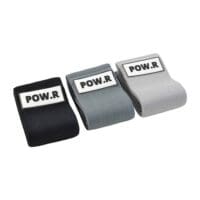
POW.R Wide Fabric Loop Resistance Band
$14.95 – $49.95Select optionsQuick View - EMS Machines, Pain Management, TENS Machine, TENS Machine & EMS
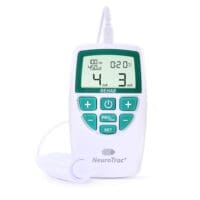
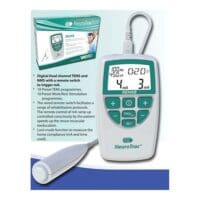
NeuroTrac Rehab (TENS Machine + EMS)
$299.95Add to cartQuick View -
 Exercise Equipment, Resistance Band
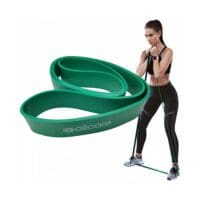
AllCare Powerloop Bands
$22.00 – $65.00Select optionsQuick View -
-
-
-
-
 Exercise Equipment, Knee, Resistance Band
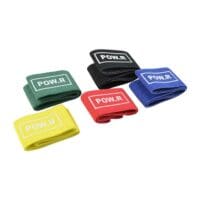
POW.R Fabric Mini Loop Bands
$12.00 – $55.00Select optionsQuick View -

-
-
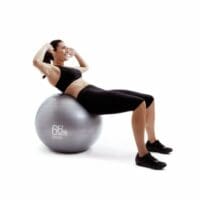 Exercise Balls, Back, Exercise Equipment, Knee, Shoulder
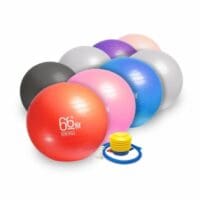
66fit Exercise Balls | Core & Rehab Stability Ball
$32.00 – $57.00Select optionsQuick View - Liniments & Gels, Massage Liniments, Pain Management
Fisiocrem
$13.98 – $35.50Select optionsQuick View






Follow PhysioWorks
Get free physiotherapy tips, exercise videos, recovery advice, and blog updates.
 |  |  | B |  |  |
References
- Martin RL, Cibulka MT, Bolgla LA, et al. Hamstring Strain Injury in Athletes. J Orthop Sports Phys Ther. 2022;52(3):CPG1-CPG44.
- Vermeulen R, Whiteley R, van der Made AD, et al. Early versus delayed lengthening exercises for acute hamstring injury in male athletes: a randomised controlled clinical trial. Br J Sports Med. 2022;56(14):792-800.
- Beattie CE, Moore IS, Domínguez-Castells R, et al. Are return-to-play times longer in lower-limb muscle injuries involving the intramuscular tendon? A systematic review. J Sci Med Sport. 2023;26(12):695-702.
- Wulff MW, Holmich P, Magnusson SP. Return to sport, reinjury rate, and tissue changes after muscle strain injury: a review of resistance training interventions. Transl Sports Med. 2024;2024:2336376.
- Paton BM, Read P, van Dyk N, et al. London International Consensus and Delphi study on hamstring injuries part 3: rehabilitation, running and return to sport. Br J Sports Med. 2023;57(5):278-291.
- Pollock N, James SLJ, Lee JC, Chakraverty R. British athletics muscle injury classification: a new grading system. Br J Sports Med. 2014;48(18):1347-1351.
Muscle Strain FAQs
How long does a muscle strain take to heal?
Recovery time depends on the grade, the muscle involved, and how well you manage load. Mild strains may settle in 2 to 3 weeks, moderate tears often take 4 to 8 weeks, and more severe injuries can take several months with structured rehabilitation.
Should I use ice or heat for a pulled muscle?
During the first 24 to 48 hours, many people use cold packs and compression to help reduce pain and swelling. Once early swelling settles, gentle heat may help stiffness, provided it does not increase pain or throbbing.
Can I keep exercising with a muscle strain?
You can often keep moving, but avoid exercise that causes sharp pain or leads to a flare-up that lasts into the next day. Start with comfortable range and light strength work, then rebuild speed, load, and impact in stages.
When should I see a physiotherapist for muscle strain?
Book an assessment if you cannot walk normally, bruising spreads quickly, swelling is significant, pain stays high after a few days, or you need a clear return-to-work or return-to-sport plan.
Do all muscle strains need a scan?
No. Many muscle strains can be assessed clinically without imaging. However, a scan may be useful if the tear seems severe, recovery is not following the expected pattern, or your clinician needs more detail for prognosis and planning.
How do I know if my muscle strain is improving?
A muscle strain is usually improving when pain settles, walking or daily movement feels easier, strength returns, and activity causes less next-day stiffness. If symptoms keep flaring after small increases in load, your recovery plan may need adjusting.