
Squash Injuries


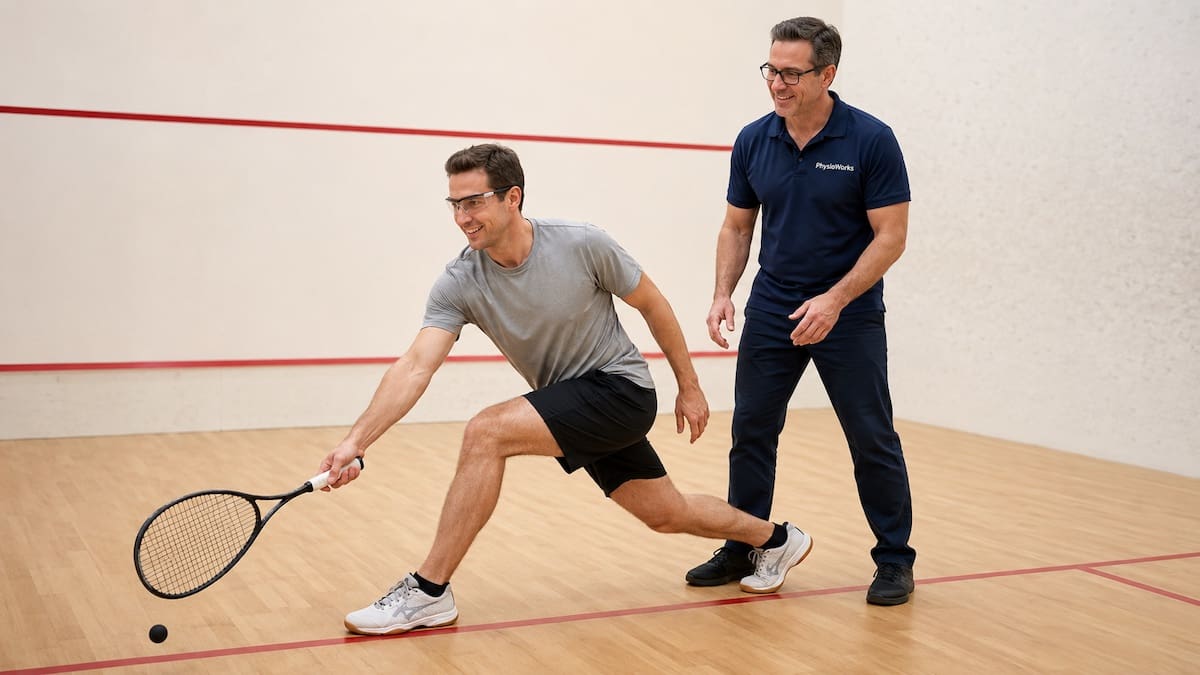
Squash lunge control and injury assessment.
What Are Squash Injuries?
Squash injuries include sudden ankle sprains, calf strains and impact injuries, as well as gradual knee, Achilles, elbow, shoulder and back pain. Squash places high loads on the body through deep lunges, rapid direction changes, rotation and hard stops in a confined court.
Most squash injuries affect the lower limb. However, racquet loading can also irritate the elbow, wrist and shoulder. Ball or racquet contact may cause an eye, facial or head injury, particularly when protective eyewear is not worn.
Players can reduce their risk by preparing for the physical demands of squash, increasing playing load gradually and addressing pain or movement limitations before they worsen.
Who Gets Injured Playing Squash?
Squash injuries affect recreational, competitive and returning players. Risk can increase with fatigue, a sudden rise in match volume, reduced strength or a history of previous injury.
A poorly rehabilitated sprained ankle or calf strain may cause recurring symptoms during lunging and change of direction. Players returning after a break may also have reduced tolerance for repeated acceleration and braking.
Quick answer: Squash injuries often occur when the speed, depth or volume of court movement exceeds the player’s current strength, control or tissue capacity.
Why Does Squash Cause Injuries?
Squash involves repeated acceleration, deceleration, rotation and reaching at speed. Players often strike the ball from a low lunge while controlling the knee, ankle and trunk under load.
As fatigue builds, movement quality and reaction time may decline. This can increase the chance of an awkward landing, ankle roll, muscle strain or gradual tendon overload late in a match or tournament.
Where Do Squash Injuries Commonly Occur?
Knee
Deep lunging, pivoting and braking can increase load through the knee joint, patellar tendon and surrounding muscles.
Ankle and Foot
Rapid cuts, court contact and awkward landings can cause ankle sprains, instability and foot pain.
Calf and Achilles
Repeated push-off, sprinting and sudden braking place high loads through the calf muscles and Achilles tendon.
Back and Upper Limb
Rotation, sustained bending, gripping and racquet control can contribute to back, elbow, wrist and shoulder pain.
What Are the Most Common Squash Injuries?
Knee Injuries
Repeated lunging and pivoting can overload the knee joint and patellar tendon. Symptoms may worsen with stairs, squatting, braking or pushing off quickly. Learn more about common causes of knee pain.
Ankle Sprains
Quick direction changes can roll the ankle and damage its supporting ligaments. Swelling, reduced balance and instability may follow. Previous sprains increase the risk of recurrence unless strength and control are restored.
Calf and Achilles Injuries
Sudden push-off and braking load the calf muscles and Achilles tendon. A torn calf muscle may cause sharp pain, weakness, bruising or difficulty walking. Gradual Achilles pain may indicate tendon overload.
Elbow and Forearm Pain
Repeated gripping and backhand strokes can irritate the outer elbow tendons. Symptoms commonly build over time and may reduce grip strength or racquet control. This pattern may resemble tennis elbow.
Lower Back Pain
Repeated bending, reaching and rotation can trigger lower back pain, particularly during long matches or tournament schedules.
Shoulder and Wrist Injuries
Overhead shots, reaching and rapid racquet control can irritate the shoulder or wrist. Shoulder symptoms may reduce power, accuracy and confidence during overhead play. Review common causes of shoulder pain.
Eye, Facial and Head Injuries
The ball and racquet move quickly in a confined space. Direct contact can injure the eye, face or head. Players should seek urgent medical care for altered vision, significant eye pain, loss of consciousness or symptoms of concussion.
Protect Your Eyes During Squash
Wear properly fitted protective eyewear designed for racquet sports. Ordinary prescription glasses may not provide adequate protection from a squash ball or racquet impact.
How May Physiotherapy Help Squash Injuries?
A physiotherapist can assess the likely source of pain and determine how much load your body currently tolerates. Assessment may include strength, mobility, balance, jumping, lunging and squash-specific change-of-direction tasks.
Treatment will depend on the injury and may include:
- education about the injury and expected recovery
- short-term activity and load modification
- targeted strength, balance and mobility exercises
- hands-on treatment when clinically appropriate
- progressive running and court movement drills
- a structured return-to-squash plan
Sports physiotherapy may help players progress from pain management through rehabilitation and return to match play.
Remedial massage may complement an active rehabilitation plan where muscle tightness or post-match soreness affects the calf, forearm, shoulder or back. It should not replace assessment and progressive exercise when an injury is present.
When Should You See a Physiotherapist?
Consider booking an assessment when you notice:
- pain or swelling after playing
- sharp pain during lunging, landing or pushing off
- difficulty accelerating, stopping or changing direction
- recurring symptoms that affect performance
- stiffness or soreness that does not settle as expected
- ankle or knee instability
- reduced confidence when moving around the court
When Is Urgent Medical Assessment Needed?
Stop playing and seek urgent medical assessment for:
- eye trauma, altered vision or significant eye pain
- suspected concussion or worsening neurological symptoms
- an obvious deformity
- inability to bear weight
- a sudden snap or pop near the Achilles followed by weakness
- rapidly increasing swelling or severe pain
How Can You Reduce Squash Injury Risk?
- Warm up with progressive court movement, lunges and direction-change drills.
- Build calf, thigh, hip and trunk strength.
- Train single-leg balance, landing control and ankle stability.
- Increase playing volume and intensity gradually.
- Allow adequate recovery between demanding matches or tournaments.
- Wear supportive court shoes with suitable grip.
- Use protective eyewear designed for racquet sports.
- Address recurring pain before it changes your movement.
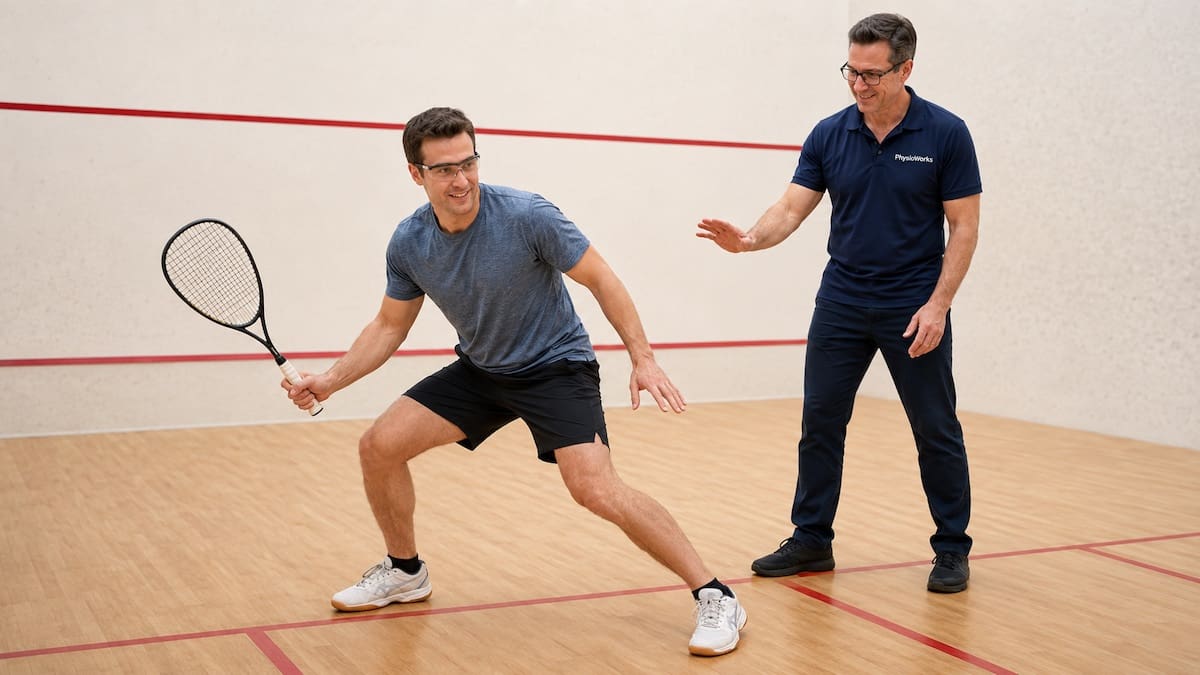
Controlled deceleration supports a safer return to squash.
How Do You Return Safely to Squash?
Return gradually rather than moving directly from rest into a full match. Start with controlled court movement and progress the speed, lunge depth, direction changes and session duration in stages.
Useful Return-to-Squash Checks
- Walking, stairs and daily activities feel comfortable.
- You can complete controlled squats, lunges or step-downs.
- You can perform repeated calf raises and push-off movements.
- You can accelerate, decelerate and move laterally with control.
- Practice drills do not cause a meaningful increase in symptoms later that day or the next morning.
- You have rebuilt enough fitness for the expected match duration.
A physiotherapist can adjust these checks to match your injury, playing level and position on the recovery timeline.
Related Squash Injury Guides
- Racquet sports injuries
- Knee pain
- Ankle pain
- Calf injuries and strains
- Elbow pain
- Back pain
- Sports physiotherapy
What Should You Do Next?
If pain is limiting your lunging, pushing off or confidence on court, an assessment can help clarify the likely cause and guide your next steps.
Your physiotherapist can develop a practical plan that matches your injury, current playing load and return-to-squash goals.
Choose your clinic and appointment pathway
Select a PhysioWorks clinic to continue to live booking, an appointment request or reception assistance.
Muscle & Soft Tissue Products
These muscle and soft tissue products are commonly used by our physiotherapists to relax or loosen muscles, improve strength, comfort, flexibility, and home exercise programs.
-

- Liniments & Gels, Massage Liniments, Pain Management
Fisiocrem
$16.95 – $39.95Select optionsQuick View -
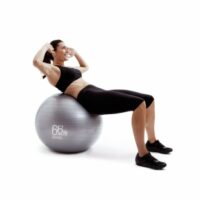 Exercise Balls, Back, Exercise Equipment, Knee, Shoulder
66fit Exercise Balls | Core & Rehab Stability Ball
$32.00 – $57.00Select optionsQuick View -
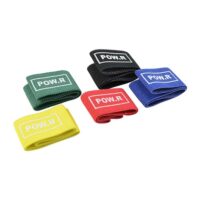 Exercise Equipment, Knee, Resistance Band
POW.R Fabric Mini Loop Bands
$12.00 – $55.00Select optionsQuick View -
-
-
-
- EMS Machines, Pain Management, TENS Machine, TENS Machine & EMS
NeuroTrac Rehab (TENS Machine + EMS)
$285.00Add to cartQuick View -
-
-
-
-
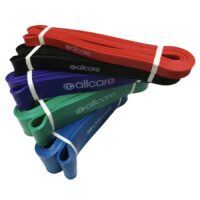
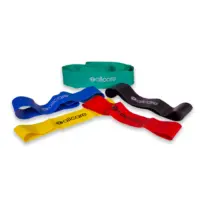
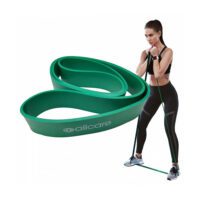 Exercise Equipment, Resistance Band
AllCare Powerloop Bands
$24.95 – $79.95Select optionsQuick View










References
- An epidemiologic study of squash injuries. PubMed.
- Squash fact sheet. Sports Medicine Australia.
- Protective eyewear attitudes in adult squash players. PMC.
Squash Injuries FAQs
What are the most common squash injuries?
The most common squash injuries affect the knee, ankle, calf, Achilles tendon, elbow and lower back. They often relate to repeated lunging, rapid direction changes, gripping and rotation at speed.
Is soreness after squash normal?
Mild muscle soreness can occur after squash, particularly after increased intensity or time away from the sport. Sharp pain, swelling, limping or worsening symptoms may indicate an injury.
When should I stop playing squash?
Stop playing when pain changes your movement, you feel unstable, or you cannot push off, stop or lunge confidently. Seek urgent care for eye trauma, altered vision, suspected concussion or an obvious serious injury.
How can I lower my squash injury risk?
Warm up progressively, build strength and balance, manage training load, wear suitable court shoes and use protective eyewear designed for racquet sports.
How long should I wait before returning to squash?
There is no single timeframe for every injury. Return when your symptoms, strength, movement control and court tolerance have progressed enough for the demands of training and match play.
