
Concussion Return to Sport


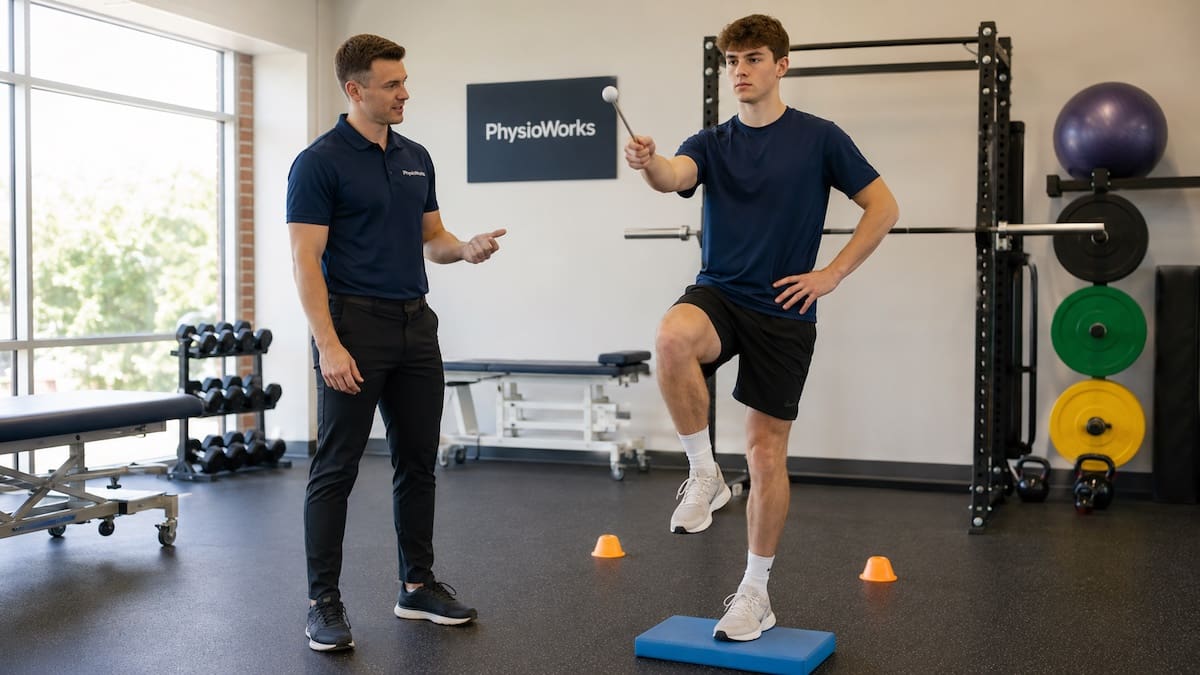
Concussion return to sport should be gradual, medically guided, and based on symptoms, thinking, balance, exercise tolerance, and sport risk. A concussion is a brain injury caused by force to the head, neck, face, or body. It can affect thinking, mood, sleep, vision, balance, reaction time, and confidence with exercise.
Do not return to play on the same day as a suspected concussion. The first steps are removal from sport, medical review, symptom monitoring, and a staged return to school, work, training, and competition. This page sits within the broader sports health cluster.
Quick Answer: What Should Happen After Suspected Concussion?
- Remove: stop sport immediately and do not return that day.
- Review: arrange medical assessment, especially after head contact, confusion, dizziness, vomiting, or unusual behaviour.
- Recover: use relative rest first, then gradually increase daily activity as symptoms allow.
- Return: progress through staged exercise and sport steps only when symptoms remain settled.
Common Concussion Symptoms and Signs
Concussion symptoms can appear straight away or develop over the next few hours or days. Loss of consciousness is not needed for a concussion diagnosis.
- Headache or pressure in the head
- Dizziness, poor balance, or feeling unsteady
- Blurred vision, light sensitivity, or noise sensitivity
- Confusion, poor concentration, or feeling slowed down
- Nausea, fatigue, or feeling “not quite right”
- Sleep changes, mood changes, or irritability
- Neck pain or headache linked with neck movement
What Is Concussion?
Concussion is a mild traumatic brain injury. It happens when force causes temporary changes in brain function. This force may come from a direct head knock, a fall, a tackle, whiplash-type movement, or body contact that transmits force to the head and neck.
In sport, concussion needs a cautious approach because a second head impact before recovery may increase risk. This matters in contact and collision sports such as AFL and rugby union, but concussion can also occur in cycling, horse riding, gymnastics, basketball, martial arts, and recreational sport.
How Do You Recognise Concussion in Sport?
Concussion can look obvious or subtle. Some players appear dazed, unsteady, or confused. Others mainly report headache, fogginess, nausea, blurred vision, or trouble concentrating later that day. If there is doubt, treat it as concussion until a suitable health professional says otherwise.
Visible Signs to Watch For
- Slow to get up after contact or a fall
- Unsteady walking or loss of balance
- Confused, vacant, or disoriented look
- Grabbing the head after contact
- Seizure activity or loss of consciousness
- Unusual behaviour or emotional change
What Should You Do Straight After a Suspected Concussion?
If concussion is suspected, the athlete should stop playing immediately and should not return to sport that day. A doctor or suitably trained health professional should assess the athlete and guide the next steps.
Seek Urgent Medical Care If Any Red Flags Appear
- worsening headache or repeated vomiting
- increasing confusion, unusual drowsiness, or seizure
- weakness, numbness, slurred speech, or vision loss
- neck pain after major trauma
- behaviour that seems very unusual for the person
- any concern about a more serious brain or cervical spine injury
Concussion Return to Sport Stages
Concussion return to sport should follow a graded progression. The athlete should move forward only when symptoms remain settled during and after each stage. If symptoms flare, reduce the load and return to the previous well-tolerated step.
| Stage | Focus | Example |
|---|---|---|
| 1 | Relative rest and daily activity | Short walks, light routine tasks, reduced screen and noise load if needed |
| 2 | Light aerobic exercise | Walking or gentle stationary cycling without symptom escalation |
| 3 | Moderate exercise and simple sport movement | Light running, basic ball skills, or non-contact movement drills |
| 4 | Heavier training without contact | Conditioning, resistance work, faster drills, and balance or vestibular tasks |
| 5 | Contact training after medical clearance | Controlled team training once earlier stages are completed |
| 6 | Return to competition | Match play after successful training progression and clearance |
How Long Does Concussion Return to Sport Take?
For youth athletes and many Australian community sport settings, current guidance uses a conservative timeline. The Australian Sports Commission concussion guidance recommends no same-day return and a staged progression before contact training or competition.
Many community and youth pathways now use at least 14 symptom-free days before return to contact training and a minimum of 21 days before competitive contact sport. Timelines can be longer if symptoms persist, the athlete is under 19, school or work tolerance is still affected, or recovery is more complex.
Return to Learn and Return to Work Matter Too
Sport is not the only load after concussion. School, study, screens, noise, travel, work, sleep disruption, and stress can all increase symptoms. Children and teenagers should usually return to learning successfully before returning to full sport.
For adults, work demands matter. A person who feels well at rest may still struggle with long meetings, computer work, driving, shift work, or busy environments. A staged plan can help match recovery to real-life demands.
Why Do Some Athletes Take Longer to Recover?
Recovery time varies. Ongoing symptoms may relate to the brain injury itself, but they can also involve the neck, balance system, vision, sleep, mood, headache patterns, or reduced exercise tolerance.
For example, an athlete may still have dizziness, neck pain, or headaches even when basic concussion symptoms have improved. Related PhysioWorks pages include headache causes, cervicogenic neck headache, tension headache, and headache, neck and jaw pain.
How Can Physiotherapy Help After Concussion?
A physiotherapist may help as part of the broader concussion care team once serious injury has been excluded and the diagnosis has been made by the appropriate medical practitioner. Physiotherapy does not replace medical concussion clearance.
Physiotherapy may support recovery by assessing neck movement, balance, vestibular symptoms, exercise tolerance, and confidence with training progressions. Treatment may include graded aerobic exercise, cervical spine care, balance retraining, vestibular rehabilitation, and staged return-to-training advice.
When a Physio Review May Be Useful
- symptoms last more than a few days
- dizziness, headache, or neck pain keeps limiting activity
- symptoms return during light exercise
- the athlete feels unsure how to progress training
- balance, vision, or movement confidence remains affected
- there are repeat concussions or a complex sporting history
Related PhysioWorks Guides
- Sports health for athletes – broader safety topics including concussion, heat illness, RED-S, and training risk.
- Acute sports injury clinic – early review for new sport injuries and return-to-training planning.
- AFL injuries – common football injuries including concussion and staged return to play.
- Rugby union injuries – contact-sport injury patterns and recovery planning.
- Cervicogenic neck headache – neck-related headache patterns after sport or trauma.
Concussion Return to Sport FAQs
Can you return to sport on the same day as a concussion?
No. An athlete with suspected concussion should stop sport immediately and should not return that day. Same-day return increases risk because symptoms can evolve over hours and judgement, balance, and reaction time may be affected.
Does concussion always involve loss of consciousness?
No. Most concussions do not involve being knocked out. Concussion can still occur when the athlete remains awake but develops headache, dizziness, confusion, nausea, blurred vision, poor balance, or a feeling of being slowed down.
How long should concussion return to sport take?
The timeline depends on age, symptoms, school or work tolerance, sport risk, and medical advice. Many Australian youth and community pathways use a minimum of 21 days before competitive contact sport, provided the athlete has progressed safely and symptoms have settled.
Who should clear an athlete after concussion?
A medical practitioner or suitably trained health professional should guide concussion diagnosis and clearance. For contact training and competition, medical clearance is important, especially for children, teenagers, repeat concussion, or persistent symptoms.
Can physiotherapy help with concussion symptoms?
Physiotherapy may help after appropriate medical review when symptoms include neck pain, dizziness, balance problems, reduced exercise tolerance, or uncertainty with return-to-training steps. Care should form part of a broader concussion management plan.
What if symptoms return during exercise?
If symptoms return during exercise, reduce the load and return to the last well-tolerated stage. Do not push through worsening symptoms. Seek review if symptoms keep returning, last longer than expected, or affect school, work, sleep, or daily function.
What to Do Next
If you or your athlete has had a suspected concussion, start with medical review and a clear recovery plan. Do not rush the process, and do not return to contact sport because symptoms feel better for one day.
If medical assessment has been completed and you need help with neck symptoms, dizziness, balance, graded exercise, or return-to-training planning, a PhysioWorks physiotherapist may be able to support your recovery pathway.
Choose your clinic and appointment pathway
Select a PhysioWorks clinic to continue to live booking, an appointment request or reception assistance.


References
- Australian Sports Commission. Concussion in sport. Accessed July 6, 2026.
- Patricios JS, Schneider KJ, Dvorak J, et al. Consensus statement on concussion in sport: the 6th International Conference on Concussion in Sport—Amsterdam, October 2022. Br J Sports Med. 2023;57(11):695-711. doi:10.1136/bjsports-2023-106898
- McRae B, Stay S. Assessment and management of sport-related concussion in general practice. Aust J Gen Pract. 2024;53(3). doi:10.31128/AJGP-12-23-7067
- Echemendia RJ, Brett BL, Broglio S, et al. Sport concussion assessment tool 6 (SCAT6). Br J Sports Med. 2023;57(11):622-631. doi:10.1136/bjsports-2023-107036
- Patricios J, Davis GA, Makdissi M, et al. Sport Concussion Office Assessment Tool – 6. Br J Sports Med. 2023;57(11):651-667. doi:10.1136/bjsports-2023-106859
