
Shoulder Arthritis
Shoulder arthritis can cause pain, stiffness and reduced arm movement. Treatment aims to improve comfort, preserve useful movement and help you manage daily activities.


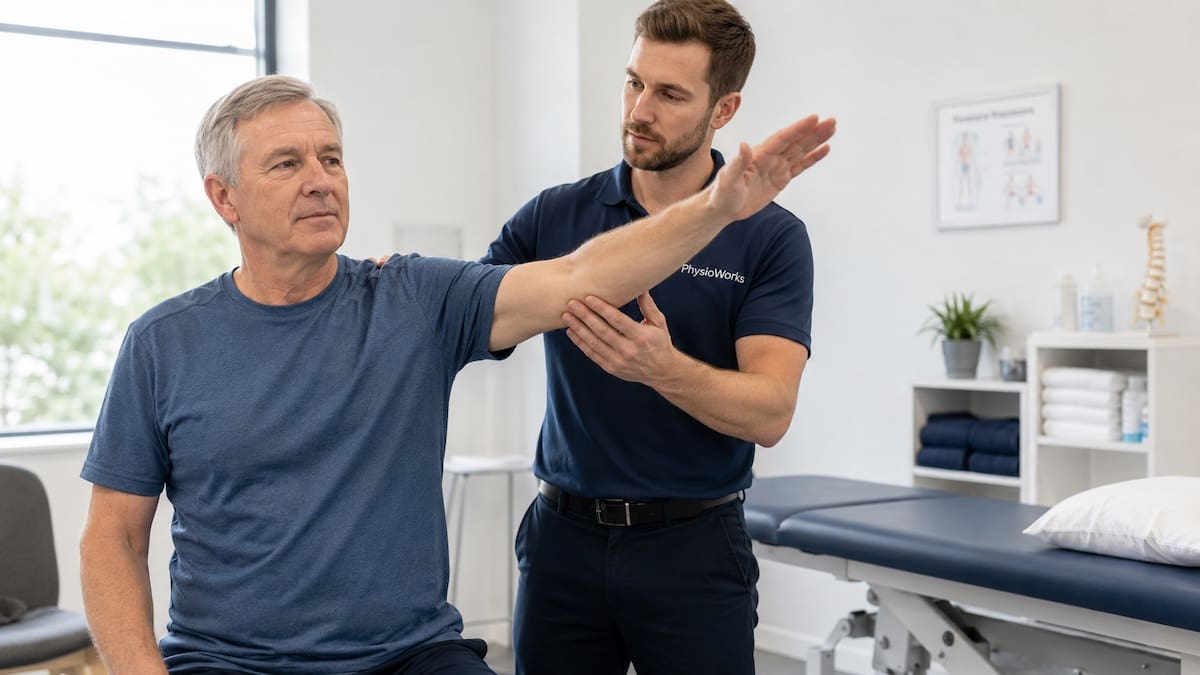
Shoulder arthritis may affect the main ball-and-socket joint, known as the glenohumeral joint, or the smaller acromioclavicular joint at the top of the shoulder.
Symptoms and treatment needs vary. Some people have mild changes with occasional discomfort. Others develop significant stiffness, weakness or pain that affects dressing, reaching, work, exercise and sleep.
Common feeling
A deep ache, stiffness or pain that increases with shoulder movement and loading.
Common difficulty
Reaching overhead, reaching behind the back, lifting, dressing or sleeping comfortably.
Treatment goal
Improve useful movement, strength, symptom control and confidence with daily activity.
What Is Shoulder Arthritis?
Arthritis describes changes that affect a joint’s cartilage, bone, lining or surrounding structures. In osteoarthritis, cartilage gradually becomes thinner, and the joint may develop changes such as reduced joint space, bone spurs and altered movement.
Shoulder arthritis does not always cause constant pain. Symptoms can fluctuate with activity, sleep, general health, joint irritation and the demands placed on the arm.
Which Parts of the Shoulder Can Develop Arthritis?
Glenohumeral osteoarthritis
This affects the main ball-and-socket joint. It commonly causes deep joint pain, stiffness and progressive loss of movement.
AC joint arthritis
This affects the small joint at the top of the shoulder. Pain may increase when reaching across the body, lifting or lying on that side.
Post-traumatic arthritis
Arthritis may develop after a fracture, dislocation or another significant shoulder injury alters the joint surface or mechanics.
Cuff tear arthropathy
A large longstanding rotator cuff tear can alter joint control and contribute to arthritis, weakness and difficulty raising the arm.
Inflammatory arthritis
Conditions such as rheumatoid arthritis can affect the joint lining and may involve several joints or broader health symptoms.
After previous surgery
Previous stabilisation, fracture repair or other surgery can sometimes contribute to later joint stiffness or degenerative change.
What Are the Symptoms of Shoulder Arthritis?
Symptoms often develop gradually, although they may become more noticeable after a change in activity or a painful flare.
- Deep aching pain within or around the shoulder
- Stiffness or loss of shoulder movement
- Pain when reaching overhead or behind the back
- Difficulty dressing, washing or fastening clothing
- Pain when lifting, carrying, pushing or pulling
- Night pain or difficulty lying on the affected side
- Weakness or reduced confidence using the arm
- Clicking, grinding or catching during movement
Grinding or clicking does not automatically mean that the joint is being damaged during every movement. Your symptoms, physical findings and function provide more useful guidance than joint noise alone.
Could It Be Another Shoulder Condition?
Several shoulder problems can produce similar symptoms. These include shoulder bursitis, rotator cuff pain, a rotator cuff tear and frozen shoulder.
Neck conditions may also refer pain into the shoulder or arm. Therefore, an assessment should examine the shoulder, neck, strength, movement pattern and symptom behaviour rather than relying on one painful movement.
How Is Shoulder Arthritis Diagnosed?
Your physiotherapist or doctor will ask about your symptoms, previous injuries, general health, work, exercise and the activities that have become difficult.
A physical assessment may include:
- Active and passive shoulder movement
- Rotator cuff and shoulder muscle strength
- Joint irritability and symptom response
- Neck and upper-back screening
- Reaching, lifting and other relevant tasks
- Comparison with the opposite shoulder
An X-ray may show joint-space narrowing, bone spurs or other arthritic changes. MRI, ultrasound or CT imaging may be useful when a clinician needs more information about the rotator cuff, bone, joint surface or surgical planning.
How Is Shoulder Arthritis Treated?
Most people begin with non-surgical management. Your plan should reflect the affected joint, symptom irritability, movement restrictions, strength, health history and personal goals.
Education and activity adjustment
You may need to modify painful loads during a flare without stopping all shoulder activity. Changing lifting height, load, frequency or technique can help you remain active while symptoms settle.
Shoulder mobility
Gentle movement can help maintain the range required for daily tasks. The most suitable direction and dosage depend on which movements are limited or irritable.
Strength and control
Progressive strengthening may improve the capacity of the rotator cuff, shoulder blade muscles and surrounding arm muscles. Visit our shoulder exercises guide for general information.
Manual therapy
Selected joint or soft-tissue techniques may provide short-term relief or help movement when used as part of a broader active rehabilitation plan.
Pain-relief options
A doctor or pharmacist can advise whether medication is suitable for you. In some cases, a doctor may discuss an injection when pain is preventing sleep, movement or rehabilitation.
Can Exercise Help Shoulder Arthritis?
Appropriate exercise may help improve movement, muscle capacity and tolerance for everyday activity. It does not need to be pain-free at every moment, but the response should remain manageable and should not cause a major or sustained flare.
-
Begin with tolerable movement
Use a comfortable range and avoid repeatedly forcing a stiff or highly irritable shoulder.
-
Build strength gradually
Start with a manageable resistance and progress the load, range or repetitions over time.
-
Watch the next-day response
A small temporary increase may occur, but a marked or lasting flare suggests that the exercise dose needs adjustment.
How Can I Manage a Painful Flare?
- Reduce or modify the activity that triggered the flare
- Continue comfortable shoulder and arm movement
- Use supported sleeping positions
- Avoid repeatedly testing the most painful movement
- Restart strengthening at a lower load when symptoms settle
- Seek advice when pain remains severe or function continues to decline
Complete rest can contribute to further stiffness and weakness. Instead, aim for relative rest while maintaining tolerable movement and normal use where possible.
When Is Shoulder Surgery Considered?
Surgery may be considered when pain and disability remain substantial despite an appropriate period of non-surgical care. The decision also depends on the joint involved, rotator cuff condition, age, health, goals and imaging findings.
Procedures may include:
- Selected arthroscopic procedures
- Anatomic total shoulder replacement
- Reverse shoulder replacement
- Other procedures suited to the affected joint or previous injury
Following surgery, a staged post-operative shoulder physiotherapy program can help restore movement, strength and functional use while respecting surgical precautions.
When Should I Seek Medical Advice?
Book a routine assessment when pain or stiffness persists, sleep is regularly affected, movement is becoming more limited or shoulder symptoms interfere with work, exercise or daily tasks.
Shoulder Arthritis FAQs
What does shoulder arthritis feel like?
Shoulder arthritis often causes a deep ache, stiffness and reduced movement. Pain may increase with reaching, lifting, dressing or lying on the affected shoulder.
Can shoulder arthritis cause clicking or grinding?
Yes. Joint-surface changes can cause clicking, grinding or catching. Joint noise alone does not show how severe the condition is, so symptoms and function also need assessment.
Can exercise make shoulder arthritis worse?
Appropriately dosed exercise is usually used to maintain movement and build strength. Excessive load, forced movement or rapid progression may cause a flare, so the program should match your symptoms and ability.
Can shoulder arthritis improve without surgery?
Many people improve their comfort and function with education, activity changes, exercise and other non-surgical care. These measures do not reverse arthritis, and results vary between individuals.
Does shoulder arthritis always get worse?
Joint changes may progress over time, but symptoms do not always worsen at the same rate. Strength, activity choices, general health and symptom management can influence daily function.
When should I see a physiotherapist?
Arrange an assessment when pain persists, movement becomes limited, sleep is affected or shoulder symptoms interfere with normal activities, work, exercise or sport.
What to Do Next
If shoulder pain or stiffness is limiting your movement, arrange a physiotherapy assessment. Your physiotherapist can identify the main factors affecting your shoulder, explain suitable options and develop a plan based on your symptoms and goals.
Choose your clinic and appointment pathway
Select a PhysioWorks clinic to continue to live booking, an appointment request or reception assistance.
Shoulder Products
These shoulder products are commonly used by our physiotherapists to improve strength, posture, movement, plus assist home exercise programs.
-
-

 Exercise Balls, Back, Exercise Equipment, Knee, Shoulder
66fit Exercise Balls | Core & Rehab Stability Ball
$32.00 – $57.00Select optionsQuick View -

-
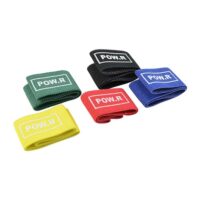 Exercise Equipment, Knee, Resistance Band
POW.R Fabric Mini Loop Bands
$12.00 – $55.00Select optionsQuick View -

-

-

-
-

-

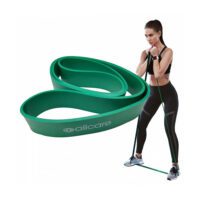 Exercise Equipment, Resistance Band
AllCare Powerloop Bands
$22.00 – $65.00Select optionsQuick View - EMS Machines, Pain Management, TENS Machine, TENS Machine & EMS
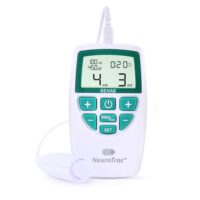
NeuroTrac Rehab (TENS Machine + EMS)
$299.95Add to cartQuick View - Liniments & Gels, Massage Liniments, Pain Management
Fisiocrem
$16.95 – $39.95Select optionsQuick View -
-
-







Share This Shoulder Arthritis Guide
Share this page with someone who may benefit from practical information about shoulder arthritis, assessment and treatment.


References
- American Academy of Orthopaedic Surgeons. Arthritis of the Shoulder. OrthoInfo. Updated September 2022.
- Michener LA, McClure PW, Sennett BJ, et al. Physical therapist management of glenohumeral joint osteoarthritis: a clinical practice guideline from the American Physical Therapy Association. Phys Ther. 2023;103(6):pzad041. doi:10.1093/ptj/pzad041.
- Yamamoto N, Szymski D, Voss A, et al. Non-operative management of shoulder osteoarthritis: current concepts. J ISAKOS. 2023;8(5):289-295. doi:10.1016/j.jisako.2023.06.002.
- American Academy of Orthopaedic Surgeons. Management of Glenohumeral Joint Osteoarthritis: Evidence-Based Clinical Practice Guideline. Published March 23, 2020.
