
Dry Needling
Dry Needling Brisbane
Dry needling uses fine, sterile, single-use needles to target sensitive muscle bands, trigger points or other tissues identified during a physiotherapy assessment. It may provide short-term pain relief or make movement more comfortable for some people.


Dry needling may be used as part of physiotherapy care for selected muscle pain and movement problems.
At PhysioWorks, dry needling is used selectively alongside exercise, education, movement advice, load management and other appropriate physiotherapy care. It sits within our broader acupuncture and dry needling service.
Pain
Dry needling may provide short-term relief from muscle pain or tenderness.
Movement
Some people find movement more comfortable after treatment.
Rehabilitation
Dry needling is usually used alongside exercise and other active physiotherapy care.
What Is Dry Needling?
Dry needling involves placing a fine, sterile needle into or near a sensitive muscle band, trigger point or other tissue identified during assessment. Your physiotherapist uses your symptoms, movement testing, anatomy and palpation findings to determine whether the technique is appropriate.
People sometimes describe sensitive muscle bands or trigger points as “muscle knots”. These areas may be associated with local tenderness, referred pain or discomfort during movement.
Dry needling aims to provide a short-term change in symptoms or movement that can support your broader rehabilitation plan.
How Does Dry Needling Work?
Dry needling may influence local sensitivity, muscle activity and how the nervous system processes pain. Some people report less pain, tenderness or restriction after treatment, while others notice little change.
During treatment, the needle may produce a brief ache, heaviness or muscle twitch. Your physiotherapist may then reassess your symptoms or movement and use any useful change to progress exercise or activity.
Less pain
Some people experience short-term reductions in pain or tenderness.
Easier movement
A temporary change in symptoms may make movement more comfortable.
Exercise tolerance
Symptom relief may make rehabilitation exercises easier to perform.
What Can Dry Needling Help?
Dry needling may be considered when muscular pain, tenderness, sensitivity or guarding contributes to a broader musculoskeletal presentation. Examples may include some presentations involving neck pain, back pain, shoulder pain, headache associated with neck muscle pain, or sports-related muscle pain.
It may also form part of a broader sports injury physiotherapy plan when muscular symptoms are making it difficult to train, move or strengthen comfortably.
The diagnosis and individual assessment findings matter more than the location of pain alone. Dry needling is not automatically appropriate simply because a muscle feels tight or painful.
Dry Needling vs Acupuncture
Dry needling and acupuncture both use fine needles, but they follow different clinical frameworks. Dry needling generally uses musculoskeletal assessment and anatomy to select treatment areas, while acupuncture commonly uses defined acupuncture points.
For a detailed comparison, see our Acupuncture vs Dry Needling guide. If you are specifically considering acupuncture, read our Acupuncture Brisbane guide.
What Does the Research Say About Dry Needling?
Research suggests dry needling may provide short-term improvements in pain or function for some musculoskeletal presentations. However, results vary between conditions and individuals, and longer-term benefits are less consistent.
An umbrella review reported that dry needling was generally more effective than sham or no treatment for short-term pain reduction and broadly comparable with other common treatments across several body regions.1 Reviews of non-traumatic shoulder pain have also reported short-term improvements in pain or disability in some groups.2–4
However, dry needling is not consistently superior to other physiotherapy approaches. Comparative research has reported that manual therapy combined with exercise may produce better outcomes than dry needling combined with exercise for some neck pain presentations.5
For this reason, PhysioWorks uses dry needling selectively. The aim is to determine whether it provides a useful contribution to a broader rehabilitation plan rather than use it as a stand-alone treatment.

Dry needling may target sensitive muscle areas identified during a physiotherapy assessment.
What Happens During Dry Needling?
Your physiotherapist will first assess your symptoms, movement, health history, goals and relevant risk factors. Dry needling should only proceed when the assessment suggests it is appropriate and you are comfortable with the proposed treatment.
If you choose to proceed, you may feel:
- a brief prick as the needle enters the skin
- a dull ache or heaviness around the treated area
- a brief muscle twitch
- temporary tenderness after treatment.
Some people experience temporary post-treatment soreness. Most can continue normal activity. If the treated area feels sore, temporarily reducing heavy or provocative activity may be more comfortable. Follow any specific advice from your physiotherapist.
Is Dry Needling Safe?
Dry needling is generally well tolerated when performed by a suitably trained physiotherapist who screens for relevant risks and uses sterile, single-use needles. Common short-term effects can include soreness, minor bruising, tenderness, minor bleeding or temporary light-headedness.
Serious complications are uncommon but can occur. Your physiotherapist should consider the treatment area, relevant anatomy, your health history and other individual risk factors before proceeding.
If dry needling is not appropriate, your physiotherapist can discuss other options such as exercise, activity modification, hands-on treatment or trigger point therapy.
How Many Dry Needling Sessions Might You Need?
The number of sessions varies with your condition, goals and response. Your physiotherapist should review whether dry needling is providing a worthwhile benefit and continue it only when it is contributing meaningfully to your symptoms, movement or rehabilitation goals.
Is Dry Needling Right for You?
Dry needling may be considered when muscular tenderness, trigger points, sensitivity or guarding are relevant findings during your physiotherapy assessment and are limiting movement or rehabilitation.
However, it is not the right choice for every condition. Your physiotherapist may recommend another approach if your symptoms require medical assessment, a different rehabilitation pathway or treatment that better matches the likely cause of your problem.
A physiotherapy assessment can help determine whether dry needling has a useful role and how it should fit alongside exercise, education, load management or other treatment.
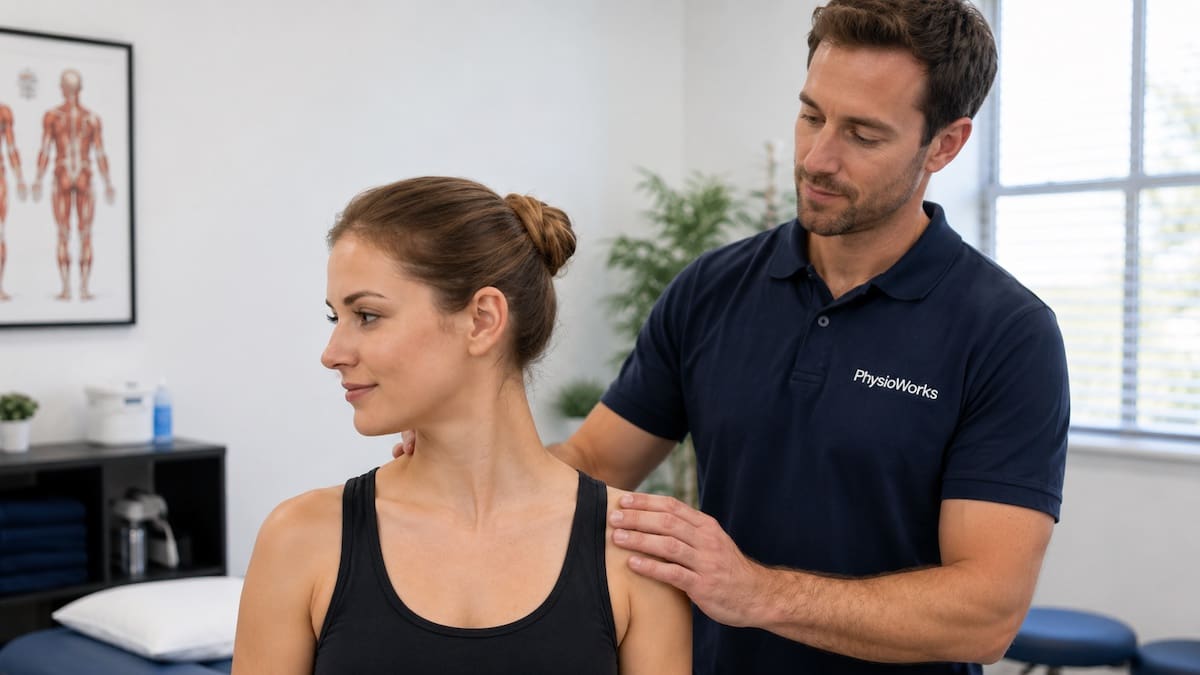
Movement and symptoms can be reassessed after dry needling to determine whether treatment has provided a useful change.
Where Is Dry Needling Available in Brisbane?
PhysioWorks offers dry needling as part of physiotherapy care at selected Brisbane clinics, including Ashgrove, Clayfield and Sandgate.
Availability varies between physiotherapists. Check that dry needling is available with your preferred clinician when booking, and tell your physiotherapist about relevant health factors before treatment.
Dry Needling FAQs
Does dry needling work straight away?
Some people notice an immediate change in pain, tenderness or movement, while others notice little or no short-term difference. Your physiotherapist should reassess your response and continue dry needling only when it is contributing meaningfully to your rehabilitation.
Does dry needling hurt?
You may feel a brief prick as the needle enters the skin, followed by an ache, heaviness or brief muscle twitch. Tell your physiotherapist if treatment feels uncomfortable.
How is dry needling different from acupuncture?
Both treatments use fine needles, but their clinical frameworks differ. Dry needling generally uses musculoskeletal assessment and anatomy to select treatment areas, while acupuncture commonly uses defined acupuncture points. Read our Acupuncture vs Dry Needling guide for a detailed comparison.
Can dry needling help shoulder or neck pain?
Dry needling may help some people when muscular tenderness, trigger points or sensitivity contribute to shoulder or neck symptoms. It is usually considered as one part of a broader rehabilitation plan rather than a stand-alone treatment.
What are the side effects of dry needling?
Common short-term effects include temporary soreness, tenderness, minor bruising or minor bleeding. Some people may feel light-headed. Serious complications are uncommon, but appropriate screening and clinical technique remain important.
How do I know if dry needling is right for me?
A physiotherapist can assess your symptoms, movement, health history and goals to determine whether dry needling has an appropriate role. It is not suitable or necessary for every musculoskeletal problem.
References
- Chys M, De Meulemeester K, De Greef I, et al. Clinical effectiveness of dry needling in patients with musculoskeletal pain: an umbrella review. J Clin Med. 2023;12(3):1205.
- Navarro-Santana MJ, Sánchez-Infante J, Gómez-Chiguano GF, et al. Effects of trigger point dry needling for nontraumatic shoulder pain of musculoskeletal origin: a systematic review and meta-analysis. Phys Ther. 2021;101(2):pzaa216.
- Para-García G, García-Muñoz AM, López-Gil JF, et al. Dry needling alone or in combination with exercise therapy versus other interventions for reducing pain and disability in subacromial pain syndrome: a systematic review and meta-analysis. Int J Environ Res Public Health. 2022;19(17):10961.
- Blanco-Díaz M, Rodríguez-Fuentes I, García-Muro F, et al. A systematic review of the effectiveness of dry needling in subacromial syndrome. Biology (Basel). 2022;11(2):243.
- Pandya J, Garvey J, Penning L, et al. Dry needling versus manual therapy for patients with mechanical neck pain: a randomized clinical trial. J Orthop Sports Phys Ther. 2024;54(4):1-12.
