FAQs

Frequently Asked Questions


Ashgrove PhysioWorks offers a broad range of physiotherapy, massage therapy, and rehabilitation services designed to help you recover well, move better, and stay active. If you are looking for an Ashgrove physiotherapy clinic, this page gives you a quick guide to the services available and where to find more detailed information.

Our team supports people with everyday aches, sports injuries, spinal pain, vestibular conditions, post-operative rehabilitation, workplace injuries, and exercise-based recovery. You can also explore broader physiotherapy treatment options, massage services in Brisbane, and common injury and condition pages across PhysioWorks.

What services are offered at Ashgrove PhysioWorks?

Ashgrove PhysioWorks provides physiotherapy, remedial massage, rehabilitation programs, exercise-based care, and selected occupational physiotherapy services. The clinic also links patients into more specific care streams such as acute sports injury care, spinal physiotherapy, and vestibular physiotherapy.

Quick service snapshot

  • General physiotherapy
  • Sports and musculoskeletal physiotherapy
  • Spinal physiotherapy and post-operative rehabilitation
  • Vestibular and jaw physiotherapy
  • Workplace and occupational physiotherapy services
  • Remedial, sports, and relaxation massage

Ashgrove physiotherapy services

Ashgrove patients can access physiotherapy for pain relief, injury rehabilitation, exercise progression, and long-term physical health support. This includes both general care and more focused programs for sports, spinal, balance, and post-operative needs.

What special interest physiotherapy is available in Ashgrove?

Ashgrove PhysioWorks also offers several special interest physiotherapy services for more specific problems. These services help people who need targeted assessment, tailored exercise, and condition-specific rehabilitation.

Occupational physiotherapy services in Ashgrove

Occupational physiotherapy can help workplaces and workers manage physical demands more effectively. Ashgrove PhysioWorks offers services that support injury prevention, work readiness, and functional capacity assessment.

Massage therapy at Ashgrove PhysioWorks

If you are looking for massage in Ashgrove, PhysioWorks also offers hands-on therapy options to help with muscle tightness, recovery, relaxation, and soft tissue discomfort. These services work well alongside physiotherapy when a combined approach suits your goals.

Who may benefit from Ashgrove PhysioWorks services?

These services may suit people with sports injuries, spinal pain, balance concerns, jaw or headache problems, workplace injuries, post-operative needs, and everyday muscle or joint pain. They may also suit people who want guided exercise, injury prevention, or recovery support.

What should you do next?

If you are unsure which service suits you best, start with the Ashgrove clinic page or book an appointment so the team can help guide you to the most suitable practitioner. That may include physiotherapy, massage, or another relevant service stream.

Early assessment can help you choose the right treatment pathway sooner and avoid wasting time on the wrong option.

PhysioWorks Ashgrove

Book an Ashgrove Appointment

Choose the service you need, or call our Ashgrove reception team for help.

Physiotherapy

Book for pain, injury assessment, hands-on treatment or rehabilitation.

Book Physiotherapy

Massage

Book massage for muscle tightness, soreness, recovery or relaxation.

Book Massage

Follow PhysioWorks

Get physiotherapy tips, exercise videos, recovery advice and blog updates.

What Services Are Available at Clayfield PhysioWorks?

Clayfield PhysioWorks services include physiotherapy, specialist sports and exercise physiotherapy, exercise physiology, vestibular physiotherapy, massage therapy, and balance-focused exercise support. If you are unsure what to book, start here and the team will help guide you.

At Clayfield PhysioWorks, you can access care for back pain, neck pain, shoulder pain, knee pain, dizziness, jaw pain, tendon injuries, and post-operative rehabilitation.

Book at PhysioWorks Clayfield

Choose your appointment type or call reception for help.

Call reception for classes, Functional Capacity Evaluations or help choosing an appointment.

Clayfield PhysioWorks Services

Clayfield PhysioWorks services are designed to help you recover, move better, and return to activity with confidence. You can book physiotherapy, specialist sports and exercise physiotherapy, exercise physiology, vestibular physiotherapy, vestibular rehabilitation therapy, balance and falls prevention, group exercise classes, dry needling, NDIS physiotherapy, and massage therapy at Clayfield.

Clayfield Physiotherapy Services

Clayfield physiotherapy helps with injury recovery, pain reduction, performance improvement, and return to work, sport, and daily activity. Your physiotherapist will assess your movement, explain what is driving your symptoms, and guide your rehabilitation step by step.

Common Conditions Treated

Not Sure What To Book at Clayfield?

If you are unsure which Clayfield PhysioWorks service suits you, use this quick guide.

Meet the Clayfield Team

Clayfield PhysioWorks services are delivered by a team of physiotherapists, an exercise physiologist, and a massage therapist. You can choose a clinician based on your symptoms, goals, or preferred treatment style.

Shane Armfield

Shane helps people with complex spinal pain, dizziness, vertigo, jaw pain, TMJ problems, headaches, sports injuries, and post-operative or post-fracture rehabilitation.

Dr Zoe Russell

Zoe is a Specialist Sports and Exercise Physiotherapist who helps with shoulder pain, knee pain, ankle injuries, hip pain, tendon problems, and advanced sports rehabilitation.

Erin Runge

Erin helps people with neck pain, back pain, long-term pain problems, BPPV, and exercise-based rehabilitation, including Pilates-informed rehab support.

Chelsea Gan

Chelsea helps people with neck pain, tendinopathy, sporting injuries, running injuries, and balance and falls-prevention rehabilitation.

Jack Campbell

Jack provides practical care for musculoskeletal injuries, exercise rehabilitation, and post-operative recovery.

Madison Stanley

Madison provides structured exercise physiology programs for rehabilitation, strength building, fitness, and long-term exercise support.

Debbie Cox

Debbie provides remedial massage at Clayfield to help reduce muscle tension, support recovery, and improve relaxation.

Massage Therapy at Clayfield

Clayfield massage therapy helps reduce tension, improve recovery, and complement physiotherapy or exercise rehabilitation when needed.

What To Do Next

Book directly if you know which service you need, or let the Clayfield team guide you to the right appointment.

Book Clayfield Appointment

Choose Your Clayfield Appointment

Select a service below. Online booking opens in a new tab.

Physiotherapy

For pain, injuries, rehabilitation, dizziness, balance concerns and movement problems.

Exercise Physiology

For individual exercise assessment, rehabilitation, strength, balance, bone health and long-term health support.

Classes and Specialised Services

Call for Balance and Falls Prevention, Better Bones, Functional Capacity Evaluations or help choosing an appointment.

Follow PhysioWorks

Get physiotherapy tips, exercise videos, recovery advice and blog updates.

What Services Are Available at Sandgate PhysioWorks?

Discover the Wide Range of Physiotherapy Services at Sandgate PhysioWorks

Sandgate PhysioWorks services include physiotherapy, sports physiotherapy, exercise physiology, massage therapy, physiotherapy group exercise classes, one-on-one reformer Pilates, balance and falls prevention classes, bike fit physio, and running analysis. If you are unsure what to book, start with Sandgate PhysioWorks and the team can help guide you to the most suitable service.

People commonly book Sandgate services for back pain, neck pain, shoulder pain, knee pain, dizziness and vertigo, sports injuries, post-operative rehabilitation, guided strength rebuilding, and recovery from tight or sore muscles.

Book at PhysioWorks Sandgate

Choose your appointment type or call reception for help.

Call reception for classes, Hydrotherapy, Bike Fit, Functional Capacity Evaluations or help choosing an appointment.

Quick Guide: What Should You Book?

What services are available at Sandgate PhysioWorks?

Sandgate PhysioWorks offers a broad mix of rehabilitation and performance services, so you can book the right support for pain relief, recovery, strength, balance, or return to activity. This includes physiotherapy, sports physiotherapy, exercise physiology, massage, group exercise classes, reformer Pilates, bike fit physio, and running analysis.

Because many people are not sure which service fits best, the Sandgate clinic works well as a starting point. You can book directly online, or use the clinic booking pathway if you want help choosing between physiotherapy and exercise physiology at Sandgate.

Why locals choose Sandgate PhysioWorks

  • Multiple services in one clinic, including physiotherapy, exercise physiology, massage, and Pilates-based rehabilitation
  • Useful for both injury care and longer-term strength, balance, and return-to-activity planning
  • Online booking options for physio, massage, and selected class pathways
  • Helpful for bayside and northside locals who want one clinic for assessment, treatment, and guided progression

Sandgate physiotherapy services

Sandgate physiotherapy helps assess what is driving your pain, stiffness, weakness, dizziness, or reduced movement confidence. Your physiotherapist then builds a practical plan to help you settle symptoms, improve function, and return to work, sport, or daily activity.

Common reasons people book physiotherapy at Sandgate

Does Sandgate PhysioWorks offer exercise physiology, Pilates, and balance classes?

Yes. Sandgate offers exercise physiology, physiotherapy group exercise classes, one-on-one reformer Pilates, and balance and falls prevention classes. These services suit people who need guided exercise, better movement control, confidence rebuilding, or a structured return to strength and fitness.

Exercise physiology can work especially well when you need a progressive exercise plan for rehabilitation, a chronic health condition, or long-term strength building. Pilates-based sessions and reformer Pilates are useful when control, posture, balance, and movement quality need more focused attention.

Does Sandgate PhysioWorks provide massage, bike fit, and running analysis?

Yes. Sandgate massage therapy may help reduce muscle tension, training soreness, and recovery stiffness, while bike fit physio and running analysis suit people who want to improve movement efficiency, comfort, and load management during cycling or running.

Popular service pathways at Sandgate

Who commonly books at Sandgate?

Sandgate PhysioWorks suits a wide mix of people, including active adults, runners, cyclists, post-operative patients, people managing dizziness or balance issues, and locals wanting guided rehabilitation close to home.

Many people travel from Sandgate, Shorncliffe, Brighton, Deagon, Bracken Ridge, Taigum, Boondall, Fitzgibbon, and the Redcliffe Peninsula to book physiotherapy, exercise physiology, Pilates, balance classes, or massage at this clinic.

Meet the Sandgate team

Sandgate PhysioWorks services are delivered by physiotherapists, an exercise physiologist, and remedial massage therapists. You can choose a clinician based on your symptoms, goals, preferred style, or sport.

John Miller

John helps people with spinal pain, vertigo, sports injuries, lumbopelvic control problems, and post-operative rehabilitation.

Erin Runge

Erin combines hands-on physiotherapy, exercise-based rehabilitation, and Pilates-informed care for neck pain, back pain, BPPV, and movement recovery.

Chelsea Gan

Chelsea helps people with neck pain, tendinopathy, sports injuries, and practical exercise-based rehabilitation.

Jack Campbell

Jack provides practical care for musculoskeletal injuries, post-operative rehabilitation, and progressive return to activity.

Madison Stanley

Madison is the Sandgate exercise physiologist. She builds structured strength and conditioning programs for injury rehabilitation, fitness rebuilds, and long-term health goals.

Brendan Scott

Brendan provides remedial and sports massage to reduce muscle tension, support recovery, and complement physiotherapy care.

Ashish Shrestha

Ashish provides remedial massage focused on helping clients move better, feel better, and recover from tightness, soreness, and training load.

What should you do next?

Book directly if you already know which Sandgate PhysioWorks service you need. If you are not sure, start with the Sandgate booking page or call the clinic for help choosing between physiotherapy, exercise physiology, massage, reformer Pilates, group exercise, or balance classes.

That first step is often the easiest way to match your symptoms, goals, and schedule with the most suitable appointment type.

Choose Your Sandgate Appointment

Select a service below. Online booking opens in a new tab.

Physiotherapy

For pain, injuries, rehabilitation, dizziness, balance concerns and movement problems.

Exercise Physiology

For individual exercise assessment, rehabilitation, strength, balance, bone health and long-term health support.

Massage and Kinesiology

Choose your practitioner so we can send you to the correct booking system.

For kinesiology with Brendan, select the dedicated 60-minute kinesiology appointment.

Classes and Specialised Services

Call for Mat Pilates, Better Bones, Balance and Falls Prevention, Hydrotherapy, Bike Fit, Functional Capacity Evaluations or help choosing an appointment.

Follow PhysioWorks

Get physiotherapy tips, exercise videos, recovery advice and blog updates.

Can a Physiotherapist Refer Me for X-Rays or Scans?

Physiotherapists can request some diagnostic imaging in Australia. However, the best pathway depends on the type of scan, your clinical presentation and whether Medicare eligibility is important.

Physiotherapist discussing an X-ray referral and scan results with a patient
Discussing whether imaging is likely to change treatment.

Your physiotherapist will usually assess you before recommending imaging. The important question is not simply whether a scan can be ordered, but whether the result is likely to change your treatment, referral or recovery plan.

Many common musculoskeletal problems can be assessed and managed without imaging at the first appointment. Examples include back pain, knee pain, shoulder pain and some forms of nerve pain.

When is imaging actually needed?

Imaging is most useful when it answers a clear clinical question or is likely to change what happens next. Your physiotherapist will consider your symptoms, injury history, function, examination findings and any warning signs before recommending a scan.

Imaging may be considered when there is:

  • suspected fracture following trauma
  • significant swelling, deformity or loss of function
  • worsening weakness, numbness or other neurological symptoms
  • persistent or unusual pain that requires further investigation
  • poor progress despite an appropriate period of treatment
  • a need to clarify surgical, medical or injection planning

Do I need a scan now?

Often not

Symptoms are mild or improving, there was no significant trauma and there is no major loss of strength or function.

Possibly

Symptoms are not improving, function remains limited, swelling is significant or the diagnosis remains uncertain.

Prompt assessment

There was significant trauma, a fracture is suspected, or weakness, numbness or neurological symptoms are worsening.

Routine early imaging does not always improve outcomes for common musculoskeletal pain. In many cases, education, exercise, load management and appropriate treatment can begin before a scan is required.

How do Medicare rebates work for physiotherapy imaging?

Medicare diagnostic imaging uses a request system. Eligibility depends on the specific imaging item, the body area, the clinical indication and who makes the request.

Physiotherapists can request diagnostic imaging, but Medicare benefits are not available for every type of imaging requested by a physiotherapist.

X-ray

Some physiotherapist-requested X-rays may attract a Medicare benefit when the examination and Medicare item meet the relevant requirements.

Diagnostic ultrasound

A physiotherapist may recommend or request ultrasound where clinically appropriate. Medicare eligibility can be more restricted, so confirm the expected fee with the imaging provider.

MRI

A physiotherapist may request an MRI. However, a physiotherapist-requested MRI does not usually provide access to a Medicare rebate. A GP or medical specialist pathway may be more appropriate when Medicare eligibility is required.

CT scan

CT scans are generally coordinated through an appropriate medical or radiology pathway when they are clinically required.

How does a physiotherapist decide if you need a scan?

Your physiotherapist considers your symptoms, injury history, physical findings, function, goals and any previous imaging. They also consider whether the result is likely to alter your management.

The decision usually comes down to three practical questions:

Safety

Are there warning signs that make imaging or medical review important?

Value

Will the scan provide useful information beyond the clinical assessment?

Action

Will the result change treatment, referral or recovery planning?

When imaging is required, your physiotherapist may request it directly, coordinate with your GP or recommend medical specialist review for a more complex presentation.

What types of imaging may be considered?

X-ray

X-rays are commonly used when a fracture or bone injury is suspected. They can also help investigate selected joint and spinal presentations.

Some physiotherapist-requested X-rays may attract a Medicare benefit when the applicable Medicare requirements are met.

Diagnostic ultrasound

Diagnostic ultrasound may help investigate selected tendon, bursa, swelling and other soft-tissue concerns.

Whether ultrasound is useful depends on the clinical question. If cost or Medicare eligibility is important, ask the imaging provider to confirm the likely fee before the examination.

MRI

MRI may be considered for selected ligament, cartilage, disc, nerve, bone and complex soft-tissue concerns when the result is likely to change management.

A physiotherapist may request an MRI. However, Medicare funding commonly requires a different requester pathway, depending on the clinical situation and applicable Medicare item.

CT scan

CT imaging can provide detailed information about bone and some other structures. It may be useful for complex fractures, trauma and selected spinal or medical investigations.

When CT imaging is required, it is generally arranged through an appropriate medical or radiology pathway.

Physiotherapists may also use real-time ultrasound retraining. This is different from diagnostic imaging. It provides visual feedback about muscle activity and may help guide exercise technique during rehabilitation.

Physiotherapist explaining a scan request and imaging pathway to an adult patient
Planning an appropriate imaging and referral pathway.

Do scans always explain pain?

No. Imaging findings do not always match a person's symptoms.

Changes such as disc bulges, tendon abnormalities and joint degeneration can sometimes appear on imaging in people who have little or no pain. Likewise, someone can have significant pain and functional difficulty without a major abnormality appearing on a scan.

Your physiotherapist interprets imaging alongside your symptoms, strength, movement and function. The aim is to determine whether the imaging finding is relevant to your presentation rather than assuming every reported change is the cause of pain.

Questions to ask before arranging a scan

  • Will this scan change my treatment or referral plan?
  • Is there a warning sign that makes imaging important now?
  • Could a GP or medical specialist request affect my Medicare eligibility?
  • Has a health professional assessed whether imaging is needed at this stage?
  • What would we do differently if the scan showed a particular finding?
  • What fee and Medicare benefit should I expect from the imaging provider?

Related information

What should you do next?

If you are unsure whether you need an X-ray or scan, a physiotherapy assessment can be a sensible starting point for a musculoskeletal problem.

Your physiotherapist can assess your symptoms and function, screen for warning signs and explain whether imaging is likely to change your care.

Many people with common problems such as back pain, knee pain and rotator cuff injuries can begin an appropriate treatment plan without having a scan first.

When imaging is needed, your physiotherapist can explain the available options and help coordinate care with your GP, radiology provider or medical specialist where appropriate.

Choose your clinic and appointment pathway

Select a PhysioWorks clinic to continue to live booking, an appointment request or reception assistance.

Physiotherapist scan referral FAQs

Can a physiotherapist refer me for an X-ray?

Yes. Physiotherapists in Australia can request selected X-rays for musculoskeletal problems. Some physiotherapist-requested X-rays may attract a Medicare benefit when the body area, clinical indication and applicable Medicare item meet the required criteria.

Can a physiotherapist refer me for an MRI?

A physiotherapist may request an MRI. However, a physiotherapist-requested MRI does not usually provide access to a Medicare rebate. Your physiotherapist may recommend involving your GP or medical specialist when an MRI is clinically required.

Can a physiotherapist refer me for an ultrasound?

A physiotherapist may recommend or request diagnostic ultrasound when it may help answer a relevant soft-tissue question. Medicare eligibility can be restricted, so ask the imaging provider to confirm the expected fee and any applicable Medicare benefit before attending.

When is imaging needed for pain?

Imaging is most useful when trauma, warning signs, significant weakness, substantial loss of function or poor recovery suggest that the result may change your care. Many common muscle, joint and spinal problems can begin treatment without early imaging.

Can scans always explain pain?

No. Imaging findings do not always match symptoms. Your physiotherapist considers the scan alongside your pain, movement, strength, function and clinical examination to decide whether a finding is relevant.

Should I see a physiotherapist or GP first?

Either may be appropriate. A physiotherapist can assess musculoskeletal pain and advise whether imaging may be useful. A GP may be a better first step if you feel unwell, have broader medical symptoms, require medication advice or may need a medical request for Medicare-funded imaging.

References

  1. Services Australia. Refer or request Medicare services. Australian Government.
  2. Australian Government Department of Health, Disability and Ageing. Medicare Benefits Schedule Note IN.0.6: Requests for R-type diagnostic imaging services. Medicare Benefits Schedule.
  3. Crowell MS, Mason JS, McGinniss JH. Musculoskeletal imaging for low back pain in direct access physical therapy compared to primary care: an observational study. International Journal of Sports Physical Therapy. 2022;17(2):237-246. doi:10.26603/001c.31720.
  4. Cattrysse E, Swinnen E, Kossi O, et al. Impact of direct access on the quality of primary care musculoskeletal physiotherapy: a scoping review from a patient, provider and societal perspective. Archives of Physiotherapy. 2024.

Sick Leave Certificates from Your Physiotherapist

sick leave certificate physiotherapist discussing work capacity and return-to-work duties

Planning safe work duties after injury.

Can My Physiotherapist Provide a Sick Leave Certificate?

Yes. A physiotherapist may provide a sick leave certificate for an injury or movement-related condition within their scope of practice. This usually applies when pain, injury, reduced movement, or physical restrictions affect your ability to work, study, drive, lift, sit, stand, or perform normal duties safely.

A sick leave certificate issued by your physiotherapist can help you manage work duties safely after an injury. It may also outline whether you are unfit for work, fit for modified duties, or ready for a staged return to normal duties.

Quick answer: A physiotherapist can assess your physical capacity and issue a certificate when your injury affects safe work or study duties. For general illness, fever, respiratory symptoms, medication needs, or broader medical concerns, see your GP.

These certificates may be used for employers, schools, sporting organisations and return-to-work programs. Some people also call them “medical certificates”, “sick notes” or “fit notes”.

When Can a Physiotherapist Issue a Sick Leave Certificate?

Your physiotherapist can issue a certificate when your injury or condition:

  • involves muscles, joints, bones, nerves, movement, or physical function
  • limits normal work, school, sport, or daily duties
  • requires temporary rest, modified duties, or staged return-to-work planning
  • needs clear work restrictions, such as lifting, sitting, standing, driving, or walking limits

Common reasons include back pain, neck pain, sprains, muscle injuries, post-surgery recovery, sports injuries, nerve pain, headaches, jaw pain and other musculoskeletal conditions.

A physiotherapist may also provide functional information for WorkCover physiotherapy, CTP physiotherapy, insurance claims, and workplace rehabilitation planning.

What Conditions Are Not Suitable for a Physio Certificate?

Physiotherapists work within a defined clinical scope. If your main issue is a general medical condition, your physiotherapist will recommend seeing your GP or another suitable medical practitioner.

See your GP if you have fever, flu-like symptoms, respiratory illness, infection, medication needs, chest symptoms, unexplained illness, or another non-musculoskeletal concern. A GP is also more suitable when your employer, insurer, award, or workplace policy specifically requests a doctor’s certificate.

Physio Certificate or GP Certificate?

  • Physio: injury, pain, movement limits, lifting limits, work capacity, modified duties.
  • GP: general illness, fever, infection, medication, medical investigations, broader health concerns.
  • Workplace policy: check HR if your employer has specific certificate rules.

What Will My Sick Leave Certificate Include?

Your certificate outlines what you can and cannot safely do. It should focus on your work capacity rather than unnecessary medical detail.

It may include:

  • whether you are unfit for work or fit for light or modified duties
  • specific restrictions, such as lifting limits, sitting tolerance, standing tolerance, driving limits, or walking limits
  • the recommended time frame for these restrictions
  • a review date
  • a staged plan for your safe return to normal duties

Your privacy is protected. A diagnosis is not usually required for a certificate to be useful. In many cases, capacity, restrictions, and review timing are more relevant to the workplace.

How Do I Get a Sick Leave Certificate from My Physiotherapist?

You need an appointment so your physiotherapist can assess you and document your condition. During the session, explain your injury, symptoms, normal duties, and the tasks you cannot currently perform safely.

Bring useful information, such as:

  • your job title and usual duties
  • lifting, standing, driving, walking, sitting, or computer requirements
  • which tasks increase your symptoms
  • any current restrictions from your employer, doctor, insurer, or case manager
  • your preferred return-to-work goal

If appropriate, your physiotherapist may issue your sick leave certificate during the same appointment. Remote sessions may be suitable via TeleHealth physiotherapy in some cases. However, some injuries require an in-person assessment.

Legal Requirements: What Does Fair Work Say?

Fair Work Ombudsman guidance states that an employer can ask for evidence to confirm that an employee was unfit for work. Medical certificates and statutory declarations are examples of acceptable evidence. Fair Work also states that the evidence needs to convince a reasonable person that the employee was genuinely entitled to sick or carer’s leave.

The Fair Work guidance does not say evidence must always come from a doctor. However, workplace policy, awards, enterprise agreements, employment contracts, insurers, or HR processes may set extra requirements. If you are unsure, check with your workplace before booking.

Fair Work Ombudsman guidance: Notice and medical certificates.

How Long Can a Physio Sign Me Off For?

Physiotherapists commonly issue certificates for short time frames after assessment. This may cover a few days, a short period of modified duties, or a staged return-to-work plan. Longer periods may need review appointments, updated assessment findings, GP input, or insurer involvement.

Will My Employer Accept a Physiotherapist Certificate?

Many workplaces may accept a physiotherapist sick leave certificate for physical injuries and musculoskeletal conditions. However, acceptance depends on your workplace policy, award rules, enterprise agreement, insurer requirements, and the reason for leave.

If you are unsure, check your workplace policy or speak with HR. This is especially important for longer absences, non-injury illness, complex claims, or certificates linked to insurance or compensation.

WorkCover, CTP and Insurance Certificates

Physiotherapists can provide functional information for WorkCover, CTP and other insurance claims. This may include:

  • capacity for work and recommended duties
  • rehabilitation goals and expected timelines
  • progress updates
  • return-to-work planning
  • recommendations for modified duties

These details may sit alongside reports from your GP, specialist doctor, insurer, employer, or case manager for coordinated injury management.

How Physiotherapy Helps You Return to Work

A sick leave certificate is only one part of your recovery. Your physiotherapist can assess your injury, treat symptoms, guide safe movement, and plan a graded return to work.

Your physiotherapy plan may include hands-on physiotherapy techniques, targeted exercise for strength and mobility, staged return-to-work planning, and ergonomic advice to reduce repeat strain.

Good Certificate Planning Should Answer

  • What work tasks are currently unsafe?
  • Which duties can you perform safely?
  • How long should restrictions apply?
  • When should your capacity be reviewed?
  • What treatment or exercise plan supports your return?

When Should I See My GP Instead?

See your GP if:

  • you feel unwell with fever, chest symptoms, infection, or general illness
  • you need medication, imaging, blood tests, or medical investigations
  • your symptoms are not clearly injury-related
  • your employer or insurer specifically requests a doctor’s certificate
  • your condition needs broader medical care

Frequently Asked Questions

Can a physiotherapist issue a sick leave certificate?

Yes. A physiotherapist can issue a sick leave certificate for musculoskeletal, injury-related, and movement-related conditions within their scope of practice. They need to assess you first and decide whether a certificate is clinically appropriate for your work or study demands.

What conditions can a physiotherapist provide a sick leave certificate for?

Physiotherapists may provide certificates for muscle, joint, bone, nerve, post-operative, or movement-related problems that limit your ability to perform normal tasks safely. Common examples include back pain, neck pain, sprains, strains, nerve pain, headaches, jaw pain, and sports injuries.

How do I get a sick leave certificate from my physiotherapist?

Book a physiotherapy appointment and explain your injury, symptoms, work duties, and current restrictions. Your physiotherapist will assess your condition and decide whether a certificate is appropriate. If suitable, the certificate may be issued during the appointment.

Do employers accept sick leave certificates from physiotherapists?

Many workplaces may accept physiotherapist certificates for physical injuries. However, workplace policy, awards, enterprise agreements, HR rules, and insurer requirements may vary. Check with your employer if you are unsure, especially for longer absences or non-injury-related illness.

Why choose a physiotherapist for a sick leave certificate?

A physiotherapist can assess your physical capacity and provide practical work restrictions. This may help your employer understand what duties are safe, what tasks should be modified, and when your capacity should be reviewed.

Can a physiotherapist help me return to work?

Yes. Your physiotherapist can help plan treatment, exercises, modified duties, and a graded return-to-work pathway. This can support safer recovery and reduce the risk of aggravating the injury when you resume normal duties.

Related Articles

What Should I Do Next?

If an injury is affecting your work capacity, book a physiotherapy assessment. Your physiotherapist can assess your condition, explain safe work options, and issue a sick leave certificate when it is appropriate.

If your symptoms are not injury-related, or your employer requires a GP certificate, book with your GP instead.

Choose your clinic and appointment pathway

Select a PhysioWorks clinic to continue to live booking, an appointment request or reception assistance.

Follow PhysioWorks

Get physiotherapy tips, exercise videos, recovery advice and blog updates.

Source

Massage Satisfaction Guarantee

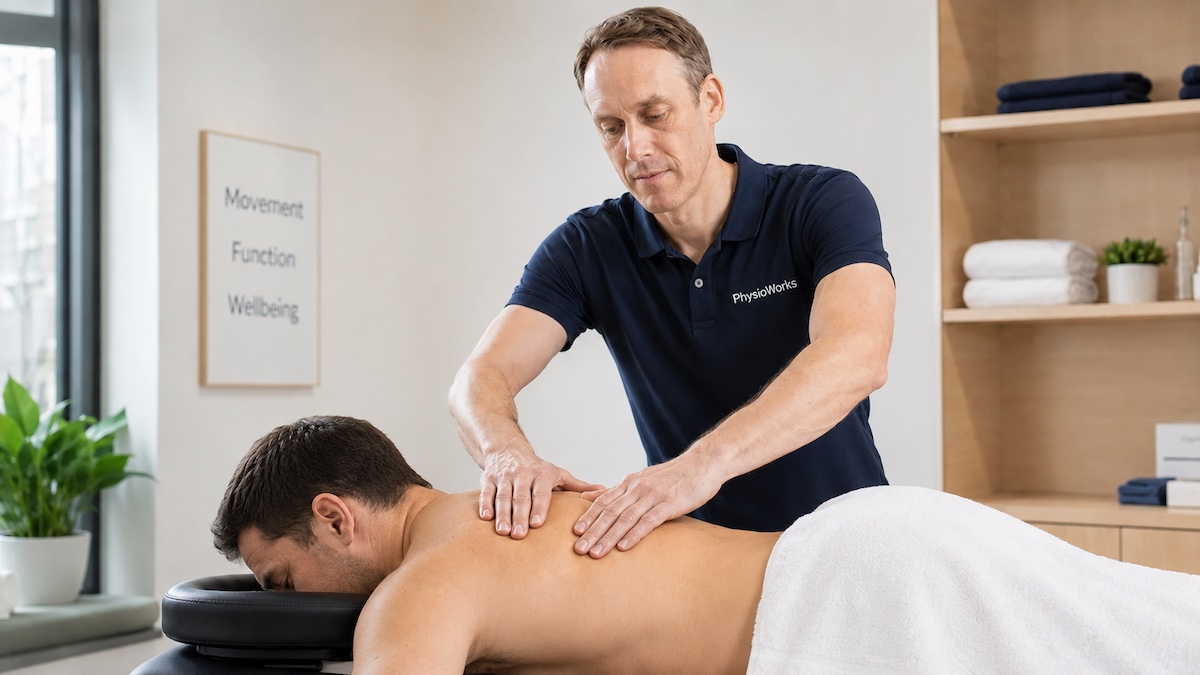
Massage satisfaction guarantee with therapist providing remedial upper-back and shoulder massage

Comfortable, professional massage care with clear communication.

The PhysioWorks massage satisfaction guarantee means that if you are not satisfied within the first 30 minutes of your massage, you may end the appointment and will not be charged.

The policy is designed to reduce uncertainty and help you book a massage in Brisbane with greater confidence. It applies to your satisfaction with the massage service rather than promising a particular health or pain-relief result.
Quick answer: Tell your massage therapist within the first 30 minutes if the session is not meeting your expectations. You may then stop the appointment without paying.

Massage is available at selected PhysioWorks clinics. Choose your clinic or therapist below if you know who you would like to book.

What Is the Massage Satisfaction Guarantee?

The massage satisfaction guarantee gives you an early opportunity to decide whether the session feels suitable. During the first 30 minutes, you can provide feedback about pressure, positioning, comfort and treatment focus.

Your therapist can adjust the massage where appropriate. However, if the treatment still does not meet your expectations, you may choose to end the appointment without being charged.

How Does the Guarantee Work?

The process is straightforward:

  1. Discuss your goals, symptoms and preferred pressure with your therapist before treatment begins.
  2. Give feedback during the massage if the pressure, position or treatment focus does not feel right.
  3. Allow your therapist an opportunity to adjust the session where appropriate.
  4. Tell your therapist within the first 30 minutes if you remain dissatisfied and want to stop.

Open communication gives your therapist the best chance to tailor the session to your needs.

What Does the Guarantee Cover?

The policy covers your satisfaction with the massage experience during the first 30 minutes. This may include concerns about:

  • massage pressure being too firm or too gentle
  • the treatment focus not matching your stated goals
  • discomfort with your position on the treatment table
  • communication or explanation during the session
  • the selected massage style not feeling suitable

What Does the Guarantee Not Promise?

The massage satisfaction guarantee does not promise that massage will remove pain, resolve an injury or produce a specific health outcome. Responses to massage vary between people and depend on factors such as the condition, symptom duration, general health and treatment goals.

Massage may help some people manage muscular tightness, stiffness, exercise-related soreness or stress. However, it may not suit every condition or every stage of recovery.

What Should You Expect at Your First Massage?

Your appointment should begin with a short discussion about your goals, current symptoms, health history and preferred pressure. This information helps your therapist choose a suitable approach and identify any areas that should be treated cautiously or avoided.

During the massage, you can ask for changes to pressure, positioning or treatment focus at any time. You do not need to wait until the end of the appointment to discuss a concern.

Which Massage Style May Suit You?

The most suitable massage style depends on your goals, comfort and preferred pressure.

Related Massage Services

When May Massage Not Be Appropriate?

Massage may need to be delayed or modified when you have an acute injury, unexplained swelling, skin infection, fever, suspected blood clot, recent surgery or another medical concern.

Tell your therapist about relevant health conditions, medications, recent injuries and procedures before treatment starts. Where massage does not appear suitable, another healthcare assessment may be a better next step.

Can You Claim Private Health Insurance?

Some private health insurance extras policies may provide a rebate for eligible remedial massage services. Cover, provider recognition, annual limits and rebate amounts vary between policies.

Check directly with your insurer before booking if a rebate is important to your decision.

Massage Satisfaction Guarantee FAQs

What is the PhysioWorks massage satisfaction guarantee?

If you are not satisfied within the first 30 minutes of your massage, you may stop the appointment and will not be charged.

When should I tell my massage therapist that I am not satisfied?

Tell your therapist as soon as you have a concern. To use the guarantee, you need to raise the issue and choose to stop within the first 30 minutes of the appointment.

Will I be charged if I stop the massage within 30 minutes?

No. If you remain dissatisfied and end the massage within the first 30 minutes under the satisfaction guarantee, you will not be charged for that appointment.

Does the guarantee promise that massage will relieve my pain?

No. The guarantee relates to satisfaction with the massage service. It does not promise pain relief, recovery or a particular clinical outcome.

Can the therapist change the pressure during my massage?

Yes. Tell your therapist if the pressure feels too firm or too gentle. They can usually adjust the pressure, your position or the area being treated.

Can I claim a private health insurance rebate?

Some extras policies provide rebates for eligible remedial massage services. Check your cover, annual limits and provider requirements directly with your insurer.

How do I book a PhysioWorks massage?

You can use the massage booking options below to select the clinic and therapist that best suit your needs.

What to Do Next

Choose the massage service that best matches your goals and tell your therapist about your preferred pressure, symptoms and concerns at the beginning of the appointment.

The massage satisfaction guarantee gives you an early opportunity to provide feedback, request changes or stop the session if it is not meeting your expectations.

Book Massage

Select your preferred clinic or massage therapist.

Remedial Massage Therapists

Our remedial massage therapists help relieve muscle tension, improve flexibility, reduce soft tissue pain, and support recovery from training loads, desk posture, and everyday physical stress.

Follow PhysioWorks

Get physiotherapy tips, exercise videos, recovery advice and blog updates.

References

  1. Mak SS, Mak S, Wan L, Farberov S, Bhandari M. Use of massage therapy for pain, 2018–2023. JAMA Netw Open. 2024;7(7):e2420773. doi:10.1001/jamanetworkopen.2024.20773
  2. Bervoets DC, Luijsterburg PAJ, Alessie JJN, et al. Massage therapy has short-term benefits for people with common musculoskeletal disorders compared to no treatment: a systematic review. J Physiother. 2015;61(3):106-116. doi:10.1016/j.jphys.2015.05.018

Non-Attendance Policy

Patient changing an appointment with a friendly PhysioWorks clinic receptionist

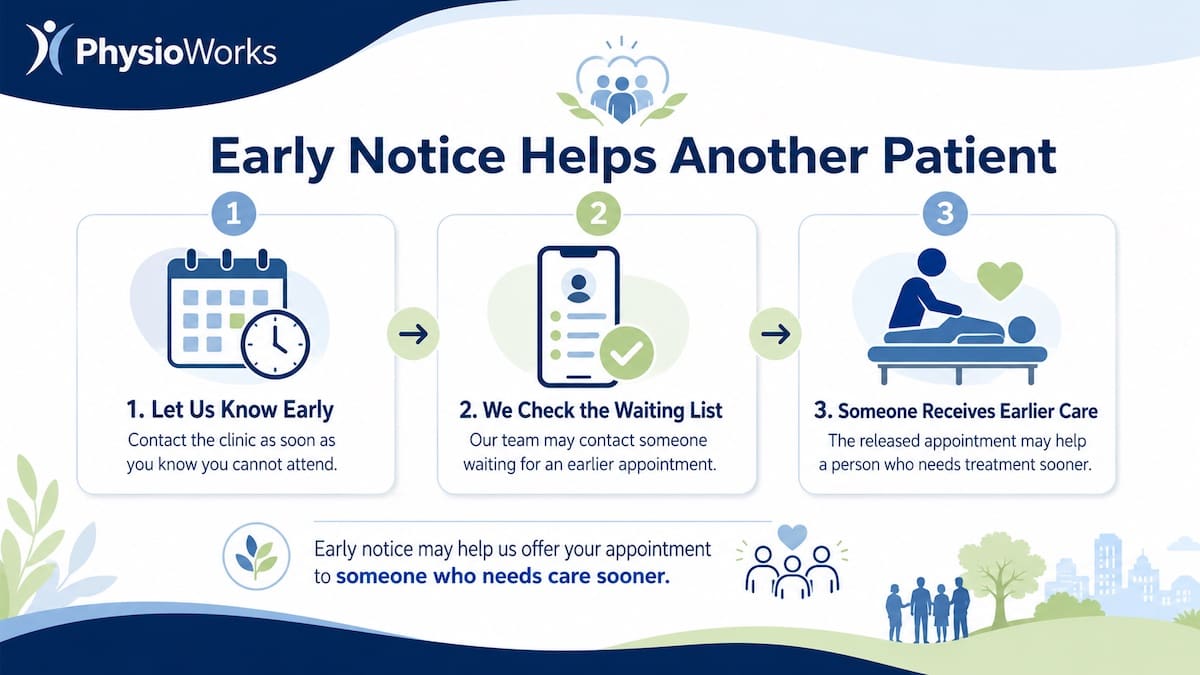
Giving early notice may help us offer your appointment to someone waiting for care.

The PhysioWorks non-attendance policy helps us keep appointments fair and available. When you give us early notice that you cannot attend, we may be able to offer your appointment to someone on our waiting list or a person who needs care sooner.

We understand that plans can change. Please contact us as early as possible so we can help you reschedule and make the appointment available to another patient where possible.

You can review our contact options for clinic phone numbers and other ways to contact our team.

Three-step infographic showing how early cancellation notice helps another patient

Early notice lets our team check the waiting list and may help someone receive care sooner.

Quick Answer

Please provide at least 24 hours’ notice for most PhysioWorks appointments. A fee may apply when an appointment is missed, cancelled late or cannot proceed because the patient arrives too late.

Different requirements may apply to NDIS and other funded appointments. These depend on the relevant funding rules and any terms agreed before treatment.

Why Do We Have a Non-Attendance Policy?

Every appointment reserves a clinician’s time for one patient. Giving adequate notice helps us offer cancelled appointments to other people who may be waiting for care.

In some cases, an available appointment may help someone with worsening symptoms, an urgent concern or a need for earlier treatment.

The policy also supports fair scheduling for patients, clinicians and clinic staff.

What Counts as a Late Cancellation or Non-Attendance?

A late cancellation or non-attendance may include:

  • not attending a scheduled appointment
  • cancelling or rescheduling without enough notice
  • arriving too late for the appointment to proceed safely or effectively

How Much Cancellation Notice Should You Give?

For most private and standard appointments, please give at least 24 hours’ notice when cancelling or rescheduling.

Earlier notice gives us the best chance of offering the appointment to someone else. Funding schemes, service agreements or specific appointment types may have different requirements.

What Happens if You Cancel Late or Miss an Appointment?

A late cancellation or non-attendance fee may apply. Depending on the appointment type, notice provided and funding arrangement, this may be up to the full scheduled consultation fee.

Private health insurance and Medicare generally do not provide benefits for an appointment that did not occur. You may therefore need to pay any applicable cancellation fee yourself.

Early Notice Can Help Someone Else

When you contact us early, our team may be able to offer the released appointment to someone on the waiting list or a person who needs care sooner.

Fees Are Not Applied Automatically in Every Situation

We understand that sudden illness, emergencies and other unexpected events can occur. Please contact the clinic as soon as possible so our team can review the circumstances fairly.

What Is the NDIS Cancellation Policy?

For relevant NDIS-funded appointments, a cancellation may be treated as a short-notice cancellation when it occurs within two business days of the scheduled appointment.

A fee may only be charged where the cancellation meets the current NDIS claiming requirements and the cancellation terms have been agreed with the participant. The relevant service agreement and current NDIS pricing guidance apply.

NDIS requirements can change. Where the current NDIS rules differ from information on this page or in an older agreement, the current rules take priority.

Do Other Funding Arrangements Have Different Rules?

They may. WorkCover, compulsory third-party insurance, Department of Veterans’ Affairs, Medicare, plan management and other third-party funding arrangements can have their own payment and cancellation requirements.

A funder may decline to pay a cancellation fee. Where this occurs, the patient may remain responsible for the fee if this was explained and agreed before the appointment.

Can an Exception Be Considered?

Yes. PhysioWorks may consider genuine emergencies, sudden illness and other significant unforeseen events. However, an exception is not guaranteed and will depend on the circumstances.

Contact the clinic promptly and provide any relevant information requested by our team.

What Happens if You Arrive Late?

Please contact the clinic if you expect to be late. Depending on the time remaining and the type of appointment, the clinician may:

  • provide a shorter appointment
  • adjust what can reasonably be completed
  • reschedule the appointment

The scheduled fee may still apply when late arrival substantially reduces the available appointment time or prevents the appointment from proceeding.

How Can You Cancel or Reschedule?

Contact your PhysioWorks clinic by phone, SMS or email as soon as you know that you cannot attend. Please do not rely on a message sent to an unmonitored account or social media page.

Include your name, clinic, appointment date and appointment time so our team can identify the booking promptly.

What Should You Do Next?

If you need to change an appointment, contact the clinic as early as possible. Adequate notice is the best way to avoid a cancellation fee and may help another patient access care sooner.

Choose your clinic and appointment pathway

Select a PhysioWorks clinic to continue to live booking, an appointment request or reception assistance.

Non-Attendance Policy FAQs

Will I be charged if I miss my appointment?

A fee may apply if you miss your appointment or cancel without enough notice. Depending on the appointment and funding arrangement, this may be up to the full scheduled consultation fee.

How much notice do I need to give?

Please give at least 24 hours’ notice for most private and standard appointments. NDIS-funded and other third-party appointments may have different requirements.

Why should I give as much notice as possible?

Early notice gives our team more time to offer the appointment to someone on the waiting list or a person who needs care sooner.

What is the NDIS cancellation notice period?

A relevant NDIS-funded appointment may be considered a short-notice cancellation when it is cancelled within two business days. Any charge must comply with the current NDIS claiming requirements and the participant’s agreed cancellation terms.

Can a late cancellation fee be waived?

PhysioWorks may consider sudden illness, genuine emergencies and other significant unforeseen events. However, an exception is not guaranteed and depends on the circumstances.

What happens if I arrive late?

Your appointment may need to be shortened or rescheduled if there is not enough time to proceed safely or effectively. Depending on the circumstances, the scheduled fee may still apply.

How do I cancel or reschedule an appointment?

Contact your PhysioWorks clinic by phone, SMS or email as early as possible. Include your name, clinic, appointment date and appointment time so the team can identify your booking.

Why is a non-attendance policy necessary?

The policy protects appointment availability, recognises the clinician time reserved for each patient and helps us offer cancelled appointments to other people waiting for care.

Follow PhysioWorks

Get physiotherapy tips, exercise videos, recovery advice and blog updates.

What to Do If Your Treatment Experience Falls Short

If your treatment experience falls short, contact PhysioWorks promptly so we can review your concerns, clarify what happened, and discuss the most suitable next step. In many cases, an early conversation helps resolve the issue quickly and supports better ongoing care through our physiotherapy service or the most appropriate clinic pathway.

At PhysioWorks, we aim to provide clear advice, respectful care, and practical treatment plans across our Brisbane clinics. However, healthcare does not always go exactly as expected. If you leave an appointment feeling unsure, disappointed, or concerned, please contact us or speak with your nearest PhysioWorks clinic as soon as possible.

What should you do right away?

  • Contact PhysioWorks promptly.
  • Explain what concerned you about your appointment.
  • Tell us the clinic location and appointment date.
  • Let us know what outcome you would like reviewed.

What should you do if your treatment experience falls short?

If your treatment experience falls short, contact us early so we can review your care and help decide the most appropriate next step. That may include a follow-up discussion, a reassessment, a second opinion within PhysioWorks, or guidance towards another suitable care option.

Please do not wait for the issue to become more frustrating. Early feedback gives us the best chance to respond well and support your recovery. Depending on your situation, that may also involve reviewing related concerns such as pain management, back pain, neck pain, or another injury or condition pathway.

Our commitment to your satisfaction

We take patient feedback seriously. If you are unhappy with any part of your consultation, we aim to listen carefully, review the circumstances fairly, and discuss a reasonable way forward.

  • We may arrange a follow-up conversation to clarify your concerns.
  • We may recommend a reassessment if your symptoms, goals, or treatment response need another review.
  • Where appropriate, we may organise a complimentary re-evaluation and treatment with another experienced physiotherapist.
  • If needed, we may suggest further investigations or referral to another suitable healthcare practitioner.

Our goal is to help you feel heard, supported, and clear about your next step.

What happens after you contact us?

Once you contact us, we will usually review your concerns with the relevant team member and decide the most appropriate response. We aim to keep the process respectful, practical, and focused on what helps you most.

  1. We listen to your feedback and confirm the main issue.
  2. We review your treatment notes and the clinical situation.
  3. We discuss options with you, which may include reassessment, treatment review, referral, or another suitable pathway.
  4. We explain the agreed next step clearly so you know what happens next.

Can you ask to see a different practitioner?

Yes. If another clinician is more suitable, we may recommend a review with a different physiotherapist or another appropriate healthcare provider. This can be helpful if you would feel more comfortable with a fresh perspective or a different treatment approach.

We may also guide you towards a more suitable service pathway, such as physiotherapy, another clinic location through our clinics page, or further information via our FAQ articles.

When should you raise a formal concern?

Most concerns can be managed directly with the clinic first. However, if your concern relates to patient safety, professional conduct, privacy, or a matter that has not been resolved after speaking with the provider, you may wish to use a formal complaints pathway.

For PhysioWorks-related enquiries, start with our contact page or your nearest clinic. If you need an external pathway in Queensland, you can review the Office of the Health Ombudsman. If your concern relates to a registered health practitioner, Ahpra also explains how to raise a concern about a health practitioner.

How can you help us resolve the issue quickly?

Clear details help us review your concern properly. When you contact us, it helps to include:

  • your full name and best contact details
  • the clinic location and date of your appointment
  • the main concern you would like reviewed
  • what outcome or next step you would like us to consider

This helps our team assess the situation efficiently and respond more usefully.

What if your symptoms became worse after treatment?

Some symptoms can flare briefly after treatment, especially after hands-on care, exercise progression, or a change in activity. However, a stronger-than-expected reaction, a new concern, or worsening symptoms should be reviewed promptly. Contact us today so we can discuss what happened and guide your next step.

If you are looking for more information while waiting for review, you may also find our advice pages on lower back pain, neck pain, or injuries and conditions helpful.

Can you still book if you feel unsure?

Yes. If you are uncertain about whether to rebook, contact our team first. We can help you decide whether a review with the same practitioner, another clinician, or a different service is the better fit for your situation.

If you are ready to move forward, use the booking options below or visit our clinic directory to choose the location that suits you best.

Common questions about treatment feedback

Will PhysioWorks listen if I was unhappy with my appointment?

Yes. We encourage patients to tell us when something did not feel right. Clear feedback helps us review your experience, explain your options, and decide on a practical next step.

Can I ask to see a different practitioner?

Yes. If another clinician is more suitable, we may recommend a review with a different physiotherapist or another appropriate healthcare provider.

What if my symptoms became worse after treatment?

Some symptoms can flare briefly after treatment, but a stronger-than-expected reaction or a new concern should be reviewed promptly. Please contact your clinic so we can discuss what happened and advise the next step.

Where should I start if I am not sure who to contact?

The best place to start is the PhysioWorks contact page or the main clinic list. Our team can then direct you to the right clinic or person.

What to do next

If you were dissatisfied with your consultation, contact PhysioWorks promptly so we can review your concern and guide the most appropriate next step. Early feedback often makes it easier to clarify the issue, support your care plan, and help you feel more confident about what happens next.

If you are ready to arrange a follow-up appointment, book with your preferred clinic below.

Choose your clinic and appointment pathway

Select a PhysioWorks clinic to continue to live booking, an appointment request or reception assistance.

Follow PhysioWorks

Get physiotherapy tips, exercise videos, recovery advice and blog updates.

References

  1. Office of the Health Ombudsman. Office of the Health Ombudsman. Accessed March 27, 2026.
  2. Australian Health Practitioner Regulation Agency. Concerned about a health practitioner?. Accessed March 27, 2026.

What to Expect with Your Physio Bike Fit

A physio bike fit assesses both you and your bike to improve cycling comfort, efficiency, and control. Small position changes can make a meaningful difference, especially if you ride regularly, have recurring discomfort, or want a setup that better suits your body.

At PhysioWorks, a physio bike fit looks beyond simple measurements. Your physiotherapist may assess your riding goals, posture, flexibility, strength, symptoms, and current bike setup before recommending practical adjustments. For broader service information, visit our Bike Fit Physio page.

What happens during a physio bike fit?

A physio bike fit usually starts with a discussion about your riding style, training volume, goals, and any current or previous injuries. Your physiotherapist then assesses how your body and bike work together.

Depending on the level of bike fit you choose, your assessment may include:

  • reviewing your riding style and skill level, such as recreational, road, track, mountain bike, or performance riding
  • discussing your injury history, including knee pain, back pain, hip pain, neck pain, or post-surgical issues
  • measuring your body proportions
  • checking likely frame size suitability
  • reviewing your current bike setup
  • assessing flexibility, joint mobility, muscle control, and functional strength
  • observing your riding posture and pedalling pattern
  • using movement or slow-motion video analysis where appropriate
  • working with you to improve your position, setup, and pedalling efficiency

Some riders also request a detailed bike fit report, which may outline recommended setup changes, exercises, or self-management strategies.

Who may benefit from a bike fit?

A physio bike fit may help a wide range of cyclists. It can suit competitive riders, recreational riders, and anyone who feels sore, restricted, or inefficient on the bike.

You may benefit if you have:

  • knee, back, hip, shoulder, neck, hand, or wrist discomfort when cycling
  • saddle pressure, perineal discomfort, numbness, or pins and needles
  • hand numbness on longer rides
  • fatigue cramps or poor pedalling efficiency
  • difficulty reaching the drops comfortably
  • knees that drift or wobble while pedalling
  • saddle sliding or tilting issues
  • locked-out arms or excessive upper body tension
  • a goal to improve power, efficiency, or long-ride comfort

If your symptoms are already affecting your riding, you may also find these pages useful: Cycling Injuries, Cycling Tips, Knee Pain, and Lower Back Pain.

Bike size vs bike fit

Bike size and bike fit are not the same thing. Bike size refers to the general frame dimensions that may suit your height and proportions. Bike fit goes further by adjusting your position to better match your body, symptoms, flexibility, and cycling goals.

Many bike shops can estimate a suitable frame size and make basic setup changes. That may work well for some riders. However, riders spending longer in the saddle, chasing more comfort, or trying to improve efficiency often need a more individual assessment.

Can the right bike size still feel wrong?

Yes. Even if your bike is the correct size, the fit may still feel uncomfortable. That can happen when flexibility is limited, muscle control is reduced, pain is already present, or past injuries affect how you tolerate a riding position.

For example, a rider with short legs, a longer trunk, restricted hip mobility, or a previous surgery may need position changes that go beyond standard sizing rules. A physio bike fit aims to balance comfort, control, and sustainable performance.

Can a physio bike fit help cycling pain?

A physio bike fit may help reduce cycling-related pain when your symptoms are linked to posture, alignment, repeated overload, or poor setup. That said, some cyclists also need a broader physiotherapy assessment, exercise program, or load-management advice.

Research suggests that professional bike fitting is associated with improved comfort and lower odds of pain during cycling, while saddle height, reach, and other setup factors can influence both performance and injury risk.1-4

What to do next

If you are getting recurring cycling pain, numbness, fatigue, or poor comfort on the bike, a physio bike fit is a sensible next step. A physiotherapist may help determine whether the main issue is your setup, your body’s current capacity, or a combination of both.

To learn more, visit Bike Fit Physio, compare the Professional Bike Fit Options, or book at Sandgate PhysioWorks.

Choose your clinic and appointment pathway

Select a PhysioWorks clinic to continue to live booking, an appointment request or reception assistance.

Follow PhysioWorks

Get physiotherapy tips, exercise videos, recovery advice and blog updates.

References

  1. Quesada JIP, Kerr ZY, Bertucci W, Carpes FP. The association of bike fitting with injury, comfort, and pain during cycling: an international retrospective survey. Eur J Sport Sci. 2019;19(6):842-849. doi:10.1080/17461391.2018.1556738
  2. Bini RR, Hume PA, Croft JL. Effects of bicycle saddle height on knee injury risk and cycling performance. Sports Med. 2011;41(6):463-476. doi:10.2165/11588740-000000000-00000
  3. Johnston TE, Scholes RL. The influence of extrinsic factors on knee biomechanics during cycling: a systematic review of the literature. Int J Sports Phys Ther. 2017;12(7):1023-1034.
  4. Bini RR, Flores N, Hume PA. Methods to determine saddle height in cycling and implications of changes in saddle height in performance and injury risk: a systematic review. J Sports Sci. 2022;40(4):386-400. doi:10.1080/02640414.2021.1994727

Shoe Size Conversion Chart

Shoe size conversion chart for men and women showing US, UK, Australian and European sizes with stylish shoes at the top corners.

Use this shoe size conversion chart as a starting point before checking fit.

This shoe size conversion chart helps you compare Australian, US, UK, European and centimetre shoe sizes. It is useful when you buy shoes online, travel overseas, or compare brands that use different sizing systems.

Shoe sizing is a guide only. A better fitting shoe should feel comfortable through the heel, midfoot and toe box. Correct footwear can also help reduce unwanted pressure on your feet, ankles, knees and lower back.

Quick Fit Checklist

  • Leave a thumb-width of space in front of your longest toe.
  • Check that your heel feels secure and does not slip.
  • Make sure the toe box is wide enough for your foot shape.
  • Try shoes later in the day when feet may be slightly larger.
  • Use brand-specific sizing charts when available.

What Do You Need Help With?

How Do You Use a Shoe Size Conversion Chart?

Use a shoe size conversion chart by finding your usual size in one system, then following the row across to compare other systems. For example, an Australian men’s size 8 usually aligns closely with a UK 8, US men’s 9 and European 42.

However, sizing varies between brands, shoe styles and foot shapes. Running shoes, work shoes, school shoes and fashion shoes may all fit differently. If pain persists despite changing shoes, a physiotherapist may assess your walking pattern, foot posture and load tolerance.

Common Shoe Sizing Mistakes

  • Choosing size based only on the number, not fit.
  • Ignoring width and toe box shape.
  • Buying shoes early in the day when feet may be smaller.
  • Assuming all brands fit the same.
  • Not accounting for foot swelling during sport or long walks.

International Shoe Size Conversion Chart

The table below compares common adult shoe sizes. On mobile, scroll sideways to view the full chart.

Sizing system Size 1 Size 2 Size 3 Size 4 Size 5 Size 6 Size 7 Size 8 Size 9
Australian Men’s 4 5 6 7 8 9 10 11 12
Australian / US Women’s 6 7 8 9 10 11 12 13 14
US Men’s 5 6 7 8 9 10 11 12 13
European 37 38 39.5 40.5 42 43 44.5 46 47
UK 4 5 6 7 8 9 10 11 12
Foot length in cm 22.8 23.7 25.1 25.4 26.3 27.1 28.0 28.8 29.6

Tip: Scroll sideways on mobile to view all sizes.

Important: conversion charts provide an estimate only. Shoe width, arch shape, toe box space and heel hold often matter as much as the number printed inside the shoe.

Do Different Shoes Fit Differently?

Yes. Shoe fit varies depending on purpose, brand and design. A size that feels right in one shoe may feel too narrow, loose or short in another.

  • Running shoes: often need extra toe room for swelling and repeated impact.
  • Work shoes: usually need support, durability and a secure heel fit.
  • Dress shoes: may feel narrower or firmer through the forefoot.
  • Sports shoes: should match the movement demands of the sport.
  • School shoes: need enough room for growth without slipping.

Why Does Correct Shoe Size Matter?

Correct shoe size matters because tight, loose or poorly shaped shoes can increase pressure on the foot and alter how you move. This may contribute to blisters, toe pain, bunions, plantar fasciitis, heel pain or lower limb discomfort.

Incorrect shoe size can contribute to specific symptoms such as:

Research on occupational footwear also links inappropriate footwear with pain in the foot, ankle, knee, hip and lower back. For general footwear advice, Better Health Channel notes that correctly fitted, supportive shoes can help protect foot health and comfort.

How Should Shoes Fit?

A well-fitting shoe should feel secure at the heel, comfortable across the midfoot and roomy enough around the toes. Your toes should not feel squeezed, and the shoe should match the activity you plan to use it for.

  • Toe room: leave space for your longest toe, not just your big toe.
  • Width: avoid shoes that press across the forefoot.
  • Heel fit: avoid excessive slipping at the back of the shoe.
  • Support: choose support based on your foot shape, activity and symptoms.
  • Activity match: running, walking, work and dress shoes have different demands.

If you run regularly, also see our guide to choosing running shoes and our article on running pain versus running injuries.

When Should You Seek Help for Shoe-Related Foot Pain?

Seek help if foot, ankle, knee or back pain continues after changing shoes, reducing load or checking your size. Persistent symptoms may relate to footwear, strength, mobility, walking pattern, training load or an underlying foot condition.

A physiotherapist can assess your movement, discuss footwear choices and guide a plan for pain, activity and exercise. This may include advice about orthotics, calf strength, foot posture, load management or footwear changes.

Still Not Sure About Your Shoe Size?

If your shoes feel uncomfortable or your pain continues, a physiotherapist can assess your foot shape, walking pattern and footwear to guide the right choice.

What To Do Next

If your shoes fit well but pain continues, book a physiotherapy assessment. We can check whether your symptoms are coming from your foot, ankle, knee, hip or lower back, then guide your next steps.

Choose your clinic and appointment pathway

Select a PhysioWorks clinic to continue to live booking, an appointment request or reception assistance.

Feet Products

These feet products are commonly used by our physiotherapists to improve support, comfort, strength, balance, flexibility, and home exercise programs.

View all feet products

Follow PhysioWorks

Get physiotherapy tips, exercise videos, recovery advice and blog updates.

FAQs About Shoe Size Conversion

How do I convert US shoe size to UK?

For many adult shoes, subtract 1 from a US men’s size to estimate the UK size. For women’s shoes, the difference is often about 2 sizes. However, always check the brand’s own sizing chart because sizing can vary.

Are Australian shoe sizes the same as UK sizes?

Australian men’s shoe sizes are often close to UK men’s sizes. Australian women’s sizing often follows US women’s sizing. Use the shoe size conversion chart as a guide, then confirm comfort by checking length, width and heel fit.

What does EU shoe size mean in Australia?

EU shoe size refers to the European sizing system. To compare it with Australian sizing, find the EU size in the conversion chart and follow the same row across to the Australian men’s or women’s size.

How do I measure my feet for shoes?

Place your foot on paper, trace around it, then measure from the heel to the longest toe. Measure both feet and use the longer foot as your guide. Also check width, as length alone may not give a comfortable fit.

Can the wrong shoe size cause foot pain?

Yes. Shoes that are too tight, loose, narrow or poorly shaped may contribute to pressure areas, blisters, heel pain, bunions or changes in walking pattern. Persistent pain should be assessed rather than managed by shoe changes alone.

Should running shoes be a bigger size?

Many runners choose slightly more toe room because feet can swell during longer runs. The shoe should still feel secure around the heel and midfoot. Avoid excessive movement inside the shoe, as this may increase rubbing or instability.

Related Articles

  1. Choosing the Right Running Shoes - Compare footwear choices for running comfort and injury prevention.
  2. Running Pain Versus Running Injuries - Learn when running discomfort may need assessment.
  3. Foot Pain Conditions - Review common foot problems and treatment pathways.
  4. Plantar Fasciitis - Read about common causes of heel and arch pain.
  5. Bunions - Learn how bunions can affect footwear comfort.
  6. Orthotics - See when shoe inserts may support foot comfort.
  7. Heel Pain Causes - Review common reasons for heel pain.
  8. Achilles Tendinopathy - Learn how footwear and load may affect Achilles pain.
  9. Diabetes and Foot Health - Read about foot care considerations for people with diabetes.
  10. Active Foot Posture Exercises - Build better foot control and strength.

References

  1. Pereira-Barriga MC, Borrero-Hernández JM, García-Sanz-Calcedo J, et al. A review of the injuries caused by occupational footwear. Occupational Medicine. 2024;74(3):218-225.
  2. Orr RM, Maupin D, Palmer R, Canetti EFD, Simas V, Schram B. The impact of footwear on occupational task performance and musculoskeletal injury risk: a scoping review to inform tactical footwear. International Journal of Environmental Research and Public Health. 2022;19(17):10703.
  3. Better Health Channel. Choosing the right shoe. Victorian Government.
  4. Better Health Channel. Footwear for healthy feet. Victorian Government.
  5. Healthdirect Australia. Foot care. Australian Government-funded health information service.
You've just added this product to the cart: