Good Back Posture Tips


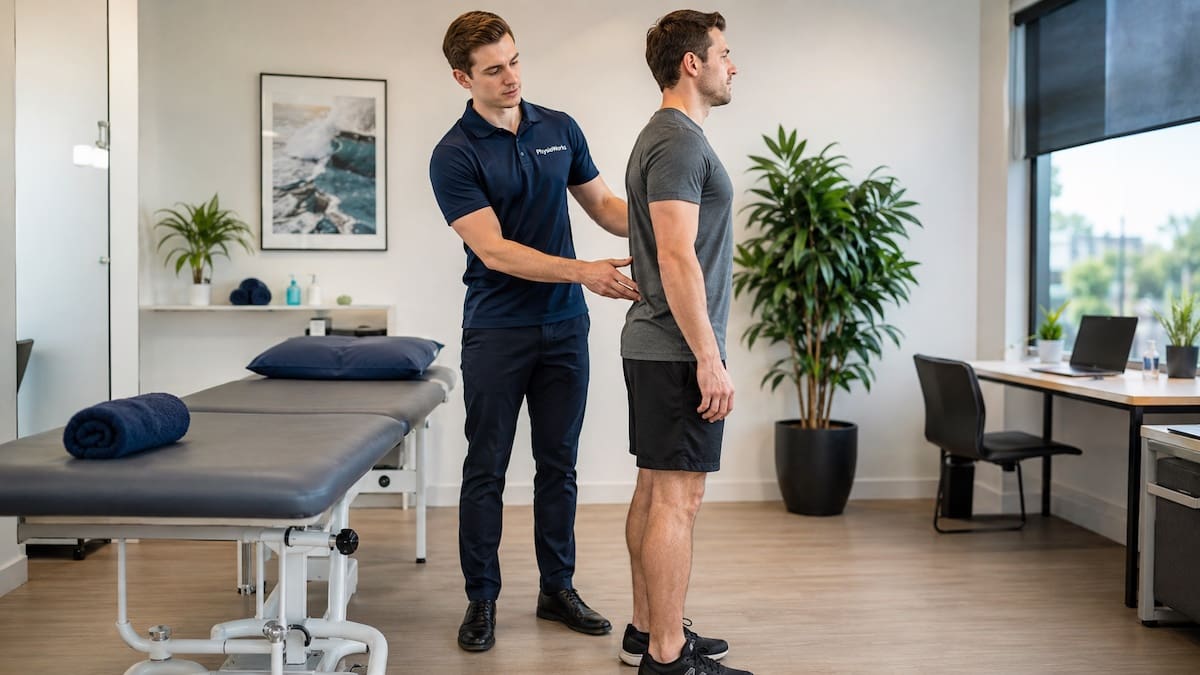
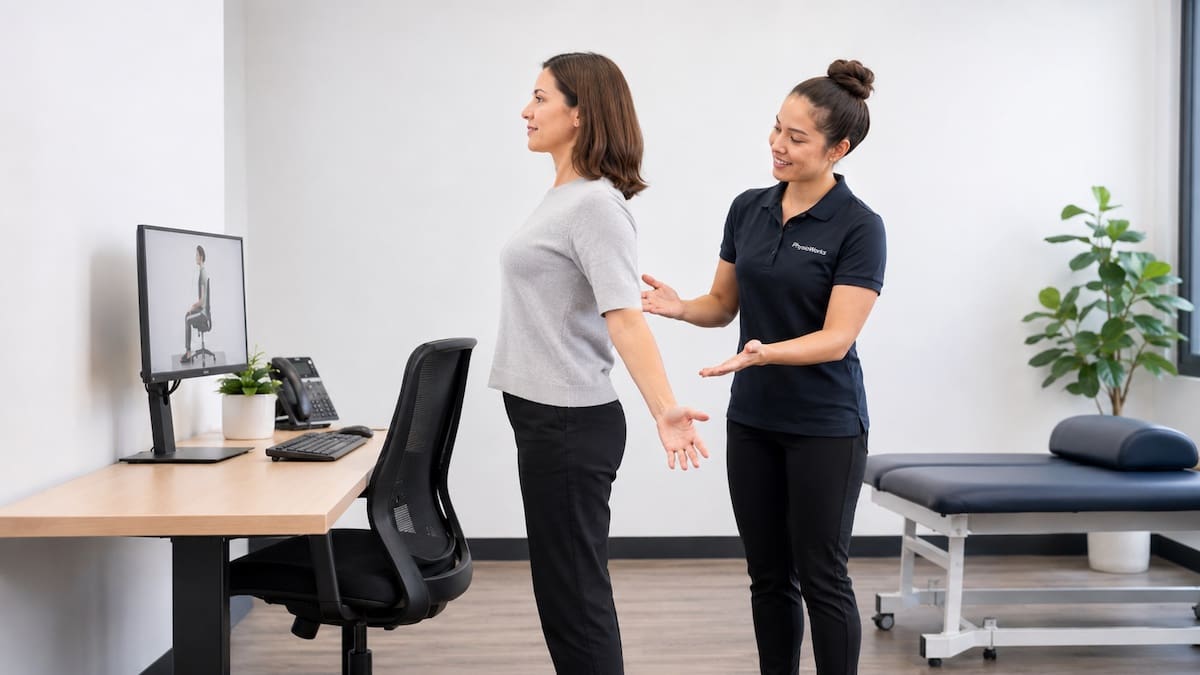
A physiotherapist assesses standing spinal posture and alignment.
Good back posture means keeping your spine supported while you sit, stand, move, work, and lift. It does not mean holding one stiff “perfect” position all day. Better posture usually comes from body awareness, movement breaks, strength, and practical setup changes.
If posture-related strain builds during your day, start with our guides to posture correction, correct sitting posture, and common causes of back pain. These pages help you match your symptoms to the right next step.
Good back posture in 60 seconds
- Change position often instead of chasing one perfect pose.
- Support your lower back during long sitting blocks.
- Keep screens, keyboards, and work tools within easy reach.
- Use your hips, knees, and thighs when lifting heavier items.
- Build strength so your spine copes better with daily load.
- Seek advice if pain keeps returning or spreads into an arm or leg.
Which posture problem sounds most like you?
A forward head position, long screen time, or repeated phone use may add strain.
Rounded shoulders and reduced mid-back movement can build stiffness across the day.
Long static sitting, poor support, or low movement tolerance may be involved.
Desk height, screen position, mouse reach, and laptop use may be adding load.
What is good back posture?
Good back posture is a supported, balanced spine position that lets you breathe, move, and work without extra strain. It should feel relaxed rather than forced. In practice, it means using your natural spinal curves, sharing load well, and changing position often.
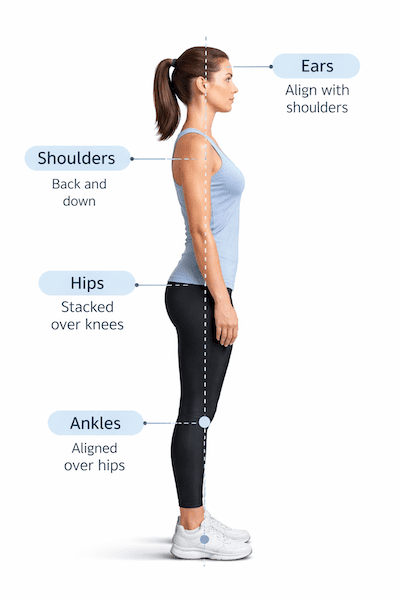
When standing, aim to keep your ears roughly over your shoulders, relax your shoulders, and share weight through both feet. When sitting, support your lower back, keep your feet flat where possible, and avoid staying collapsed into one position for long blocks.
Why does good back posture matter?
Good back posture matters because long, fixed, or awkward positions can increase strain on muscles, joints, discs, and supporting tissues. It may not be the only cause of pain, but it can reduce your comfort and work tolerance when combined with long sitting, low activity, or poor desk setup.
Healthdirect posture advice supports regular activity, frequent position changes, better workstation design, safe lifting habits, and physiotherapy guidance when needed. This matches the practical goal: move better, support your body, and build capacity.
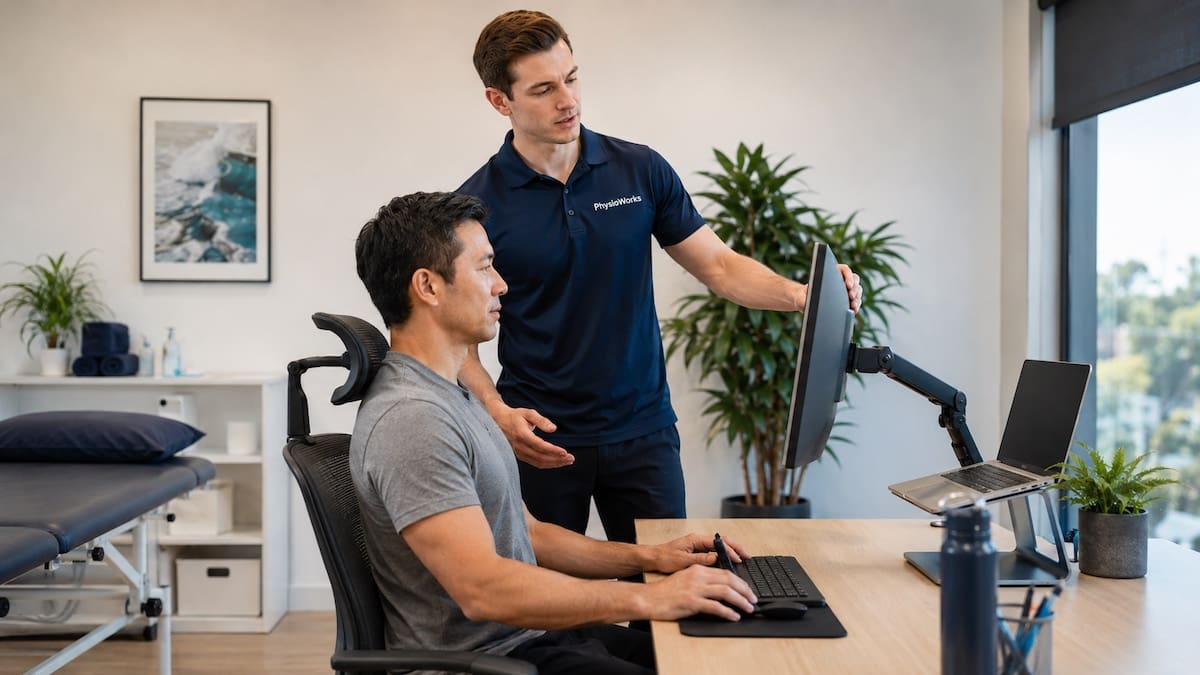
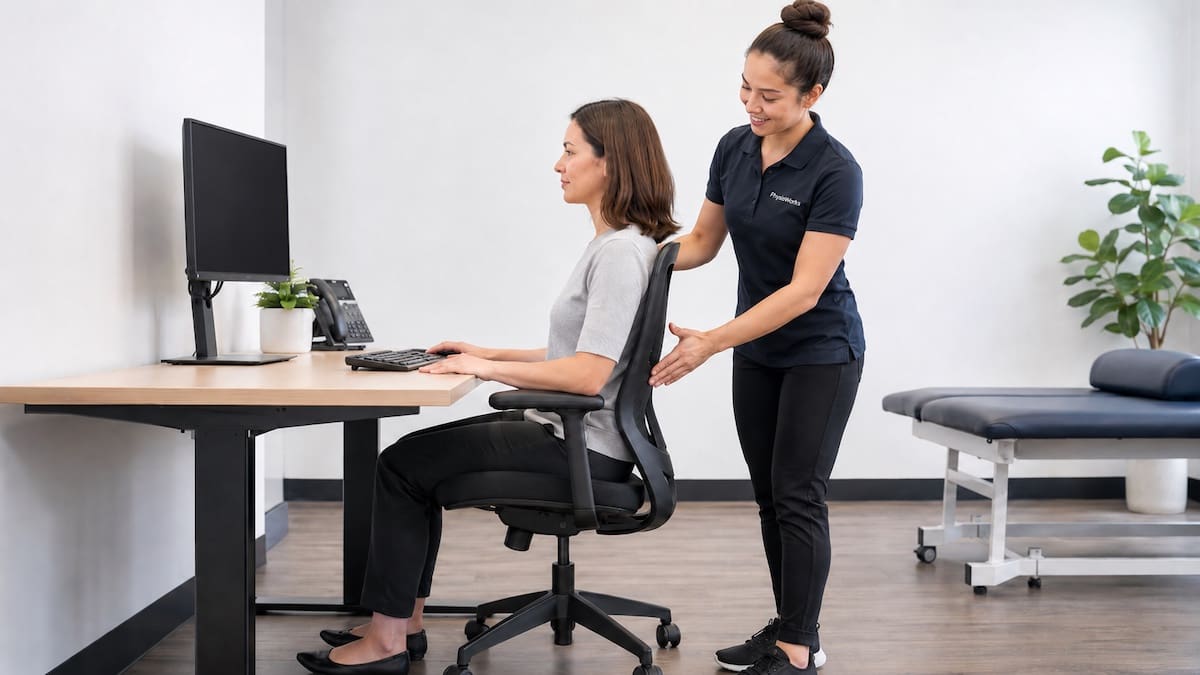
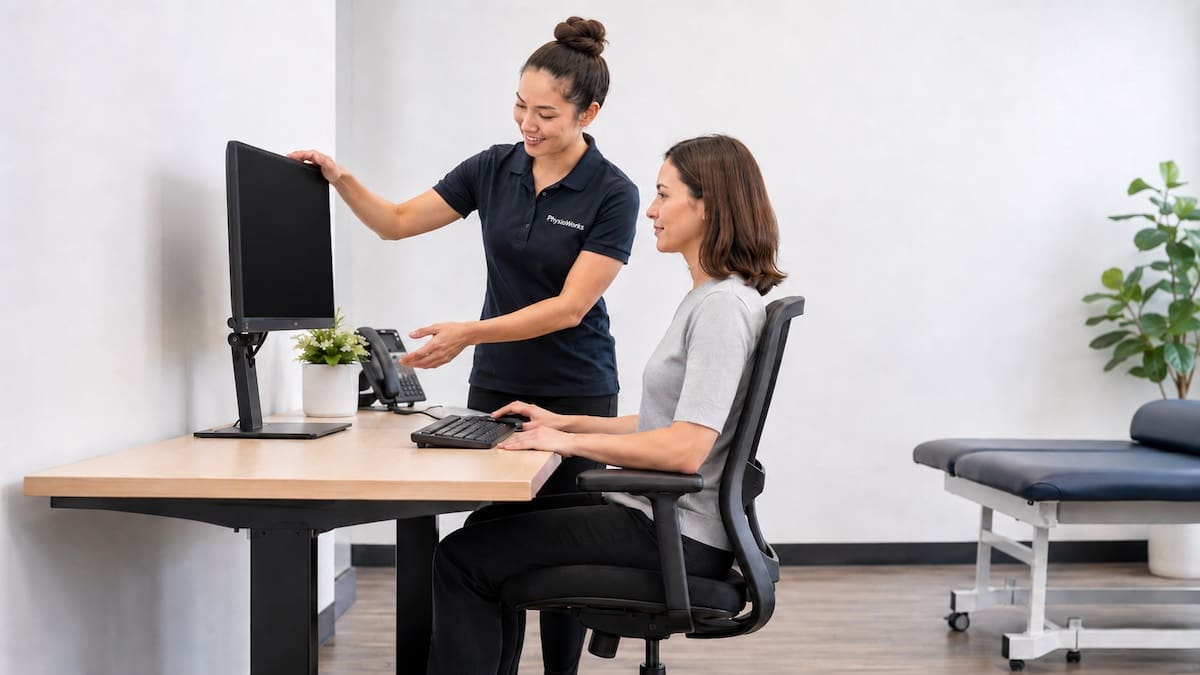
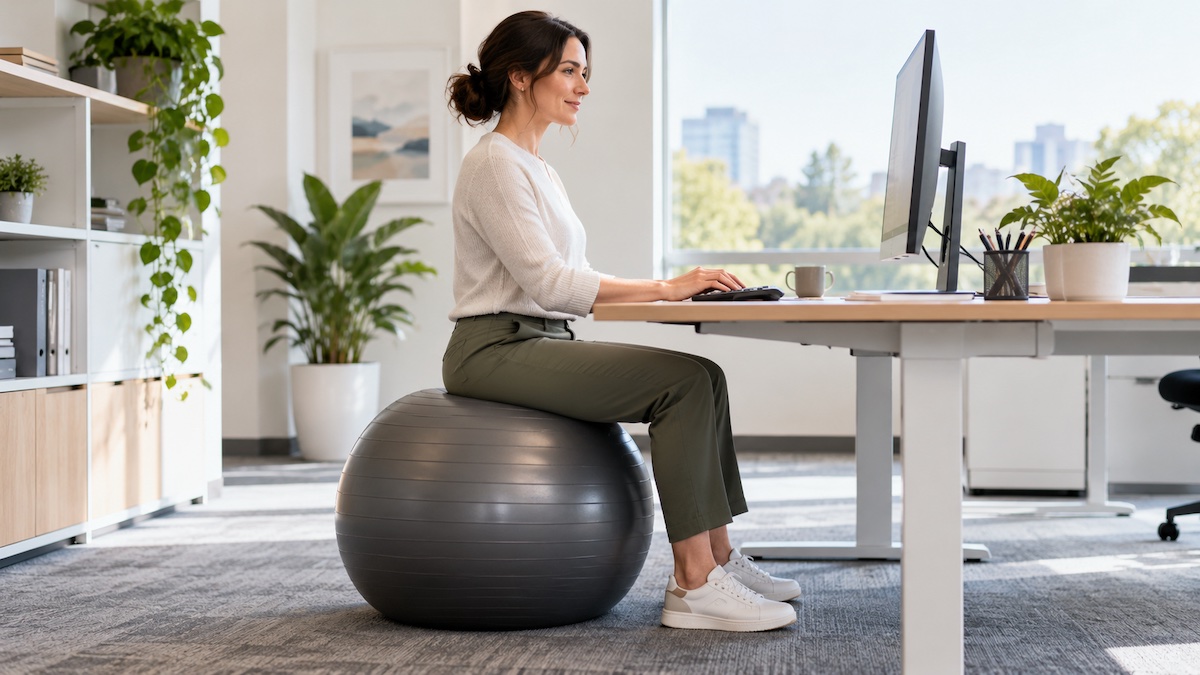
Desk setup changes can reduce spinal strain during screen work.
How can you improve good back posture at work and at home?
You can improve good back posture by combining better positioning with more movement. A supportive chair, sensible desk height, and better screen position all help. However, the bigger gain usually comes from avoiding long, uninterrupted static postures.
At work, place your screen near eye level, keep your keyboard and mouse close, and support your forearms where possible. At home, watch laptop use, lounge posture, phone posture, and how long you stay in one position.
If symptoms keep returning during office work, study, or work-from-home tasks, an ergonomic workstation assessment may help you prioritise the changes that matter most.
Three posture wins you can start today
Stand, walk, or stretch every 30 to 60 minutes rather than holding one posture all day.
Use chair support and simple alignment cues instead of sitting stiffly upright.
Improve strength, endurance, and mobility so your body tolerates daily loads better.
Can one perfect posture prevent back pain?
No single perfect posture can prevent back pain. Your body is built to move, not hold one position all day. A better goal is to use a few comfortable postures, move often, and build enough strength to cope with work, study, sport, and lifting.
Trying to sit “perfectly” can make some people tense their shoulders, brace their lower back, or overthink normal movement. Use posture as a guide, not a rigid rule.
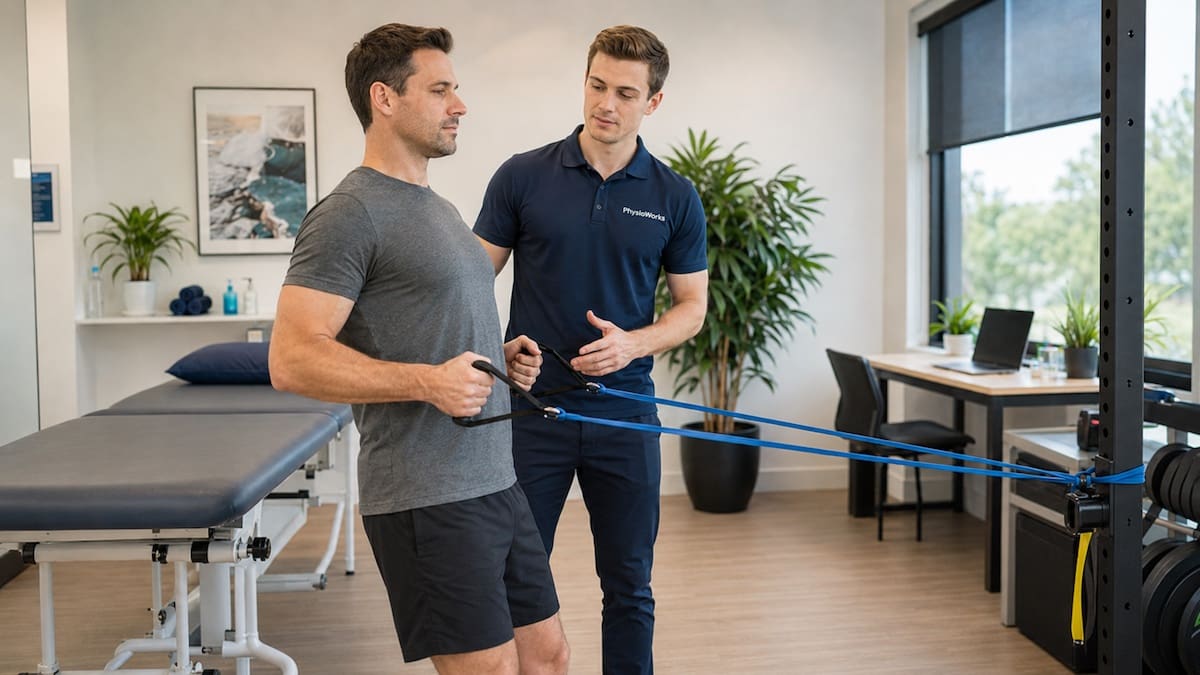
Resistance band rowing helps build upper back posture strength.
What exercises help good back posture?
Exercises that help good back posture usually target the upper back, shoulder blades, trunk, hips, and neck. The aim is not to force your spine straight. Instead, exercise should help your body support itself with less fatigue.
Useful options may include posture exercises, core stability exercises, thoracic mobility, shoulder blade strengthening, and guided Pilates for back pain where appropriate.
| Daily task | Try this | Avoid relying on |
|---|---|---|
| Desk work | Screen near eye level, keyboard close, short standing breaks. | Holding one upright pose for hours. |
| Phone use | Bring the phone higher and change hands often. | Looking down for long blocks. |
| Lifting | Keep the load close and use your hips, knees, and thighs. | Twisting while holding a heavy object. |
| Driving | Sit back, support your lower back, and adjust mirrors after setup. | Reaching too far for the wheel. |
When should you get help for posture-related pain?
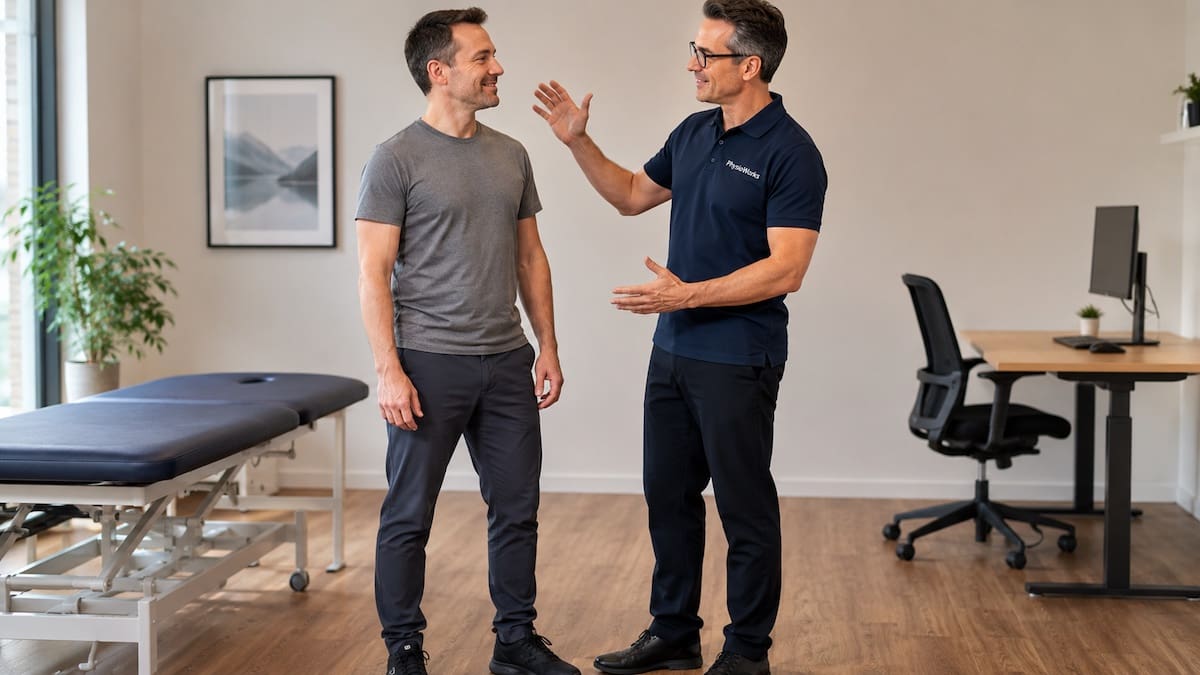
You should get help if posture-related pain keeps returning, limits work, affects sleep, or spreads into your arm or leg. A physiotherapist can assess your movement, strength, work setup, symptoms, and goals before building a plan.
Book sooner if you notice:
- pain that is getting worse rather than easing
- pins and needles, numbness, or weakness
- pain that spreads from your back into your leg
- headaches linked with neck or desk posture
- symptoms that return whenever you sit or work
- uncertainty about which exercises are safe for you
Back Posture FAQs
What is good back posture?
Good back posture means your spine is supported while you sit, stand, move, and lift. It should feel balanced and relaxed, not stiff. It also means changing position often so one area of your spine does not carry the same load for too long.
How can I improve my back posture?
You can improve your back posture by moving more often, supporting your lower back, setting up your workstation well, and building strength through your trunk, hips, and upper back. Start with small changes that you can repeat each day.
What are the signs of poor back posture?
Signs that posture may be part of the problem include stiffness after sitting, rounded shoulders, forward head position, low back ache, neck tightness, and feeling better after movement. These signs do not prove one cause, but they can guide the next step.
Why is good back posture important?
Good back posture is important because it helps your body share load more evenly. It may reduce muscle fatigue during sitting, standing, lifting, and desk work. It works best when combined with movement breaks and regular exercise.
What exercises help with good back posture?
Helpful exercises often target the upper back, shoulder blades, trunk, hips, and neck. Common options include posture resets, thoracic mobility, core stability, and upper-back strengthening. The best exercise plan depends on your symptoms and goals.
How does ergonomics affect good back posture?
Ergonomics affects good back posture by changing how easily your body can stay supported during work or study. Chair height, screen position, keyboard reach, mouse setup, and task layout all matter. A better setup should still include regular movement breaks.
Related posture and back pain articles
- Posture Correction — broader posture advice and physiotherapy treatment options.
- Improving Posture — simple changes for everyday posture habits.
- Correct Sitting Posture — desk and chair setup basics.
- Posture Exercises — guided strengthening and mobility options.
- Back Pain — common causes and treatment pathways.
- Ergonomic Workstation Assessment — workstation support for desk-related symptoms.
What should you do next if posture is causing pain?
If posture-related pain is mild, start with simple changes for one week. Move more often, improve your sitting setup, and try a few gentle posture exercises. Track what helps and what flares your symptoms.
If pain keeps returning, affects your work, or spreads beyond your back, book a physiotherapy appointment. Your physiotherapist can assess your spine, movement habits, strength, and workstation setup, then guide a plan that fits your day.
Choose your clinic and appointment pathway
Select a PhysioWorks clinic to continue to live booking, an appointment request or reception assistance.
Back Support Products
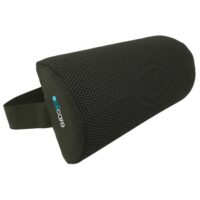
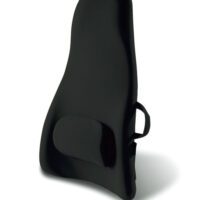
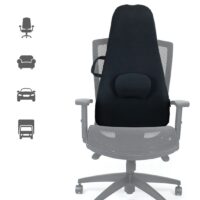
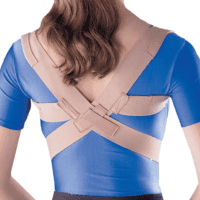
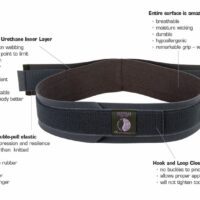
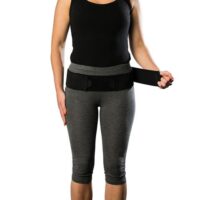
These back support products are commonly used by our physiotherapists to help reduce back pain, improve comfort, and support your recovery at home.
-
-
 Braces & Supports, Back, Maternity, SIJ
Maternity Support Belt – OPPO 4062
$37.00Select optionsQuick View -
 Back, Braces & Supports, Maternity, SIJ
Core Stability Support – OPPO 3462
$54.00Select optionsQuick View - Braces & Supports, Back, Maternity, SIJ
AOM38 AllCare Ortho Core Stability Belt
$49.95Select optionsQuick View -
-
-

 Back, Braces & Supports, Maternity, Posture
Pregnancy Belly Band & C-Section 3-in-1
$94.99Select optionsQuick View -
 Back, Braces & Supports, Maternity, Posture
Maternity Back Support – OPPO 2062
$60.00 – $64.00Select optionsQuick View



References
- Healthdirect Australia. How to improve your posture. Healthdirect Australia. Accessed June 24, 2026.
- Santos W, Rojas C, Isidoro R, et al. Efficacy of ergonomic interventions on work-related musculoskeletal pain: a systematic review and meta-analysis. J Clin Med. 2025;14(9):3034. doi:10.3390/jcm14093034
- Chen M, Sparkes V, Sheeran L. Systematic review of digital health interventions to support self-management of low back pain in the workplace. Digit Health. 2025;11:20552076251336281. doi:10.1177/20552076251336281
- Cheng M, Tian Y, Ye Q, Li J, Xie L, Ding F. Evaluating the effectiveness of six exercise interventions for low back pain: a systematic review and meta-analysis. BMC Musculoskelet Disord. 2025;26(1):433. doi:10.1186/s12891-025-08658-0