Knee

Meniscus Surgery or Physiotherapy?

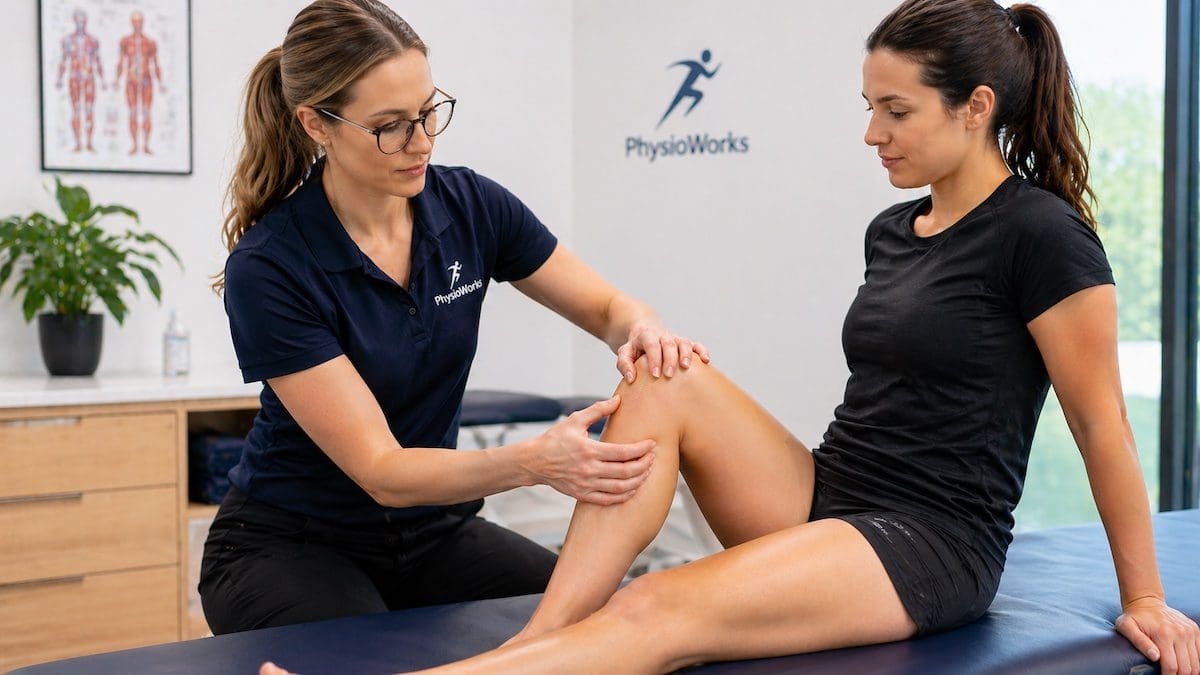
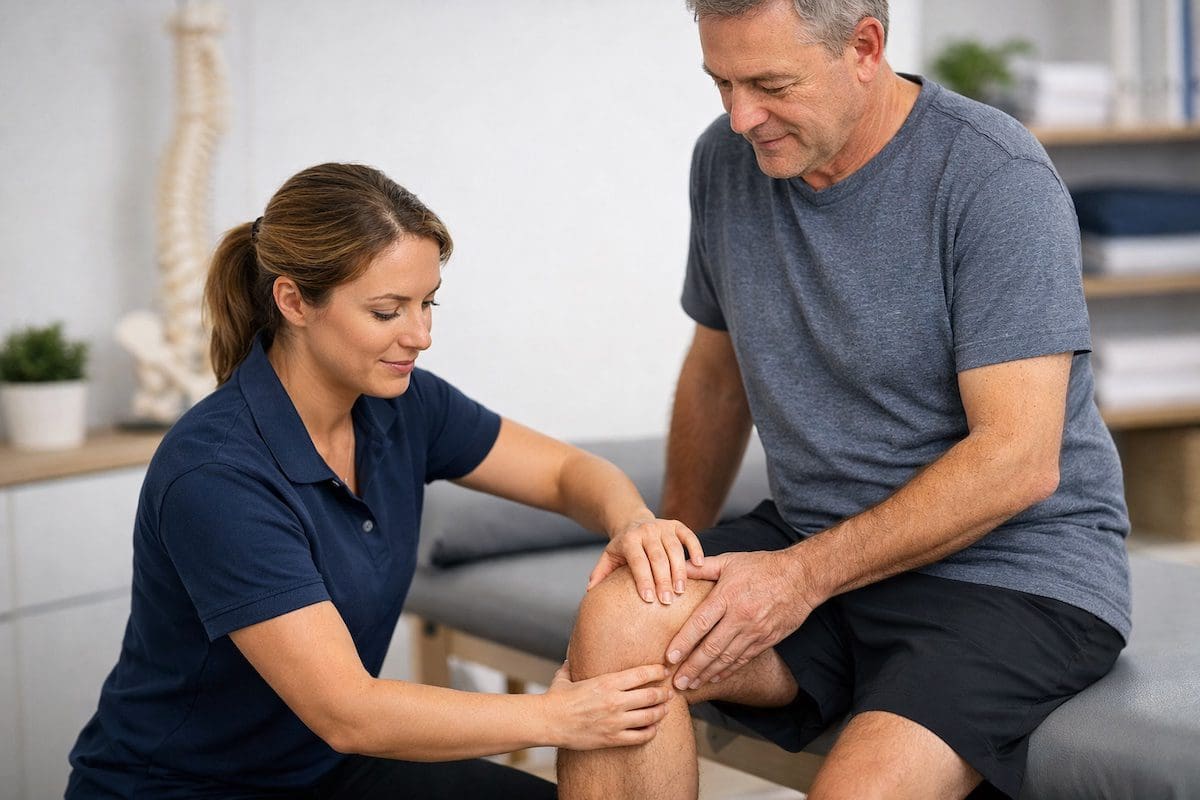
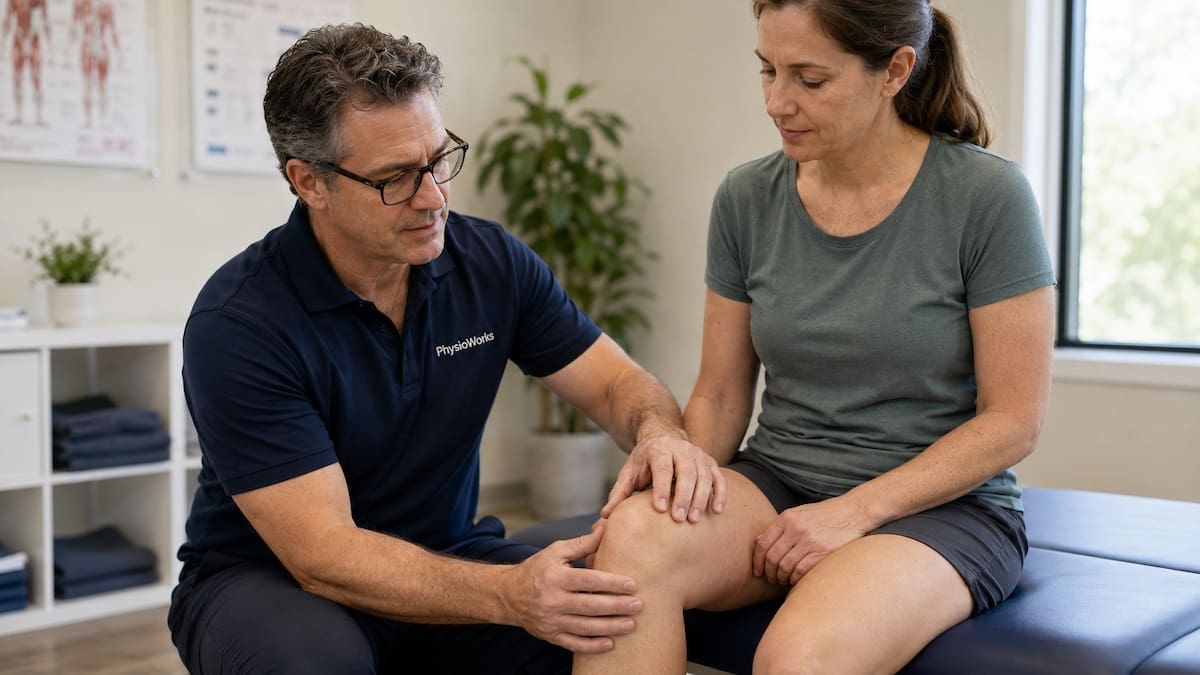
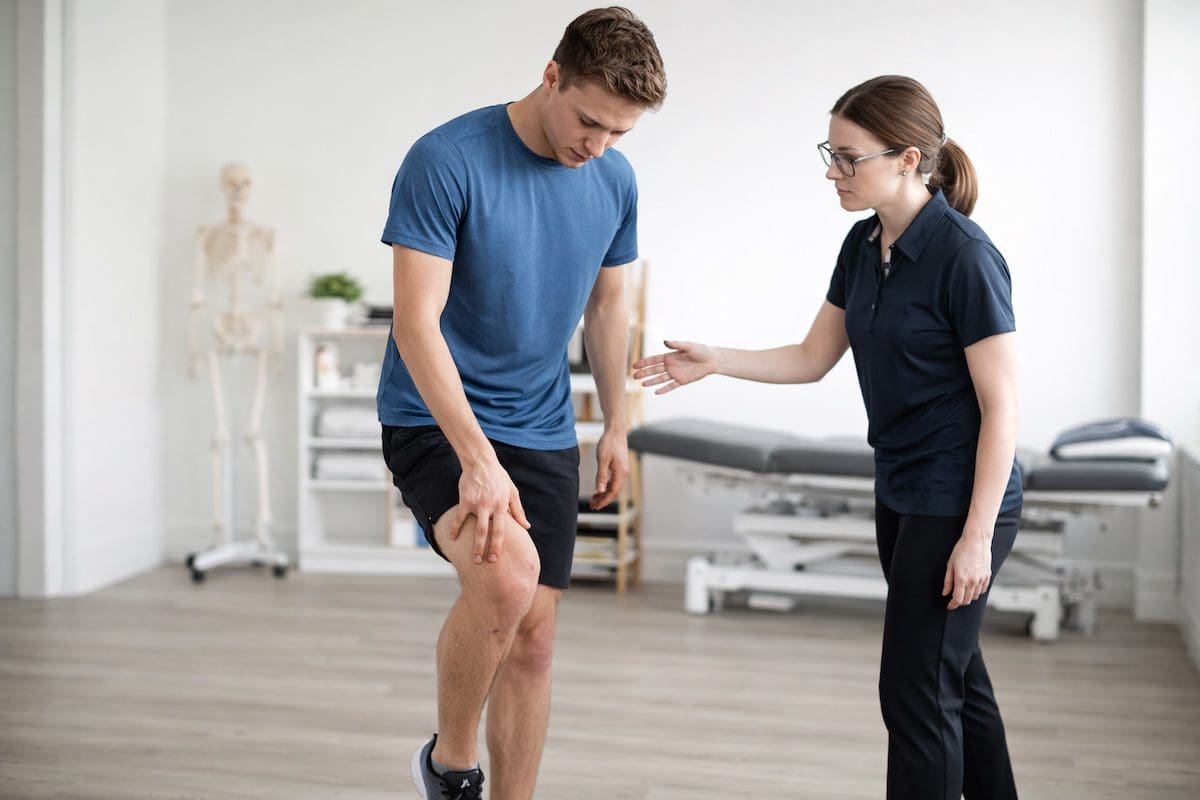
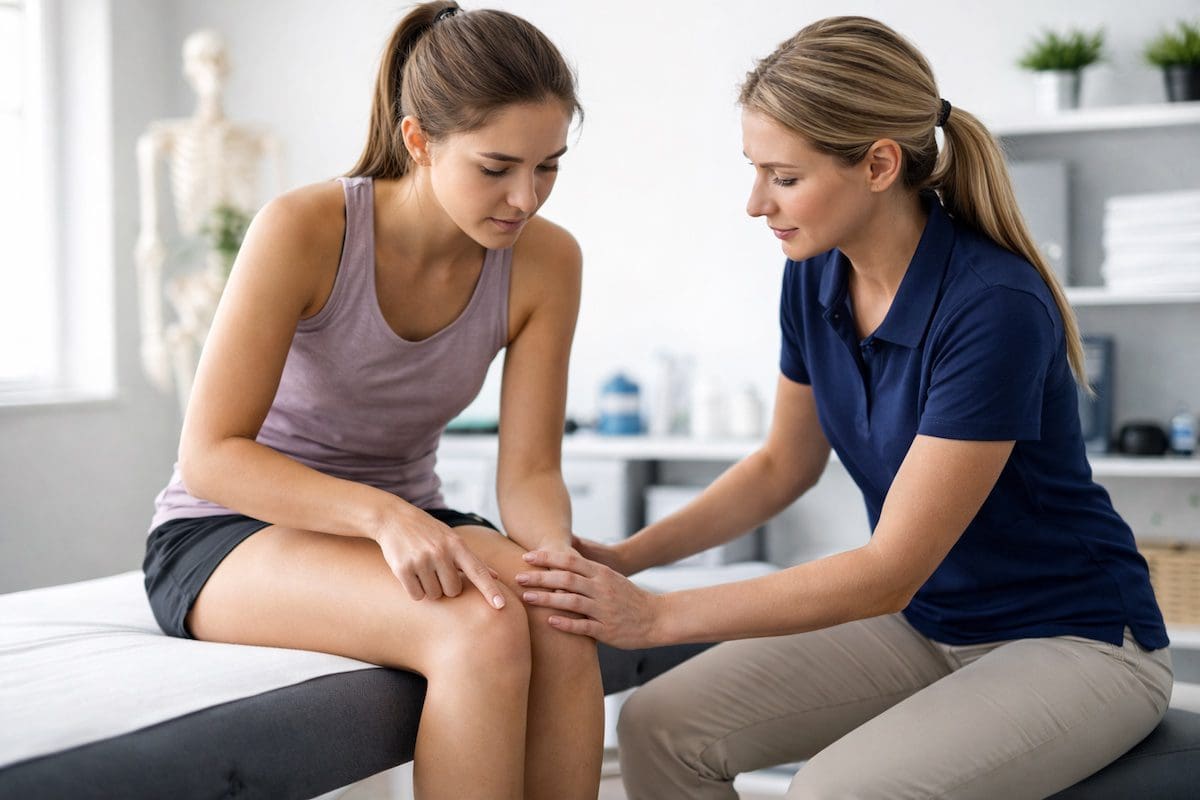
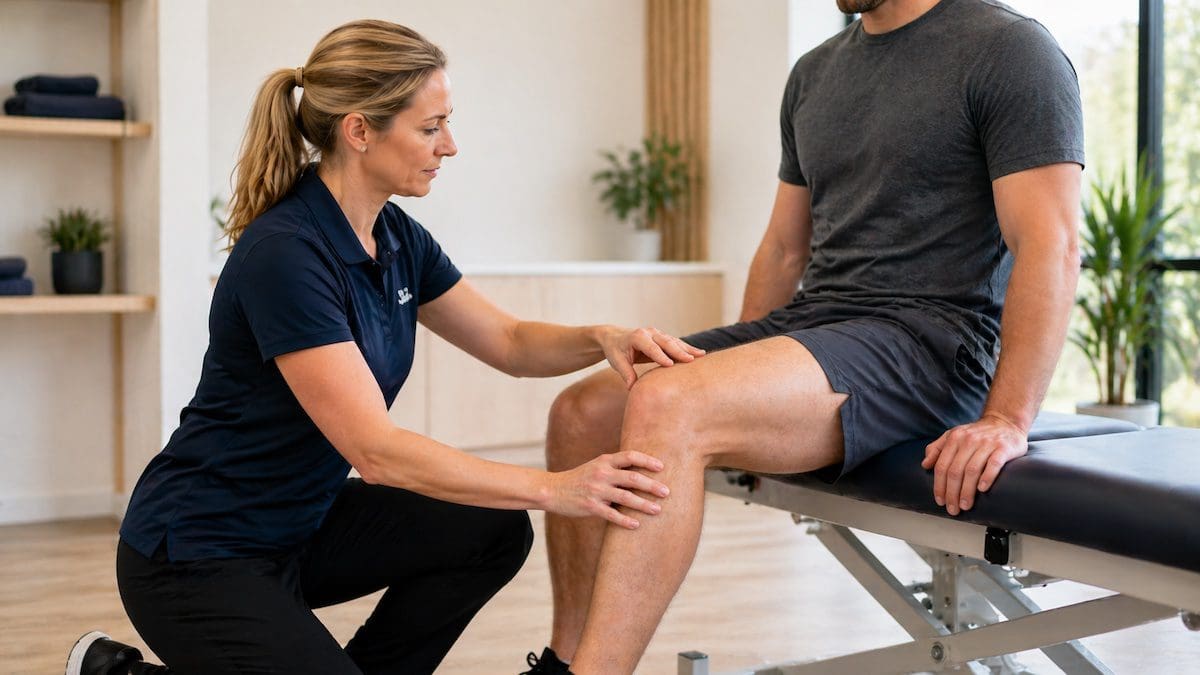
Meniscus surgery or physiotherapy medial knee joint line assessment during physio review

Meniscal assessment helps guide the right treatment path.

Meniscus surgery or physiotherapy? For many people with a degenerative meniscus tear, physiotherapy is the right first step. A guided rehab plan can often improve pain, swelling, strength and daily function without surgery. However, a locked knee, a displaced fragment, or a major twist injury may still need early medical or orthopaedic review.

This FAQ helps you compare both paths. It explains when rehab is often the safer start, when surgery may be needed, and what signs should prompt faster review. For a wider guide to knee pain, visit our main knee hub.

Quick Answer

  • Physiotherapy is often the first choice for a degenerative meniscus tear.
  • Surgery may be needed if the knee is truly locked or cannot straighten.
  • A large acute tear after a twist may need early surgical review.
  • MRI can help, but scan results do not decide care by themselves.
  • Assessment should match the scan, your symptoms and your goals.

What Is a Meniscal Injury?

A meniscal injury affects one of the two C-shaped cartilage pads inside your knee. These pads help spread load, support joint control and protect the knee during walking, stairs, squats, twists and sport.

A tear can happen suddenly after a pivot or deep bend. It can also build over time as part of age-related knee change. If your pain started during sport or a clear twist, our meniscus tear guide may help.

When Is Meniscus Surgery or Physiotherapy the Better Option?

The better option depends on the tear type, your age, your symptoms, your sport or work needs, and whether the knee is blocked. Degenerative tears often respond well to rehab. A locked knee or a large displaced tear may need faster surgical review.

Key Decision Factors

  • Did the pain start after a twist, or did it build slowly?
  • Can the knee fully straighten?
  • Did swelling appear quickly after injury?
  • Does the knee truly lock, or does it only feel stiff?
  • Does the knee give way with walking or stairs?
  • Does your goal involve sport, heavy work, or daily comfort?

What Types of Meniscal Tears Matter Most?

Acute meniscal tears usually happen after twisting, cutting, pivoting or deep bending under load. They are more common in sport. The injury story is often clear.

Degenerative meniscal tears often build more slowly. They are common in middle-aged and older adults. These tears may sit alongside other knee changes and do not always need surgery.

When Is Physiotherapy Usually the Better First Option?

Physiotherapy is often the better first option when the tear is degenerative, the knee is not locked, and the main problems are pain, swelling, stiffness, weakness or low confidence. In this setting, a graded rehab plan can help you move better while avoiding the risks and downtime of surgery.

Rehab often focuses on swelling control, knee movement, quadriceps strength, hip strength, balance and graded return to activity. If you need a practical starting point, our knee exercises guide covers common early options.

When Might Meniscus Surgery Be More Appropriate?

Surgery may be more appropriate when the knee is truly locked, when a loose piece blocks movement, or when a large acute tear is unlikely to settle with rehab alone. Surgical review may also help if a repairable tear is likely, especially in a younger person after a fresh twist injury.

Seek Help Sooner If:

  • you cannot fully straighten the knee
  • the knee locked after a twist
  • swelling came on quickly after injury
  • the knee keeps catching or giving way
  • pain is severe or getting worse

How Is a Meniscal Injury Assessed?

A physiotherapist or knee surgeon will use your injury story, symptoms and physical tests to guide the next step. Joint-line pain, swelling, loss of extension and pain with twisting can point to a meniscal problem.

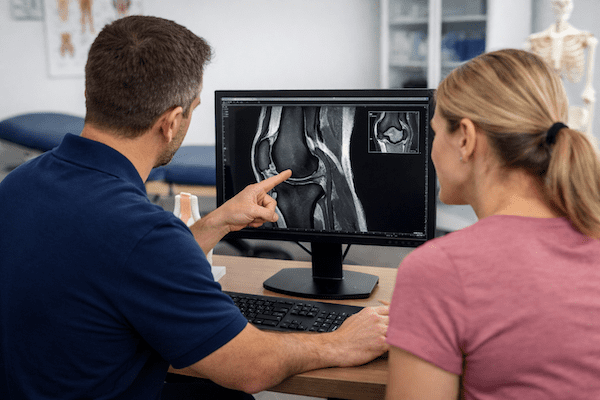
MRI may help when the diagnosis is unclear, when surgery is being considered, or when the knee is not improving as expected. Even so, many adults have scan changes that do not need surgery. For a broader decision guide, read should I see a doctor or physio for a knee injury?.

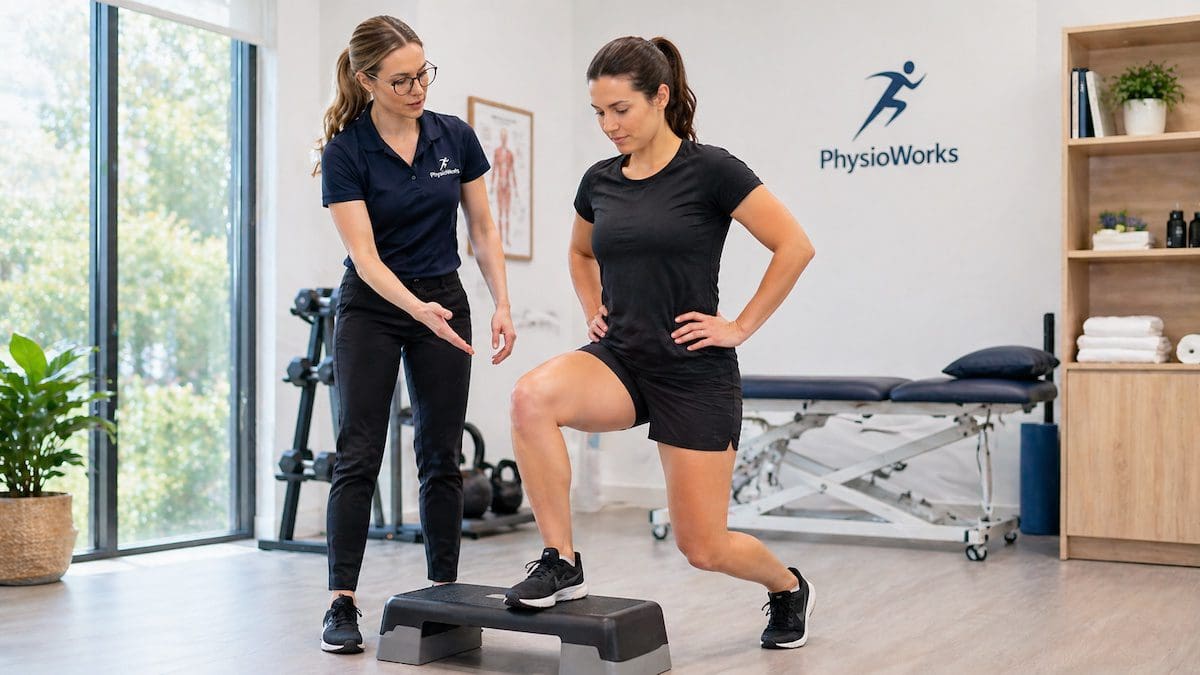
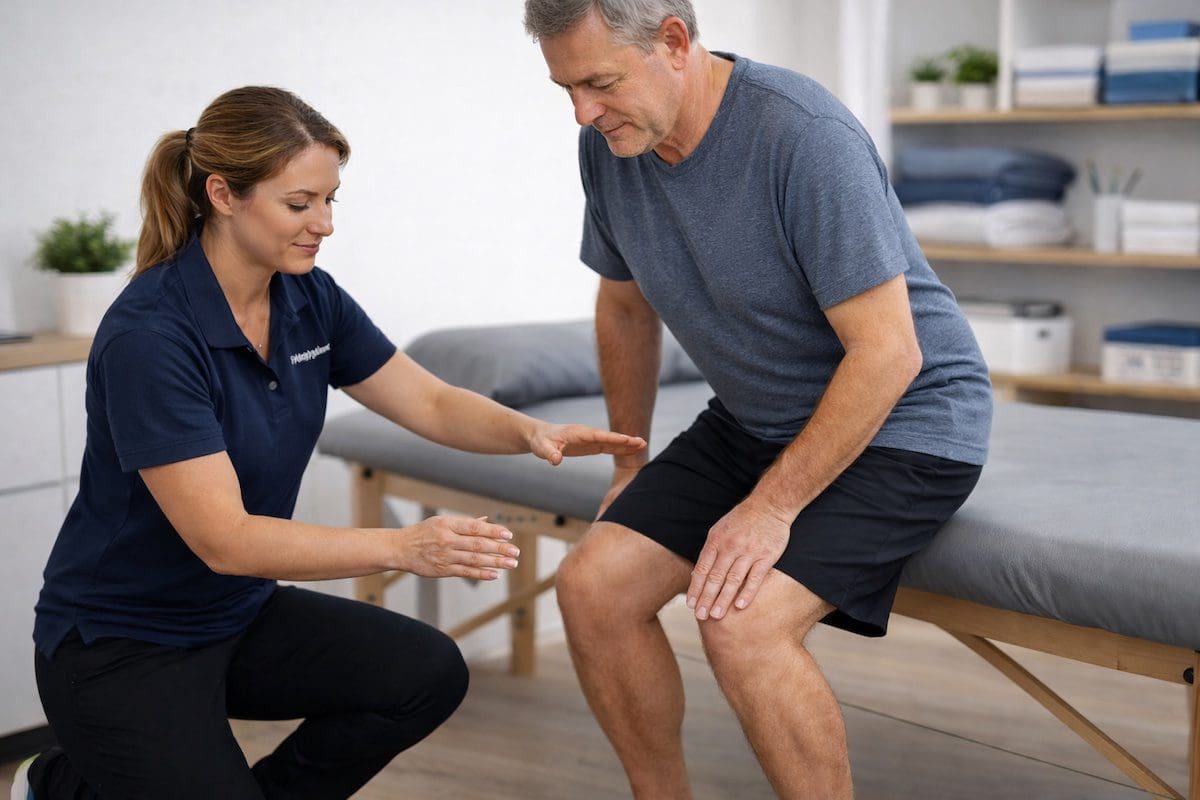
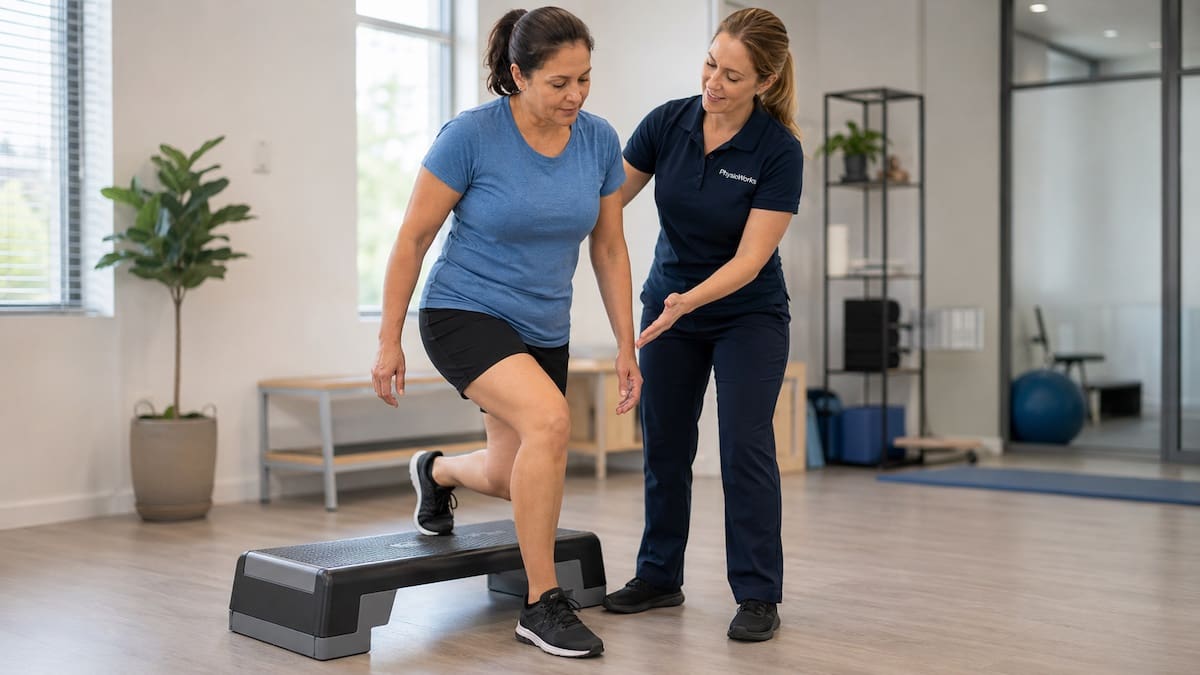
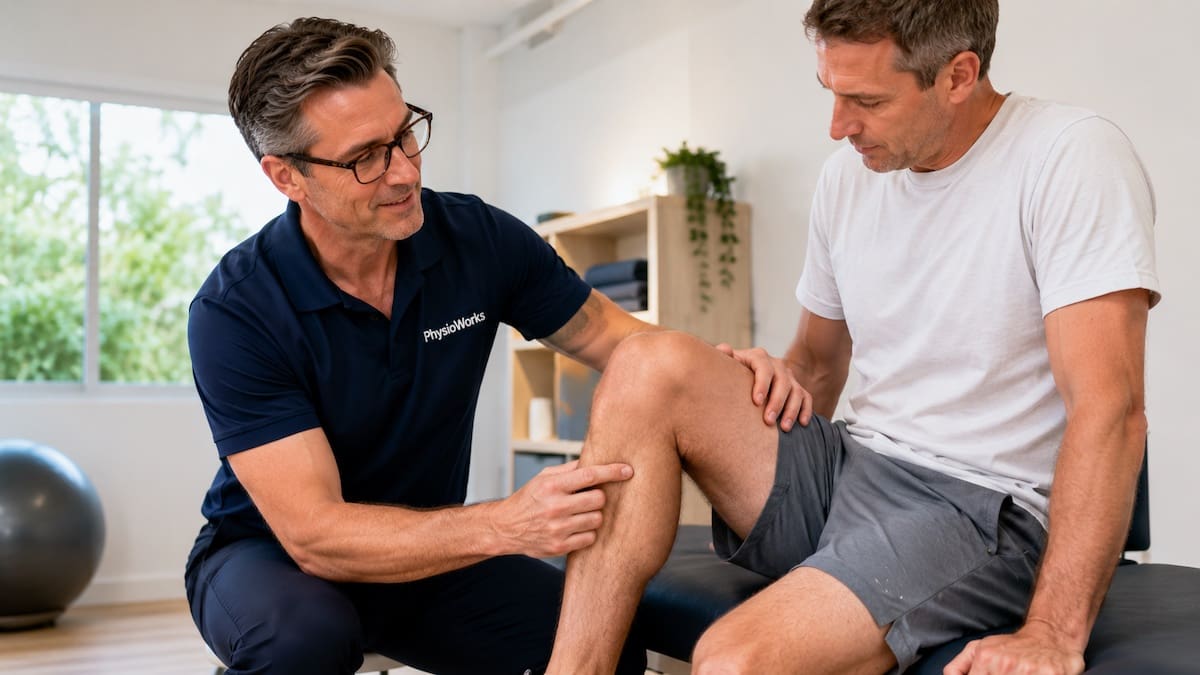
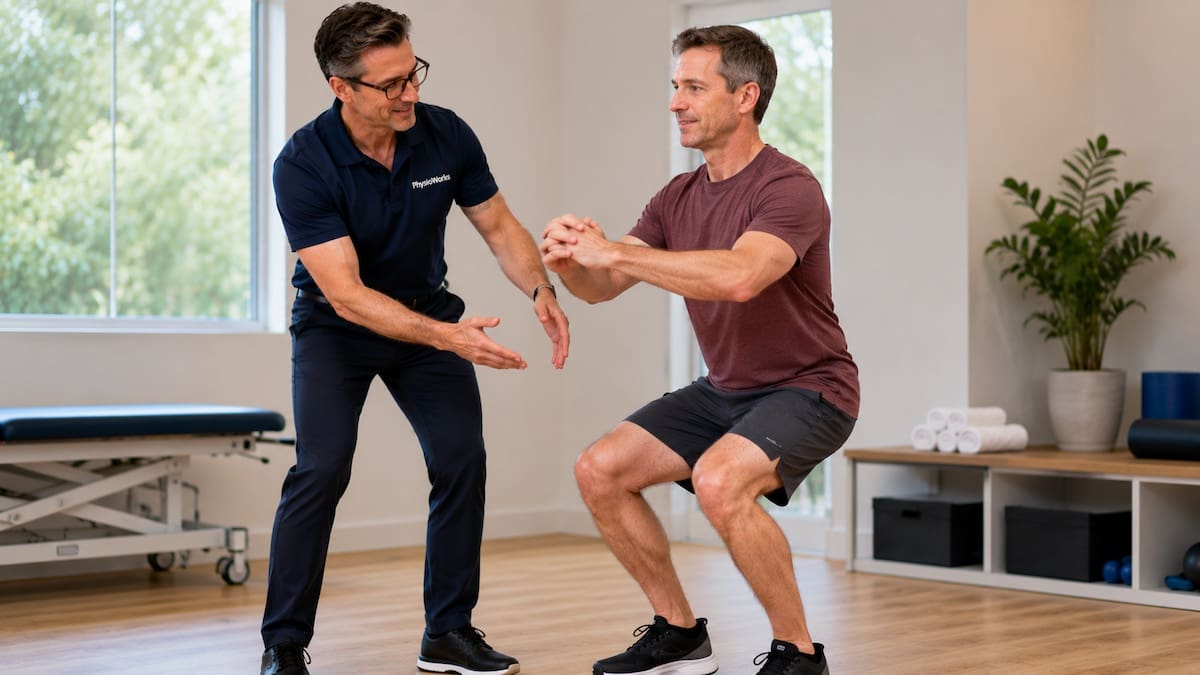
Meniscus surgery or physiotherapy functional knee load test during supervised squat assessment

Functional testing helps judge rehab versus surgical review.

What Does Meniscus Physiotherapy Involve?

Meniscus physiotherapy usually starts by settling pain and swelling. Your physiotherapist may then help restore knee extension, improve walking, build strength and guide a safe return to stairs, work, gym, running or sport.

Common Rehab Steps

Early stage settle swelling, restore extension, improve walking
Strength stage build quadriceps, hip and calf strength
Control stage improve balance, squat control and stair confidence
Return stage grade running, gym, work tasks or sport demands

If stairs are one of your main triggers, our page on knee pain on stairs may also help explain load-related knee pain.

What Does This Mean for Degenerative Meniscal Tears?

For many middle-aged adults with degenerative meniscal tears, physiotherapy should often come before arthroscopic surgery. This does not mean surgery is never useful. It means the first step is often a clear assessment, a staged rehab plan and a fair trial of exercise-based care unless urgent mechanical signs are present.

This is important because an MRI report can sound alarming. A physiotherapist can help match the scan findings with your pain, swelling, strength, walking, stairs and goals.

When Should You Seek Help Quickly?

Seek prompt assessment if your knee locks, cannot straighten, swells fast after injury, or gives way with daily walking. You should also act sooner if symptoms are getting worse, if stairs feel unsafe, or if you are unsure whether the problem needs surgical review.

For more general guidance, our knee pain FAQs and walking tips for knee pain pages can help while you organise an assessment.

What Should You Do Next?

If you are trying to choose between meniscus surgery or physiotherapy, start with a clinical assessment rather than the scan report alone. In many cases, structured physiotherapy is the most sensible first step.

However, if your knee is truly locked or strongly suggests a displaced tear, urgent medical or orthopaedic review may be needed. A PhysioWorks physiotherapist can assess your knee, explain whether rehab is likely to help, and guide you if referral is the better path.

Related PhysioWorks Guides

FAQs About Meniscus Surgery or Physiotherapy

Is physiotherapy better than surgery for a meniscus tear?

For many degenerative meniscus tears, physiotherapy is often the preferred first option. Exercise-based care can improve pain and function for many people. A locked knee, displaced tear or major acute injury may still need surgical review.

When might meniscus surgery be necessary?

Meniscus surgery may be needed if the knee is truly locked, cannot fully straighten, has a displaced fragment, or has a repairable acute tear after a clear twist injury. These signs need prompt assessment.

Can an MRI tell if I need meniscus surgery?

MRI can show the tear type and location, but the scan alone does not decide care. Your symptoms, knee movement, function, age, goals and examination findings all matter.

How long should you try physiotherapy before considering surgery?

That depends on the tear type and your progress. Many degenerative tears suit a structured rehab trial first. A locked knee, blocked movement or displaced tear usually needs earlier review.

What does physiotherapy for a meniscal injury involve?

Physiotherapy often includes swelling care, knee movement, strength work, walking practice, stair confidence and graded return to sport or daily activity.

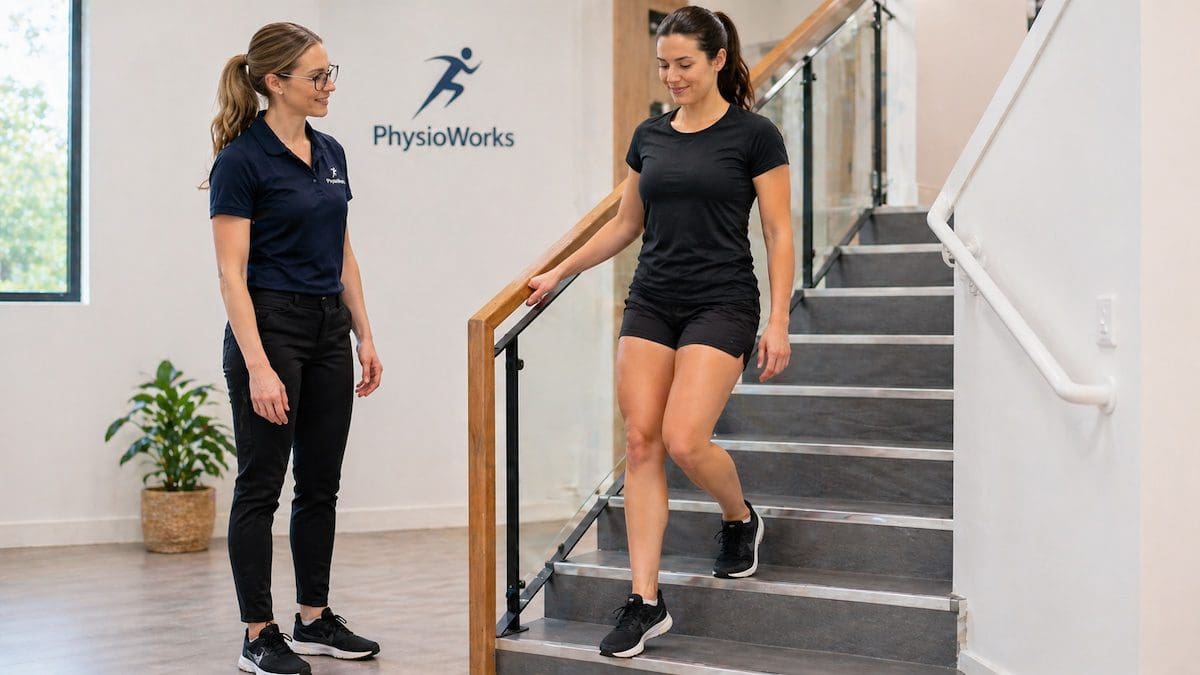
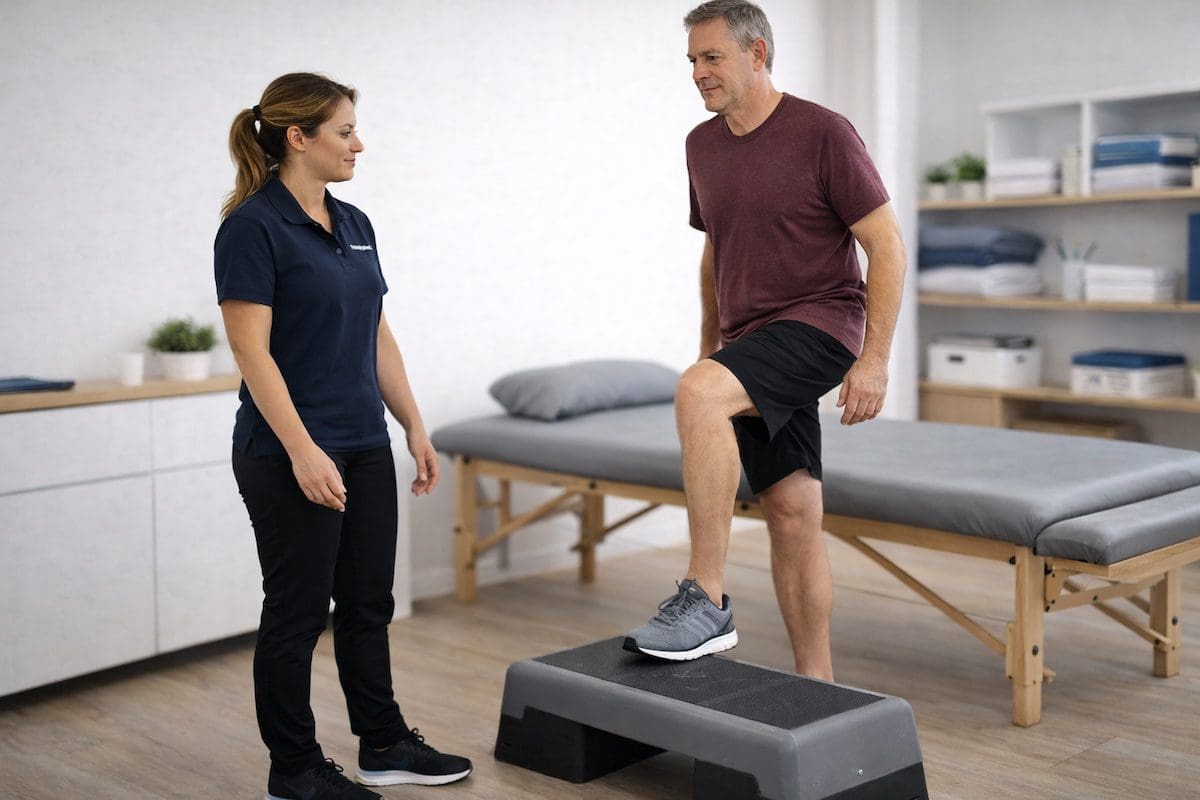
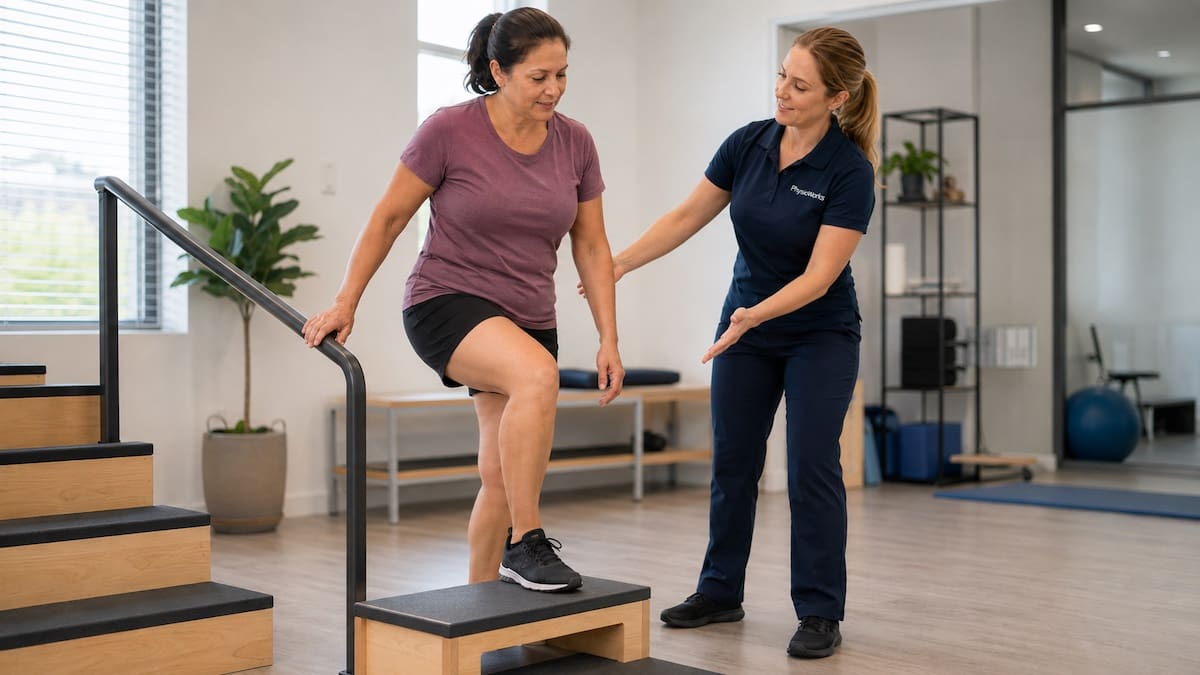
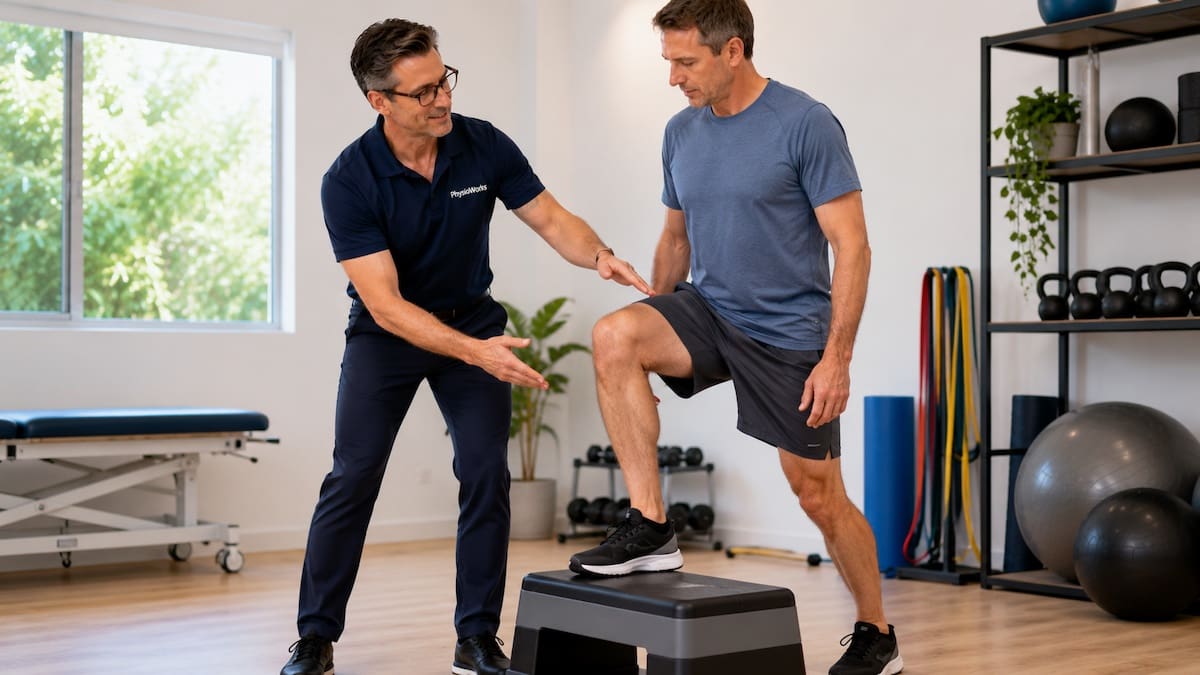
Meniscus surgery or physiotherapy step-up rehab showing confident knee function

Structured meniscus rehab can rebuild knee confidence.

Book your appointment – 24/7

Choose your preferred PhysioWorks clinic and book online.

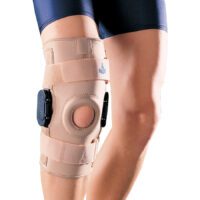
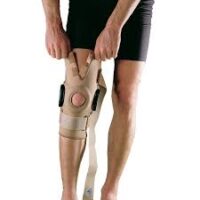
Knee Support Products

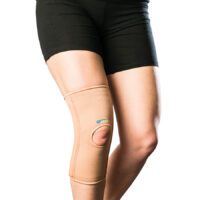
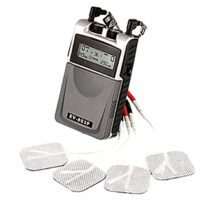
These knee support products are commonly used by our physiotherapists to help reduce strain, improve stability, and support your recovery at home.

View all knee support products

Follow PhysioWorks

Get free physiotherapy tips, exercise videos, recovery advice, and blog updates.

Facebook Instagram YouTube B X Email PhysioWorks

References

  1. Noorduyn JCA, van de Graaf VA, Willigenburg NW, et al. Effect of physical therapy vs arthroscopic partial meniscectomy in people with degenerative meniscal tears: five-year follow-up of the ESCAPE randomized clinical trial. JAMA Netw Open. 2022;5(7):e2220394. doi:10.1001/jamanetworkopen.2022.20394
  2. Berg B, Roos EM, Englund M, et al. Arthroscopic partial meniscectomy versus exercise therapy for degenerative meniscal tears: 10-year follow-up of the OMEX randomised controlled trial. Br J Sports Med. 2025;59(2):91-98. doi:10.1136/bjsports-2024-108644
  3. Siemieniuk RAC, Harris IA, Agoritsas T, et al. Arthroscopic surgery for degenerative knee arthritis and meniscal tears: a clinical practice guideline. BMJ. 2017;357:j1982. doi:10.1136/bmj.j1982
  4. The Royal Australian College of General Practitioners. Meniscal tear – presentation, diagnosis and management. Aust Fam Physician. 2012;41(4):182-187.

Knee Pain Causes

A practical guide to common knee pain causes, warning signs, and next steps.

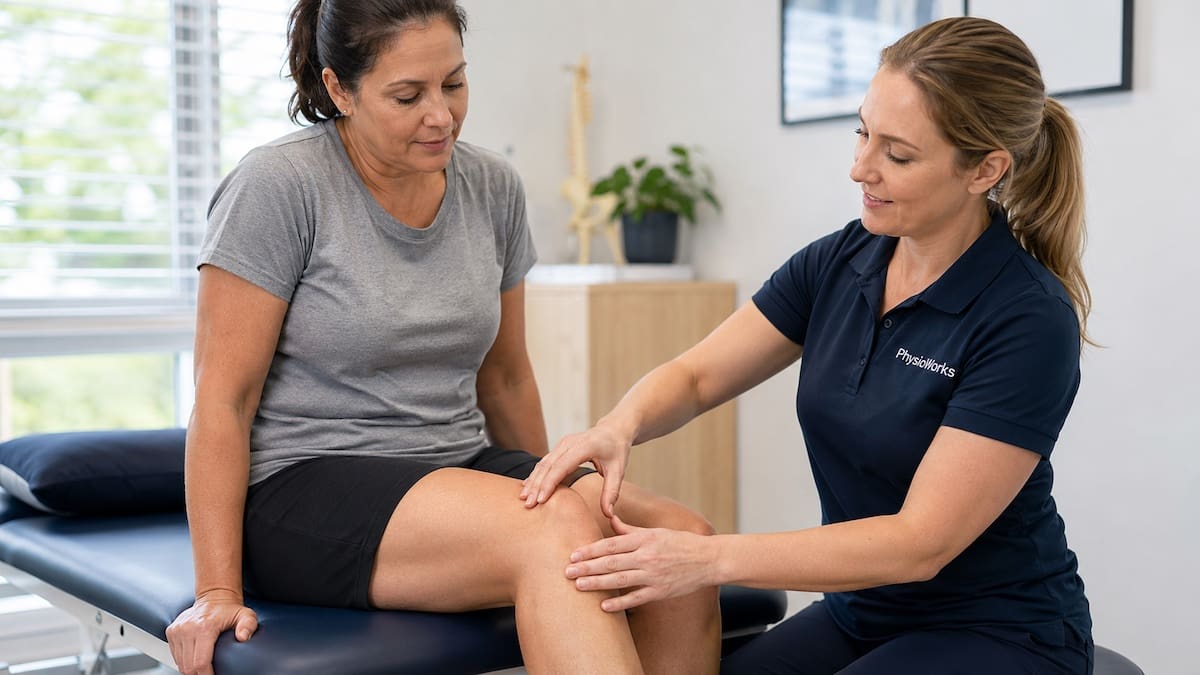
Knee pain causes physiotherapy assessment of kneecap and knee joint line
Knee assessment helps identify likely causes.

Knee pain causes include ligament injuries, meniscus tears, kneecap pain, tendon overload, bursitis, arthritis, and less common referred or inflammatory pain. The likely cause becomes clearer when you review pain location, swelling, locking, giving way, and movement triggers.

If your symptoms started after sport, twisting, jumping, kneeling, or a training increase, match your symptoms with the most likely cause. This page supports our broader knee pain guide and links to common diagnoses seen in active and everyday patients.

Quick symptom guide

  • Front knee pain often points to kneecap pain or tendon overload.
  • Joint line pain may suggest a meniscus injury.
  • Immediate swelling after a twist can suggest ligament or internal joint injury.
  • Pain below the kneecap often fits patellar tendinopathy.
  • Morning stiffness may fit knee arthritis.

What are the most common knee pain causes?

The most common knee pain causes are kneecap pain, meniscus injuries, ligament sprains, tendon overload, bursitis, and knee arthritis. Your symptoms, movement pattern, swelling response, and activity load help guide the likely cause.

In practice, knee pain often falls into four groups: sudden injury, repeated overload, age-related joint change, or nearby soft tissue irritation. A physiotherapist helps narrow this down through your history, movement tests, strength tests, and load response.

Common causes of knee pain

Ligament injuries

ACL injuries, MCL injuries, LCL injuries, and PCL injuries often follow twisting, pivoting, sudden stopping, or impact. These injuries may cause fast swelling, giving way, pain with turning, or poor confidence when changing direction.

Meniscus injuries

Meniscus tears often cause joint line pain, clicking, catching, locking, or pain with deep bending. Symptoms commonly start after a twist, pivot, squat, or awkward landing.

Patellofemoral pain

Patellofemoral pain syndrome usually causes pain around or behind the kneecap. It often worsens with stairs, squats, lunges, hills, running, or long sitting with bent knees.

Tendon overload

Patellar tendinopathy is common in jumping and sprinting sports. Pain usually sits just below the kneecap and often flares with repeated loading or sudden training increases.

Arthritis

Knee osteoarthritis often causes stiffness, swelling, deep aching, and reduced walking tolerance. Symptoms often build slowly and may feel worse after rest, in the morning, or after longer weight-bearing tasks.

Bursitis

Knee bursitis can cause local swelling and tenderness. It often follows kneeling, direct pressure, or repeated irritation around the front or inner side of the knee.

Other important causes

Other knee pain causes include ITB syndrome, plica syndrome, Osgood-Schlatter disease, and Sinding Larsen Johansson syndrome. In children and teenagers, growth-related overload problems are common. They usually respond best to smart load change rather than complete rest.

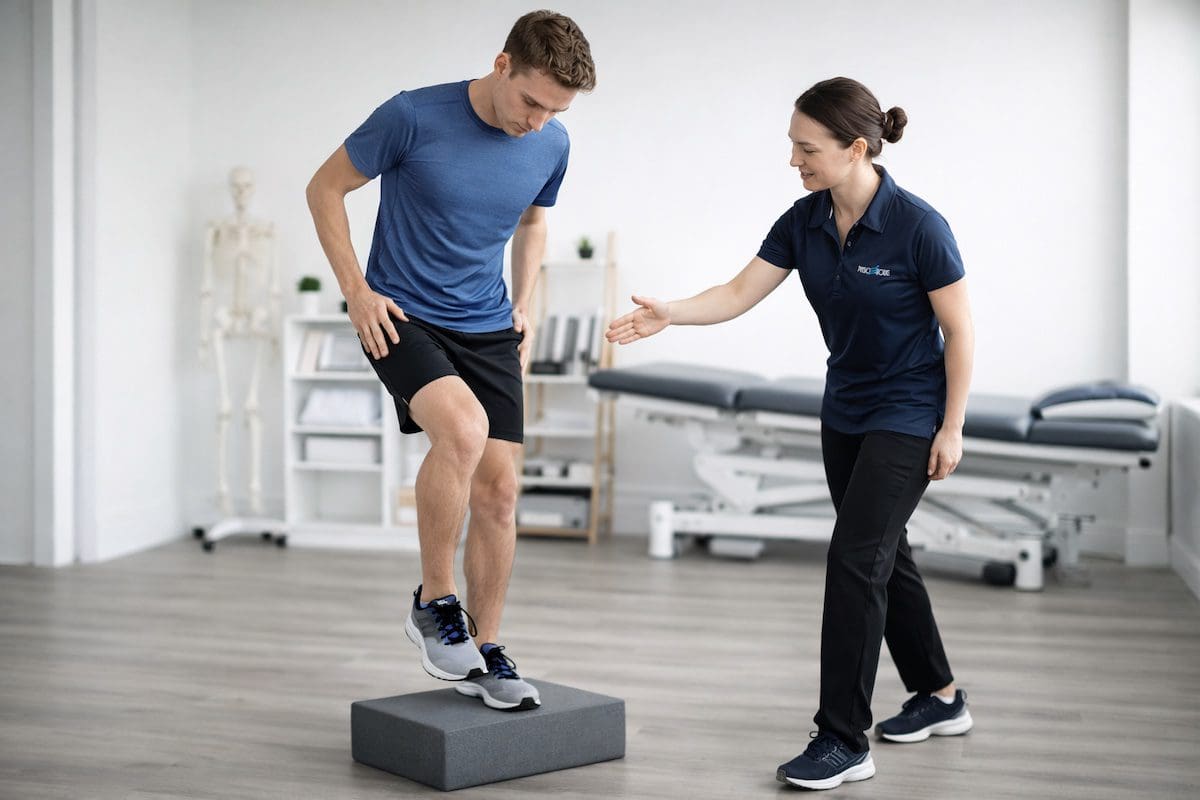
Knee pain causes step-down assessment checking kneecap and joint line control
Step-down testing shows knee control.

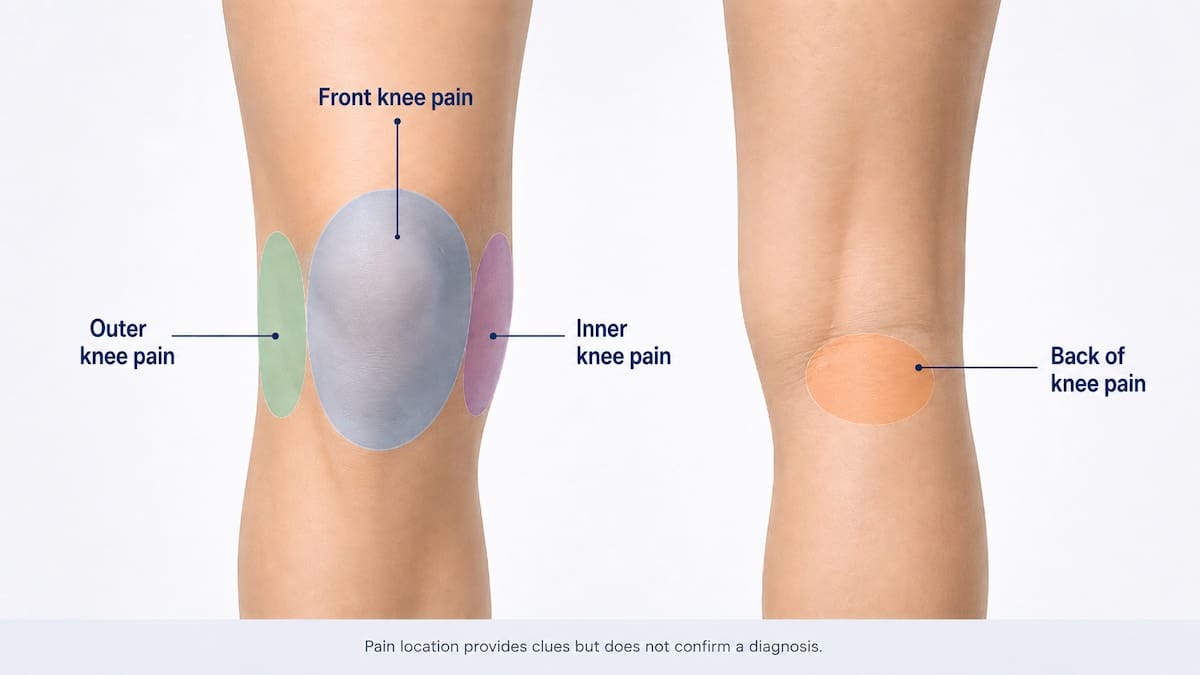
Where your knee pain sits can guide diagnosis

Pain location gives useful clues about the likely diagnosis. Front knee pain behaves differently from inner-knee pain, outer-knee pain, or a deep joint ache, so location helps guide the next step.

Location Likely cause Common trigger
Front Kneecap pain or patellar tendon overload Stairs, squats, lunges, running
Inner MCL injury or medial meniscus irritation Twisting, side force, deep bending
Outer ITB syndrome or lateral meniscus irritation Running, downhill, cutting
Deep ache Arthritis or wider joint irritation Long walks, standing, repeated loading

Diagnosis pathway

Pain location and symptom behaviour guide the first diagnosis. Swelling, locking, giving way, strength loss, and movement tests then help confirm whether the main problem is ligament, meniscus, tendon, arthritis, or another overload condition.

How is knee pain diagnosed?

Knee pain is usually diagnosed through your symptom history, movement testing, swelling pattern, and load response. Imaging helps in selected cases, but many common knee pain causes can be assessed first through a detailed clinical assessment.

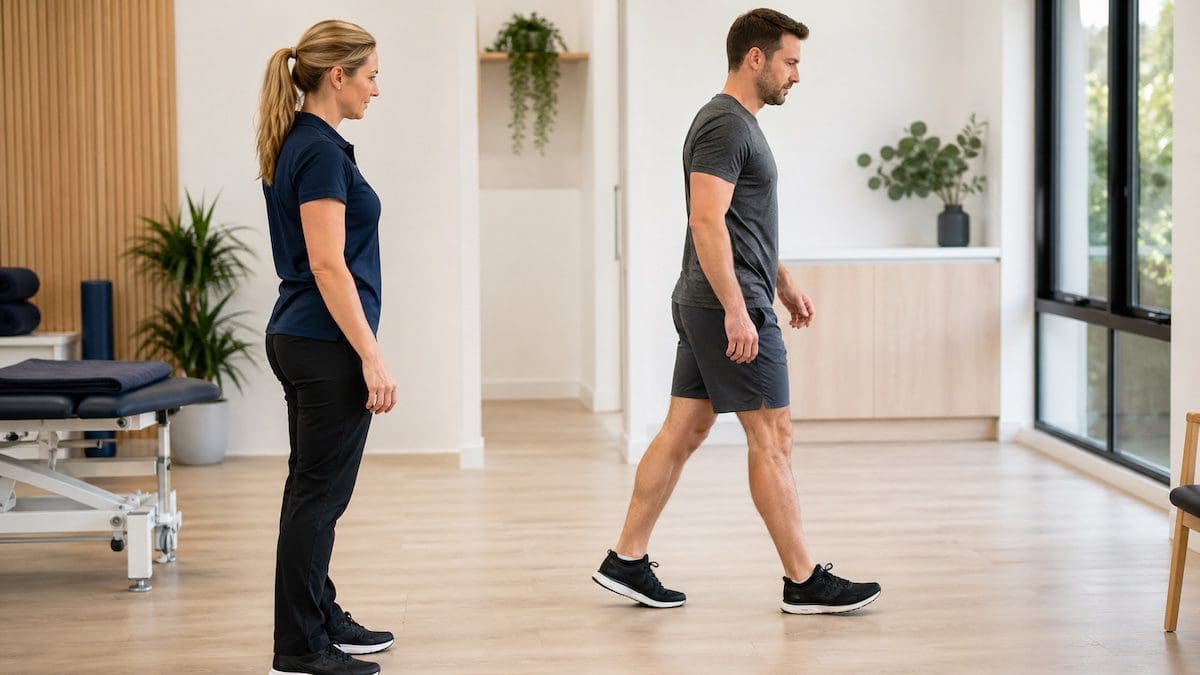
Your physiotherapist may assess walking, squatting, step-down control, ligament stability, meniscus signs, strength, balance, hopping, and training load. For broader public information, Healthdirect provides a clear overview of knee pain and when medical review may be needed.

See a physiotherapist or doctor promptly if:

  • your knee swells quickly after a twist or collision
  • the knee locks or will not fully straighten
  • the knee gives way when walking or turning
  • you cannot weight bear properly
  • the joint is red, hot, or linked with fever

How can physiotherapy help knee pain causes?

Physiotherapy helps identify the main pain source, settle irritation, improve movement, and rebuild strength. The best plan depends on the diagnosis, because arthritis, meniscus irritation, jumper’s knee, and ligament injuries each need different management.

Treatment may include swelling control, activity changes, strength work, balance retraining, landing mechanics, running or sport progressions, taping, bracing when appropriate, and clear return-to-activity planning.

Can I keep exercising with knee pain?

You can often keep moving if pain stays mild, settles after activity, and does not cause swelling or giving way. Reduce speed, hills, jumping, deep bending, or volume if these trigger symptoms.

Stop and seek advice if pain increases, your knee swells, locks, gives way, or remains worse the next day. A guided knee exercise plan can help rebuild strength and load tolerance safely.

Load management for knee pain causes

Load management means reducing painful loads, rebuilding strength, then progressing activity again. This approach helps many knee pain causes because the knee often reacts to sudden spikes in walking, running, stairs, gym work, kneeling, or sport.

  • Reduce the main painful activity during a flare-up.
  • Keep gentle movement that does not increase symptoms.
  • Rebuild strength with a gradual knee exercise plan.
  • Avoid sudden jumps in running, hills, stairs, or sport.
  • Check how the knee feels over the next 24 to 48 hours.

What should you do if knee pain keeps returning?

Recurring knee pain often means the knee is still being overloaded, underprepared, or both. This can happen when strength has not recovered, training rose too quickly, or the first diagnosis did not match the true pain source.

If symptoms keep returning, it often helps to review return to sport timing, rebuild strength slowly, and improve exercise load instead of resting until pain settles again.

When should you worry about knee pain causes?

You should be more concerned if knee pain follows a major twist or collision, causes fast swelling, locks the joint, prevents weight bearing, or makes the knee give way. These signs may point to a more significant injury.

You should also seek help if pain lasts beyond a few days, keeps returning with activity, wakes you at night, or stops you from walking, working, training, or managing stairs with confidence.

Knee pain causes FAQs

What causes knee pain most often?

The most common knee pain causes are kneecap pain, meniscus injuries, ligament sprains, tendon overload, bursitis, and arthritis. The likely cause depends on where the pain sits, how it started, whether swelling is present, and which movements trigger symptoms.

How do I know if my knee pain is from a meniscus tear?

Meniscus pain often sits along the joint line. It may come with clicking, catching, locking, or pain during twisting and deep bending. However, other knee injuries can feel similar, so a proper assessment is still important.

Can knee pain settle without surgery?

Yes. Many knee pain causes improve with physiotherapy, load management, strengthening, movement retraining, and time. Surgery is usually reserved for selected cases such as major ligament injuries, certain locked meniscus tears, fractures, or advanced joint disease.

Do I need a scan for knee pain?

Not always. Many common knee pain causes can be assessed from your history and physical tests. Scans are more useful when there is major swelling, suspected fracture, locking, strong instability, infection concern, or poor recovery despite care.

Can children and teenagers get knee pain too?

Yes. Young active people often develop knee pain from growth-related overload conditions such as Osgood-Schlatter disease or Sinding Larsen Johansson syndrome. These problems usually improve with smart activity change, strength work, and gradual reloading.

When should I see a physiotherapist for knee pain?

You should see a physiotherapist if your knee pain lasts more than a few days, keeps returning, follows a sporting injury, or affects walking, stairs, gym work, running, or sport. Early assessment often makes recovery more efficient.

Related knee pain articles

What to do next

If you are unsure which knee pain cause fits your symptoms, book a physiotherapy assessment. A clear diagnosis, early load advice, and the right exercise plan can help you settle pain and return to daily activity or sport with more confidence.

If your knee has swollen quickly, locked, buckled, or become hard to weight bear, arrange prompt assessment. The earlier the real cause is identified, the easier it is to choose the right treatment path.

Book your appointment – 24/7

Choose your preferred PhysioWorks clinic and book online.

Knee Support Products

These knee support products are commonly used by our physiotherapists to help reduce strain, improve stability, and support your recovery at home.

View all knee support products

Follow PhysioWorks

Get free physiotherapy tips, exercise videos, recovery advice, and blog updates.

Facebook Instagram YouTube B X Email PhysioWorks

References

  1. Healthdirect. Knee pain. Accessed June 14, 2026.
  2. Neal BS, Lack S, Barton C, et al. Best practice guide for patellofemoral pain based on synthesis of a systematic review, the patient voice and expert clinical reasoning. Br J Sports Med. 2024;58(24):1486-1498.
  3. Culvenor AG, Crossley KM, Agarwal S, et al. Rehabilitation after anterior cruciate ligament and meniscal injuries: a best-evidence synthesis of systematic reviews for the OPTIKNEE consensus. Br J Sports Med. 2022;56(24):1445-1453.
  4. American Academy of Orthopaedic Surgeons. Management of Acute Isolated Meniscal Pathology: Clinical Practice Guideline. Published June 10, 2024.
  5. Brophy RH, Fillingham YA. AAOS Clinical Practice Guideline Summary: Management of Osteoarthritis of the Knee (Nonarthroplasty), Third Edition. J Am Acad Orthop Surg. 2022;30(9):e721-e729.

Knee Pain FAQs: What Your Symptoms May Mean

Knee pain FAQs kneecap and joint line assessment by physiotherapist

Knee assessment helps guide next steps.

Clear Answers to Common Knee Pain Questions

Knee pain FAQs help you understand common knee symptoms, likely injury patterns, imaging choices, and when to seek care. For a full overview of causes and treatment pathways, start with our Knee Pain guide.

Knee pain can start after a twist, fall, awkward landing, or sudden change in activity. It can also build with stairs, hills, running, kneeling, squatting, or joint change. Common causes include patellofemoral pain syndrome, knee ligament injury, meniscus tear, and knee arthritis. Healthdirect also provides a useful Australian overview of knee pain.

Quick Takeaway

Knee pain is often linked to overload, injury, swelling, or joint change. Your symptom pattern can give useful clues. However, one symptom alone rarely confirms the exact cause.

  • Fast swelling after a twist may suggest ligament or internal joint injury.
  • Clicking without pain is often less concerning than clicking with locking or swelling.
  • Kneecap pain on stairs often links to load and movement control.
  • Morning stiffness can occur with arthritis or swelling.
  • Giving way needs assessment if it keeps happening.

What Do Your Knee Symptoms Suggest?

Your symptoms can help you choose the most useful guide. They do not replace assessment, but they can point you in the right direction.

Knee pain FAQs kneecap control during step down screening

Step-down screening checks knee control.

Top Knee Pain FAQs

These common questions cover diagnosis, clicking, MRI scans, walking, meniscus injury, ligament injury, arthritis, and treatment choices.

Knee Pain by Location

Pain location can guide your next read. Still, swelling, injury history, walking ability, strength, and movement control also matter.

Front of Knee Pain

Front knee pain often involves the kneecap joint or patellar tendon. It may hurt with stairs, squats, running, jumping, or long sitting. Start with Patellofemoral Pain Syndrome.

Inner Knee Pain

Inner knee pain may involve the medial ligament, medial meniscus, joint irritation, or overload. It often follows twisting, pivoting, or repeated bending.

Outer Knee Pain

Outer knee pain can occur with running load, hill work, side-to-side sport, ligament injury, or lateral joint irritation. If it persists, an assessment may help clarify the cause.

Back of Knee Pain

Back of knee pain may come from swelling, a Baker’s cyst, hamstring or calf tendon irritation, or joint restriction. People often describe tightness, pressure, or discomfort with full bending or straightening.

When Is Knee Pain More Concerning?

Seek prompt assessment if your knee pain follows a significant twist, pop, collision, or fall. Also seek help if the knee is very swollen, giving way, locking, unable to straighten, or painful enough to stop normal walking.

Simple rule: if your knee changes how you walk, swells quickly, locks, or feels unreliable, reduce load and arrange assessment.

Do All Knee Injuries Need an MRI?

No. Many knee problems can be assessed from your story, swelling, movement, strength, and stability tests. MRI may help when symptoms are severe, the diagnosis is unclear, or the result may change your plan.

Can Knee Clicking Be Normal?

Yes. Knee clicking without pain, swelling, locking, catching, or giving way is often not serious. However, clicking that starts after injury or comes with swelling or movement loss should be checked.

Is Walking Good for Knee Pain?

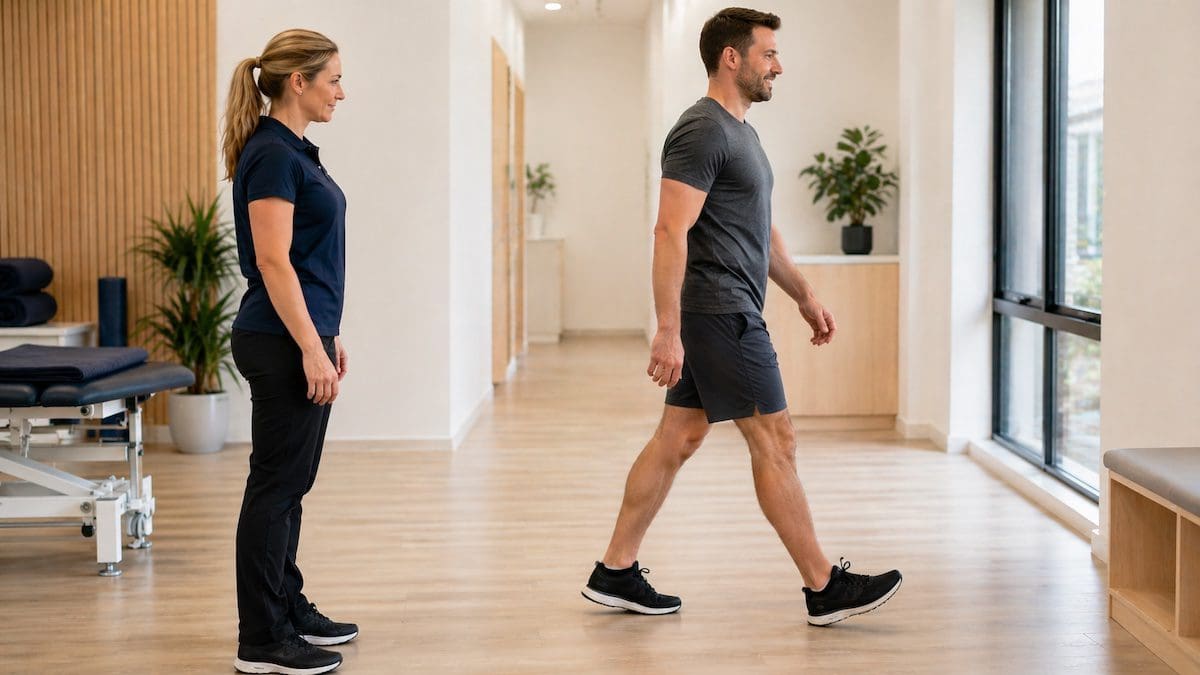
Walking can help when symptoms stay mild and settle quickly. It may be too much if it causes limping, swelling, sharper pain, or soreness that lasts into the next day.

Walking Load Check

  • Green light: mild pain that settles soon after walking.
  • Amber light: pain that changes your stride or builds as you walk.
  • Red light: swelling, limping, sharp pain, locking, or next-day flare.

Can a Meniscus Tear Improve Without Surgery?

Some meniscus tears improve with physiotherapy, load changes, and progressive strengthening. Recovery depends on the tear type, tear location, age, locking, swelling, and activity goals.

What Is the First Thing to Do After a Knee Injury?

Stop the aggravating activity. Avoid repeated painful testing. Then monitor swelling, walking, and range of motion. If the knee feels unstable, locks, swells quickly, or stops normal walking, arrange assessment early.

Helpful Knee Pain Guides

Use these pages to move from broad symptoms to a clearer pathway.

Knee pain FAQs knee joint control during supported step up

Guided loading builds knee confidence.

What To Do Next

If you are unsure what your knee pain means, choose the section that best matches your symptoms. If your knee is swollen, locking, giving way, or stopping normal walking, book an assessment rather than guessing.

A physiotherapist may help identify the likely cause, explain your options, and guide a safe return to walking, stairs, work, training, or sport.

Book your appointment – 24/7

Choose your preferred PhysioWorks clinic and book online.

Knee Support Products

These knee support products are commonly used by our physiotherapists to help reduce strain, improve stability, and support your recovery at home.

View all knee support products

Follow PhysioWorks

Get free physiotherapy tips, exercise videos, recovery advice, and blog updates.

Facebook Instagram YouTube B X Email PhysioWorks

References

  1. Noorduyn JCA, van de Graaf VA, Willigenburg NW, et al. Effect of physical therapy vs arthroscopic partial meniscectomy in people with degenerative meniscal tears: five-year follow-up of the ESCAPE randomised clinical trial. JAMA Netw Open. 2022;5(7):e2220394. doi:10.1001/jamanetworkopen.2022.20394
  2. Kotsifaki R, Korakakis V, King E, et al. Aspetar clinical practice guideline on rehabilitation after anterior cruciate ligament reconstruction. Br J Sports Med. 2023;57(9):500-514. doi:10.1136/bjsports-2022-106158
  3. Lawford BJ, Hall M, Hinman RS, et al. Exercise for osteoarthritis of the knee. Cochrane Database Syst Rev. 2024;12(12):CD004376. doi:10.1002/14651858.CD004376.pub4

Common Running Injuries

Runner with knee pain pointing to knee during physiotherapy assessment in clinic

Running-related knee pain assessed in clinic

Common running injuries usually develop when repeated running load exceeds tissue capacity.

Common running injuries most often affect the knee, shin, calf and Achilles, and foot. Common examples include shin splints, runner’s knee, Achilles tendinopathy, plantar fasciopathy, and stress fractures.

If your pain keeps returning, changes your stride, or stops you training normally, it is worth comparing this page with our broader running injuries guide and sports injuries hub. These pages help you work out whether the issue is more likely to be a training-load problem, a tendon or joint overload issue, or something that needs earlier assessment.

Common signs of running overload

  • Pain that builds during or after a run
  • Morning stiffness in the Achilles, calf or foot
  • Localised shin or bone pain after load spikes
  • Knee pain with hills, stairs or downhill running
  • Symptoms that keep returning when mileage increases

What are common running injuries?

Common running injuries are overuse or impact-related problems affecting muscles, tendons, joints, bones, or supporting tissues during training. They usually build gradually rather than appearing from one single incident, although some runners also develop acute injuries such as a rolled ankle, muscle tear, or sudden calf pain.

Most runners experience pain in one of a few predictable regions. That is why the best page structure for common running injuries is not just one long list. It should help readers match their symptoms to the right body region and then move to the most relevant condition page.

Why do running injuries happen?

Most running injuries happen because your training load rises faster than your tissues can adapt. This can occur when volume, pace, hills, shoes, surface, recovery, or strength work change too quickly. In other words, the issue is often not running itself, but how much load your body is being asked to tolerate.

Common contributors include sudden weekly kilometre increases, too much speed work, back-to-back harder sessions, poor recovery, reduced calf or hip strength, limited running preparation, and returning too quickly after time off. A running analysis or sports physiotherapy assessment can help identify which factors are most relevant to you.

Most common running injuries by body region

The most common running injuries usually cluster around the tissues that absorb and transfer repeated force. The main hotspots are the knee, shin, calf-Achilles complex, foot, hip-groin region, and lower back. Start with the painful area, then use the links below to drill down to the most likely condition pages.

Assessment helps identify which tissues are overloaded and guide the right treatment approach.

Lower limb physiotherapy assessment with single-leg stance evaluating knee, shin and foot alignment

Assessing lower limb alignment during single-leg stance

Lower limb alignment and control play a key role in common running injuries, particularly affecting the knee, shin, calf and foot during repeated load.

Knee injuries

Knee pain is one of the most common complaints in runners, especially during mileage increases, hills, or downhill running. Front-of-knee pain often links with runner’s knee or patellofemoral pain syndrome, while outer knee pain may relate to ITB syndrome.

Shin injuries

Shin pain is common when impact load, hills, speed work, or total volume rise too fast. The most common diagnosis is shin splints, but more focal pain may suggest a stress fracture or another bone stress problem.

Calf and Achilles injuries

Calf and Achilles pain often flare when runners add hills, speed, sprinting, or faster training blocks. Morning stiffness is common with Achilles tendinopathy, while sudden sharp pain may point to a calf tear. Runners with persistent calf tightness, Achilles soreness, or reduced push-off power often benefit from earlier loading advice and progressive strengthening.

Foot and heel injuries

Foot pain often relates to repeated loading through the arch, heel, forefoot, or smaller stabilising tendons. Heel pain may reflect plantar fasciopathy, while metatarsal or localised forefoot pain may need assessment for a foot stress fracture. Foot symptoms that worsen with longer runs, harder surfaces, or reduced recovery often respond best when footwear, load, and strength are reviewed together.

Hip, thigh and groin injuries

Runners can also develop overload in the hip and pelvis, especially when strength, control, or recovery are lagging behind training demand. Common examples include hamstring strain, gluteal tendinopathy, groin strain, and higher-risk bone stress problems such as femoral stress fracture.

Back and trunk-related pain

Some runners develop lower back symptoms because fatigue, stiffness, or trunk load tolerance cannot keep pace with training. This may present as lower back pain, back muscle pain, or symptoms linked with reduced trunk control.

Why do runners get shin pain?

Runners usually get shin pain when impact load, hills, speed work, or training volume rise faster than the lower leg can adapt. The most common causes are shin splints and bone stress problems, so localised pain that worsens with hopping or lingers after exercise deserves earlier review.

If your pain is broad and exercise-related, shin splints may be more likely. If it is small, sharp, and very local, compare your symptoms with a stress fracture or foot stress fracture.

Physiotherapist guiding step-up exercise for lower limb strength and rehabilitation in clinic

Step-up exercise to rebuild strength and control

Step-up exercises can help rebuild lower limb strength, balance and running control during rehabilitation.

How Can Physiotherapy Help Common Running Injuries?

Physiotherapy for common running injuries usually focuses on settling irritation, improving tissue capacity, and grading your return to running. Treatment may include load modification, strength work, calf and hip conditioning, mobility where needed, footwear or training advice, and progressive return-to-run planning.

For some runners, the key issue is simply doing too much too soon. For others, the problem is repeated exposure to hills, speed work, poor recovery, or reduced control through the calf, hip, or trunk. A good plan matches the tissue involved and the demands of your running. This is also where running analysis can add value.

What to watch during training

  • Sharp increases in weekly kilometres
  • Adding speed and hills at the same time
  • Ignoring pain that changes your stride
  • Morning stiffness that is worsening, not easing
  • Localised bone pain that lingers after running

When runners should book an assessment

  • Pain changes your running style or causes limping
  • Symptoms keep returning with mileage increases
  • Morning stiffness is worsening rather than easing
  • Bone pain feels sharp, focal, or lingers after exercise

When should you worry about common running injuries?

You should worry about common running injuries when pain becomes localised, changes your running pattern, causes swelling or limping, wakes you at night, or keeps returning despite rest and modified training. These features increase the chance that you need a clearer diagnosis and a more structured rehabilitation plan.

Seek earlier assessment if you suspect a stress fracture, have calf pain that feels sudden or severe, develop marked swelling, or cannot run without compensating. Even when the injury is not serious, earlier guidance often shortens the downtime and reduces the chance of a repeat flare-up.

How can you reduce the risk of common running injuries?

You can reduce the risk of common running injuries by progressing load gradually, spacing harder sessions sensibly, building calf and hip strength, and monitoring how your body responds to each training block. Prevention is less about one magic exercise and more about managing overall running stress well.

Many runners do well when they combine graded mileage progression with simple strength work, recovery planning, and early response to warning signs. If you are unsure whether your issue is training-related, our pages on running injuries, running analysis, and sports physiotherapy are good next steps.

Common running injuries FAQs

What is the most common running injury?

The most common running injury varies between studies, but knee pain presentations such as runner’s knee and patellofemoral pain are consistently common. Shin splints, Achilles tendon pain, plantar fasciopathy, and stress-related bone pain also appear regularly in both recreational and more experienced runners.

Are most running injuries overuse injuries?

Yes. Most running injuries are overuse-related rather than caused by one dramatic event. They usually develop when repeated impact and training stress outpace the body’s ability to recover and adapt, especially during volume increases, hill work, speed blocks, or a quick return after time off.

What are the first signs of a running injury?

Early signs often include stiffness at the start of a run, pain that builds during or after running, local soreness the next morning, or symptoms that flare every time training volume increases. A small change in stride or confidence can also be an early warning sign worth taking seriously.

Should I stop running if I have pain?

Not always, but you should modify your running if pain is worsening, changing your gait, or not settling by the next day. Some minor symptoms can be managed with load reduction, while sharper, localised, or escalating pain needs earlier assessment to rule out more significant overload problems.

When is shin pain more serious for runners?

Shin pain is more serious when it becomes very localised, hurts with hopping, lingers after exercise, or progresses from exercise pain to walking pain. That pattern can suggest a bone stress injury rather than shin splints and should usually be assessed sooner rather than later.

Can running analysis help prevent injuries?

Running analysis may help when it leads to practical changes in training, strength work, recovery, or technique. It is most useful when combined with a broader physiotherapy assessment, because common running injuries rarely come from one isolated movement issue alone.

What causes knee pain when running?

Knee pain when running is commonly caused by load-related irritation of the patellofemoral joint, ITB, or patellar tendon. It often develops when training increases too quickly or recovery is insufficient.

What to do next

If you think one of these common running injuries matches your symptoms, start by using the body-region links above to narrow the most likely diagnosis. Then compare it with our detailed running injuries guide or book a sports physiotherapy assessment if the problem is limiting your training.

Earlier assessment can help clarify whether you are dealing with tendon overload, joint irritation, muscle strain, or a bone stress issue. That usually leads to a safer return-to-run plan and fewer repeat flare-ups.

Book your appointment – 24/7

Choose your preferred PhysioWorks clinic and book online.

Follow PhysioWorks

Get free physiotherapy tips, exercise videos, recovery advice, and blog updates.

Facebook Instagram YouTube B X Email PhysioWorks

References

  1. Correia CK, Machado JM, Dominski F, de Castro MP. Risk factors for running-related injuries: An umbrella systematic review. J Sport Health Sci. 2024;13(6):743-757. doi:10.1016/j.jshs.2024.04.011
  2. Frandsen JSB, Hulme A, Nielsen RO, et al. How much running is too much? Identifying high-risk running sessions for lower extremity overuse injury in recreational runners. Br J Sports Med. 2025;59(17):1203-1211.
  3. Kakouris N, Yener N, Fong DTP. A systematic review of running-related musculoskeletal injuries in runners. J Sport Health Sci. 2021;10(5):513-522. doi:10.1016/j.jshs.2021.04.001

How Do I Know What Type of Knee Injury I Have?

Patient pointing to knee pain while physiotherapist assesses injury in clinic

Identifying the source of knee pain

You can often get useful clues about a knee injury from how it started, where it hurts, how quickly swelling appears, and whether the knee locks, clicks, buckles, or feels unstable. However, several knee problems feel similar early on, so it is not always easy to identify the exact structure without a proper assessment.

The knee contains bones, cartilage, ligaments, tendons, muscles, and nerves. Because more than one structure can be injured at the same time, self-diagnosis can be unreliable. A clear diagnosis helps guide the right treatment and reduces the risk of aggravating the injury.

Common symptom patterns may point towards a meniscus injury, an ACL injury, kneecap-related pain, or a patella tendon injury. If unsure, review our broader guide to knee pain and knee sports injuries.

Quick Clues That May Help

  • Fast swelling within a few hours may suggest a ligament or joint injury.
  • Joint-line pain with clicking, catching, or locking may indicate a meniscus injury.
  • Front knee pain with stairs, squatting, or sitting often relates to the kneecap.
  • Pain directly below the kneecap may indicate patella tendon overload.
  • Buckling or giving way may suggest ligament involvement or reduced control.

What are the main signs that help identify a knee injury?

The most useful indicators include:

  • how the injury occurred
  • pain location
  • swelling speed
  • locking, clicking, or instability
  • which movements aggravate symptoms

A twisting injury often suggests a meniscus or ligament issue. Gradual pain during jumping or running is more consistent with tendon overload. Kneecap-related pain behaves differently again, especially with stairs or prolonged sitting.

A physiotherapist will assess movement, swelling, strength, joint stability, and function. This combined assessment provides a clearer picture than any single symptom.

Common knee injury patterns

Meniscus Injury

Clues: joint-line pain, clicking, locking, twisting pain, delayed swelling.

Learn more

ACL or Ligament Injury

Clues: twist, pop, rapid swelling, instability, giving way.

Learn more

Patellofemoral Pain

Clues: pain around the kneecap, worse with stairs, sitting, squatting, or running.

Learn more

Patella Tendon Injury

Clues: pain below the kneecap, worse with jumping and loading.

Learn more

How do you know if a knee injury might be a meniscus injury?

A meniscus injury often causes pain along the joint line, with clicking, catching, or a feeling that the knee does not move smoothly. Swelling may appear more gradually over several hours rather than immediately after the injury.

Many people describe a twist, pivot, squat, or awkward turn before symptoms begin. Some also notice pain with deeper bending, turning on a planted foot, or getting up from a chair. For more detail, see our guide to meniscus injury symptoms and treatment.

How do you know if a knee injury could be an ACL or ligament injury?

An ACL or other knee ligament injury often causes pain after a change of direction, twist, landing, collision, or sporting tackle. Rapid swelling, a “pop”, and a feeling that the knee is unstable are common features, especially with ACL injuries.

Ligament injuries can affect different parts of the knee depending on which ligament is involved. If your knee feels unstable, see our pages on knee ligament injuries, ACL injury, and PCL injury.

What does pain at the front of the knee usually mean?

Front knee pain often points towards kneecap joint irritation, tendon overload, or patellofemoral problems. The exact pain location matters. Pain around or behind the kneecap often behaves differently from pain felt directly below it.

If your pain worsens with stairs, sitting, squatting, or running, the problem may be linked to the kneecap joint or movement control. In contrast, a very local sore spot just below the kneecap is more suggestive of a patella tendon injury.

Why can it be hard to tell what type of knee injury you have?

Many knee injuries share similar early symptoms, including pain, swelling, stiffness, and reduced confidence with movement. It is also common for more than one structure to be injured at the same time, especially after twisting or sporting injuries.

Because of this, self-diagnosis is often unreliable. A structured assessment that considers how the injury occurred, movement patterns, joint stability, and symptom behaviour provides a clearer and safer diagnosis. Healthdirect also provides a general overview of knee injuries.

When should you get a knee injury checked?

Seek assessment if you notice:

  • significant or rapid swelling
  • locking or inability to straighten
  • repeated giving way
  • difficulty weight bearing
  • worsening or persistent pain
  • recovery is not progressing as expected

Early assessment helps guide appropriate treatment and prevents unnecessary aggravation. It can also help determine whether you may benefit from rehabilitation, taping, bracing, imaging, or medical review.

Related knee injury pages

Frequently Asked Questions About Knee Injuries

Can you tell what knee injury you have from symptoms alone?

Sometimes you can make a reasonable guess from the symptom pattern, but symptoms alone are not always enough. Several knee injuries overlap, and mixed injuries are common. A proper assessment is usually the best way to identify the likely structure involved and plan the next step safely.

Does swelling speed matter after a knee injury?

Yes. Very fast swelling can be more suspicious for a significant ligament or joint injury, while slower swelling may fit some meniscus or overload presentations. However, swelling speed is only one clue and should always be interpreted with the injury mechanism and other symptoms.

What if my knee clicks but does not hurt much?

A click on its own does not always mean a serious problem. However, clicking with pain, locking, catching, swelling, or giving way is more meaningful and should be assessed. Persistent clicking that affects sport or daily function also deserves attention.

Can more than one knee structure be injured at once?

Yes. It is quite common for a knee injury to involve more than one structure, especially after twisting sports injuries, direct impact, or falls. This is one reason why self-diagnosis can be difficult.

Do all knee injuries need imaging?

No. Many knee injuries can be assessed well from the history and physical examination. Imaging is more likely to be useful when symptoms are severe, the knee is unstable, weight bearing is difficult, or recovery is not following the expected pattern.

Is front knee pain always tendon-related?

No. Front knee pain can come from the kneecap joint, the patella tendon, surrounding soft tissues, or movement control issues. Pain location, tenderness, aggravating activities, and loading history help separate these possibilities.

What should you do next?

If unsure, avoid pushing through pain or testing the knee repeatedly. Reduce aggravating loads and arrange an assessment to identify the likely injury and plan recovery.

Your physiotherapist can help identify the most likely injured structure, explain what activities are safe, guide the right exercises, and advise whether you may need bracing, imaging, medical review, or a graded return to sport.

Book your appointment – 24/7

Choose your preferred PhysioWorks clinic and book online.

Supportive options such as braces, straps, or taping may assist some knee conditions. Explore suitable knee pain products based on your injury and recovery stage.

Knee Support Products

These knee support products are commonly used by our physiotherapists to help reduce strain, improve stability, and support your recovery at home.

View all knee support products

Follow PhysioWorks

Get free physiotherapy tips, exercise videos, recovery advice, and blog updates.

Facebook Instagram YouTube B X Email PhysioWorks

References

  1. Logerstedt DS, Scalzitti D, Bennell KL, et al. Knee Pain and Mobility Impairments: Meniscal and Articular Cartilage Lesions Revision 2018. J Orthop Sports Phys Ther. 2018;48(2):A1-A50. doi:10.2519/jospt.2018.0301
  2. Benjaminse A, Gokeler A, van der Schans CP. Clinical diagnosis of an anterior cruciate ligament rupture: a meta-analysis. J Orthop Sports Phys Ther. 2006;36(5):267-288. doi:10.2519/jospt.2006.2011
  3. Beaufils P, Becker R, Kopf S, Matthieu O, Pujol N. Management of traumatic meniscal tear and degenerative meniscal lesions: save the meniscus. Orthop Traumatol Surg Res. 2017;103(8S):S237-S244. doi:10.1016/j.otsr.2017.08.003

Can a Torn Meniscus Heal Without Surgery?

Torn meniscus heal without surgery medial knee joint line assessment
Medial knee assessment helps guide meniscus care.

A torn meniscus does not always need surgery. Many people improve with physiotherapy, sensible activity changes, and a gradual return to load. Whether a torn meniscus can heal without surgery depends on the tear location, tear type, age, activity level, and current knee symptoms.

Pain, swelling, locking, and how your knee responds to load often matter more than scan wording alone. Many people return to walking, work, gym exercise, and sport with the right guidance, even when a tear remains visible on imaging.

The meniscus of the knee helps spread load, absorb shock, and support joint stability. When the meniscus is torn, its ability to manage force can be reduced. Healing varies because some areas have a better blood supply than others.

Quick Guide: What Matters Most?

  • Outer red-zone tears have better blood supply and may have more healing potential.
  • Inner white-zone tears heal less easily but may still become pain-free and useful.
  • Degenerative tears often respond well to exercise-based rehabilitation.
  • True locking or a knee stuck in one position needs prompt review.
  • Your symptoms should guide decisions, not the MRI report alone.

Can a torn meniscus heal without surgery?

Some meniscus tears can settle without surgery, especially small, stable tears in the outer part of the meniscus where blood supply is better. Other tears may not fully heal in a structural sense. Even so, pain, swelling, strength, and knee function can still improve with physiotherapy.

This is why a meniscus tear physiotherapy assessment looks beyond the scan. Your physiotherapist will consider swelling, movement, strength, giving way, catching, locking, walking tolerance, sport goals, and how your knee responds to load.

Why can some meniscus tears heal naturally?

Some tears heal naturally because the outer third of the meniscus has a better blood supply. This area is often called the red zone. Blood flow brings cells and nutrients that support tissue repair, so small stable tears in this region may improve with time and guided rehab.

The inner part of the meniscus has limited blood supply. This area is often called the white zone. Tears here heal less reliably. However, limited tissue healing does not always mean ongoing pain or poor function.

When is a meniscus tear less likely to heal without surgery?

A meniscus tear is less likely to heal without surgery when it is large, unstable, displaced, or causing true mechanical locking. A knee that gets stuck and cannot fully bend or straighten needs timely review, especially after a twisting injury.

Symptoms that may need further assessment include:

  • True locking: the knee becomes stuck and cannot fully straighten or bend.
  • Repeated painful catching: catching that limits movement or confidence.
  • Ongoing swelling: swelling that returns after normal activity or sport.
  • Giving way: the knee feels unstable or unreliable.
  • Loss of extension: the knee cannot straighten compared with the other side.

In these cases, imaging and referral to an orthopaedic specialist may be appropriate. Surgical decisions depend on tear location, tear pattern, symptoms, age, sport demands, and whether the torn tissue can be repaired.

Meniscus Tear Decision Guide

Presentation What it may suggest Likely next step
Mild pain, no locking, improving swelling Often suitable for non-surgical care Physiotherapy, strength work, load control
Pain with squats, stairs, kneeling, or sport Load-sensitive knee symptoms Exercise changes and graded rehab
Degenerative tear in adults over 40 Common finding linked with joint load tolerance Education, strengthening, activity planning
True locking or blocked movement Possible unstable or displaced tear Prompt assessment and possible referral

Can physiotherapy help a torn meniscus?

Physiotherapy may help a torn meniscus by improving knee movement, reducing swelling, restoring strength, and guiding a safe return to activity. The aim is to build a knee that tolerates normal loads without repeated flare-ups.

Management often includes education, swelling control, knee range exercises, quadriceps and hip strengthening, balance work, walking progressions, and sport-specific loading. Your program should match your symptoms rather than follow a rigid timeline.

Many people with meniscus symptoms also have related knee issues, such as patellofemoral pain syndrome, patellar tendinopathy, or ligament injury after a twist. If your injury involved a pivot, your physiotherapist may also screen for an ACL injury.

What about degenerative meniscus tears?

Degenerative meniscus tears often respond well to structured non-surgical care. These tears usually develop gradually as the knee and meniscus become less tolerant of load. They are common in adults over 40 and may occur without a clear injury.

Research supports exercise-based physiotherapy as a strong first-line option for many degenerative and non-obstructive meniscal tears. Large trials have found that physical therapy can provide outcomes comparable to arthroscopic partial meniscectomy for many people with degenerative tears.

This does not mean every tear is the same. It means that scan findings should be matched with symptoms, function, and goals before deciding on surgery. Large clinical trials published in peer-reviewed journals, including the BMJ trial on exercise therapy and meniscal tears, support non-surgical care as an appropriate first-line option for many degenerative meniscal injuries.

Torn meniscus heal without surgery tibiofemoral knee step-up rehab
Controlled step-ups can support meniscus rehab.

Should you keep exercising with a torn meniscus?

You can often keep exercising with a torn meniscus, but the type and amount of exercise should match your symptoms. Calm, controlled movement is usually better than complete rest. However, repeated swelling, sharp pain, or locking means the program needs review.

Load rule: exercise should feel controlled during the session and should not cause a clear swelling flare later that day or the next morning.

Useful early options may include walking on flat ground, low-resistance cycling, supported squats, step-ups, and targeted knee strengthening exercises. Your physiotherapist may adjust depth, speed, surface, volume, and recovery time to keep your knee within a safe training range.

When should you seek help?

You should seek help if knee pain, swelling, catching, or giving way limits your walking, work, training, or sport. You should also book an assessment if symptoms keep returning when you try to increase activity.

Seek earlier review if your knee locks, will not straighten, swells quickly after injury, or feels unstable. These symptoms may require imaging or medical review. A physiotherapist can help decide whether conservative care is suitable or whether referral is needed.

Torn meniscus heal without surgery controlled knee bend confidence
Guided rehab can build knee confidence.

What to do next

If you think you have a meniscus tear, start by reducing activities that repeatedly flare swelling or catching. Then book a physiotherapy assessment so your knee movement, swelling, strength, and load tolerance can be checked.

Your PhysioWorks physiotherapist can explain whether your symptoms fit a non-surgical pathway, guide rehabilitation, and help you return to walking, work, gym, or sport with a clear plan.

Book your appointment – 24/7

Choose your preferred PhysioWorks clinic and book online.

Knee Support Products

These knee support products are commonly used by our physiotherapists to help reduce strain, improve stability, and support your recovery at home.

View all knee support products

Follow PhysioWorks

Get free physiotherapy tips, exercise videos, recovery advice, and blog updates.

Facebook Instagram YouTube B X Email PhysioWorks

Related PhysioWorks Articles

Frequently Asked Questions

Can a torn meniscus heal without surgery?

Some torn meniscus injuries can improve without surgery, especially smaller stable tears in the outer red zone. Tears with limited blood supply may not fully heal structurally, but symptoms can still settle with physiotherapy, strength work, and activity changes.

Which meniscus tears are less likely to heal naturally?

Tears in the inner white zone are less likely to heal naturally because this area has poor blood supply. Large, displaced, or unstable tears are also less likely to settle without further review, especially when the knee locks or cannot straighten fully.

Do all meniscus tears need surgery?

No. Many meniscus tears do not need surgery. Degenerative and non-obstructive tears often respond well to education, exercise-based rehabilitation, and load management. Surgery may be considered when symptoms remain limiting or when the knee has true mechanical locking.

How long does a meniscus tear take to settle with physiotherapy?

Timeframes vary. Mild symptoms may improve over a few weeks. More persistent tears may need several months of progressive strengthening and activity planning. Recovery depends on tear type, swelling behaviour, strength, joint health, and sport or work demands.

When should I see a physiotherapist for a meniscus tear?

See a physiotherapist if knee pain, swelling, catching, giving way, or reduced movement affects your daily activity or sport. Seek prompt help if your knee locks, swells rapidly after injury, or will not fully straighten.

References

  1. Abram SGF, Hopewell S, Monk AP, Bayliss LE, Beard DJ, Price AJ. Arthroscopic partial meniscectomy for meniscal tears of the knee: a systematic review and meta-analysis. Br J Sports Med. 2020;54(11):652-663. doi:10.1136/bjsports-2018-100223
  2. Kise NJ, Risberg MA, Stensrud S, et al. Exercise therapy versus arthroscopic partial meniscectomy for degenerative meniscal tear in middle aged patients: randomised controlled trial with two year follow-up. BMJ. 2016;354:i3740. doi:10.1136/bmj.i3740
  3. Sihvonen R, Paavola M, Malmivaara A, et al. Arthroscopic partial meniscectomy versus sham surgery for a degenerative meniscal tear. N Engl J Med. 2013;369(26):2515-2524. doi:10.1056/NEJMoa1305189
  4. van de Graaf VA, Noorduyn JCA, Willigenburg NW, et al. Effect of early surgery vs physical therapy on knee function among patients with nonobstructive meniscal tears: the ESCAPE randomized clinical trial. JAMA. 2018;320(13):1328-1337. doi:10.1001/jama.2018.13308
  5. Noorduyn JCA, van de Graaf VA, Willigenburg NW, et al. Effect of physical therapy vs arthroscopic partial meniscectomy in people with degenerative meniscal tears: five-year follow-up of the ESCAPE randomized clinical trial. JAMA Netw Open. 2022;5(7):e2220394. doi:10.1001/jamanetworkopen.2022.20394

Can You Walk on a Torn Knee Ligament?

physiotherapist assessing walking safety with torn knee ligament injury

A physiotherapist checks whether walking is safe after a knee ligament injury.

You can sometimes walk on a torn knee ligament — but that doesn’t mean it’s safe. Many people can still walk after a ligament injury, even when the knee is unstable. The key question is not “can you walk?” but “should you keep walking without making it worse?”

Mild sprains may allow short, careful walking. However, swelling, sharp pain, locking, or giving way can suggest a more serious knee ligament injury that needs assessment before you keep loading the knee.

If walking worsens your symptoms, stop and protect the joint. A physiotherapist can assess knee stability, advise whether you need crutches or a brace, and guide safe early rehabilitation.

Should you walk on a torn knee ligament?

  • Usually safe: mild pain, minimal swelling, and the knee feels stable.
  • Be careful: limping, moderate swelling, or uncertain knee stability.
  • Stop walking: giving way, locking, sharp pain, or rapid swelling.

Walking ability does not confirm your injury is minor. When in doubt, reduce load and get assessed.

When Is Walking Safe After a Torn Knee Ligament?

Walking is usually safer when pain stays low, swelling does not increase, and the knee does not buckle. Short, flat-ground walking may form part of early recovery for mild to moderate ligament sprains.

However, a torn knee ligament can feel deceptive. Some people can walk after an ACL injury or other ligament injuries, yet still have significant joint instability. Walking ability alone does not confirm the injury is minor.

When Should You Stop Walking on a Knee Ligament Injury?

You should stop walking if the knee gives way, locks, swells quickly, or causes sharp pain with each step. These signs may suggest a more serious ligament tear or another injury, such as a meniscus tear.

Stop walking and seek prompt advice if you notice:

  • rapid swelling within the first few hours
  • the knee giving way or buckling
  • locking, catching, or inability to straighten the knee
  • severe pain when taking weight
  • difficulty walking more than a few steps

Can Walking Make a Torn Knee Ligament Worse?

Walking too far, too fast, or without support may worsen swelling and irritation. It may also increase the risk of secondary injury if the knee is unstable.

Early care focuses on protecting the joint while keeping safe movement where appropriate. This balance helps reduce stiffness without overloading injured tissue.

Symptom Walking Advice
Mild pain, little swelling, stable knee Short, careful walking may be reasonable.
Moderate swelling or limp Reduce walking and seek assessment.
Giving way, locking, or rapid swelling Avoid walking and arrange prompt review.
Unable to take weight Seek urgent medical assessment.

Why Knee Ligaments Matter for Walking

Knee ligaments act like strong bands that guide and stabilise the joint. The ACL, PCL, MCL, and LCL each help control different directions of movement.

Muscles, tendons, cartilage, and the joint capsule also support stability. This combined support explains why some people can still walk after a ligament tear. Even so, pain, swelling, and instability can limit safe movement and confidence.

physiotherapist assessing knee ligament stability during movement test

Controlled testing helps identify knee ligament stability and safe movement.

How Can Physiotherapy Help a Torn Knee Ligament?

Physiotherapy may help by assessing knee stability, controlling swelling, restoring movement, and rebuilding strength. Your plan may include walking advice, bracing guidance, balance retraining, and staged exercises.

Rehabilitation often starts with symptom control and safe movement. Later stages focus on strength, balance, landing control, direction change, and sport-specific loading where needed.

Should You Use Crutches or a Knee Brace?

Crutches or a brace may help if walking increases pain, swelling, or instability. Your physiotherapist or doctor can advise whether support is useful and how long to use it.

Some ligament injuries need short-term protection, while others need closer medical review. You can view knee support options in the knee braces and supports section.

What Should You Do Next?

If you suspect a torn knee ligament, avoid testing the knee repeatedly or pushing through pain. Book a physiotherapy assessment if you have swelling, instability, a limp, or trouble returning to normal walking.

Your physiotherapist can help decide whether you need imaging, bracing, a knee surgeon opinion, or a structured rehabilitation plan. You can also review our knee pain overview and sports physiotherapy information.

The good news: Most knee ligament injuries improve well with the right guidance. Early assessment helps you avoid setbacks and return to normal walking with more confidence.

walking normally after knee ligament injury rehabilitation

Most people return to normal walking with guided rehabilitation.

Book your appointment – 24/7

Choose your preferred PhysioWorks clinic and book online.

Knee Support Products

These knee support products are commonly used by our physiotherapists to help reduce strain, improve stability, and support your recovery at home.

View all knee support products

Follow PhysioWorks

Get free physiotherapy tips, exercise videos, recovery advice, and blog updates.

Facebook Instagram YouTube B X Email PhysioWorks

Related Knee Articles

For a general medical overview, you can also review this ACL injury article on NCBI.

FAQs About Walking on a Torn Knee Ligament

Can you still walk with a torn ligament in your knee?

Some people can walk short distances with a torn knee ligament, especially with a mild sprain. However, walking is not a reliable test of severity. If your knee gives way, locks, swells rapidly, or pain increases, stop walking and arrange an assessment.

How do you know if a knee ligament injury is serious?

A knee ligament injury may be more serious if you heard a pop, developed rapid swelling, cannot take weight, or feel the knee buckle. Locking or catching may suggest another injury inside the knee, such as a meniscus tear.

Should you rest or keep moving after a torn knee ligament?

Early movement can help some knee ligament injuries, but it must stay controlled and symptom-guided. Rest from aggravating activity, protect the knee, and seek guidance before returning to sport, running, pivoting, or heavy gym work.

Can a torn knee ligament heal without surgery?

Some partial ligament tears can settle without surgery. Some complete ligament injuries may also be managed without surgery if the knee remains stable and the person follows a structured rehabilitation plan. A physiotherapist or knee surgeon can help guide this decision.

When should you see a physiotherapist?

Book a physiotherapist if you suspect a knee ligament injury, especially if swelling, instability, pain, or limping persists. Early assessment can guide safe walking, bracing, exercises, and whether imaging or medical review is needed.

References

  1. Svantesson J, Hamrin Senorski E, Sundemo D, et al. Rehabilitation of medial collateral ligament injuries: A systematic review. Knee. 2024.
  2. Lucidi GA, Solaro L, Grassi A, et al. Current trends in the management of medial knee injuries: Beyond the medial collateral ligament. J Orthop Traumatol. 2024.
  3. Bingöl I, Erden T, Yıldız F, et al. PCL injury following high-energy trauma: Clinical patterns and considerations. J Orthop Surg Res. 2024.
  4. Arundale AJH, Bizzini M, Hewett TE, et al. Exercise-based knee and anterior cruciate ligament injury prevention programmes: A systematic review. J Orthop Sports Phys Ther. 2023.
  5. Jaibaji M, Najim O, Alali H, et al. Single-stage versus multistage reconstruction for multiligament knee injuries: Systematic review and meta-analysis. J Clin Med. 2025.

ACL Surgery Pros and Cons

ACL knee assessment physiotherapist performing ligament test on exposed knee in clinic

ACL knee assessment in physiotherapy clinic

ACL surgery can help restore knee stability for some people, but it is not the right choice for everyone. The best option depends on your sport, your instability symptoms, any associated knee damage, and how well you respond to structured ACL treatment, rehabilitation, and progressive knee treatment.

If you have recently injured your knee, start with the broader ACL injury guide and the sports knee injuries hub. These pages explain how ACL tears fit into the wider picture of knee instability, swelling, meniscal injury, and return-to-sport planning.

Quick answer: ACL surgery is more often considered when the knee repeatedly gives way, when there is associated damage such as a meniscal tear, or when the person wants to return to high-demand pivoting sport. However, some people do well with high-quality rehabilitation and delayed surgery only if needed.

  • ACL surgery is more often considered when the knee repeatedly gives way.
  • Some people do well with high-quality rehabilitation and delayed surgery only if needed.
  • Associated injuries such as a meniscus tear can change the decision.
  • Your sport, age, work, goals, and confidence all matter.

What is ACL surgery and what is it trying to achieve?

ACL surgery usually means ACL reconstruction. The torn ligament is replaced with a graft to improve mechanical stability, reduce episodes of giving way, and support a safer return to pivoting sport. However, surgery does not remove the need for rehabilitation. Rehabilitation remains essential whether you choose surgery or non-surgical care.

When is ACL surgery more likely to be worth considering?

ACL surgery is more commonly considered when you want to return to a sport with frequent cutting, twisting, landing, or contact. It is also more relevant when the knee repeatedly gives way during daily activity, work, or training, or when there is concern about associated injury to the meniscus, cartilage, or other ligaments.

Australian guidance supports shared decision-making rather than a one-size-fits-all approach. The Australian Knee Society consensus position statement supports weighing early reconstruction against delayed optional reconstruction after a structured rehabilitation trial.

What are the main pros of ACL surgery?

The main potential benefit of ACL surgery is improved knee stability, particularly for people who want to return to pivoting sport such as AFL, soccer, rugby, basketball, or netball. A more stable knee may also lower the risk of repeated giving-way episodes that could irritate other structures inside the knee.

Some people also feel more confident after reconstruction, especially if instability is the main problem. This can help with progressive strength work, running progressions, change-of-direction drills, and eventual return to sport.

What are the main cons or limits of ACL surgery?

ACL surgery is still major surgery. It involves cost, time away from sport, a long rehabilitation process, and the usual risks associated with surgery such as stiffness, pain, swelling, graft problems, and slower-than-expected recovery. Surgery also does not guarantee a return to the same level of sport.

Importantly, ACL reconstruction is not automatically superior for every person with an isolated ACL tear. Some people achieve good function through rehabilitation alone, particularly if their knee becomes stable and their sport or lifestyle places lower rotational demands on the joint.

Can you avoid ACL surgery?

Yes, some people can avoid ACL surgery. Non-surgical management is more realistic when the knee settles well, the person can build strong dynamic control, and there are no major associated injuries or repeated instability episodes. A detailed ACL injury FAQ page can help compare common questions about scans, swelling, rehabilitation, and surgery timing.

Recent evidence suggests that, for selected isolated ACL injuries, non-operative care with a well-designed rehabilitation program may offer similar functional outcomes for some people, even though reconstructed knees often show better mechanical stability. That is why the decision should be based on the whole person, not the scan alone.

How does rehabilitation influence the ACL surgery decision?

Rehabilitation is one of the biggest decision-makers. Good rehab helps reduce swelling, restore extension, rebuild quadriceps and hamstring strength, improve landing control, and test whether the knee can cope without surgery. It also prepares the knee better if surgery is later chosen.

Whether you have surgery early, delay it, or avoid it, a staged rehab plan still matters. For many people, that plan includes swelling control, movement restoration, progressive strengthening, neuromuscular retraining, hopping and landing drills, and carefully monitored load progression. You can also review ACL injury prevention strategies to reduce future knee stress during cutting and landing tasks.

knee stability training using BOSU balance exercise to improve joint control

Knee stability training on BOSU

Knee stability training using a BOSU balance exercise can improve joint control, balance, and lower limb confidence during rehabilitation.

What factors should shape your decision?

Your decision should be based on more than whether the ACL is torn. Important factors include your age, sport, work demands, repeated instability, associated injuries, access to rehabilitation, time goals, and willingness to commit to a long recovery process. If the knee is unstable with daily tasks or sport despite strong rehabilitation, surgery becomes more reasonable.

On the other hand, if the knee feels stable, strength and control improve, and your goals do not involve frequent pivoting, surgery may be less urgent. This is where a physiotherapist and orthopaedic surgeon can help compare the practical pros and cons in your situation.

How do meniscal injuries and tier-one sports influence ACL surgery decisions?

ACL injuries often occur alongside other knee damage, particularly a meniscus tear. These co-existing injuries can significantly influence whether ACL surgery is recommended and how urgently it is considered.

The meniscus plays an important role in load distribution, shock absorption, and joint protection. When a meniscal injury is present with an ACL tear, repeated instability episodes may increase the risk of further cartilage damage and long-term joint changes such as knee osteoarthritis. In these cases, earlier surgical stabilisation may be more strongly considered to protect the knee.

Sporting demands also play a major role. Athletes involved in high-level or tier-one pivoting sports such as AFL, rugby, soccer, and basketball often place greater rotational stress on the knee. Returning to these sports without a functioning ACL can be difficult due to instability, reduced confidence, and increased reinjury risk.

  • Co-existing meniscal injuries may increase the need for surgical stability.
  • Elite or high-demand pivoting sports increase the importance of knee stability.
  • Lower-demand activities may allow successful non-surgical management in some cases.

This is why ACL surgery decisions should consider the whole knee and the individual’s goals. A stable knee for daily life is not always the same as a knee that can tolerate elite sport demands.

Is ACL surgery right for you?

ACL surgery may be worth considering if your knee keeps giving way, your sport involves cutting and pivoting, or associated damage such as a meniscal tear is increasing your risk. If your knee feels stable and responds well to rehabilitation, a non-surgical pathway may still be reasonable.

The best decision is usually based on function, sport demands, and confidence rather than the scan result alone. That is why many people benefit from a sports physiotherapy review before committing to surgery.

Related ACL and knee information

What to do next

If you are weighing up ACL surgery, get your knee properly assessed before making a rushed decision. A sports physiotherapist can help clarify whether your current issue is instability, weakness, swelling, confidence, associated meniscal irritation, or a combination of these.

If needed, your physiotherapist can also guide referral for imaging or orthopaedic review. The goal is to match the treatment plan to your sport, knee function, and future goals rather than assuming surgery is always the first answer.

Common ACL surgery questions

Is ACL surgery always necessary?

No. ACL surgery is not always necessary. Some people manage well with structured rehabilitation and activity modification, especially if the knee becomes functionally stable and their goals do not involve high-demand pivoting sport.

How long is recovery after ACL surgery?

Recovery after ACL surgery is usually measured in months rather than weeks. Many people need a long, staged rehabilitation period before full return to pivoting sport, and progress depends on strength, movement quality, swelling, confidence, and objective testing.

Can physiotherapy help if you do not have ACL surgery?

Yes. Physiotherapy can help reduce swelling, improve strength, restore movement, and build dynamic knee control. For some people, that is enough to return to daily activity and selected sport without reconstruction.

Does ACL surgery prevent arthritis?

Not necessarily. ACL surgery may improve stability, but it does not guarantee protection from later knee osteoarthritis. Long-term joint health still depends on associated injuries, recurrent instability, load management, strength, and overall knee care.

ACL recovery walking confidently after knee rehabilitation with physiotherapist support

Returning to confident walking after ACL injury

With the right rehabilitation and guidance, many people return to confident movement after an ACL injury.

Book your appointment – 24/7

Choose your preferred PhysioWorks clinic and book online.

Knee Support Products

These knee support products are commonly used by our physiotherapists to help reduce strain, improve stability, and support your recovery at home.

View all knee support products

Follow PhysioWorks

Get free physiotherapy tips, exercise videos, recovery advice, and blog updates.

Facebook Instagram YouTube B X Email PhysioWorks

References

  1. Australian Orthopaedic Association, Australian Knee Society. Consensus position statement on non-operative and operative management in anterior cruciate ligament injury. 2021.
  2. Kotsifaki A, Whiteley R, Van Rossom S, et al. Aspetar clinical practice guideline on rehabilitation after anterior cruciate ligament reconstruction. Br J Sports Med. 2023;57(9):500-514.
  3. de Jonge R, Máté M, Kovács N, et al. Nonoperative treatment as an option for isolated anterior cruciate ligament injury: a systematic review and meta-analysis. Orthop J Sports Med. 2024;12(4). doi:10.1177/23259671241239665.
Article by John Miller & Erin Runge

ACL Reconstruction Rehabilitation: What Happens After Surgery?

ACL reconstruction rehabilitation is a structured recovery process that helps restore knee movement, strength, control, and confidence after surgery. Good rehabilitation does more than fill time. It helps reduce reinjury risk and prepares you for daily activity, exercise, and sport.

If you are recovering from surgery, this guide explains what rehabilitation usually involves, how return-to-sport decisions are made, and why progress matters more than simply waiting for the calendar. If you are still deciding about surgery, you may also find our page on whether you need an operation for an ACL tear helpful.

Quick Answer

Most people need many months of guided ACL reconstruction rehabilitation. Early goals include swelling control, knee extension, and walking. Later stages focus on strength, hopping, running, change of direction, and return-to-sport testing. Safe progression depends on symptoms, movement quality, strength, function, and confidence.

Related ACL Pages

This page sits within the broader ACL and knee ligament cluster. You may also find these pages helpful:

ACL Reconstruction Rehabilitation Timeline

ACL rehabilitation usually progresses through clear stages. These timeframes are only a guide. Your knee should be assessed on swelling, strength, control, and function before you move to the next stage.

Phase Usual Timeframe Main Goals
Protection and recovery 0–6 weeks Reduce swelling, regain extension, improve knee bend, normalise walking, activate quadriceps
Strength and control 6–12 weeks Build strength, improve balance, restore single-leg control, progress functional movements
Running and higher-load preparation 3–6 months Introduce running, landing mechanics, hopping, and higher-level gym work
Return to sport or performance 6–12+ months Pass strength and function testing, regain confidence, complete sport-specific drills

Time Alone Does Not Mean You Are Ready

A calendar date does not prove that your knee is ready for running, contact, jumping, or pivoting. ACL reconstruction rehabilitation should be progressed using swelling, movement, quadriceps strength, hop performance, control, and confidence rather than time alone.

What is ACL reconstruction rehabilitation?

ACL reconstruction rehabilitation is the staged physiotherapy program completed after a torn anterior cruciate ligament has been surgically reconstructed. It aims to restore knee range of motion, build quadriceps and hamstring strength, improve balance and landing control, and prepare you for a gradual return to activity. Many people also benefit from guided ACL reconstruction exercises throughout each phase.

Why is rehabilitation after ACL reconstruction so important?

Rehabilitation after ACL reconstruction matters because surgery alone does not restore movement quality, strength symmetry, agility, or sport readiness. Without a structured program, people can be left with stiffness, weakness, swelling, reduced confidence, or poor jumping and landing mechanics. These issues can affect both daily activity and return to demanding sport.

What happens in the early phase after ACL reconstruction?

The first phase usually focuses on settling the knee and restoring basic function. Priorities often include pain and swelling control, regaining full knee extension, improving knee bend, normalising walking, and waking up the quadriceps. At this stage, your physiotherapist also watches for warning signs such as excessive swelling, poor extension, or difficulty activating the thigh muscles.

  • Reduce pain and swelling
  • Restore full knee straightening
  • Improve bending range gradually
  • Normalise walking pattern
  • Begin early strength and control work

How does ACL reconstruction rehabilitation progress?

As your knee settles, rehabilitation becomes more demanding. Strength, control, and loading are progressed step by step. Later phases usually include single-leg strength, balance, hop training, running drills, landing mechanics, and sport-specific change-of-direction work. This progression is especially important for athletes returning to pivoting and cutting sports, but it also matters for recreational exercisers who want their knee to feel reliable again.

Throughout rehabilitation, your physiotherapist may also consider related issues such as MCL injury, meniscus tear, or broader knee ligament injuries that may influence your recovery plan.

Tier 1 Sports Need Stricter Return-to-Sport Standards

Tier 1 sports usually involve jumping, hard pivoting, cutting, fast deceleration, or body contact. These sports place a higher load on the ACL and usually require stricter strength, hop, and movement criteria before return.

Examples of Tier 1 sports include:

Does your sport affect ACL rehabilitation goals?

Yes. Your sport strongly affects rehabilitation targets. Level I or Tier 1 sports such as football, rugby, netball, basketball, volleyball, tennis, and skiing usually demand more pivoting, cutting, jumping, or contact. These activities place greater stress on the reconstructed knee, so return-to-sport testing needs to be stricter. Lower-demand activities may allow an earlier functional return, but they still require good strength, control, and confidence.

How long does ACL reconstruction rehabilitation take?

ACL reconstruction rehabilitation usually takes many months, not weeks. Some people regain good day-to-day function relatively early, but returning to demanding sport often takes much longer. The key point is that time alone does not prove readiness. Progress should also be judged using symptoms, swelling, strength, movement quality, hop testing, confidence, and task-specific performance.

Do age and sex affect return to sport after ACL reconstruction?

They can. Research has shown that younger athletes were more likely to return to level I sport within 12 months, and male athletes in younger age brackets had higher return rates than female athletes. Better limb symmetry and stronger patient-reported knee scores were also associated with better return-to-sport outcomes.

Why does strength symmetry matter after ACL reconstruction?

Strength symmetry matters because large differences between limbs can reflect incomplete recovery. In practical terms, poor symmetry may mean reduced force production, poorer control during landing or cutting, and a higher risk of struggling when you return to sport. This is why ACL reconstruction rehabilitation usually places strong emphasis on quadriceps strength, hop testing, and single-leg control before clearance.

What else should be assessed before return to sport?

Return-to-sport decisions should also consider swelling response, knee extension, landing mechanics, confidence, and how your knee behaves during harder running or cutting drills. If your symptoms keep flaring, it may be worth reviewing the broader ACL injury picture or the wider knee ligament injuries cluster rather than relying on one test result.

Return-to-Sport Checklist

Most athletes should not return to higher-risk sport until they can show more than just time since surgery. Common clearance markers may include:

  • Minimal or no swelling after training
  • Full knee extension and strong movement quality
  • Quadriceps and hamstring strength close to the other leg
  • Hop or landing tests at an acceptable symmetry level
  • Confidence with cutting, jumping, and change of direction
  • Sport-specific training completed without major flare-up

Is passing return-to-sport criteria enough?

No single test can guarantee a safe return. Return decisions should combine time from surgery, symptoms, strength, hopping, movement quality, sport demands, and psychological readiness. A structured checklist helps, but the broader picture still matters.

Common mistakes during ACL reconstruction rehabilitation

  • Rushing back to running or sport too early
  • Ignoring persistent swelling or extension loss
  • Underloading the quadriceps during rehab
  • Relying only on time since surgery
  • Skipping late-stage hopping and agility preparation

What should you do if you are recovering from ACL reconstruction?

If you are recovering from surgery, follow a structured physiotherapy plan and have your progress reviewed regularly. Ask whether your program is measuring range of motion, swelling, quadriceps strength, single-leg control, hop performance, and return-to-sport readiness. If you still have instability or pain, it may also help to review broader ACL injury factors, related ACL FAQs and products, or your meniscus tear and other associated injuries if they apply.

ACL Reconstruction Rehabilitation FAQs

When can I walk normally after ACL reconstruction?

Walking improves gradually over the first few weeks, but the exact timing varies. Full knee extension, reduced swelling, and good quadriceps activation usually help normal walking return sooner.

When can I run after ACL reconstruction?

Running usually begins only after your knee has settled and you have enough strength, control, and landing capacity. Time alone is not enough. Your physiotherapist should assess whether your knee is ready.

When can I return to sport after ACL reconstruction?

Return to sport depends on your sport, symptoms, strength, hop testing, movement quality, and confidence. Pivoting or contact sports generally require a more thorough clearance process than straight-line gym or fitness activity.

Why does my knee still feel weak months after surgery?

Persistent weakness is common, especially in the quadriceps. Swelling, pain, movement loss, and incomplete loading can all slow recovery. This is one reason why progressive rehabilitation is essential.

Can I return to sport just because I am 9 or 12 months after surgery?

No. Time is only one part of the decision. You also need good strength, control, function, and sport readiness. Many reinjuries happen when people return before they are truly ready.

Do I still need physiotherapy if my knee feels good?

Usually, yes. A knee can feel quite good during basic activity but still lack the strength, control, or landing capacity needed for higher-level sport. Physiotherapy helps bridge that gap.

What to do next

If you are working through ACL reconstruction rehabilitation, a physiotherapist can help you progress safely from early recovery through to running, jumping, and return-to-sport testing. A structured program gives you a clearer pathway and reduces the risk of guessing your way back too soon.

Book your appointment – 24/7

Choose your preferred PhysioWorks clinic and book online.

Knee Support Products

These knee support products are commonly used by our physiotherapists to help reduce strain, improve stability, and support your recovery at home.

View all knee support products

Follow PhysioWorks

Get free physiotherapy tips, exercise videos, recovery advice, and blog updates.

Facebook Instagram YouTube B X Email PhysioWorks

References

  1. Webster KE, Feller JA. Return to Level I Sports After Anterior Cruciate Ligament Reconstruction: Evaluation of Age, Sex, and Readiness to Return Criteria. Orthop J Sports Med. 2018;6(8):2325967118788045. doi:10.1177/2325967118788045
  2. Hadley CJ, Rao S, Tjoumakaris FP, et al. Safer Return to Play After Anterior Cruciate Ligament Reconstruction: Evaluation of a Return-to-Play Checklist. Orthop J Sports Med. 2022;10(4):23259671221090412. doi:10.1177/23259671221090412
  3. Paterno MV, Rauh MJ, Thomas S, et al. Return-to-Sport Criteria After Anterior Cruciate Ligament Reconstruction Fail to Identify the Risk of Second ACL Injury. J Athl Train. 2022;57(9-10):937-945. doi:10.4085/1062-6050-0608.21
  4. Ardern CL, Taylor NF, Feller JA, Webster KE. Return-to-Sport Outcomes at 2 to 7 Years After Anterior Cruciate Ligament Reconstruction Surgery. Br J Sports Med. 2016;50(24):1500-1508. doi:10.1136/bjsports-2015-095952
  5. Grindem H, Snyder-Mackler L, Moksnes H, Engebretsen L, Risberg MA. Simple Decision Rules Can Reduce Reinjury Risk by 84% After ACL Reconstruction. Br J Sports Med. 2016;50(13):804-808. doi:10.1136/bjsports-2016-096031

Why Has My Knee Suddenly Started Hurting?

Twisting knee injury assessment with physiotherapist evaluating knee alignment in clinic

Knee assessment after twisting injury

Sudden knee pain usually starts after a twist, awkward landing, direct blow, or sharp increase in load. If you are asking why has my knee suddenly started hurting, the cause is often an acute injury involving the ligaments, meniscus, kneecap, cartilage, tendon, or bone around the joint.

This page is one of our knee pain and injury FAQs. Some sudden knee injuries are relatively minor, while others need urgent assessment. A clear diagnosis matters because an knee ligament injury, meniscus tear, fracture, or kneecap dislocation can look similar in the first few hours.

Pay close attention to how the pain started, where it hurts, whether swelling appeared quickly, and whether your knee locks, gives way, or feels unsafe to walk on. Those details help your physiotherapist or doctor work out whether you have a soft tissue injury, a joint surface problem, or something more serious.

Common early clues include:

  • a pop or tear sensation during twisting or pivoting
  • rapid swelling within a few hours
  • pain with weight-bearing, stairs, or bending
  • locking, catching, or giving way
  • difficulty fully straightening the knee
Netball injuries single leg landing knee ankle load
Single-leg landing mechanics in netball place high load on the knee and ankle.

Sudden knee pain often follows a twist or awkward landing

Many people first notice sudden knee pain during a movement that feels slightly off, followed by discomfort, swelling, or instability.

What causes sudden knee pain?

Sudden knee pain is most often caused by an acute injury rather than gradual wear and tear. Twisting, pivoting, landing awkwardly, kneeling, falling, or taking a direct hit can overload the ligaments, meniscus, cartilage, kneecap, or surrounding muscles and tendons.

Many sporting injuries sit within the broader sports knee injuries cluster, especially if the pain began during running, football, netball, basketball, skiing, or gym training. Acute overload can also happen outside sport when you slip, misstep on stairs, or twist while carrying weight. Treatment may include physiotherapy treatment options based on the structure involved and the severity of the injury.

Which knee injuries commonly start suddenly?

Several conditions can cause sudden knee pain. The most likely diagnosis depends on the mechanism of injury, swelling pattern, pain location, and whether your knee feels unstable, stuck, or too painful to load.

ACL injury

An ACL injury often happens during a pivot, sidestep, or awkward landing. People commonly report a pop, rapid swelling, and difficulty trusting the knee. Instability is a major clue, especially in pivoting sports.

Meniscus tear

A meniscus tear may occur with twisting, deep bending, or a loaded squat. Joint line pain, delayed swelling, clicking, catching, and difficulty straightening the knee are common. Some tears settle well with rehabilitation, while others need further review.

Collateral ligament or other knee ligament injury

A medial collateral ligament (MCL) tear often follows a force to the outside of the knee or a valgus twist. The knee may feel sore, unstable, and painful on the inside. Other ligament injuries can also occur depending on the direction of force.

Patellar dislocation or kneecap instability

If the kneecap shifts or dislocates, the pain is often immediate and dramatic. Swelling, loss of confidence, and pain around the front or outer side of the knee are common. Some people describe the kneecap as moving out and back in again.

Tibial plateau fracture or bony injury

A fracture is less common, but it must be considered after a high-force fall, collision, or awkward landing. Inability to bear weight, marked swelling, severe pain, and joint-line tenderness raise concern. For general public guidance on knee injuries and urgent care signs, Healthdirect provides a useful overview of knee injuries.

Juvenile osteochondritis dissecans

In adolescents, sudden knee pain sometimes relates to juvenile osteochondritis dissecans. This condition affects the bone and cartilage beneath the joint surface and may cause swelling, catching, or locking, especially in active young athletes.

When should you worry about sudden knee pain?

You should worry about sudden knee pain when you cannot take four steps, the swelling appears quickly, the knee looks deformed, the joint locks, or you feel marked instability. These features increase concern for fracture, major ligament injury, loose body, or a significant meniscal tear.

Urgent medical review is also sensible if the knee is hot and red, you have fever, numbness, severe calf swelling, or symptoms are worsening quickly. Healthdirect advises prompt care when you cannot walk because of a knee injury or when the knee is badly swollen or changed shape.

How is sudden knee pain assessed?

Assessment starts with the injury story. Your physiotherapist or doctor will ask what you were doing, whether you heard a pop, how quickly the swelling developed, and whether the knee now locks or gives way. That history often points strongly toward the likely structure involved.

The physical examination usually checks swelling, joint line tenderness, ligament stability, kneecap position, range of motion, and weight-bearing ability. Imaging is not always needed straight away, but X-ray may be important if fracture is possible, while MRI is more useful for ligament, meniscus, cartilage, or osteochondral injuries.

If your pain is very recent, an acute soft tissue injury approach often helps settle the knee until a clearer diagnosis is made. In the first phase, this commonly means protecting the knee, managing swelling, and restoring safe movement before loading harder.

What should you do if your knee suddenly starts hurting?

If your knee suddenly starts hurting, stop the aggravating activity, reduce load, use ice if helpful, consider compression, and avoid pushing through unstable or locking symptoms. Early assessment is usually the safest next step because the right plan depends on what structure has been injured.

Physiotherapy may help you identify the injured tissue, decide whether imaging is needed, reduce swelling, restore movement, and begin a staged rehab plan. As the knee settles, treatment may progress to knee exercises, strength work, balance retraining, and return-to-sport guidance. If you are unsure who to see first, this FAQ on doctor or physio for a knee injury may help.

FAQs about sudden knee pain

Can sudden knee pain happen without a major accident?

Yes. Sudden knee pain can start after a smaller twist, awkward squat, stumble, or change in training load. The movement may seem minor, but if the force is poorly timed or the knee is vulnerable, it can still irritate the meniscus, ligaments, tendon, kneecap, or joint lining.

Does a pop always mean I tore my ACL?

No. A pop raises suspicion for an ACL injury, but it is not specific to the ACL. Meniscus tears, kneecap dislocations, and other joint injuries can also produce a pop or shift sensation. Rapid swelling and instability make ACL injury more likely, but proper assessment is still needed.

Why did my knee swell so quickly?

Rapid swelling within a few hours can suggest bleeding inside the joint, which is more common with ACL tears, patellar dislocation, fracture, or other significant internal injuries. Delayed swelling is more often seen with some meniscus or overload problems, although patterns can overlap.

Should I keep walking on a suddenly painful knee?

Light walking may be reasonable if your symptoms are mild and the knee feels stable. However, you should avoid pushing through if you are limping badly, the knee buckles, swelling is increasing, or you cannot take four normal steps. Those signs suggest the injury needs earlier review.

Do I need an MRI straight away?

Not always. Many acute knee injuries can be assessed well from the history and physical examination first. X-ray is often more important early if fracture is suspected. MRI is more useful when ligament, meniscus, cartilage, or osteochondral injury is suspected, or when recovery is not progressing as expected.

How can physiotherapy help sudden knee pain?

Physiotherapy may help by identifying the likely injured structure, reducing pain and swelling, improving range of motion, guiding safe loading, and progressing strength and control. It also helps you decide when you can return to work, sport, stairs, squatting, and other everyday tasks with more confidence.

What to do next

If your knee has suddenly started hurting, do not guess the diagnosis based on pain location alone. The same area of pain can come from very different structures, and the correct treatment depends on what has actually been injured.

Book an assessment if you have swelling, instability, locking, trouble walking, or symptoms that are not settling quickly. Early guidance often helps you avoid setbacks and gives you a safer path back to work, exercise, and sport.

Not Sure What You’ve Injured?

If your knee pain started suddenly, getting the right diagnosis early can make a big difference. Many injuries look similar at first but need very different management.

A physiotherapy assessment can help identify the structure involved and guide your next steps with more confidence.

References

  1. Jadidi S, Lee AD, Pierko EJ, Choi H, Jones NS. Non-operative Management of Acute Knee Injuries. Curr Rev Musculoskelet Med. 2024;17(1):1-13. doi:10.1007/s12178-023-09875-7
  2. Sims JI, Chau MT, Davies JR. Diagnostic accuracy of the Ottawa Knee Rule in adult acute knee injuries: a systematic review and meta-analysis. Eur Radiol. 2020;30(8):4438-4446. doi:10.1007/s00330-020-06804-x
  3. Akkawi I, Zmerly H, Draghetti M, Felli L. Juvenile Osteochondritis Dissecans: Current Concepts. Cureus. 2024;16(7):e65496. doi:10.7759/cureus.65496
  4. Howell M, Khalid A, Nelson C, Doonan J, Jones B, Blyth M. Long term outcomes following tibial plateau fracture fixation and risk factors for progression to total knee arthroplasty. Knee. 2024;51:303-311. doi:10.1016/j.knee.2024.10.003

Book your appointment – 24/7

Choose your preferred PhysioWorks clinic and book online.

Knee Support Products

These knee support products are commonly used by our physiotherapists to help reduce strain, improve stability, and support your recovery at home.

View all knee support products

Follow PhysioWorks

Get free physiotherapy tips, exercise videos, recovery advice, and blog updates.

Facebook Instagram YouTube B X Email PhysioWorks
You've just added this product to the cart: