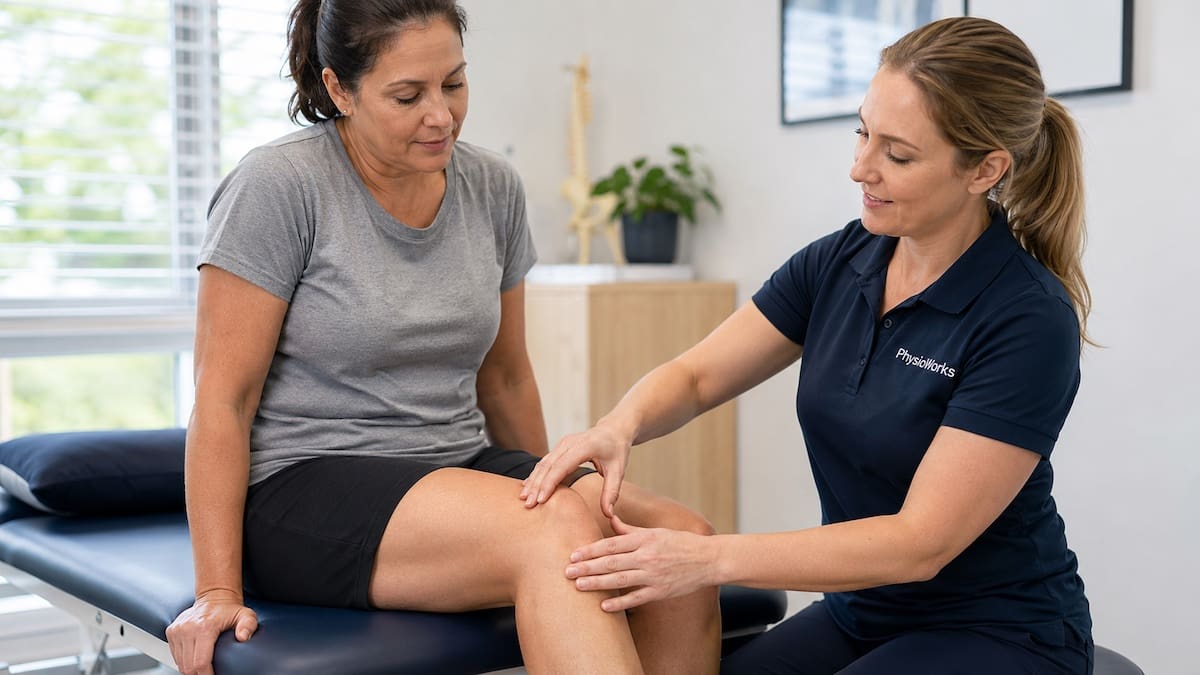
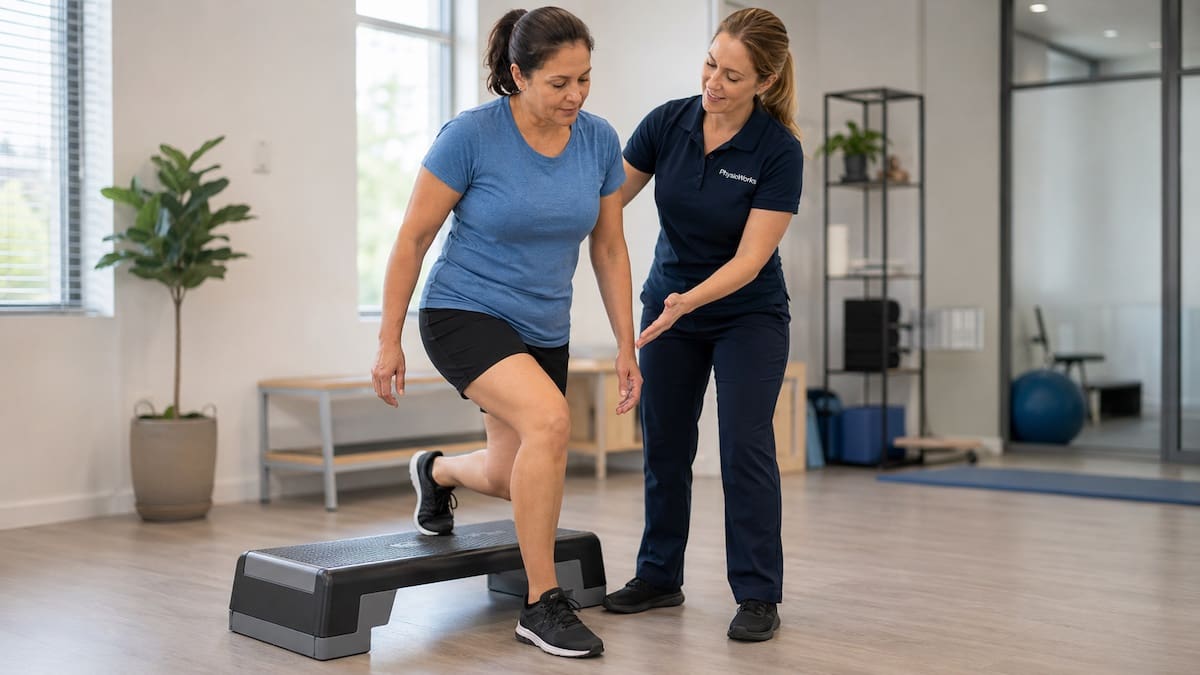
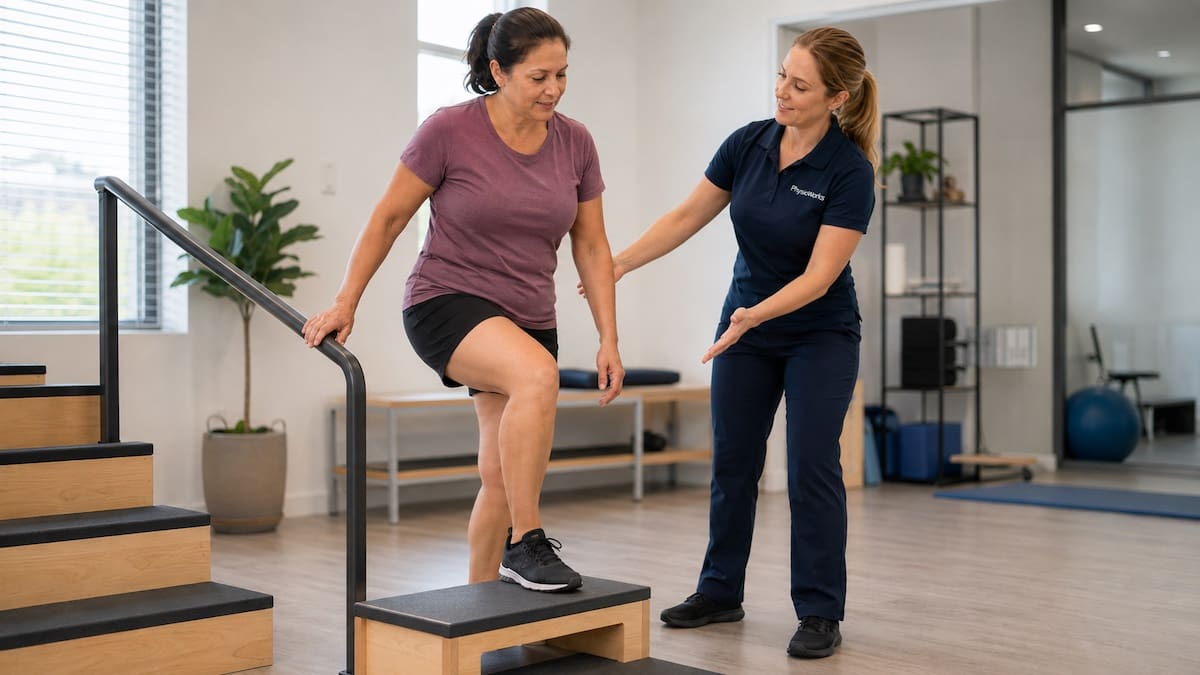
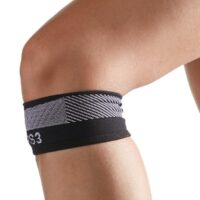
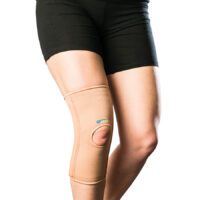
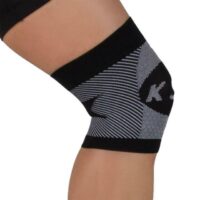
A knee assessment considers your symptoms, swelling, movement, strength, stability and walking ability.
Clear Answers to Common Knee Pain Questions
Knee pain may begin after a twist, fall, collision, awkward landing or sudden change in activity. It can also build gradually with stairs, hills, running, kneeling, squatting or changes within the joint.
For a broader overview of possible causes, assessment and treatment pathways, visit our main Knee Pain guide. Healthdirect also provides an Australian overview of knee pain.
Fast swelling
Rapid swelling after a twist or collision may suggest a ligament or internal joint injury.
Clicking
Clicking without pain is often less concerning than clicking with swelling, catching or locking.
Kneecap pain
Pain with stairs, squats or prolonged sitting often relates to how the kneecap is being loaded.
Morning stiffness
Stiffness after rest can occur with arthritis, swelling or irritation within the knee.
Giving way
Repeated instability or buckling should be assessed, particularly when it follows an injury.
Walking change
Limping or reduced walking tolerance suggests that your current activity level may be too high.
What Do Your Knee Symptoms Suggest?
Your symptom pattern can help you choose the most relevant information. However, it does not replace an individual assessment.
Choose the question or symptom pathway that best matches your situation. Arrange an assessment sooner if your knee is very swollen, locking, repeatedly giving way or stopping you from walking normally.
Identify the main symptom
Consider whether pain, swelling, stiffness, locking or instability is causing the greatest difficulty.
Think about how it started
A sudden twist, collision or fall suggests a different pathway from pain that built gradually with activity.
Check your normal function
Notice whether you can walk, use stairs, bend and straighten the knee without limping or increasing swelling.
Choose the next step
Use the guides below for general information or arrange an assessment when symptoms remain unclear or limiting.
Inner knee pain may involve the medial ligament, medial meniscus, joint irritation or repeated overload. It often follows twisting, pivoting or deep bending.
Back knee pain may come from swelling, a Baker’s cyst, tendon irritation or restricted joint movement. It may feel tight with full bending or straightening.
Seek prompt assessment when knee pain follows a significant twist, pop, collision or fall. You should also arrange care if the knee becomes very swollen, repeatedly gives way, locks or cannot fully straighten.
Common Knee Pain FAQs
Do all knee injuries need an MRI?
No. Many knee problems can be assessed from your story, swelling, movement, strength and stability tests. MRI may help when symptoms are severe, the diagnosis remains unclear or the result may change your treatment plan.
Can knee clicking be normal?
Yes. Knee clicking without pain, swelling, locking, catching or giving way is often not serious. Clicking that begins after an injury or occurs with swelling or movement loss should be assessed.
Walking may help when symptoms stay mild, your stride remains normal and the discomfort settles soon afterwards. Reduce the distance or pace if walking causes limping, swelling, sharper pain or a flare that lasts into the next day.
Can a meniscus tear improve without surgery?
Some meniscus tears improve with physiotherapy, activity changes and progressive strengthening. Recovery depends on factors such as the tear type, location, age, locking, swelling and activity goals.
What is the first thing to do after a knee injury?
Stop the aggravating activity and avoid repeatedly testing painful movements. Monitor swelling, walking and knee movement. Arrange an early assessment if the knee feels unstable, locks, swells quickly or prevents normal walking.
When is knee pain more concerning?
Knee pain is more concerning when it follows a significant twist, pop, collision or fall. It should also be checked if the knee is very swollen, giving way, locking, unable to straighten or painful enough to stop normal walking.
How Much Walking Is Appropriate?
Use your symptoms during and after walking to judge whether the current distance and pace are suitable.
Green light
Mild discomfort that does not change your stride and settles shortly after walking.
Amber light
Pain that gradually builds, changes your stride or remains noticeably worse for several hours.
Red light
Sharp pain, swelling, limping, locking, instability or a clear next-day flare.
Learn about stiffness, aching, swelling and activity-related symptoms.
Progressive strengthening can help restore knee confidence for walking, stairs, work and sport.
What to Do Next
Choose the guide that best matches your symptoms. However, arrange an assessment rather than guessing when your knee is swollen, locking, giving way or preventing normal walking.
A physiotherapist may assess your movement, strength, swelling and knee stability. They can then explain the likely causes, discuss whether imaging may help and guide a gradual return to walking, stairs, work, exercise or sport.
Choose your clinic and appointment pathway
Select a PhysioWorks clinic to continue to live booking, an appointment request or reception assistance.
Lawford BJ, Hall M, Hinman RS, et al. Exercise for osteoarthritis of the knee. Cochrane Database Syst Rev. 2024;12(12):CD004376. doi:10.1002/14651858.CD004376.pub4