
How Do I Know If My Knee Injury Is Serious?
How Do I Know If My Knee Injury Is Serious?


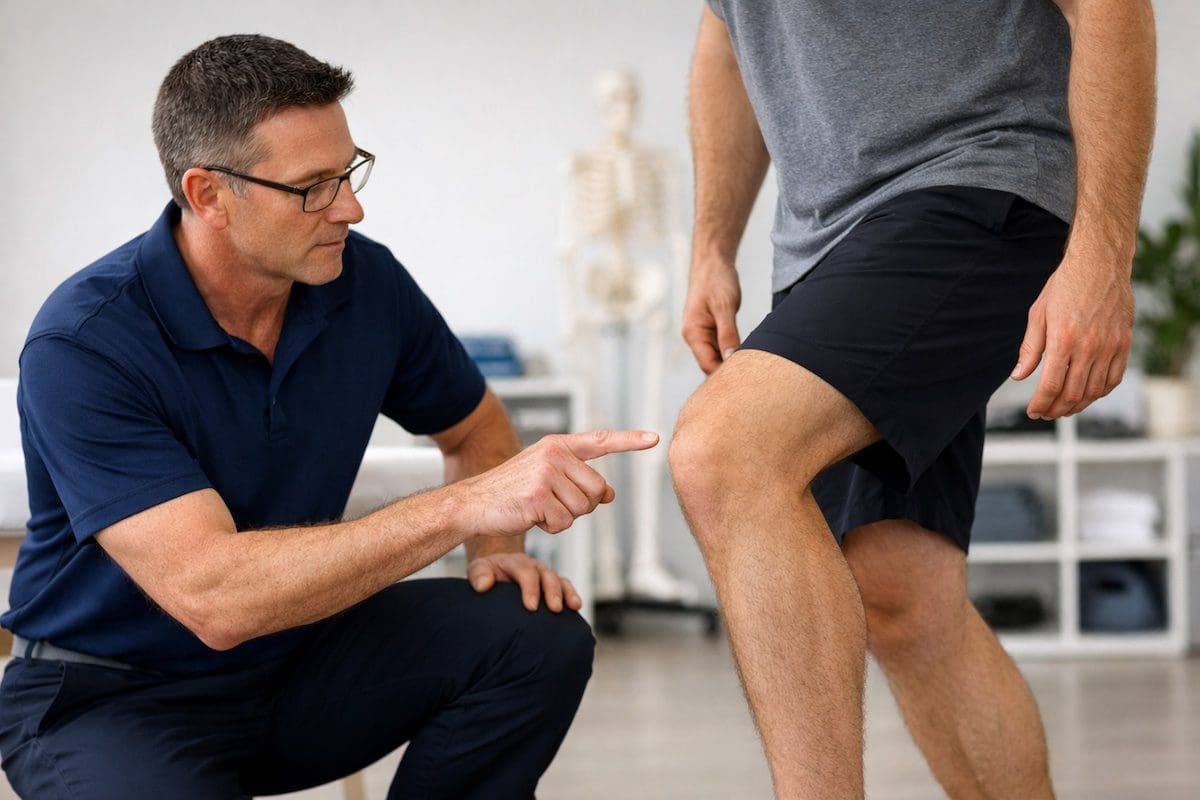
Knee instability, swelling, or loss of control can indicate a serious injury.
A knee injury may be serious if it causes rapid swelling, locking, giving way, inability to bear weight, marked loss of movement, or severe pain after a twist, fall, or collision. These signs can suggest ligament, meniscus, bone, or joint damage and should be assessed promptly.
If your symptoms are not urgent but still concerning, our knee pain hub explains common causes, treatment options, and when to seek help.
Quick Serious Knee Injury Check
- Seek urgent medical care if you cannot bear weight, the knee looks deformed, or the joint is hot, red, and swollen.
- Book a physio soon if your knee is swelling, locking, giving way, or not improving over a few days.
- Monitor briefly if pain is mild, movement is improving, and you can walk comfortably.
What are the signs of a serious knee injury?
Serious knee injuries often involve more than simple soreness. Warning signs include rapid swelling, instability, locking, inability to bear weight, or pain that is worsening rather than settling. These features can point to injuries such as a ligament tear, meniscus injury, fracture, or major joint irritation.
Rapid swelling after injury
Swelling that appears quickly, especially within the first few hours, can suggest bleeding inside the joint. This is common with injuries such as an ACL tear, patellar dislocation, or significant impact trauma.
Inability to bear weight
If you cannot stand, walk, or push off properly through the leg, the injury needs prompt assessment. Severe pain with weight-bearing may indicate a fracture, major ligament injury, or significant joint damage.
Locking or catching
A knee that gets stuck or will not fully straighten can suggest a mechanical problem inside the joint. Meniscus tears are a common cause, although swelling and joint irritation can also restrict movement.
Instability or giving way
If the knee buckles, shifts, or feels unreliable when walking or turning, this can suggest reduced structural support. Ligament injuries and patellar instability are common causes of a knee giving way.
Persistent or worsening pain
Mild knee pain often settles with relative rest and simple load management. However, pain that keeps worsening, disturbs sleep, or does not improve after a few days deserves professional attention.
When should you seek urgent help for knee pain?
You should seek urgent medical attention if you have severe pain after trauma, obvious deformity, inability to bear weight, a hot swollen knee, fever, or rapidly increasing swelling. These signs may suggest a fracture, major ligament rupture, infection, or other urgent joint problem.
- Severe pain after a fall, twist, or collision
- Inability to walk or bear weight
- Visible deformity
- Rapid large swelling
- Hot, red, swollen knee or fever
- Sudden loss of movement
If your knee pain is clearly linked to sport, see our guide to knee sports injuries for common patterns and next steps.
When should you worry about a knee injury?
This quick table helps separate symptoms that may settle with brief monitoring from symptoms that deserve urgent review or immediate medical care.
| Symptom or sign | What it may mean | Best next step |
|---|---|---|
| Mild pain that is improving | Minor irritation or overload | Monitor briefly and reduce load |
| Swelling within a few hours | Possible ligament or internal joint injury | Book a physio or doctor promptly |
| Locking or catching | Possible meniscus or mechanical joint problem | Seek assessment soon |
| Giving way or buckling | Possible ligament or kneecap instability | Book an assessment soon |
| Cannot bear weight | Possible fracture or major structural injury | Urgent medical review |
| Hot, red, swollen knee with fever | Possible infection or inflammatory flare | Immediate medical care |
Should you see a doctor or physiotherapist first?
If there are no emergency warning signs, many knee injuries can be assessed well by a physiotherapist first. Physiotherapists commonly assess ligament sprains, meniscus irritation, overuse injuries, tendon pain, kneecap pain, and movement-related knee problems.
If you are unsure who to see first, this guide on doctor or physio for knee injury can help you decide.
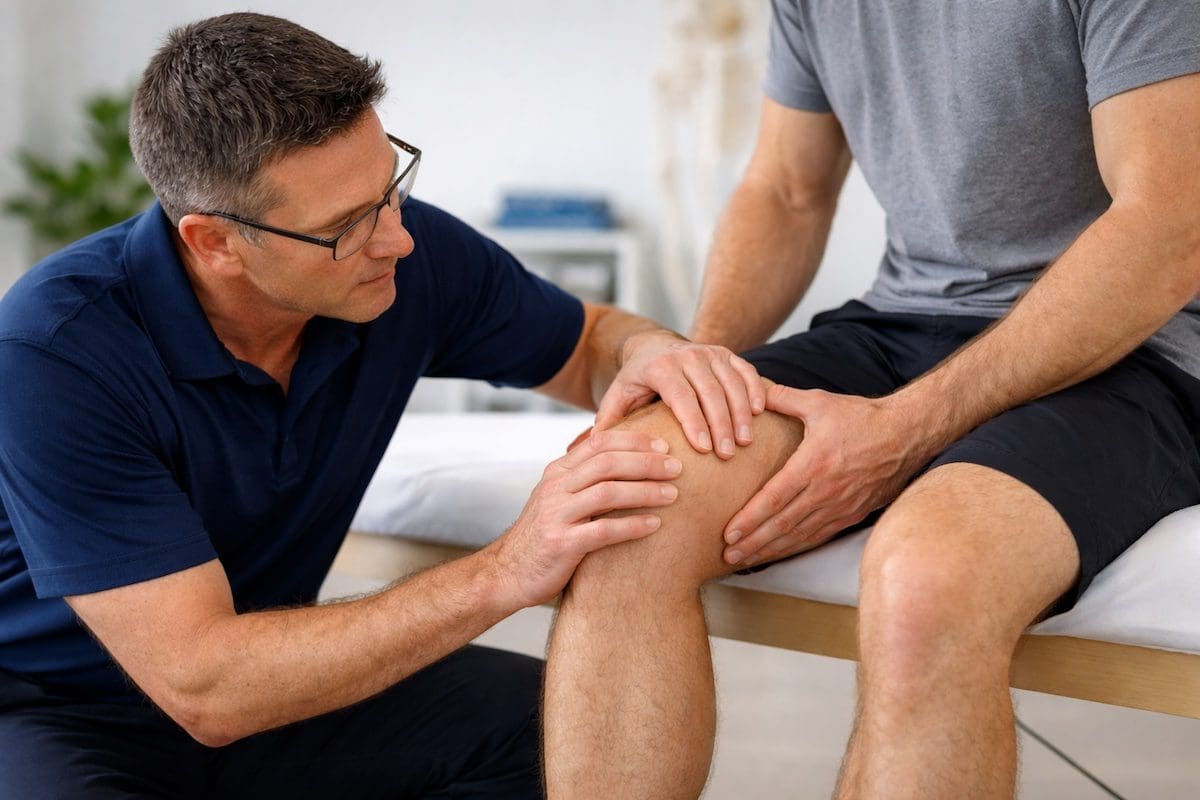
A detailed knee assessment helps identify ligament or meniscus injury.
What does a physiotherapist assess?
A physiotherapist will look at swelling, movement, strength, joint stability, pain behaviour, and walking pattern. They can then guide whether your injury is likely to respond to rehabilitation alone or whether imaging or medical review is more appropriate.
What should you do in the first 24 to 48 hours?
In the early phase after a knee injury, the goal is to settle symptoms without letting the joint stiffen too much. Reduce aggravating activities, apply ice if swelling is present, and keep the knee moving gently within comfort where possible.
- Reduce running, jumping, twisting, and deep squatting
- Use ice for swelling if helpful
- Keep walking short and controlled
- Avoid pushing into sharp or worsening pain
- Seek advice early if swelling, locking, or instability is present
Supportive rehabilitation may include strength work, balance training, taping, bracing, and a graded return to sport or activity. You can also explore common knee treatment options if your symptoms are ongoing.
Why early assessment matters
Early assessment can help identify whether your knee pain is likely to settle with guided rehabilitation or whether more urgent medical review is needed. It can also reduce the risk of chronic weakness, recurrent instability, persistent swelling, or ongoing movement loss.
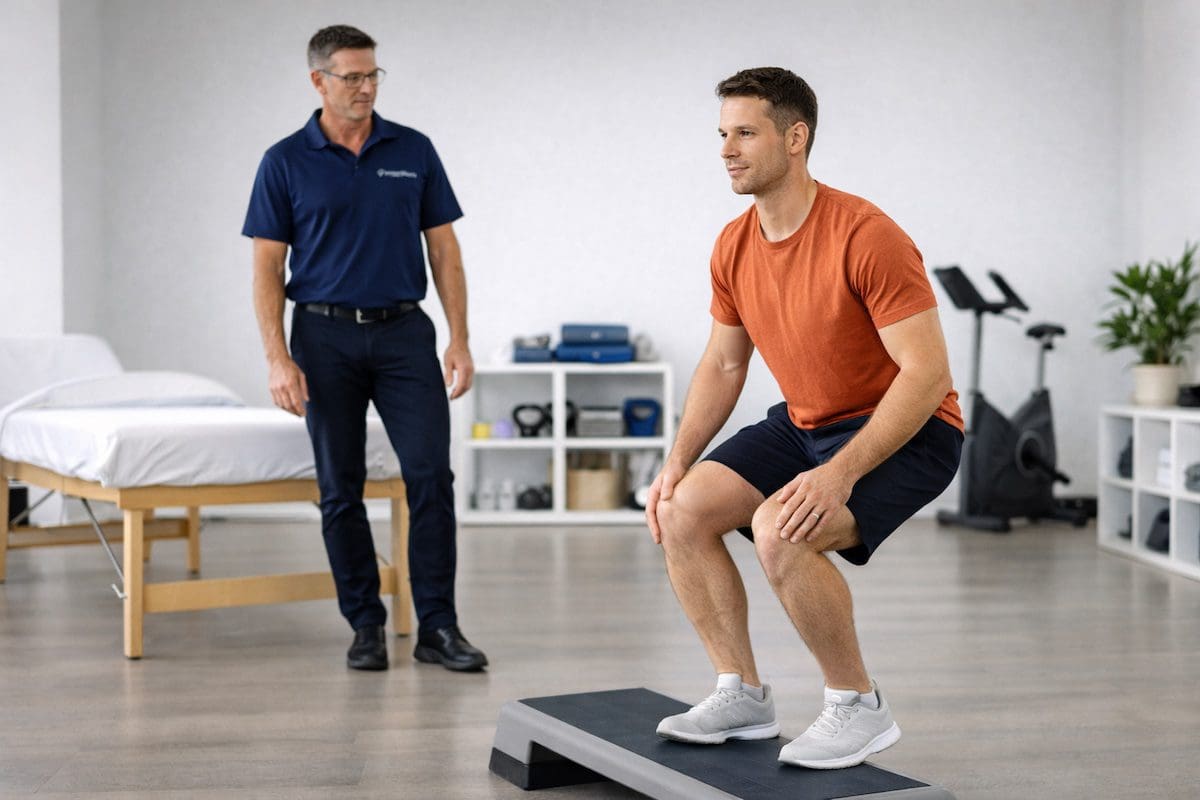
Guided rehabilitation helps restore strength and confidence after knee injury.
What should you do next?
If your knee is swelling, locking, giving way, or not improving, book an assessment promptly. Early diagnosis and the right treatment plan can help you recover more safely and return to normal activity with confidence.
If your symptoms are severe, urgent, or clearly traumatic, seek immediate medical care. Otherwise, a PhysioWorks physiotherapist can help assess the injury and guide the next step.
Frequently Asked Questions
How do I know if my knee injury is serious?
A knee injury may be serious if it causes rapid swelling, locking, giving way, inability to bear weight, major loss of movement, or severe pain after a twist, fall, or collision. These features can suggest ligament, meniscus, bone, or joint damage and should be assessed promptly.
When should I seek urgent help for knee pain?
You should seek urgent medical care if you cannot bear weight, your knee looks deformed, the joint is hot, red, and swollen, or you have severe pain after trauma. Rapid swelling, fever, or sudden loss of movement also deserve urgent review.
Can I still walk on a serious knee injury?
Sometimes yes, but being able to walk does not always rule out a serious injury. Some ligament, meniscus, and kneecap injuries still allow limited walking, especially early on. However, pain, swelling, instability, or locking still deserve assessment.
Should I see a doctor or physiotherapist first?
If there are no emergency warning signs, a physiotherapist can often assess your knee injury first. However, severe trauma, inability to bear weight, deformity, fever, or a hot swollen joint should be assessed urgently by a doctor or emergency department.
Is swelling after a knee injury serious?
Swelling can be a sign of a more serious knee injury, especially when it appears quickly after trauma. It may suggest bleeding inside the joint, significant ligament damage, patellar dislocation, or another internal joint injury.
Choose your clinic and appointment pathway
Select a PhysioWorks clinic to continue to live booking, an appointment request or reception assistance.
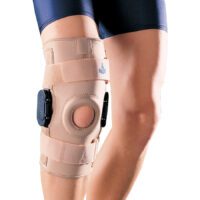
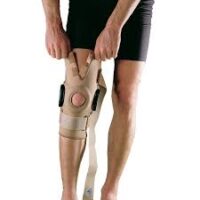
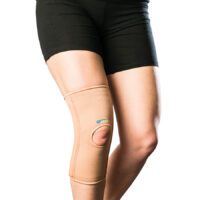
Knee Support Products
These knee support products are commonly used by our physiotherapists to help reduce strain, improve stability, and support your recovery at home.
-


-


-
-
 Exercise Equipment, Knee, Resistance Band
POW.R Fabric Mini Loop Bands
$12.00 – $55.00Select optionsQuick View -

 Calf, Elbow, Ice & Heat, Knee, Pain Management
Victor Elastic Cold Sleeve
$44.00 – $60.00Select optionsQuick View -
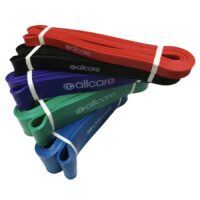
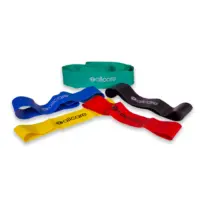
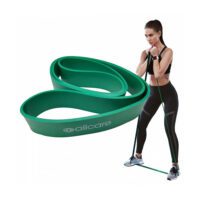 Exercise Equipment, Resistance Band
AllCare Powerloop Bands
$24.95 – $79.95Select optionsQuick View - Liniments & Gels, Massage Liniments, Pain Management
Fisiocrem
$16.95 – $39.95Select optionsQuick View - EMS Machines, Pain Management, TENS Machine, TENS Machine & EMS
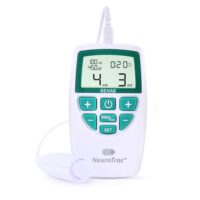
NeuroTrac Rehab (TENS Machine + EMS)
$285.00Add to cartQuick View -
-
-

 Exercise Balls, Back, Exercise Equipment, Knee, Shoulder
66fit Exercise Balls | Core & Rehab Stability Ball
$32.00 – $57.00Select optionsQuick View -
-
-






Related Knee Injury Pages
References
- Gompels B, Sidalak D, Wilson M, et al. Just the Facts: Assessing and managing soft tissue knee injuries in the emergency department. CJEM. 2024;26(6):819-821. doi:10.1007/s43678-024-00741-3.
- Logerstedt DS, Scalzitti D, Bennell KL, et al. Knee Pain and Mobility Impairments: Meniscal and Articular Cartilage Lesions Revision 2018. J Orthop Sports Phys Ther. 2018;48(2):A1-A50. doi:10.2519/jospt.2018.0301.
- van Melick N, van Cingel REH, Brooijmans F, et al. Evidence-based clinical practice update: practice guidelines for anterior cruciate ligament rehabilitation based on a systematic review and multidisciplinary consensus. Br J Sports Med. 2016;50(24):1506-1515. doi:10.1136/bjsports-2015-095898.