What causes sudden knee pain?
Sudden knee pain is most often caused by an acute injury rather than gradual wear and tear. Twisting, pivoting, landing awkwardly, kneeling, falling, or taking a direct hit can overload the ligaments, meniscus, cartilage, kneecap, or surrounding muscles and tendons.
Many sporting injuries sit within the broader sports knee injuries cluster, especially if the pain began during running, football, netball, basketball, skiing, or gym training. Acute overload can also happen outside sport when you slip, misstep on stairs, or twist while carrying weight. Treatment may include physiotherapy treatment options based on the structure involved and the severity of the injury.
Which knee injuries commonly start suddenly?
Several conditions can cause sudden knee pain. The most likely diagnosis depends on the mechanism of injury, swelling pattern, pain location, and whether your knee feels unstable, stuck, or too painful to load.
ACL injury
An ACL injury often happens during a pivot, sidestep, or awkward landing. People commonly report a pop, rapid swelling, and difficulty trusting the knee. Instability is a major clue, especially in pivoting sports.
Meniscus tear
A meniscus tear may occur with twisting, deep bending, or a loaded squat. Joint line pain, delayed swelling, clicking, catching, and difficulty straightening the knee are common. Some tears settle well with rehabilitation, while others need further review.
Collateral ligament or other knee ligament injury
A medial collateral ligament (MCL) tear often follows a force to the outside of the knee or a valgus twist. The knee may feel sore, unstable, and painful on the inside. Other ligament injuries can also occur depending on the direction of force.
Patellar dislocation or kneecap instability
If the kneecap shifts or dislocates, the pain is often immediate and dramatic. Swelling, loss of confidence, and pain around the front or outer side of the knee are common. Some people describe the kneecap as moving out and back in again.
Tibial plateau fracture or bony injury
A fracture is less common, but it must be considered after a high-force fall, collision, or awkward landing. Inability to bear weight, marked swelling, severe pain, and joint-line tenderness raise concern. For general public guidance on knee injuries and urgent care signs, Healthdirect provides a useful overview of knee injuries.
Juvenile osteochondritis dissecans
In adolescents, sudden knee pain sometimes relates to juvenile osteochondritis dissecans. This condition affects the bone and cartilage beneath the joint surface and may cause swelling, catching, or locking, especially in active young athletes.
When should you worry about sudden knee pain?
You should worry about sudden knee pain when you cannot take four steps, the swelling appears quickly, the knee looks deformed, the joint locks, or you feel marked instability. These features increase concern for fracture, major ligament injury, loose body, or a significant meniscal tear.
Urgent medical review is also sensible if the knee is hot and red, you have fever, numbness, severe calf swelling, or symptoms are worsening quickly. Healthdirect advises prompt care when you cannot walk because of a knee injury or when the knee is badly swollen or changed shape.
How is sudden knee pain assessed?
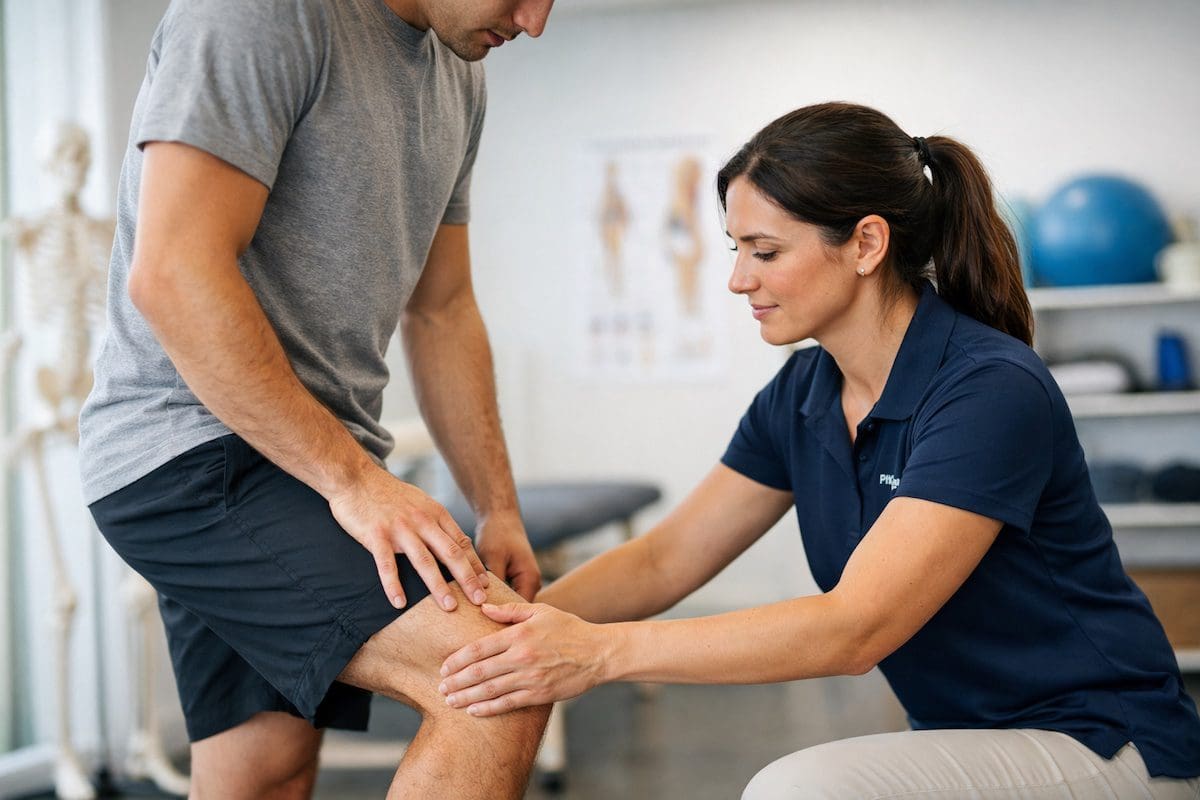
Assessment starts with the injury story. Your physiotherapist or doctor will ask what you were doing, whether you heard a pop, how quickly the swelling developed, and whether the knee now locks or gives way. That history often points strongly toward the likely structure involved.
The physical examination usually checks swelling, joint line tenderness, ligament stability, kneecap position, range of motion, and weight-bearing ability. Imaging is not always needed straight away, but X-ray may be important if fracture is possible, while MRI is more useful for ligament, meniscus, cartilage, or osteochondral injuries.
If your pain is very recent, an acute soft tissue injury approach often helps settle the knee until a clearer diagnosis is made. In the first phase, this commonly means protecting the knee, managing swelling, and restoring safe movement before loading harder.
What should you do if your knee suddenly starts hurting?
If your knee suddenly starts hurting, stop the aggravating activity, reduce load, use ice if helpful, consider compression, and avoid pushing through unstable or locking symptoms. Early assessment is usually the safest next step because the right plan depends on what structure has been injured.
Physiotherapy may help you identify the injured tissue, decide whether imaging is needed, reduce swelling, restore movement, and begin a staged rehab plan. As the knee settles, treatment may progress to knee exercises, strength work, balance retraining, and return-to-sport guidance. If you are unsure who to see first, this FAQ on doctor or physio for a knee injury may help.
FAQs about sudden knee pain
Can sudden knee pain happen without a major accident?
Yes. Sudden knee pain can start after a smaller twist, awkward squat, stumble, or change in training load. The movement may seem minor, but if the force is poorly timed or the knee is vulnerable, it can still irritate the meniscus, ligaments, tendon, kneecap, or joint lining.
Does a pop always mean I tore my ACL?
No. A pop raises suspicion for an ACL injury, but it is not specific to the ACL. Meniscus tears, kneecap dislocations, and other joint injuries can also produce a pop or shift sensation. Rapid swelling and instability make ACL injury more likely, but proper assessment is still needed.
Why did my knee swell so quickly?
Rapid swelling within a few hours can suggest bleeding inside the joint, which is more common with ACL tears, patellar dislocation, fracture, or other significant internal injuries. Delayed swelling is more often seen with some meniscus or overload problems, although patterns can overlap.
Should I keep walking on a suddenly painful knee?
Light walking may be reasonable if your symptoms are mild and the knee feels stable. However, you should avoid pushing through if you are limping badly, the knee buckles, swelling is increasing, or you cannot take four normal steps. Those signs suggest the injury needs earlier review.
Do I need an MRI straight away?
Not always. Many acute knee injuries can be assessed well from the history and physical examination first. X-ray is often more important early if fracture is suspected. MRI is more useful when ligament, meniscus, cartilage, or osteochondral injury is suspected, or when recovery is not progressing as expected.
How can physiotherapy help sudden knee pain?
Physiotherapy may help by identifying the likely injured structure, reducing pain and swelling, improving range of motion, guiding safe loading, and progressing strength and control. It also helps you decide when you can return to work, sport, stairs, squatting, and other everyday tasks with more confidence.
What to do next
If your knee has suddenly started hurting, do not guess the diagnosis based on pain location alone. The same area of pain can come from very different structures, and the correct treatment depends on what has actually been injured.
Book an assessment if you have swelling, instability, locking, trouble walking, or symptoms that are not settling quickly. Early guidance often helps you avoid setbacks and gives you a safer path back to work, exercise, and sport.
Not Sure What You’ve Injured?
If your knee pain started suddenly, getting the right diagnosis early can make a big difference. Many injuries look similar at first but need very different management.
A physiotherapy assessment can help identify the structure involved and guide your next steps with more confidence.
References
- Jadidi S, Lee AD, Pierko EJ, Choi H, Jones NS. Non-operative Management of Acute Knee Injuries. Curr Rev Musculoskelet Med. 2024;17(1):1-13. doi:10.1007/s12178-023-09875-7
- Sims JI, Chau MT, Davies JR. Diagnostic accuracy of the Ottawa Knee Rule in adult acute knee injuries: a systematic review and meta-analysis. Eur Radiol. 2020;30(8):4438-4446. doi:10.1007/s00330-020-06804-x
- Akkawi I, Zmerly H, Draghetti M, Felli L. Juvenile Osteochondritis Dissecans: Current Concepts. Cureus. 2024;16(7):e65496. doi:10.7759/cureus.65496
- Howell M, Khalid A, Nelson C, Doonan J, Jones B, Blyth M. Long term outcomes following tibial plateau fracture fixation and risk factors for progression to total knee arthroplasty. Knee. 2024;51:303-311. doi:10.1016/j.knee.2024.10.003