
Arm Pain
Arm Pain
Arm pain can come from the shoulder, elbow, wrist, hand or neck. The pattern of pain, weakness, tingling or movement restriction can help identify the likely source and guide appropriate management.


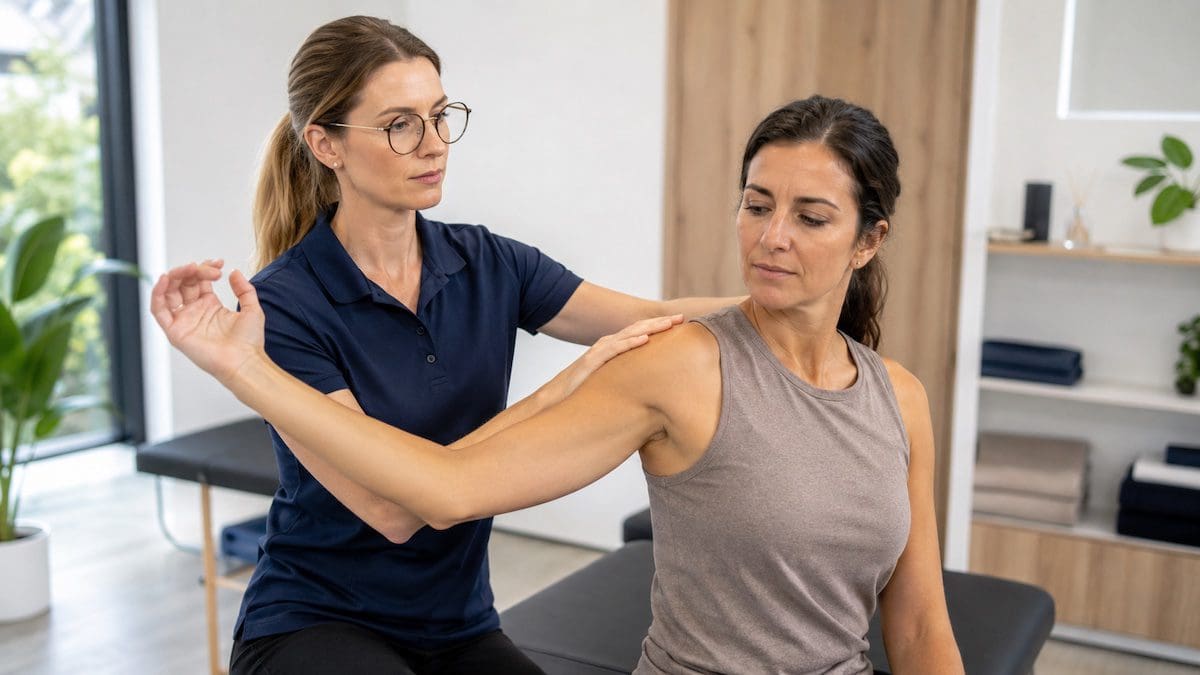
A physiotherapist assesses shoulder and arm movement to help identify the source of arm pain.
Arm pain is discomfort felt anywhere from the shoulder to the hand. Symptoms may include aching, stiffness, weakness, tingling, numbness or sharp pain.
Arm pain can affect lifting, gripping, reaching, computer work, sleep, sport and everyday tasks. A physiotherapist can assess your shoulder, elbow, wrist and hand, neck and nerve function to help identify the likely driver.
Common Signs of Arm Pain
- Aching or stiffness in the shoulder, upper arm, elbow, forearm, wrist or hand.
- Pins and needles, numbness or tingling.
- Pain with lifting, gripping, reaching or typing.
- Weakness or reduced control.
- Pain that spreads from the neck into the arm.
Arrange an assessment if symptoms are not settling as expected, keep returning, affect sleep or limit work, sport or everyday activities.
What Causes Arm Pain?
Arm pain may begin in local tissues such as muscles, tendons, joints or ligaments. It may also come from an irritated nerve or be referred from the neck or upper back.
Common triggers include repetitive gripping, lifting, sport, desk work, device use, awkward sleep positions and a sudden increase in activity. The most useful management depends on the affected region, the tissue involved and the activities that aggravate your symptoms.
Where Can Arm Pain Start?
Shoulder and Upper Arm
Pain may come from the rotator cuff, shoulder joint, bursa or surrounding muscles. It often worsens with reaching, lifting or lying on the affected side.
Elbow and Forearm
Elbow and forearm pain commonly follows repeated gripping, lifting, racquet sports, gym exercise or manual work.
Wrist and Hand
Wrist and hand symptoms may affect gripping, typing, tool use, opening jars or holding objects.
Neck and Nerves
Neck and nerve problems may cause pain, tingling, numbness, weakness or symptoms that change with neck or arm position.
Can Arm Pain Come From the Neck?
Yes. Structures in the neck can refer pain into the shoulder, upper arm, forearm or hand. Irritation of a cervical nerve root may also cause pins and needles, numbness or weakness. Symptoms may change when you move or hold your neck in particular positions.
Read more about neck arm pain or cervical radiculopathy. A physiotherapist can compare your neck movement, shoulder function, arm strength, sensation and nerve signs to help distinguish neck-related symptoms from a local shoulder, elbow, wrist or hand problem.
How Is Arm Pain Assessed?
An arm pain assessment usually checks movement, strength, joint range, tendon load tolerance, nerve signs and how your symptoms respond to particular positions or activities.
Your physiotherapist may assess your neck, upper back, shoulder blade control, shoulder, elbow, wrist and grip. They will also consider work demands, sport, sleep positions, recent injuries and changes in activity.
If symptoms suggest a fracture, infection, inflammatory condition, circulation problem or significant nerve involvement, your physiotherapist may recommend GP review, imaging or further medical assessment.
How May Physiotherapy Help Arm Pain?
Physiotherapy may help by identifying the likely source of symptoms, reducing aggravating loads, restoring comfortable movement and rebuilding strength for work, sport and daily life.
Management depends on whether symptoms arise mainly from a tendon, joint, muscle, nerve or referred neck pain. Your plan may include:
- Graded strengthening: to improve the capacity of the shoulder, elbow, wrist, hand and upper back.
- Mobility exercises: to restore comfortable movement where stiffness is contributing.
- Load management: to reduce flare-ups without unnecessarily stopping all activity.
- Task and ergonomic changes: to reduce strain during work, study or repetitive activities.
- Manual therapy: where joint or soft-tissue movement may benefit from hands-on treatment.
- Return-to-activity planning: to rebuild lifting, gripping, gym, work or sporting demands gradually.
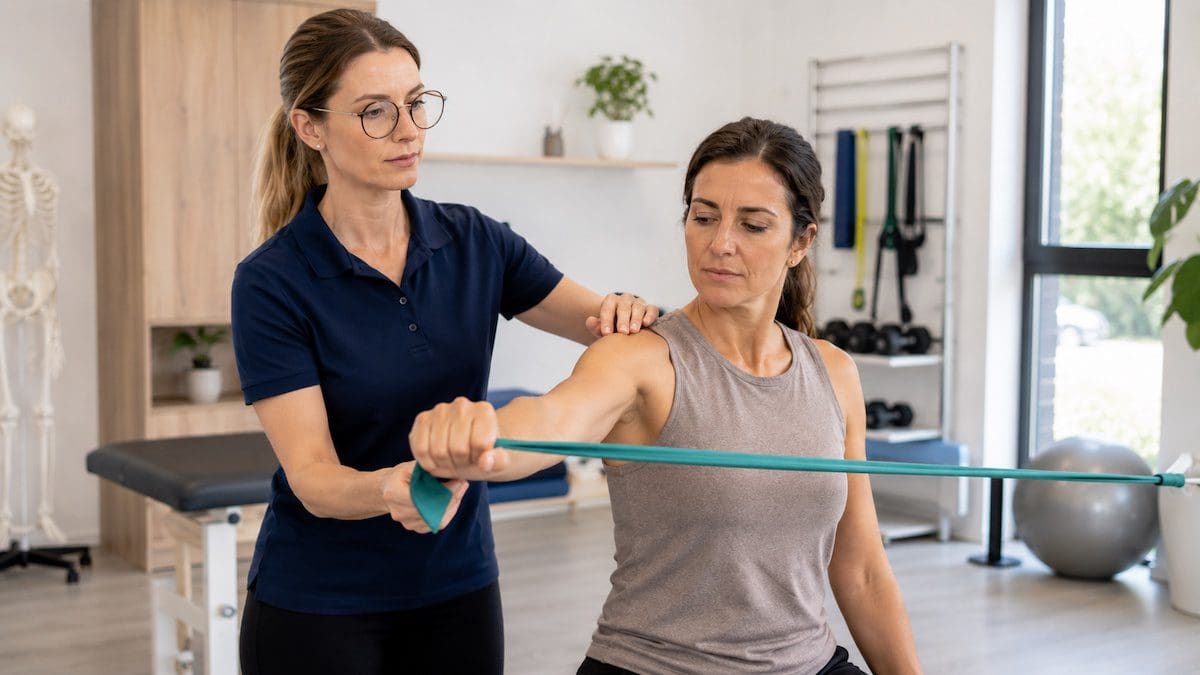
Targeted exercise can help restore arm strength, movement and control.
Does Arm Pain Always Need Hands-On Treatment?
No. Many arm pain rehabilitation plans centre on exercise, education, activity changes and gradually rebuilding strength and load tolerance.
Hands-on treatment may help selected people when pain or movement restriction is limiting rehabilitation. Depending on the presentation, this may include manual therapy or treatments such as dry needling. These approaches are usually used as part of a broader plan rather than as a standalone solution.
Tailored exercise programs can progressively rebuild shoulder, elbow, wrist, neck or upper-back capacity according to your symptoms and goals.
How Can You Reduce the Risk of Arm Pain Returning?
Long-term improvement often depends on matching activity levels to your current capacity. Avoid sudden increases in lifting, gripping, training or repetitive work.
- Change positions and tasks regularly.
- Build strength and activity gradually.
- Use comfortable wrist and shoulder positions during desk work.
- Take short movement breaks during repetitive tasks.
- Review technique when lifting, exercising or playing sport.
- Adjust sleep positions if they repeatedly aggravate symptoms.
Practical changes to workstation ergonomics may reduce unnecessary strain across the neck, shoulder, elbow, wrist and hand.
When Should You Get Arm Pain Checked?
Arrange an assessment if arm pain is not settling as expected, keeps returning, affects sleep, limits work or sport, or includes numbness, tingling or weakness.
Seek assessment sooner after a significant injury, if weakness is worsening, if the arm is becoming difficult to use, or if night pain is severe or unexplained.
What to Do Next
- Mild symptoms: reduce aggravating loads briefly and keep the arm moving gently within comfort.
- Persistent or recurring symptoms: arrange an assessment to identify the likely source and plan appropriate rehabilitation.
- Numbness or weakness: seek assessment sooner, particularly if symptoms are worsening.
- Severe or urgent symptoms: follow the emergency advice near the top of this page.
Choose your clinic and appointment pathway
Select a PhysioWorks clinic to continue to live booking, an appointment request or reception assistance.


Arm Pain FAQs
What are common causes of arm pain?
Common causes include muscle or tendon overload, joint irritation, nerve symptoms and pain referred from the neck. The shoulder, elbow, wrist and hand can each produce different patterns of pain, weakness or stiffness.
Can arm pain be caused by a pinched nerve?
Yes. A nerve may become irritated in the neck or along the arm. People often notice pins and needles, numbness, weakness or symptoms that change with neck or arm position.
When should I worry about arm pain?
Call Triple Zero (000) if arm or shoulder pain occurs with chest pressure, chest tightness, shortness of breath, nausea, dizziness or a cold sweat. Seek urgent medical care after a major injury if the arm looks deformed, swelling is severe, the hand becomes pale or cold, or you cannot move or use the arm.
May physiotherapy help arm pain?
Physiotherapy may help by identifying the likely pain driver, improving movement and strength, managing aggravating loads and guiding a gradual return to work, lifting, exercise or sport.
What causes arm pain at night?
Night pain may relate to shoulder irritation, referred neck pain, nerve sensitivity, joint inflammation or sleep position. Seek assessment if night pain is worsening, unexplained or linked with weakness or numbness.
How long should arm pain last?
Mild symptoms from temporary overload may settle relatively quickly, while tendon, joint or nerve-related problems can take longer. Arrange an assessment if pain is worsening, repeatedly returning or not progressing as expected.
References
- Lucado AM, Dale RB, Vincent J, Day JM. Lateral Elbow Pain and Muscle Function Impairments: Clinical Practice Guidelines Linked to the International Classification of Functioning, Disability and Health. J Orthop Sports Phys Ther. 2022;52(12):CPG1-CPG111. doi:10.2519/jospt.2022.0302
- American Academy of Orthopaedic Surgeons. Management of Carpal Tunnel Syndrome Clinical Practice Guideline. Published 2024.
- Singh HP, Watts AC, Hyett G, et al. BESS patient care pathway: tennis elbow. Shoulder & Elbow. 2023;15(4):381-390.
- McCartney S, Baskerville R, Blagg S, McCartney D. Cervical Radiculopathy. In: StatPearls. StatPearls Publishing; updated 2025.
- MedlinePlus. Arm Injuries and Disorders. US National Library of Medicine.
- Healthdirect Australia. Heart attack. Australian Government.
