
Carpal Tunnel Syndrome



Carpal tunnel syndrome physiotherapy may help if you wake with tingling fingers, a numb hand, wrist pain, or weaker grip. Carpal tunnel syndrome happens when the median nerve becomes irritated or compressed as it passes through the carpal tunnel at the wrist.
Symptoms often affect the thumb, index finger, middle finger, and part of the ring finger. Many people notice symptoms at night, while driving, typing, gripping tools, holding a phone, or using the hand for repeated tasks.
For broader guidance, start with our Hand & Wrist Pain hub. If your symptoms feel more nerve-like, also see our Nerve Pain guide.
Carpal Tunnel Syndrome Quick Guide
- Main nerve involved: median nerve at the wrist.
- Common symptoms: tingling, numbness, night pain, weak grip, or clumsiness.
- Common triggers: bent wrist positions, gripping, typing, driving, vibration, or swelling.
- Early care focus: calm symptoms, reduce nerve pressure, and restore hand use.
- Prompt review matters: constant numbness or worsening weakness needs assessment.
What Is Carpal Tunnel Syndrome?
Carpal tunnel syndrome describes symptoms caused by pressure or irritation of the median nerve at the wrist. The carpal tunnel is a narrow passage formed by the wrist bones and a strong band of tissue called the transverse carpal ligament. The median nerve and finger flexor tendons pass through this space.
If swelling, tendon irritation, wrist position, or local pressure reduces space in the tunnel, the nerve can become sensitive. This may cause tingling, numbness, pain, weakness, or reduced hand control.
What Are the Symptoms of Carpal Tunnel Syndrome?
Carpal tunnel syndrome usually affects the thumb side of the hand. Symptoms may come and go early, then become more constant if nerve pressure persists.
- tingling or pins and needles in the thumb, index, and middle fingers
- night pain or waking with a numb, “dead”, or swollen-feeling hand
- hand weakness, reduced pinch grip, or dropping objects
- symptoms with driving, typing, gripping, tool use, or holding a phone
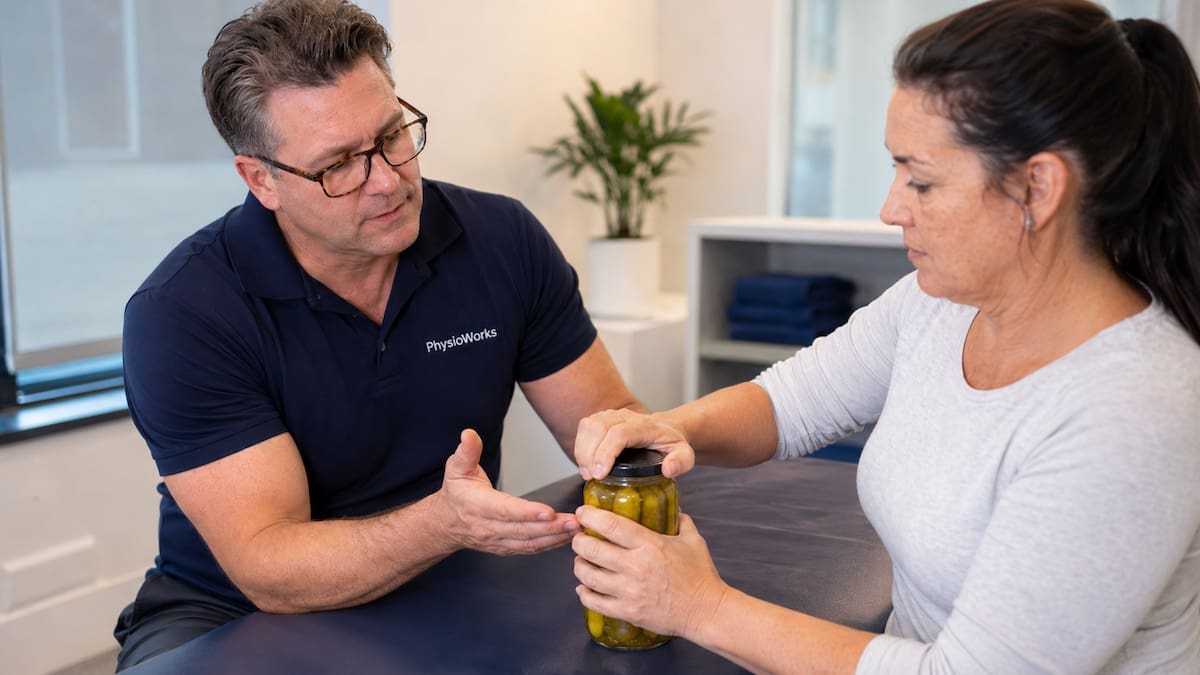
- reduced fine control with buttons, jars, pens, or small objects
Why does carpal tunnel syndrome hurt more at night?
Night symptoms are common because the wrist often stays bent during sleep. A bent wrist can increase pressure inside the carpal tunnel and irritate the median nerve. A night splint aims to keep the wrist closer to neutral so the nerve has less pressure while you sleep.
What Causes Carpal Tunnel Syndrome?
Carpal tunnel syndrome often has more than one driver. It may relate to wrist position, repeated gripping, swelling, tendon irritation, vibration exposure, pregnancy-related fluid changes, inflammatory conditions, diabetes, thyroid problems, or a naturally smaller tunnel.
Work and sport may contribute when the hand repeatedly grips, twists, vibrates, or stays in a bent wrist position for long periods. However, symptoms do not always come from one clear cause.
Is It Carpal Tunnel Syndrome or a Neck Problem?
Not all hand tingling comes from the wrist. A pinched nerve, cervical radiculopathy, or neck arm pain can also cause arm or hand symptoms.
Carpal tunnel syndrome usually focuses on the thumb-side fingers and often worsens at night or with wrist-heavy tasks. Neck-related nerve symptoms may change with neck movement, include shoulder blade or arm pain, or spread outside the classic median nerve pattern. A physiotherapist will usually screen the neck, shoulder, elbow, wrist, and hand to decide which pattern fits best.
What is “double crush”?
“Double crush” means a nerve may be sensitive at more than one point, such as the neck and wrist. This can make symptoms more widespread or easier to flare. Screening the full upper limb helps guide the plan, especially when symptoms are not only in the hand.
How Is Carpal Tunnel Syndrome Diagnosed?
Diagnosis starts with your symptom pattern, health history, work and sport loads, and a physical examination. Your physiotherapist may check wrist movement, sensation, thumb strength, grip, pinch, nerve sensitivity, and whether symptoms change with neck or upper limb testing.
Common clinical tests may include Phalen’s test, Tinel’s sign, carpal compression testing, and hand strength checks. If symptoms are severe, persistent, or worsening, your GP may request nerve conduction studies or ultrasound to help confirm severity and guide management.
How Can Physiotherapy Help Carpal Tunnel Syndrome?
Physiotherapy for carpal tunnel syndrome aims to reduce median nerve irritation, improve wrist and hand function, and guide safe return to daily loads. Treatment depends on symptom severity, your hand demands, and whether the nerve is mainly irritated at the wrist or also sensitive higher up the arm.
- wrist positioning advice for sleep, work, driving, devices, and tools
- night splint advice where symptoms wake you
- graded nerve and tendon gliding exercises
- gentle manual therapy where clinically suitable
- load and ergonomic changes for typing, gripping, lifting, or vibration
- strength work for the hand, forearm, shoulder, and upper limb as symptoms settle
How do nerve gliding exercises fit in?
Nerves need to slide and tolerate movement. If the median nerve is irritable, graded movement may help improve tolerance without forcing the nerve. Your physiotherapist may use neurodynamics to assess and guide nerve movement. The right dose matters, because too much stretch can flare symptoms.
Do Night Splints Help Carpal Tunnel Syndrome?
Night splints may help some people with mild to moderate symptoms, especially when symptoms wake them. The splint should hold the wrist close to neutral without tight pressure across the palm or wrist. If a splint increases numbness, pain, or swelling, stop using it and seek advice.
What Exercises Help Carpal Tunnel Syndrome?
Exercises may include tendon gliding, median nerve gliding, wrist mobility work, and later strengthening. Early exercises should feel gentle and controlled. They should not create strong pins and needles, spreading numbness, or lasting symptom flare.

Exercise Progression Guide
| Phase | Main Goal | Examples |
|---|---|---|
| Irritable | Calm nerve symptoms | wrist position changes, short gentle glides, task breaks |
| Settling | Improve movement tolerance | tendon glides, graded nerve glides, light grip control |
| Building | Restore hand capacity | forearm strength, grip endurance, work or sport task practice |
Can Carpal Tunnel Syndrome Go Away on Its Own?
Mild carpal tunnel syndrome can settle, especially when symptoms relate to a temporary change such as pregnancy-related swelling, a short workload spike, or a new gripping task. However, persistent night symptoms, worsening numbness, or growing weakness should be assessed because longer-lasting nerve compression can slow recovery.
When Should You Worry About Carpal Tunnel Syndrome?
Arrange an assessment if symptoms keep waking you, spread through the hand, or affect grip, pinch, or fine hand control. Seek prompt medical review if you notice constant numbness, progressive weakness, major loss of hand function, or visible muscle wasting near the base of the thumb.
Decision point: If symptoms are occasional and mild, early changes to wrist position, workload, and sleep support may be enough. If symptoms are worsening, constant, or linked to weakness, get assessed before relying on home exercises alone.
What About Injections or Surgery?
If symptoms are severe, persistent, or linked to ongoing weakness, your clinician may discuss corticosteroid injection or surgical review. Surgery is usually considered when symptoms do not improve with suitable conservative care, when nerve tests show significant compression, or when weakness and muscle wasting suggest higher risk.
Before making this decision, it helps to confirm that symptoms are mainly from the carpal tunnel and not mostly from the neck, elbow, or another nerve site. This is important because the right diagnosis can change the treatment pathway.
How Can You Reduce Carpal Tunnel Flare-Ups?
Many flare-ups improve when you reduce the main drivers: prolonged wrist bending, high gripping load, vibration, repeated forceful tasks, poor recovery breaks, and low hand capacity. For related problems, see Repetitive Strain Injury (RSI), Wrist Tendinopathy, and De Quervain’s Tenosynovitis.
Related PhysioWorks Guides
- Hand & Wrist Pain – broader hand and wrist symptom guide.
- Nerve Pain – explains nerve sensitivity and referred symptoms.
- Cervical Radiculopathy – useful when hand symptoms may come from the neck.
- Neurodynamics – background on nerve movement and physiotherapy assessment.
FAQs About Carpal Tunnel Syndrome
What are the main symptoms of carpal tunnel syndrome?
Common symptoms include tingling or numbness in the thumb, index, and middle fingers, night pain, and waking with a numb or “dead” hand. Some people also notice weaker grip, poorer pinch strength, or clumsiness with buttons, jars, pens, or small objects.
How do you know if it is carpal tunnel syndrome or a pinched nerve?
Carpal tunnel syndrome usually focuses on the thumb-side fingers and often worsens at night or with wrist-heavy tasks. A pinched nerve from the neck may include neck pain, shoulder blade pain, arm symptoms, or changes with neck movement. A physiotherapist can screen both areas.
Do night splints help carpal tunnel syndrome?
Night splints may help reduce symptoms by keeping the wrist closer to neutral while you sleep. They should feel supportive, not tight. If a splint worsens numbness or pain, stop using it and ask a clinician to check the fit.
What exercises help carpal tunnel syndrome?
Exercises may include graded nerve gliding, tendon gliding, wrist mobility work, and later strength work for the hand and forearm. The best starting point depends on symptom irritability. Exercises should not cause strong or lasting nerve symptoms.
Can carpal tunnel syndrome affect grip strength?
Yes. Median nerve irritation can affect thumb and hand control, which may reduce pinch strength, grip confidence, and fine motor control. Worsening weakness or dropping objects more often should be assessed because it may suggest more significant nerve compression.
When is surgery considered for carpal tunnel syndrome?
Surgery may be considered when symptoms are severe, persistent despite suitable conservative care, or linked to progressive weakness, constant numbness, or muscle wasting. Your clinician may recommend nerve testing or specialist review to help guide the next step.
What to Do Next
If you have night-time numbness, worsening tingling, or reduced hand strength, book an assessment. A physiotherapist can check whether your symptoms match carpal tunnel syndrome, screen your neck and upper limb, and explain a practical plan.
If your symptoms include constant numbness, progressive weakness, or major loss of function, arrange prompt GP or specialist review as well.
Choose your clinic and appointment pathway
Select a PhysioWorks clinic to continue to live booking, an appointment request or reception assistance.
Wrist Products
These wrist products are commonly used by our physiotherapists to improve comfort, strength, and home exercise programs.
-


- Liniments & Gels, Massage Liniments, Pain Management
Fisiocrem
$16.95 – $39.95Select optionsQuick View -


-

-
-
-


-


-

-


-
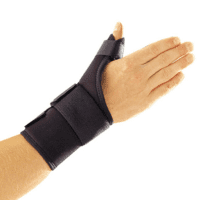 Braces & Supports, Hand, Thumb, Wrist
OPPO 1188 Wrist and Thumb Support
$30.00Select optionsQuick View -

-
-
 Braces & Supports, Thumb, Uncategorized, Wrist
Victor Neoprene Thumb Brace
$37.00Add to cartQuick View -








References
- Shapiro LM, Kamal RN; AAOS Work Group. Clinical Practice Guideline Summary: Management of Carpal Tunnel Syndrome. J Am Acad Orthop Surg. 2025;33(7):e356-e366. doi:10.5435/JAAOS-D-24-01179
- Karjalainen TV, Lusa V, Page MJ, et al. Splinting for carpal tunnel syndrome. Cochrane Database Syst Rev. 2023;2(2):CD010003. doi:10.1002/14651858.CD010003.pub2
- Burton C, Chesterton LS, Davenport G, et al. The effectiveness of corticosteroid injection versus night splints for carpal tunnel syndrome: 24-month follow-up of a randomised trial. Rheumatology (Oxford). 2023;62(2):546-554. doi:10.1093/rheumatology/keac219
- Çağlar S, Tokgöz N, Aydın T. Evaluation of Splint and Exercise Interventions for Carpal Tunnel Syndrome: A Randomized Controlled Trial. Med Sci Monit. 2024;30:e945612. doi:10.12659/MSM.945612
- Masiero S, et al. Surgical Versus Conservative Management for Carpal Tunnel Syndrome: An Updated Systematic Review of Randomised Trials. Brain Sci. 2026;16(4):399. doi:10.3390/brainsci16040399
- Healthdirect Australia. Carpal tunnel syndrome. Last reviewed September 2024. Accessed July 2, 2026.
