Exercises

What Exercise Ball Size Should I Use?

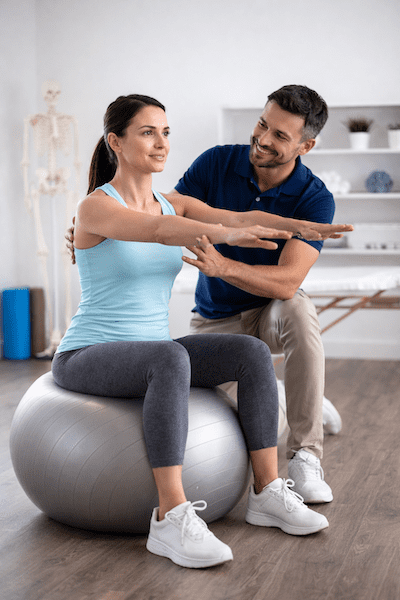
physiotherapist checking exercise ball size with seated knee and hip alignment

Correct exercise ball size keeps your hips slightly higher than your knees.

The right exercise ball size depends mainly on your height, leg length and how you plan to use it. Most adults suit a 55 cm or 65 cm ball. When seated, your feet should stay flat and your hips should sit slightly higher than your knees.

Choosing the correct exercise ball size can improve comfort and control during sitting, balance work and core stability training. If you plan to use a ball for back exercises, rehab or desk sitting, fit matters more than the label on the box.

Quick Exercise Ball Size Guide

  • 137–152 cm → 45 cm ball
  • 155–173 cm → 55 cm ball
  • 175–188 cm → 65 cm ball
  • 190–200 cm → 75 cm ball
  • 200 cm+ → 85 cm ball

How Do You Choose the Correct Exercise Ball Size?

Match your height to the ball diameter first. Then check your seated position. Your knees should sit just below your hips, your feet should stay flat, and your spine should feel upright without strain.

If you are between sizes, your main use matters. Choose the larger ball for sitting or workstation use. Choose the smaller ball for controlled exercise, balance drills or early-stage back exercises.

Exercise Ball Size Chart

Ball Diameter Recommended Height Common Use
45 cm 137–152 cm Smaller users / rehab
55 cm 155–173 cm Shorter to average adults
65 cm 175–188 cm Average to taller adults
75 cm 190–200 cm Tall users / sitting
85 cm 200 cm+ Very tall users

Before You Buy: Quick Checklist

  • Check your height against the size chart.
  • Sit on the ball before regular use where possible.
  • Confirm your hips sit slightly above your knees.
  • Choose larger for sitting and smaller for exercise control.
  • Inflate to the labelled diameter, not to maximum hardness.
ball chair height should be at least the height of your your thigh when seated.

Check seated knee height to confirm your ideal ball size.

Should I Use a Bigger or Smaller Exercise Ball?

Use a bigger exercise ball if your hips drop below your knees when sitting. Use a smaller ball if you need better control during exercise, especially for balance, beginner core work or gentle movement after lower back pain.

Fit Check: The 30-Second Test

  • Too small: knees sit higher than hips, or you feel cramped.
  • Too large: feet lift, hips rock, or balance feels unsafe.
  • Good fit: feet stay flat, hips sit slightly high, and control feels easy.

Common Exercise Ball Size Mistakes

  • Choosing a ball that is too small for sitting.
  • Using a soft or under-inflated ball.
  • Ignoring leg length and desk height.
  • Using one ball for every exercise.
  • Sitting on a ball for too long without posture breaks.

Physio Tips for Safe Exercise Ball Use

Start with short sessions. Keep both feet flat, move slowly, and use the ball on a non-slip surface. If you feel unstable, dizzy, sore or unsafe, stop and use a more supported option.

Inflation also matters. A ball that is too soft drops your hips too low. A ball that is too hard may feel unstable. For setup steps, read how to inflate an exercise ball safely.

Exercise balls may suit gentle back pain exercises, posture work and balance training when used well. However, they are not ideal for every person or every stage of recovery.

Is an Exercise Ball Good as a Chair?

An exercise ball can be useful for short posture or movement breaks. It should not replace a supportive chair for long periods of desk work. WorkSafe Victoria advises that fitness balls are not suitable as standard workplace chairs.

If you want active sitting, start with short blocks and change position often. For a fuller guide, read our ball chair benefits and safety guide. For desk discomfort, a full ergonomic workstation assessment may help you match chair height, desk height and screen position.

What to Do Next

Most adults suit either a 55 cm or 65 cm exercise ball. If your hips sit below your knees, move up a size. If you cannot control the ball during exercise, move down a size or use a more stable option.

If you plan to use a ball for pain, rehab, posture or workstation support, a physiotherapist can help match the ball size to your body, goals and exercise program.

Choose your clinic and appointment pathway

Select a PhysioWorks clinic to continue to live booking, an appointment request or reception assistance.

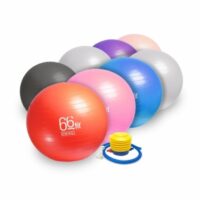
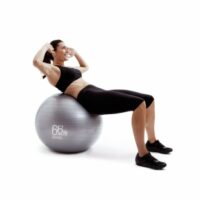
Exercise Ball Products

These exercise balls are commonly used by our physiotherapists to improve strength, balance, posture, and home exercise programs.

View all exercise ball products

Exercise Ball Size FAQs

What size exercise ball should I use for my height?

Most people between 155–173 cm use a 55 cm exercise ball. People between 175–188 cm usually suit a 65 cm ball. Taller users may need a 75 cm or 85 cm ball, depending on leg length and use.

How do I know if my exercise ball fits?

Sit on the ball with both feet flat on the floor. Your hips should sit slightly higher than your knees, and your spine should feel upright and relaxed. If your knees sit higher than your hips, the ball is probably too small.

Should I go bigger or smaller with an exercise ball?

Go bigger if you are using the ball for sitting, especially at a desk. Go smaller if you need more control during exercise. Your goal matters because sitting needs height, while exercise needs control.

Can an exercise ball help posture?

An exercise ball may help posture awareness by encouraging upright sitting and small movements. However, it should not replace regular breaks, workstation setup or strength work.

Can I use an exercise ball for back pain?

Some people use an exercise ball for gentle movement, core control and supported back exercises. Back pain has many causes, so stop and seek advice if pain worsens, spreads into your leg, or limits daily tasks.

How firm should an exercise ball be?

The ball should feel firm but still give slightly when you sit on it. If it collapses heavily under your weight, it may be under-inflated or too small. Always follow the maker’s inflation and safety guide.

When should I avoid using an exercise ball?

Avoid using an exercise ball if you feel unsafe, dizzy, unstable or unable to control your balance. Seek advice first after surgery, a recent injury, a fall, or significant back or pelvic pain.

Is an exercise ball better than a chair?

An exercise ball is not automatically better than a chair. It may help as a short movement option, but long desk work still needs a supportive chair, regular breaks, standing, walking and exercise.

Follow PhysioWorks

Get physiotherapy tips, exercise videos, recovery advice and blog updates.

Related Articles

References

  1. WorkSafe Victoria. Fitness balls are not suitable as chairs. Accessed July 1, 2026.
  2. Riccio D. Choosing the right exercise ball. Spine-health. Accessed July 1, 2026.
  3. Elliott TLP, Marshall JM, Munson EC, et al. The effect of sitting on stability balls on nonspecific lower back pain, disability, and core endurance. J Sport Rehabil. 2016;25(4):379-386. doi:10.1123/jsr.2015-0093
  4. Gregory DE, Dunk NM, Callaghan JP. Stability ball versus office chair: comparison of muscle activation and lumbar spine posture during prolonged sitting. Hum Factors. 2006;48(1):142-153. doi:10.1518/001872006776412243

Are Anti-Burst Exercise Balls Safe?

Anti-burst exercise balls safety with seated knee and hip alignment check
Correct exercise ball size improves safety, posture and control.

Anti-burst exercise balls safety depends on more than the label on the box. These balls are designed to release air more slowly if punctured, instead of failing with a sudden pop. However, safer use still depends on the right size, correct inflation, a clear floor space, and sensible exercise choice.

For ball options, sizes and related products, start with the Exercise Balls hub.

Quick answer: Anti-burst exercise balls are generally safe when you choose the correct size, inflate to the listed diameter, and use the ball on a flat, non-slip surface.

Safety still matters: Anti-burst does not mean unbreakable. Sharp objects, heat damage, overinflation and worn material can still make a ball unsafe.

What Does Anti-Burst Mean?

Anti-burst means the exercise ball is made from material designed to release air slowly after a puncture. This can reduce the risk of a sudden drop during seated work, beginner balance drills, or controlled rehab exercises.

Still, the design does not remove all risk. A large tear, damaged valve, wrong inflation level, or rough surface may still make the ball unsafe. Treat the anti-burst label as one safety feature, not a guarantee.

How Do You Use An Anti-Burst Exercise Ball Safely?

Use an anti-burst exercise ball safely by matching the size to your body, inflating it to the listed diameter, checking the surface, and starting with controlled exercises. Most safety problems come from poor setup, worn material, rough floors, or exercises that are too advanced for the person using the ball.

  • Choose the right size: When seated, your hips and knees should sit close to 90 degrees. Use the guide: What exercise ball size should I use?
  • Inflate to diameter, not hardness: A ball that feels very firm may be overinflated. Follow: How to correctly inflate an exercise ball
  • Check the floor: Use a flat, clean, non-slip surface. Avoid rough concrete, sharp edges, pet claws, stones, pins and screws.
  • Inspect the ball: Stop using it if you notice cracks, thinning, sticky patches, deep scratches, bulging, valve problems, or air loss.
  • Match the exercise to your control: Start with seated control or simple supported drills before advanced balance work or added weights.

Best First-Use Test

Sit on the ball beside a stable bench, chair or wall. Keep both feet flat. Check that you can sit tall, breathe normally, and stand up without needing to rush.

If you feel unsteady, dizzy, sore, or unsure, choose a simpler exercise or ask a physiotherapist for guidance.

Can Anti-Burst Exercise Balls Still Pop?

Yes. Anti-burst balls can still fail if they are cut, badly worn, overheated, overinflated, overloaded, or used on a rough surface. The difference is that a good anti-burst ball should deflate more slowly after a small puncture.

Replace the ball if the surface looks tired or damaged. Also check the product instructions for weight rating, inflation diameter, storage advice and replacement guidance. Product load ratings are usually tested under controlled conditions, so they should not be treated as approval for jumping, dropping, or using heavy external loads.

Use Extra Care If You Are Unsure

Choose a lower-risk option if you feel unsafe, dizzy, unstable, rushed, or unable to control the ball. A wall, chair, bench, mat, or simpler floor exercise may be a better starting point.

Seek advice before using a ball after recent surgery, a fall, a new injury, pregnancy-related pain, significant back or pelvic pain, or any problem that affects balance.

Who Should Be More Careful?

Some people need a more cautious start. This includes anyone with poor balance, dizziness, recent surgery, osteoporosis, high falls risk, pregnancy-related symptoms, or pain that changes with movement.

Exercise balls can still be useful, but the first exercise should be easy to control. A physiotherapist may suggest a lower-risk setup, a wall-supported drill, or a different exercise tool. For back comfort and trunk control, read: Can an exercise ball improve core stability for back pain?

Anti-burst exercise balls safety during supervised core stability exercise
Supervision can help match ball exercises to your control.

How Can A Physiotherapist Help With Exercise Ball Safety?

A physiotherapist can help you choose safer exercises, check your starting control, and progress the program at the right pace. They may use an exercise ball to train posture awareness, trunk control, balance, breathing control, hip movement, shoulder control, or graded strength.

For broader support with exercise planning, see Exercise Programs or Musculoskeletal Physiotherapy.

Choosing An Exercise Ball

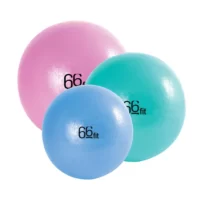
Look for a clear size label, anti-burst construction, suitable load rating, simple inflation instructions, and a secure valve. The 66fit Exercise Balls page provides product options that may suit core, posture and rehabilitation exercises.

Before buying, check your height, planned use, available floor space and whether you need a pump. If you plan to use the ball for sitting at a desk, remember that changing position often matters more than sitting on any one product all day.

When Should You Stop Using The Ball?

Stop using the ball if it feels unstable, loses air, looks damaged, causes pain, or makes you feel dizzy. You should also stop if the exercise requires you to hold your breath, rush, grip the floor with your toes, or use momentum to stay balanced.

If symptoms persist, worsen, or affect normal activity, book a physiotherapy appointment. Your physiotherapist can check whether the ball suits your body, your condition, and your current exercise control.

Frequently Asked Questions

Are anti-burst exercise balls safe?

Anti-burst exercise balls are generally safe when they are the correct size, inflated to the recommended diameter, and used on a flat, non-slip surface. They are designed to deflate more slowly if punctured, but they are not unbreakable.

What does anti-burst mean on an exercise ball?

Anti-burst means the ball is designed to release air more gradually after a puncture. This may reduce sudden collapse risk. However, safe use still depends on correct setup, storage, surface choice and exercise selection.

Can an anti-burst exercise ball still pop?

Yes. A ball can still fail if it is cut, badly worn, overheated, overloaded or overinflated. Check the ball before use and replace it if you notice cracks, bulging, valve problems, thinning or air loss.

How do I choose the right size exercise ball?

Choose a ball that lets you sit with both feet flat and your hips and knees close to 90 degrees. Your hips may sit slightly higher than your knees. Use a sizing guide and inflate the ball to the listed diameter.

What surface should I use an exercise ball on?

Use an exercise ball on a flat, clean, non-slip surface. Avoid sharp edges, rough concrete, stones, screws, pins, pet claws and heat exposure. A clear exercise space also lowers trip and fall risk.

Should I see a physiotherapist before using an exercise ball?

Consider physiotherapy advice if you have pain, dizziness, poor balance, recent surgery, pregnancy-related symptoms, high falls risk, or uncertainty about which exercises are safe. A physiotherapist can match the exercise to your current control and goals.

Related Information

What To Do Next

Choose the correct ball size, inflate it to the recommended diameter, and start with simple exercises on a stable surface. If pain, balance, dizziness, pregnancy symptoms, or injury recovery is part of your situation, get advice before progressing.

A physiotherapist can help you choose safer exercises, set a starting level, and progress your program at the right pace.

Choose your clinic and appointment pathway

Select a PhysioWorks clinic to continue to live booking, an appointment request or reception assistance.

Follow PhysioWorks

Get physiotherapy tips, exercise videos, recovery advice and blog updates.

References

  1. Noreen A, Arain N, Nazir U, et al. Comparing the effects of Swiss-ball training and virtual reality training on balance, mobility, and cortical activation in individuals with chronic stroke: study protocol for a multi-center randomized controlled trial. Trials. 2024.
  2. Rodríguez-Perea Á, Reyes-Ferrada W, Jerez-Mayorga D, et al. Core training and performance: a systematic review with meta-analysis. Biology of Sport. 2023;40(4):975-992.
  3. Bao Z, Wang Z, Gao Y, et al. Effects of unstable training on muscle activation: a systematic review and meta-analysis of electromyographic studies. PeerJ. 2025;13:e19751. doi:10.7717/peerj.19751
  4. Australian Competition and Consumer Commission. Product Safety Australia. Accessed July 1, 2026.

How to Inflate an Exercise Ball Safely

Exercise Ball Inflation FAQs

How much should I inflate an exercise ball?

Inflate your exercise ball to its recommended diameter, not maximum firmness. The ball should feel firm, support your weight, and still compress slightly when you sit on it.

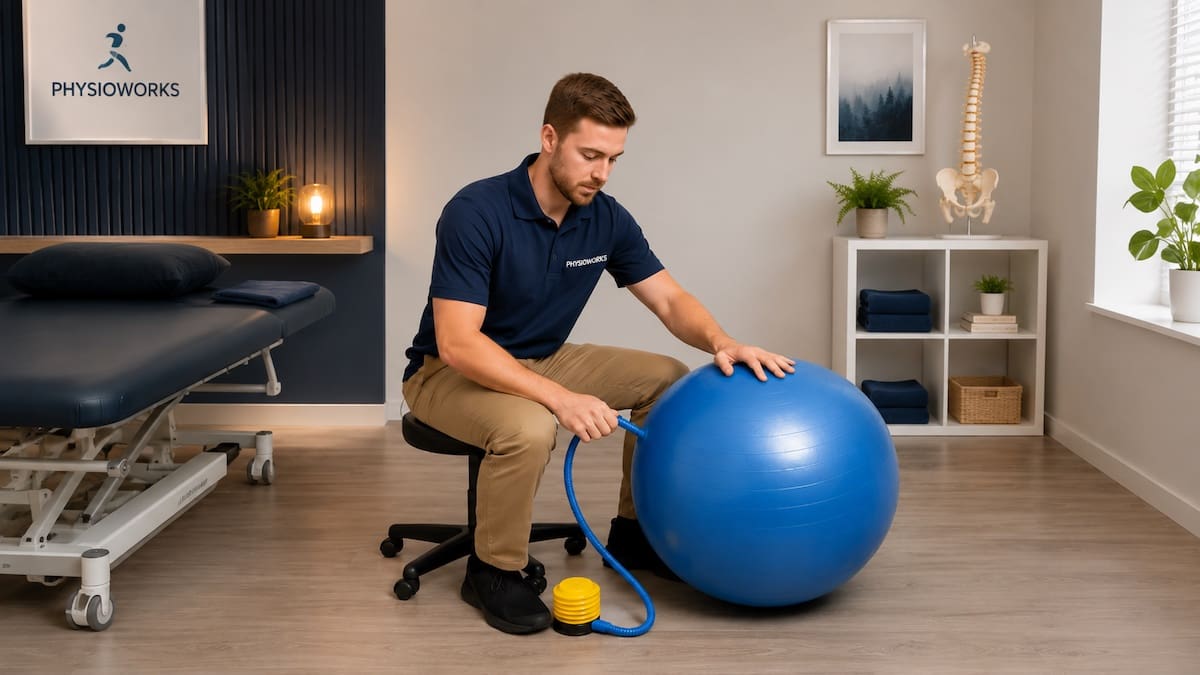
Exercise ball inflation with foot pump in a physiotherapy clinic
Inflate to size, not maximum firmness.

Exercise ball inflation should match the ball’s recommended size, not maximum firmness. A correctly inflated ball feels firm, but still has a little give. It should support you without feeling hard, stretched or unstable.

Many people overinflate their exercise ball. Others use it before the ball has had time to settle. Both can make the ball harder to control.

Use this guide before sitting, stretching or doing core exercises on your ball. If you are unsure which ball size to buy, check our exercise ball size guide first.

Quick Answer: How Full Should the Ball Be?

Your exercise ball is full enough when it reaches its listed size. Do not keep pumping air in just to make it harder.

  • Use the size marked on the ball or box.
  • Inflate slowly.
  • Stop when the ball reaches the right height and width.
  • Let a new ball settle before final use.

Why Does Safe Inflation Matter?

Safe inflation helps the ball support your body. It also helps your posture, balance and control during exercise.

If the ball is too soft, you may sink too low. If it is too hard, it may feel unstable. It may also place more strain on the ball material.

For broader advice about back care, see our back pain FAQ guide.

How Do You Inflate an Exercise Ball?

Use a hand pump, foot pump or low-pressure pump. Some bike pumps may work if they have the right nozzle. Pump slowly and check the ball often.

1. Let the Ball Warm Up

Let the ball sit at room temperature before you finish inflating it. This matters more in cold rooms.

Cold ball material can feel stiff. A warm ball stretches more evenly.

2. Pump to About 80%

Start by filling the ball to about 80% of its final size. Then leave it to settle.

This gives the material time to stretch before you add the last amount of air.

3. Wait Before Final Inflation

For a new exercise ball, wait up to 24 hours before final inflation. Do not use the ball during this first settling period.

After the ball has rested, add air slowly until it reaches the right size.

4. Measure the Ball, Not the Pressure

Do not rely on pump pressure. Different pumps feel different.

Measure the ball’s size instead. You can use a tape measure or place two boxes the correct distance apart and roll the ball between them.

5. Check Your Sitting Position

Sit in the middle of the ball. Your hips should usually sit a little higher than your knees.

Your feet should rest flat on the floor. You should feel steady, not wobbly or tense.

Exercise Ball Inflation Checklist

  • Use the correct ball size for your height.
  • Use a pump that fits the valve well.
  • Inflate in stages.
  • Check the ball’s size before use.
  • Keep the ball away from sharp edges.
  • Replace it if it cracks, leaks or loses shape.

Can You Overinflate an Exercise Ball?

Yes. Overinflation can make the ball too hard. It can also place extra strain on the ball material.

Stop when the ball reaches its listed size. Do not add extra air to make it feel firmer.

For more safety tips, read our anti-burst exercise ball safety guide.

How Firm Should an Exercise Ball Feel?

The ball should feel firm, but not rock-hard. It should keep its shape when you sit on it. It should still compress a little under your body weight.

A very firm ball is not always better. A slightly softer ball may feel safer when you are learning balance or starting new exercises.

When Should You Replace an Exercise Ball?

Replace your ball if you notice cracks, thinning, seam damage, punctures or repeated air loss.

Also replace it if it has been stored in heat, left in direct sun or used near sharp objects. Do not use a damaged ball for exercise.

Can an Exercise Ball Help With Core or Back Exercises?

An exercise ball can add balance challenge to some exercises. It may suit simple strengthening exercises, balance drills and guided core work.

Start with slow and controlled exercises. If you use the ball for back pain or rehab, ask your physiotherapist which exercises suit your body.

You can also read our guide to exercise balls for lower back pain and core stability.

Simple safety rule: If the ball feels hard, slippery, unstable or damaged, stop using it and check the size, surface and condition before you continue.

Exercise Ball Inflation FAQs

How do I know if my exercise ball is fully inflated?

Measure the ball’s size. When you sit in the centre, your hips should usually sit a little higher than your knees. The ball should feel firm, but not hard.

Can I overinflate an exercise ball?

Yes. Overinflation can make the ball too hard and may strain the material. Inflate only to the listed size.

Do I need a special pump?

No. Many exercise balls come with a hand pump. You can also use a foot pump or bike pump with the right nozzle.

Why does my exercise ball feel soft after a few days?

New balls can stretch a little after first inflation. Temperature changes can also affect firmness. Add a small amount of air if the ball drops below the right size.

Why inflate an exercise ball in stages?

Staged inflation lets the material stretch slowly. This can help the ball settle before you use it.

Can I use a bike pump?

Yes, if the nozzle fits. Pump slowly and stop when the ball reaches the right size.

How long does an exercise ball last?

Many exercise balls last for several years with normal home use. Replace the ball sooner if it leaks, cracks or loses shape.

Where should I store my exercise ball?

Store it in a cool, dry place. Keep it away from heat, direct sun, pets and sharp items.

Recommended PhysioWorks Resources

What to Do Next

Choose the right size first. Then inflate the ball slowly and check the final size before you use it.

If the ball feels unsafe, causes discomfort or you are unsure which exercises suit you, a physiotherapist can help you set it up and choose a safe plan.

Find the Right Exercise Ball

Choose your clinic and appointment pathway

Select a PhysioWorks clinic to continue to live booking, an appointment request or reception assistance.

Exercise Ball Products

These exercise balls are commonly used by our physiotherapists to improve strength, balance, posture, and home exercise programs.

View all exercise ball products

Follow PhysioWorks

Get physiotherapy tips, exercise videos, recovery advice and blog updates.

References

  1. Hayden JA, Ellis J, Ogilvie R, Malmivaara A, van Tulder MW. Exercise therapy for chronic low back pain. Cochrane Database Syst Rev. 2021;9(9):CD009790. doi:10.1002/14651858.CD009790.pub2
  2. Smrcina Z, Woelfel S, Burcal C. A systematic review of the effectiveness of core stability exercises in patients with non-specific low back pain. Int J Sports Phys Ther. 2022;17(5):766-774. doi:10.26603/001c.37251
  3. Cheng M, Tian Y, Ye Q, et al. Evaluating the effectiveness of six exercise interventions for low back pain: a systematic review and meta-analysis. BMC Musculoskelet Disord. 2025;26:433. doi:10.1186/s12891-025-08658-0
You've just added this product to the cart: