Exercises

Healthy Ageing Exercise Over 80s FAQs

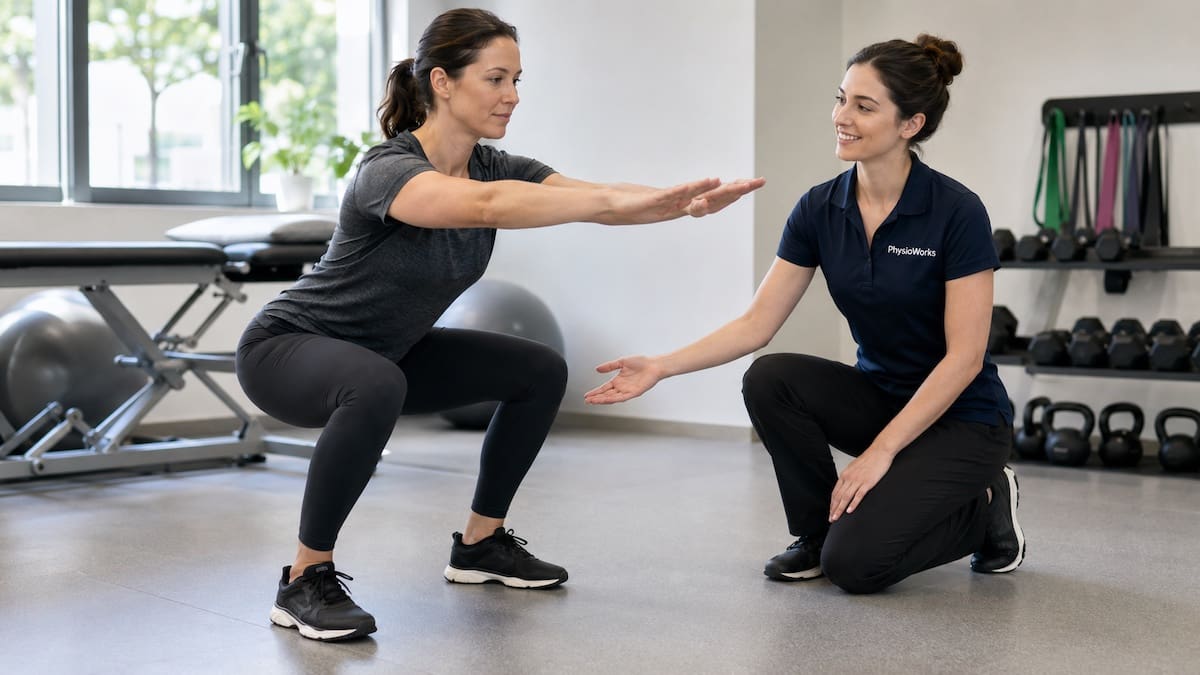
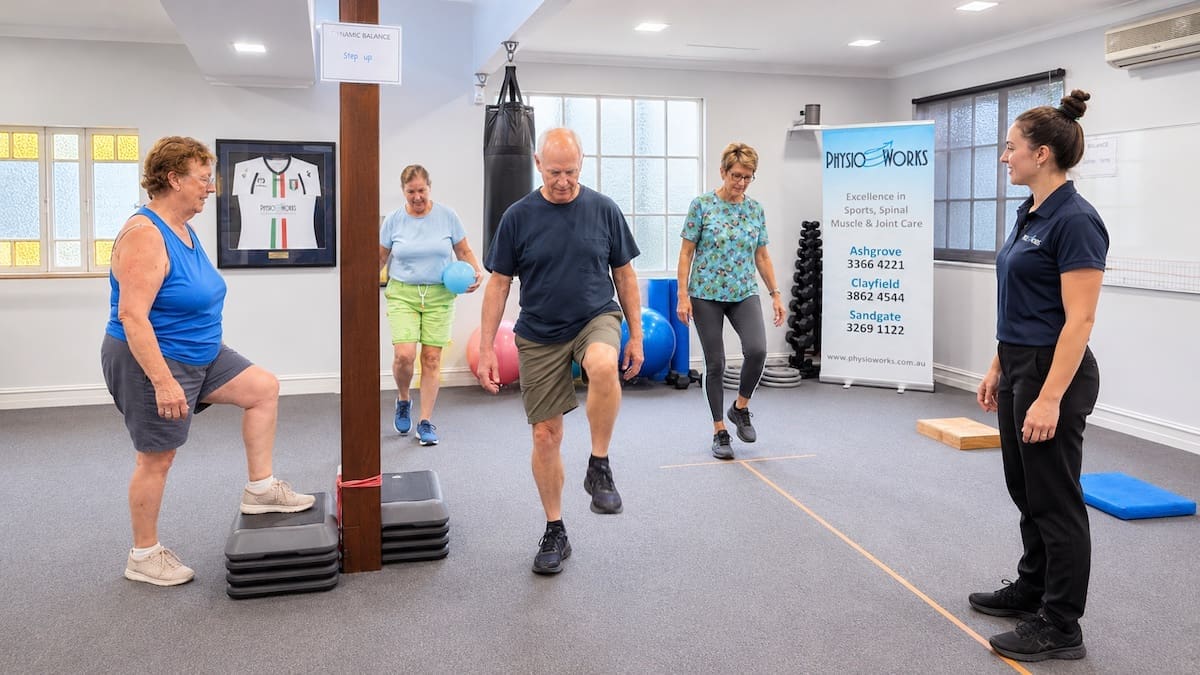
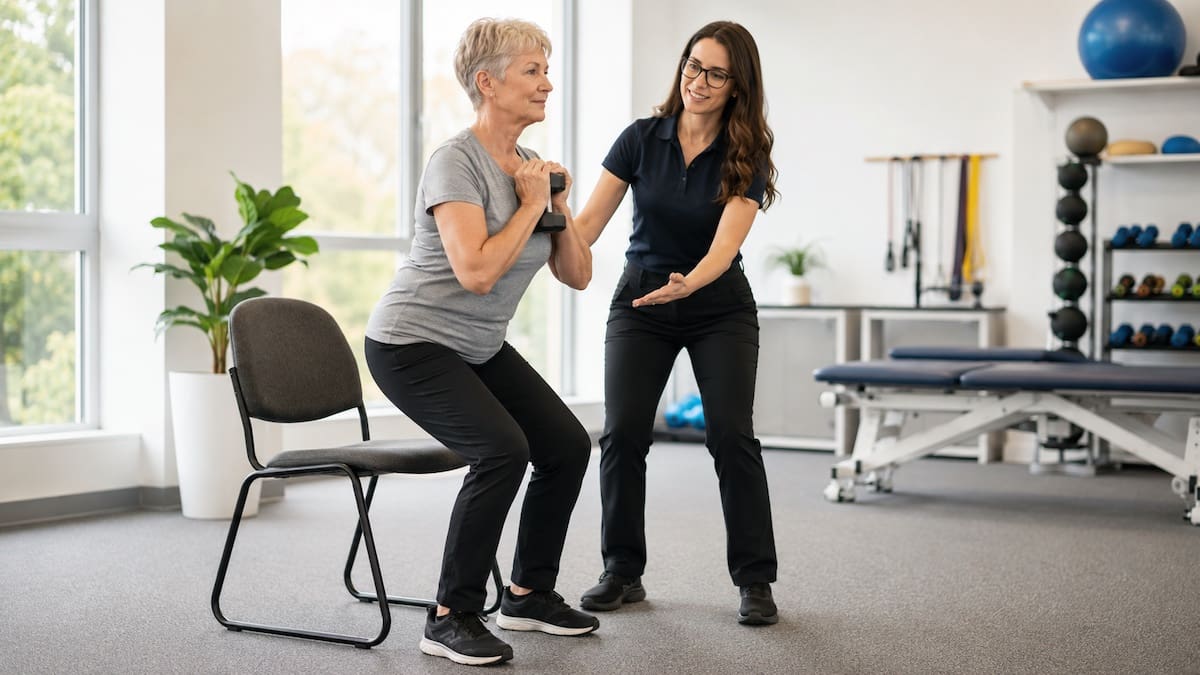
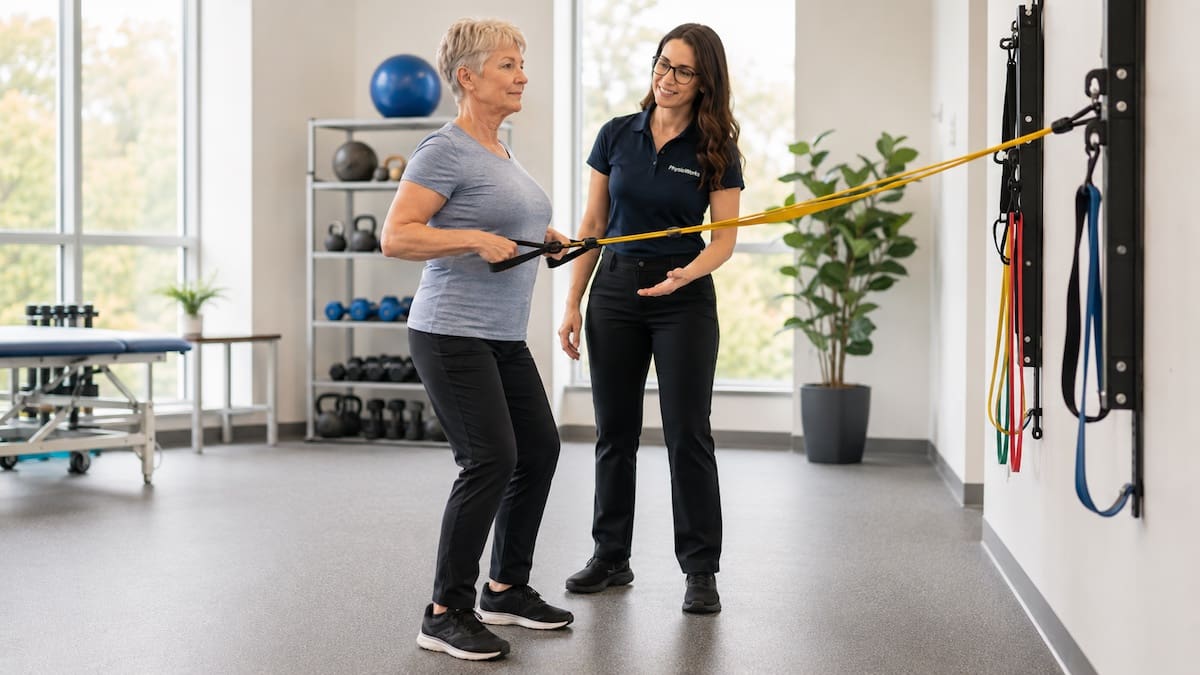
Healthy ageing exercise over 80 with supervised balance and stepping practice

Supervised balance practice can help older adults build steadiness and confidence.

Healthy ageing exercise over 80 can help you stay strong, steady, mobile, and independent. A good program may improve leg strength, balance, walking confidence, posture, and daily function. It can also help if arthritis, chronic pain, stiffness, low fitness, or fear of falling has slowed you down.

You do not need hard exercise to get benefit. Many adults in their 80s and beyond do best when they start gently, use support where needed, and build up in small steps. A safe mix often includes walking, strength work, balance practice, mobility, and less sitting.

For a more personal starting point, see our exercise programs, exercise physiology, and physiotherapy services.

Healthy Ageing Exercise Priorities Over 80

  • Move on most days, even if sessions are short.
  • Do strength work at least twice each week.
  • Practise balance, mobility, and coordination at least three times weekly.
  • Add light movement through the day.
  • Break up long sitting periods.

What Is Healthy Ageing?

Healthy ageing means keeping as much strength, mobility, steadiness, and confidence as possible as you get older. For many adults over 80, that means getting out of a chair, walking safely, carrying light shopping, doing housework, getting to appointments, and staying active with family and friends.

What Should Healthy Ageing Exercise Over 80 Include?

Healthy ageing exercise over 80 should include low-impact cardio, strength training, balance work, mobility, and regular light movement. This mix helps your heart, muscles, bones, joints, posture, and day-to-day function more than walking or stretching alone.

A good week may include walking, cycling, swimming, or pool exercise on most days. Add strength training twice weekly. If balance feels less steady, our Balance and Falls Prevention Class may be a useful pathway after an assessment.

What Should You Focus On First Over 80?

Walking confidence:
Start with supported walking, shorter walks, and guided balance practice.
Weak legs:
Use sit-to-stands, heel raises, step-ups, and band work.
Balance worry:
Start with supported balance drills and safe stepping practice.
Stiffness or posture:
Add mobility, stretching, posture work, and gentle control drills.
Pain or arthritis:
Use lower-load exercise and slower progress. A tailored plan often helps.

Top 5 Exercise Priorities Over 80

Priority Why It Matters Simple Examples
Walking fitness Builds stamina and daily confidence. Short walks, pool walking, cycling.
Leg strength Helps with chairs, stairs, and carrying. Sit-to-stands, heel raises, step-ups.
Balance Helps steadiness and falls confidence. Supported stands and stepping drills.
Mobility Helps movement feel easier. Stretching and posture drills.
Less sitting Supports joints and circulation. Standing breaks and light housework.

Why Does Exercise Feel Harder After 80?

Exercise can feel harder after 80 because muscle strength, power, joint range, bone density, balance reactions, and recovery can change with age. Past injuries, pain, illness, less activity, and lower confidence can also make movement feel harder.

However, age alone does not stop progress. Many adults over 80 improve their strength, walking, balance, and confidence when they start at the right level and build slowly.

Good load management matters. A small amount done often is usually better than doing too much, flaring up, and stopping again.

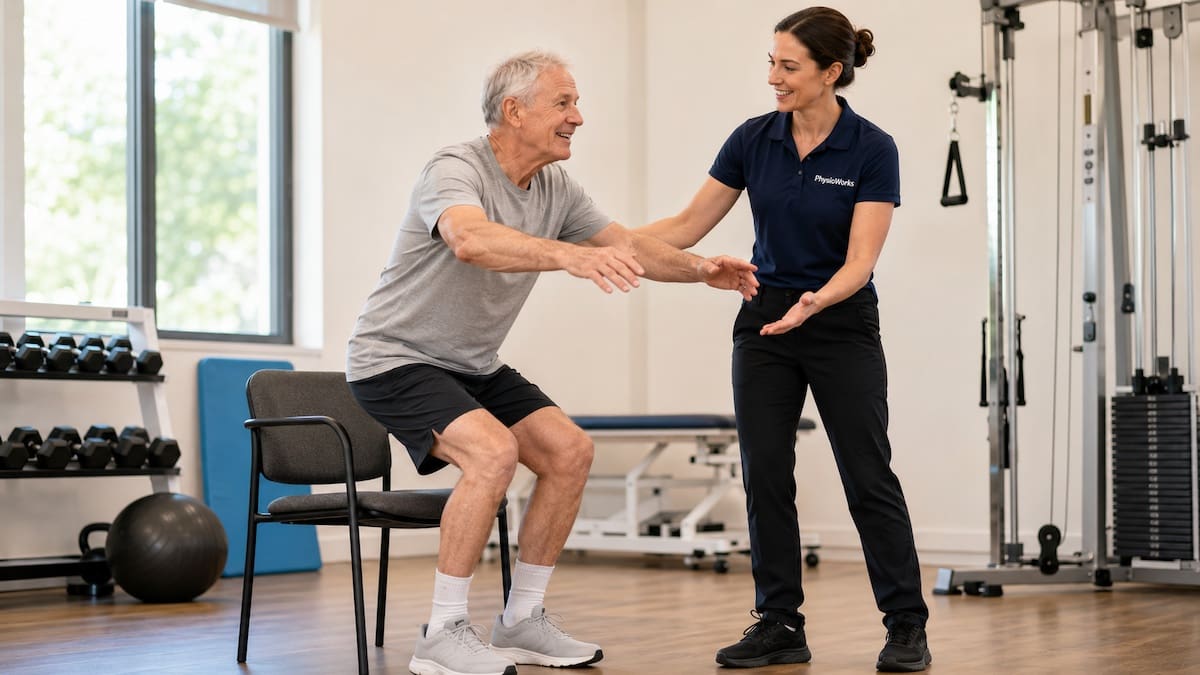
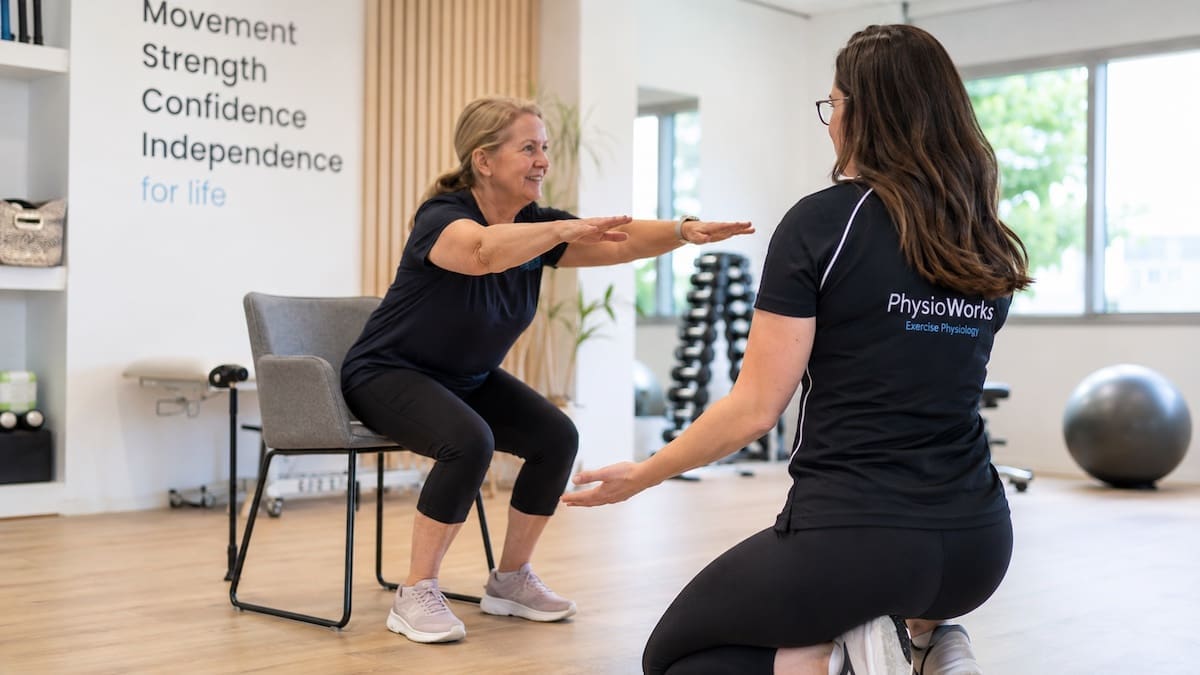
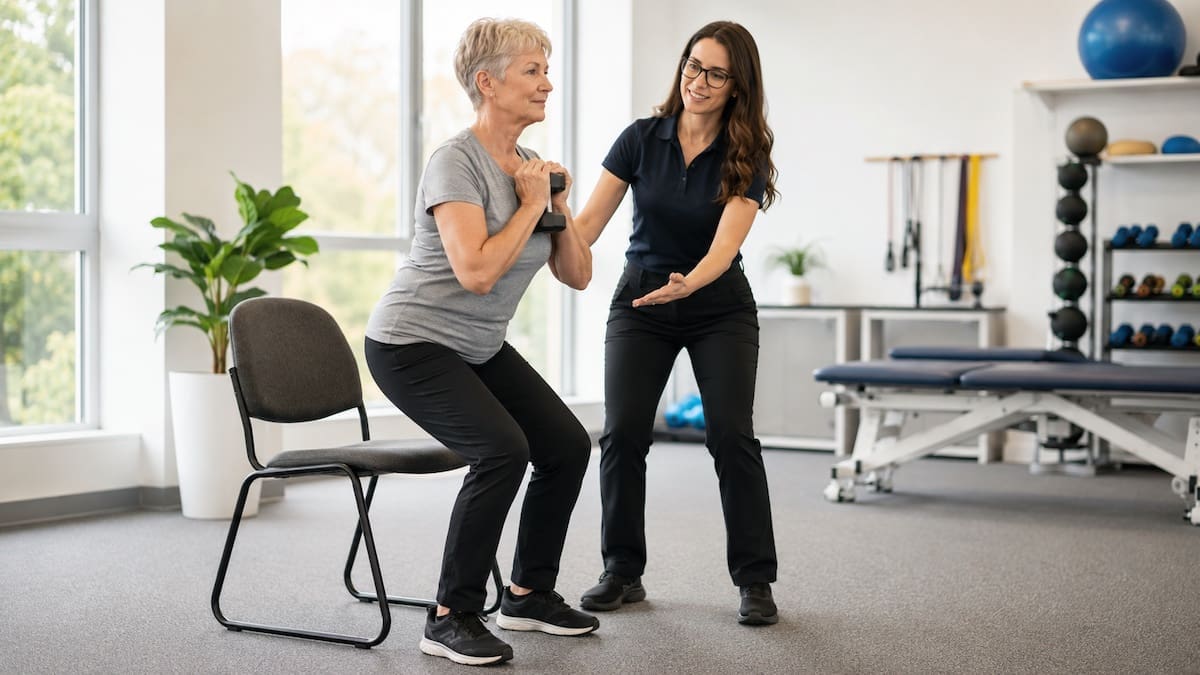
Exercise physiology sit-to-stand training for healthy ageing over 80

Coached sit-to-stand training can support strength and independence.

How Can Exercise Improve Healthy Ageing Over 80?

Regular exercise can help with fitness, strength, balance, bone health, sleep, mood, mobility, and independence. It can also help you keep doing daily tasks such as chair transfers, stairs, walking, gardening, shopping, and travel.

Exercise is also useful for common age-related issues such as osteoporosis and osteopenia, joint stiffness, poor balance, and deconditioning. Balance and strength work are often the two key areas to build.

Can You Start Exercising Over 80 If You Have Pain or Arthritis?

Yes, many people can start exercising over 80 even if they have pain or arthritis. The key is to choose the right type and dose. Do not push through strong flare-ups.

Some people start with walking, cycling, hydrotherapy, chair-based strength work, or guided mobility. Helpful starting guides include warming up, safe exercise warning signs, and posture.

A Simple Weekly Exercise Plan Over 80

This is a general starting point. It needs changing if you have pain, poor balance, recent illness, osteoporosis, dizziness, or health concerns.

Day Suggested Focus
Monday Short walk, sit-to-stands, and heel raises.
Tuesday Mobility, posture, and light movement.
Wednesday Short strength session with bands or light weights.
Thursday Supported balance plus walking, cycling, or pool work.
Friday Second strength session plus easy cardio.
Weekend Walking, gardening, swimming, or a safe class.

Which PhysioWorks Class Pathway May Suit You?

The right class depends on your balance, strength, pain, confidence, and health history. An assessment helps confirm the safest starting point.

Your Main Goal Possible Pathway Why It May Help
Feel steadier and reduce falls worry Balance & Falls Prevention Class Works on balance, leg strength, stepping, mobility, and walking confidence.
Build strength and confidence Physiotherapy Group Exercise Classes Supports guided strength, posture, mobility, and movement control.
Support bone health Bone Density Class pathway May suit people with osteopenia, osteoporosis, weakness, or falls worry.
Exercise with less joint load Hydrotherapy Warm water exercise may help when land work feels too sore or hard.

Important: group classes require an assessment first. Some people should start with one-to-one care before joining a class.

When Should You Slow Down or Get Checked?

Slow down or book advice if exercise causes sharp pain, major swelling, repeated giving way, dizziness, chest pain, unusual breathlessness, or symptoms that keep getting worse. Pain that lasts for days after light exercise may also mean your plan needs changing.

Get Advice Sooner If:

  • Pain keeps getting worse with simple exercise.
  • You feel unsteady or worried about falling.
  • You have osteoporosis, recent injury, or major weakness.
  • You feel dizzy, unusually breathless, or unwell with exercise.
  • You do not know which exercise is safe to start.
  • You have stopped and restarted several times.

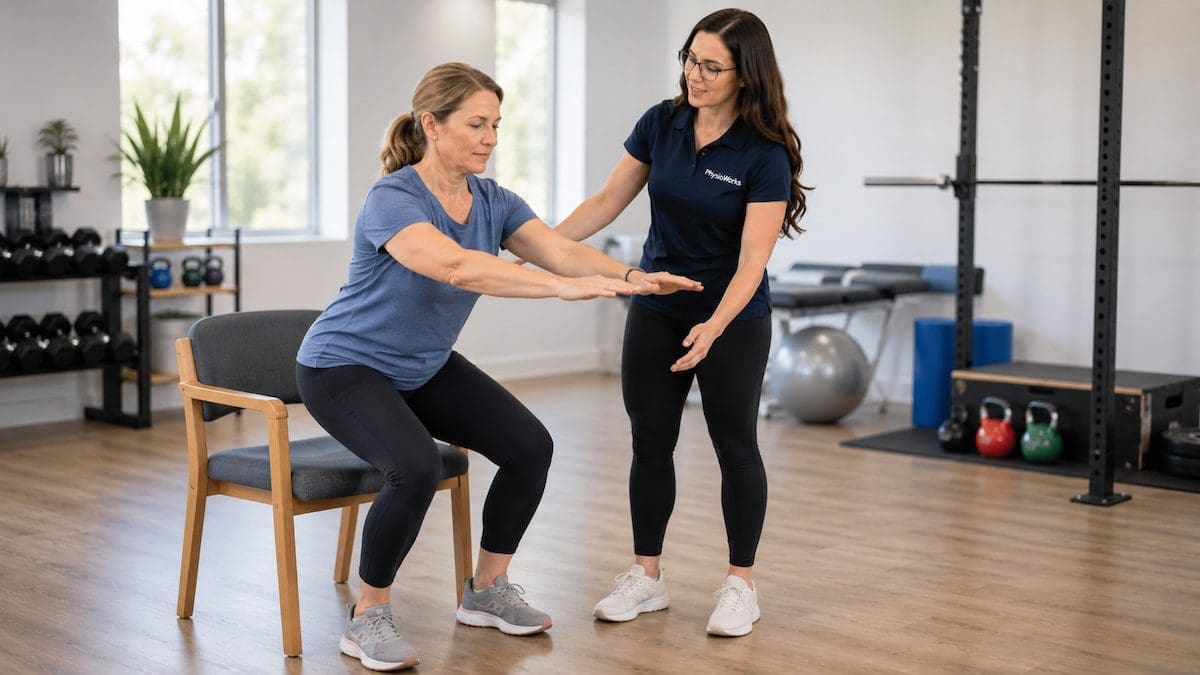
Healthy ageing exercise over 80 with supervised sit-to-stand rehabilitation

Strength progressions can be matched to your current capacity.

How Can a Physiotherapist Help?

A physiotherapist can assess your starting point, check pain triggers, and build a plan that suits your goals. Your plan may include strength, balance, walking, mobility, posture, and confidence work.

This can help if you have old injuries, arthritis, back pain, poor balance, low confidence, or repeated setbacks. A clear plan can make exercise feel safer and easier to follow.

Related Articles

Healthy Ageing Exercise Over 80 FAQs

How much exercise should a healthy adult over 80 do?

Most adults over 80 should move on most days, do strength work twice weekly, and practise balance often. It also helps to break up long sitting periods.

What exercise is best for over 80s?

A mix of walking or other cardio, strength training, balance work, and mobility is usually best. This mix supports strength, steadiness, fitness, and function.

Is walking enough exercise over 80?

Walking is a strong start, but it is usually not enough alone. Strength, balance, and mobility work also matter.

Can strength training be safe after 80?

Yes. Strength training can be safe after 80 when it matches your current ability and builds slowly.

What if I have not exercised for years?

You can still start. Begin with simple movements, short sessions, and low loads. Then build as your body adapts.

Should I exercise if I have arthritis?

In many cases, yes. Well-chosen exercise can help stiffness, movement, and strength. The right dose matters.

When should I see a physiotherapist before starting exercise?

Book an assessment if you have pain, poor balance, falls worry, recent injury, osteoporosis, major weakness, or low confidence.

Is it too late to get fit at 80?

No. Many people improve strength, balance, mobility, and fitness after 80 when they start gently and stay consistent.

How many steps per day should you aim for over 80?

There is no single perfect number. A realistic target depends on your fitness, pain, balance, and health. Gradual increases are safest for most people.

What to Do Next

Start with exercise that feels safe and achievable now. Small steps done often can build confidence and reduce the stop-start cycle.

If you want help choosing the right pathway, a PhysioWorks physiotherapist or exercise physiologist can guide you. Your pathway may include one-to-one care, a home plan, Balance & Falls Prevention Class, Physiotherapy Group Exercise Classes, Bone Density Class pathways, or hydrotherapy.

Book your appointment – 24/7

Choose your preferred PhysioWorks clinic and book online.

Balance Products

These balance products are commonly used by our physiotherapists to improve strength, balance, prevent injuries falls or injuries, plus assist home exercise programs.

View all balance products

Follow PhysioWorks

Get free physiotherapy tips, exercise videos, recovery advice, and blog updates.

Facebook Instagram YouTube B X Email PhysioWorks

References

  1. Australian Government Department of Health, Disability and Ageing. Recommendations for older adults (65 years and over). Updated March 16, 2026.
  2. Tiedemann A, Sturnieks DL, Burton E, et al. Exercise and Sports Science Australia updated position statement on exercise for preventing falls in older people living in the community. J Sci Med Sport. 2025.
  3. Bull FC, Al-Ansari SS, Biddle S, et al. World Health Organization 2020 guidelines on physical activity and sedentary behaviour. Br J Sports Med. 2020;54(24):1451-1462.
  4. Healthdirect Australia. Physical activity guidelines for older adults. Reviewed 2025.


Healthy ageing exercise over 60 with supervised sit-to-stand strength training

Supervised strength exercise can support balance, mobility and confidence.

Healthy ageing exercise over 60 should include strength, balance, mobility, aerobic activity and light movement through the day. The goal is not to train harder every year. The goal is to keep building capacity, confidence and consistency.

Many adults over 60 benefit from a guided plan. This is especially true if pain, stiffness, low bone density, arthritis, balance concerns or low confidence make exercise harder. At PhysioWorks, your pathway may include Exercise Physiology, exercise programs, physiotherapy, Physiotherapy Group Exercise Classes, Balance & Falls Prevention Classes, Bone Density Class or Hydrotherapy.

Healthy Ageing Exercise Priorities Over 60

  • Move on most days.
  • Do strength work at least twice per week.
  • Practise balance, mobility and coordination often.
  • Add light movement across the day.
  • Break up long sitting periods.

What Is Healthy Ageing?

Healthy ageing means staying strong, mobile, steady and independent as you get older. For many adults over 60, this means feeling confident with stairs, chairs, walking, shopping, housework, travel, gardening and social activity.

What Should Healthy Ageing Exercise Over 60 Include?

Healthy ageing exercise over 60 should include aerobic activity, strength work, balance practice, mobility training and regular light movement. This mix supports heart health, muscle strength, bone health, posture, walking confidence and daily function.

A balanced week may include walking, cycling, swimming or pool exercise on most days. Add strength training at least twice per week. If balance feels less reliable, a targeted option such as our Balance & Falls Prevention Class may be useful.

Australian guidance for older adults supports regular activity, muscle strengthening, balance and mobility work, daily light movement and less prolonged sitting. Read the Australian recommendations for older adults.

Which Exercise Should You Focus On First?

Use this quick guide to choose a starting point.

If stamina is your main issue
Start with walking, cycling, swimming or pool exercise.
If you feel weaker than you used to
Try chair squats, heel raises, step-ups, bands or guided strength work.
If balance feels less reliable
Use supported balance drills, stepping practice and falls prevention exercise.
If stiffness limits you
Add mobility, posture drills and gentle movement control exercises.
If pain keeps interrupting you
Start with lower-load exercise and slower progress.


Balance and falls prevention class with supervised stepping exercises for older adults

Supervised balance work helps build steadiness and walking confidence.

Top 5 Exercise Priorities Over 60

Priority Why it matters Examples
Walking fitness Builds stamina and daily activity tolerance Walking, cycling, swimming
Leg strength Helps with stairs, chairs and carrying Sit-to-stands, step-ups, heel raises
Balance practice Supports steadiness and confidence Stepping drills, supported single-leg balance
Mobility Helps movement feel easier Stretching, posture drills, thoracic mobility
Less sitting Supports joints, circulation and health Standing breaks, short walks, housework

Why Does Exercise Feel Harder After 60?

Exercise can feel harder after 60 because muscle strength, power, joint movement, bone density and recovery can change over time. Previous injuries, arthritis, pain, illness, reduced activity and lower confidence can also make movement feel harder.

However, age alone does not stop progress. Many adults over 60 improve once they train often, start at the right level and progress slowly. A manageable amount done often is usually better than doing too much, flaring up and stopping.

How Can Exercise Improve Healthy Ageing Over 60?

Regular exercise can support fitness, strength, balance, bone health, mood, sleep, mobility and independence. It can also help with stairs, chairs, shopping, walking, gardening, travel and family activity.

Exercise is also important for common age-related concerns such as osteoporosis and osteopenia, joint stiffness, reduced walking tolerance, poor balance and deconditioning. Strength and balance training can support falls prevention and confidence.


Bone density class sit-to-stand strength exercise for healthy ageing over 60

Strength and balance training can support safer movement with low bone density.

Which PhysioWorks Class May Suit You?

The right class depends on your goal, health history and confidence. Most classes need an assessment first. This helps your clinician match the class to your starting level.

Goal Pathway May suit
Better balance Balance & Falls Prevention Class People who feel unsteady or worry about falls.
Bone health Bone Density Class People with osteoporosis, osteopenia or low bone density.
Strength and control Physiotherapy Group Exercise Classes People wanting guided exercise, posture and movement control.
Lower-load exercise Hydrotherapy People with joint pain or poor land-based exercise tolerance.
Long-term capacity Exercise Physiology People with chronic conditions, low fitness or strength goals.

Can You Exercise Over 60 With Pain or Arthritis?

Many people can start exercise over 60 even with pain or arthritis. The key is to choose the right entry point. Start low, progress slowly and avoid pushing through strong flare-ups.

Some people start with walking, cycling, hydrotherapy, chair strength work or guided mobility exercise. Others need help with pacing, technique or recovery first. These guides may help: warming up, safe exercise warning signs and posture.

A Simple Weekly Plan Over 60

This is a general starting point. It needs adjusting if you have pain, poor balance, injury, recent illness or health concerns.

Day Focus
Monday Walk plus sit-to-stands and heel raises
Tuesday Mobility, posture and light activity
Wednesday Strength using bodyweight, bands or weights
Thursday Balance practice plus light cardio
Friday Second strength session
Weekend Active recreation or a social exercise class


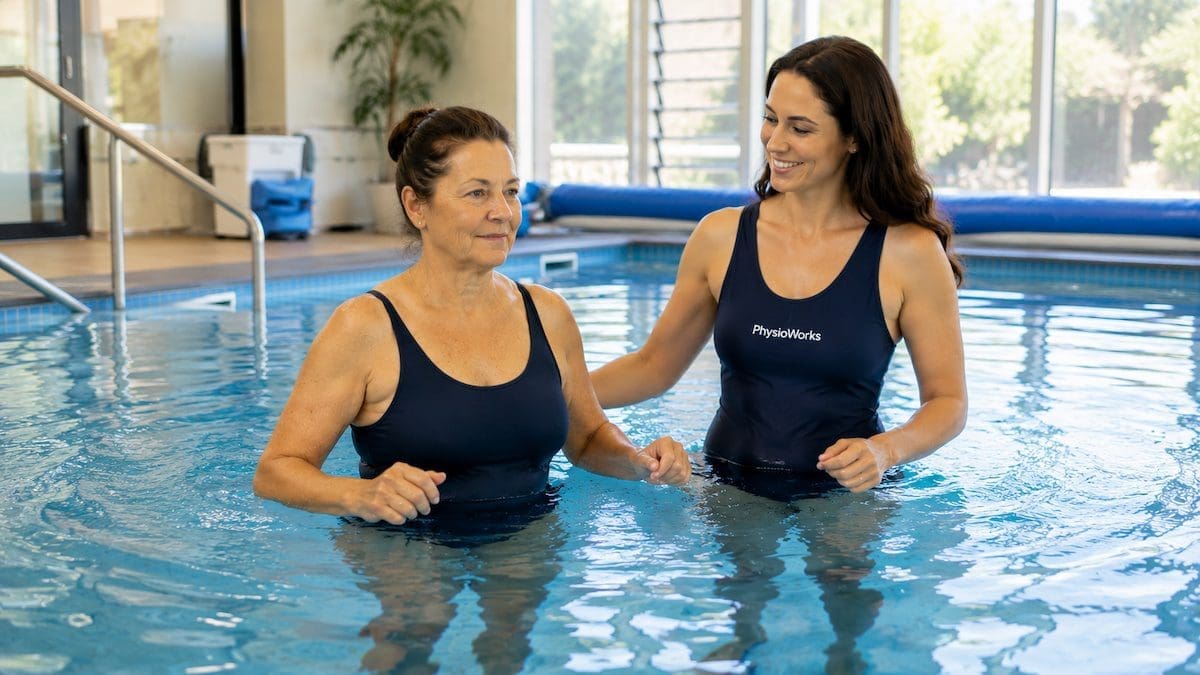
Hydrotherapy for healthy ageing exercise over 60 in warm water rehabilitation

Hydrotherapy may suit people who need lower-load exercise options.

When Might Hydrotherapy Help Over 60?

Hydrotherapy may help when land-based exercise feels too painful, heavy or unstable. Warm-water exercise can reduce body-weight load. It still lets you practise walking, strength, balance and mobility.

Hydrotherapy may suit some people with arthritis, persistent pain, reduced walking tolerance or poor balance confidence. Start with an assessment so your clinician can check whether pool exercise, clinic strength work or a combined plan suits you.

Should You Choose Physiotherapy or Exercise Physiology?

Choose physiotherapy first if you have a new injury, acute pain, worsening symptoms, dizziness, falls or need early treatment. Choose Exercise Physiology if you need a structured exercise plan for strength, fitness, chronic disease, bone health or long-term capacity.

Many people use both. A physiotherapist may help settle pain or assess balance. An Accredited Exercise Physiologist may then guide strength, fitness, bone-loading exercise, hydrotherapy or a long-term plan.

A Simple Decision Guide

  • New pain or injury? Start with physiotherapy.
  • Ongoing weakness or low fitness? Consider Exercise Physiology.
  • Unsteady or worried about falls? Ask about a balance assessment.
  • Low bone density? Ask about supervised strength exercise.
  • Joint pain with poor land tolerance? Ask about hydrotherapy.

When Should You Slow Down or Get Checked?

Slow down or get checked if exercise causes sharp pain, major swelling, giving way, dizziness, chest pain, unusual breathlessness or symptoms that keep worsening. Pain that lasts for days after light exercise can also mean your plan needs changing.

Get Advice Sooner If:

  • Pain worsens with simple exercise.
  • You feel unstable or worry about falling.
  • You have osteoporosis, recent injury or major deconditioning.
  • You are unsure which exercise is safest.
  • You keep stopping and restarting without success.

How Can a Physiotherapist Help?

A physiotherapist can assess your starting point, pain triggers and movement limits. They can then help build a plan for strength, mobility, balance, walking, posture and confidence.

This is useful if you have old injuries, arthritis, back pain, poor balance, low confidence or repeated setbacks. A tailored plan can make exercise clearer, safer and easier to follow.

Healthy Ageing Exercise Options at PhysioWorks

PhysioWorks offers several supervised exercise pathways for adults over 60. Your clinician can help match the option to your goals, safety needs and current ability.

Related Articles

Healthy Ageing Exercise Over 60 FAQs

How much exercise should a healthy adult over 60 do?

Most adults over 60 should move on most days. Add strength work at least twice weekly. Balance work also matters, especially if you feel unsteady.

What types of exercise matter most over 60?

The most useful mix includes cardio, strength, balance and mobility. This helps support independence, steadiness, stamina, bone health and muscle health.

Is walking enough exercise over 60?

Walking is a strong start. It is usually not enough on its own. Strength, balance and mobility work also help protect function and confidence.

Can strength training be safe after 60?

Yes. Strength training can be safe when it matches your ability. Start with simple movements and progress slowly.

What if I have not exercised for years?

You can still start. Begin with shorter sessions and lower loads. Build up gradually. A guided plan can reduce flare-ups.

Should I exercise if I have arthritis?

In many cases, yes. Well-chosen exercise can help stiffness, movement and strength. The key is the right type and dose.

When should I see a physiotherapist before starting exercise?

See a physiotherapist if you have pain, poor balance, repeated flare-ups, recent injury, osteoporosis, major deconditioning or low confidence.

Is it too late to get fit at 60?

No. Many people improve strength, balance, mobility and fitness after 60. Start at the right level and stay consistent.

How many steps per day should you aim for over 60?

There is no perfect number for everyone. A realistic target depends on your fitness, pain, balance and health. Build gradually.

What To Do Next

Start with exercise that feels achievable now. A sensible plan can build momentum and reduce the stop-start cycle that comes from doing too much too soon.

If you want help choosing the right starting point, a PhysioWorks physiotherapist or exercise physiologist can assess your needs and guide a plan that suits your age, goals, symptoms and fitness.

Book your appointment – 24/7

Choose your preferred PhysioWorks clinic and book online.

Balance Products

These balance products are commonly used by our physiotherapists to improve strength, balance, prevent injuries falls or injuries, plus assist home exercise programs.

View all balance products

Follow PhysioWorks

Get free physiotherapy tips, exercise videos, recovery advice, and blog updates.

Facebook Instagram YouTube B X Email PhysioWorks

References

  1. Australian Government Department of Health, Disability and Ageing. Recommendations for older adults (65 years and over).
  2. Australian Government Department of Health, Disability and Ageing. Australian 24-hour movement guidelines for adults (18 to 64 years) and older adults (65+ years).
  3. Bull FC, Al-Ansari SS, Biddle S, et al. World Health Organization 2020 guidelines on physical activity and sedentary behaviour. Br J Sports Med. 2020;54(24):1451-1462.
  4. Di Lorito C, Long A, Byrne A, et al. Exercise interventions for older adults: a systematic review of meta-analyses. J Sport Health Sci. 2021;10(1):29-47.
  5. Tiedemann A, Sturnieks DL, Burton E, et al. Exercise and Sports Science Australia updated position statement on exercise for preventing falls in older people living in the community. J Sci Med Sport. 2025.

Healthy Ageing Exercise Over 70 FAQs

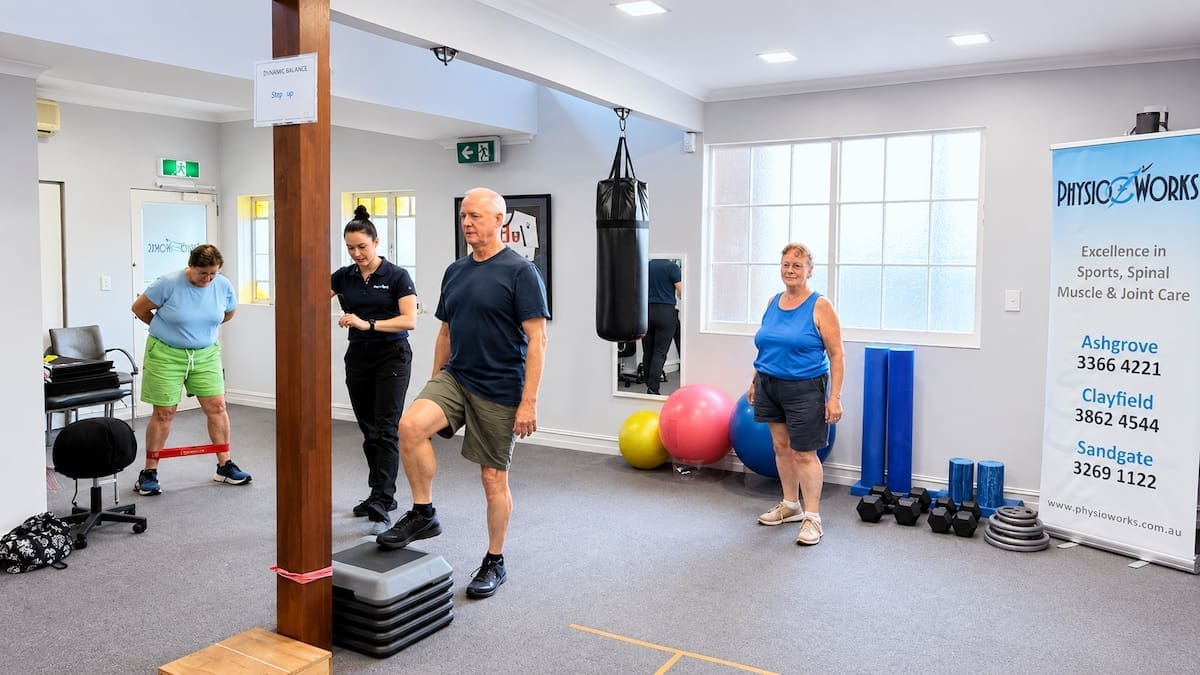
Healthy ageing exercise over 70 using supervised balance step-up training

Supervised balance and strength training can support confidence with daily movement.

Healthy ageing exercise over 70 helps you stay strong, steady, mobile, and independent. A good program can improve leg strength, balance, stamina, bone health, posture, walking confidence, and daily function. It may also help you manage arthritis, chronic pain, reduced fitness, stiffness, and fear of falling.

You do not need hard exercise to benefit. Many adults over 70 do well when they start gently, practise often, and build up in small steps. The right mix usually includes walking fitness, strength work, balance training, mobility, and less sitting. If you need a more personal starting point, our exercise programs, exercise physiology, and physiotherapy services can help guide you safely.

Healthy ageing exercise priorities over 70

  • Move on most days, even if sessions are short.
  • Do strength work at least twice each week.
  • Practise balance and coordination several times each week.
  • Break up long sitting with light activity.
  • Choose exercise you can repeat and progress.

What is healthy ageing?

Healthy ageing means keeping as much strength, mobility, steadiness, confidence, and independence as possible. For many adults over 70, this means staying capable with stairs, chairs, walking, shopping, housework, gardening, travel, and social activity.

What should healthy ageing exercise over 70 include?

Healthy ageing exercise over 70 should include aerobic activity, strengthening, balance work, mobility training, and regular light movement. This mix supports heart health, muscle, bone strength, posture, walking confidence, and everyday function better than walking alone.

A balanced week may include walking, cycling, swimming, or low-impact cardio on most days. It should also include strength training at least twice each week. If balance feels less reliable, a targeted option such as our Balance and Falls Prevention Class may help.

The aim is not to do more all at once. Start with the right amount, then repeat it often. Short sessions, supported balance drills, chair-based exercise, and regular walking often build confidence better than a long program that feels too hard.

Where should you start?

Use this guide to choose your first focus.

If walking confidence is your main issue
Start with supported walking, shorter walks more often, and guided balance practice.
If you feel weaker than you used to
Prioritise sit-to-stands, heel raises, step-ups, resistance bands, and leg strengthening.
If balance feels less reliable
Focus on supported single-leg balance, tandem walking, stepping drills, and falls prevention exercise.
If stiffness or posture limits you
Add mobility, thoracic movement, stretching, posture drills, and movement control exercises.
If pain or arthritis interrupts you
Start with lower-load exercise, lighter effort, and slower progressions.

Top exercise priorities over 70

Priority Why it matters Simple examples
Walking fitness Builds stamina and confidence with daily activity. Walking, pool walking, cycling, short repeated walks.
Leg strength Helps with stairs, chairs, carrying, and independence. Sit-to-stands, heel raises, step-ups, bands.
Balance practice Supports steadiness and may reduce falls risk. Tandem walking, supported single-leg standing, stepping drills.
Mobility and posture Helps movement feel easier and more comfortable. Stretching, posture drills, thoracic mobility exercises.
Less sitting Supports circulation, joint comfort, and general health. Standing breaks, short walks, stairs, housework.

Why does exercise feel harder after 70?

Exercise can feel harder after 70 because muscle mass, power, joint movement, bone density, reaction speed, and recovery can change with age. Past injuries, arthritis, pain, illness, less activity, and lower confidence can also make movement feel harder.

However, age does not stop progress. Many adults over 70 improve strength, mobility, balance, and walking tolerance when they train often and progress slowly. Good load management matters. A small amount done often usually works better than doing too much, flaring up, then stopping.

How can exercise improve healthy ageing over 70?

Regular exercise can support heart fitness, muscle strength, balance, bone health, mood, sleep, mobility, and independence. It also helps people keep doing tasks such as stairs, chair transfers, shopping, gardening, and walking further.

Exercise also plays an important role in managing common age-related issues such as osteoporosis and osteopenia, joint stiffness, reduced walking tolerance, poor balance, and deconditioning. Strength and balance training are especially useful for falls confidence.

Can you start exercising over 70 if you have pain or arthritis?

Yes. Many people can start exercising over 70 even if they have pain or arthritis. The key is to choose the right starting level, match the exercise to your body, and progress gradually. You should not push through strong flare-ups.

Some people start with walking, cycling, hydrotherapy, chair-based strength work, or guided mobility exercise. Others need help with pacing, technique, or recovery first. Helpful guides include warming up, safe exercise warning signs, and posture.

Healthy ageing exercise over 70 using sit-to-stand strength training
Strength training can start simply.

A simple weekly exercise plan over 70

This is a general starting point. Adjust it if you have pain, poor balance, recent illness, injury, or major health concerns.

Day Suggested focus
Monday 10 to 20-minute walk, sit-to-stands, and heel raises.
Tuesday Mobility, posture, and light activity through the day.
Wednesday Short strength session with bodyweight, bands, or light weights.
Thursday Balance practice plus a short walk, cycling, or pool exercise.
Friday Second short strength session plus easy aerobic activity.
Weekend Walking, gardening, swimming, or a suitable social exercise class.
Healthy ageing exercise over 70 in supervised group band row class
Group exercise can build confidence.

Which PhysioWorks group class may suit you?

Group exercise can help when you want structure, support, and steady progress. It is not the right starting point for everyone. An assessment helps confirm your goals, safety needs, balance level, pain triggers, and suitable starting level.

Group class options for healthy ageing

Goal Class option May suit
Steadiness and falls confidence Balance and Falls Prevention Class People who feel unsteady, worry about falling, or want supervised balance practice.
Bone health and strength Bone Density Building Class People with osteopenia, osteoporosis, or low confidence with strength training.
Posture, control, and general strength Physiotherapy Group Exercise / Mat Pilates People who want guided exercise for trunk control, mobility, posture, and strength.
Lower-load movement Hydrotherapy People who feel more comfortable exercising in warm water or need a gentler entry point.

Class availability can change. Please call your preferred clinic to check current options and whether an assessment is needed before joining.

What exercises work well over 70?

Useful exercises over 70 are safe, repeatable, and progressive. Walking helps, but many people also need resistance exercise, balance drills, sit-to-stand practice, step work, carrying tasks, and mobility exercises.

Good options may include chair squats, heel raises, light dumbbells, resistance bands, swimming, cycling, stair practice, supported single-leg balance, and simple core control. If motivation or confidence is a barrier, supervised exercise may help you stay consistent.

When should you slow down or get checked?

Slow down or get checked if exercise causes sharp pain, major swelling, repeated giving way, dizziness, chest pain, unusual breathlessness, or symptoms that keep worsening. Pain that lasts for days after light exercise may also mean your program needs adjusting.

Get advice sooner if:

  • Pain steadily worsens with simple exercise.
  • You feel unstable or worried about falling.
  • You have osteoporosis, recent injury, or major deconditioning.
  • You are unsure which exercise type is safe to start.
  • You have stopped and restarted exercise several times without success.

How can a physiotherapist help with healthy ageing exercise over 70?

A physiotherapist can assess your starting point, identify movement limits or pain triggers, and build a plan that suits your goals. That plan may target strength, mobility, balance, walking tolerance, posture, and confidence.

This can be useful if you have old injuries, arthritis, back pain, poor balance, low confidence, or repeated setbacks. It may also help if you feel deconditioned after illness or feel unsure about how hard to push.

Healthy Ageing Exercise Over 70 FAQs

How much exercise should a healthy adult over 70 do?

Most adults over 70 should move on most days. Add moderate activity across the week, strength work at least twice weekly, and balance work often. It also helps to reduce long sitting periods.

What exercise is useful for over 70s?

A useful program combines walking or other cardio, strength training, balance practice, and mobility work. This mix supports independence, steadiness, stamina, confidence, muscle, and bone health better than one exercise type alone.

Is walking enough exercise over 70?

Walking is a strong starting point, but it is usually not enough by itself. Strength work, balance practice, and mobility exercises also help maintain muscle, bone health, confidence, and function.

Can strength training be safe after 70?

Yes. Strength training can be safe after 70 when it matches your current ability and builds gradually. It is one of the most helpful ways to support muscle, function, and bone health.

What if I have not exercised for years?

You can still start. Begin with simple movements, short sessions, and low loads. Then build up gradually. A guided program may help reduce flare-ups and make the process feel more manageable.

Should I exercise if I have arthritis?

In many cases, yes. Well-chosen exercise may reduce stiffness, improve movement, and build strength around sore joints. The goal is to find the right type and dose of activity.

When should I see a physiotherapist before starting exercise?

It is worth seeing a physiotherapist if you have strong pain, poor balance, repeated flare-ups, recent injury, osteoporosis, major deconditioning, or low confidence with exercise.

Is it too late to get fit at 70?

No. Many people improve strength, balance, mobility, and fitness after 70. Start at the right level, stay consistent, and build gradually.

How many steps per day should you aim for over 70?

There is no single perfect number. A realistic step target depends on your fitness, pain, balance, and health. Gradually increasing daily walking often works better than chasing an arbitrary number.

Which group class is suitable for older adults?

The right class depends on your goals. Balance classes may suit falls concerns. Bone density classes may suit bone health goals. Mat Pilates-style group exercise may suit posture and control. Hydrotherapy may suit lower-load exercise needs.

What to do next

If you want to stay active, independent, and confident, start with exercise that feels achievable now. A sensible program can help you avoid the stop-start cycle that comes from doing too much too soon.

If you would like help choosing the right starting point, a PhysioWorks physiotherapist or exercise physiologist can assess your needs and guide a program that suits your age, goals, symptoms, and current fitness.

Book your appointment – 24/7

Choose your preferred PhysioWorks clinic and book online.

Balance Products

These balance products are commonly used by our physiotherapists to improve strength, balance, prevent injuries falls or injuries, plus assist home exercise programs.

View all balance products

Follow PhysioWorks

Get free physiotherapy tips, exercise videos, recovery advice, and blog updates.

Facebook Instagram YouTube B X Email PhysioWorks

References

  1. Australian Government Department of Health, Disability and Ageing. Recommendations for older adults (65 years and over). Updated March 16, 2026.
  2. Australian Government Department of Health, Disability and Ageing. 24-Hour Movement Guidelines for Adults and Older Adults brochure. Published March 2026.
  3. Bull FC, Al-Ansari SS, Biddle S, et al. World Health Organization 2020 guidelines on physical activity and sedentary behaviour. Br J Sports Med. 2020;54(24):1451-1462.
  4. Tiedemann A, Sturnieks DL, Burton E, et al. Exercise and Sports Science Australia updated position statement on exercise for preventing falls in older people living in the community. J Sci Med Sport. 2025;28(2):87-94.
  5. Sherrington C, Fairhall NJ, Wallbank GK, et al. Evidence on physical activity and falls prevention for people aged 65+ years: systematic review to inform the WHO guidelines on physical activity and sedentary behaviour. Int J Behav Nutr Phys Act. 2020;17(1):144.
Post-exercise muscle soreness recovery exercise in a physiotherapy clinic

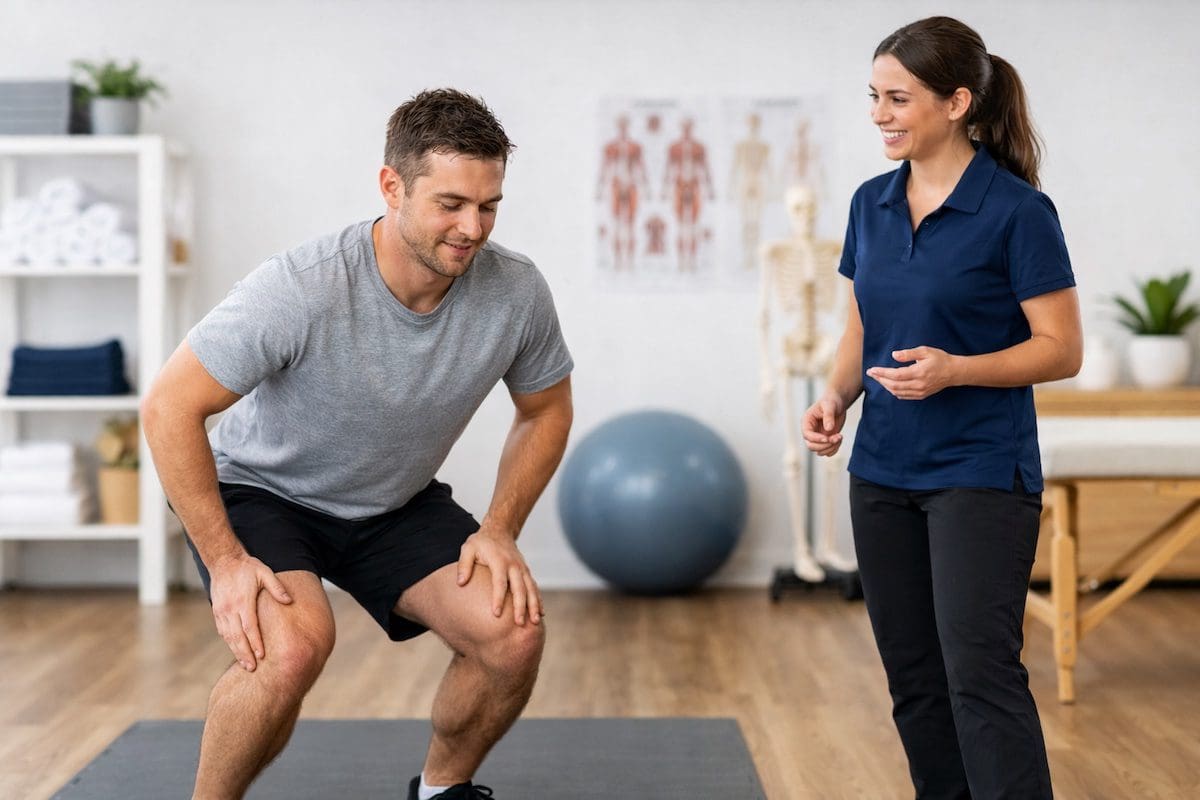
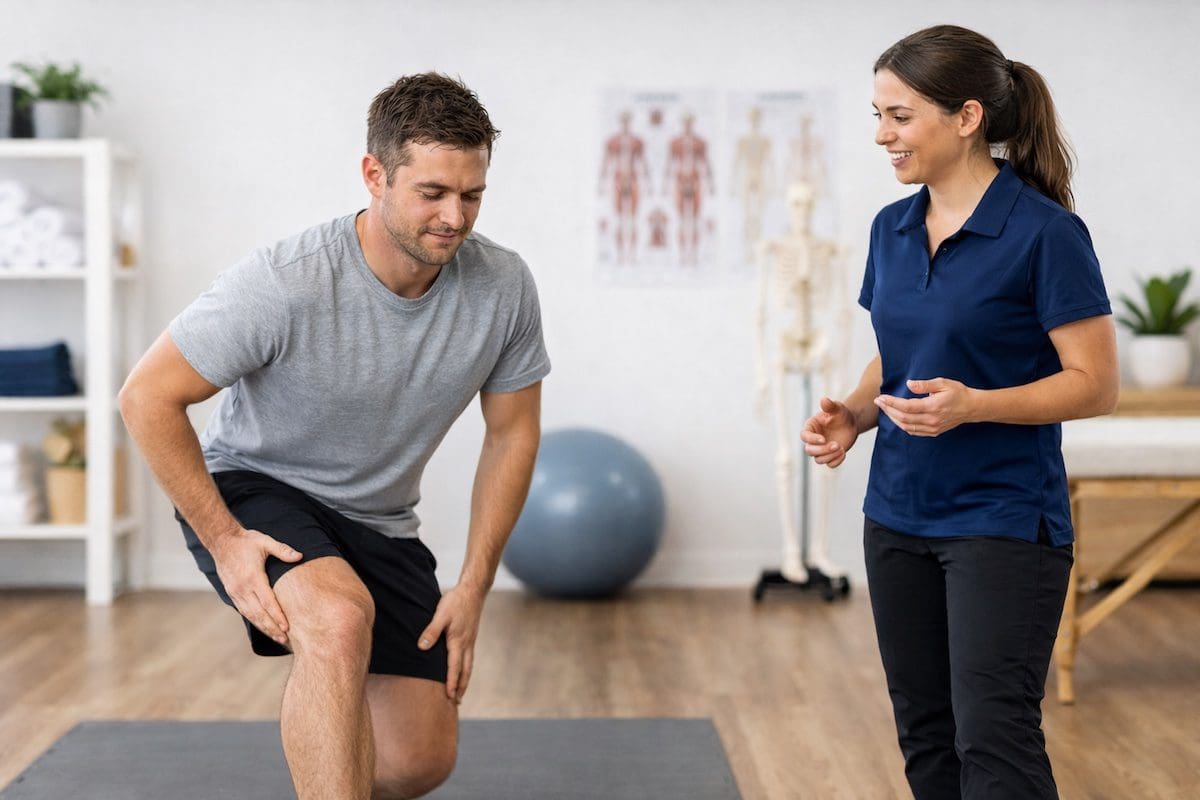
Mild muscle soreness after exercise is common and often improves with gentle movement.

What Causes Post-Exercise Muscular Pain?

Post-exercise muscular pain is usually caused by delayed onset muscle soreness (DOMS) after harder-than-usual or unfamiliar exercise, especially eccentric loading such as lowering weights, downhill running, or returning to training after a break. It is less often caused by lactic acid, and sometimes it can reflect a true muscle strain or another muscle pain problem.

This page discusses the most common reasons muscles feel stiff, sore, or heavy after exercise, when that response is normal, and when you should think beyond DOMS. If your pain started after sport or gym work, our guide to Delayed Onset Muscle Soreness (DOMS) is the best first cluster page to read.

Quick signs your post-exercise soreness may be normal

  • Soreness starts 12 to 24 hours after training
  • It often peaks over the next 24 to 72 hours
  • The area feels stiff or generally sore rather than sharply painful
  • It eases as you warm up gently
  • There is no major bruising, swelling, or limping

Key takeaway: DOMS usually starts later. Pain that begins during exercise, feels sharp, or stays very localised is more likely to need assessment.

Is post-exercise muscular pain just lactic acid?

No. Lactic acid was once blamed for post-exercise muscular pain, but that explanation does not fit the delayed pattern most people notice with DOMS. Lactate rises during exercise and clears relatively quickly, whereas DOMS usually builds later and is more closely linked to unfamiliar loading, especially eccentric work, plus temporary tissue irritation and sensitivity.

Why does post-exercise muscular pain happen after a new or harder session?

Mild quadriceps soreness after exercise assessed in physiotherapy clinic setting

Mild muscle soreness after a new or harder session

Post-exercise muscular pain is more likely when your muscles face a load they are not ready for. Common triggers include starting a new program, increasing weights too quickly, adding hills or speed work, doing lots of lowering-based strength work, or returning to training after time off. This is why DOMS is common after the first harder session rather than every session.

In practical terms, sore muscles after exercise often reflect a load spike rather than damage that needs rest alone. A sensible progression in intensity, volume, and recovery usually reduces the risk of a bigger flare-up.

When is post-exercise muscular pain normal?

Post-exercise muscular pain is usually a normal recovery response when it appears later, feels more widespread than pinpoint, and gradually settles over a few days. Mild soreness after a hard session can be part of training adaptation. However, pain that starts during exercise, feels sharp, or gets worse instead of better is less typical of DOMS.

Many people describe this as muscle soreness after exercise or a general heavy feeling after training. That pattern is usually less concerning than sudden, sharp pain in one precise spot.

How does exercise change your muscles?

As you train consistently, your body becomes better at handling load, coordinating movement, and recovering between sessions. Muscles, tendons, and connective tissues gradually improve their tolerance. That is why graded progression matters. Sudden spikes in load are far more likely to produce post-exercise muscular pain than a sensible, well-paced training plan.

If you want a broader explanation of how physiotherapists assess pain, stiffness, and recovery problems, Healthdirect provides a useful overview of physiotherapy.

How can massage help post-exercise muscular pain?

Massage may help reduce the feeling of muscle tightness, soreness, and fatigue after exercise. For some people, it also improves comfort with movement and recovery confidence. A sports recovery massage can be useful when your muscles feel loaded and heavy, although it should support rather than replace sensible sleep, hydration, nutrition, and load management.

What about muscle and joint stiffness?

Stiffness after training can come from more than one source. Sometimes it is simple DOMS. Other times it reflects a mild muscle injury, tendon overload, joint irritation, or a recovery mismatch between load and capacity. Massage may help some of these presentations, but the best approach depends on whether the issue is normal recovery, overload, or a true tissue injury.

Massage is a drug-free option, but not the only answer

Massage is a hands-on, drug-free treatment option that many active people use to feel looser and more comfortable after hard training. However, it works best as part of a bigger recovery plan. If your muscles are repeatedly flaring, a physiotherapist may help identify whether the real issue is weak load tolerance, poor progression, a technique problem, or an undiagnosed injury.

When should you worry about post-exercise muscular pain?

You should be more cautious when post-exercise muscular pain starts during exercise, causes limping, creates clear weakness, comes with bruising or swelling, or stays sharply localised. That pattern is less typical of DOMS and more suggestive of a muscle strain or another injury that deserves earlier assessment.

If your muscle soreness after workout is getting worse each day instead of settling, it is also wise to consider whether you are dealing with more than normal recovery soreness.

What are the signs of over-exercising?

Over-exercising often shows up as repeated soreness that does not settle between sessions, falling performance, heavy legs, poor recovery, sleep disturbance, irritability, or pain that keeps returning in the same body region. If that sounds familiar, it is worth reviewing your program, your recovery habits, and your week-to-week load increases.

Related information

FAQs about post-exercise muscular pain

How long should post-exercise muscular pain last?

DOMS often peaks between 24 and 72 hours after exercise and then settles over the next few days. If the soreness is still severe, worsening, or clearly limiting your walking, lifting, or training after several days, it is worth getting checked.

Is it okay to exercise with sore muscles?

Light movement is often fine when the soreness is mild and behaves like DOMS. Walking, cycling, mobility work, or an easier session may help. It is less wise to train hard through sharp, localised, or worsening pain.

What is the difference between DOMS and a muscle strain?

DOMS usually starts later and feels more general and stiff. A muscle strain more often starts during the activity or straight afterwards, then hurts with contraction, stretching, or load. Bruising, swelling, and weakness are stronger warning signs of strain.

Can massage speed up muscle recovery?

Massage may help some people feel less sore and move more comfortably after exercise. It can be useful as part of recovery, but it works best alongside load management, sleep, hydration, and a sensible return to training.

Should I stretch sore muscles?

Gentle mobility and light stretching may feel helpful, but aggressive stretching can irritate already sensitive tissues. Aim for comfortable movement rather than forcing range. If stretching increases pain, back off and choose easier recovery work instead.

When should I see a physiotherapist?

You should consider an assessment if the pain started during exercise, is sharply localised, causes limping or weakness, keeps coming back, or is not improving within a few days. A physiotherapist can work out whether it is DOMS, a muscle injury, or another problem.

Is DOMS a sign of a good workout?

Not necessarily. DOMS can happen after a hard or unfamiliar session, but soreness is not the only sign of progress. You can improve strength and fitness without feeling very sore after every workout.

How can I prevent muscle soreness after exercise?

You can reduce the risk by progressing your training gradually, allowing recovery between harder sessions, warming up well, sleeping enough, and avoiding sudden spikes in load. If soreness keeps returning in the same area, it may be worth checking your technique, footwear, or program design.

What to do next

If your soreness appeared later, feels general rather than sharply localised, and is already easing, it is more likely to be DOMS. Reduce your load for a few days, keep moving gently, and build back gradually.

If your pain started during exercise, feels more precise, or is affecting your walking, lifting, gym work, or sport, book an assessment. PhysioWorks can help determine whether you are dealing with normal post-exercise muscular pain, a muscle strain, or another injury, and then guide the right next step.

Confident walking after post-exercise muscle soreness recovery in physiotherapy clinic

Returning to movement after muscle soreness

Book your appointment – 24/7

Choose your preferred PhysioWorks clinic and book online.

Follow PhysioWorks

Get free physiotherapy tips, exercise videos, recovery advice, and blog updates.

Facebook Instagram YouTube B X Email PhysioWorks

References

  1. Sonkodi B. Should We Void Lactate in the Pathophysiology of Delayed Onset Muscle Soreness? J Orthop Sports Phys Ther. 2022;52(12):E1-E3. doi:10.2519/jospt.2022.11298
  2. Guo J, Li L, Gong Y, et al. Massage alleviates delayed onset muscle soreness after strenuous exercise: a systematic review and meta-analysis. Front Physiol. 2017;8:747. doi:10.3389/fphys.2017.00747
  3. Davis HL, Alabed S, Chico TJA. Effect of sports massage on performance and recovery: a systematic review and meta-analysis. BMJ Open Sport Exerc Med. 2020;6(1):e000614. doi:10.1136/bmjsem-2019-000614

High-Intensity Interval Training (HIIT)

High-Intensity Interval Training HIIT supervised cardio interval exercise session

Guided HIIT can be scaled to your fitness level.

High-Intensity Interval Training (HIIT) alternates short bursts of hard effort with brief recovery periods. It can improve fitness, heart health and exercise capacity in less time than many traditional workouts. If you are returning from injury, building fitness or need a tailored plan, exercise physiology or physiotherapy guidance can help you choose the right starting point.

HIIT suits many people because it is flexible. You can use it with walking, cycling, rowing, bodyweight drills or gym-based circuits. However, the safest HIIT program depends on your goals, injury history, fitness level and recovery capacity.

Quick takeaway: HIIT can be useful when the dose matches your body. Start with simple intervals, avoid sudden spikes, and progress only when your recovery remains steady.

What Is High-Intensity Interval Training (HIIT)?

High-Intensity Interval Training (HIIT) is a style of exercise that alternates repeated short periods of vigorous work with planned recovery. A session might include 20 to 60 seconds of hard effort followed by 20 to 90 seconds of lighter movement or rest. The aim is to challenge your heart, lungs, muscles and energy systems in a short workout.

Many HIIT sessions include:

  • a dynamic warm-up,
  • repeated work and recovery intervals,
  • several rounds matched to your fitness level, and
  • a cooldown to settle your breathing and movement.

Common Features of HIIT Training

  • short bursts of hard work followed by recovery,
  • sessions often completed in 10 to 30 minutes,
  • options using running, cycling, rowing, walking or bodyweight drills,
  • programs that can be adjusted for beginners or experienced exercisers, and
  • stronger results when the plan is progressed gradually.

What Are the Benefits of High-Intensity Interval Training (HIIT)?

HIIT can improve aerobic fitness, exercise tolerance and cardiometabolic health. Recent reviews report benefits for cardiorespiratory fitness and several heart-health markers. HIIT may also suit people who struggle to find time for longer workouts because the sessions are usually short and varied.

Potential benefits of HIIT include:

  • improved cardiovascular fitness,
  • better exercise efficiency for busy people,
  • increased tolerance to higher training loads,
  • support for weight-management plans when paired with nutrition and recovery, and
  • a flexible way to train at home, outdoors or in a gym.

How Does HIIT Work?

HIIT works by challenging both your aerobic and anaerobic energy systems. During each hard interval, your heart rate and breathing rise quickly. During recovery, your body starts to clear fatigue products and prepare for the next effort. Over time, this repeated stress-and-recovery pattern can improve fitness and exercise tolerance.

Because the loads are higher than steady exercise, HIIT should be dosed carefully. That is especially important if you have had a muscle strain, delayed onset muscle soreness (DOMS) or recurring tendinopathy.

Where Does Exercise Physiology Fit With HIIT?

An Accredited Exercise Physiologist (AEP) can help turn HIIT from a random hard workout into a structured exercise plan. At PhysioWorks, exercise physiology focuses on safe progression, pacing, strength, fitness and confidence. This can be useful if you are new to interval training, returning after injury, managing a health condition or unsure how hard to train.

An AEP may help you choose the right exercise mode, work-to-rest ratio, session frequency and progression speed. For active people and athletes, performance exercise physiology may also help align HIIT with strength, sport demands and recovery.

Physio or Exercise Physiology for HIIT?

Choose the starting point that matches your main issue.

  • See a physiotherapist first: if pain, injury, swelling, weakness or loss of movement is limiting exercise.
  • See an exercise physiologist: if you need a structured fitness, strength, chronic disease or return-to-exercise plan.
  • Use both when needed: physiotherapy can guide diagnosis and early recovery, while EP can progress longer-term conditioning.

Is High-Intensity Interval Training Safe for Beginners?

HIIT can be safe for beginners when it starts at the right level. The problem is not the name. The problem is starting too hard, too soon or too often. Many injuries happen when people copy advanced workouts before they have built enough strength, movement control and recovery capacity.

If you are new to exercise, you may do better with shorter work intervals, longer recovery periods and lower-impact options such as brisk uphill walking, cycling or rowing. Exercise physiology may also help if you want a supervised plan that builds fitness without repeated flare-ups.

HIIT Readiness Check

Before you add HIIT, check whether your body can recover from harder sessions. A good starting point should feel challenging, but it should not leave you sore for several days or make an old injury flare.

  • Green light: you recover within 24 to 48 hours and movement feels normal.
  • Yellow light: soreness lasts longer than expected or technique drops quickly.
  • Red light: pain is sharp, spreading, worsening or linked with dizziness or chest symptoms.

Who Should Be Careful With HIIT Workouts?

You should be more cautious with HIIT if you have heart or lung disease, uncontrolled blood pressure, dizziness, poor exercise tolerance or a recent injury. HIIT also needs careful planning if you are returning to sport after time off or trying to manage persistent pain.

In these cases, HIIT may still help, but the program should be modified. Many people do better when they first build a base with lower-intensity exercise, then progress into intervals. If you play sport regularly, our sports injuries information may also help you understand load, recovery and overuse patterns.

Can HIIT Help During Rehabilitation?

Yes, HIIT principles can sometimes be used in rehabilitation, but the dose matters. Physiotherapists may use interval-style loading to rebuild fitness without overloading an injured area. For example, intervals on a bike, cross trainer or in a pool can let someone train hard while keeping impact lower than running or jumping.

Exercise physiologists may also use interval-style programming during later rehabilitation or return-to-fitness planning. This can help rebuild exercise capacity, confidence and training tolerance while still respecting pain, fatigue and recovery response.

This is one reason HIIT is attractive in rehab and performance settings. It is adaptable. Nevertheless, it should support the bigger recovery plan rather than replace sound diagnosis, strength work, mobility and graded return to activity. You may also find our injury prevention programs guide useful if you are rebuilding capacity after a break.

High-Intensity Interval Training HIIT sit-to-stand interval exercise coaching

Start HIIT with safe, controlled exercise progressions.

Beginner HIIT Progression Example

A simple HIIT plan should start easier than you think. Progress one variable at a time, such as interval length, number of rounds or exercise impact.

Stage Example Best For
Entry level 20 seconds brisk effort, 60 seconds easy recovery, 6 rounds Beginners or return after a break
Building phase 30 seconds hard effort, 60 seconds recovery, 8 rounds People tolerating early sessions well
Higher load 40 seconds hard effort, 40 seconds recovery, 8 to 10 rounds Experienced exercisers with good recovery

Common HIIT Mistakes That Increase Injury Risk

Most HIIT problems come from poor dosing rather than the training method itself. Sudden changes in speed, volume, jumping, hill work or gym load can irritate muscles, tendons and joints.

  • Skipping the warm-up
  • Adding too many hard sessions in one week
  • Using high-impact jumping before building strength
  • Training hard when sleep or recovery is poor
  • Ignoring pain that changes your movement pattern

If muscle pain is limiting your exercise, our muscle pain and injury guide can help you compare general soreness, DOMS and possible strain patterns.

Does HIIT Help Mental Performance as Well?

Emerging research suggests HIIT may also support brain health and cognitive performance. Reviews have reported favourable effects on brain-derived neurotrophic factor (BDNF), which is involved in neuroplasticity and brain function. This does not mean HIIT is always better for every person, but it adds to the case for exercise as part of whole-body health.

Exercise can also support mood and resilience. For broader advice on activity and wellbeing, see exercise for mental health. Healthdirect also explains that exercise can support mental health, reduce stress and improve sleep when started safely and gradually.

How Do You Start HIIT Safely?

Start with one or two sessions per week. Choose a low-impact option if needed. Keep the first few sessions short, and leave enough recovery between them. A simple beginner example is 20 seconds of hard work followed by 40 to 60 seconds of easy recovery for 6 to 8 rounds after a warm-up.

The American College of Sports Medicine provides useful public guidance on physical activity levels and vigorous exercise participation in adults. See their overview of physical activity guidelines.

Related PhysioWorks Articles

Frequently Asked Questions About High-Intensity Interval Training (HIIT)

How long should a HIIT session last?

Many HIIT sessions last between 10 and 30 minutes, depending on the workout design, the intensity of the work intervals and your fitness level. Shorter sessions can still be effective when the intensity is high enough and the recovery periods are planned well.

How many times per week should you do HIIT?

Most people do well with one to three HIIT sessions per week. The right amount depends on your training background, sport, work demands, sleep and injury history. Too many hard sessions can reduce recovery and increase the chance of overload problems.

Is HIIT better than steady exercise?

Not always. HIIT is often more time-efficient, but steady exercise still has clear benefits. Steady exercise may suit beginners, people with some medical conditions or those building an aerobic base. The best choice depends on your body, goals and tolerance.

Can you do HIIT if you have had an injury?

Sometimes, yes. However, the exercise choice, impact level and work-to-rest ratio may need to change. If you have had a recent injury or keep flaring up with exercise, professional guidance can help you return more safely.

Can an exercise physiologist help with HIIT?

Yes. An exercise physiologist can help match HIIT to your goals, fitness level, health history and recovery response. This may include exercise selection, work-to-rest timing, weekly frequency and safe progression.

What is the easiest HIIT option for beginners?

Low-impact intervals are often the easiest starting point. Brisk walking, cycling, rowing or step-ups can raise your heart rate without the same impact as sprinting or jumping. Start with longer rests and progress gradually.

Should HIIT feel painful?

No. HIIT should feel hard, but it should not cause sharp pain, worsening symptoms or movement changes. Stop and seek advice if pain persists, spreads or keeps returning each time you train.

What to Do Next

If HIIT interests you but you are unsure where to start, begin with a program that matches your current fitness and recovery capacity. Avoid the trap of chasing intensity before your body is ready for it.

If pain, injury history or poor exercise tolerance is holding you back, a PhysioWorks physiotherapist or exercise physiologist can assess your starting point and help tailor a plan that builds fitness safely and progressively.

Book your appointment – 24/7

Choose your preferred PhysioWorks clinic and book online.

Follow PhysioWorks

Get free physiotherapy tips, exercise videos, recovery advice, and blog updates.

Facebook Instagram YouTube B X Email PhysioWorks

References

  1. Cadenas-Sanchez C, Moriana-Coronas FJ, Esteban-Cornejo I, et al. A systematic review and cluster analysis approach of 103 systematic reviews and meta-analyses on the effectiveness of high-intensity interval training on cardiorespiratory fitness. J Sport Health Sci. 2024;13(4):633-652.
  2. Edwards JJ, Thielen H, Harrison AS, et al. High-intensity interval training and cardiometabolic health in adults: an overview of systematic reviews. Sports Med. 2023;53(10):1967-1991. doi:10.1007/s40279-023-01849-3
  3. Mielniczek M, Czechowska D, Pol W, et al. The effect of high-intensity interval training (HIIT) on brain-derived neurotrophic factor in adults: a systematic review. Int J Mol Sci. 2024;25(24):13315. doi:10.3390/ijms252413315
  4. Leite CDFC, dos Santos PB, de Souza HL, et al. Exercise-induced muscle damage after a high-intensity interval training session: a systematic review. Sports. 2023;11(11):219. doi:10.3390/sports11110219

Why Is a Cool Down Important After Exercise?

Cool down after exercise with guided hip flexor stretching
Guided stretching can help finish training calmly.

A cool down after exercise is a short period of easier movement after training. It helps your heart rate and breathing settle, gives tight muscles time to relax, and helps you notice how your body feels before you stop.

A practical cool down does not need to be complex. Most people can start with 5 to 10 minutes of light movement, then add gentle stretching, mobility work, or recovery support if it feels useful. For sport-specific recovery advice, see our Sports Physiotherapy Brisbane page.

Quick answer: A cool down helps your body shift from hard work to rest.

  • It lets your heart rate and breathing settle gradually.
  • It may reduce the tight feeling after hard training.
  • It gives you time to stretch or move stiff areas.
  • It helps you plan your next session with less guesswork.

What Are the Main Benefits of a Cool Down After Exercise?

A cool down after exercise gives your body a calmer finish. It supports a gradual drop in heart rate, helps you assess tight or sore areas, and builds a simple recovery habit between sessions.

The four main reasons to cool down are:

  • Heart and breathing recovery: light movement helps your body slow down.
  • Muscle comfort: gentle movement may reduce the feeling of tightness.
  • Mental reset: slower breathing can help you calm down after effort.
  • Next-session planning: you can note soreness, fatigue, or load issues early.

How Does a Cool Down Help Your Heart Rate Settle?

A cool down helps your heart rate and breathing return towards normal more gradually. This may reduce light-headedness after hard exercise, especially after running, cycling, gym work, or team sport.

During exercise, your heart pumps more blood to working muscles. If you stop suddenly, some people feel dizzy because blood flow changes quickly. A few minutes of easy walking, slow cycling, gentle swimming, or relaxed movement can make the shift feel smoother.

Simple Cool Down Template

  • Step 1: 3 to 5 minutes of easy movement.
  • Step 2: slow breathing while you keep moving.
  • Step 3: gentle stretches for the main muscles used.
  • Step 4: note any pain, sharp soreness, or unusual fatigue.

Does a Cool Down Reduce Muscle Soreness?

A cool down may help you feel less stiff, but it may not prevent delayed onset muscle soreness, also called DOMS. Research suggests active cool-downs and stretching have mixed effects on soreness, so the goal should be comfort, safe slowing down, and better recovery habits.

DOMS often appears after new, hard, or high-load exercise. It may be more noticeable after downhill running, heavy strength work, jumping, or a sudden return to sport. For more detail, read our guide to delayed onset muscle soreness.

Light movement can still be worthwhile. It may help stiff muscles feel easier in the short term. It also gives you time to decide whether you need rest, a lighter next session, physiotherapy, or recovery support.

Cool down after exercise with hamstring and calf stretching guidance
Gentle stretching can support recovery habits.

What Stretches Are Best After Exercise?

Gentle static stretches can suit many cool downs. Hold each stretch in a mild, comfortable position. Do not force the range, bounce, or push into sharp pain.

A useful starting point is 20 to 30 seconds per stretch, repeated once or twice. Choose the muscles you used most. For runners, this may include calves, quadriceps, hamstrings, hip flexors, and gluteals. For swimmers, it may include shoulders, chest, upper back, and hips.

Stretching is not magic, but it can help you feel calmer and looser. For a more detailed guide, see our stretching exercises page.

Match the Cool Down to the Session

  • After running: walk first, then stretch calves, quads and hips.
  • After weights: use light movement, then stretch the loaded areas.
  • After team sport: jog or walk, then address tight or sore spots.
  • After swimming: easy laps, then shoulder and trunk mobility.

Should You Use a Foam Roller or Massage After Training?

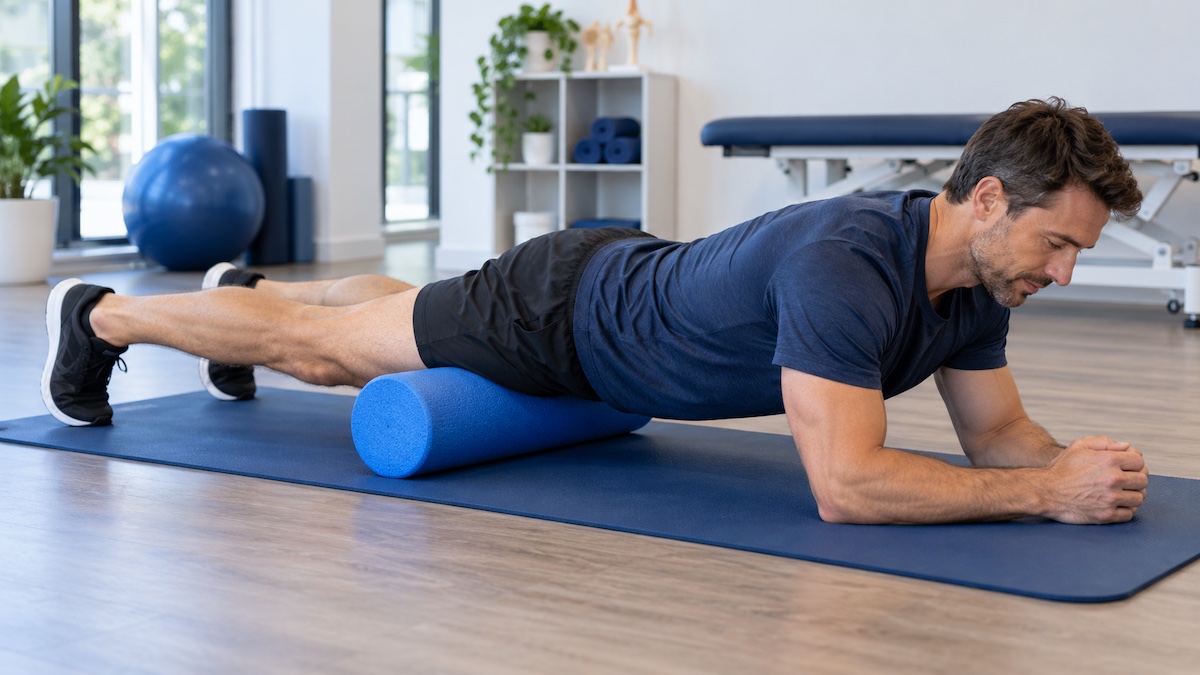
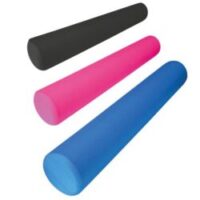
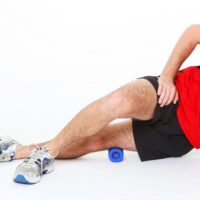
A foam roller may help some people reduce post-exercise tightness. Keep the pressure firm but tolerable. Avoid rolling directly over bruising, swelling, fresh injury, numbness, or sharp pain.

Some people also use recovery massage or sports massage as part of their training plan. Massage may help with comfort and recovery perception, but it should match your training load, pain level, and goals.

What Should You Avoid During a Cool Down?

Avoid turning your cool down into more hard training. The aim is to slow down, not add another workout. Also avoid aggressive stretching, very painful foam rolling, alcohol straight after training, and heat over a fresh injury or swollen area.

  • Avoid sharp pain: pain is a signal to stop or change the activity.
  • Avoid hard stretching: gentle is enough after exercise.
  • Avoid heat on acute swelling: it may increase warmth and throbbing.
  • Avoid alcohol after hard training: it can affect sleep, hydration and recovery.

When Should You Get Help With Post-Exercise Pain?

Seek advice if soreness is severe, one-sided, worsening, linked with swelling, or still affecting normal movement after several days. You should also get help if pain changes your walking, running, lifting, or sport technique.

A physiotherapist can help check whether your symptoms fit normal training soreness, a soft tissue injury, or a load problem. They may guide exercise changes, recovery pacing, strength work, mobility, or a return-to-sport plan. You can also read our muscle pain and injury guide.

Frequently Asked Questions

How long should a cool down after exercise take?

Most people can use 5 to 10 minutes. Harder sessions may need longer. Start with easy movement, then add gentle stretching or mobility work if it feels helpful.

Is walking enough for a cool down?

Yes, walking is often enough after running, gym work, or team sport. Keep the pace easy. You should feel your breathing and heart rate start to settle.

Can stretching after exercise stop DOMS?

Stretching may help you feel less tight, but it may not stop DOMS. Soreness after new or hard training often needs time, sleep, food, hydration, and smart load planning.

Should I cool down after every workout?

A short cool down is a useful habit after most harder sessions. It matters most after intense training, long sessions, heat, sport, intervals, or exercise that leaves you light-headed.

Can I use ice baths after exercise?

Cold water may help some athletes manage soreness after hard sessions. It is not needed for every workout. Use it carefully and match it to your training goal.

What should I do if I feel dizzy after exercise?

Stop safely, sit or lie down if needed, and sip water when you can. If dizziness is severe, repeated, linked with chest pain, or does not settle, seek urgent medical help.

Related Information

For general recovery and exercise advice, the Australian Institute of Sport provides recovery resources through its REST Hub recovery guide. Healthdirect also provides Australian public health information about fitness and exercise.

What To Do Next

Use a cool down as a simple check-in after training. Keep it easy, breathe slowly, and pay attention to any sharp pain, unusual fatigue, dizziness, swelling, or soreness that changes how you move.

If pain keeps returning after exercise, or you are unsure how hard to train, book a PhysioWorks appointment. A physiotherapist can help review your load, recovery plan, strength, mobility and return-to-sport steps.

Book your appointment – 24/7

Choose your preferred PhysioWorks clinic and book online.

Muscle & Soft Tissue Products

These muscle and soft tissue products are commonly used by our physiotherapists to relax or loosen muscles, improve strength, comfort, flexibility, and home exercise programs.

View all muscle & soft tissue products

Follow PhysioWorks

Get free physiotherapy tips, exercise videos, recovery advice, and blog updates.

Facebook Instagram YouTube B X Email PhysioWorks

Warming Up Before Exercise

Warming up before exercise helps prepare your muscles, joints, tendons, and nervous system for activity. A gradual warm-up can improve movement quality, help performance, and reduce the risk of overload. It also works well alongside stretching exercises, a sensible exercise program, and good injury prevention habits.

A good warm-up is not just a few random stretches. Instead, it should build from light movement to activity-specific drills so your body is ready for the session ahead. This approach is commonly used in sports physiotherapy and broader sports injuries management.

Why Is Warming Up Important?

Warming up increases blood flow, raises muscle temperature, and helps your body move more efficiently. As a result, many people feel looser, more coordinated, and better prepared when training starts. For active people, warming up may also reduce the chance of muscle strain, tendinopathy, and other training-related soft tissue problems.

  • Improves movement readiness
  • Helps muscles and tendons tolerate load
  • Supports better coordination and control
  • May improve exercise and sports performance
  • Can reduce post-exercise soreness

Does Warming Up Unlock Performance?

Yes, in many situations it can. A well-structured warm-up helps your body transition from rest to exercise by gradually increasing effort, sharpening coordination, and preparing the muscles you are about to use. Many athletes notice better movement, improved speed, and more confidence once they are properly warmed up.

Recent research suggests that dynamic stretching is the most reliable warm-up method for improving explosive lower-limb performance. In particular, dynamic stretching performed for about 7 to 10 minutes produced the best performance effect in that review. By contrast, static stretching alone reduced explosive performance, while a combination of static plus dynamic stretching also improved performance but less consistently than dynamic stretching alone.

What Type of Warm-Up Helps Most?

The strongest evidence supports an active, dynamic, and sport-specific warm-up. That usually means light aerobic movement first, followed by dynamic mobility, muscle activation, and drills that resemble the activity you are about to do. This style of warm-up appears more helpful than passive preparation or long static stretching before explosive exercise.

For injury prevention, a simple generic warm-up may still help, but the evidence suggests it has only a small protective effect. More structured programs, especially neuromuscular injury prevention programs, appear to provide stronger benefits. These plans often combine movement control, balance, landing mechanics, trunk control, and progressive strengthening.

What Should a Good Warm-Up Include?

A useful warm-up usually starts with light whole-body movement, then progresses into mobility, activation, and sport-specific practice. For example, a runner may begin with brisk walking or easy jogging, then add dynamic leg swings, marching drills, and short build-up efforts before harder running.

  1. 2 to 5 minutes of light aerobic movement
  2. Dynamic mobility through the main joints
  3. Muscle activation for the task ahead
  4. Practice drills that match the sport or exercise

If your activity involves sprinting, jumping, cutting, or explosive movement, dynamic preparation is usually a better fit than long static holds before the session begins. If you want related guidance, read common muscle injuries and common physiotherapy treatment techniques.

Should You Stretch Before Exercise?

Stretching can help, but the type and timing matter. Dynamic stretching often suits a warm-up better than long static holds because it keeps the body moving while preparing the same muscles and joints used in your activity. In contrast, long static stretching may be better placed after exercise or in a separate flexibility session.

If you often tighten up after exercise, you may also like to read about delayed onset muscle soreness (DOMS), muscle recovery, and why a cool down matters after exercise.

Can Warming Up Help Prevent Injury?

Warming up may help lower injury risk, particularly when it is combined with good training habits, recovery, and progressive loading. It is not a guarantee against injury, but it can reduce the shock of sudden effort on muscles, ligaments, and tendons. This is especially relevant in activities that involve sprinting, jumping, lifting, or rapid changes of direction.

Current evidence suggests that structured neuromuscular warm-up programs are more protective than an unstructured general warm-up. These routines often include balance work, landing control, coordination drills, and strengthening elements. Some prevention programs also include eccentric training, which may help reduce injury risk in certain sports and muscle groups.

Soft tissue injuries such as a muscle strain are more likely when tissues are overloaded beyond what they are ready to handle. A gradual build-up helps your body prepare for those demands.

What Type of Warm-Up Works Best for Different Activities?

The best warm-up matches the activity you are about to do. A gym session, team sport, golf round, and distance run all place different demands on the body. Therefore, your warm-up should reflect the speed, movement, and load of the session, rather than relying on one routine for everything.

For field and court sports, a neuromuscular warm-up that includes running drills, balance, landing control, and direction changes may be especially useful. For gym or running sessions, a combination of light aerobic preparation, dynamic mobility, and muscle activation often works well. A physiotherapist may also use a tailored exercise program to address recurring issues.

For sport-specific advice, you can also explore sports physiotherapy. If you are unsure whether to continue training, this guide on listening to your body during exercise can also help.

When Should You Seek Professional Help?

If warming up still leaves you with pain, repeated tightness, or a pattern of recurring injuries, it is worth getting assessed. Ongoing symptoms can point to an underlying mobility issue, muscle weakness, tendon irritation, poor load management, or a technique problem that needs more than a simple warm-up change.

If you keep breaking down with training, recurring tendon pain, repeated muscle strains, or broader sports injuries may need a more specific rehabilitation plan.

Frequently Asked Questions About Warming Up

What type of warm-up is best before exercise?

For most people, the best warm-up is a dynamic and activity-specific one. That usually includes light aerobic movement, dynamic mobility, muscle activation, and drills that match the exercise or sport you are about to perform.

Is dynamic stretching better than static stretching before exercise?

Dynamic stretching is often better before explosive or high-speed exercise because it helps prepare the body without reducing power. Static stretching alone may reduce explosive performance if used immediately before sprinting or jumping.

How long should a warm-up take?

Most warm-ups take about 5 to 15 minutes. For explosive activities, around 7 to 10 minutes of dynamic preparation may work particularly well, depending on the sport, weather, and your fitness level.

Can warming up reduce soreness after exercise?

It may help reduce how stiff or uncomfortable you feel after exercise, especially when combined with sensible training loads and recovery habits. However, it will not remove soreness completely in every case.

Do beginners need to warm up?

Yes. Beginners often benefit from warming up because it helps the body ease into exercise, improves confidence, and makes movement feel more controlled from the start.

What to Do Next

If you are unsure how to warm up for your sport, gym training, or injury history, a physiotherapist can help tailor a routine to your needs. The right plan should match your activity, movement restrictions, and performance goals rather than relying on a generic approach.

If pain, tightness, or recurring injury keeps interrupting your training, book an assessment so the cause can be identified and your exercise plan adjusted safely.

Book your appointment – 24/7

Choose your preferred PhysioWorks clinic and book online.

Follow PhysioWorks

Get free physiotherapy tips, exercise videos, recovery advice, and blog updates.

Facebook Instagram YouTube B X Email PhysioWorks

References

  1. Fradkin AJ, Zazryn TR, Smoliga JM. Effects of warming-up on physical performance. J Strength Cond Res. 2010;24(1):140-148. doi:10.1519/JSC.0b013e3181c643a0
  2. Behm DG, Chaouachi A. A review of the acute effects of static and dynamic stretching on performance. Eur J Appl Physiol. 2011;111(11):2633-2651. doi:10.1007/s00421-011-1879-2
  3. Okobi OE, Warrington SJ. A meta-analysis of randomized controlled trials on the effectiveness of exercise intervention in preventing sports injuries. Cureus. 2022;14(6):e26123. doi:10.7759/cureus.26123
  4. Li FY, Guo CG, Li HS, Xu HR, Sun P. A systematic review and net meta-analysis of the effects of different warm-up methods on the acute effects of lower limb explosive strength. BMC Sports Sci Med Rehabil. 2023;15(1):106. doi:10.1186/s13102-023-00703-6
Balance Exercises

Balance exercises step-and-reach control for falls prevention training

Guided balance exercises can help build control, steadiness and trust.

Balance exercises train your body to stay steady when you stand, walk, turn, step or reach. They may help with balance training, falls risk, sport rehab and return after a leg injury.

A physio can help you start safely, find why you feel less steady and build a plan that matches your goals.

Quick answer: Balance exercises help your legs, trunk, eyes, inner ear and brain work together.

  • They may improve steadiness and quick steps.
  • They often help after ankle, knee or hip injury.
  • They work best when tasks progress in small steps.
  • They are stronger when paired with leg strength work.

What Are Balance Exercises?

Balance exercises are simple tasks that train you to stay steady. They can include standing drills, step work, reaching tasks, turns and controlled single-leg tasks.

Most plans start with support nearby. You may use a bench, rail or wall. Then the task becomes harder as your control improves.

  • Stand with better control
  • Turn and step with more trust
  • Feel safer on stairs and uneven ground
  • Rebuild confidence after a sprain, fall or injury
  • Lower falls risk when paired with strength training

Who May Benefit From Balance Exercises?

Balance work may help older adults, active adults, athletes and people who feel less steady after a fall or injury.

It is often used after ankle sprains, knee injury, hip pain and dizzy spells. It can also form part of a broader physio care plan.

If you have near-falls, new unsteadiness or low trust when you walk, a balance assessment can help find the likely causes.

Common Types of Balance Exercises

A physio may choose drills based on your health, past injury, strength, confidence and goals.

Two-Foot Stance Drills

These drills start with both feet on the ground. You may narrow your stance, stand heel-to-toe or shift your weight from side to side.

One-Leg Balance

Standing on one leg trains your ankle, knee, hip and trunk. It can help with leg rehab and sport preparation.

Step and Reach Drills

Step and reach drills train you to move while you stay steady. They can help with turns, stairs and uneven ground.

Balance Pad or Wobble Board Work

These tasks train joint sense and foot control. They are often used in injury prevention programs and ankle rehab.

How Should Balance Exercises Progress?

Start Use support, slow tasks and a steady surface.
Build Add reaches, turns, steps or less hand support.
Challenge Add sport, stairs, speed or uneven ground when ready.

Why Can Balance Feel Worse?

Balance can change for many reasons. Common causes include weak legs, slower steps, stiff joints, pain, reduced foot sense, medicine effects or inner ear problems.

If dizzy spells are part of the problem, read more about vertigo and dizziness.

Can Balance Exercises Help Prevent Falls?

Balance exercises may help reduce falls risk, mainly when they are paired with strength work and practised often.

This can matter if you feel unsafe on stairs, rough ground or fast turns. Healthdirect also explains broader falls prevention steps for older adults.

If falls are your main concern, see our guide on fall prevention or the Balance & Falls Prevention Class.

How Do You Start Safely?

Start with a task that suits your current level. Practise near a bench, rail or wall.

You can make it harder by changing your foot position, adding arm movement, using less hand support or adding steps.

A physio may change your plan if you have joint pain, nerve signs, dizzy spells, a recent fall or low trust in your balance.

Balance exercises step-and-reach control for falls prevention training

Step and reach drills train safer movement.

Book a check sooner if you notice:

  • recent falls or near-falls
  • new dizzy spells or loss of trust
  • poor balance on stairs, rough ground or turns
  • balance trouble after an ankle, knee, hip or head injury
  • symptoms that limit work, sport or daily life

When Should You See a Physio?

See a physio if you have fallen, avoid tasks, feel unsafe on stairs or feel less steady when walking.

A check can help work out if strength, joint control, pain, the inner ear or more than one factor is involved.

Can Exercise Physiology Help Balance?

Yes, it may help when you need a longer strength, fitness or falls-confidence plan. Exercise physiology can support safe, supervised exercise for strength, balance and daily function.

This can suit people who need steady progress after injury, illness, loss of strength or reduced activity.

Balance Exercises FAQs

What is the best balance exercise to start with?

Start with a simple standing task near firm support. Try feet-together stance, heel-to-toe stance or small weight shifts. The right choice depends on how steady you feel.

How often should you do balance exercises?

Short practice, done often, can work well. Many people do a few short sessions each week. Your physio can guide the dose and progress.

Can balance exercises help after an ankle sprain?

Yes. They can help rebuild joint sense, quick steps and leg control. They are often paired with strength work and a staged return to activity.

Are balance exercises only for older adults?

No. They can help older adults, athletes and people after injury. They are often used to improve movement control and lower re-injury risk.

Can balance exercises help dizziness?

They may help some people, but dizzy spells need assessment first. The cause may involve the inner ear, neck, nerves, medicine or other health issues.

How long does it take to improve balance?

Some people feel better within a few weeks. Others need longer. It depends on the cause, your practice and how the tasks are progressed.

Related Information

What To Do Next

If you want to feel safer and move with more trust, start with an assessment.

A physio can test your balance, find the key issues and give you a plan that suits your goals.

Book your appointment – 24/7

Choose your preferred PhysioWorks clinic and book online.

Follow PhysioWorks

Get free physiotherapy tips, exercise videos, recovery advice, and blog updates.

Facebook Instagram YouTube B X Email PhysioWorks

References

  1. Sherrington C, Fairhall NJ, Wallbank GK, et al. Exercise for preventing falls in older people living in the community: an abridged Cochrane systematic review. Br J Sports Med. 2020;54(15):885-891. doi:10.1136/bjsports-2019-101512
  2. Sluga SP, Kozinc Ž. Sensorimotor and proprioceptive exercise programs to improve balance in older adults: a systematic review with meta-analysis. Eur J Transl Myol. 2024;34(1):12010. doi:10.4081/ejtm.2024.12010
  3. Cui Z, Xiong J, Li Z, Yang C. Tai chi improves balance performance in healthy older adults: a systematic review and meta-analysis. Front Public Health. 2024;12:1443168. doi:10.3389/fpubh.2024.1443168

Why Are Physiotherapy Exercises Specific to You?

A tailored exercise plan helps match rehab to your body, symptoms and goals.

Article by John Miller & Erin Runge


Physiotherapy exercise program with supervised sit-to-stand strength exercise in clinic

Supervised exercise helps match your program to your stage.

A physiotherapy exercise program is a tailored plan that helps improve movement, strength, balance and control after pain, injury, surgery or deconditioning. Rather than giving generic stretches, a physiotherapist matches your exercises to your symptoms, capacity, goals and stage of recovery. For the broader treatment overview, visit our exercise programs page.

The right plan can help you load tissues safely, rebuild confidence and avoid doing too much too soon. It should also give you a clear path forward, not guesswork.

Short answer: physiotherapy exercises are specific because your diagnosis, symptoms, strength, confidence, goals and recovery stage all affect what is safe and useful. A good program matches the exercise, dose and progression to you.

Why Do Physiotherapists Prescribe Specific Exercises?

Different injuries need different loading plans. A painful tendon may need a different approach from a stiff joint, weak muscle, irritated nerve or post-operative repair. Therefore, your physiotherapist selects exercises that fit the problem and your current tolerance.

Your starting point also matters. Age, fitness, pain level, work demands, balance, confidence and medical history can all change what is safe and useful. A good plan should challenge you without repeatedly flaring symptoms.

What Should a Physiotherapy Exercise Program Include?

A physiotherapy exercise program often progresses in stages. Early work may focus on comfortable movement, swelling control, breathing, posture or simple muscle activation. Later, the plan may shift towards strength training, endurance, control and daily tasks such as walking, lifting, squatting, stairs or sport.

Common Exercise Types

  • Mobility: to restore comfortable range.
  • Activation: to help weak or inhibited muscles switch on.
  • Strength: to improve load tolerance.
  • Balance: to improve control and reduce falls risk.
  • Function: to return to work, sport or daily activity.

This is why copying someone else’s rehab often falls short. Even with the same diagnosis, two people may need different exercises, dosage and pacing. Some people start with gentle stretching exercises. Others are ready for resistance-based progressions such as resistance band exercises.


Physiotherapy exercise program using supervised resistance band strength training

Strength exercises should match your capacity.

Should Physiotherapy Exercises Hurt?

Not always. Some exercises should feel easy and controlled, especially early in recovery. Others may feel challenging as your strength and tolerance improve.

However, severe pain, sharp pain, swelling, loss of confidence or a flare-up that lasts into the next day may suggest the exercise needs adjustment. Your physiotherapist may change the range, load, speed, support, rest time or technique.

A Simple Load Check

  • Green light: mild effort that settles quickly.
  • Yellow light: discomfort that needs a dosage change.
  • Red light: sharp pain, swelling, giving way or symptoms that worsen afterwards.

For some conditions, careful progressions such as eccentric strengthening may be useful. The key is matching the exercise to your stage, rather than pushing through every symptom.

How Does a Program Progress?

A useful program should change as you improve. It should not stay at the same level for weeks if your strength, confidence and control have moved forward.

Stage Main Goal Example Focus
Early Settle symptoms and restore movement Gentle mobility, activation and supported movement
Middle Build capacity Strength, balance, endurance and control drills
Later Return to life, work or sport Stairs, lifting, running, agility or sport-specific tasks

For active people, later stages may include agility exercises or higher-level strengthening built on a base of core exercises.

What Happens If You Stop Too Early?

If you stop too early, weak or poorly coordinated muscles may stay that way. As a result, irritated tissues can remain overloaded, and nearby joints or muscles may start to compensate. This can slow recovery and may allow symptoms to return.

Not every exercise needs to continue forever. Even so, many people benefit from keeping part of their routine until they have enough strength, movement and control for normal daily life, work or sport.

When Assessment May Help

An assessment may help if you are unsure which exercises are safe, if symptoms keep returning, or if online exercises have not matched your needs. It can also help after surgery, after a major flare-up, or when you feel weak, stiff, unsteady or deconditioned.

Your physiotherapist can then refine your physiotherapy exercise plan by changing the movement, dosage, support or progression. Where balance or falls risk is part of the picture, specific balance training may also be appropriate.

Activity and Load Still Matter

Exercises work best when they sit beside sensible load management. You may need to adjust walking, gym training, running, work tasks or sitting time while tissues settle and capacity improves.

In other words, the exercise itself is only one part of the plan. Matching it to your weekly load often makes the program more practical and sustainable.

Keep Going, Change It, or Get Help?

  • Keep going if symptoms are mild and settle quickly.
  • Change it if pain keeps building during or after exercise.
  • Get assessed if symptoms keep returning, spreading, swelling or limiting normal activity.


Physiotherapy exercise program supporting walking confidence and functional recovery

Exercise programs progress towards real-life movement.

What This Means for You

If you have pain, weakness, stiffness, balance loss or delayed recovery, a tailored physiotherapy exercise program may help clarify what to do next. The aim is to match the right exercise to the right stage, then progress it step by step.

Assessment can help you avoid overdoing it, underloading it or wasting time on exercises that do not suit your problem. You can also read more about broader physiotherapy care at PhysioWorks.

Related Information

Physiotherapy Exercise Program FAQs

What is a physiotherapy exercise program?

A physiotherapy exercise program is a tailored plan designed to improve movement, strength, control and function after pain, injury, surgery or deconditioning.

Why are physiotherapy exercises specific to each person?

Exercises should match your diagnosis, symptoms, recovery stage, fitness, goals and daily demands. This helps the plan progress safely and reduces the risk of unnecessary flare-ups.

Should physiotherapy exercises hurt?

They should not usually cause severe or sharp pain. Some exercises may feel challenging, but pain that lingers or worsens may mean the load, range or dosage needs changing.

How often should I do my exercises?

It depends on the goal. Some exercises may suit daily practice. Others need rest days so tissues can recover. Your physiotherapist can help set the right dose.

When should I get assessed?

Assessment may help if pain keeps returning, online exercises have not worked, you feel weak or unstable, or you are recovering after surgery or a significant injury.

What To Do Next

If you are unsure which exercises are safe, book a physiotherapy assessment. Your physiotherapist can check your movement, explain what is likely driving your symptoms and build a plan that fits your stage.

If your exercises are helping, keep building gradually. If they are flaring symptoms or you are not progressing, it is worth having the plan reviewed.

Book your appointment – 24/7

Choose your preferred PhysioWorks clinic and book online.

Strength Products

These strength products are commonly used by our physiotherapists to improve strength, controlled movement, plus assist home exercise programs.

View all strength products

Follow PhysioWorks

Get free physiotherapy tips, exercise videos, recovery advice, and blog updates.

Facebook Instagram YouTube B X Email PhysioWorks

References

  1. Hayden JA, Ellis J, Ogilvie R, Malmivaara A, van Tulder MW. Exercise therapy for chronic low back pain. Cochrane Database Syst Rev. 2021;2021(9):CD009790. doi:10.1002/14651858.CD009790.pub2
  2. De la Corte-Rodriguez H, Roman-Belmonte JM, Resino-Luis C, Madrid-Gonzalez J, Rodriguez-Merchan EC. The role of physical exercise in chronic musculoskeletal pain: best medicine-a narrative review. Healthcare (Basel). 2024;12(2):242. doi:10.3390/healthcare12020242
  3. Heisig J, Wassenaar TM, Tarp J, et al. Adherence support strategies for physical activity randomized controlled trials in chronic musculoskeletal pain: a systematic review. J Phys Act Health. 2025;22(1):4-18. doi:10.1123/jpah.2024-0327
  4. Arora NK, Donath L, Miller C, et al. Exercise for chronic musculoskeletal pain: time to prescribe with precision. BMJ Open Sport Exerc Med. 2025;11(4):e003076. doi:10.1136/bmjsem-2025-003076

What Exercise Ball Size Should I Use?

physiotherapist checking exercise ball size with seated knee and hip alignment

Correct exercise ball size keeps your hips slightly higher than your knees.

The right exercise ball size depends mainly on your height, leg length and how you plan to use it. Most adults suit a 55 cm or 65 cm ball. When seated, your feet should stay flat and your hips should sit slightly higher than your knees.

Choosing the correct exercise ball size can improve comfort, posture and control during sitting, balance work and core stability training. If you use a ball for back exercises or desk sitting, fit matters more than the label on the box.

Quick Exercise Ball Size Guide

  • 137–152 cm → 45 cm ball
  • 155–173 cm → 55 cm ball
  • 175–188 cm → 65 cm ball
  • 190–200 cm → 75 cm ball
  • 200 cm+ → 85 cm ball

How Do You Choose the Correct Exercise Ball Size?

Match your height to the ball diameter, then test your seated position. Your knees should sit just below hip height, your feet should stay flat, and your spine should feel relaxed rather than slumped.

If you are between sizes, choose the larger ball for sitting or workstation use. Choose the smaller ball for controlled exercise, balance drills or early-stage back exercises.

Exercise Ball Size Chart

Ball Diameter Recommended Height Common Use
45 cm 137–152 cm Smaller users / rehab
55 cm 155–173 cm Most shorter to average users
65 cm 175–188 cm Most average to taller users
75 cm 190–200 cm Tall users / sitting
85 cm 200 cm+ Very tall users

Before You Buy: Quick Checklist

  • ✔ Check your height against the size chart
  • ✔ Sit on the ball before regular use where possible
  • ✔ Confirm hips sit slightly above knees
  • ✔ Choose larger for sitting and smaller for controlled exercise
  • ✔ Inflate the ball firmly, without making it hard or unstable
ball chair height should be at least the height of your your thigh when seated.

Check seated knee height to confirm your ideal ball size.

Should I Use a Bigger or Smaller Exercise Ball?

Use a bigger exercise ball if your hips drop below your knees when sitting. Use a smaller ball if you need better control during exercise, especially for balance, beginner core work or gentle movement after lower back pain.

Common Exercise Ball Size Mistakes

  • Choosing a ball that is too small for sitting
  • Using a soft or under-inflated ball
  • Ignoring leg length and desk height
  • Using one ball for every exercise
  • Sitting on a ball for too long without posture breaks

Physio Tips for Safe Exercise Ball Use

Start with short sessions. Keep both feet flat, move slowly, and use the ball on a non-slip surface. If you feel unstable, dizzy, sore or unsafe, stop and use a more supported option.

Exercise balls may suit gentle back pain exercises, posture work and balance training when used well. However, they are not ideal for every person or every stage of recovery.

Choose the Right Exercise Ball

Use the guide above to select your likely size, then choose a ball that suits your goal. A better fit can make sitting, balance work and controlled exercise feel safer and easier.

Book your appointment – 24/7

Choose your preferred PhysioWorks clinic and book online.

Exercise Ball Products

These exercise balls are commonly used by our physiotherapists to improve strength, balance, posture, and home exercise programs.

View all exercise ball products

What to Do Next

Most adults suit either a 55 cm or 65 cm exercise ball. If your hips sit below your knees, move up a size. If you cannot control the ball during exercise, move down a size or use a more stable option.

If you plan to use a ball for pain, rehab, posture or workstation support, a physiotherapist can help match the ball size to your body, goals and exercise program.

Exercise Ball Size FAQs

What size exercise ball should I use for my height?

Most people between 155–173 cm use a 55 cm exercise ball. People between 175–188 cm usually suit a 65 cm ball. Taller users may need a 75 cm or 85 cm ball, depending on leg length and how they plan to use it.

How do I know if my exercise ball fits?

Sit on the ball with your feet flat on the floor. Your hips should sit slightly higher than your knees, and your spine should feel upright and relaxed. If your knees sit higher than your hips, the ball is probably too small.

Should I go bigger or smaller with an exercise ball?

Go bigger if you are using the ball for sitting, especially at a desk. Go smaller if you need more control during exercise. Between sizes, your purpose matters: sitting needs height, while exercise often needs stability and control.

Can an exercise ball help posture?

An exercise ball may help posture by encouraging upright sitting and gentle core activity. However, it should not replace regular movement breaks, workstation setup or strength work. For desk comfort, also consider a full ergonomic workstation assessment.

Can I use an exercise ball for back pain?

Some people use an exercise ball for gentle movement, core control and supported back exercises. However, back pain has many causes. If pain worsens, spreads into your leg, or affects daily function, seek guidance before progressing exercises.

How firm should an exercise ball be?

The ball should feel firm but still give slightly when you sit on it. If it collapses heavily under your weight, it may be under-inflated or too small. Always follow the manufacturer’s inflation and safety instructions.

When should I avoid using an exercise ball?

Avoid using an exercise ball if you feel unsafe, dizzy, unstable or unable to control your balance. You should also seek advice before using one after surgery, a recent injury, a fall, or significant back or pelvic pain.

Is an exercise ball better than a chair?

An exercise ball is not automatically better than a chair. It can be useful for short posture or movement breaks, but long sitting still needs variation. For desk use, alternate between a supportive chair, standing, walking breaks and targeted exercise.

Follow PhysioWorks

Get free physiotherapy tips, exercise videos, recovery advice, and blog updates.

Facebook Instagram YouTube B X Email PhysioWorks
You've just added this product to the cart: