What Causes Post-Exercise Muscular Pain?



Mild muscle soreness after exercise often improves with gentle movement.
Why Do Muscles Hurt After Exercise?
Post-exercise muscular pain most often comes from delayed onset muscle soreness, or DOMS. It usually begins 12 to 24 hours after unfamiliar or harder exercise and may peak within 24 to 72 hours. Pain that starts during exercise, feels sharp, or causes weakness, swelling or limping may indicate a muscle strain rather than normal soreness.
DOMS is especially common after eccentric loading, such as lowering weights, downhill running or returning to training after a break. It is not caused by lactic acid remaining in the muscles. Sometimes, however, post-exercise discomfort can reflect another muscle pain or injury problem.
This guide explains why muscles can feel stiff, sore or heavy after exercise, when that response is usually normal and when you should consider an assessment. For a more detailed explanation, read our guide to Delayed Onset Muscle Soreness.
Quick Signs Your Muscle Soreness May Be Normal
- Soreness begins 12 to 24 hours after training.
- It often peaks within the next 24 to 72 hours.
- The muscles feel generally stiff or sore rather than sharply painful.
- Gentle movement makes the area feel more comfortable.
- There is no major bruising, swelling, weakness or limping.
Is Post-Exercise Muscular Pain Caused by Lactic Acid?
No. Lactic acid was once blamed for post-exercise muscular pain, but it does not explain the delayed pattern of DOMS. Lactate rises during exercise and clears relatively quickly. DOMS develops later and is more closely linked to unfamiliar loading, temporary tissue irritation and increased sensitivity after exercise.
Why Does Soreness Follow a New or Harder Session?
Post-exercise muscular pain becomes more likely when your muscles face a load they are not yet ready to tolerate. Common triggers include:
- starting a new exercise program
- increasing weights or training volume too quickly
- adding hills, speed work or longer running sessions
- performing a high volume of lowering-based strength exercises
- returning to training after illness, injury or time away
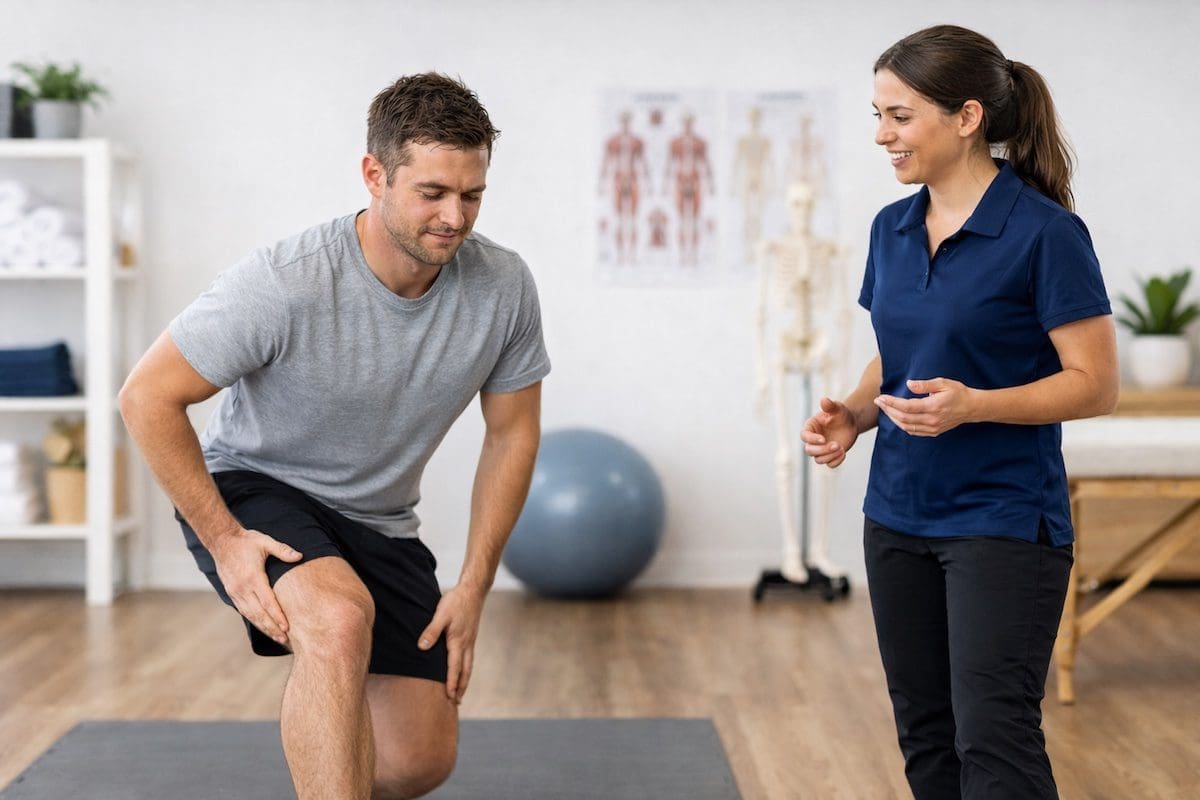
Muscle soreness is common after a new or harder training session.
DOMS commonly appears after the first challenging session rather than after every workout. In practical terms, sore muscles often reflect a sudden increase in load rather than an injury that requires complete rest.
A gradual progression in exercise intensity, volume and frequency usually helps your body develop better load tolerance while reducing larger soreness flare-ups.
When Is Post-Exercise Muscular Pain Normal?
Post-exercise muscular pain is usually a normal recovery response when it appears later, feels widespread rather than pinpointed and gradually improves over several days. Mild soreness after a demanding session can occur while your body adapts to training.
Many people describe DOMS as general muscle tenderness, stiffness or heaviness. This pattern is usually less concerning than sudden pain in one precise spot. Pain that begins during exercise, feels sharp or worsens instead of settling is less typical of DOMS.
How Does Regular Exercise Change Your Muscles?
Consistent training helps your body handle load, coordinate movement and recover between sessions. Muscles, tendons and connective tissues gradually become more tolerant of exercise. However, sudden spikes in training load can exceed that capacity and produce greater soreness.
A structured progression does not mean avoiding challenging exercise. Instead, it means allowing enough time for your body to adapt before adding more weight, distance, speed or training sessions.
How May Massage Help Muscle Soreness?
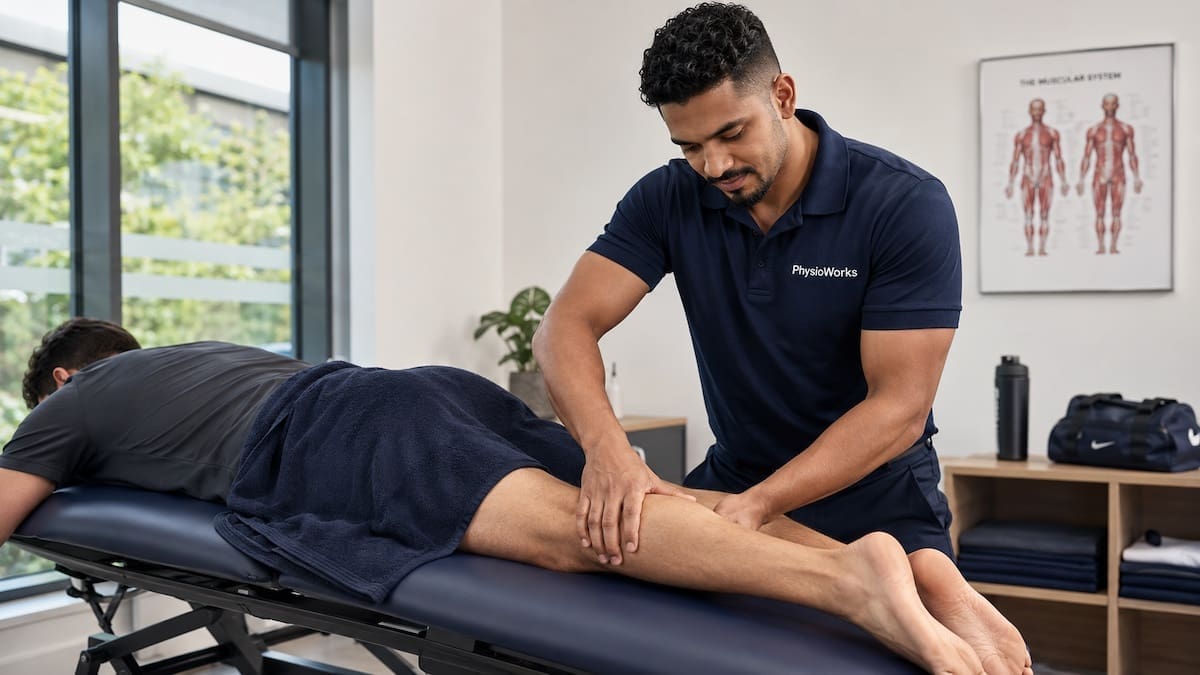
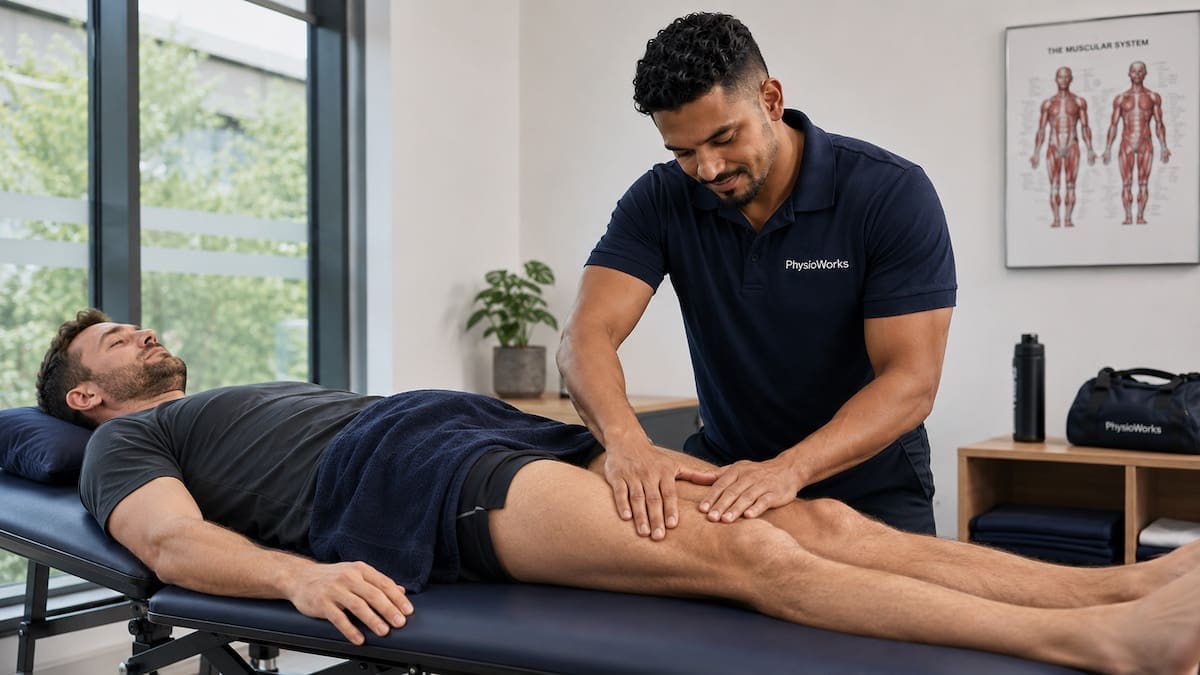
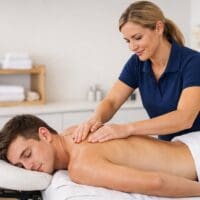
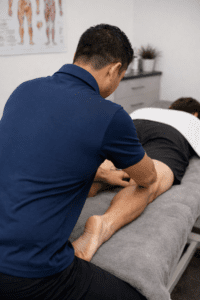
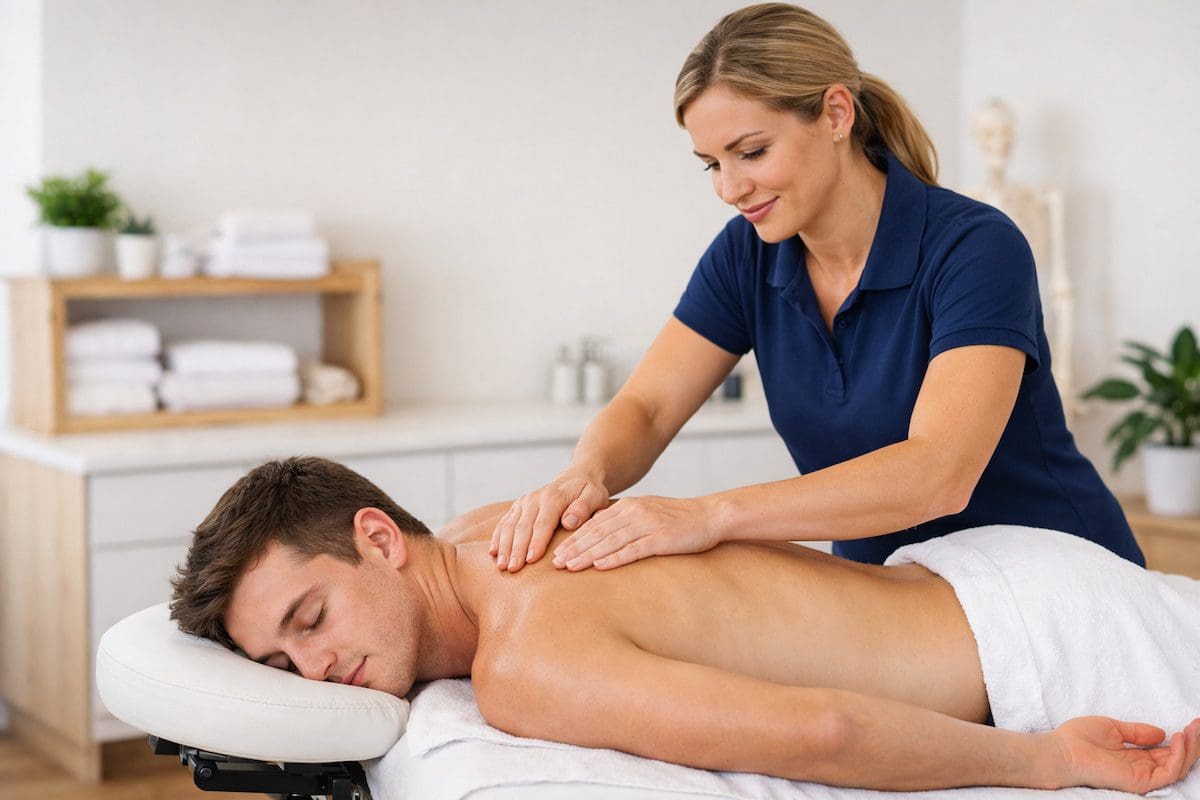
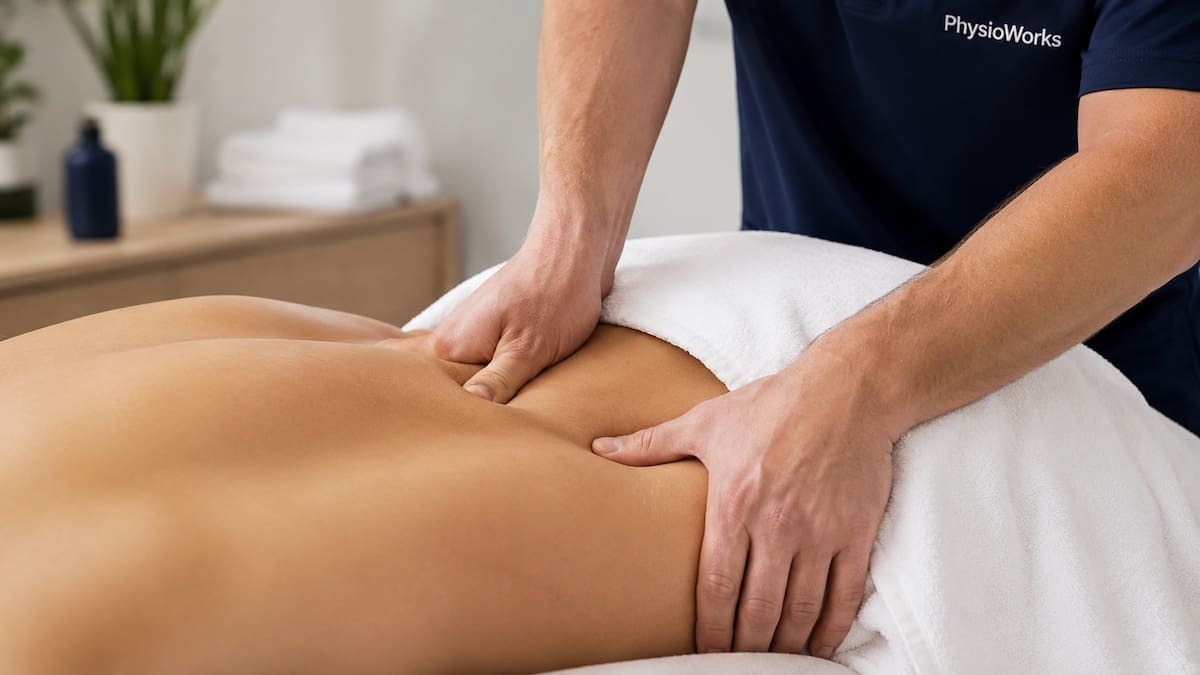
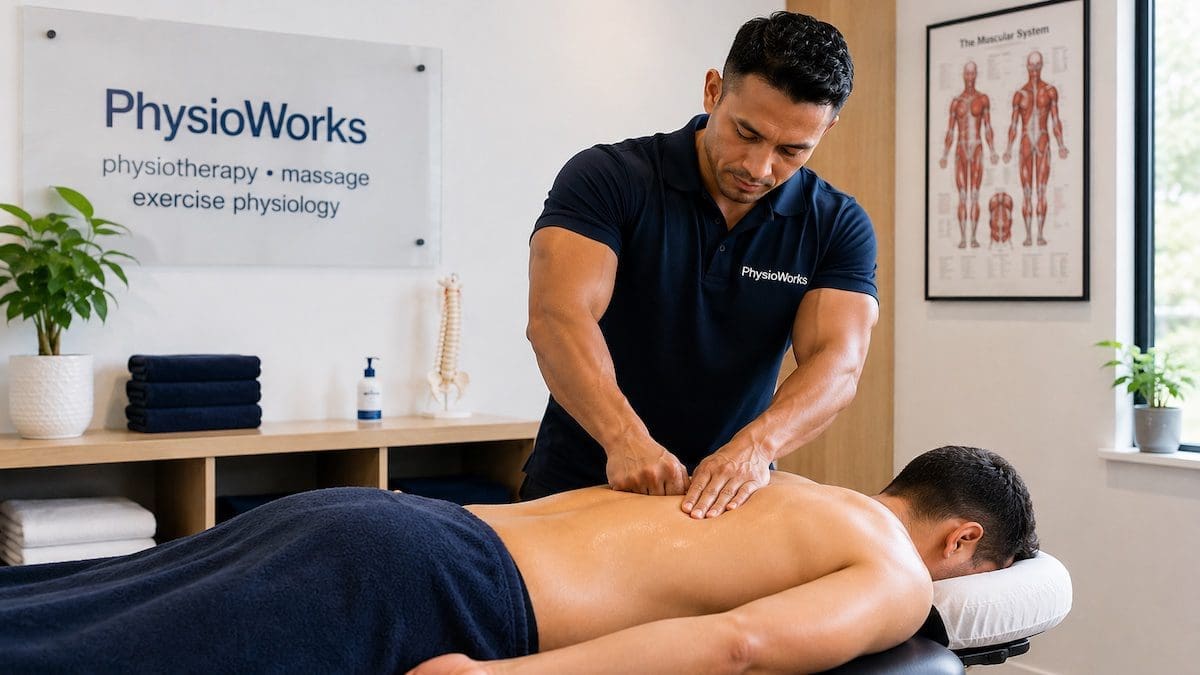
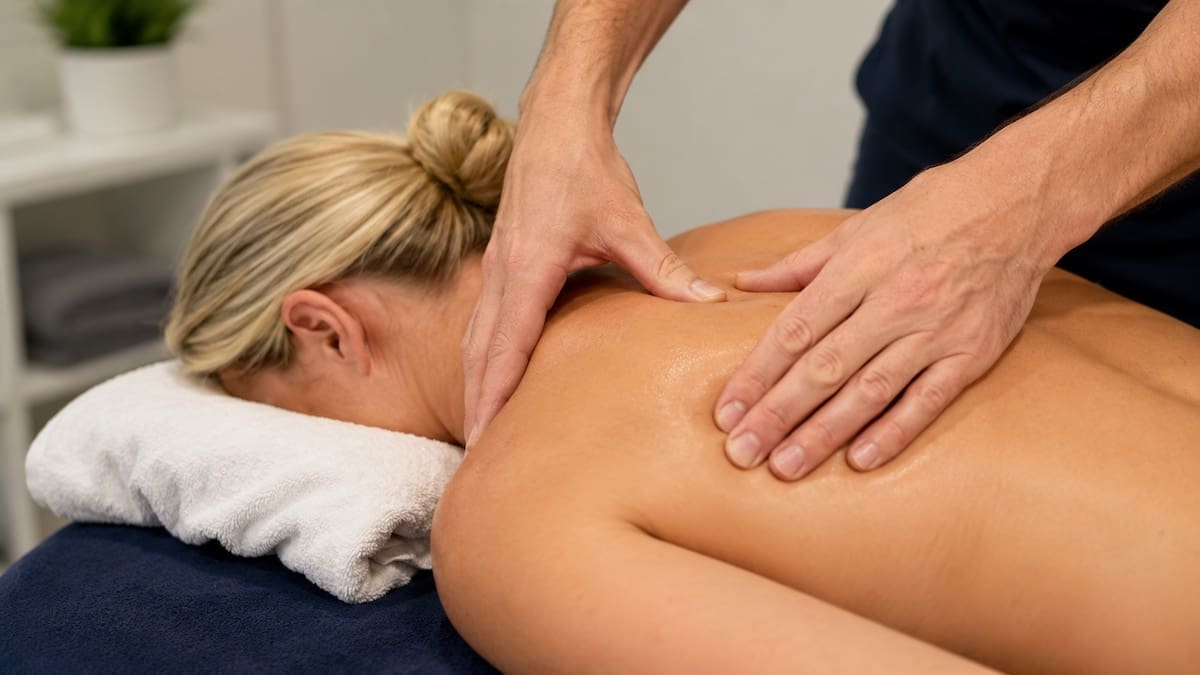
Massage may reduce the feeling of muscle soreness, tightness and fatigue after exercise. Some people also find that it improves movement comfort and confidence during recovery.
A sports recovery massage may be useful when muscles feel heavy or loaded. However, massage should support rather than replace sleep, hydration, nutrition and sensible load management.
Repeated soreness can also reflect tendon overload, joint irritation, poor recovery or a mild muscle injury. When symptoms keep returning in the same area, a physiotherapist may assess exercise technique, training progression, strength and load tolerance.
When Should You Worry About Post-Exercise Muscular Pain?
Consider an assessment when pain starts during exercise, remains sharply localised, causes weakness or limping, or appears with bruising or swelling. These features are less typical of DOMS and may suggest a muscle strain or another injury.
DOMS or Possible Injury?
More consistent with DOMS: soreness begins later, affects a broader muscle area, improves with gentle movement and settles over several days.
Consider an assessment: pain began during exercise, feels sharp or pinpointed, or comes with bruising, swelling, weakness or limping.
Muscle soreness that becomes worse each day instead of gradually improving also deserves closer attention.
What Are the Signs of Exercising Too Much?
Possible signs include soreness that does not settle between sessions, falling performance, persistent heavy legs, poor sleep, irritability and pain that repeatedly returns in the same body region.
These signs do not always mean that you must stop exercising. However, they suggest that your training program, recovery habits and week-to-week load progression may need adjustment.
Related Information
- Delayed Onset Muscle Soreness
- Muscle Pain and Injury
- How Can I Speed Up Muscle Recovery?
- Post-Run Soreness: Should You Be Concerned?
- When Is the Best Time for a Post-Event Recovery Massage?
- Common Muscle Injuries
Frequently Asked Questions
How Long Should Post-Exercise Muscular Pain Last?
DOMS often peaks between 24 and 72 hours after exercise and then settles over the next few days. Consider an assessment if the soreness remains severe, becomes worse or clearly limits walking, lifting or training after several days.
Is It Okay to Exercise With Sore Muscles?
Light movement is often reasonable when soreness is mild and behaves like DOMS. Walking, gentle cycling, mobility work or an easier exercise session may help. Avoid training hard through pain that is sharp, localised or becoming worse.
What Is the Difference Between DOMS and a Muscle Strain?
DOMS usually starts later and feels general, tender or stiff. A muscle strain more often begins during activity or shortly afterwards and hurts with contraction, stretching or loading. Bruising, swelling and clear weakness are stronger warning signs of a strain.
Can Massage Speed Up Muscle Recovery?
Massage may help some people feel less sore and move more comfortably after exercise. It can support recovery, although sleep, nutrition, hydration, load management and a gradual return to training remain important.
Should I Stretch Sore Muscles?
Gentle mobility or light stretching may feel comfortable, but aggressive stretching can irritate sensitive muscles. Aim for easy movement rather than forcing range. Reduce the stretch if it increases pain.
When Should I See a Physiotherapist?
Consider a physiotherapy assessment if pain began during exercise, remains sharply localised, causes weakness or limping, keeps returning or does not improve within several days. Assessment can help distinguish DOMS from a muscle injury or another problem.
Is DOMS a Sign of a Good Workout?
Not necessarily. DOMS can occur after a hard or unfamiliar session, but soreness is not required for progress. You can improve strength, fitness and exercise capacity without feeling sore after every workout.
How Can I Prevent Muscle Soreness After Exercise?
Progress training gradually, allow recovery between harder sessions, warm up appropriately and avoid sudden spikes in load. Good sleep and nutrition also support recovery. Repeated soreness in the same area may justify a review of exercise technique, footwear or program design.
What to Do Next
If soreness appeared later, feels general rather than sharply localised and is already easing, it is more likely to be DOMS. Reduce the training load briefly, keep moving gently and build back gradually as comfort improves.
Book an assessment if pain began during exercise, feels more precise or affects walking, lifting, gym work or sport. A physiotherapist can assess whether you are dealing with normal post-exercise muscular pain, a muscle strain or another problem and guide your next step.

Build back towards normal activity as muscle soreness settles.
Choose your clinic and appointment pathway
Select a PhysioWorks clinic to continue to live booking, an appointment request or reception assistance.


References
- Sonkodi B. Should We Void Lactate in the Pathophysiology of Delayed Onset Muscle Soreness? J Orthop Sports Phys Ther. 2022;52(12):E1-E3. doi:10.2519/jospt.2022.11298
- Guo J, Li L, Gong Y, et al. Massage alleviates delayed onset muscle soreness after strenuous exercise: a systematic review and meta-analysis. Front Physiol. 2017;8:747. doi:10.3389/fphys.2017.00747
- Davis HL, Alabed S, Chico TJA. Effect of sports massage on performance and recovery: a systematic review and meta-analysis. BMJ Open Sport Exerc Med. 2020;6(1):e000614. doi:10.1136/bmjsem-2019-000614