Myofascial Release Massage
Myofascial Release Massage Brisbane

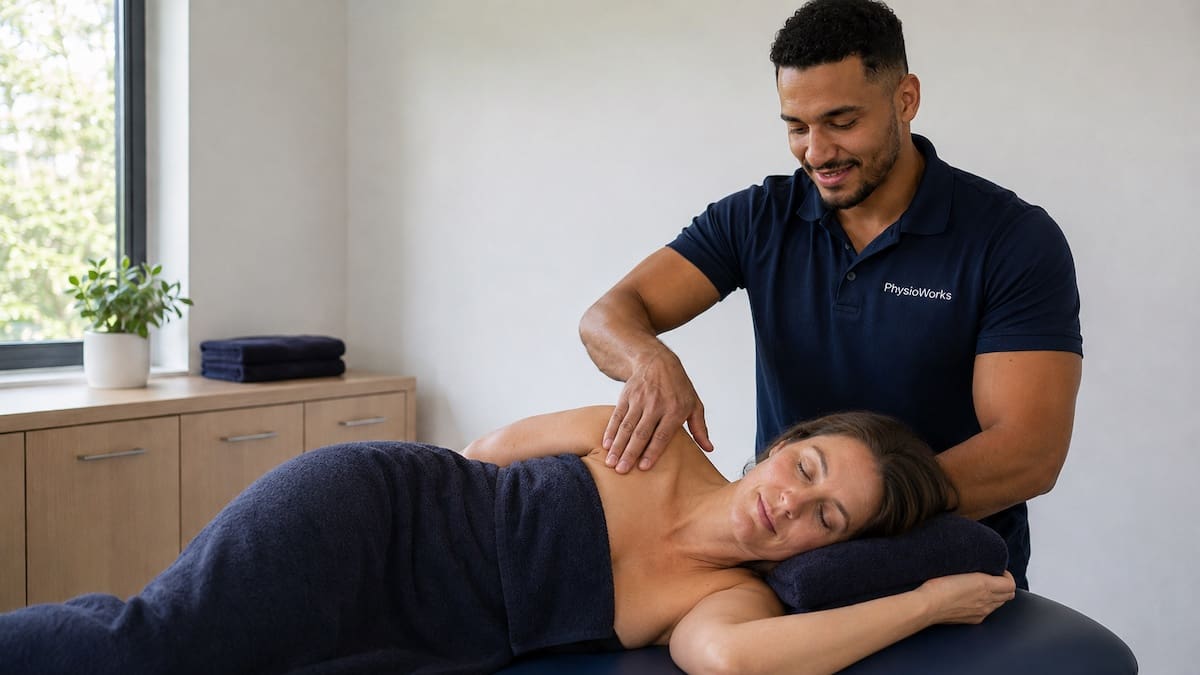
Myofascial release massage is a hands-on massage approach that uses slow, sustained pressure and gentle tissue movement. It may suit people seeking targeted treatment for areas that feel tight, sensitive or restricted.
Your massage therapist can adjust the technique and pressure according to your comfort, symptoms and goals. For other treatment styles, explore our Brisbane massage services, including remedial massage, deep tissue massage and trigger point therapy.
Quick Summary
- Uses slow, sustained pressure and gentle tissue movement
- Can target areas such as the neck, shoulders, back, hips or calves
- Pressure should remain within your comfort
- Treatment is adapted to your symptoms, preferences and goals
- Your therapist can help you decide whether another massage style may suit you better
Book a Massage Appointment
Massage is available at selected PhysioWorks clinics. Choose your preferred clinic to view current booking options.
What Is Myofascial Release Massage?
The term myofascial refers to muscles and their associated connective tissues. Myofascial release massage describes hands-on techniques that use sustained pressure, gentle stretch or slow movement through an area rather than fast massage strokes.
Your therapist does not need to use heavy pressure for treatment to feel targeted. The technique can be adjusted according to the area being treated, tissue sensitivity and your pressure preference.
Why Do People Choose Myofascial Release Massage?
People commonly consider myofascial release massage when an area feels persistently tight, stiff or uncomfortable. This may occur alongside prolonged sitting, repetitive work, sport, gym training or periods of increased physical load.
- Neck and shoulder tightness after desk work or driving
- Back stiffness associated with sitting, lifting or training
- Upper back or chest tightness
- Hip, gluteal or calf tightness after exercise
- Areas that feel sensitive or restricted during normal movement
Massage is only one option for these concerns. Persistent, worsening or unexplained symptoms may require assessment rather than repeated massage. You can also learn more about neck pain, back pain and muscle pain.
What Happens During a Myofascial Release Session?
Your therapist will ask about the area bothering you, your activity level, relevant health history, pressure preference and what you hope to achieve from the session.
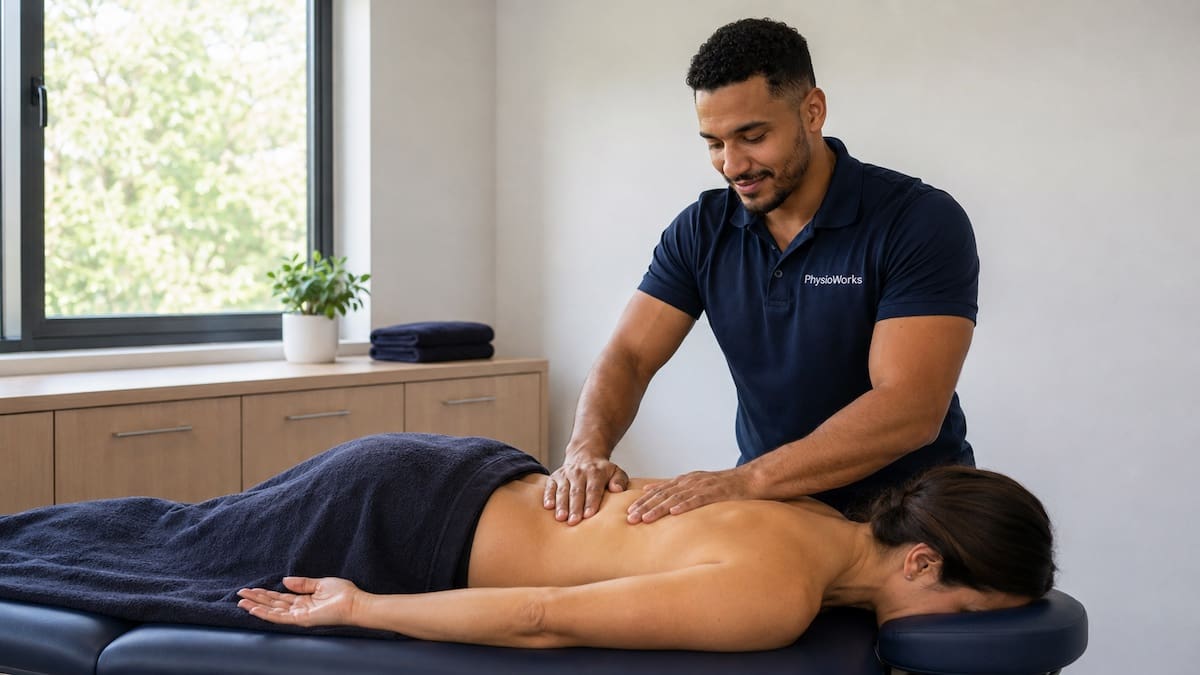
Treatment may include sustained hands-on pressure, gentle tissue stretch or slow gliding techniques. Your therapist may work directly around the area that feels tight as well as nearby regions where appropriate.
Pressure should remain tolerable. Tell your therapist if a technique feels too strong, uncomfortable or simply does not feel useful. Treatment can be modified or stopped at any time.
If movement or activity is contributing to your symptoms, you may also find our guides to body mechanics, flexibility and mobility and massage benefits useful.
Who May Consider Myofascial Release Massage?
This approach may appeal to people who want targeted hands-on treatment without necessarily using strong or rapid massage techniques.
- Office workers with neck, shoulder or upper back tightness
- Runners, gym users and active people managing muscle tightness
- People who prefer slower, sustained massage techniques
- People who find heavy massage uncomfortable
- People comparing different massage approaches for recurring stiffness
If you are unsure which style to choose, your massage therapist can discuss your goals and pressure preferences before treatment begins.
When Should Massage Be Delayed or Modified?
Massage is not appropriate for every condition or at every stage of recovery. Seek appropriate medical advice before massage if you have symptoms that may indicate a blood clot, significant unexplained swelling, fever, an infectious skin condition or a significant acute injury.
Tell your therapist about recent surgery, medications including blood thinners, pregnancy, significant bruising, skin problems or medical conditions that may affect treatment. Your therapist can modify treatment, avoid an area or recommend another form of assessment when appropriate.
For general information, see Healthdirect’s massage therapy guide.
What Does the Research Say About Myofascial Release?
Research into myofascial release has reported possible improvements in pain, movement or function in some populations, including people with chronic neck or lower back pain. However, study methods and results vary, so the evidence does not support promising a particular response for every person.
Massage may form one part of a broader approach that includes appropriate activity, exercise, recovery strategies or physiotherapy when indicated.
What Should You Do After Your Massage?
Most people can return to normal daily activity according to comfort. If the treated area feels temporarily tender, lighter activity may feel more comfortable until it settles.
Your therapist may also suggest movement, mobility or activity changes that relate to your individual presentation. Persistent or worsening symptoms should be reassessed rather than managed indefinitely with massage alone.
What to Do Next
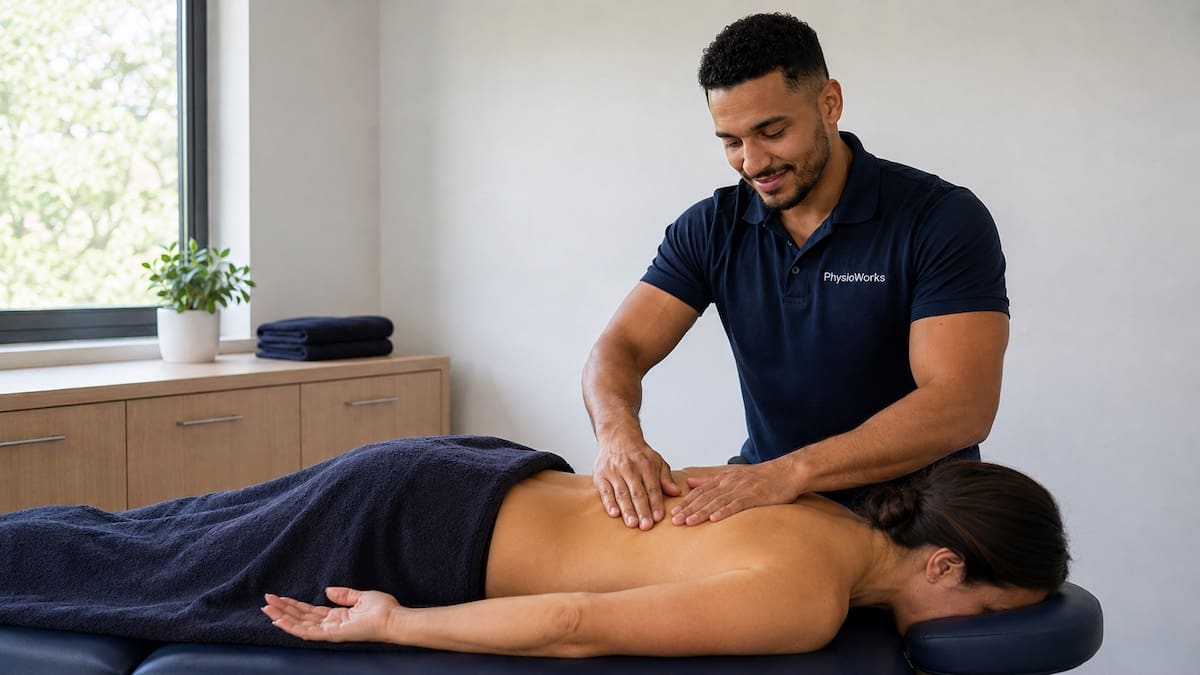
If muscle tightness or stiffness is affecting your work, exercise or everyday comfort, you can book a massage appointment and discuss whether myofascial release techniques suit your needs.
Alternatively, compare back massage, neck massage, leg massage or sports massage.
Massage Satisfaction Promise
We aim to provide a consistently high standard of care. If, within the first 30 minutes of your massage, you feel the treatment is not meeting your expectations, please let your massage therapist know. You may choose to stop the session at that point, with no charge applied.
Myofascial Release Massage FAQs
What is myofascial release massage?
Myofascial release massage is a hands-on approach that uses sustained pressure, gentle tissue stretch or slow movement. Techniques are adjusted according to the area being treated, your comfort and your goals.
Is myofascial release massage painful?
It may feel firm or intense in sensitive areas, but pressure should remain tolerable. Tell your therapist if you are uncomfortable so the technique or pressure can be adjusted.
How many sessions will I need?
There is no standard number of sessions. This depends on why you are seeking massage, your goals, how you respond and whether other management may be more appropriate.
Can myofascial release massage help posture-related tightness?
Some people choose myofascial release massage for tightness associated with prolonged sitting, driving or repetitive work. Regular movement and appropriate activity changes may also be useful when these factors contribute to recurring symptoms.
What should I do after a session?
Most people can continue normal daily activity according to comfort. If the treated area feels temporarily tender, lighter activity may feel more comfortable until it settles.
Related Articles
- Remedial Massage
- Deep Tissue Massage Brisbane
- Trigger Point Therapy
- Massage Benefits
- Flexibility and Mobility
References
- Guo Y, Lv X, Zhou Y, et al. Myofascial release for the treatment of pain and dysfunction in patients with chronic mechanical neck pain: systematic review and meta-analysis of randomised controlled trials. Clin Rehabil. 2023;37(4):478-493.
- Wu Z, Wang Y, Ye X, et al. Myofascial release for chronic low back pain: a systematic review and meta-analysis. Front Med (Lausanne). 2021;8:697986.
- Gugliotti M, Rothstein A, Badash E, et al. The immediate effects of myofascial release on lumbar range of motion and flexibility in healthy individuals: a double-blind, randomised sham-controlled trial. J Bodyw Mov Ther. 2025;42:645-650.
Brisbane Massage Therapists
Choose a massage therapist and book a session that matches your needs, pressure preference and schedule.
Remedial Massage Therapists
Our remedial massage therapists help relieve muscle tension, improve flexibility, reduce soft tissue pain, and support recovery from training loads, desk posture, and everyday physical stress.
Debbie Cox

Ashish Shrestha
Courtney Burgin

Massage Products
These muscle and soft tissue products are commonly used by our remedial massage therapists and physiotherapists to relax or loosen muscles.
- Pain Management, Christmas Gift Ideas, Liniments & Gels, Product Search
ActivFlex Pain Relief Gel
$27.95 – $42.95Select optionsQuick View -

- Christmas Gift Ideas, Exercise Equipment, Gift Ideas, Massage Tools, Pain Management
Pocket Physio MAX
$24.95Select optionsQuick View -
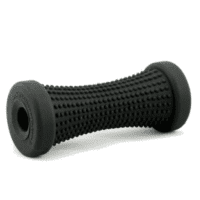
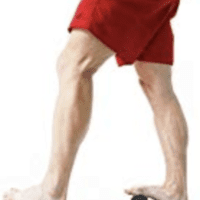 Gift Ideas, Christmas Gift Ideas, Exercise Equipment, Foot, Knee, Massage Tools, Pain Management
Footeez Lockeroom
$45.00Add to cartQuick View -
-
- Liniments & Gels, Massage Liniments, Pain Management
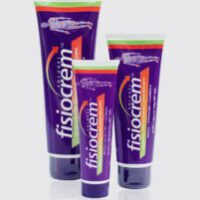
Fisiocrem
$16.95 – $39.95Select optionsQuick View -


-


-
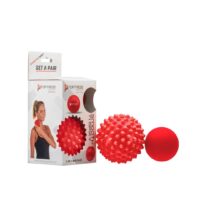 Exercise Equipment, Gift Ideas, Massage Tools
Smooth n Spiky Massage Balls (2 Pack)
$20.00Select optionsQuick View -
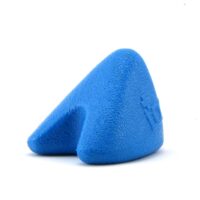
 Exercise Equipment, Back, Elbow, Foot, Massage Tools, Shoulder
Pocket Physio
$14.95Select optionsQuick View