
Trigger Point Therapy
Trigger Point Therapy Brisbane
Targeted remedial massage using controlled pressure for sensitive muscle points, recurring tightness and muscle-related discomfort.


Targeted trigger point therapy for upper trapezius and shoulder muscle tension.
Trigger point therapy is a targeted form of remedial massage that applies controlled pressure to sensitive points within muscle tissue. It may help reduce local tenderness, muscle guarding and movement discomfort when muscular tension contributes to your symptoms.
At PhysioWorks, trigger point therapy may form part of massage care for muscle knots, referred discomfort, neck and shoulder tension, back discomfort and training-related muscle soreness. Treatment is adjusted to your comfort, symptoms and goals.
Book a Massage Appointment
Massage is available at selected PhysioWorks clinics. Choose your preferred clinic to view current booking options.
What Is Trigger Point Therapy?
Trigger point therapy involves applying direct, controlled pressure to sensitive points in muscle tissue. These tender areas are often called myofascial trigger points. Pressure may reproduce local discomfort or a familiar sensation in another area.
Trigger points may become sensitive following muscle overload, repeated activity, sustained positions, trauma, poor recovery or protective muscle guarding. For example, tenderness around the upper trapezius may occur alongside neck tension, shoulder discomfort or some headache presentations.
However, a tender muscle point does not always explain the full problem. Similar symptoms may arise from joints, nerves, tendons or broader pain sensitivity. Your practitioner should consider your symptoms, activity, movement and health history before deciding whether trigger point therapy is appropriate.
For more background, read what a trigger point is and why it may hurt.
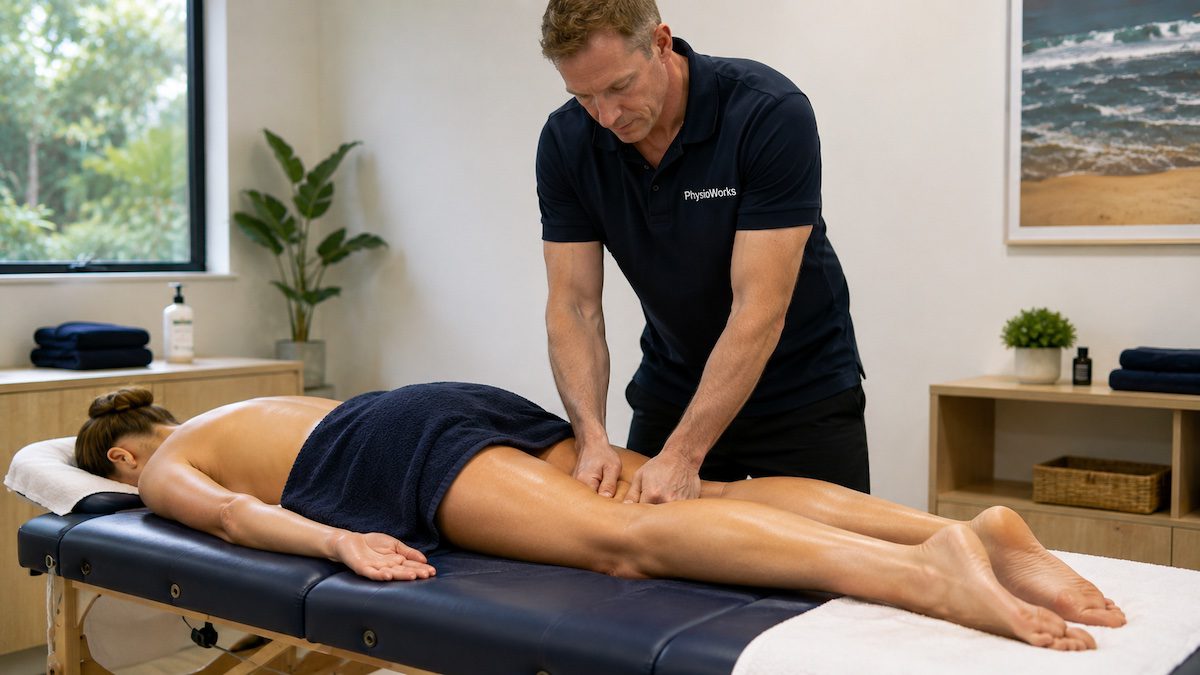
Targeted pressure may form part of treatment for local hamstring muscle tenderness.
How May Trigger Point Therapy Help Muscle Knots?
Trigger point therapy uses steady, tolerable pressure over a sensitive muscle area. This may temporarily reduce local tenderness or guarding, allowing some people to move more comfortably.
People often consider trigger point therapy when a tight or tender area keeps returning despite stretching, rest or general massage. A practitioner can discuss whether the discomfort appears predominantly muscular or whether physiotherapy or medical assessment may be more appropriate.
What Symptoms May Respond to Trigger Point Therapy?
Trigger point therapy may be worth considering when muscle tension appears to contribute to symptoms such as:
- Tight neck or shoulder muscles
- Upper-back tension associated with desk work or training
- A local muscle knot that feels tender when pressed
- A familiar ache that refers into a nearby area
- Reduced movement comfort or flexibility
- Muscle soreness following sport, gym exercise or repetitive activity
Massage may form part of care when muscular tenderness accompanies muscle pain, neck pain, back pain or shoulder pain.
What Happens During Trigger Point Therapy?
Your practitioner will usually ask about your symptoms, activities, medical history, treatment preferences and goals. They may examine the tender area, nearby muscle tissue and relevant movement before selecting treatment techniques.
Treatment may include sustained pressure, slow soft tissue techniques and broader remedial massage. Pressure should remain tolerable. You may feel a strong, dull or familiar ache, but treatment should not feel sharp, unsafe or excessive.
You can ask questions, request a change in pressure or position, decline treatment of an area or stop treatment at any time. Tell your practitioner if treatment causes unexpected symptoms, pins and needles, numbness, dizziness, nausea or increasing pain.
Is Trigger Point Therapy the Same as Deep Tissue Massage?
No. Trigger point therapy is generally more targeted than deep tissue massage. Deep tissue massage usually applies firmer techniques across broader muscle areas, while trigger point therapy focuses on selected sensitive points that may reproduce familiar symptoms.
A remedial massage appointment may include both approaches when appropriate. People who prefer firmer treatment across larger muscle regions can also learn more about deep tissue massage.
Can Trigger Point Therapy Work With Physiotherapy?
Yes. Trigger point therapy may complement physiotherapy when pain, stiffness or muscle guarding affects movement. Massage may help with short-term comfort, while physiotherapy can assess factors such as joint movement, nerve sensitivity, strength, workload and movement capacity.
When appropriate, care may combine hands-on treatment with activity modification, mobility work, strengthening and a gradual return to work, training or sport.
What About Dry Needling?
Dry needling differs from manual trigger point therapy. It uses a fine sterile needle rather than hand pressure and is generally performed as part of physiotherapy after appropriate assessment and consent.
Research suggests dry needling may provide short-term improvement for some myofascial trigger point presentations.3 However, it is not required for every muscle knot or pain problem.
When May Trigger Point Therapy Be Unsuitable?
Massage does not suit every presentation. Seek medical advice first if you have:
- Unexplained swelling, redness or fever
- Recent significant trauma or a suspected fracture
- A skin or systemic infection
- Unexplained weight loss or severe night pain
- A history of cancer with new or unexplained symptoms
- New weakness or numbness
- New changes to bladder or bowel control
- Chest pain, breathing difficulty or symptoms of a medical emergency
Your practitioner may also modify or avoid firm pressure if you take anticoagulant medication, bruise easily, have an acute inflammatory condition, reduced sensation, fragile skin, recent surgery or another health condition that affects treatment safety.
What Does Research Say About Trigger Point Therapy?
Research suggests manual trigger point techniques may improve pain or range of motion for some people with myofascial trigger points.1,2,4 However, study methods and treatment approaches vary. Trigger point therapy is generally better considered as one possible part of broader conservative management rather than a stand-alone solution.
Current research also recognises that muscle pain can involve local tissue sensitivity, referred symptoms and changes in how the nervous system processes sensation. Assessment should therefore consider the wider clinical presentation.
For a broader clinical overview, see the myofascial pain syndrome summary from StatPearls.5
Trigger Point Therapy FAQs
Is trigger point therapy good for muscle knots?
Trigger point therapy may help some muscle knots by applying controlled pressure to sensitive muscle points. Some people experience less tenderness or easier movement afterwards, particularly when massage forms part of a broader management plan.
Does trigger point therapy hurt?
Trigger point therapy can feel uncomfortable, but it should remain tolerable. You may feel a strong ache or familiar referred sensation while the practitioner treats the area. Pressure should be adjusted according to your response.
How many trigger point therapy sessions will I need?
There is no fixed number. It depends on your symptoms, how long they have been present, contributing factors and how you respond to treatment. Recurring symptoms may require a broader management approach rather than repeated treatment of one tender point.
Can trigger point therapy help neck and shoulder tension?
Trigger point therapy may help when muscle tenderness or guarding contributes to neck and shoulder tension. However, joints, nerves, workload, sleep, activity and other factors may also influence symptoms.
Is trigger point therapy safe?
Trigger point therapy is generally considered low risk when an appropriately trained practitioner screens for relevant health issues and adjusts treatment to your response. It may not suit some medical conditions or acute injuries.
What to Do Next
If muscle knots, recurring tightness or soft tissue discomfort affect your movement, work or training, trigger point therapy may be worth considering. A PhysioWorks massage practitioner can discuss your symptoms, treatment preferences and goals before selecting an appropriate approach.
Choose a massage appointment when you want targeted help with muscular tension, soreness or training-related tightness. Consider physiotherapy or medical assessment first when symptoms involve significant injury, neurological symptoms, marked weakness, substantial joint restriction or uncertainty about the cause.
Research & References
- Guzmán-Pavón MJ, Martínez-Aguirre C, Fernández-de-Las-Peñas C, et al. Effect of manual therapy interventions on range of motion among individuals with myofascial trigger points: a systematic review and meta-analysis. Pain Med. 2022;23(1):137–143.
- Müggenborg F, Santacatterina A, Ceusters W, et al. Effectiveness of manual trigger point therapy in patients with orofacial myofascial pain: a systematic review. J Oral Rehabil. 2023;50(5):481–493.
- Lucena-Anton D, Rodríguez-González M, Moral-Munoz JA, Lucena-Anton J, Salazar A. Effectiveness of dry needling of myofascial trigger points in the triceps surae muscles: a randomised clinical trial. Int J Environ Res Public Health. 2022;19(19):12462.
- Zhai T, Deng S, Wu H, et al. A comprehensive review of trigger point theory and muscle pain: recent advances in diagnosis and management. Front Med (Lausanne). 2024;11:1433070.
- Dua A, Alvarado AM, Staud R. Myofascial pain syndrome. In: StatPearls. StatPearls Publishing; 2025.
