
TMJ assessment during physiotherapy treatment
TMJ Treatment: Effective Help for Jaw Pain and TMD


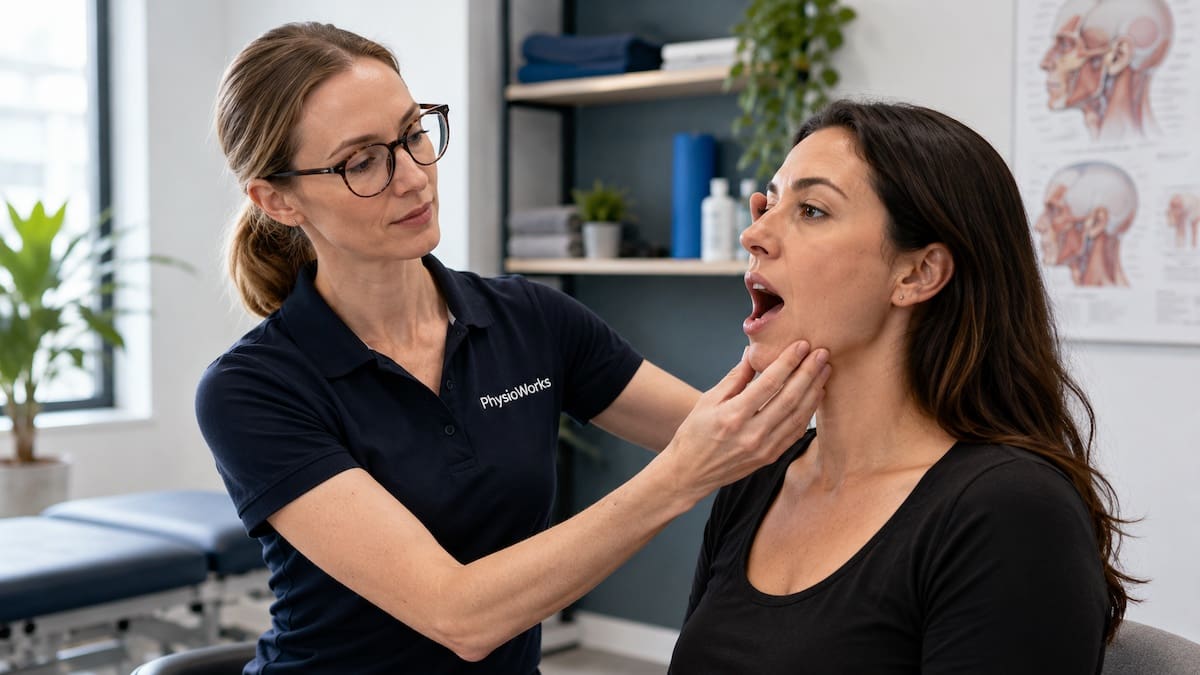
TMJ treatment may help jaw pain, clicking, stiffness and jaw muscle tension. It is often used when temporomandibular disorder, also called TMD, affects how your jaw opens, closes or loads during chewing.
Many people improve with simple steps first. These may include physio, jaw exercises, load changes, habit tips and, when needed, dental or medical care. If your symptoms involve painful chewing, morning jaw tightness, headaches, locking or neck tension, start with the broader jaw pain cluster. This page also links to TMD and TMJ physio treatment.
Quick Answer: What Is the Best First Step for TMJ Treatment?
TMJ treatment usually starts with gentle care. A physio may check jaw movement, neck movement, muscle tension, habits and chewing load. Dental review may also be needed if you have tooth wear, bite change, tooth pain, major locking, trauma or possible infection.
Common Signs TMJ Treatment May Help
- Jaw pain, tightness or fatigue with chewing or talking
- Clicking, popping or catching in the jaw joint
- Reduced mouth opening or uneven jaw movement
- TMJ headache, ear discomfort or facial ache
- Neck tension, clenching or grinding that keeps returning
What Is TMD?
TMD is a group of jaw joint and jaw muscle problems. It may cause pain, stiffness, clicking, locking or reduced movement. It can affect eating, talking, yawning and sleep. It can also overlap with neck pain and headache patterns.
TMD is not one single problem. Some people have mainly muscle pain. Others have joint irritation, disc movement issues, arthritis or a mixed pattern. A clear assessment helps match the TMJ treatment plan to the main driver.
Common Causes of TMD
TMD is often mixed. Several factors may build at the same time. Jaw overload, muscle tension, poor sleep, stress and neck stiffness can all play a role.
- Jaw clenching or teeth grinding, also called bruxism
- Chewing gum, tough foods or long dental visits
- Joint irritation, disc movement issues or jaw arthritis
- Stress, poor sleep and muscle guarding
- Upper neck stiffness or posture strain
- Past trauma, dental work or long mouth opening
Jaw symptoms can also sit within headache, neck and jaw pain patterns. That is why good care often looks beyond the jaw alone.
What Symptoms Suggest You May Need TMJ Treatment?
You may need TMJ treatment if jaw symptoms keep coming back, affect eating or talking, or spread into your head, face or neck. A painless click with normal movement may only need advice. Painful clicking, locking or reduced opening should be assessed.
Common symptoms include:
- Jaw pain near the joint or chewing muscles
- Pain with biting, chewing, yawning or singing
- Clicking, popping, grinding or poor tracking
- Hard opening or jaw drift to one side
- Morning jaw tightness from clenching or grinding
- Earache, facial ache or headaches linked to the jaw
Which Type of TMJ Problem Might You Have?
A proper assessment is still the best way to find the main driver. This guide can help you decide what to do next.
Muscle-Dominant Jaw Pain
If your jaw feels tight, tired or sore with chewing, the problem may be muscle-driven. It may also worsen with stress or clenching. These cases often respond to jaw control exercises, load changes and habit tips.
Clicking Without Pain
If your jaw clicks but opens well and does not hurt, it may only need advice and load control. Not every click needs active treatment.
Clicking With Pain or Reduced Opening
If clicking hurts, catches or limits opening, treatment is more likely to help. A physio can check whether the issue is muscle, joint, disc-related or mixed.
Locking or Major Restriction
If your jaw locks open or closed, or you suddenly cannot open well, seek prompt care. These cases may need shared care and sometimes imaging.
Bite or Tooth Concerns
If you notice tooth wear, bite change or tooth pain, a dentist should also be involved. Many people do best with shared physio and dental care.
How Is TMJ Dysfunction Assessed?
TMJ dysfunction is usually assessed with a clinical exam. Your physio may check jaw opening, side movement, joint sounds, muscle tenderness, neck movement, posture and habits such as clenching, nail biting or chewing overload.
A dentist may be needed when tooth wear, bite issues or splint planning are relevant. Imaging is not routine for every case. It may be considered after trauma, with long-lasting locking, or when the joint picture is more complex.
How Can Physiotherapy Help TMJ Treatment?
Physio may help TMJ treatment by improving jaw control, easing overload and reducing muscle guarding. It may also address neck or posture factors. Current guidelines support simple, conservative care as the usual first step for many TMD cases.
Your plan may include a mix of care based on your assessment.
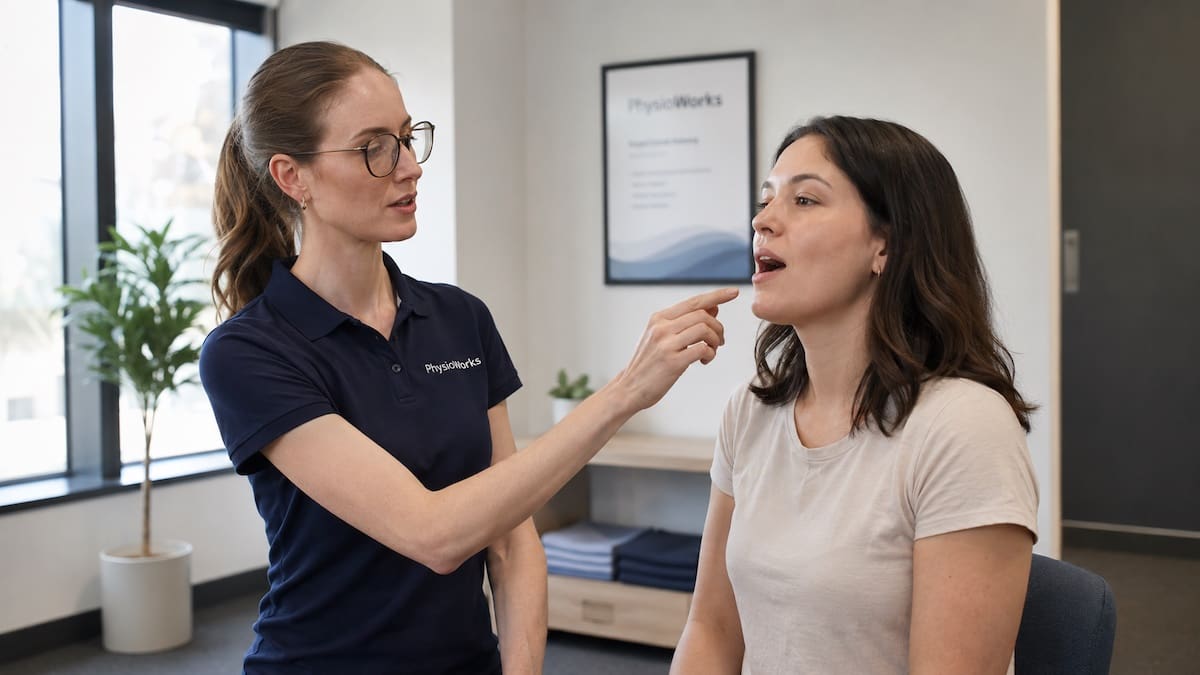
Guided jaw control exercise for TMJ treatment
1. Education and Load Management
You may be advised to reduce hard chewing, wide yawning, long mouth opening or daytime clenching. This gives the joint and muscles time to settle.
2. Jaw Mobility and Control Exercises
Jaw exercises may help smoother opening and closing. They may also reduce guarding. Some people later add gentle strength work once pain settles.
3. Neck and Upper-Quarter Treatment
The jaw does not work alone. Many plans include the upper neck and posture system because neck pain and jaw pain often overlap. Some people may also benefit from neck strengthening.
4. Manual Therapy
Manual therapy may help muscle tenderness, joint stiffness and movement limits. Treatment may include soft tissue work, joint mobilisation and neck care where suitable.
5. Other Care When Needed
Some people may also benefit from dry needling, sleep advice, relaxation tips or shared care with a dentist. For more detail, see TMJ physio treatment.
Should You See a Physio or Dentist First?
Choose physio first if your main issue is jaw movement, muscle pain, neck stiffness, posture strain or load sensitivity. Choose dental care first if you have tooth pain, bite change, tooth wear, swelling, infection signs or likely splint needs. Shared care is often useful.
What Should You Avoid if Your Jaw Is Irritated?
If your jaw is flared up, reduce repeated strain for a short time. This does not mean stopping normal jaw use forever. It means calming the area first, then building tolerance again.
- Avoid chewing gum
- Limit very hard, chewy or crunchy foods for a short time
- Try not to force wide yawning
- Keep your teeth apart at rest to reduce clenching
- Avoid leaning on your jaw
When Should Jaw Pain Also Be Checked by a Dentist or Doctor?
Jaw pain should also be checked by a dentist or doctor when you have tooth pain, bite change, tooth wear, infection signs, major trauma, persistent locking or symptoms that do not fit a simple muscle or joint pattern.
Jaw Pain Red Flags
Seek prompt medical or dental review if you have sudden jaw locking that will not release, major facial trauma, severe swelling, fever, infection signs, numbness or unexplained weight loss. These signs need more than routine TMJ treatment.
FAQs About TMJ Treatment
Can TMJ Treatment Help Jaw Clicking?
TMJ treatment may help when clicking is linked to poor control, muscle tension or overload. A painless click with normal movement may only need advice. Painful clicking, catching or locking should be assessed.
How Long Does TMJ Treatment Take to Work?
This depends on the cause, symptom time and daily habits. Mild muscle-driven cases may improve within a few weeks. Longer-lasting or mixed problems often need a steadier plan and review.
Can Stress Make TMJ Symptoms Worse?
Yes. Stress can increase clenching, muscle guarding, poor sleep and pain sensitivity. This does not mean the pain is “just stress”. It means stress control can be one useful part of care.
Should I See a Physio or Dentist for TMD?
Many people benefit from both. Physios help with jaw movement, muscle pain, neck links and load control. Dentists help when bite, splints, tooth wear or dental causes need review.
Is Imaging Needed for TMJ Dysfunction?
Not usually. Many cases are assessed in the clinic first. Imaging may be considered after trauma, with long-lasting locking, marked restriction or possible joint changes.
Can Neck Treatment Help Jaw Pain?
Yes, in some cases. Jaw pain and neck dysfunction often overlap. This is more likely when headaches, posture strain or upper neck stiffness are also present.
Related PhysioWorks Articles
- Jaw Pain
- Temporomandibular Disorder (TMD)
- TMJ Treatment and Jaw Pain Physio
- TMJ Headache
- Headache, Neck and Jaw Pain
- Neck Pain
- PhysioWorks Services
What Should You Do Next?
If jaw pain keeps coming back, or chewing and talking feel harder than they should, a targeted assessment can help. Your physio can check whether the main driver is muscle, joint, neck, bite-related or mixed.
PhysioWorks can assess your jaw, neck and movement pattern. You can then start a practical plan. If your symptoms need dental or medical care, your clinician can guide that step early.
Choose your clinic and appointment pathway
Select a PhysioWorks clinic to continue to live booking, an appointment request or reception assistance.


References
- Busse JW, Casassus R, Carrasco-Labra A, et al. Management of chronic pain associated with temporomandibular disorders: a clinical practice guideline. BMJ. 2023;383:e076227. doi:10.1136/bmj-2023-076227
- Ooi K, Nishiyama A, Yuasa H, et al. Clinical practice guidelines in primary treatment for temporomandibular disorders: The Japanese Society for the Temporomandibular Joint, 2023 edition. J Prosthodont Res. 2025;69(4):608-617. doi:10.2186/jpr.JPR_D_24_00168
- Tran C, Ghahreman K, Huppa C, Gallagher JE. Management of temporomandibular disorders: a rapid review of systematic reviews and guidelines. Int J Oral Maxillofac Surg. 2022;51(9):1211-1225. doi:10.1016/j.ijom.2021.11.009
- Mortazavi N, Khaki N, Sharifian MR, Vossoughi M. Is bruxism associated with temporomandibular joint disorders? A systematic review and meta-analysis. Br Dent J. 2023. doi:10.1038/s41415-023-6094-3
