


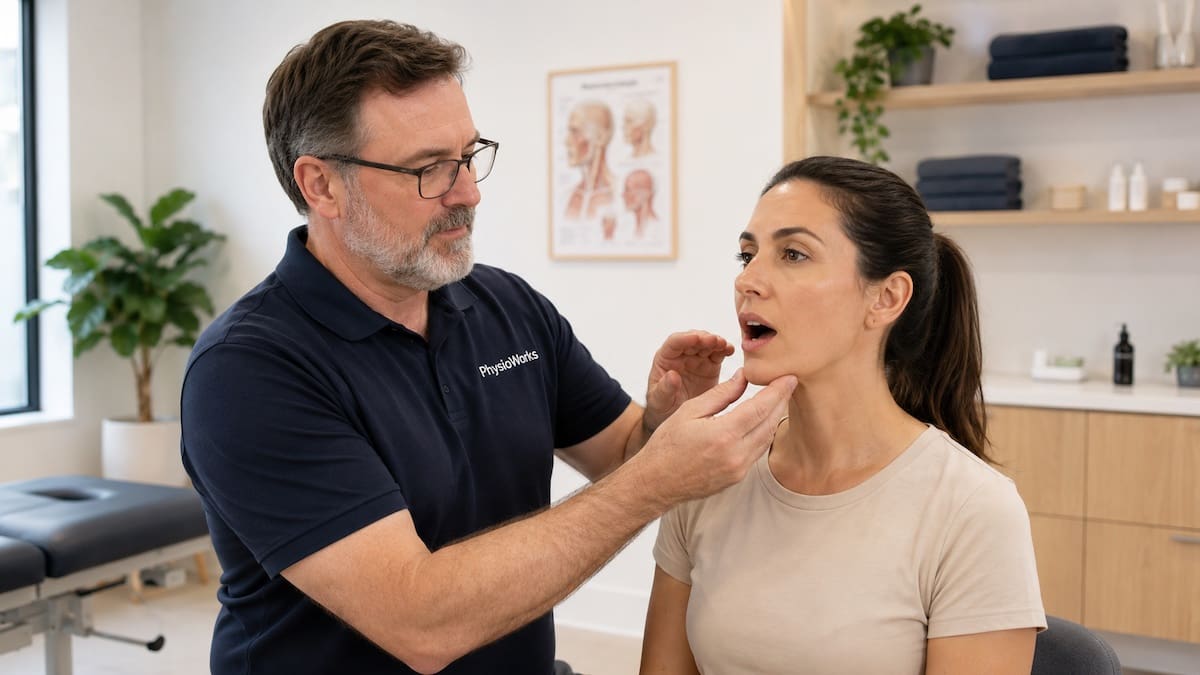
TMJ treatment focuses on reducing jaw pain, restoring normal jaw movement, and addressing contributing factors such as muscle tension, posture, clenching, and joint control. TMJ-related symptoms often overlap with temporomandibular dysfunction (TMD), jaw pain, TMJ-related headaches, and neck pain.
Many people seek physiotherapy when jaw pain, clicking, headaches, or restricted mouth opening affect chewing, speaking, sleep, work, or exercise. Early assessment can help identify whether symptoms are mainly linked with jaw control, muscle tension, neck stiffness, dental loading, or a mix of factors.
TMJ treatment addresses problems affecting the temporomandibular joint and surrounding jaw muscles. These problems are commonly grouped under temporomandibular dysfunction (TMD). Treatment aims to settle pain, improve jaw coordination, and reduce strain during daily tasks such as talking, chewing, yawning, and prolonged desk work.
TMJ dysfunction may develop due to jaw overload, teeth clenching or grinding, trauma, arthritis, or prolonged muscle tension. Head, neck, and jaw posture may also play a role. Stress-related muscle guarding can increase jaw tightness and make symptoms harder to settle.
A physiotherapist will usually assess jaw movement, muscle tone, posture, and neck contribution. This may include checking mouth opening, jaw tracking, joint tenderness, muscle sensitivity, and neck movement. Dentists may assess bite alignment, tooth wear, and clenching signs. Imaging such as X-ray or MRI is occasionally used when symptoms persist or joint structure needs review.
For a broader overview of symptom patterns and causes, see our guide to temporomandibular dysfunction (TMD).
A physiotherapy assessment may help when jaw symptoms affect chewing, speaking, work posture, sleep, or exercise.
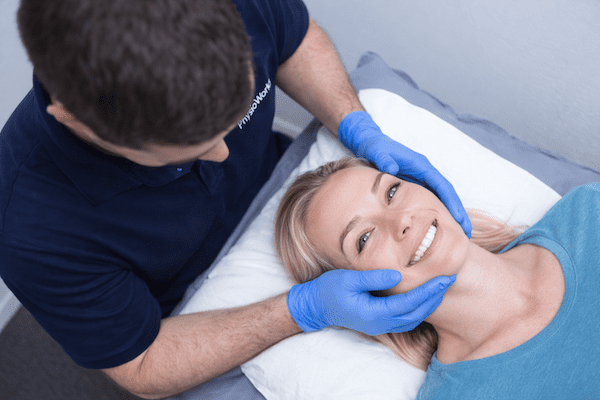
TMJ assessment can identify jaw control, joint, muscle, and neck contributors.
Physiotherapy for TMJ dysfunction usually combines education, jaw movement retraining, muscle relaxation strategies, and neck-related treatment where relevant. The aim is to reduce irritation, improve jaw control, and help you return to normal daily function with less pain.
Hands-on techniques may help reduce muscle tension and joint stiffness. Treatment may include soft tissue techniques, joint mobilisation, and targeted neck treatment when the neck contributes to jaw symptoms.
Specific exercises aim to restore smooth jaw movement and improve muscle coordination. Your physiotherapist may guide controlled opening, side-to-side movement, relaxation drills, and graded strengthening where appropriate.
Head, neck, and jaw posture can influence TMJ loading. Exercises often focus on reducing sustained forward head posture, improving neck control, and limiting jaw overuse patterns during desk work, study, and screen time.
Movement retraining may help normalise jaw control and reduce protective muscle guarding. This can be useful when the jaw deviates, clicks painfully, or feels difficult to control during opening and closing.
Dry needling or acupuncture may help selected people when muscular pain dominates symptoms. Your physiotherapist will discuss whether these options suit your presentation, goals, and comfort level.
Recent clinical research supports conservative management as a first-line approach for many TMJ conditions. Exercise-based therapy, manual techniques, education, and shared dental care are commonly considered before invasive options. Research also highlights that temporomandibular disorders can involve joint, muscle, behavioural, and pain-system factors, so care often works best when it matches the person’s presentation.
Consider physiotherapy when jaw pain is linked with restricted movement, clicking with pain, neck stiffness, headaches, posture, muscle tension, or difficulty controlling jaw movement.
Consider dental review when you notice clenching, grinding, tooth wear, bite discomfort, morning jaw tightness, or symptoms that worsen overnight.
Many people benefit from both. Your physiotherapist may recommend dental input when bite loading, grinding, or splint options need review.
Dental care may be useful when clenching, grinding, bite loading, or dental wear contributes to TMJ symptoms. A dentist may discuss options such as:
After TMJ surgery, physiotherapy may assist with restoring jaw mobility, improving muscle control, and progressing functional movement in a graded manner. Your surgeon’s protocol and post-operative restrictions should guide early rehabilitation.
Many TMJ cases benefit from shared care between physiotherapists and dentists. Physiotherapy can address jaw movement, neck contribution, and muscle control. Dental care can address clenching, bite-related loading, dental wear, and splint options. This combined approach may be useful for persistent, complex, or recurring symptoms.
Treatment depends on the cause of your jaw pain. Many people start with conservative care such as education, jaw exercises, posture changes, manual therapy, and dental review where clenching or bite loading contributes.
Physiotherapy may help when jaw clicking is linked with pain, restricted opening, muscle tension, or poor jaw control. Clicking without pain may not always need treatment, but painful or worsening clicking should be assessed.
TMJ dysfunction may cause jaw pain, clicking, locking, restricted mouth opening, facial pain, headaches, or ear discomfort. A physiotherapist can assess jaw movement, muscle tenderness, neck contribution, and symptom behaviour.
Yes. Neck stiffness, posture, muscle tension, and headache patterns can overlap with jaw symptoms. This is why a TMJ assessment often includes the jaw, neck, upper back, and daily posture habits.
Consider dental review when you notice tooth grinding, clenching, tooth wear, morning jaw tightness, bite discomfort, or symptoms that worsen overnight. A dentist may assess whether a splint or other dental option is appropriate.
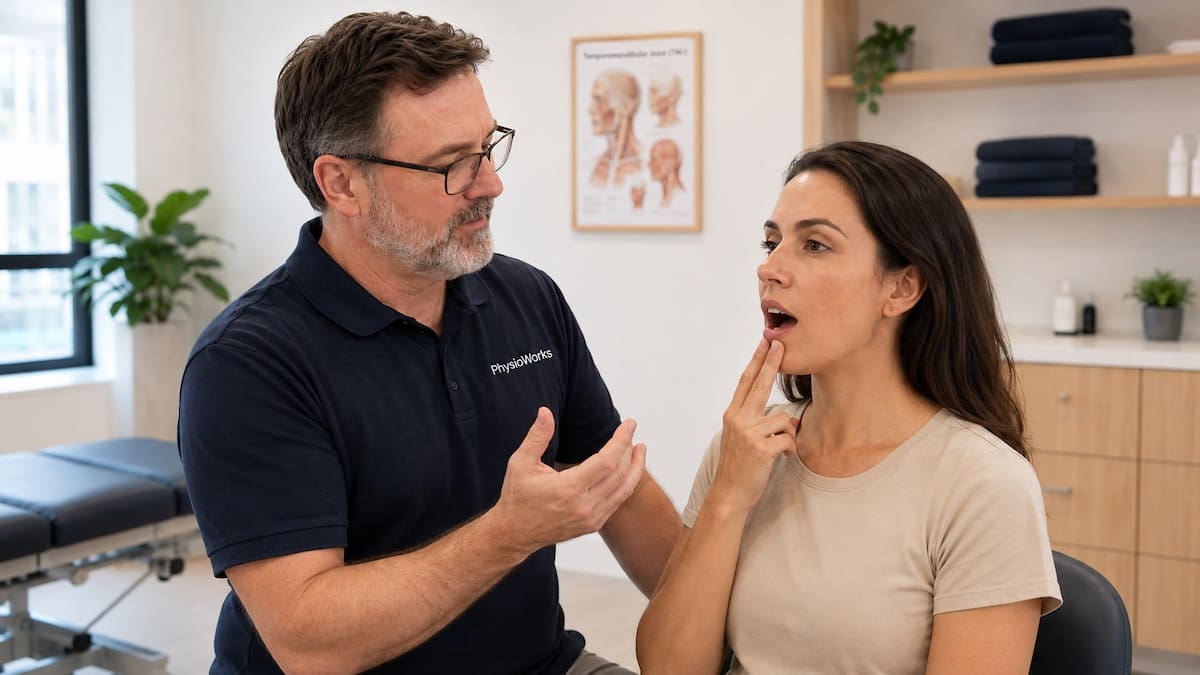
If jaw pain, clicking, or stiffness is affecting daily function, a physiotherapy assessment can help determine contributing factors and guide early management. You can also read about treatment options for temporomandibular joint disorder and how dizziness can relate to jaw symptoms in TMJ disorders and dizziness. Dental input may be recommended when bite-related loading is present.
Select a PhysioWorks clinic to continue to live booking, an appointment request or reception assistance.



