FAQs

Frequently Asked Questions


Real-Time Ultrasound Retraining: What to Expect

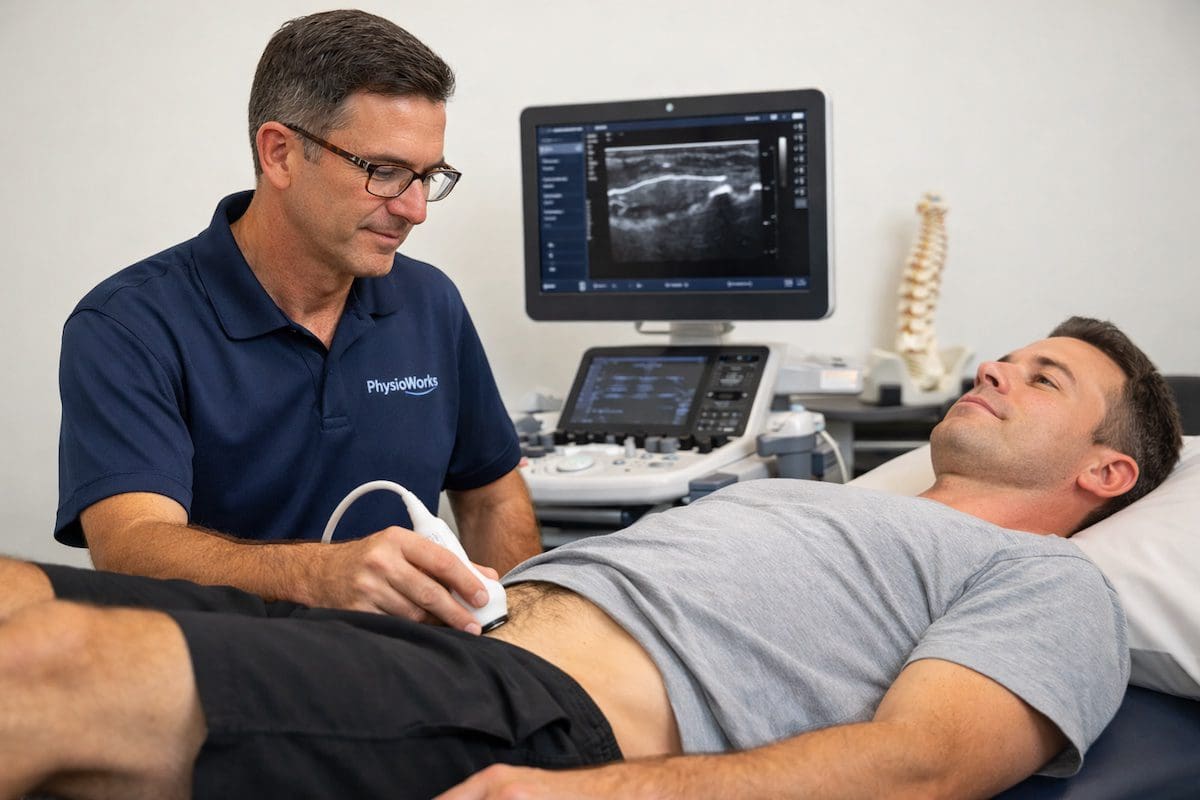
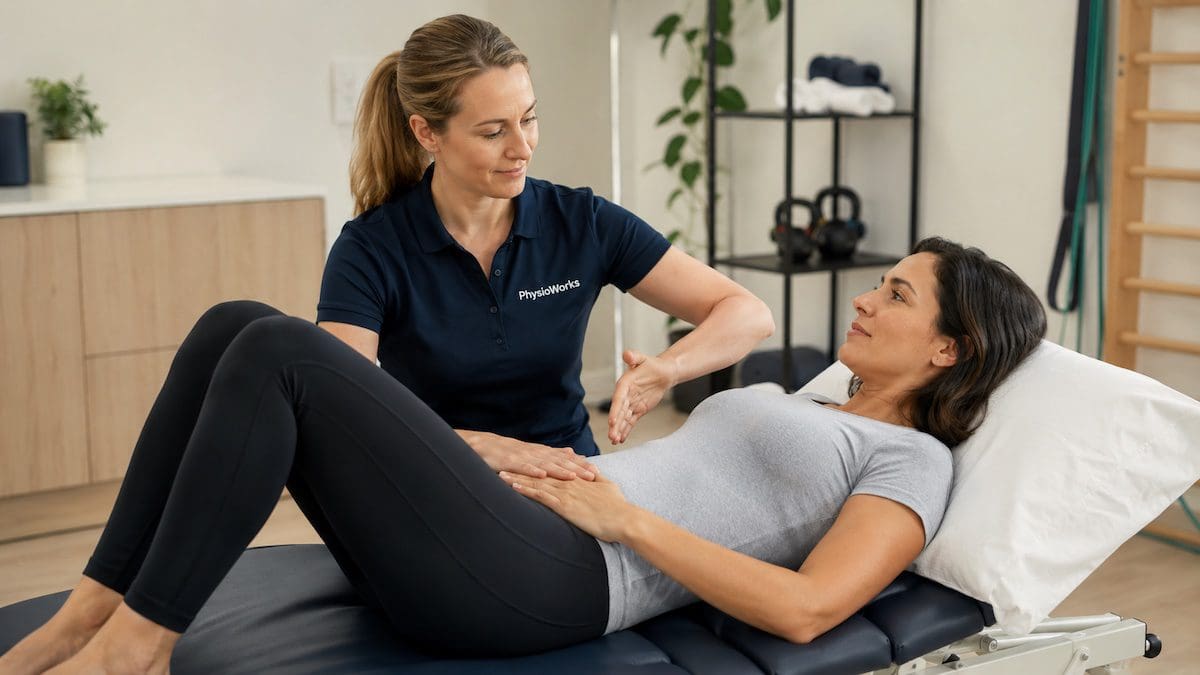
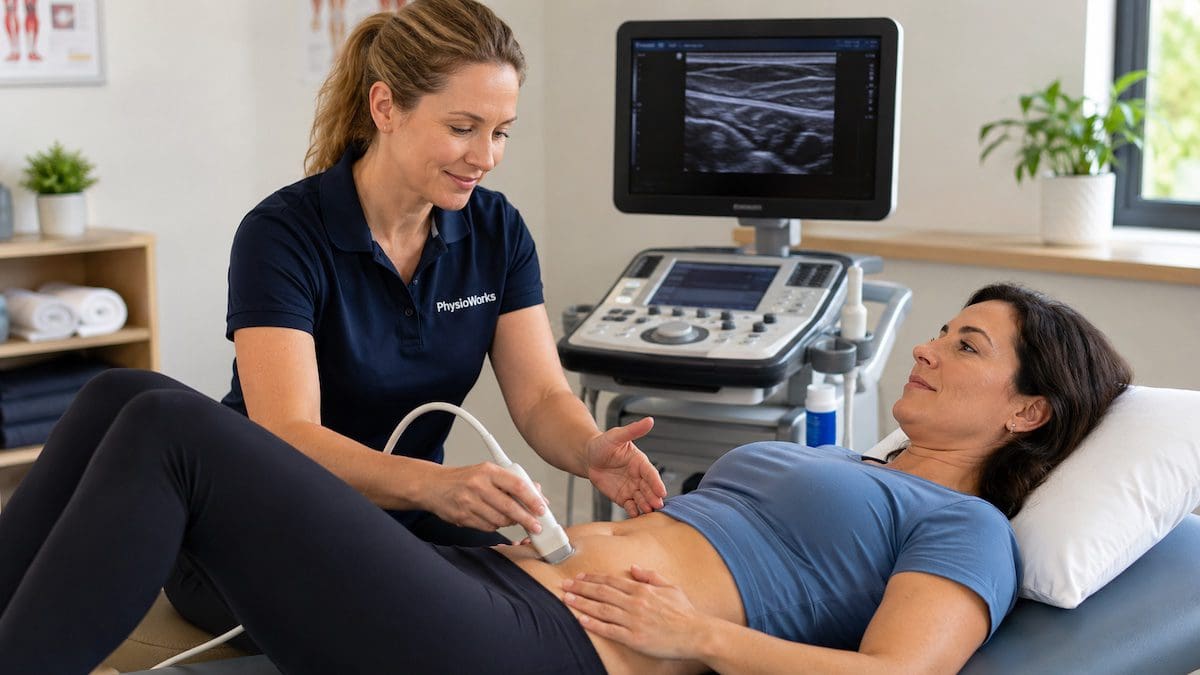
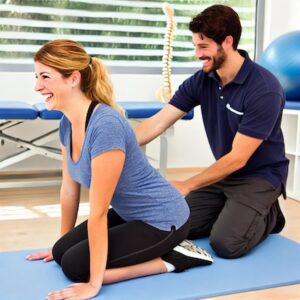
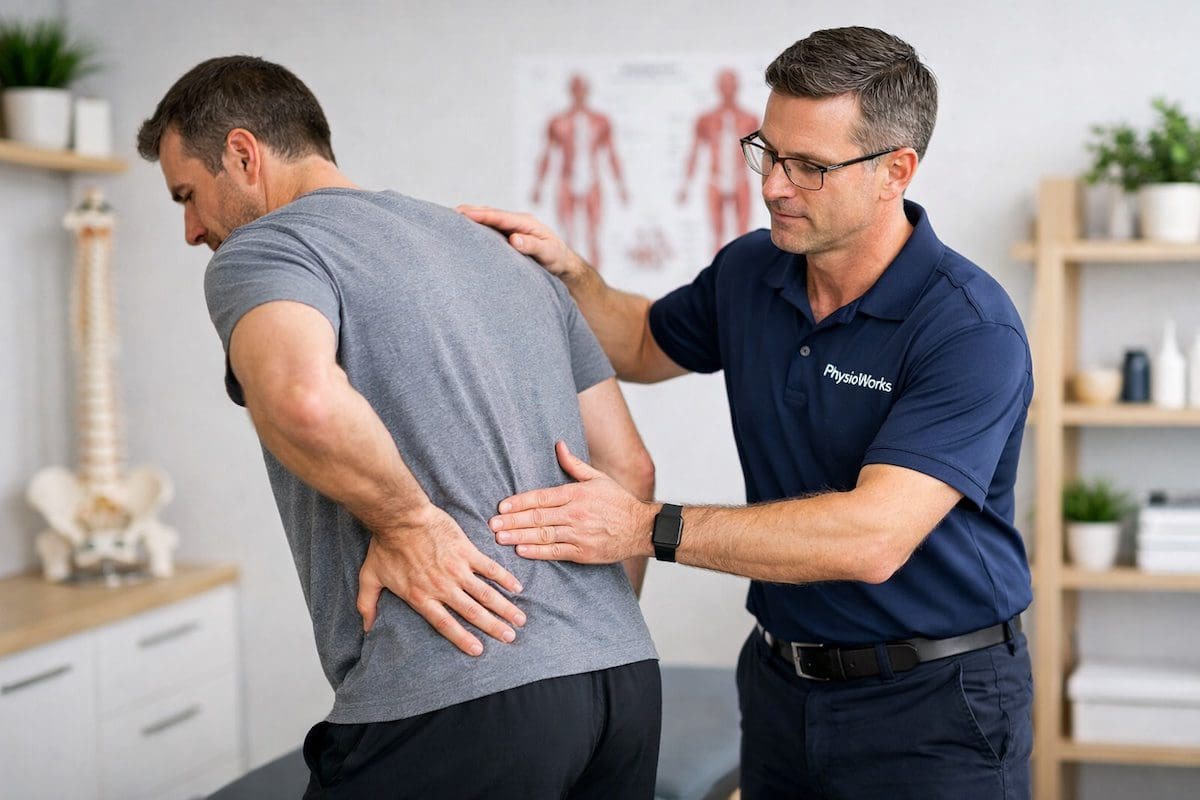
Patient receiving Real-Time Ultrasound Physiotherapy for lower back pain

Real-time ultrasound retraining helps you and your physiotherapist see how specific muscles switch on during an exercise or movement task. At PhysioWorks, this approach is used to support real-time ultrasound physiotherapy when muscle timing, control, or coordination may be affecting pain, recovery, or performance.

Many people are referred for this assessment when they have lower back pain, trouble activating their core stability muscles, pelvic floor control issues, or difficulty regaining efficient movement after injury or surgery. The scan does not treat the problem by itself. Instead, it provides live visual feedback that may help guide more accurate exercise retraining.

What is real-time ultrasound retraining?

Real-time ultrasound retraining is a physiotherapy assessment and feedback method that uses diagnostic ultrasound to show your muscles working on screen while you move or exercise. It may help your physiotherapist identify whether the right muscle is switching on at the right time and whether you can improve that pattern with guided feedback.

  • Live visual feedback during muscle activation
  • Commonly used for deep trunk and pelvic muscle retraining
  • Often paired with exercise instruction and home practice
  • Useful when symptoms relate to poor timing or muscle control

What happens during real-time ultrasound retraining?

Your session usually starts with a discussion about your symptoms, goals, and why your physiotherapist wants to assess muscle activation. After that, a small amount of gel is placed on the skin and the ultrasound probe is positioned over the body region being assessed. Common areas include the abdominal wall, lower back, pelvic region, or other muscles that need retraining.

As you breathe, move, or perform a specific exercise, the screen shows what the muscle is doing in real time. Your physiotherapist then explains what they are looking for and coaches you to improve the quality, timing, or sequence of the contraction. This is often combined with a broader physiotherapy plan rather than used on its own.

What can you expect during a session?

Most sessions feel straightforward and interactive. The scan is non-invasive, and many people find the live visual feedback helpful because it makes a hard-to-feel muscle contraction easier to recognise. Rather than guessing whether you are doing the exercise correctly, you can often see the result immediately.

Your physiotherapist may ask you to:

  • lie on your back, side, or stomach depending on the target muscle
  • breathe normally, then perform a gentle activation
  • repeat a movement several times to compare muscle timing
  • progress to more functional positions as your control improves

Who may benefit from real-time ultrasound retraining?

Real-time ultrasound retraining may help people who struggle to recruit deep support muscles effectively, particularly when symptoms persist despite trying standard exercise cues. It is commonly considered when poor motor control is suspected in the trunk, pelvic floor, or other stabilising muscles.

Common examples include people with ongoing lower back pain, athletes returning to training, people rebuilding core stability, and those progressing through rehabilitation after injury or surgery. It can also be useful when a person understands the exercise in theory but still finds it hard to perform accurately.

Which muscles can be trained using real-time ultrasound?

The strongest clinical use of real-time ultrasound retraining is with the deep trunk muscles, especially the transversus abdominis, internal oblique, and lumbar multifidus. These muscles can be difficult to feel without feedback, so seeing them work on screen may improve exercise accuracy and confidence.

Real-time ultrasound can also be useful for pelvic floor exercises. In selected cases, the scan helps patients see whether the pelvic floor is lifting, relaxing, and coordinating properly. This can be helpful for bladder control issues, pelvic support problems, and rehabilitation after pregnancy or surgery.

For men, this approach may also support pre and post prostatectomy rehab. When pelvic floor contraction is hard to identify, ultrasound feedback may help teach the correct muscle pattern and improve confidence with exercise technique as part of a broader continence rehabilitation plan.

In selected rehabilitation settings, physiotherapists may also use real-time ultrasound to assist retraining of the gluteal muscles, deep hip rotators, deep neck flexors, or some shoulder stabilising muscles. These uses are more targeted and depend on the clinician, body region, and rehabilitation goal. They are generally used to improve movement quality and muscle recruitment rather than as a stand-alone treatment.

Can real-time ultrasound retraining help back pain or pelvic floor problems?

It may help when symptoms are linked to impaired muscle control rather than strength alone. For example, some people with persistent back pain benefit from clearer feedback about how to activate deep abdominal or spinal support muscles. Others use it as part of pelvic floor retraining when they need better awareness of how those muscles are switching on and relaxing.

That said, not every pain problem needs ultrasound-guided retraining. Your physiotherapist will decide whether it adds value based on your assessment findings, the stage of recovery, and whether it is likely to improve the quality of your exercise program.

How many sessions of real-time ultrasound retraining are usually needed?

The number of sessions varies. Some people only need one or two sessions to learn the pattern and then continue with home exercises. Others need a longer progression if the movement pattern has been hard to change, symptoms are longstanding, or the exercise needs to be transferred into more demanding positions or sport-specific tasks.

The goal is usually not repeated scanning forever. Instead, the aim is to use visual feedback to help you learn an improved pattern, then build that pattern into a practical rehabilitation plan.

Where is real-time ultrasound retraining available?

PhysioWorks currently promotes this service through its Ashgrove clinic and Sandgate clinic. If you are unsure whether this service suits your needs, a physiotherapist can assess your presentation first and explain whether ultrasound-guided retraining is likely to add value to your program.

Real-Time Ultrasound Retraining FAQs

What is real-time ultrasound retraining?

Real-time ultrasound retraining is a physiotherapy technique that uses diagnostic ultrasound to show your muscles working on a screen while you perform specific exercises. The visual feedback helps you learn how to activate the correct muscles more accurately. Physiotherapists commonly use this approach to retrain deep stabilising muscles such as the transversus abdominis, multifidus, or pelvic floor.

How does real-time ultrasound help muscle retraining?

The ultrasound screen allows you and your physiotherapist to see the muscle contract in real time. This visual feedback can make it easier to learn how to activate muscles that are difficult to feel, particularly deep stabilising muscles in the trunk or pelvis. By seeing the contraction immediately, you can adjust your technique and improve the quality of your exercise.

What conditions may benefit from ultrasound muscle retraining?

Real-time ultrasound retraining is commonly used for persistent lower back pain, core muscle weakness, pelvic floor dysfunction, and rehabilitation after injury or surgery. It can also assist athletes who need to retrain stabilising muscles as part of a structured rehabilitation program.

Can real-time ultrasound retraining help pelvic floor problems or prostatectomy recovery?

It may. Real-time ultrasound can be used as visual feedback during pelvic floor exercises and may also support pre and post prostatectomy rehab when patients need help identifying the correct muscle contraction pattern. It is usually combined with a broader physiotherapy and continence rehabilitation program.

Is real-time ultrasound retraining safe?

Yes. Diagnostic ultrasound imaging is considered a safe and non-invasive assessment tool. It uses sound waves rather than radiation, and the probe simply rests on the skin with a small amount of gel to improve image quality.

Does real-time ultrasound retraining hurt?

No. The ultrasound scan itself is painless. You may feel mild discomfort if the area being assessed is already sensitive due to injury or inflammation, but the scanning process itself should not cause pain.

How long does a real-time ultrasound retraining session take?

A typical session lasts around 30 to 45 minutes. During this time your physiotherapist will assess your muscle activation, explain what you see on the screen, and guide you through exercises designed to improve muscle control and coordination.

How many sessions of ultrasound retraining do I need?

Some people only require one or two sessions to learn the correct muscle activation pattern. Others may benefit from several sessions if the movement pattern has been difficult to change or if the exercises need to be progressed into more functional activities.

Is ultrasound retraining the same as therapeutic ultrasound treatment?

No. Therapeutic ultrasound uses sound waves to deliver energy to tissues as a treatment modality. Real-time ultrasound retraining, on the other hand, is mainly a visual feedback tool used to help patients learn how to activate muscles correctly during exercise.

Can athletes benefit from real-time ultrasound retraining?

Yes. Athletes often use ultrasound-guided retraining when recovering from injury or when working on stabilising muscle control. Improved muscle timing and coordination may support better movement efficiency and injury prevention.

Do I need a referral for real-time ultrasound retraining?

Most people do not need a referral. A physiotherapist can assess your condition and decide whether real-time ultrasound retraining is likely to help as part of your rehabilitation program.

What to do next

If you have been told that your muscle control, core activation, pelvic floor function, or post-surgical recovery may be contributing to your symptoms, a physiotherapy assessment can help clarify whether real-time ultrasound retraining is likely to help. It is most useful when it sits within a broader rehabilitation plan rather than as a stand-alone service.

A physiotherapist may recommend this approach when standard exercise cues have not been enough, when you need clearer feedback, or when accurate retraining is important for recovery, continence, function, or return to activity.

Choose your clinic and appointment pathway

Select a PhysioWorks clinic to continue to live booking, an appointment request or reception assistance.

Follow PhysioWorks

Get physiotherapy tips, exercise videos, recovery advice and blog updates.

References

  1. Van K, Hides JA, Richardson CA. The use of real-time ultrasound imaging for biofeedback of lumbar multifidus muscle contraction in healthy subjects. J Orthop Sports Phys Ther. 2006;36(12):920-925. doi:10.2519/jospt.2006.2304
  2. Valera-Calero JA, Al-Boloushi Z, Casaña J, et al. Ultrasound Imaging as a Visual Biofeedback Tool in Rehabilitation: An Updated Systematic Review. Int J Environ Res Public Health. 2021;18(14):7554. doi:10.3390/ijerph18147554
  3. Daniel DS, Deering RE, Stafford RE, Hodges PW, Miller JM. Rehabilitative Ultrasound Imaging as Visual Biofeedback in Pelvic Floor Dysfunction: A Narrative Review. J Clin Med. 2026;15(3):651. doi:10.3390/jcm15030651
  4. Milios JE, Ackland TR, Green DJ, et al. Pelvic floor muscle training in radical prostatectomy: a randomized controlled trial of the impacts on pelvic floor muscle function and urinary incontinence. BMC Urol. 2019;19(1):116. doi:10.1186/s12894-019-0546-5
  5. Yoshida M, Kakizaki H, Yoneyama T, et al. May perioperative ultrasound-guided pelvic floor muscle training promote early recovery of urinary continence after robot-assisted radical prostatectomy? Neurourol Urodyn. 2019;38(6):1588-1594. doi:10.1002/nau.24030

Is Ultrasound Retraining the Whole Cure for Lower Back Pain?

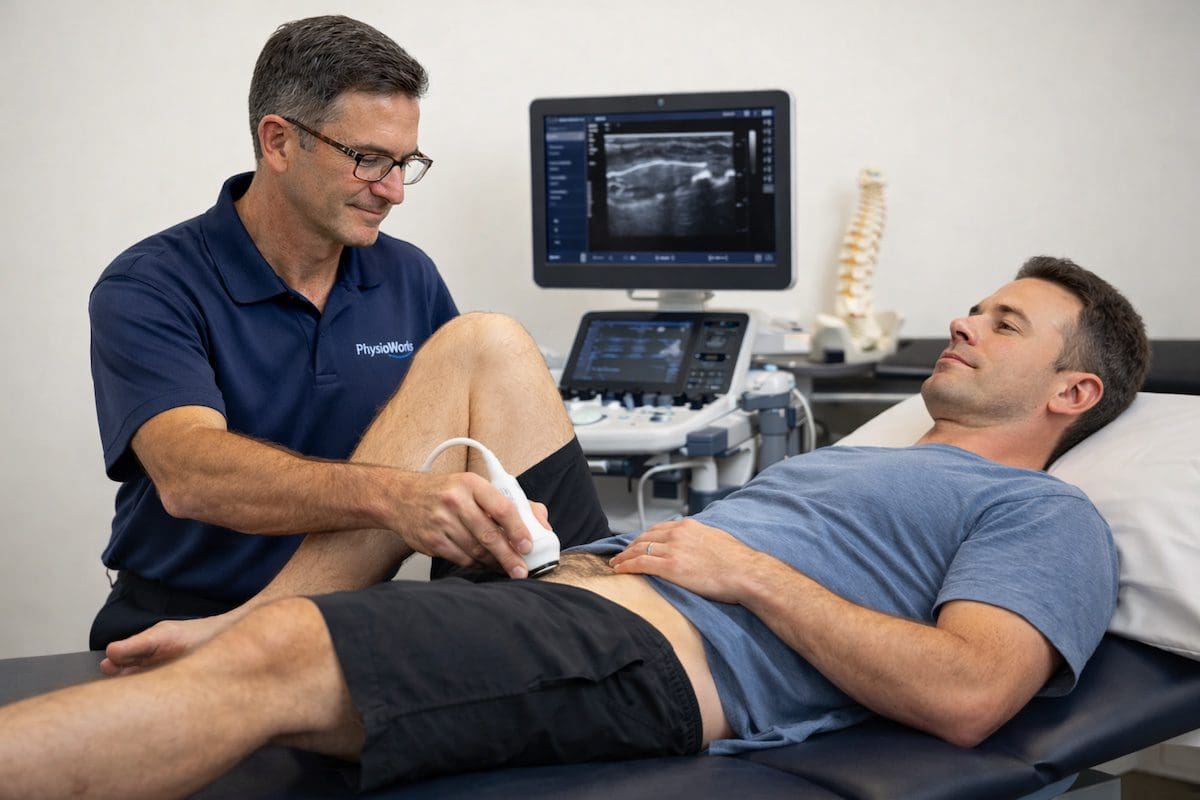
Ultrasound retraining lower back pain assessment with abdominal muscle feedback in physiotherapy clinic

Real-time ultrasound helps guide deep muscle retraining.

No, ultrasound retraining is usually not the whole cure for lower back pain. Real-time ultrasound physiotherapy can help some people improve deep muscle activation and movement control, but most lower back pain needs a broader rehabilitation plan based on symptom behaviour, strength, mobility, load tolerance, and daily function.

This page supports our broader back pain and real-time ultrasound physiotherapy pathways. In most cases, ultrasound retraining works best as one useful tool inside a full physiotherapy program rather than as a stand-alone fix.

Key takeaway: Real-time ultrasound retraining may improve exercise accuracy and muscle control, but lasting lower back pain relief usually needs broader rehabilitation.

Why is ultrasound retraining not the whole cure for lower back pain?

Lower back pain is usually multifactorial. Even when poor activation of the deep trunk muscles contributes, symptoms can also relate to joint irritation, disc problems, nerve sensitivity, reduced strength, poor load tolerance, stiffness, fear of movement, work demands, sleep, or repeated overload. That is why a broader rehabilitation plan often works better than one technique alone.

Real-time ultrasound can help your physiotherapist assess and retrain muscles such as the transversus abdominis and multifidus. However, the bigger goal is not simply to make these muscles switch on. The goal is to help you bend, lift, sit, walk, exercise, and live with better comfort and confidence.

What does ultrasound retraining actually help with?

Ultrasound retraining mainly helps with assessment, feedback, and motor control retraining. It lets you and your physiotherapist see whether specific muscles are activating well during an exercise or movement task. That can be useful if you struggle to feel the right contraction, have poor coordination, or need clearer visual feedback early in rehabilitation.

You can read more about what real-time ultrasound physiotherapy may help with and what to expect from ultrasound retraining. If your main issue is strength, endurance, mobility, or repeated flare-ups during activity, your program will usually need more than ultrasound feedback alone.

Ultrasound retraining lower back pain exercise with guided deep core activation feedback

Ultrasound can guide early deep muscle control exercises.

Ultrasound retraining vs general lower back pain rehabilitation

Ultrasound retraining is mainly a feedback tool, while lower back pain rehabilitation is the bigger recovery plan. Many people do best when ultrasound-guided motor control work is combined with mobility, strength, load management, and gradual return to normal activity.

Ultrasound Retraining General Lower Back Pain Rehabilitation Helps assess and retrain deep muscle activation Addresses the broader causes of pain and reduced function Useful for exercise feedback and motor control Includes strength, mobility, endurance, and load progression Often most useful early in retraining Usually needed across the full recovery journey May improve exercise accuracy Aims to improve pain, confidence, and daily function Rarely enough as a stand-alone treatment Usually provides the more complete long-term solution

What else may be needed for lower back pain recovery?

Most people do better when treatment is matched to the source of their lower back pain. Your physiotherapist may combine ultrasound retraining with core stability exercises, core stability training, gym back exercises, mobility work, walking, manual therapy, and gradual strength progression.

Depending on your assessment, treatment may also include movement retraining, lumbopelvic control work, hip and leg strengthening, activity modification, and a return-to-work or return-to-sport plan. A structured plan is usually more important than any single modality.

Can Pilates help after ultrasound retraining?

Yes, Pilates may help some people after ultrasound retraining when it is used as part of a broader progression plan. Once deep muscle control improves, some people move on to Pilates for back pain, Pilates and core stability guidance, or physiotherapist-guided group exercise to build confidence and function.

The key is matching the exercise level to your diagnosis, irritability, and goals. Pilates is not the same as core stability, and neither is automatically right for everyone with lower back pain.

When does it help most? Ultrasound retraining is often most useful when you need better feedback to learn deep muscle control early in rehabilitation, not as the only treatment for persistent lower back pain.

How can physiotherapy help lower back pain beyond ultrasound retraining?

Physiotherapy helps by identifying why your pain is persisting and then building a plan around your presentation. That may involve symptom relief, strength, endurance, movement quality, confidence, and progressive return to normal activity. Ultrasound retraining can support this process, but it rarely replaces the rest of the program.

Many people improve when treatment combines education, graded exercise, and practical movement advice. You can also explore related pages on back pain FAQs, common causes of lower back pain, and posture correction where relevant to your presentation.

If you want a general Australian overview of symptoms, red flags, and self-management, Healthdirect also provides practical information on back pain.

When should you consider ultrasound retraining for lower back pain?

You should consider ultrasound retraining when your physiotherapist thinks better muscle timing, exercise accuracy, or movement control is an important part of your rehabilitation. It is usually most helpful when paired with a broader plan rather than used in isolation.

If you are unsure whether it suits your presentation, a physiotherapy assessment can clarify whether ultrasound feedback is likely to add value or whether your recovery should focus more on general strengthening, mobility, walking tolerance, or graded activity progression.

Common questions about ultrasound retraining and lower back pain

Can ultrasound retraining fix lower back pain on its own?

Usually, no. Ultrasound retraining can improve muscle awareness and exercise accuracy, but lower back pain often needs a broader plan that addresses mobility, strength, load management, and the specific structures involved.

Is real-time ultrasound the same as therapeutic ultrasound?

No. Real-time ultrasound physiotherapy is mainly an assessment and exercise-feedback tool. Therapeutic ultrasound is a different modality and is used for a different clinical purpose.

Does everyone with lower back pain need deep core retraining?

No. Some people benefit from it, while others improve more from walking, graded strength work, mobility exercises, or general activity progression. Your assessment should guide the plan.

Can weak transversus abdominis or multifidus muscles be the only cause of back pain?

Not usually. These muscles can be part of the picture, but back pain is often influenced by several factors such as joint irritation, disc sensitivity, deconditioning, posture, stress, sleep, and activity load.

How long does it take to see results from ultrasound-guided retraining?

That depends on the cause of your pain, how long it has been present, and how well your full rehabilitation program matches your needs. Early improvements in control can occur quickly, but lasting change usually takes consistent progression.

Where is real-time ultrasound physiotherapy available?

PhysioWorks currently lists real-time ultrasound physiotherapy at Ashgrove PhysioWorks and Sandgate PhysioWorks. Clinic availability can change, so it is worth checking the latest clinic information when booking.

Lower back pain rehabilitation progress with guided functional exercise in physiotherapy clinic

Lasting recovery usually needs broader rehabilitation progression.

What to do next

If you have lower back pain and are wondering whether ultrasound retraining is right for you, start with a proper assessment rather than guessing. A physiotherapist can work out whether deep muscle retraining is relevant and whether you would benefit more from strength work, Pilates-based progression, posture strategies, or load-management support.

PhysioWorks physiotherapists regularly assess lower back pain and can guide you through a program that matches your symptoms, goals, and activity level. You can also explore Pilates for back pain, back exercises, and lower back pain support before booking.

Choose your clinic and appointment pathway

Select a PhysioWorks clinic to continue to live booking, an appointment request or reception assistance.

Back Support Products

These back support products are commonly used by our physiotherapists to help reduce back pain, improve comfort, and support your recovery at home.

View all back support products

Follow PhysioWorks

Get physiotherapy tips, exercise videos, recovery advice and blog updates.

References

  1. George SZ, Fritz JM, Silfies SP, et al. Interventions for the Management of Acute and Chronic Low Back Pain: Revision 2021. J Orthop Sports Phys Ther. 2021;51(11):CPG1-CPG60. doi:10.2519/jospt.2021.0304.
  2. Smrcina Z, Woelfel S, Burcal C. A Systematic Review of the Effectiveness of Core Stability Exercises in Patients with Non-Specific Low Back Pain. Int J Sports Phys Ther. 2022;17(5):766-774. doi:10.26603/001c.37251.
  3. Henry SM, Teyhen DS. Ultrasound Imaging as a Feedback Tool in the Rehabilitation of Trunk Muscle Dysfunction for People With Low Back Pain. J Orthop Sports Phys Ther. 2007;37(10):627-634. doi:10.2519/jospt.2007.2555.
  4. Mannion AF, Caporaso F, Pulkovski N, Sprott H. Spine Stabilisation Exercises in the Treatment of Chronic Low Back Pain: A Good Clinical Outcome Is Not Associated with Improved Abdominal Muscle Function. Eur Spine J. 2012;21(7):1301-1310. doi:10.1007/s00586-012-2155-9.

Which PhysioWorks Clinics Offer Real-Time Ultrasound Physiotherapy?

PhysioWorks currently offers Real-Time Ultrasound Physiotherapy at Ashgrove and Sandgate. This service may help selected people with lower back pain, core muscle retraining, abdominal wall control, pelvic floor rehabilitation, and movement re-education when live visual feedback is useful.

Patient receiving Real-Time Ultrasound Physiotherapy for lower back pain

Real-Time Ultrasound Physiotherapy uses live ultrasound imaging during treatment to show how muscles are working. Physiotherapists may use it to assess deep muscle activation, improve exercise accuracy, and guide retraining as part of a broader physiotherapy treatment plan.

At PhysioWorks, it is most commonly discussed in relation to back pain and trunk control. However, it can also support selected rehabilitation programs involving the abdominal wall, pelvic floor, breathing pattern control, post-pregnancy recovery, and movement awareness.

Quick Answer

  • Clinics: Ashgrove PhysioWorks and Sandgate PhysioWorks
  • Main use: live visual feedback for muscle retraining
  • Often used for: lower back, core, abdominal wall, and pelvic floor rehabilitation
  • Best next step: book an assessment to see whether it suits your presentation

What Is Real-Time Ultrasound Physiotherapy?

Real-Time Ultrasound Physiotherapy is a rehabilitation tool that shows muscles moving on a screen during assessment and exercise. Physiotherapists use it to assess muscle activation, improve body awareness, and help patients practise more accurate muscle control during guided rehabilitation.

It differs from a diagnostic imaging referral because it is used during treatment rather than only to produce a report. The goal is usually to improve how you move and how specific muscles switch on, especially when pain, weakness, or poor coordination has disrupted normal control.

What Conditions or Problems May It Help?

Real-Time Ultrasound Physiotherapy may help selected rehabilitation programs involving lower back pain, deep trunk muscle control, post-pregnancy abdominal retraining, pelvic floor activation, and lumbopelvic stability work. It is most useful when visual feedback helps a patient learn or relearn a specific muscle pattern.

For example, a physiotherapist may use it when someone struggles to activate the deep abdominal wall, lumbar multifidus, or pelvic floor with standard coaching alone. It may also help when exercises need to be refined rather than simply made harder.

Other Uses for Real-Time Ultrasound Physiotherapy

Real-Time Ultrasound Physiotherapy is not only for lower back pain. It may also be used in selected cases for abdominal wall retraining, postnatal recovery, breathing and pressure control, pelvic floor rehabilitation, and exercise technique correction where deeper muscle timing matters.

Common reasons a physiotherapist may consider it include:

  • persistent difficulty activating deep core muscles
  • retraining after pregnancy or abdominal wall change
  • pelvic floor exercise feedback
  • movement retraining after recurrent back pain
  • improving control during Clinical Pilates or rehabilitation exercises

Why Might a Physiotherapist Use It Instead of Standard Cueing Alone?

A physiotherapist may use Real-Time Ultrasound Physiotherapy when verbal cues, touch cues, or standard exercise instruction have not been enough. The live screen can make it easier to see what is happening and improve confidence that the right muscles are working during exercise.

This can be helpful for people who feel unsure whether they are “doing it right”. It may also reduce guesswork when the treatment goal is precise muscle retraining rather than general strengthening.

Ashgrove PhysioWorks

Real-Time Ultrasound Physiotherapy available.

Phone: (07) 3366 4221

View Ashgrove clinic

Sandgate PhysioWorks

Real-Time Ultrasound Physiotherapy available.

Phone: (07) 3269 1122

View Sandgate clinic

Which PhysioWorks Clinics Offer Real-Time Ultrasound Physiotherapy?

Real-Time Ultrasound Physiotherapy is currently available at Ashgrove PhysioWorks and Sandgate PhysioWorks. These clinics can assess whether this technology is appropriate for your rehabilitation goals and whether it should be included in your treatment plan.

If you are comparing locations, you can also browse the main PhysioWorks clinic locations page for suburb details and booking options.

Is Real-Time Ultrasound Physiotherapy Right for Everyone?

Real-Time Ultrasound Physiotherapy is not needed for every patient. Many people improve well with standard exercise rehabilitation, manual therapy, education, and progressive strengthening without ultrasound feedback. The key question is whether the imaging adds useful information or better exercise accuracy for your case.

A physiotherapist may recommend it when your rehabilitation needs more precise retraining, especially for muscle timing, coordination, or confidence with deep stabilising exercises. In other cases, simpler exercise progressions may be enough.

What Can You Expect During an Appointment?

During an appointment, the physiotherapist places ultrasound gel and a handheld probe over the relevant area while you perform specific movements or exercises. The screen shows how the muscles respond in real time, which can help guide your technique and improve feedback during retraining.

The session usually forms part of a broader rehabilitation plan rather than standing alone. That plan may also include hands-on care, exercise progression, load management, and advice about posture, movement, or daily activity.

What Should You Do Next?

If you have been advised to consider Real-Time Ultrasound Physiotherapy, or if you want help with persistent lower back or core retraining issues, book an assessment at Ashgrove or Sandgate. A physiotherapist can explain whether it suits your presentation and what alternatives may also help.

You may also find these pages helpful: Real-Time Ultrasound Retraining, Ultrasound Guided Physiotherapy for Lower Back Pain, Why Choose Real-Time Ultrasound Physiotherapy?, What Conditions Are Assisted by Real-Time Ultrasound Physiotherapy?, and Is Ultrasound Physiotherapy the Whole Solution for Lower Back Pain?.

Common Reasons People Ask About This Service

  • persistent lower back pain with poor core control
  • difficulty feeling deep abdominal muscles working
  • post-pregnancy abdominal retraining
  • pelvic floor exercise feedback
  • uncertainty about exercise technique during rehab

Frequently Asked Questions

Which PhysioWorks clinics offer Real-Time Ultrasound Physiotherapy?

Ashgrove PhysioWorks and Sandgate PhysioWorks currently offer Real-Time Ultrasound Physiotherapy. These clinics can assess whether it is appropriate for your rehabilitation plan.

Is Real-Time Ultrasound Physiotherapy only used for back pain?

No. It is commonly linked with lower back rehabilitation, but it may also be used for abdominal wall retraining, pelvic floor feedback, postnatal rehabilitation, breathing control, and selected exercise technique correction.

Does Real-Time Ultrasound Physiotherapy replace normal physiotherapy treatment?

No. It is usually one tool within a broader physiotherapy plan. Your treatment may still include assessment, education, exercise progression, manual therapy, and load management.

Is Real-Time Ultrasound Physiotherapy painful?

Real-Time Ultrasound Physiotherapy is generally not painful. It uses a handheld probe and gel on the skin while you perform movements or exercises, similar to other ultrasound-based imaging procedures.

How do I know whether I need Real-Time Ultrasound Physiotherapy?

You need an assessment first. A physiotherapist can decide whether live imaging is likely to improve your exercise accuracy, muscle retraining, or movement confidence compared with standard rehabilitation alone.

Can Real-Time Ultrasound Physiotherapy help pelvic floor or postnatal rehabilitation?

It may help selected pelvic floor or postnatal rehabilitation cases when visual feedback is useful for learning muscle activation and pressure control. Your physiotherapist will decide whether it is clinically appropriate.

Choose your clinic and appointment pathway

Select a PhysioWorks clinic to continue to live booking, an appointment request or reception assistance.

Follow PhysioWorks

Get physiotherapy tips, exercise videos, recovery advice and blog updates.

References

  1. Lin S, Li Y, Wang X, et al. Effect of real-time ultrasound imaging for biofeedback on trunk muscle contraction in healthy subjects: a preliminary study. BMC Musculoskelet Disord. 2021;22(1). doi:10.1186/s12891-021-04006-0
  2. Whittaker JL, Ellis R, Hodges PW, et al. Imaging with ultrasound in physical therapy: What is the PT's scope of practice? A competency-based educational model and training recommendations. Br J Sports Med. 2019;53(23):1447-1453. doi:10.1136/bjsports-2018-100193
  3. Healthdirect Australia. Physiotherapy. Accessed March 23, 2026.

What Are the Best Core Exercises?

physiotherapist guiding front plank core exercise with correct technique

Front plank with physiotherapy guidance

The best core exercises are the ones that retrain your deep stabilising muscles before you move to harder drills. Good core training may improve spinal support, trunk control, and lower back protection. It also works best when matched to your symptoms, technique, and current strength level rather than copied from a generic fitness program.

If you are looking into this because of poor control, repeated flare-ups, or lower back pain, it helps to begin with accurate muscle retraining instead of advanced abdominal work. Many people do better when guided by a physiotherapist, especially if faulty movement patterns or repeated pain episodes are already present.

Quick Guide

  • Start with deep core activation before harder exercises.
  • Technique matters more than intensity early on.
  • Progress too quickly, and you may overload your spine.
  • A physiotherapist can help match exercises to your pain, control, and goals.

What Are the Best Core Exercises?

The best core exercises usually start with low-load activation of the deep core stability muscles, including the transverse abdominis, multifidus, diaphragm, and pelvic floor. These muscles act like an internal support system for your spine. Once they are working well, you can safely progress to more functional exercises such as bridging, bird dog, side plank progressions, and controlled standing balance work.

Why do deep core muscles matter?

Your deep core muscles help provide segmental support to the spine and assist with trunk control during lifting, walking, running, and sport. When they are not working well, your body often compensates by overusing the outer abdominal muscles, hip flexors, or back extensors. This pattern may contribute to repeated back pain, poor exercise tolerance, and reduced control during activity.

If you want more detail on this system, read the deep core muscles guide. You can also browse the broader back pain hub.

How do you start core exercises safely?

You should start with exercises that teach correct activation rather than fatigue. That often means practising breathing control, abdominal drawing-in, pelvic floor co-contraction, and gentle limb movement while maintaining trunk stability.

One useful progression tool is real-time ultrasound physiotherapy.

Helpful tip

A core exercise is only useful if you can control your breathing, pelvis, and spine while doing it.

Core stability training dead bug exercise guided by physiotherapist

Dead bug progression with physiotherapy guidance

Best beginner core exercises

  • abdominal bracing
  • pelvic floor activation
  • heel slides
  • bent knee fall-outs
  • dead bug progressions
  • supine marching

What exercises can you progress to next?

Once control improves, you can move to more functional exercises such as bridges, bird dog, and plank variations.

Be careful with these signs

  • pain worsens during or after exercise
  • loss of pelvic control
  • holding your breath
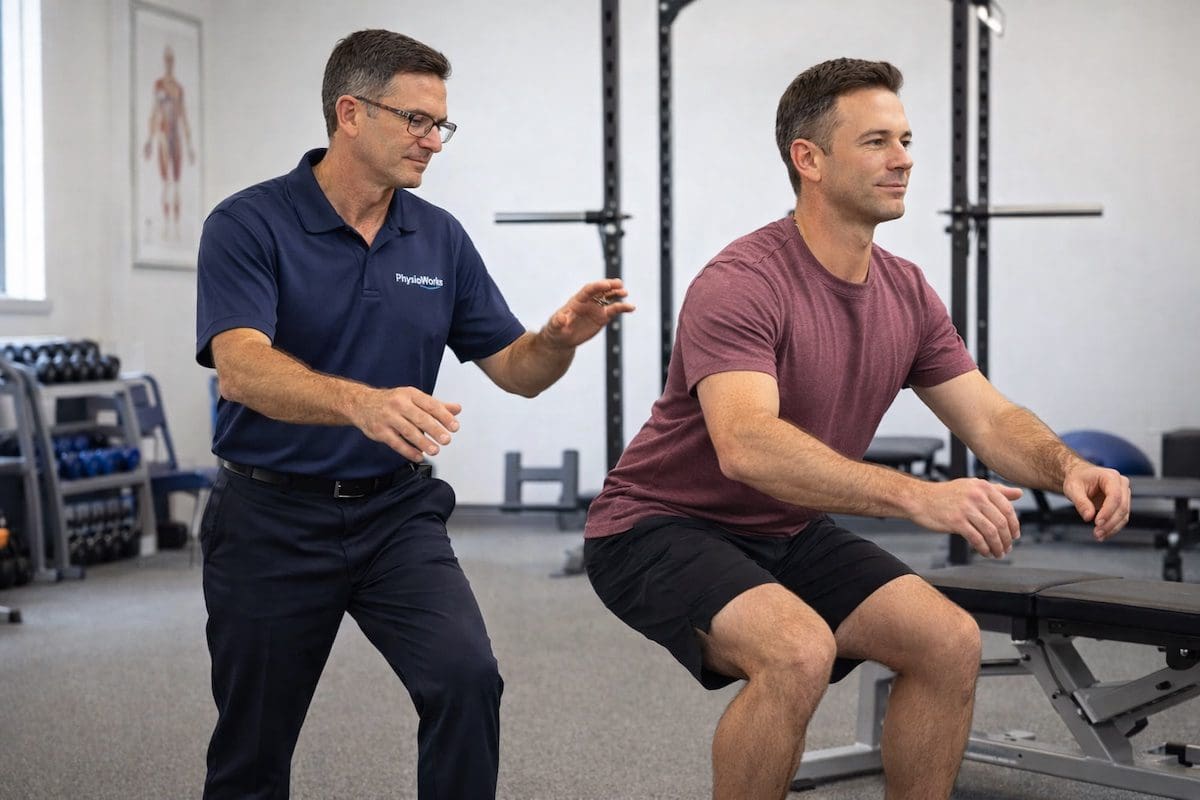
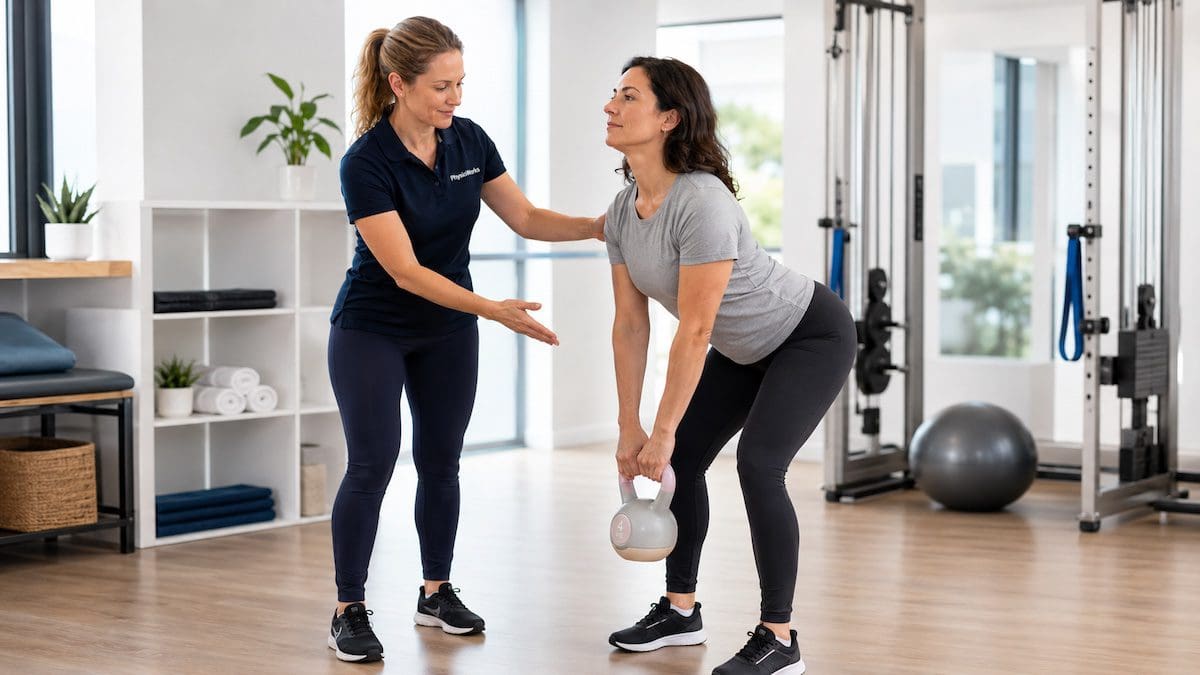
Physiotherapist coaching goblet squat to support safe exercise and body awareness

Functional movement control matters

When should you get help?

If symptoms persist, a physiotherapist can assess and guide your progression.

Core Exercises FAQs

What is the most effective core exercise?

The one that activates deep stabilising muscles correctly.

Are planks good?

Yes, when done with proper alignment and breathing.

How often should you train?

3–5 times per week is typical.

Can it help back pain?

Yes, when matched to the cause.

What to do next

If your core exercises are not helping, have your technique assessed.

Choose your clinic and appointment pathway

Select a PhysioWorks clinic to continue to live booking, an appointment request or reception assistance.

Deep Core Muscles: What They Are and Why They Matter

Deep core muscles help control your trunk and pelvis during breathing, lifting, walking, exercise and everyday movement.

Physiotherapy assessment of lower abdominal deep core muscle control
Assessing deep core muscle control.

What Are the Deep Core Muscles?

The term deep core muscles usually describes several deeper muscles around the abdomen, spine and pelvis that contribute to control of the trunk. The main muscles commonly discussed are the transversus abdominis, multifidus, pelvic floor and diaphragm.

These muscles do not work alone. They coordinate with the larger abdominal, back, hip and pelvic muscles to manage movement, breathing, load and changes in pressure inside the trunk.

Transversus abdominis

A deep abdominal muscle that contributes to abdominal tension and trunk control.

Multifidus

Small muscles beside the spine that contribute to control between spinal segments.

Pelvic floor

A group of muscles at the base of the pelvis involved in continence, support and pressure management.

Diaphragm

The main breathing muscle, which also works with the abdominal wall and pelvic floor to manage trunk pressure.

How Do the Deep Core Muscles Work?

Transversus Abdominis

The transversus abdominis is the deepest of the broad abdominal muscles. Its fibres run mainly around the abdomen rather than vertically like the rectus abdominis.

It contributes to abdominal tension and helps coordinate the trunk when you move your arms or legs, change position, lift or respond to changes in balance. Activation should usually be appropriate to the task rather than a maximal abdominal brace.

Multifidus

The multifidus consists of small muscles that run close to the spine. These muscles span short distances between vertebrae and contribute to fine control of spinal movement.

Changes in multifidus size or activation have been observed in some people with low back pain. However, back pain is complex, and a change in one muscle does not by itself explain why somebody has pain or predict whether symptoms will persist.

Pelvic Floor Muscles

The pelvic floor muscles form the muscular base of the pelvis. They help support the pelvic organs, contribute to continence and respond to changes in pressure during activities such as coughing, lifting and exercise.

The pelvic floor works with the abdominal wall and diaphragm rather than functioning as an isolated stabilising muscle. Pregnancy, childbirth, pelvic surgery and other factors can alter pelvic floor function, so assessment may be useful when pelvic floor symptoms are present.

Diaphragm

The diaphragm is your main breathing muscle. As you breathe in, it moves downwards and changes pressure within the abdomen. The abdominal wall and pelvic floor respond to these pressure changes.

This coordination helps explain why relaxed breathing matters during core exercises. Constant breath-holding or hard bracing is not usually the aim of early core retraining.

How Do Deep Core Muscles Support Movement?

Deep core muscles contribute to trunk control, but they are only one part of a larger movement system. Your hips, larger abdominal muscles, back muscles, legs and nervous system all contribute to how you balance, bend, lift, walk and exercise.

Together, these systems can help you:

  • control your trunk during movement
  • adapt to changing loads and body positions
  • coordinate breathing with lifting and exercise
  • maintain comfortable positions during sitting and standing
  • transfer force between your upper and lower body
  • build confidence during gym, work and sporting tasks

Do Weak Deep Core Muscles Cause Back Pain?

Back pain is rarely explained by one weak or poorly activated muscle. Pain can be influenced by many factors, including tissue sensitivity, previous episodes, load, sleep, stress, physical capacity, movement habits and general health.

Some people with low back pain show changes in the way trunk muscles activate. Others do not. Therefore, core retraining should not be based on the idea that everybody with back pain has a faulty or “switched-off” core.

Exercise can still be useful. The goal is usually to improve movement confidence, strength, endurance and tolerance to meaningful activities rather than to hold the spine rigidly in one position.

How Do Physiotherapists Assess Core Control?

A physiotherapist may assess how your trunk, pelvis and hips respond during activities that matter to you. Depending on your symptoms and goals, this may include bending, lifting, squatting, balance tasks, walking, breathing or specific exercises.

Assessment may also consider:

  • how comfortably you move
  • whether you hold your breath or brace excessively
  • hip and leg strength
  • trunk strength and endurance
  • movement confidence
  • pelvic floor symptoms where relevant
  • how symptoms respond to different loads and positions
Real-time ultrasound feedback during deep abdominal muscle retraining
Ultrasound feedback can help some people learn deep abdominal muscle control.

Real-Time Ultrasound Retraining

Real-time ultrasound retraining can provide visual feedback while you contract selected abdominal or spinal muscles. You and your physiotherapist can watch the muscle response on the ultrasound screen while adjusting breathing, effort and technique.

This feedback may help some people learn a movement or muscle-control task. It is a training aid rather than a stand-alone treatment, and not everybody needs ultrasound to make progress.

How Can You Train Your Deep Core Muscles?

Core training should progress beyond isolated muscle activation. Early exercises may focus on comfortable breathing and controlled trunk movement. Later exercises should increasingly resemble the activities you want to perform.

Depending on your starting point, training may include:

  • gentle abdominal control with relaxed breathing
  • bridging
  • four-point kneeling exercises
  • dead-bug or limb-loading variations
  • side planks or front planks
  • squats and lunges
  • lifting and hip-hinge practice
  • sport-specific or work-specific loading

The best exercise depends on your symptoms, capacity and goals. For more examples, see our core stability exercises guide.

Hip hinge retraining to progress trunk control during lifting
Progressing trunk control into a functional lifting task.

Should You Brace Your Core During Exercise?

Sometimes, but not as hard as possible for every movement.

A heavier lift may require more abdominal tension than walking, breathing exercises or low-load rehabilitation. Your trunk should be able to vary its level of stiffness according to the task.

Constant maximal bracing can make breathing and movement unnecessarily difficult. During many rehabilitation exercises, a comfortable level of abdominal activity with normal breathing is more useful.

Can Pilates Help Train the Core?

Pilates combines breathing, controlled movement and progressive exercise. It can be one way to improve trunk strength, movement awareness and general physical capacity.

Pilates does not need to isolate the deep core muscles to be useful. Instead, exercises can progressively challenge the whole trunk and body while maintaining comfortable movement and breathing.

People managing back pain may also find our Pilates for back pain information helpful.

How Is Progress Measured?

There is no single universal “core stability score”. Progress is better judged against the activities and goals that matter to you.

A physiotherapist may reassess:

  • exercise control and technique
  • strength and endurance
  • breathing during movement
  • tolerance to lifting or exercise
  • balance or functional tasks
  • symptom response
  • confidence returning to work, sport or gym training

Deep Core Muscles FAQ

What are the deep core muscles?

The muscles commonly described as the deep core include the transversus abdominis, multifidus, pelvic floor and diaphragm. They contribute to trunk control, breathing and pressure management while working with many other muscles.

How do deep core muscles relate to back pain?

Deep core muscles contribute to trunk control, but back pain is rarely caused by one weak muscle. Exercise may help by improving strength, movement confidence, capacity and tolerance to everyday loads.

How can I strengthen my deep core muscles?

Training can progress from gentle breathing and trunk-control exercises to bridging, four-point kneeling, planks, squats, lifting and other functional exercises. The programme should match your starting point and goals.

What are signs of weak deep core muscles?

There is no reliable symptom pattern that proves your deep core muscles are weak. Back pain, fatigue, poor lifting confidence or breath-holding can have several causes, so assessment should consider the whole movement and health picture.

Can Pilates help deep core muscles?

Pilates can improve trunk strength, movement control, breathing coordination and general physical capacity. It does not need to isolate one deep muscle to be useful.

What is real-time ultrasound core training?

Real-time ultrasound retraining uses ultrasound imaging to provide visual feedback while you contract selected abdominal or spinal muscles. It can help some people understand and adjust their muscle-control technique.

Should I brace hard when doing core exercises?

Usually not for every exercise. The amount of abdominal tension should match the task. Many rehabilitation exercises use comfortable trunk control with normal breathing rather than maximal bracing.

When should I see a physiotherapist for core stability?

Consider physiotherapy if back pain keeps returning, exercise repeatedly aggravates your symptoms, you have pelvic floor concerns, or you are unsure how to progress safely back to lifting, sport, work or gym training.

What to Do Next

If you want to improve trunk strength or return confidently to lifting, exercise, work or sport, start with a programme matched to your current capacity rather than trying to keep your deep core muscles permanently contracted.

A physiotherapist can assess the activities that are difficult for you and help progress exercise from simple control to meaningful movement. Where appropriate, this may include core stability exercises, general strengthening, movement retraining or real-time ultrasound feedback.

Choose your clinic and appointment pathway

Select a PhysioWorks clinic to continue to live booking, an appointment request or reception assistance.

Follow PhysioWorks

Get physiotherapy tips, exercise videos, recovery advice and blog updates.

Can Pilates Improve Core Stability?

Article by John Miller & Erin Runge
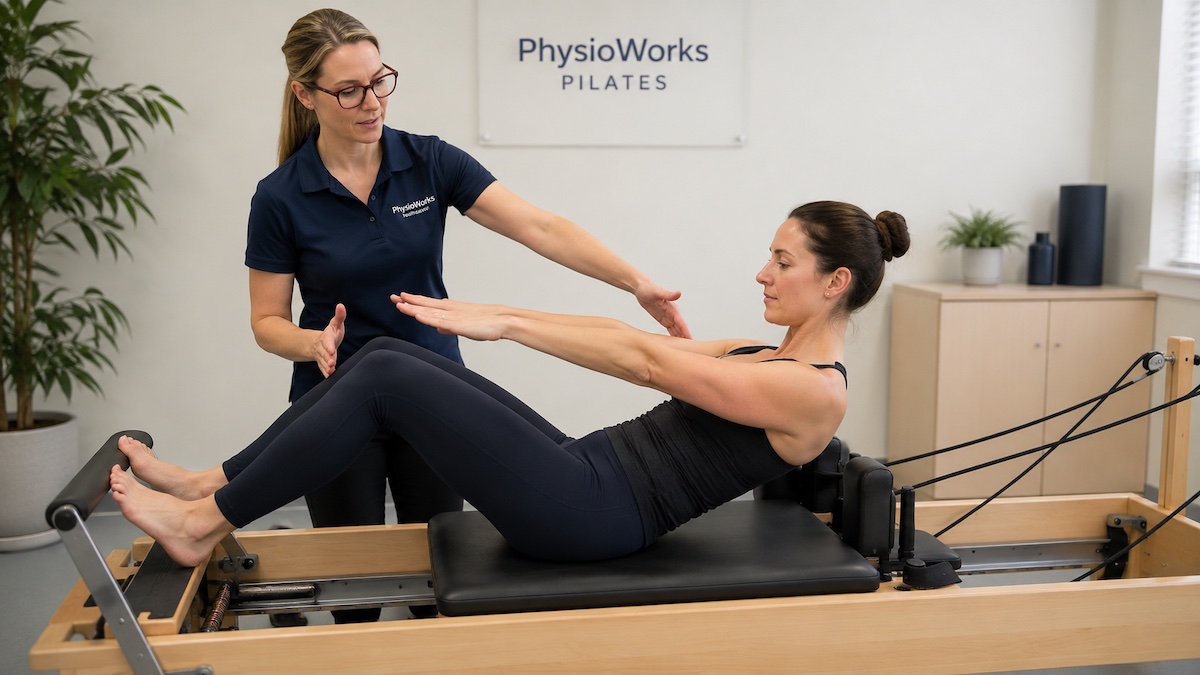
Pilates and core stability coaching during reformer exercise
Guided Pilates can match trunk-control exercises to your current ability.

Pilates and core stability are closely linked, but they are not the same thing. Pilates uses controlled movement, breathing and posture work to challenge trunk control. Core stability describes how your deep and surface trunk muscles support your spine, pelvis and ribcage during movement.

For many people, Pilates may help improve movement control and support some types of lower back pain. However, not every Pilates exercise suits every back, pelvis or injury. The right starting level matters.

Quick answer: Pilates can support core stability when the exercises match your strength, control, breathing pattern and pain level.

Key point: If an exercise makes symptoms worse, the issue may be load, timing, technique or diagnosis rather than “weak core” alone.

How Are Pilates and Core Stability Linked?

Joseph Pilates promoted a strong, controlled centre through posture, breathing and precise movement. Modern physiotherapy uses core stability to describe how your trunk muscles work together to support movement.

That means the two ideas overlap. Pilates often trains trunk control through whole-body exercise. Core stability training may start more specifically, with breathing control, deep muscle timing and low-load movement. Our guides to deep core muscles and core stability training explain this in more detail.

Can Pilates Improve Core Stability?

Yes, Pilates may help improve core stability for many people. Current reviews suggest Pilates can reduce pain and disability for some people with chronic low back pain. However, Pilates does not clearly beat every other exercise approach for every person.

In practice, Pilates works best when the exercise level matches your current control, strength, flexibility and tolerance. Some people do well with Pilates quickly. Others need a more individual starting point before joining group classes or harder routines.

Pilates may be a good fit if you want to improve:

  • trunk control during lifting, sitting, sport or gym training
  • breathing and movement coordination
  • hip, pelvis and ribcage control
  • confidence returning to exercise after back pain
  • movement quality before progressing to harder strength work

Why Doesn’t Pilates Suit Everyone?

Pilates, yoga, gym work and strengthening programs all place demand on the trunk. If your deep trunk muscles switch on late, overwork, or do not coordinate well with breathing and hip control, harder exercises may stir symptoms instead of settling them.

For example, some people with recurring back pain brace too hard through the surface abdominal muscles. Others progress too quickly. If this sounds familiar, core stability exercises can help explain how early-stage progressions differ from advanced exercise.

Should You Keep Doing the Exercise?

Feels controlled and settles quickly This is usually a reasonable sign. Keep the load modest and progress gradually.
Pain builds during the set Reduce range, load, spring tension or hold time. Technique may need review.
Symptoms flare later or the next day The exercise may be too advanced. A lower-load starting point may suit you better.
Leg pain, numbness or worsening weakness appears Stop and seek clinical advice before continuing.

What Causes Problems with Core Stability?

Core stability problems can develop after pain, injury, surgery, pregnancy, deconditioning, heavy physical work, long sitting periods or repeated flare-ups. In some people, the problem is not pure weakness. It may involve timing, endurance, breathing pattern, confidence or how the trunk responds to limb movement.

Earlier research found delayed transversus abdominis activation in people with low back pain. This helped shape the modern discussion around motor control and deep trunk function. Newer reviews still support Pilates as one useful option, but exercise choice needs to suit the person.

How Do You Know if It’s a Core Stability Problem?

You cannot reliably tell from symptoms alone. A physiotherapist may assess posture, breathing, trunk control, hip function, spinal movement, endurance and how your body manages load during daily activity, work, sport or exercise.

Some people who think they need more “core strength” actually need better movement control, pacing or technique. Our pages on back pain treatment and back pain FAQs explain why diagnosis and exercise progression matter more than simply pushing harder.

Does Real-Time Ultrasound Help?

For some people, yes. Real-time ultrasound retraining may help a physiotherapist assess and teach deep abdominal muscle activation, especially when someone struggles to feel the right contraction.

It can be a useful feedback tool. However, it should not be the whole plan. It works best when it sits within a broader program that includes movement practice, strength, pacing and functional progressions. Healthdirect also explains how physiotherapy may use assessment, education and exercise to improve movement and function.

What Should You Expect from Core Stability Training?

Early core stability work is often slower and more specific than people expect. You may start with breathing control, posture awareness, low-load trunk activation and simple movement drills. Then you can progress to harder Pilates, gym or sport-specific exercises.

The goal is not just to make your abdominal muscles work harder. The goal is to improve control, timing, endurance and confidence.

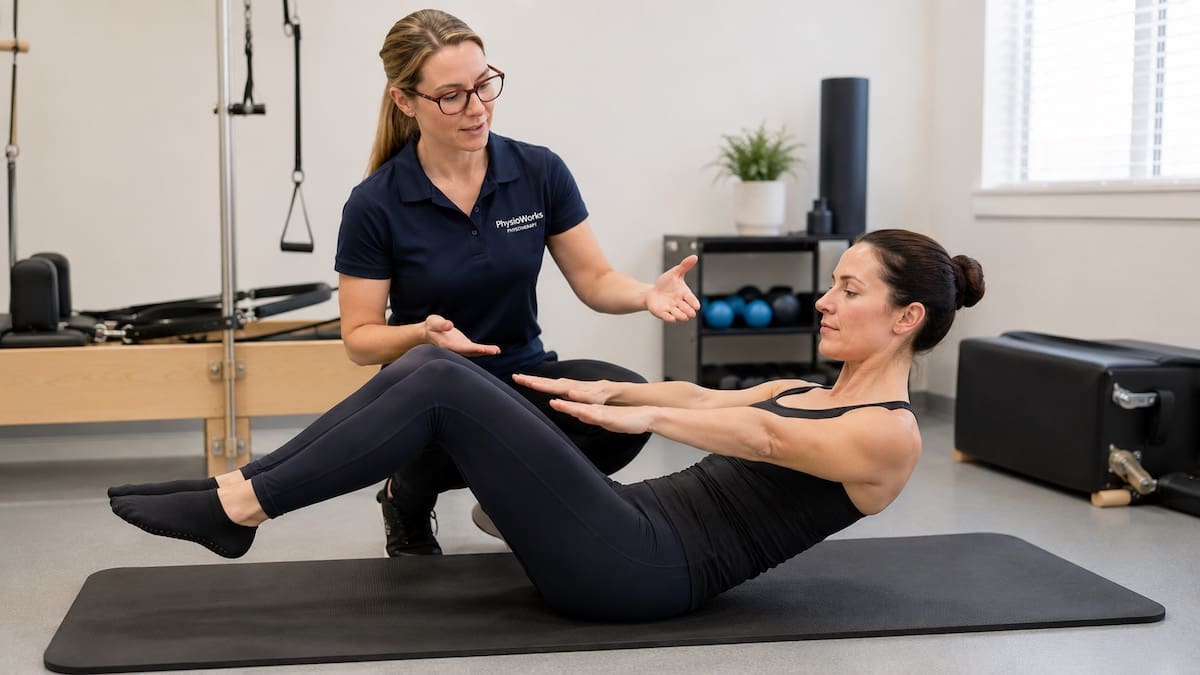
Core stability Pilates exercise for trunk and pelvic control
Core stability training often starts with controlled, low-load movement.

A typical progression may look like this:

Stage Main focus Example
Early Find control without flaring symptoms Breathing, pelvic control, low-load activation
Middle Add movement and endurance Dead bug variations, reformer control, light resistance
Later Build strength and real-world tolerance Squats, hinges, carries, sport or work tasks

Where Does Pilates Fit in a Long-Term Plan?

Once your foundation is better, Pilates can become a useful part of long-term strength, mobility and back care. It may also pair well with Pilates education, Reformer Pilates, clinician-led group exercise or a home program.

The safest pathway depends on your diagnosis, current symptoms and goals. If you load too far beyond your current control, symptoms may flare. That is why exercise progression matters.

Common Reasons People Explore Pilates for Core Stability

  • recurrent lower back pain
  • poor trunk control during exercise
  • difficulty returning to gym, Pilates or sport
  • postural fatigue with sitting or lifting
  • a feeling of weakness, stiffness or instability through the trunk
  • uncertainty about whether group classes are safe yet

Practical takeaway: Pilates is not automatically “good” or “bad” for your core. The better question is whether the exercise, load and coaching match your current body.

Frequently Asked Questions

Is Pilates good for lower back pain?

Pilates may help some people with lower back pain, especially when exercises match their symptoms and ability. It may not suit everyone, particularly if certain movements flare pain or if trunk control needs more individual retraining first.

Is core stability the same as Pilates?

No. Core stability describes how your trunk muscles support and control movement. Pilates is an exercise method that can train some of those qualities. Pilates can support core stability, but the terms are not interchangeable.

Can Pilates make back pain worse?

Yes. Pilates can aggravate symptoms if the exercise is too advanced, the technique is poor, or the program does not suit your diagnosis. Pain that worsens during or after class suggests the program may need modification.

Do I need an assessment before starting Pilates?

An assessment is sensible if you have recurring back pain, recent injury, pelvic pain, nerve symptoms or difficulty controlling movement. It helps identify whether Pilates is suitable now or whether a different starting point would be safer.

What if I cannot feel my deep core muscles working?

That is common. Many people need cues, visual feedback or guided progressions before they can isolate and coordinate deep trunk muscles. Real-time ultrasound may help some people learn the contraction more clearly.

Should I choose mat Pilates, Reformer Pilates or physio exercises?

It depends on your symptoms, goals and control. Mat Pilates can work well for general strength. Reformer Pilates adds support and resistance. Physio exercises may be better when pain, diagnosis or movement control needs closer guidance.

Related PhysioWorks Guides

What to Do Next

If you are considering Pilates for back pain, pelvic stability or trunk control, start with the right diagnosis and the right exercise level. A physiotherapist can help you work out whether you need motor control retraining, graded strengthening, movement correction or a safer pathway back into Pilates.

The right program should match your body, your goals and your current tolerance. Done well, Pilates can form part of a useful long-term plan. Done too early or too aggressively, it may overload the wrong system.

Choose your clinic and appointment pathway

Select a PhysioWorks clinic to continue to live booking, an appointment request or reception assistance.

Back Support Products

These back support products are commonly used by our physiotherapists to help reduce back pain, improve comfort, and support your recovery at home.

View all back support products

Follow PhysioWorks

Get physiotherapy tips, exercise videos, recovery advice and blog updates.

What Causes Lower Back Pain?

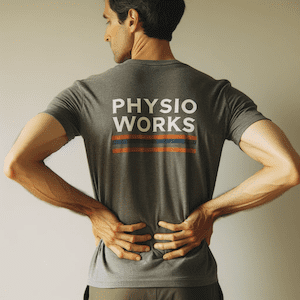
Man clutching her lower back due to pain.

Lower back pain is one of the most common reasons people seek help. It can develop from muscles, joints, discs, ligaments, nerves, or more serious spinal conditions. This page explains the common causes of lower back pain, when symptoms may suggest related problems such as sciatica, and how related conditions such as a bulging disc may contribute.

What Causes Lower Back Pain?

Lower back pain usually happens when the tissues in your lumbar spine become irritated, overloaded, strained, or compressed. In many cases, symptoms relate to non-specific lower back pain, where pain is real but no single structure can be confirmed. In other cases, symptoms may come from a disc, spinal joint, nerve irritation, fracture, infection, or another specific condition.

Common patterns include:

  • local pain in the lower back
  • pain after lifting, bending, twisting, or prolonged sitting
  • stiffness first thing in the morning or after rest
  • pain spreading into the buttock or leg
  • difficulty standing upright, walking, or changing position

How Is Lower Back Pain Categorised?

Clinicians usually group lower back pain into three broad categories. This helps guide diagnosis, treatment, and the urgency of further investigation.

  1. Specific spinal pathology: less than 1% of cases. These are less common but more serious causes such as fracture, infection, inflammatory disease, malignancy, or cauda equina syndrome.
  2. Radicular syndrome: about 5% to 10% of cases. This is pain caused by irritation or compression of a spinal nerve, often including leg pain, pins and needles, numbness, or weakness.
  3. Non-specific lower back pain: about 90% to 95% of cases. This is the most common presentation, where pain arises from the back region but no single structure can be identified with confidence.

Common Causes of Lower Back Pain

Non-specific lower back pain is the most common category. It often relates to a combination of movement overload, reduced conditioning, joint irritation, muscle strain, ligament sprain, disc irritation, stress, poor sleep, or prolonged postures. Many people improve with sensible activity, guided manual physiotherapy, and progressive back exercises.

Some people have more specific diagnoses. A bulging disc may irritate nearby nerves. A pulled back muscle can cause local pain after lifting or sport. Degenerative disc disease, lumbar facet joint pain, and sacroiliac joint pain can also contribute to symptoms.

Why Does Lower Back Pain Sometimes Travel Into the Leg?

Lower back pain that spreads into the buttock, thigh, calf, or foot may suggest nerve irritation. This pattern often occurs with sciatica, a pinched nerve, or other radicular syndromes. Symptoms may include sharp pain, burning, tingling, numbness, or weakness. However, not all leg pain comes from a nerve, so assessment still matters.

Who Gets Lower Back Pain?

Lower back pain can affect teenagers, adults, office workers, tradies, parents, athletes, and older adults. Risk often increases with sudden workload changes, repetitive lifting, long periods of sitting, deconditioning, poor sleep, stress, smoking, previous episodes of back pain, and reduced movement confidence. Good habits such as regular exercise and better posture may help reduce flare-ups.

When Should You Worry About Lower Back Pain?

You should seek urgent medical care if lower back pain is linked with bladder or bowel changes, saddle numbness, significant leg weakness, fever, unexplained weight loss, major trauma, or constant night pain. Severe or worsening symptoms can point to conditions that need prompt investigation. For a practical guide, read severe back pain: causes, symptoms, what to do and when.

How Is Lower Back Pain Managed?

Treatment depends on the cause, your symptoms, and how long the pain has been present. Physiotherapy may include education, movement advice, activity modification, hands-on treatment, graded strengthening, mobility work, and a return-to-work or return-to-sport plan. Many people also benefit from learning the best treatment options for back pain and using a structured back pain prevention plan.

Current clinical guidance supports staying active, avoiding unnecessary bed rest, and using exercise-based care for most uncomplicated cases of lower back pain. Healthdirect also provides a helpful overview of back pain and when to seek medical review.

What Does Recent Research Say?

Research consistently shows that lower back pain is a major global health issue and a leading cause of disability. Evidence also supports non-surgical management for many uncomplicated cases, particularly education, exercise, and a personalised rehabilitation plan based on symptoms, function, and activity goals.

FAQs About Lower Back Pain

What are the main causes of lower back pain?

The main causes of lower back pain include non-specific lower back pain, muscle strain, disc irritation, joint irritation, nerve-related pain such as sciatica, and less common but important spinal conditions. In many people, symptoms relate to several factors rather than one single structure.

How is lower back pain treated?

Lower back pain treatment often includes education, physiotherapy, progressive exercise, temporary activity modification, and pain-relief strategies. Treatment should match the cause, severity, and duration of symptoms. A physiotherapist may also screen for signs that suggest imaging or medical referral is needed.

Can lower back pain be prevented?

Many episodes can be reduced by staying active, building trunk and hip strength, improving lifting habits, varying posture, pacing physical loads, and addressing recovery factors such as sleep and stress. Prevention does not always stop pain completely, but it can reduce the risk of repeated flare-ups.

When should I see a doctor or physiotherapist for lower back pain?

You should seek assessment if pain is severe, lasts longer than expected, keeps returning, travels into the leg, or limits your work, sleep, walking, or usual activity. Seek urgent medical care for bladder or bowel changes, saddle numbness, fever, unexplained weight loss, or major weakness.

How long does lower back pain take to settle?

Many simple episodes improve within a few days to a few weeks, especially when you stay active and use appropriate guidance. Recovery can take longer when pain is persistent, recurrent, nerve-related, or linked to a specific spinal condition. Early assessment can help direct the right plan.

What to Do Next

If your lower back pain is not settling, keeps returning, or is affecting your daily life, book an assessment with your physiotherapist or doctor. Early guidance can help clarify the likely cause, rule out important warning signs, and start a treatment plan that matches your symptoms and goals.

Choose your clinic and appointment pathway

Select a PhysioWorks clinic to continue to live booking, an appointment request or reception assistance.

Back Support Products

These back support products are commonly used by our physiotherapists to help reduce back pain, improve comfort, and support your recovery at home.

View all back support products

Follow PhysioWorks

Get physiotherapy tips, exercise videos, recovery advice and blog updates.

References

  1. Maher C, Underwood M, Buchbinder R. Non-specific low back pain. Lancet. 2017;389(10070):736-747. doi:10.1016/S0140-6736(16)30970-9
  2. Hoy D, March L, Brooks P, et al. The global burden of low back pain: estimates from the Global Burden of Disease 2010 study. Ann Rheum Dis. 2014;73(6):968-974. doi:10.1136/annrheumdis-2013-204428
  3. Qaseem A, Wilt TJ, McLean RM, Forciea MA. Noninvasive treatments for acute, subacute, and chronic low back pain: a clinical practice guideline from the American College of Physicians. Ann Intern Med. 2017;166(7):514-530. doi:10.7326/M16-2367

Back Pain Prevention

Back Pain Prevention Tips

Back pain prevention starts with simple daily habits. Good posture, regular movement, sensible lifting, better workstation setup, and the right exercise plan can all help reduce your risk of flare-ups. For a broader overview of symptoms, causes, and related conditions, start with our back pain hub.

Many people sit too long, move too little, or overload their back during work, sport, parenting, or long drives. Over time, those repeated stresses can build up. The good news is that small changes often make a real difference, especially when you combine movement, strength, and smarter day-to-day habits.

Why Is Back Pain Prevention Important?

Preventing back pain matters because recurring back pain can affect work, sleep, exercise, driving, and everyday comfort. It can also lead to reduced activity, stiffness, and loss of confidence with bending, lifting, or returning to exercise. Good prevention habits aim to keep your spine moving well and your body more resilient to load.

How Can You Improve Back Pain Prevention Each Day?

The best back pain prevention plan is practical and repeatable. Aim to move often, build strength gradually, and reduce long periods of static posture. The sections below cover the main areas worth improving.

1. Improve Your Posture

Poor posture alone does not explain every episode of back pain, but long periods in one position can increase strain. Try the simple cue of “grow tall”: gently lift your chest, relax your shoulders, keep your chin level, and avoid slumping for long periods. This can help during sitting, standing, desk work, and walking. Read more in our posture improvement tips.

2. Break Up Prolonged Sitting

Your back usually tolerates movement better than stillness. If you sit for work, study, or driving, stand up every 30 to 45 minutes. Walk briefly, stretch, or reset your posture. For many people, this is one of the easiest ways to improve back pain prevention without changing much else.

3. Use Safer Lifting Technique

When lifting, keep the object close to your body, bend through your hips and knees, and avoid twisting while carrying load. Spread your feet for balance and use your legs and gluteal muscles to help generate force. If lifting is a regular part of your work, a physiotherapist may also review your technique and overall load tolerance.

4. Set Up Your Workstation Properly

Desk setup can influence how your back feels through the day. Adjust your chair so your lower back is supported, place your screen at a comfortable height, and keep your keyboard and mouse close enough that your shoulders stay relaxed. Our ergonomics page explains this in more detail.

5. Build Strength and Control

Stronger muscles help your back tolerate work, sport, and daily activity. Most people benefit from a mix of trunk strength, hip strength, flexibility, and general conditioning. A tailored program may include back exercises, gym back exercises, and core stability training. If flexibility is limited, these flexibility exercises may also help.

Back pain prevention exercises supervised by a physiotherapist on an exercise mat
A patient performs guided exercises to improve strength, posture, and back control

6. Review Your Mattress and Pillow

Sleep position and support can influence morning stiffness and overnight comfort. If you regularly wake with pain, your mattress or pillow may be part of the problem. Read our guide on finding the best pillow for you and our article on sleeping positions for back and neck health.

7. Think About Driving Posture

Long drives combine sitting, vibration, and limited movement. Sit tall, keep your lower back supported, and stop regularly for short walks on longer trips. You can also browse our lumbar support options if you need extra support in the car.

Who Benefits Most From Back Pain Prevention?

Everyone can benefit, but prevention becomes especially important if you sit for long periods, lift often at work, drive a lot, have had previous back pain, or are returning to exercise after time off. It is also useful for parents, tradies, office workers, runners, and gym-goers who want to reduce repeat flare-ups.

Where Should You Focus On Back Pain Prevention?

Back pain prevention should happen where your back gets loaded most: at your desk, in the car, at the gym, during work tasks, and while sleeping. A good plan looks at your real routine rather than relying on one single exercise or one-off treatment.

When Should You Start Back Pain Prevention?

Start before pain becomes persistent. Prevention works best when it becomes part of your weekly routine rather than something you do only after a flare-up. If you already have symptoms, active management and early advice can still help reduce recurrence. You may also find our guides on what causes back pain and back pain treatment options helpful.

What Else Helps Reduce The Risk Of Back Pain?

Research suggests exercise, and exercise combined with education, can help reduce future low back pain episodes for many people. For a plain-language overview, Healthdirect explains common causes, prevention ideas, and when to seek care for low back pain.

How Do You Know When To Seek Professional Advice?

Seek professional advice if your back pain keeps returning, lasts more than a couple of weeks, limits work or sleep, or includes leg pain, pins and needles, numbness, or weakness. You should also get urgent medical assessment if you develop bladder or bowel changes, saddle numbness, severe trauma-related pain, fever, or unexplained weight loss.

Back Pain Prevention FAQs

  1. What causes back pain most often? Common contributors include muscle strain, joint irritation, prolonged sitting, poor load management, reduced strength, and sudden increases in activity. Sometimes more than one factor is involved, which is why an assessment can help identify the main drivers. See what causes back pain.
  2. What are the best exercises for back pain prevention? The best exercises usually improve strength, control, and tolerance to daily load. Walking, trunk strengthening, hip strengthening, and flexibility work are common starting points. Our back exercises and core stability training guides are useful places to begin.
  3. Does posture really matter for preventing back pain? Yes, but mainly because long static postures can irritate your back over time. Good posture is less about being perfectly upright all day and more about changing position regularly, staying comfortable, and avoiding prolonged slumped sitting. Read our posture FAQs.
  4. Can a mattress or pillow affect back pain? They can. If you wake with stiffness or discomfort, your sleep setup may be contributing. Better support and better sleep position can help some people. Read more about choosing a pillow and sleeping positions.
  5. When should I see a physiotherapist for back pain prevention? It is sensible to see a physiotherapist if you have repeat flare-ups, are unsure which exercises suit you, or want help with lifting, work posture, gym technique, or return-to-activity planning. Early guidance often helps you build a clearer plan and avoid setbacks.

What To Do Next

If you want help with back pain prevention, a physiotherapist can assess your posture, movement, flexibility, strength, work setup, and activity levels, then build a plan that suits your goals. This may include targeted exercise, load management advice, ergonomic changes, and strategies to reduce future flare-ups. You can book a consultation via PhysioWorks online bookings.

Choose your clinic and appointment pathway

Select a PhysioWorks clinic to continue to live booking, an appointment request or reception assistance.

Back Support Products

These back support products are commonly used by our physiotherapists to help reduce back pain, improve comfort, and support your recovery at home.

View all back support products

Follow PhysioWorks

Get physiotherapy tips, exercise videos, recovery advice and blog updates.

Related Articles

  1. Back Pain – Explore common back pain causes, symptoms, and related spinal conditions.
  2. Lower Back Pain – Learn more about lumbar pain patterns, red flags, and treatment options.
  3. Posture Improvement Tips – Practical advice for sitting, standing, and moving better through the day.
  4. Ergonomics – Improve your workstation and reduce repeated spinal strain.
  5. Back Exercises – Guided exercises to improve control, strength, and confidence.
  6. Core Stability Training – Build trunk control and support your spine more effectively.
  7. Best Sleeping Positions for Back and Neck Health – Sleep setup tips that may improve overnight comfort.
  8. What Causes Back Pain? – A useful guide to common triggers and contributing factors.

References

  1. Steffens D, Maher CG, Pereira LSM, et al. Prevention of Low Back Pain: A Systematic Review and Meta-analysis. JAMA Internal Medicine. 2016.
  2. de Campos TF, Maher CG, Fuller JT, et al. Prevention strategies to reduce future impact of low back pain: a systematic review and meta-analysis. British Journal of Sports Medicine. 2021.
  3. Shiri R, Coggon D, Falah-Hassani K. Exercise for the Prevention of Low Back Pain: Systematic Review and Meta-analysis of Controlled Trials. American Journal of Epidemiology. 2018.

Can an Exercise Ball Help Lower Back Pain?

Exercise ball exercises for core stability, posture awareness and lower back pain control

Article by John Miller & Erin Runge
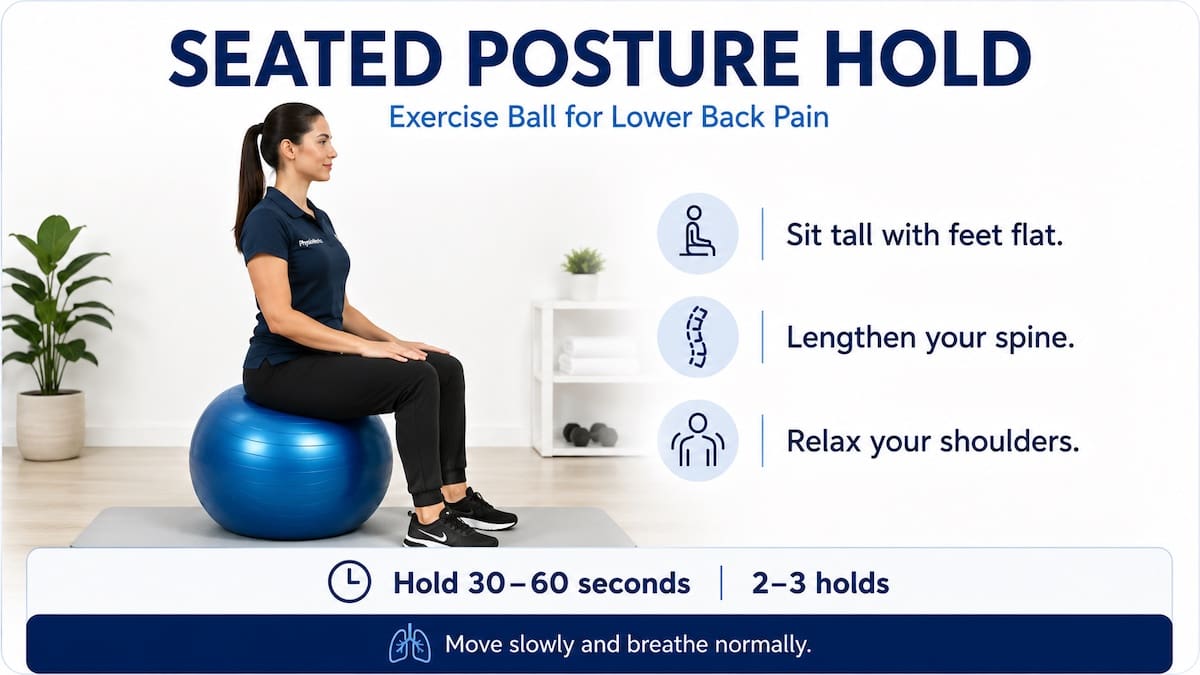
exercise ball for lower back pain seated posture hold

Start with upright seated posture control.

An exercise ball for lower back pain may help some people improve core stability, posture awareness and movement confidence. The ball adds gentle instability, so your trunk, hips and pelvis make small balance corrections while you move.

However, an exercise ball is not a stand-alone fix. It usually works better as part of a broader plan that includes core stability training, graded strengthening, sensible activity progressions and advice matched to your symptoms.

Quick answer: An exercise ball may help lower back pain when you use it for short, controlled exercises. Start with easy drills, keep symptoms settled and avoid using the ball all day as a desk chair.

If you need help choosing the right size, read our guide: What exercise ball size should I use? You can also view our 66fit exercise balls for home and clinic exercise programs.

Why May an Exercise Ball Help Lower Back Pain?

An exercise ball changes how your body balances. When you sit, shift weight or perform simple exercises, your deep trunk muscles and larger support muscles work together to keep you steady.

For people with lower back pain, this may help rebuild control before harder strengthening. It can also improve confidence with movement, especially when pain has made you stiff, guarded or hesitant.

Exercise ball benefits may include

  • better awareness of spinal and pelvic position
  • gentle activation of trunk and hip support muscles
  • improved balance and movement control
  • a low-load starting point after some back pain flare-ups
  • more confidence before progressing to harder back exercises

How Should You Start Using an Exercise Ball?

Start small. Many flare-ups happen when people do too much, too soon. Treat the ball like training equipment, not a chair replacement. Keep early sessions short, move slowly and stop if symptoms spread or increase.

Stage What to try Progress when
Beginner Seated posture holds, gentle pelvic tilts and relaxed breathing. Pain stays mild and settles quickly.
Control Weight shifts, supported bridging and arm movements while seated. You can stay steady without breath-holding.
Strength Bridge progressions, dead bug-style control and gentle squat support. Symptoms remain stable the next day.
Function Progress into lifting control, gym work, walking, sport or work tasks. You need more challenge and have good control.

Simple Exercise Ball Options for Lower Back Pain

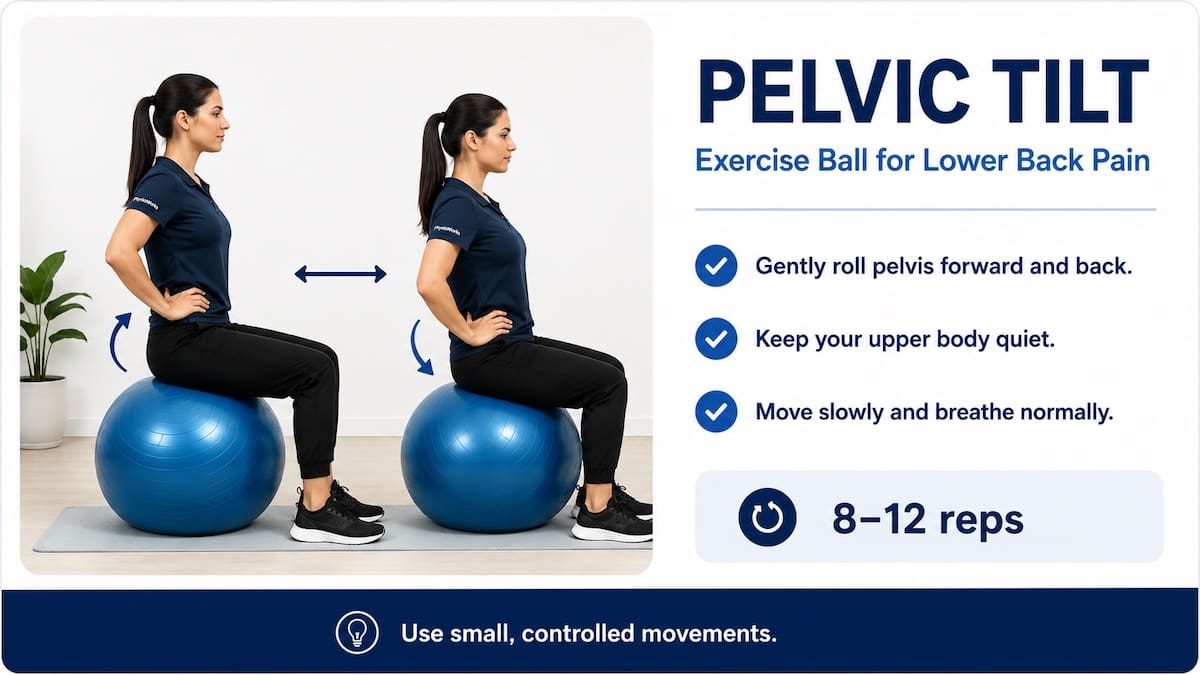
A physiotherapist may begin with low-load exercises that suit your pain pattern and confidence. Common options include seated pelvic tilts, gentle weight shifts, supported bridging and controlled arm or leg movements while keeping the trunk steady.

The goal is control first, then strength and endurance. For more ideas, read our related guide: Core exercises for lower back pain.

exercise ball for lower back pain pelvic tilt exercise

Use small pelvic tilts for control.

Use this safety rule

A mild effort feeling is fine. Sharp pain, spreading leg pain, numbness, pins and needles, or symptoms that stay worse the next day suggest the exercise needs to change.

Reduce the range, shorten the session, use a smaller challenge, or book an assessment if you are unsure.

Should You Sit on an Exercise Ball All Day?

Usually, no. A ball may help you move more and notice posture changes, but long sitting can still irritate lower back pain. Some people also fatigue and slump when they sit on a ball for too long.

For desk work, use the ball in short blocks if it suits you. Then return to a supportive chair and keep taking movement breaks. Our guide on ball chair benefits explains this in more detail.

When Should You Use Caution?

An exercise ball for lower back pain may not suit every person or every stage. Pause and get advice if your pain is severe, your balance is poor, or symptoms travel into your leg.

  • Avoid unstable ball drills during a strong flare-up unless guided.
  • Use extra care if you feel dizzy, unsteady or at risk of falling.
  • Seek urgent medical care for bladder or bowel changes, saddle numbness, fever, major trauma or rapidly worsening leg weakness.
  • Book a physiotherapy assessment if symptoms keep returning or you do not know where to start.

If safety is your main concern, review our related FAQ: Are anti-burst exercise balls safe?

How Does Physiotherapy Fit In?

A physiotherapist can assess whether your lower back pain relates to movement control, strength, endurance, joint stiffness, nerve sensitivity, workload or another factor. From there, they can help you choose the right starting exercises and progress them safely.

Exercise ball work may form one part of back pain physiotherapy. Your plan may also include walking, mobility work, hip and trunk strengthening, lifting retraining and pacing strategies. For a broader condition guide, visit lower back pain causes and treatment.

exercise ball for lower back pain seated marching exercise

Progress to slow seated marching.

Related PhysioWorks Guides

Exercise Ball FAQs

Can an exercise ball help lower back pain?

Yes, an exercise ball for lower back pain may help some people improve trunk control, balance and confidence with movement. It works better when exercises start gently and progress gradually.

How long should I use an exercise ball for back pain?

Start with 5 to 10 minutes of simple drills. Build time only if symptoms stay settled during and after exercise. Longer sessions are not always better.

Is it safe to sit on an exercise ball all day?

Sitting on a ball all day is not usually ideal. Use it in short blocks if it feels helpful, then return to a supportive chair and keep taking movement breaks.

What size exercise ball should I use?

Choose a ball that lets you sit with both feet flat and your hips level with, or slightly higher than, your knees. Your exercise goal may also affect the right size.

Which exercise ball exercises are easiest to start with?

Many people start with seated posture holds, pelvic tilts, gentle weight shifts and relaxed breathing. These drills build control before harder strengthening work.

When should I avoid exercise ball exercises?

Avoid or pause ball exercises if pain worsens, symptoms spread down the leg, you feel unstable, or you develop numbness, pins and needles, or weakness.

What to Do Next

If lower back pain keeps returning, focus on a clear plan rather than guessing. Start with short, controlled movement, build strength gradually and match exercise difficulty to your symptoms.

If you are unsure which exercises suit your back, book a physiotherapy assessment. Your physiotherapist can help you choose safe starting drills and progress toward daily activity, gym, work or sport.

Choose your clinic and appointment pathway

Select a PhysioWorks clinic to continue to live booking, an appointment request or reception assistance.

Back Pain Tips: 7 Evidence-Based Ways to Move Better, Hurt Less & Recover Faster

A Physiotherapist’s Guide to a Stronger, Healthier Back

Discover practical, research-based strategies to ease back pain, move with confidence, and build long-term strength. Written by physiotherapist John Miller, this concise guide blends science and decades of clinical experience to help you recover faster and stay active for life.

  • Clear, actionable advice grounded in current research
  • Whole-person approach: movement, sleep, mindset and care team
  • Includes a quick flare-up plan, FAQs and daily habits

Follow PhysioWorks

Get physiotherapy tips, exercise videos, recovery advice and blog updates.

References

  1. World Health Organization. WHO guideline for non-surgical management of chronic primary low back pain in adults in primary and community care settings. World Health Organization; 2023.
  2. George SZ, Fritz JM, Silfies SP, Schneider MJ, Beneciuk JM, Lentz TA, et al. Interventions for the management of acute and chronic low back pain: revision 2021. J Orthop Sports Phys Ther. 2021;51(11):CPG1-CPG60. doi:10.2519/jospt.2021.0304
  3. Smrcina Z, Woelfel S, Burcal C. A systematic review of the effectiveness of core stability exercises in patients with non-specific low back pain. Int J Sports Phys Ther. 2022;17(5):766-774. doi:10.26603/001c.37251
  4. Cheng M, Tian Y, Ye Q, et al. Evaluating the effectiveness of six exercise interventions for low back pain: a systematic review and meta-analysis. BMC Musculoskelet Disord. 2025;26:433. doi:10.1186/s12891-025-08658-0

Does Smoking or Diabetes Cause Lower Back Pain?

Does smoking or diabetes cause lower back pain physiotherapy assessment of lumbar movement and posture

Physiotherapist assessing lower back movement while considering lifestyle factors such as smoking, health, and activity levels.

Smoking may increase the risk of lower back pain and spinal degeneration, while diabetes may also be linked with lower back pain through broader health factors. Neither issue explains every case on its own. For the broader picture, start with our back pain guide.

This page explains what current research suggests, which lifestyle factors matter most, and which common beliefs are probably myths. If your symptoms are ongoing, also see lower back pain and common causes of back pain.

Quick answer

  • Smoking is linked with a higher risk of lower back pain.
  • Smoking is also linked with more spinal degeneration in some studies.
  • Diabetes may be associated with lower back pain, but it is unlikely to be the only reason.
  • Sleep, stress, body weight, fitness, and daily loading also matter.
  • Back pain usually needs a broader assessment than one single lifestyle factor.

Lifestyle factors: fact vs myth

Some lifestyle habits may increase lower back pain risk. Others are often blamed without strong evidence.

  • Smoking → FACT — linked with higher rates of back pain and spinal degeneration.
  • Low physical activity → FACT — reduced movement can lower strength and load tolerance.
  • Poor sleep → FACT — sleep disturbance is associated with back pain and slower recovery.
  • Obesity → FACT — excess body weight is associated with a higher risk of lower back pain.
  • Stress → PARTLY TRUE — stress can amplify pain sensitivity and disability, but it is usually one contributor rather than the sole cause.
  • Diabetes → PARTLY TRUE — associated with back pain, but often through broader health factors.
  • Tattoos → MYTH — there is no good evidence that tattoos cause lower back pain.
  • “Bad posture” alone → MYTH — posture is rarely the sole explanation for ongoing lower back pain.

What lifestyle factors increase lower back pain risk?

Lifestyle factors such as smoking, low physical activity, poor sleep, excess body weight, stress, and broader metabolic health may increase the likelihood of lower back pain. These factors often affect tissue health, pain sensitivity, recovery, and load tolerance rather than acting as one simple direct cause.

That is why lower back pain usually needs a broader assessment. A person may have one clear diagnosis, such as a bulging disc or spinal stenosis, but symptoms can still be influenced by sleep, stress, smoking, fitness, and general health.

Does smoking cause lower back pain?

Smoking does not explain every case of lower back pain, but research suggests it is a meaningful risk factor. It may increase the likelihood of back pain, ongoing symptoms, and degenerative spinal change. Smoking is better viewed as one contributor within a bigger picture rather than the only cause.

Several mechanisms may help explain this link. Smoking can reduce blood flow, increase systemic inflammation, affect disc nutrition, slow tissue healing, and lower physical capacity. These factors may make the lumbar spine less tolerant of repeated daily loads, work demands, and sport.

Why might smoking affect the spine?

Smoking may affect the spine by reducing tissue health and recovery capacity. Over time, that may make discs, joints, and surrounding tissues less able to handle normal stress. This does not mean smoking creates a single diagnosis, but it may raise the chance of pain persistence and degenerative change.

That matters because lower back pain is rarely caused by one factor alone. A person who smokes may also have lower exercise tolerance, poorer sleep, higher stress, slower recovery, and less confidence with movement. Together, those issues can amplify pain and slow rehabilitation.

Does diabetes cause lower back pain?

Diabetes does not automatically cause lower back pain, but it may be associated with it. Newer reviews suggest people with diabetes are more likely to report lower back pain than people without diabetes. Even so, the link is probably indirect in many cases.

For example, diabetes may sit alongside higher body weight, lower activity levels, poorer circulation, nerve sensitivity, and slower tissue recovery. These factors can all influence pain. That is why it is better to ask how diabetes may contribute to back pain risk, rather than treating it as a simple yes-or-no cause.

Do sleep, stress, and body weight affect lower back pain?

Yes. Sleep disturbance, psychological stress, and excess body weight are all associated with lower back pain. However, they usually act by changing pain sensitivity, tissue loading, physical capacity, and recovery rather than by creating one single spinal diagnosis.

This is another reason why a broader management plan often works better than chasing one “magic” cause. Improving sleep, pacing load, building strength, and increasing activity tolerance may all help alongside condition-specific treatment.

Do tattoos or posture cause lower back pain?

Tattoos are not recognised as a cause of lower back pain. They should not be considered a meaningful spinal risk factor. “Bad posture” is also often oversimplified. Posture may influence comfort in some positions, but it is rarely the sole reason someone develops ongoing back pain.

In practice, most back pain is better explained by a mix of load, movement tolerance, strength, recovery, sleep, stress, health factors, and the specific tissues involved. If symptoms persist, a proper assessment is far more useful than blaming tattoos or one posture habit.

Which spinal conditions matter more than lifestyle myths?

Lifestyle factors are background contributors. They are usually less useful than identifying the actual pain pattern or diagnosis driving your symptoms. In practice, people often need assessment for conditions such as lower back pain, degenerative disc disease, spinal stenosis, or disc-related pain.

That is why broad health risk factors should never replace a proper mechanical and functional assessment. The pattern of your pain, what aggravates it, whether it spreads into the leg, and how it responds to movement are usually more helpful clinically.

Can physiotherapy help if smoking, diabetes, or degeneration are part of the picture?

Yes. Physiotherapy may help by identifying the main drivers of your pain and building a practical plan around them. Treatment often focuses on movement confidence, load management, strength, mobility, pacing, and gradual return to normal activity.

If your symptoms are recurring, you may also benefit from back pain physiotherapy and a guided program of back pain exercises. Management often works best when lifestyle risks and physical contributors are addressed together.

When should you worry about lower back pain?

You should seek prompt medical review if back pain follows significant trauma, comes with fever, unexplained weight loss, severe night pain, progressive leg weakness, saddle numbness, or bladder or bowel changes. Those features need urgent attention.

If your pain is not urgent but keeps returning, limits work, disturbs sleep, or stops exercise, an assessment is still worthwhile. Waiting too long can let stiffness, fear of movement, and loss of strength build up around the problem.

Related back pain information

Frequently asked questions

Does smoking cause lower back pain?

Smoking may increase the risk of lower back pain and spinal degeneration, but it does not explain every case. It is better viewed as one contributor within a broader mix of loading, tissue health, activity levels, recovery, and general health factors.

Does diabetes cause lower back pain?

Diabetes does not automatically cause lower back pain, but it may be associated with it. The relationship appears to be influenced by factors such as body weight, inflammation, circulation, nerve health, physical activity, and recovery capacity.

Do sleep, stress, and body weight affect lower back pain?

Yes. Sleep disturbance, stress, and excess body weight are all associated with lower back pain. However, they usually influence pain through recovery, sensitivity, loading, and physical capacity rather than acting as one single direct cause.

Do tattoos or posture cause lower back pain?

Tattoos are not recognised as a cause of lower back pain. Posture may affect comfort in some positions, but it is rarely the sole explanation for ongoing lower back pain. Most cases are better explained by a mix of load, movement tolerance, strength, recovery, and health factors.

Can physiotherapy help if smoking, diabetes, or degeneration are part of the picture?

Yes. Physiotherapy may help by identifying the main drivers of your pain and building a practical plan around movement, load management, strength, mobility, pacing, and return to activity. Treatment usually works best when lifestyle and physical factors are addressed together.

When should you worry about lower back pain?

You should seek prompt medical review if back pain follows major trauma, comes with fever, unexplained weight loss, severe night pain, progressive leg weakness, saddle numbness, or bladder or bowel changes. Persistent or recurring pain also deserves assessment.

What to do next

If you smoke, quitting may help your long-term spine health as well as your general health. If you have diabetes, good overall management may improve your capacity to exercise and recover. However, neither issue should stop you from getting your back pain assessed properly.

If your lower back pain is persistent, keeps coming back, or affects daily function, book a physiotherapy assessment. A clearer diagnosis and a tailored rehabilitation plan are usually more helpful than assuming the cause is only smoking, diabetes, posture, tattoos, or age-related degeneration.

Choose your clinic and appointment pathway

Select a PhysioWorks clinic to continue to live booking, an appointment request or reception assistance.

Back Support Products

These back support products are commonly used by our physiotherapists to help reduce back pain, improve comfort, and support your recovery at home.

View all back support products

Follow PhysioWorks

Get physiotherapy tips, exercise videos, recovery advice and blog updates.

References

  1. Shiri R, Karppinen J, Leino-Arjas P, Solovieva S, Viikari-Juntura E. The association between smoking and low back pain. Am J Med. 2010;123(1):87.e7-35.
  2. Pozzobon D, Ferreira PH, Dario AB, Almeida L, Vesentini G, Harmer AR. Is there an association between diabetes and neck and back pain? A systematic review with meta-analyses. PLoS One. 2019;14(2):e0212030.
  3. Amiri S, Behnezhad S. Sleep disturbances and back pain: systematic review and meta-analysis. Neuropsychiatr Dis Treat. 2020;16:731-748.
  4. Shiri R, Karppinen J, Leino-Arjas P, Solovieva S, Viikari-Juntura E. The association between obesity and low back pain: a meta-analysis. Am J Epidemiol. 2010;171(2):135-154.
  5. Swain CTV, Pan F, Owen PJ, Schmidt H, Belavy DL. No consensus on causality of spine postures or physical activities and low back pain: an umbrella review. Eur Spine J. 2020;29(5):1027-1036.
  6. Kluger N, Sleth JC. Tattoo and epidural analgesia: rise and fall of a myth. Int J Obstet Anesth. 2020;44:89-91.
You've just added this product to the cart: