

Does Ultrasound Physiotherapy Help Lower Back Pain?
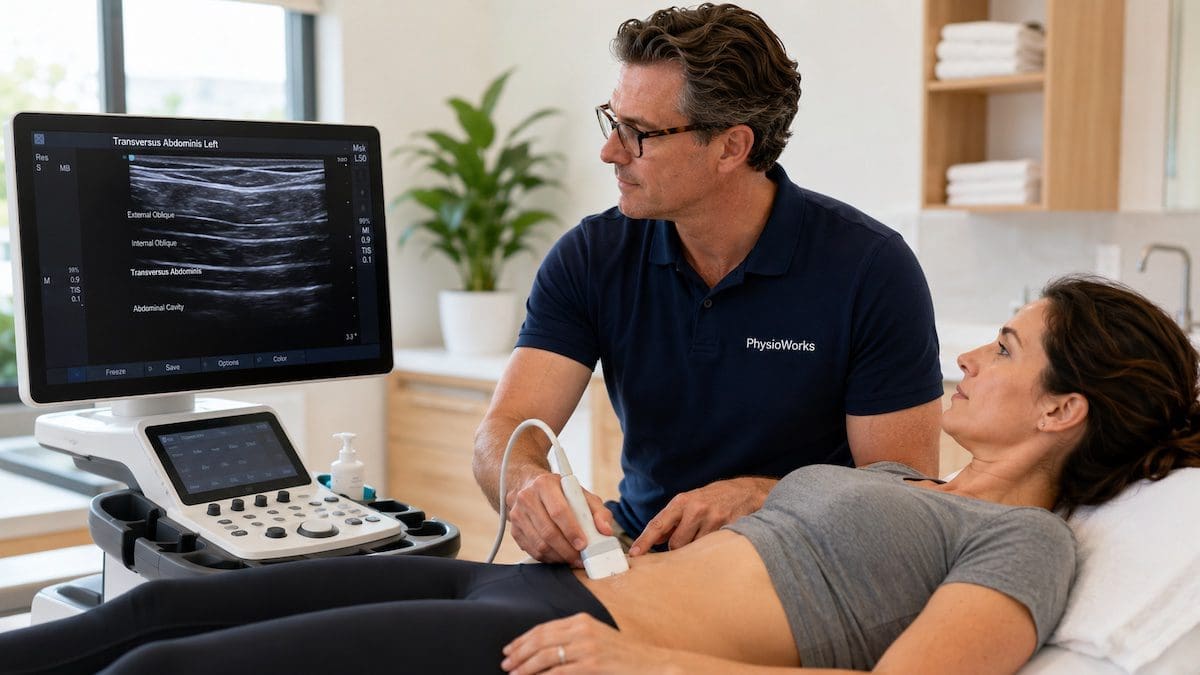
Live scan feedback can help you learn deep core control.
Ultrasound physiotherapy for lower back pain may help when your physio uses live scan feedback to guide muscle control and exercise. This is called real-time ultrasound, or RTUS.
RTUS is not the same as therapeutic ultrasound. It shows live muscle movement on a screen. It does not aim to heat tissue. At PhysioWorks, it is used with real-time ultrasound retraining, lower back pain physio care and back exercises.
Quick answer: RTUS may help some people with back pain when deep core control is hard to feel.
Best use: It works best as a feedback tool during active rehab.
Does Ultrasound Physiotherapy Help Lower Back Pain?
It can help in selected cases. RTUS lets your physio see how some deep core muscles switch on. The task is simple. You breathe. You brace. You relax. You move. This can help when pain keeps coming back. It can also help when normal cues do not help enough.
The goal is simple. You learn what the right muscle action feels like. You learn when you brace too hard. You learn when you hold your breath.
What Does RTUS Show?
RTUS uses a scan probe and screen. Your physio may watch deep core muscles as you breathe, brace, relax or move.
This can help you see if the target muscle switches on. It can show if larger outer muscles take over. It can also show if you can relax after the effort.
RTUS may help check:
- gentle deep core activation.
- breathing and bracing control.
- relaxation after the effort.
- muscle timing during simple moves.
- carryover into exercise.
Who May Benefit Most?
RTUS may suit people with back pain that flares again and again. It may also help if exercise feels vague. You may not know if the right muscle is on. The scan can make that clearer.
Your physio will still do a full check first. They may look at how you move. They may test a bend. They may test a lift. They may watch you walk. They will then decide if RTUS is useful. Another plan may be a better fit.
What Happens During RTUS Retraining?
You will usually lie or sit in a relaxed way. Your physio places the probe on the skin with gel. You breathe. You brace. You relax. You move. Both of you look at the screen.
Your physio may then change your cues. The screen shows if the change worked. This makes the drill easier to learn. For more detail, read Real-Time Ultrasound Retraining: What to Expect.
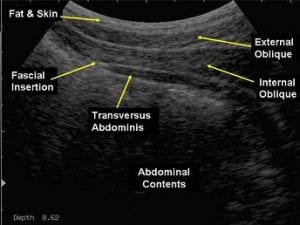
The scan screen can help explain muscle activation.
How Your Plan May Progress
RTUS feedback is only one step. Once you can find the right muscle action, your physio may add real tasks. These should matter to you.
| Stage | Focus | Examples |
|---|---|---|
| Early. | Awareness. | Breathing, gentle brace, relax. |
| Middle. | Control. | Bend, roll, sit, stand, reach. |
| Later. | Carryover. | Lift, gym work, walk, run, sport. |
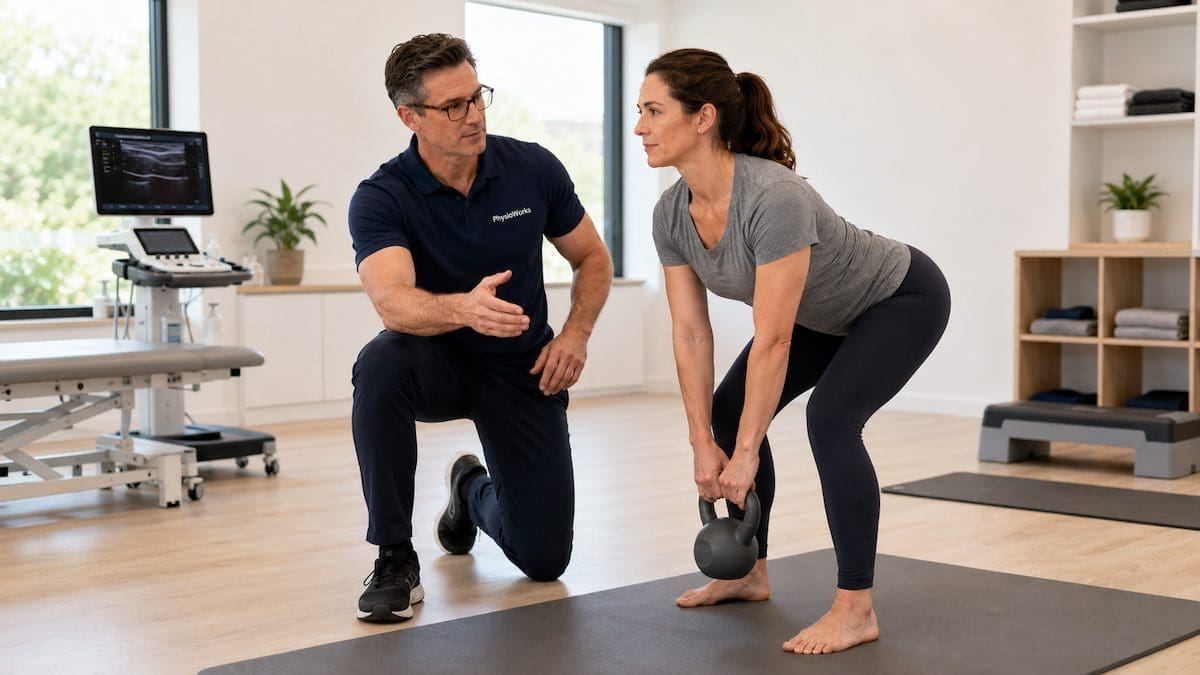
Retraining can progress into confident movement control.
When Is RTUS Not Needed?
RTUS is not needed for every back pain case. If strength is the main issue, other care may matter more. The same may apply with sleep, stress, work load, nerve pain or fitness.
Also, RTUS is not a quick fix. It is a feedback tool. The value comes from the plan. You still need to practise.
Book an assessment if:
- your back pain keeps coming back.
- you cannot feel the right muscle working.
- exercise often flares your pain.
- you brace too hard or feel guarded.
- you need a clear plan to get moving again.
Where Is RTUS Available?
Real-time ultrasound physiotherapy is available at selected PhysioWorks clinics. Your physio will confirm if it suits your back pain. They will also check your goals.
Related Information
These pages may help you link RTUS feedback with your back pain plan.
- Lower Back Pain Physiotherapy.
- Real-Time Ultrasound Retraining.
- Real-Time Ultrasound: What to Expect.
- What Can Real-Time Ultrasound Physiotherapy Help With?.
- Exercises for Lower Back Pain.
- Back Pain Products & FAQs.
- Physiotherapy.
Ultrasound Physiotherapy Lower Back Pain FAQs
Does ultrasound physiotherapy help lower back pain?
It may help some people when RTUS is used as feedback for deep core retraining. It works best with exercise. It also works best with advice and a graded return to normal tasks.
Is RTUS the same as therapeutic ultrasound?
No. RTUS uses live images to show muscle movement. Therapeutic ultrasound is a different treatment that uses sound waves on soft tissue.
What muscles can RTUS show?
Your physio may use RTUS to view deep core muscles. These may include transversus abdominis or multifidus. The target depends on your signs, goals and exam findings.
Do I still need exercises?
Yes. The scan helps you learn. Exercise helps you build skill. It also helps build strength and trust in your back.
Where is RTUS available at PhysioWorks?
RTUS is available at selected PhysioWorks clinics, including Ashgrove and Sandgate. Your physio can tell you if it suits your back pain.
What to Do Next
If your back pain keeps coming back, book a physiotherapy assessment. Your physio can check if RTUS-guided retraining is useful. They can also tell you if another plan should come first.
Book Online 24/7 and choose the clinic that suits you.
Choose your clinic and appointment pathway
Select a PhysioWorks clinic to continue to live booking, an appointment request or reception assistance.
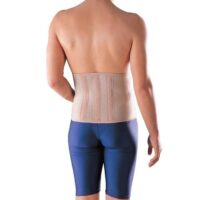
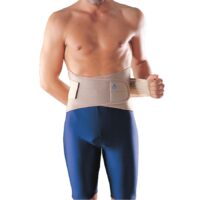
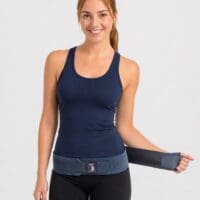
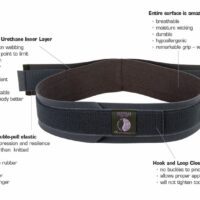
Back Support Products
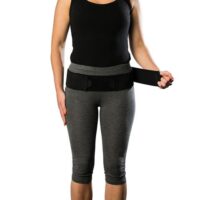
These back support products are commonly used by our physiotherapists to help reduce back pain, improve comfort, and support your recovery at home.
-
- Braces & Supports, Back, Maternity, SIJ
AOM38 AllCare Ortho Core Stability Belt
$49.95Select optionsQuick View -
 Back, Braces & Supports, Maternity, Posture
Pregnancy Belly Band & C-Section 3-in-1
$94.99Select optionsQuick View -
 Back, Braces & Supports, Maternity, SIJ
Core Stability Support – OPPO 3462
$54.00Select optionsQuick View -
 Braces & Supports, Back, Maternity, SIJ
Maternity Support Belt – OPPO 4062
$37.00Select optionsQuick View -
 Back, Braces & Supports, Maternity, Posture
Maternity Back Support – OPPO 2062
$60.00 – $64.00Select optionsQuick View -
-


References
- Australian Commission on Safety and Quality in Health Care. Low Back Pain Clinical Care Standard. Sydney: ACSQHC; 2022.
- Whittaker JL, Ellis R, Hodges PW, et al. Imaging with ultrasound in physical therapy: what is the PT’s scope of practice? A competency-based educational model and training recommendations. Br J Sports Med. 2019;53(23):1447-1453. doi:10.1136/bjsports-2018-100193
- Valera-Calero JA, Fernández-de-las-Peñas C, Varol U, Ortega-Santiago R, Gallego-Sendarrubias GM, Arias-Buría JL. Ultrasound imaging as a visual biofeedback tool in rehabilitation: an updated systematic review. Int J Environ Res Public Health. 2021;18(14):7554. doi:10.3390/ijerph18147554
- Sarafadeen R, Ganiyu SO, Ibrahim AA. Lumbar stabilization exercise with and without real-time ultrasound imaging biofeedback in chronic low back pain patients: a randomized controlled trial. Sci Rep. 2025;15:31465. doi:10.1038/s41598-025-20942-6