Is Ultrasound Retraining the Whole Cure for Lower Back Pain?


Is Ultrasound Retraining the Whole Cure for Lower Back Pain?


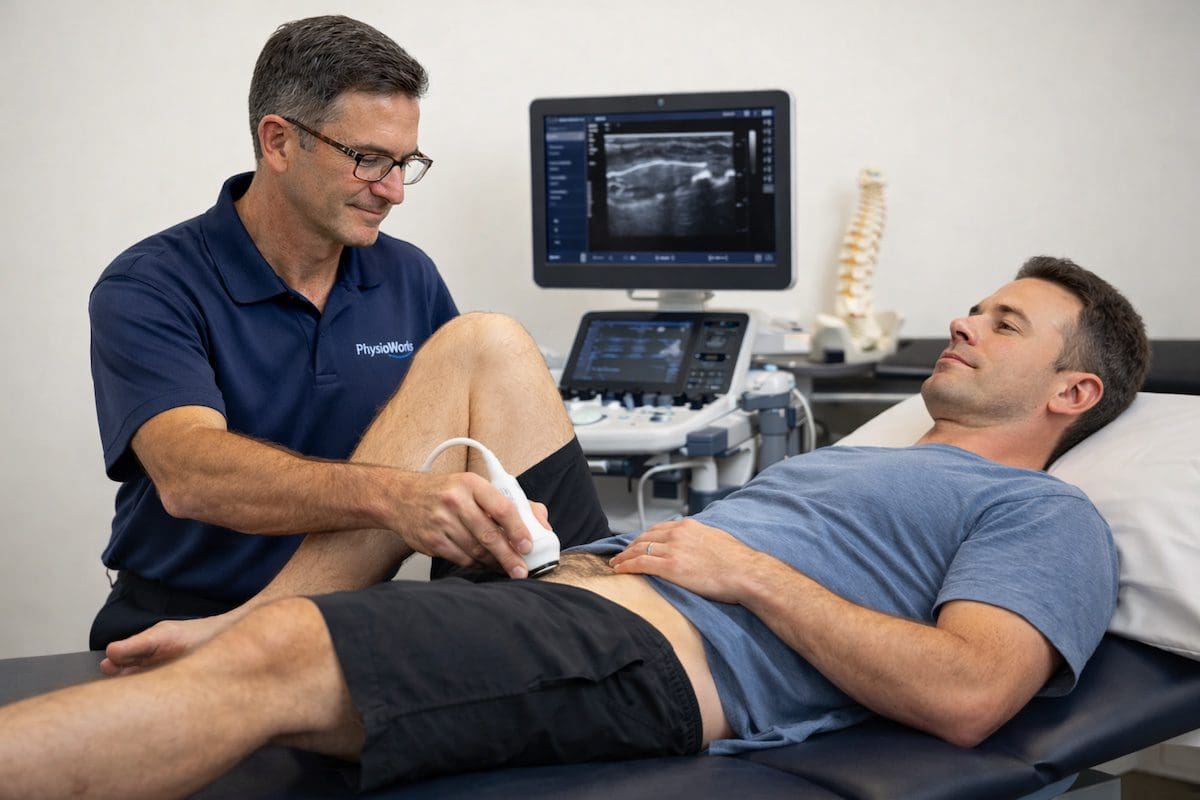
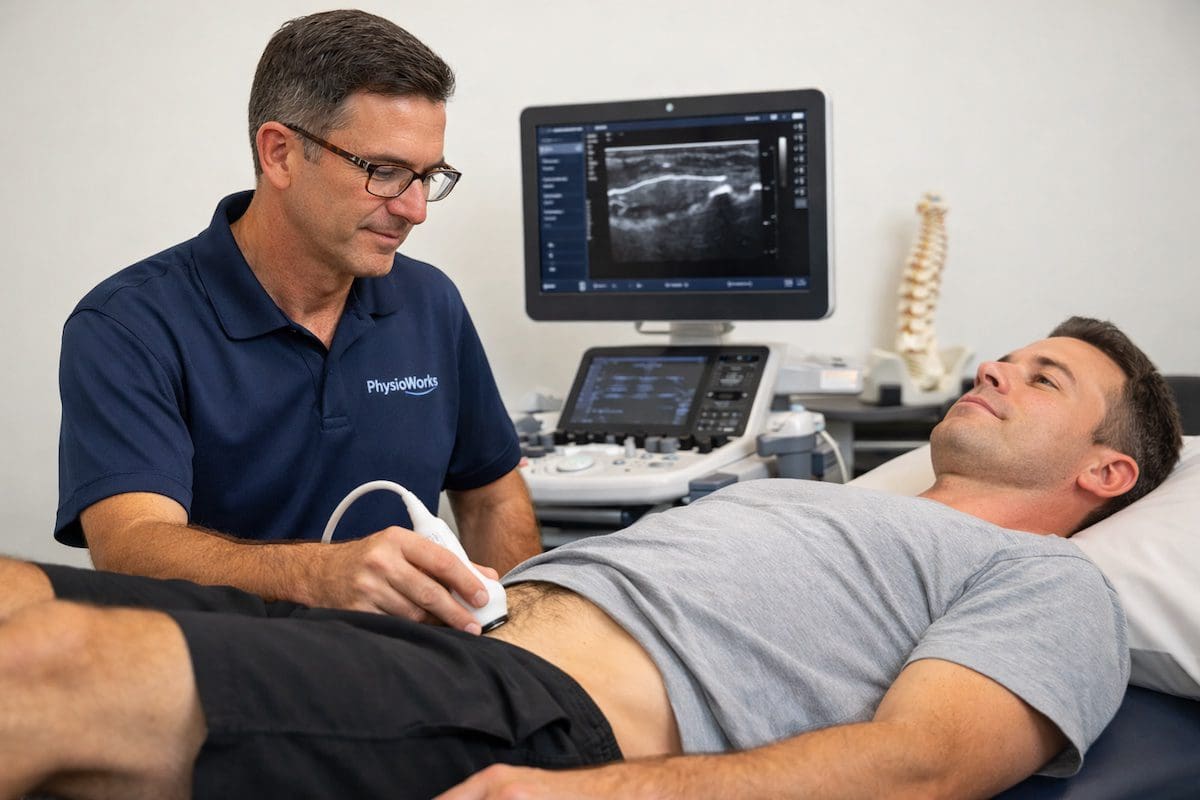
Ultrasound retraining lower back pain assessment with abdominal muscle feedback in physiotherapy clinic

Real-time ultrasound helps guide deep muscle retraining.

No, ultrasound retraining is usually not the whole cure for lower back pain. Real-time ultrasound physiotherapy can help some people improve deep muscle activation and movement control, but most lower back pain needs a broader rehabilitation plan based on symptom behaviour, strength, mobility, load tolerance, and daily function.

This page supports our broader back pain and real-time ultrasound physiotherapy pathways. In most cases, ultrasound retraining works best as one useful tool inside a full physiotherapy program rather than as a stand-alone fix.


Key takeaway: Real-time ultrasound retraining may improve exercise accuracy and muscle control, but lasting lower back pain relief usually needs broader rehabilitation.

Why is ultrasound retraining not the whole cure for lower back pain?

Lower back pain is usually multifactorial. Even when poor activation of the deep trunk muscles contributes, symptoms can also relate to joint irritation, disc problems, nerve sensitivity, reduced strength, poor load tolerance, stiffness, fear of movement, work demands, sleep, or repeated overload. That is why a broader rehabilitation plan often works better than one technique alone.

Real-time ultrasound can help your physiotherapist assess and retrain muscles such as the transversus abdominis and multifidus. However, the bigger goal is not simply to make these muscles switch on. The goal is to help you bend, lift, sit, walk, exercise, and live with better comfort and confidence.

What does ultrasound retraining actually help with?

Ultrasound retraining mainly helps with assessment, feedback, and motor control retraining. It lets you and your physiotherapist see whether specific muscles are activating well during an exercise or movement task. That can be useful if you struggle to feel the right contraction, have poor coordination, or need clearer visual feedback early in rehabilitation.

You can read more about what real-time ultrasound physiotherapy may help with and what to expect from ultrasound retraining. If your main issue is strength, endurance, mobility, or repeated flare-ups during activity, your program will usually need more than ultrasound feedback alone.


Ultrasound retraining lower back pain exercise with guided deep core activation feedback

Ultrasound can guide early deep muscle control exercises.

Ultrasound retraining vs general lower back pain rehabilitation

Ultrasound retraining is mainly a feedback tool, while lower back pain rehabilitation is the bigger recovery plan. Many people do best when ultrasound-guided motor control work is combined with mobility, strength, load management, and gradual return to normal activity.

Ultrasound Retraining General Lower Back Pain Rehabilitation Helps assess and retrain deep muscle activation Addresses the broader causes of pain and reduced function Useful for exercise feedback and motor control Includes strength, mobility, endurance, and load progression Often most useful early in retraining Usually needed across the full recovery journey May improve exercise accuracy Aims to improve pain, confidence, and daily function Rarely enough as a stand-alone treatment Usually provides the more complete long-term solution

What else may be needed for lower back pain recovery?

Most people do better when treatment is matched to the source of their lower back pain. Your physiotherapist may combine ultrasound retraining with core stability exercises, core stability training, gym back exercises, mobility work, walking, manual therapy, and gradual strength progression.

Depending on your assessment, treatment may also include movement retraining, lumbopelvic control work, hip and leg strengthening, activity modification, and a return-to-work or return-to-sport plan. A structured plan is usually more important than any single modality.

Can Pilates help after ultrasound retraining?

Yes, Pilates may help some people after ultrasound retraining when it is used as part of a broader progression plan. Once deep muscle control improves, some people move on to Pilates for back pain, Pilates and core stability guidance, or physiotherapist-guided group exercise to build confidence and function.

The key is matching the exercise level to your diagnosis, irritability, and goals. Pilates is not the same as core stability, and neither is automatically right for everyone with lower back pain.

When does it help most? Ultrasound retraining is often most useful when you need better feedback to learn deep muscle control early in rehabilitation, not as the only treatment for persistent lower back pain.

How can physiotherapy help lower back pain beyond ultrasound retraining?

Physiotherapy helps by identifying why your pain is persisting and then building a plan around your presentation. That may involve symptom relief, strength, endurance, movement quality, confidence, and progressive return to normal activity. Ultrasound retraining can support this process, but it rarely replaces the rest of the program.

Many people improve when treatment combines education, graded exercise, and practical movement advice. You can also explore related pages on back pain FAQs, common causes of lower back pain, and posture correction where relevant to your presentation.

If you want a general Australian overview of symptoms, red flags, and self-management, Healthdirect also provides practical information on back pain.

When should you consider ultrasound retraining for lower back pain?

You should consider ultrasound retraining when your physiotherapist thinks better muscle timing, exercise accuracy, or movement control is an important part of your rehabilitation. It is usually most helpful when paired with a broader plan rather than used in isolation.

If you are unsure whether it suits your presentation, a physiotherapy assessment can clarify whether ultrasound feedback is likely to add value or whether your recovery should focus more on general strengthening, mobility, walking tolerance, or graded activity progression.

Common questions about ultrasound retraining and lower back pain

Can ultrasound retraining fix lower back pain on its own?

Usually, no. Ultrasound retraining can improve muscle awareness and exercise accuracy, but lower back pain often needs a broader plan that addresses mobility, strength, load management, and the specific structures involved.

Is real-time ultrasound the same as therapeutic ultrasound?

No. Real-time ultrasound physiotherapy is mainly an assessment and exercise-feedback tool. Therapeutic ultrasound is a different modality and is used for a different clinical purpose.

Does everyone with lower back pain need deep core retraining?

No. Some people benefit from it, while others improve more from walking, graded strength work, mobility exercises, or general activity progression. Your assessment should guide the plan.

Can weak transversus abdominis or multifidus muscles be the only cause of back pain?

Not usually. These muscles can be part of the picture, but back pain is often influenced by several factors such as joint irritation, disc sensitivity, deconditioning, posture, stress, sleep, and activity load.

How long does it take to see results from ultrasound-guided retraining?

That depends on the cause of your pain, how long it has been present, and how well your full rehabilitation program matches your needs. Early improvements in control can occur quickly, but lasting change usually takes consistent progression.

Where is real-time ultrasound physiotherapy available?

PhysioWorks currently lists real-time ultrasound physiotherapy at Ashgrove PhysioWorks and Sandgate PhysioWorks. Clinic availability can change, so it is worth checking the latest clinic information when booking.


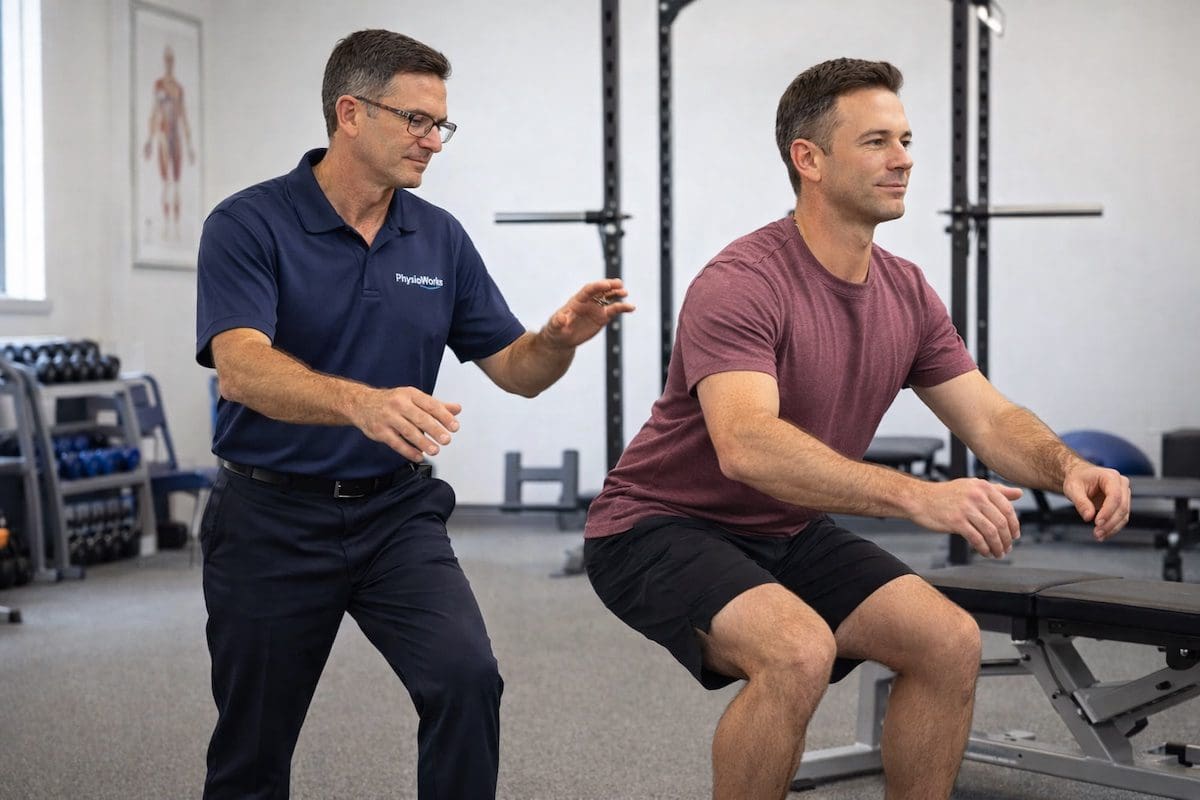
Lower back pain rehabilitation progress with guided functional exercise in physiotherapy clinic

Lasting recovery usually needs broader rehabilitation progression.

What to do next

If you have lower back pain and are wondering whether ultrasound retraining is right for you, start with a proper assessment rather than guessing. A physiotherapist can work out whether deep muscle retraining is relevant and whether you would benefit more from strength work, Pilates-based progression, posture strategies, or load-management support.

PhysioWorks physiotherapists regularly assess lower back pain and can guide you through a program that matches your symptoms, goals, and activity level. You can also explore Pilates for back pain, back exercises, and lower back pain support before booking.


Book your appointment – 24/7

Choose your preferred PhysioWorks clinic and book online.


Back Support Products

These back support products are commonly used by our physiotherapists to help reduce back pain, improve comfort, and support your recovery at home.

View all back support products


Follow PhysioWorks

Get free physiotherapy tips, exercise videos, recovery advice, and blog updates.

Facebook Instagram YouTube B X Email PhysioWorks

References

  1. George SZ, Fritz JM, Silfies SP, et al. Interventions for the Management of Acute and Chronic Low Back Pain: Revision 2021. J Orthop Sports Phys Ther. 2021;51(11):CPG1-CPG60. doi:10.2519/jospt.2021.0304.
  2. Smrcina Z, Woelfel S, Burcal C. A Systematic Review of the Effectiveness of Core Stability Exercises in Patients with Non-Specific Low Back Pain. Int J Sports Phys Ther. 2022;17(5):766-774. doi:10.26603/001c.37251.
  3. Henry SM, Teyhen DS. Ultrasound Imaging as a Feedback Tool in the Rehabilitation of Trunk Muscle Dysfunction for People With Low Back Pain. J Orthop Sports Phys Ther. 2007;37(10):627-634. doi:10.2519/jospt.2007.2555.
  4. Mannion AF, Caporaso F, Pulkovski N, Sprott H. Spine Stabilisation Exercises in the Treatment of Chronic Low Back Pain: A Good Clinical Outcome Is Not Associated with Improved Abdominal Muscle Function. Eur Spine J. 2012;21(7):1301-1310. doi:10.1007/s00586-012-2155-9.

You've just added this product to the cart: