
Common Thigh Injuries


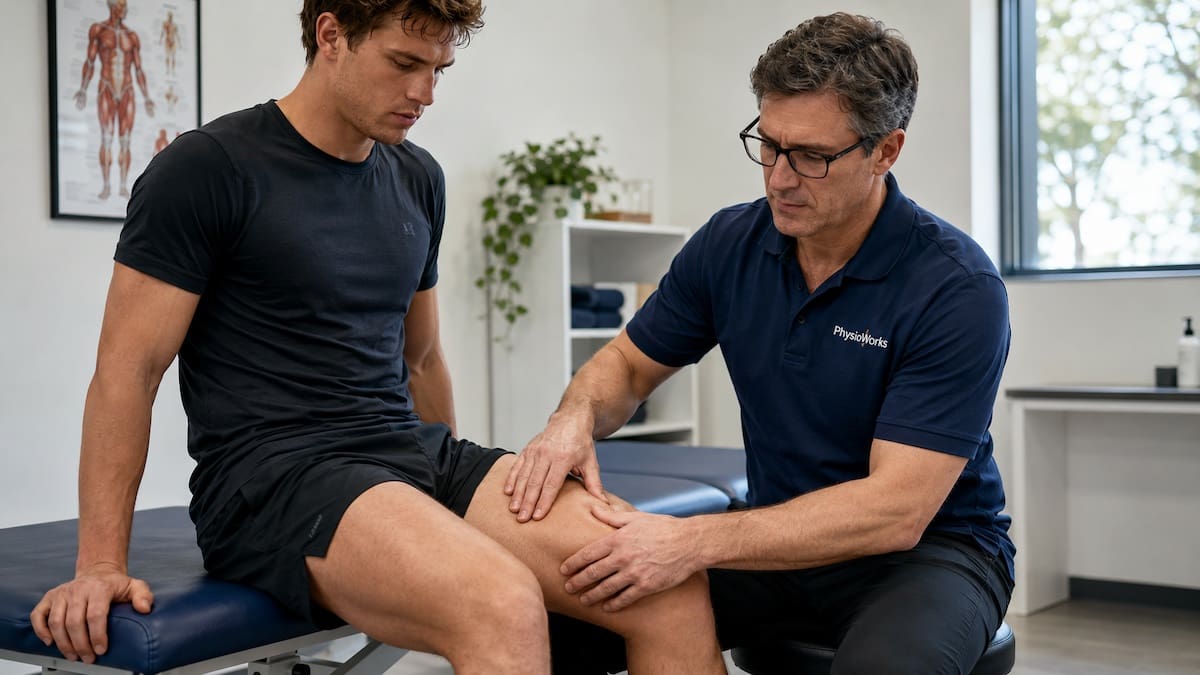
What Are the Most Common Thigh Injuries?
Common thigh injuries include muscle strains, corked thigh, hamstring strain, ITB syndrome, runner’s knee, and pain referred from the lower back, hip, or knee. The source of pain is not always obvious early, so symptom pattern, injury mechanism, and movement testing all matter.
If you are active, play sport, or have recently increased training, start by checking the main thigh pain patterns. This can help you decide whether your pain sounds like a muscle injury, a bruising injury, an overload problem, or referred pain such as sciatica.
Quick check: a sudden pull, bruising, swelling, limping, tingling, numbness, or pain that keeps returning should be assessed rather than ignored.
Seek urgent medical care: if you cannot weight-bear, have severe swelling, major trauma, spreading numbness, new weakness, or bladder or bowel changes.
Which Thigh Injuries Are Most Common?
Most common thigh injuries affect the front, back, or outer side of the thigh. However, pain can also refer from the lower back, hip, or knee. That is why a clear history and physical assessment help guide the right treatment plan.
Hamstring Strain
A hamstring strain affects one or more muscles at the back of the thigh. It often happens during sprinting, kicking, jumping, or sudden acceleration. Common signs include a sharp pull, local tenderness, weakness, and pain with fast walking, bending, or sport.
Thigh Strain or Corked Thigh
A thigh strain can follow a forceful stretch, hard sprint, kick, or sudden change of speed. A corked thigh usually follows a direct knock. Pain, bruising, swelling, stiffness, and difficulty lifting the leg are common.
ITB Syndrome
ITB syndrome is an overload problem often linked with running or cycling. Pain usually sits near the outside of the knee, but tightness or irritation can also track along the outer thigh. Training changes, hip control, and load tolerance can all play a role.
Runner’s Knee
Runner’s knee, also called patellofemoral pain, usually causes discomfort around or behind the kneecap. Some people feel pain spreading into the lower thigh, especially with stairs, squats, hills, running, or long sitting.
Sciatica or Referred Nerve Pain
Sciatica may cause thigh pain, burning, tingling, numbness, or weakness. Unlike a simple muscle strain, nerve-related pain may travel down the leg and may change with sitting, bending, coughing, or spinal movement.
What Causes Common Thigh Injuries?
Common thigh injuries often follow sprinting, kicking, sudden acceleration, awkward landing, direct contact, or repeated overload. Other cases relate to poor load progression, reduced strength, limited mobility, running mechanics, or referred symptoms from the back, hip, or knee.
Overuse injuries can build when the thigh muscles and surrounding tissues do not have enough time to adapt. This may happen after a sudden increase in distance, speed, hills, gym loading, sport sessions, or match minutes.
Why Does Thigh Pain Happen During Sport or Exercise?
Thigh pain during sport or exercise often means the tissue load has exceeded what your muscles, tendons, joints, or nerves can currently tolerate. This may follow repeated sprinting, kicking, hills, change-of-direction work, or returning to sport before the thigh has recovered enough.
The pain pattern gives useful clues. A sharp local pain after a sprint may suggest a strain. Bruising after contact may suggest a corked thigh. Burning, tingling, numbness, or pain that travels may suggest nerve involvement.
How Can You Help Prevent Common Thigh Injuries?
Prevention starts with good training habits. A suitable warm-up, gradual workload progression, and a structured exercise program may help improve strength, control, and load tolerance.

- Warm up well: prepare for speed, kicking, and change-of-direction work.
- Progress gradually: avoid sudden jumps in distance, intensity, hills, or sprint volume.
- Build strength: train the hamstrings, quadriceps, gluteals, calves, and trunk.
- Improve control: work on landing, running, deceleration, and single-leg stability.
- Respect recovery: sleep, rest days, and lighter sessions still matter.
When Should You Worry About Thigh Pain?
You should seek help if thigh pain is severe, you cannot walk normally, swelling or bruising is significant, symptoms keep returning, or you notice numbness, tingling, or weakness. Ongoing pain that limits work, training, stairs, sitting, or sleep also deserves assessment.
For nerve-related leg pain, Healthdirect provides a useful public overview of sciatica symptoms and causes.
FAQs About Common Thigh Injuries
How do I know if thigh pain is a strain or sciatica?
A muscle strain usually causes local pain, tenderness, and weakness in one part of the thigh after a clear movement or effort. Sciatica more often causes pain that travels, with tingling, numbness, burning, or symptoms that change with back movement or sitting.
How long do common thigh injuries take to heal?
Recovery time depends on the source and severity. A mild muscle issue may settle within days to a few weeks. A larger strain, overload problem, or nerve-related presentation can take longer. Early diagnosis and the right loading plan usually help guide the timeline.
Can I keep exercising with thigh pain?
Sometimes, but it depends on the cause. Mild symptoms may allow modified activity. Sharp pain, limping, bruising, worsening symptoms, numbness, tingling, or weakness usually mean you should stop and get advice. Good management often means modifying load, not pushing through.
What treatment helps common thigh injuries?
Treatment may include load modification, targeted strengthening, mobility work, manual therapy, running or movement advice, and a graded return-to-sport plan. The right option depends on whether the problem is muscular, tendon-related, joint-related, or referred from the back.
Can thigh pain come from the knee, hip, or back?
Yes. Some thigh pain starts outside the thigh. Knee problems can refer pain into the lower thigh, hip problems can affect the upper thigh, and back or nerve irritation can send pain, tingling, or numbness down the leg.
Related PhysioWorks Guides
- Thigh Pain
- Thigh Strain
- Corked Thigh
- Hamstring Strain
- How Can I Speed Up Muscle Recovery?
- Sports Injury Management Physiotherapy
What to Do Next
If your thigh pain is not settling, keeps coming back, or affects walking, work, training, or sport, a physiotherapist can assess the likely source and guide your next step. Early advice may help you choose the right loading plan and reduce repeated flare-ups.
Choose your clinic and appointment pathway
Select a PhysioWorks clinic to continue to live booking, an appointment request or reception assistance.
Thigh Products
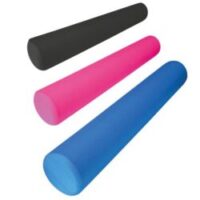
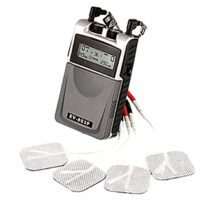
These thigh products are commonly used by our physiotherapists to improve strength, provide comfort, improve flexibility, plus assist home exercise programs.
-
-
 Gift Ideas, Christmas Gift Ideas, Exercise Equipment, Foot, Knee, Massage Tools, Pain Management
Footeez Lockeroom
$45.00Add to cartQuick View -
 Ankle, Back, Braces & Supports, Calf, Foot, Groin, Heel, Hip, Knee, Thigh, Walking
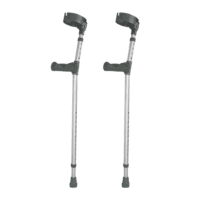
Forearm Crutches
$64.00Select optionsQuick View -
-
-

- Liniments & Gels, Massage Liniments, Pain Management
Fisiocrem
$16.95 – $39.95Select optionsQuick View -
-
-

-
- EMS Machines, Pain Management, TENS Machine, TENS Machine & EMS
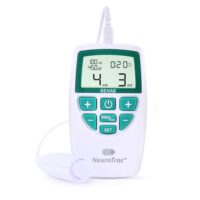
NeuroTrac Rehab (TENS Machine + EMS)
$285.00Add to cartQuick View -
-
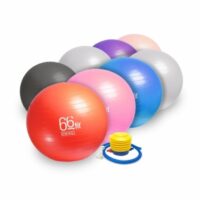
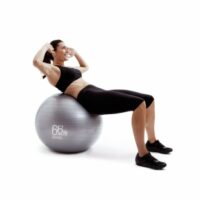 Exercise Balls, Back, Exercise Equipment, Knee, Shoulder
66fit Exercise Balls | Core & Rehab Stability Ball
$32.00 – $57.00Select optionsQuick View -





References
- Jankaew A, Chen JC, Chamnongkich S, Lin CF. Therapeutic Exercises and Modalities in Athletes With Acute Hamstring Injuries: A Systematic Review and Meta-analysis. Sports Health. 2023;15(4):497-511. doi:10.1177/19417381221118085
- Pietsch S, Lorenz S, Ueblacker P, Mickschl DJ, Hasler M, Kümmel J, et al. Epidemiology of quadriceps muscle strain injuries in elite track and field athletes. Br J Sports Med. 2024;58(2):95-101.
- Pietsch S, Lorenz S, Hasler M, Ueblacker P, Mickschl DJ, Schlegel TF, et al. Risk Factors for Quadriceps Muscle Strain Injuries in Sport: A Systematic Review. Int J Sports Phys Ther. 2022;17(4):536-550.
- Sanchez-Alvarado A, Bokil C, Cassel M, Engel T. Effects of conservative treatment strategies for iliotibial band syndrome on pain and function in runners: a systematic review. Front Sports Act Living. 2024;6:1386456. doi:10.3389/fspor.2024.1386456
- Neal BS, Lack SD, Bartholomew C, Morrissey D, et al. Best practice guide for patellofemoral pain based on synthesis of a systematic review, the patient voice and expert clinical reasoning. Br J Sports Med. 2024;58(24):1486-1495. doi:10.1136/bjsports-2024-108110
- Zaina F, Doniselli FM, Andreucci A, et al. Identification of Best Evidence for Rehabilitation in persons with low back pain with radiculopathy. Arch Phys Med Rehabil. 2023;104(6):1209-1218. doi:10.1016/j.apmr.2023.02.013
