Bursitis

Bursitis

Cortisone vs PRP Injections: Which Is Better?

Cortisone and platelet-rich plasma (PRP) injections work in different ways. The better option depends on the condition being treated, your goals, the expected benefits and risks, and the rehabilitation plan around the injection.


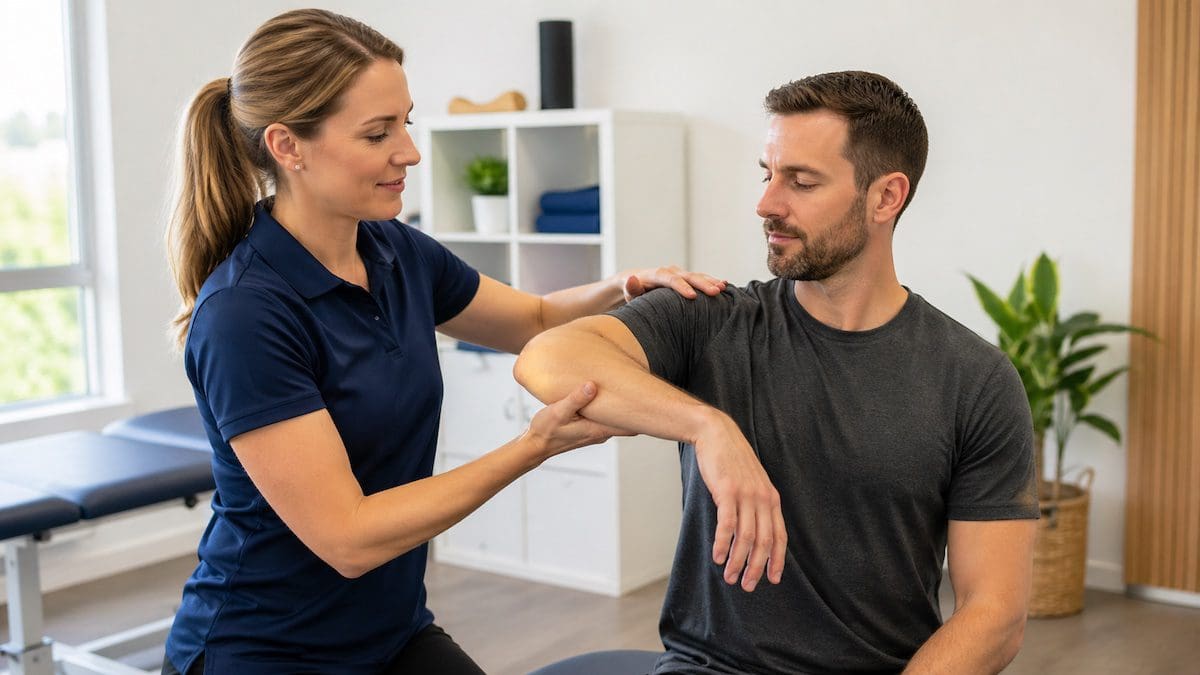
physiotherapist assessing shoulder pain before cortisone injection decision

Assessment helps determine whether an injection may support a broader rehabilitation plan.

Are cortisone and PRP injections the same?

No. Cortisone and PRP are different treatments rather than interchangeable injections.

Cortisone is a corticosteroid medicine used to reduce inflammation and pain. PRP uses a concentrated sample of your own platelets and is intended to influence the local healing response. Which approach makes sense depends on the tissue involved, the diagnosis and what you are trying to achieve.

Cortisone injections

Cortisone may provide relatively fast pain relief when inflammation or irritation is contributing to symptoms. Benefits are often strongest in the short term.

PRP injections

PRP is usually considered when the aim is to influence a longer-term tissue response. Evidence varies substantially between different tendon and joint conditions.

If you are weighing up an injection, it also helps to consider broader pain management options and why your symptoms developed in the first place.

What do cortisone injections do?

A cortisone injection usually contains a corticosteroid medicine, sometimes combined with local anaesthetic. It may be considered when pain or inflammation is limiting movement, sleep or rehabilitation.

Examples include selected cases of shoulder bursitis, joint irritation and some rotator cuff-related shoulder presentations.

Some people notice symptom relief within days. However, cortisone does not automatically correct the reason a tendon, joint or other structure became painful.

Potential benefits of cortisone

  • May provide relatively quick short-term pain relief.
  • May help when pain is preventing rehabilitation from progressing.
  • Can be useful for selected inflammatory or joint-related presentations.
  • Is widely available through appropriate medical providers.

What are the limitations?

  • Relief may be temporary.
  • It does not repair damaged tendon fibres.
  • Repeated corticosteroid injections may carry additional tissue risks in some situations.
  • The benefit depends on the diagnosis, injection site and individual health factors.

For shoulder-specific information, see our guide to cortisone injections for shoulder bursitis and rotator cuff pain.

When is PRP considered?

PRP stands for platelet-rich plasma. A clinician takes a sample of your blood and processes it to create a preparation with a higher concentration of platelets. This is then injected into the target area.

PRP may be discussed for selected longer-standing tendon or joint problems. Examples can include some cases of Achilles tendinopathy and other persistent tendon presentations.

The evidence is not the same for every condition. Results can vary with the tissue being treated, PRP preparation, injection technique, number of injections and rehabilitation program.

Potential benefits of PRP

  • Uses material prepared from your own blood.
  • May improve symptoms or function in selected tendon or joint conditions.
  • May be considered when symptoms remain despite appropriate conservative care.
  • Can form part of a structured rehabilitation plan.

What are the limitations?

  • Research findings are mixed and condition-specific.
  • Improvement, when it occurs, is not usually immediate.
  • More than one treatment may sometimes be recommended.
  • PRP can be more expensive and less accessible than cortisone.
  • Soreness, bruising or bleeding can occur after blood collection or injection.

Is PRP better than cortisone?

There is no single answer for every injury. In rotator cuff tendinopathy research, corticosteroid injections tend to perform better for short-term pain relief. Some studies suggest PRP may produce more sustained improvement later, but findings remain inconsistent.

The decision should therefore be based on the specific diagnosis rather than simply choosing the injection with the strongest marketing claim.

Speed

Cortisone may act faster when short-term pain reduction is the main goal.

Evidence

Evidence for both injections varies according to the condition and tissue being treated.

Rehabilitation

Neither option removes the need to address strength, movement, workload and return to activity where these factors matter.

What about nerve blocks and Botox?

Cortisone and PRP are not the only injections used in pain and musculoskeletal medicine. Other injections have different purposes and should not be treated as direct alternatives to PRP or cortisone.

What are nerve blocks used for?

A nerve block places medication near a nerve or group of nerves to reduce pain signals. Clinicians may use nerve blocks for pain control around surgery, to help identify a likely pain source or to provide targeted pain relief in selected cases.

They are most useful when the clinical question and target nerve are clear. More widespread or persistent pain may need a broader assessment of pain types and causes.

Can Botox help pain or muscle overactivity?

Botulinum toxin, commonly known by the brand name Botox, also has medical uses. It has an established role in chronic migraine prevention and may be used for selected conditions involving muscle overactivity or spasticity.

People with temporomandibular disorder or some jaw-related pain presentations may also ask about Botox. Suitability depends on the diagnosis because reducing muscle activity can also temporarily reduce normal muscle strength.

What are the main risks of injection therapy?

All injections carry some risk. The type and likelihood of complications depend on the medication or biological product, injection site, technique and your health history.

  • Temporary pain or soreness after the injection.
  • Bruising or bleeding.
  • Infection, although this is uncommon with appropriate sterile technique.
  • Temporary numbness or weakness with some injections.
  • Changes in blood glucose after corticosteroid injections, particularly for people with diabetes.
  • Tissue-specific risks associated with repeated corticosteroid exposure.

Why does rehabilitation still matter after an injection?

An injection may reduce pain or change symptoms, but that does not necessarily restore strength, mobility or load tolerance.

This matters in problems such as tendinopathy, where progressive loading and movement planning are often central to longer-term management.

Depending on the condition, physiotherapy after an injection may include:

  • graded strengthening
  • mobility exercises
  • load and activity modification
  • movement or technique changes
  • progressive return to work, gym or sport
  • monitoring how symptoms respond as activity increases

The timing of exercise after an injection should match the injection type, tissue involved and advice from the clinician who performed the procedure.

What should you do before choosing an injection?

  1. Clarify the diagnosis

    Ask what structure or condition is believed to be causing your symptoms and how confident the diagnosis is.

  2. Understand the goal

    Find out whether the injection is intended to reduce pain, help confirm a diagnosis or support another part of treatment.

  3. Discuss benefits and risks

    Ask what improvement is realistically expected, how long it may last and which complications matter in your situation.

  4. Plan what happens afterwards

    Know when you can restart normal activity and whether physiotherapy, exercise or another treatment should follow.

What to do next

If you are considering cortisone, PRP or another injection, make sure the diagnosis and purpose of the procedure are clear first.

A physiotherapist can assess movement, strength, load tolerance and other factors that may be contributing to your symptoms. They can also help you decide whether rehabilitation should come first or help plan your recovery around an injection recommended by your doctor.

Choose your clinic and appointment pathway

Select a PhysioWorks clinic to continue to live booking, an appointment request or reception assistance.

Follow PhysioWorks

Get physiotherapy tips, exercise videos, recovery advice and blog updates.

Cortisone and PRP injection FAQs

Do cortisone injections fix the cause of pain?

Not usually. Cortisone may reduce pain and inflammation, but it does not automatically correct factors such as weakness, stiffness, excessive load or reduced movement capacity. Rehabilitation may still be needed.

Is PRP better than cortisone?

It depends on the condition and treatment goal. Cortisone may provide faster short-term pain relief, while PRP is sometimes considered for selected longer-standing tendon or joint problems. PRP evidence remains mixed and condition-specific.

How quickly do cortisone and PRP injections work?

Cortisone may begin reducing symptoms within several days, although responses vary. PRP generally does not provide the same immediate anti-inflammatory effect and any improvement may develop more gradually.

What are nerve blocks mainly used for?

Nerve blocks may be used for post-surgical pain control, diagnostic clarification or targeted pain relief. Their usefulness depends on having an appropriate clinical reason and a clearly identified target.

Can Botox help migraines or jaw pain?

Botulinum toxin has an established medical role in chronic migraine prevention. It may also be considered in selected conditions involving muscle overactivity, including some jaw presentations, but suitability depends on the diagnosis and potential effects on normal muscle function.

Are injections enough on their own?

Often not. An injection may help control symptoms, but many musculoskeletal problems also require strength, mobility, load management or a graded return to normal activity.

Related articles

References

  1. Kyaw O, Khin C. Short-Term Relief or Long-Term Repair: A Narrative Review of Corticosteroid and Platelet-Rich Plasma Injections in Rotator Cuff Tendinopathy. Cureus. 2025;17(11):e97271. doi:10.7759/cureus.97271
  2. Sleeswijk Visser TSO, van Linschoten R, Vicenzino B, Weir A, de Vos RJ. Terminating Corticosteroid Injection in Tendinopathy? Hasta la Vista, Baby. J Orthop Sports Phys Ther. 2024;54(1):10-13. doi:10.2519/jospt.2023.11875
  3. Niyonkuru E, Iqbal MA, Zeng R, Zhang X, Ma P. Nerve Blocks for Post-Surgical Pain Management: A Narrative Review of Current Research. J Pain Res. 2024;17:3217-3239. doi:10.2147/JPR.S476563
  4. Pozo-Rosich P, Alpuente A, Silberstein SD, Burstein R. Insights from 25 Years of OnabotulinumtoxinA in Migraine: Mechanisms and Management. Nat Rev Neurol. 2024;20(9):555-568. doi:10.1038/s41582-024-01002-5

Cortisone Injection for Shoulder Bursitis

Cortisone injections may provide short-term pain relief for some people with shoulder bursitis or rotator cuff-related shoulder pain, but rehabilitation remains central to longer-term recovery.

physiotherapist assessing shoulder pain before cortisone injection decision

Assessment helps determine whether a shoulder cortisone injection fits your treatment plan.

A cortisone injection for shoulder bursitis may reduce pain and short-term disability for some people, particularly when symptoms are limiting sleep, reaching, lifting or rehabilitation. However, the benefit is usually temporary. Cortisone does not repair damaged tendon tissue.

Shoulder pain may involve the subacromial bursa, rotator cuff tendons or several structures at the same time. Conditions commonly described as shoulder impingement or rotator cuff-related shoulder pain can produce similar symptoms. Assessment helps determine the most appropriate management pathway.

What Is a Cortisone Injection in the Shoulder?

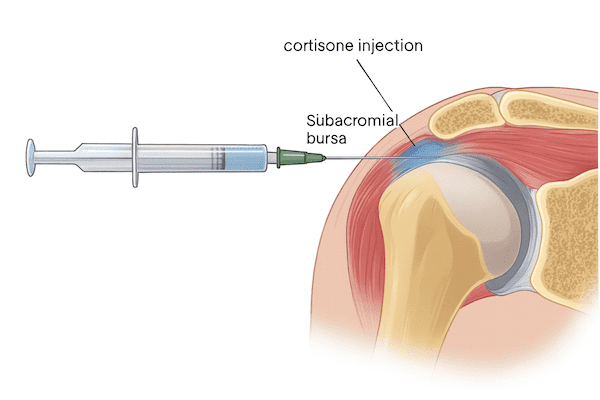
A cortisone injection uses corticosteroid medication to reduce pain and inflammation. It may also contain local anaesthetic. For rotator cuff-related shoulder pain, the injection commonly targets the subacromial bursa rather than the rotator cuff tendon itself.

The injection does not correct the underlying cause of shoulder pain or repair tendon damage. Instead, short-term symptom relief may make it easier to restore movement and progress strengthening.

The diagram below shows a typical subacromial injection location.

cortisone injection shoulder illustration showing subacromial bursa injection

Diagram showing a typical cortisone injection location within the subacromial bursa.

When Might a Cortisone Injection Be Considered?

A corticosteroid injection may be considered when shoulder pain remains significant despite appropriate initial non-surgical care. Current clinical guidance does not recommend corticosteroid injection as first-line treatment for rotator cuff tendinopathy.

An injection discussion may be reasonable when:

  • pain continues to restrict reaching, lifting or normal daily activities;
  • night pain is significantly disrupting sleep;
  • pain is preventing useful rehabilitation progression;
  • appropriate early treatment has not provided enough relief; or
  • your physiotherapist and medical practitioner consider an injection appropriate within the broader rehabilitation plan.

Which Shoulder Problems May Be Relevant?

Corticosteroid injection may be considered for selected people with pain involving the subacromial region. Similar shoulder symptoms can have different causes, so the diagnosis should not be based on pain location or one clinical test alone.

Are Shoulder Cortisone Injections Safe?

Shoulder corticosteroid injections are generally well tolerated when used appropriately, but they are not risk-free. The potential benefits and risks depend on the injection site, dose, frequency, your health and the condition of the surrounding tissues.

Clinicians generally avoid injecting corticosteroid directly into a rotator cuff tendon. Repeated exposure may adversely affect tendon tissue, so repeated injections require careful medical consideration.

For subacromial corticosteroid injection, current rotator cuff tendinopathy guidelines recommend ultrasound guidance where available. Greater placement accuracy, however, does not mean an injection will provide a better long-term outcome than rehabilitation.

Injection or Rehabilitation?

An Injection May Be Worth Discussing When

  • pain remains high and significantly affects sleep or normal movement;
  • rehabilitation cannot progress because pain is too limiting;
  • appropriate initial conservative care has not provided enough relief; or
  • a medical practitioner considers an injection reasonable within the broader management plan.

Rehabilitation Remains Central When

  • strength, control or load tolerance needs to improve;
  • symptoms are responding to exercise and activity modification;
  • shoulder function is gradually improving; or
  • short-term pain relief is being used to help progress exercise and normal activity.

What Happens During a Shoulder Cortisone Injection?

A medical practitioner cleans the skin and places a needle into the intended bursa or joint space. Corticosteroid medication is then injected, sometimes with local anaesthetic. Ultrasound may be used to guide needle placement.

Local anaesthetic can provide temporary numbness before its effect wears off. The corticosteroid effect, when helpful, may take longer to develop.

Your medical practitioner should provide advice about activity following the procedure. Rehabilitation can then be resumed and progressed according to your symptoms, shoulder function and the advice of the clinicians involved.

How Effective Are Cortisone Injections Compared With Physiotherapy?

A 2025 systematic review and meta-analysis of 15 randomised controlled trials involving 1,785 participants found that corticosteroid injection combined with physiotherapy interventions may provide small to moderate improvements in pain and function in the short term compared with physiotherapy alone.

However, corticosteroid injection alone was generally not more effective than physiotherapy interventions, and injections were not superior at medium- or long-term follow-up. The certainty of the evidence ranged from moderate to mostly very low.

This supports using an injection selectively for short-term symptom management rather than viewing it as a replacement for active rehabilitation.

Why Does Rehabilitation Still Matter After an Injection?

Rotator cuff tendinopathy guidelines support active rehabilitation as an initial treatment. Exercise can address strength, movement capacity and the shoulder's ability to tolerate everyday, work and sporting loads.

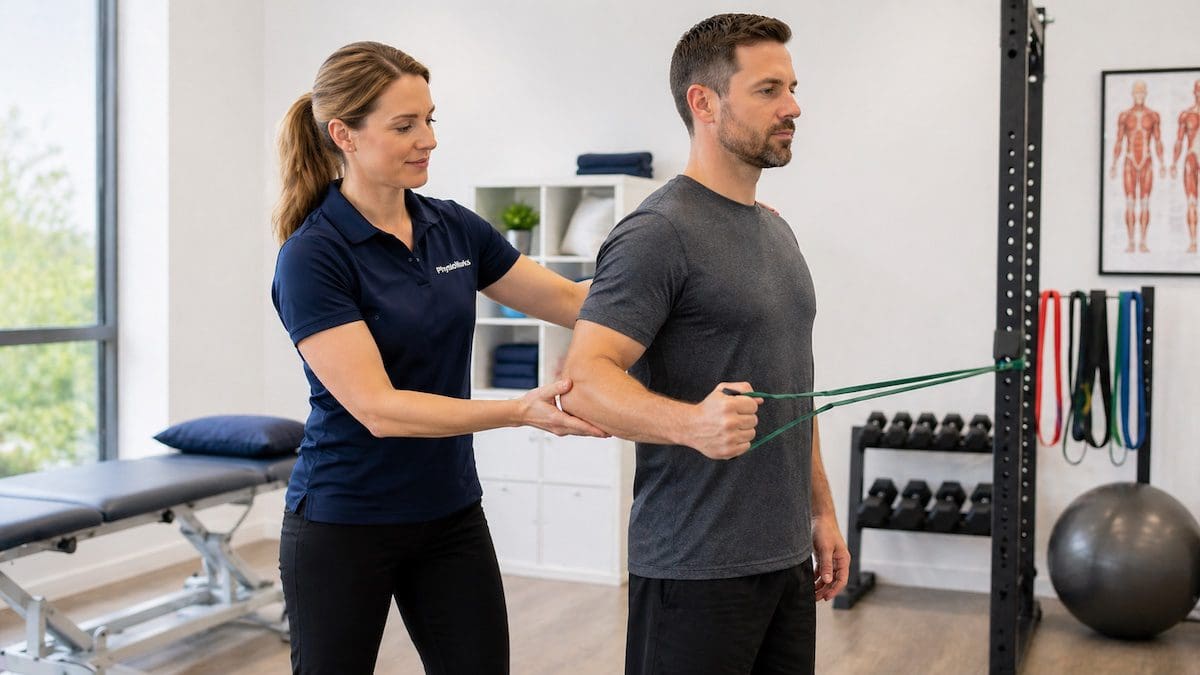
physiotherapist guiding rotator cuff rehab after shoulder cortisone injection

Progressive rehabilitation helps restore shoulder strength, movement and load tolerance.

When an injection provides useful symptom relief, rehabilitation can focus on rebuilding the physical capacity required for daily activities, work, gym or sport.

Your rehabilitation program may include:

  • rotator cuff strengthening;
  • scapular and shoulder control exercises;
  • shoulder and thoracic mobility where appropriate;
  • graded return to lifting, work, gym or sport; and
  • load modification while shoulder capacity improves.

Do Cortisone Injections Fix Rotator Cuff Tears?

No. Cortisone may reduce pain, but it does not repair torn rotator cuff tendon fibres. Management of a rotator cuff tear depends on factors such as the size and type of tear, symptoms, strength, function, age, activity requirements and treatment goals.

Progressive rehabilitation is appropriate for many rotator cuff tears. Persistent weakness, substantial loss of function or symptoms following significant trauma may warrant further medical assessment or imaging.

What Are the Risks and Limitations?

Most people tolerate shoulder corticosteroid injections without a major complication, but side effects can occur.

  • temporary increase in pain after the injection;
  • skin thinning or colour change around the injection site;
  • temporary elevation of blood glucose, particularly in people with diabetes;
  • infection, although this is uncommon; and
  • potential adverse effects on tendon health with repeated corticosteroid exposure.

When Should You Seek Professional Advice?

Consider professional assessment if shoulder pain continues to affect sleep, work, sport or normal daily activities. A physiotherapist can assess shoulder movement, strength, symptom behaviour and function, then help determine whether rehabilitation alone or medical review is the appropriate next step.

Related Shoulder Information

Common Questions About Shoulder Cortisone Injections

Is a cortisone injection for shoulder bursitis safe?

Shoulder cortisone injections are generally well tolerated when used appropriately, but they are not risk-free. Clinicians generally avoid injecting corticosteroid directly into a rotator cuff tendon, and repeated injections require caution because corticosteroid exposure may adversely affect tendon health.

How long does a shoulder cortisone injection last?

The response varies. Corticosteroid injections mainly provide short-term symptom relief, and some people gain little or no benefit. Current evidence does not show an advantage over physiotherapy at medium- or long-term follow-up for rotator cuff tendinopathy.

Where is cortisone injected for shoulder bursitis?

For subacromial shoulder pain or bursitis, corticosteroid is commonly injected into the subacromial bursa rather than directly into a rotator cuff tendon. Current clinical guidelines recommend ultrasound guidance where available for subacromial corticosteroid injection.

Can cortisone repair a rotator cuff tear?

No. Cortisone may reduce pain, but it does not repair torn tendon fibres. Rotator cuff tears may require progressive rehabilitation, load management and, in selected cases, further medical or surgical review.

Should you rest after a shoulder cortisone injection?

Follow the advice given by the medical practitioner who performs the injection. Activity may be modified briefly before movement and rehabilitation are progressively resumed according to your symptoms and the injection details.

What to Do Next

If shoulder pain is not settling, book a physiotherapy assessment. Your physiotherapist can assess the likely contributors to your symptoms, guide rehabilitation and discuss whether medical review for a corticosteroid injection may be useful within your broader treatment plan.

Choose your clinic and appointment pathway

Select a PhysioWorks clinic to continue to live booking, an appointment request or reception assistance.

Shoulder Products

These shoulder products are commonly used by our physiotherapists to improve strength, posture, movement, plus assist home exercise programs.

View all shoulder products

Follow PhysioWorks

Get physiotherapy tips, exercise videos, recovery advice and blog updates.

References

  1. Desmeules F, Roy JS, Lafrance S, et al. Rotator cuff tendinopathy diagnosis, non-surgical medical care and rehabilitation: a clinical practice guideline. J Orthop Sports Phys Ther. 2025;55(4):256-285. doi:10.2519/jospt.2025.13182.
  2. Lazzarini SG, Buraschi R, Pollet J, Bettariga F, Pancera S, Pedersini P. Effectiveness of additional or standalone corticosteroid injections compared to physical therapist interventions in rotator cuff tendinopathy: a systematic review and meta-analysis of randomized controlled trials. Phys Ther. 2025;105(3):pzaf006. doi:10.1093/ptj/pzaf006.
  3. Adamson NJ, Chew KS, Holst MV, Hansen TB. Ultrasound-guided versus landmark-guided subacromial corticosteroid injections in adults with shoulder pain: a systematic review and meta-analysis. Musculoskeletal Care. 2022;20(4):734-746. doi:10.1002/msc.1643.
  4. Puzzitiello RN, Patel BH, Forlenza EM, et al. Adverse impact of corticosteroid injection on rotator cuff tendon health and repair: a systematic review. Arthroscopy. 2020;36(5):1468-1475. doi:10.1016/j.arthro.2019.12.006.
  5. Shen PC, Su FC, Lin YS, et al. Ultrasound-guided versus landmark-guided injections for musculoskeletal pain: an umbrella review. J Rehabil Med. 2024;56:jrm40769. doi:10.2340/jrm.v56.40769.
You've just added this product to the cart: