What is the best sleeping position for back and neck pain?


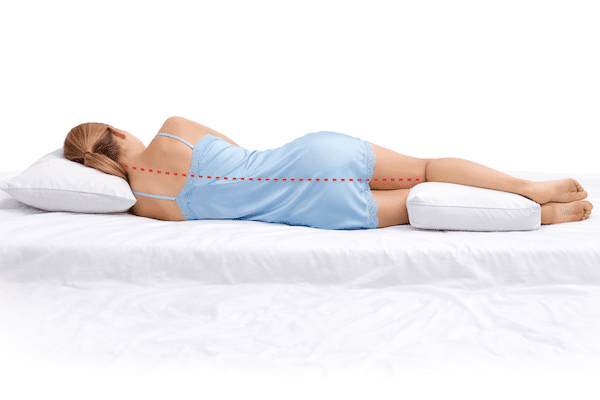
Side sleeping with knee support can help reduce twisting through the lower back.
The best sleeping position for back and neck pain is usually the one that keeps your head, neck, spine and pelvis well supported. For many people, this means sleeping on the back with support under the knees, or on the side with a pillow between the knees.
There is no single perfect sleep posture for every body. Your most useful position depends on your symptoms, body shape, mattress, pillow height and how stiff or sensitive your back or neck feels in the morning. If symptoms keep affecting sleep, a musculoskeletal physiotherapy assessment can help identify whether posture, mobility, strength, nerve sensitivity or daily loading is part of the problem.
Quick Answer
- Back sleeping: place a pillow under the knees to reduce lower back strain.
- Side sleeping: keep knees slightly bent and place a pillow between them.
- Neck support: choose a pillow that keeps your head level with your body.
- Stomach sleeping: often strains the neck because it keeps it turned for hours.
- Morning pain: review your pillow, mattress and how you get out of bed.
Why does sleeping position matter for back and neck pain?
Sleep holds your spine in one position for several hours. A poorly supported position may increase pressure on joints, muscles, discs or nerves. Over time, this can add to morning stiffness, neck pain, headaches, or lower back pain.
Support matters more than forcing a rigid posture. Your body should feel relaxed, with fewer gaps between your spine and the bed. A small pillow or towel can often improve comfort when placed under the knees, between the knees, or around the waist.
What is the best back-sleeping setup?
Back sleeping often suits people who feel worse with twisting. Place a pillow under your knees so your hips and knees bend slightly. This can reduce the pull on the lower back and help the spine rest in a more relaxed position.
Your head pillow should support the neck curve without pushing the chin down towards the chest. If your pillow is too high, your neck may sit flexed all night. If it is too low, your head may drop back and strain the upper neck.
Back Sleeping Checklist
- Use one supportive head pillow.
- Place one pillow under both knees.
- Keep your chin relaxed, not tucked hard down.
- Avoid a sagging mattress that lets your hips sink too far.
What is the best side-sleeping setup?
Side sleeping often feels comfortable for back and neck pain when the spine stays level. Bend the knees slightly and place a pillow between them. This helps reduce pelvis roll and lower back twisting.
Your head pillow should fill the space between your shoulder and ear. If your head tips down, the pillow is likely too low. If your head tips up, it is likely too high. Our best pillow for sleep guide explains how pillow height changes with sleep position and shoulder width.
Which sleeping positions may aggravate pain?
Stomach sleeping commonly places the neck in long rotation. It can also increase lower back extension, especially on a soft mattress. If you wake with neck stiffness, headaches, shoulder tightness or back ache, stomach sleeping may be one factor.
A tight foetal position may increase stiffness for some people because it rounds the spine for hours. However, some people with spinal stenosis feel better in a slightly flexed position. The key is comfort, symptom response and the ability to move well after waking.
How should you choose a pillow for neck pain?

A pillow should support your head and neck in line with the rest of your body. Side sleepers often need more height than back sleepers. Back sleepers often need a medium height that supports the neck curve without pushing the head forward.
If you wake with neck pain, headaches, shoulder tightness, or arm symptoms, review your pillow first. You may also find our perfect pillow guide and signs of an unsupportive pillow helpful.
What mattress firmness helps back pain?
A mattress should support your body without sagging. Very firm beds can create pressure around the shoulders, hips and lower back. Very soft beds can let the spine sink and twist. Many people do better with a medium-firm surface, but comfort still varies between people.
Do not judge a mattress on one night. If your mattress is old, sagging, or clearly worse than other beds you sleep on, it may be worth reviewing. If pain continues, also check whether daily load, desk posture, exercise, stress or reduced movement is contributing.
How do you get out of bed safely with back or neck pain?
A simple log-roll can reduce sudden strain. Roll onto your side first. Then move your legs over the edge of the bed and push up with your arms. This is often easier than sitting straight up from lying on your back.
After standing, move gently before you rush into the day. Short walks, light mobility, heat, or your prescribed exercises may help if morning stiffness is a regular issue.
When should you seek help?
Book an assessment if pain keeps waking you, returns most mornings, spreads into your arm or leg, or limits work, exercise or daily activity. A physiotherapist can assess your neck, back, posture, movement, strength and symptom pattern.
Seek urgent medical care if back pain occurs with new bladder or bowel changes, saddle numbness, fever, unexplained weight loss, major trauma, or progressive leg weakness. For neck pain, urgent review is also important with progressive arm weakness, severe unexplained headache, dizziness with neurological symptoms, or symptoms after significant trauma.
Related PhysioWorks guides
- Sleep Therapy for Pain Management
- Musculoskeletal Physiotherapy
- Lower Back Pain
- Neck Pain
- Best Pillow for Sleep
- How to Choose the Perfect Pillow
- Signs of an Unsupportive Pillow
- Posture Correction
- Neck Exercises for Pain Relief
Sleeping Position FAQs
What is the best sleeping position for back and neck pain?
Many people feel most comfortable sleeping on their back with a pillow under the knees, or on their side with a pillow between the knees. The aim is to keep the spine supported without long twisting or sagging.
Is side sleeping or back sleeping better?
Both can work. Back sleeping may reduce twisting. Side sleeping may feel better when the head, waist and knees are well supported. Your morning response is often the best guide.
Why can stomach sleeping cause neck pain?
Stomach sleeping often keeps the neck turned to one side for several hours. This can strain the upper neck joints and muscles, especially if your pillow is too high or your mattress lets your lower back sag.
What pillow height is best for neck pain?
The right height keeps your head level with your body. Side sleepers often need a higher pillow than back sleepers because the pillow must fill the shoulder-to-ear gap.
Should I put a pillow under my knees for back pain?
A pillow under the knees may help some back sleepers. It slightly bends the hips and knees, which can reduce lower back arching and help the back muscles relax.
When should I see a physiotherapist about sleep-related pain?
Book an assessment if pain keeps disturbing sleep, returns most mornings, spreads into the arm or leg, or does not improve after changing your pillow, mattress or sleeping setup.
What to do next
If sleep posture is adding to your back or neck pain, start with one simple change for a few nights. Try knee support, better pillow height, or a log-roll when getting out of bed.
If symptoms persist, book a PhysioWorks appointment. Your physiotherapist can assess your symptoms and help you choose a practical plan for sleep, posture, movement and daily loading.
Choose your clinic and appointment pathway
Select a PhysioWorks clinic to continue to live booking, an appointment request or reception assistance.
Pillow Support Products
- Christmas Gift Ideas, Neck, Pillows/Cushions
FlexiPillow Alleve Pillow
$109.95Add to cartQuick View -
- Neck, Christmas Gift Ideas, Gift Ideas, Pillows/Cushions, Posture
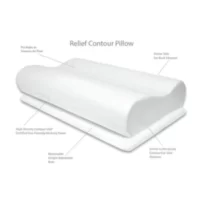
FlexiPillow Relief Contour Pillow
$109.95Add to cartQuick View




Back Pain Tips: 7 Evidence-Based Ways to Move Better, Hurt Less & Recover Faster
A Physiotherapist’s Guide to a Stronger, Healthier Back
Discover practical, research-based strategies to ease back pain, move with confidence, and build long-term strength. Written by physiotherapist John Miller, this concise guide blends science and decades of clinical experience to help you recover faster and stay active for life.
- Clear, actionable advice grounded in current research
- Whole-person approach: movement, sleep, mindset and care team
- Includes a quick flare-up plan, FAQs and daily habits


References
- Cary D, Jacques A, Briffa K. Examining relationships between sleep posture, waking spinal symptoms and quality of sleep: A cross sectional study. PLoS One. 2021;16(11):e0260582. doi:10.1371/journal.pone.0260582
- Saini Y, Rai A, Sen S. Relationship between sleep posture and low back pain: A systematic review. Musculoskeletal Care. 2025;23(2):e70114. doi:10.1002/msc.70114
- Pang JCY, Tsang SMH, Fu ACL. The effects of pillow designs on neck pain, waking symptoms, neck disability, sleep quality and spinal alignment in adults: A systematic review and meta-analysis. Clinical Biomechanics. 2021;85:105353. doi:10.1016/j.clinbiomech.2021.105353
- Barbara AM, Grobelna A. Therapeutic mattresses for chronic pain. CADTH Health Technology Review. 2022.