Back

Sudden Back Pain Causes, Treatment & When to Worry

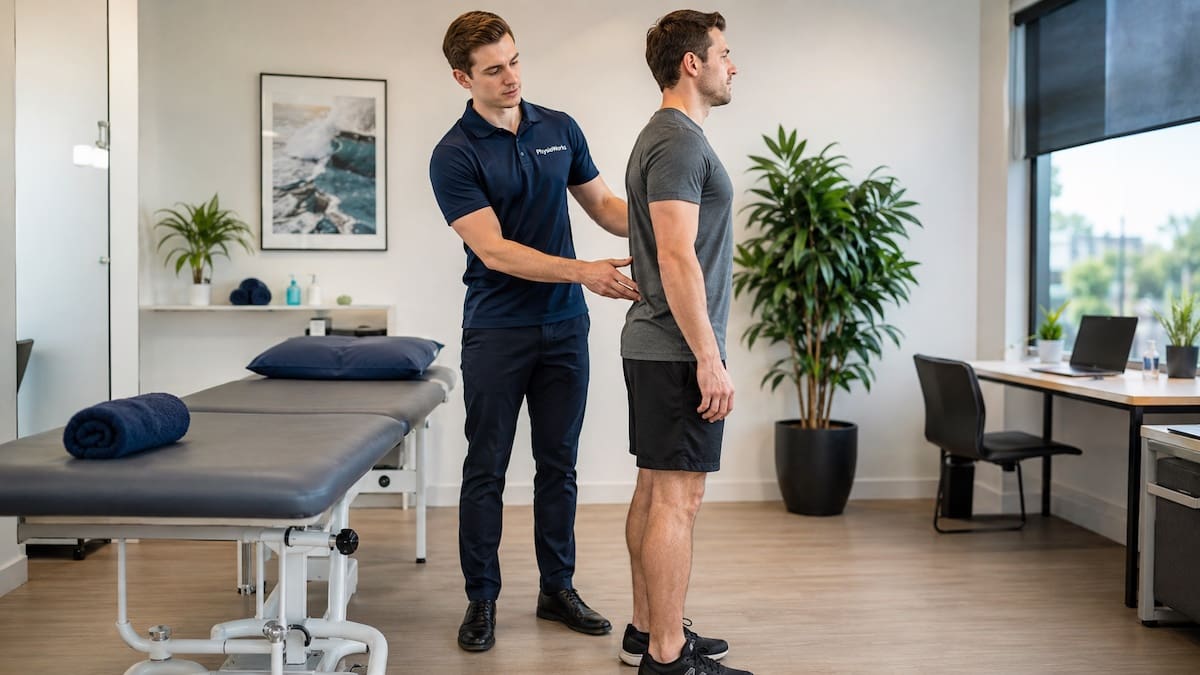
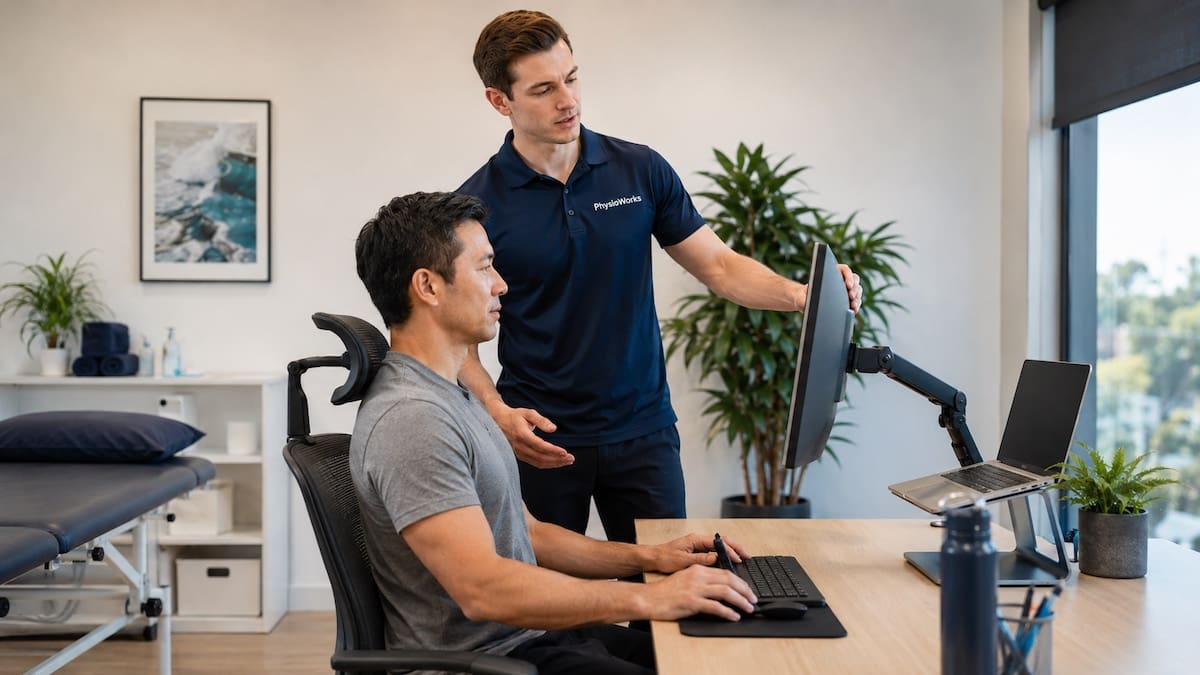
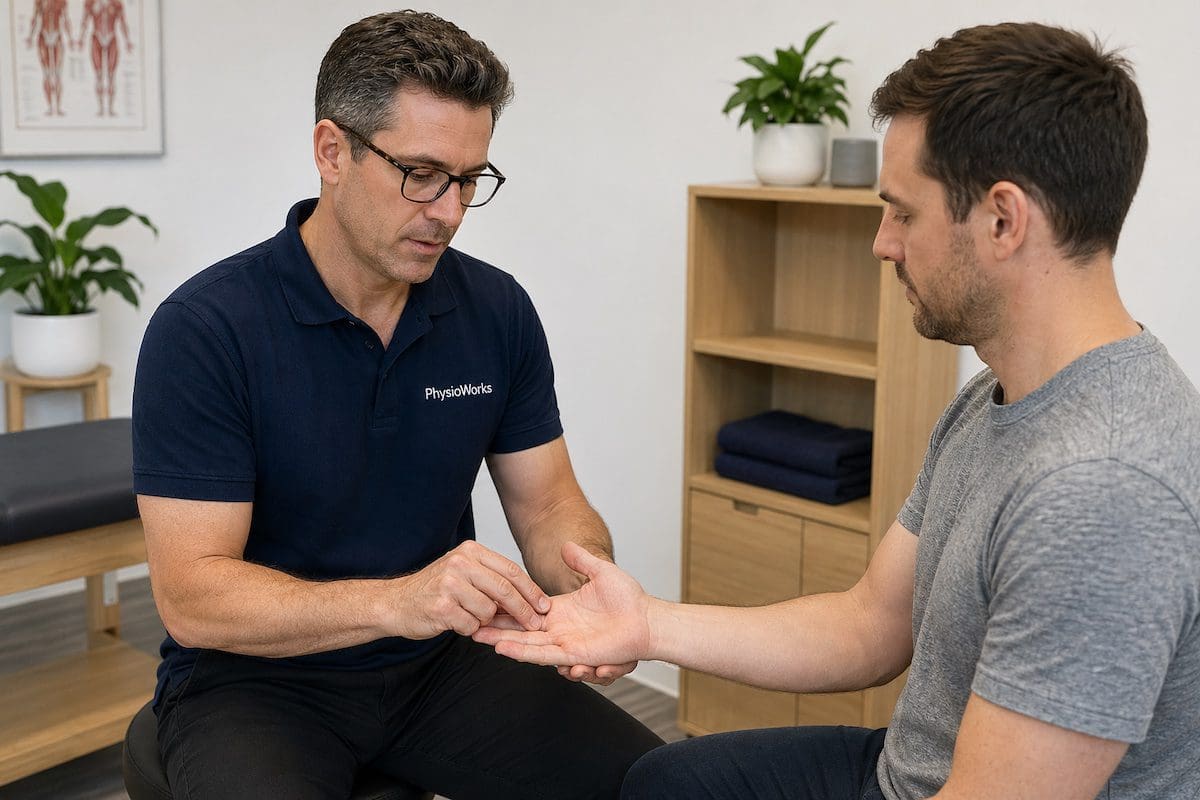
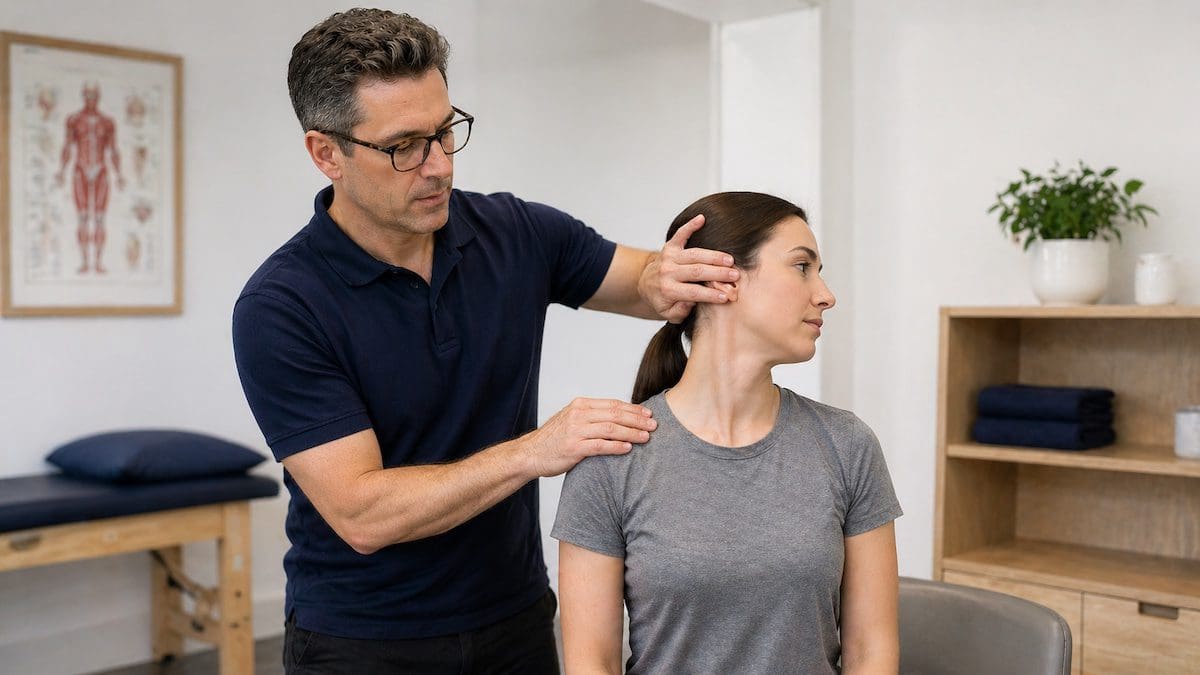
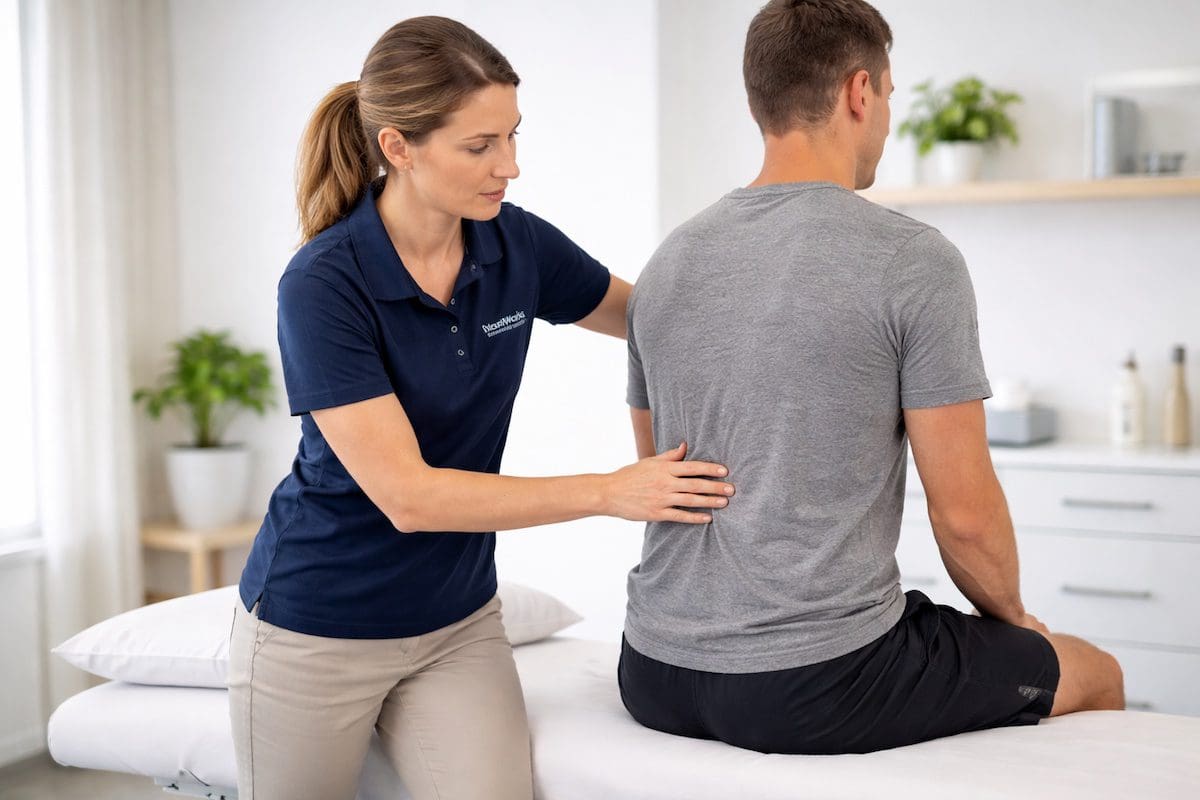
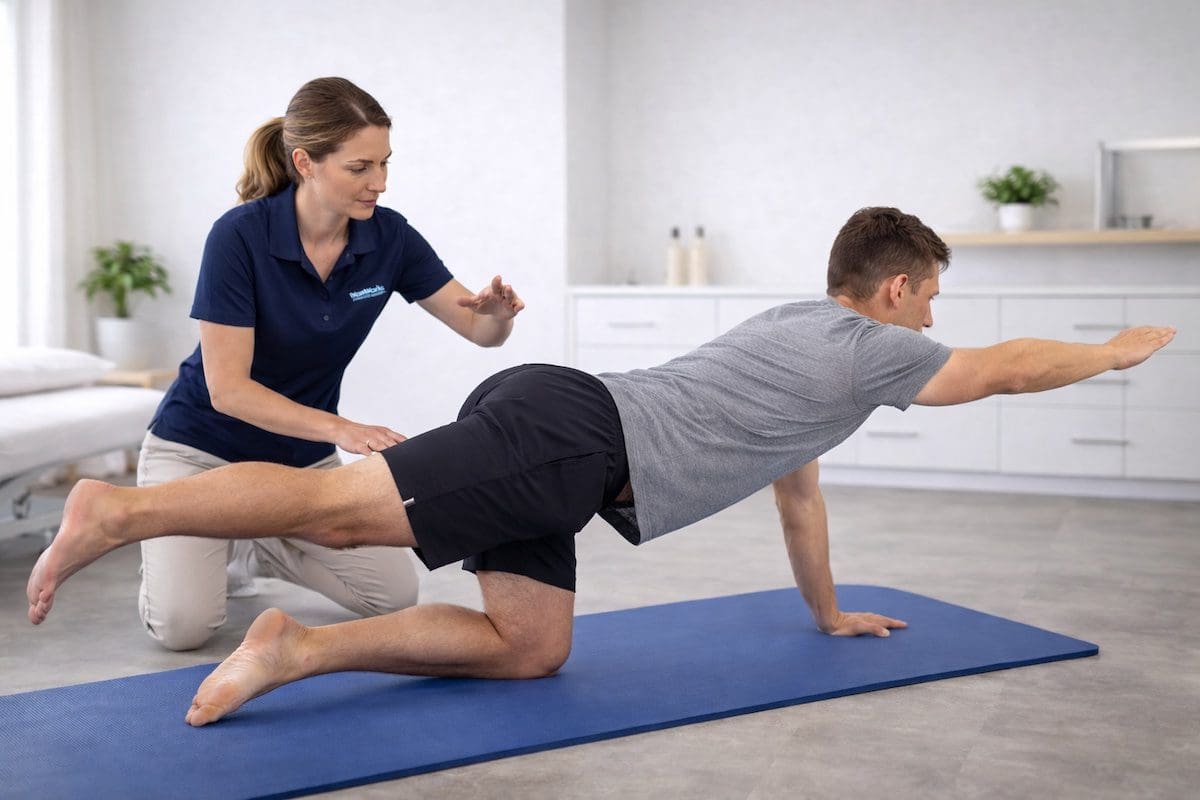
Physiotherapist assessing patient back pain and symptoms during clinical physiotherapy evaluation
Clinical physiotherapy back assessment

Sudden back pain often comes on quickly and can feel sharp, stiff, or alarming. In most cases, it relates to a mechanical issue such as a muscle strain or joint irritation rather than serious injury.

Understanding the cause of sudden back pain helps guide the right treatment. Many people improve within days to weeks with the right approach and early physiotherapy advice.

What Causes Sudden Back Pain?

The most common cause of sudden back pain is mechanical back pain. This includes muscle strains, joint irritation, or ligament sprains.

Less commonly, sudden back pain may relate to fractures, inflammatory conditions, or nerve irritation such as sciatica.

What Does Sudden Back Pain Feel Like?

Symptoms vary depending on the structure involved but often include:

  • Sharp or sudden onset pain
  • Stiffness or difficulty moving
  • Muscle tightness or spasm
  • Pain with bending, lifting, or twisting
  • Occasional leg pain or nerve symptoms

What Should You Do Immediately?

Early management plays a key role in recovery. Most people benefit from staying gently active rather than resting completely.

  • Keep moving with short walks or gentle activity
  • Avoid heavy lifting or aggravating movements
  • Use heat or ice for symptom relief
  • Take medication if recommended by your GP or pharmacist

Prolonged rest can slow recovery. Instead, controlled movement helps maintain mobility and reduces stiffness.

When Should You Worry About Sudden Back Pain?

Most sudden back pain is not serious. However, you should seek medical advice if you experience:

  • Severe or worsening pain that does not improve
  • Loss of bladder or bowel control
  • Numbness around the groin or saddle area
  • Significant leg weakness
  • Pain following trauma or a fall

These signs may indicate a more serious condition requiring urgent assessment.

How Can Physiotherapy Help Sudden Back Pain?

Physiotherapy provides targeted treatment based on the specific cause of your back pain.

  • Hands-on therapy to reduce stiffness and muscle tension
  • Guided movement and exercise to restore mobility
  • Advice on posture and safe movement strategies
  • Progressive rehabilitation to prevent recurrence

Early physiotherapy often helps reduce pain faster and supports a safe return to normal activity.

Is This Likely to Improve?

Yes. Most episodes of sudden back pain improve within a few weeks. Staying active and following the right treatment plan improves outcomes and reduces the risk of ongoing issues.

What to Do Next

  • Stay active and avoid complete rest
  • Modify activities that increase pain
  • Start simple mobility exercises
  • Book a physiotherapy assessment if symptoms persist

If you are unsure about your symptoms, a physiotherapist can assess your condition and guide your recovery plan.

Related Articles

Book your appointment – 24/7

Choose your preferred PhysioWorks clinic and book online.

Back Pain Tips: 7 Evidence-Based Ways to Move Better, Hurt Less & Recover Faster

A Physiotherapist’s Guide to a Stronger, Healthier Back

Discover practical, research-based strategies to ease back pain, move with confidence, and build long-term strength. Written by physiotherapist John Miller, this concise guide blends science and decades of clinical experience to help you recover faster and stay active for life.


  • Clear, actionable advice grounded in current research
  • Whole-person approach: movement, sleep, mindset and care team
  • Includes a quick flare-up plan, FAQs and daily habits

Follow PhysioWorks

Get free physiotherapy tips, exercise videos, recovery advice, and blog updates.

Facebook Instagram YouTube B X Email PhysioWorks

Back Surgery FAQs: When to Consider Surgery & Recovery Guide

physiotherapist assessing lower back posture to determine need for back surgery

Assessing whether back surgery is necessary

When should you consider back surgery?

Back surgery is usually considered when there is a clear structural problem that matches your symptoms, examination findings, and scan results, and when well-guided non-surgical care has not provided enough improvement. In most cases, back surgery is not the first step. Many people with back pain improve with the right combination of education, activity modification, exercise, and physiotherapy.

This question often overlaps with lower back pain, sciatica, bulging disc, and spinal stenosis. A physiotherapist and spinal specialist can help you work out whether you are likely to improve with rehabilitation alone or whether surgery deserves serious discussion.

Quick signs that need closer review

  • New bladder or bowel changes, or saddle numbness
  • Progressive leg weakness, numbness, or altered reflexes
  • Severe pain after trauma, fracture concern, or spinal instability
  • Symptoms linked with infection, cancer, or inflammatory spinal disease
  • Persistent pain and disability despite a structured non-surgical plan

When is back surgery unlikely to help?

Back surgery is usually less helpful when the main problem is isolated, non-specific low back pain without clear nerve compression, spinal instability, fracture, infection, or cancer. Surgery is also less likely to help if scan findings do not match your symptoms, if symptoms are steadily improving, or if the goal is vague rather than function-based.

This matters because many MRI findings, such as disc bulges and age-related degeneration, are common even in people without pain. Surgery should not be based on scan changes alone. It should be based on the full clinical picture.

When is back surgery most likely to help?

Back surgery is more likely to help when a specific anatomical problem clearly matches the symptom pattern. Common examples include lumbar disc herniation causing ongoing leg pain and neurological loss, or lumbar spinal stenosis causing neurogenic claudication, reduced walking tolerance, and nerve-related symptoms.

Surgery is also more likely to be appropriate when serious spinal pathology is present, such as cauda equina syndrome, infection, fracture, tumour, or significant instability. These situations are very different from routine mechanical back pain and need urgent specialist review.

What criteria should you consider before back surgery?

Good surgical decision-making is usually based on several factors, not just pain duration. The strongest criteria are:

  • your symptoms, examination findings, and imaging all point to the same pain source
  • you have completed an adequate trial of non-surgical care, often at least 6 to 12 weeks unless red flags are present
  • pain, weakness, walking limits, or function loss remain significant
  • there is a realistic goal, such as improving leg pain, walking, sleep, or work capacity
  • you understand the likely benefit, limits, risks, and rehabilitation commitment

What should you try before back surgery?

Most people should first complete a reasonable trial of conservative care unless urgent red flags are present. This usually includes education, activity modification, medication review, and a physiotherapy assessment. Treatment often includes progressive exercise such as back pain exercises matched to the problem rather than generic rest.

For many people, treatment also includes a broader back pain physiotherapy program. If surgery is already being considered, pre-operative physiotherapy can still help improve movement, build confidence, and prepare you for recovery afterwards.

Can you recover without back surgery?

Many people improve without surgery when their treatment plan matches their condition and goals. This is especially true for non-specific low back pain and many flare-ups of back pain with or without referred symptoms. A structured rehabilitation program can help reduce pain, improve movement, and build confidence so you can return to normal activities safely.

If you want a plain-English overview of one common decompression procedure, Healthdirect provides useful information about laminectomy and recovery.

What are realistic back surgery success rates?

Success rates depend on the operation, the diagnosis, and how success is measured. Surgery for the right problem usually performs better than surgery for vague or non-specific back pain. In carefully selected patients, lumbar disc surgery generally relieves leg pain faster than continued non-surgical care, while long-term differences may narrow in some groups.

For lumbar disc surgery, published reviews report success rates of roughly 78% to 95% at two years in selected patients. By comparison, surgery for isolated chronic low back pain without clear neural compression or instability has much less predictable benefit. Decompression surgery tends to help leg symptoms and walking tolerance more reliably than it helps pure back pain.

What should you expect during back surgery recovery?

Back surgery recovery is usually staged rather than instant. The exact timeline depends on the procedure, the tissues involved, your baseline health, and how long nerve symptoms were present before surgery. Some people improve quickly, while others need a steadier and more closely guided plan.

Stage 1: early recovery (first 2 weeks)

Early priorities usually include wound care, pain control, safe transfers, short walks, gentle mobility, and avoiding sudden overloading. Walking is commonly encouraged early. The aim is to keep you moving safely rather than staying in bed.

Stage 2: rebuilding routine activity (weeks 2 to 6)

This stage often focuses on increasing walking, improving comfort with sitting and standing, and gradually returning to light daily tasks. For many decompression procedures, people may start getting back to light or desk-based work around 4 to 6 weeks, depending on symptoms and job demands.

Stage 3: strength and function (weeks 6 to 12)

Rehabilitation often shifts towards trunk control, hip strength, balance, lifting confidence, and work or activity tolerance. Many people notice meaningful improvement by about 6 to 12 weeks after decompression surgery, although recovery speed varies.

Stage 4: longer recovery after fusion or more complex surgery (3 to 12 months)

Recovery after lumbar fusion is usually slower. Return to desk work may take around 6 to 8 weeks in some cases, while heavier work can take several months and sometimes longer. Bone healing and full confidence with loading may continue to improve over 6 to 12 months.

How can physiotherapy help after back surgery?

Physiotherapy after back surgery usually focuses on restoring movement, improving trunk and hip strength, rebuilding confidence, and pacing load safely. It may also help you improve walking, sitting, lifting tolerance, and return-to-work planning without doing too much too soon.

physiotherapist guiding core stability exercise for lower back recovery

Guided core rehab for back recovery

Good rehabilitation is rarely just about one exercise. It often combines movement retraining, posture and lifting advice, symptom monitoring, and a gradual return to the activities that matter to you. Current research suggests that earlier rehabilitation may improve disability in the first month and pain in the short to mid term after lumbar surgery, although the best exact protocol still varies by procedure and patient needs.

Common back surgery FAQs

Does back surgery fix back pain straight away?

Sometimes symptoms settle quickly, especially leg pain after decompression or disc surgery, but recovery is rarely instant. Pain, mobility, strength, confidence, and work capacity often improve over weeks to months rather than overnight.

How do you know if back surgery is necessary?

Back surgery is more likely to be appropriate when symptoms, examination findings, and scans all point in the same direction, especially if you have ongoing nerve pain, significant walking limits, progressive weakness, or serious spinal pathology.

How long should you try conservative treatment first?

Unless there are urgent red flags, many people should complete at least 6 to 12 weeks of well-guided non-surgical care before surgery is considered seriously. The exact timeframe depends on symptom severity, diagnosis, and whether neurological function is worsening.

Can physiotherapy still help if you are being considered for surgery?

Yes. Physiotherapy can help you prepare for surgery, stay as strong and mobile as possible beforehand, and understand what recovery will involve afterwards. It may also help some people avoid surgery if symptoms improve with a better-matched plan.

Can you avoid back surgery?

Sometimes you can. Many people improve with education, progressive exercise, load management, and physiotherapy, especially when red flags and progressive neurological loss are absent. Surgery is usually less helpful for isolated chronic low back pain without a clear surgical target.

When should you worry after back surgery?

You should seek medical advice promptly if you develop worsening leg weakness, new bladder or bowel symptoms, saddle numbness, fever, wound concerns, or severe pain that is clearly escalating rather than gradually settling.

What to do next

If you are wondering whether back surgery is the right step, start with a clear assessment rather than guessing from a scan alone. A physiotherapist can help you understand what is driving your symptoms, which non-surgical options are still worth trying, and when surgical review makes more sense.

If surgery is already planned, early guidance can make your recovery smoother. A structured post-operative physiotherapy plan often helps you progress with more confidence and avoid doing either too much or too little in the early stages.

Patient walking confidently after physiotherapy rehabilitation with improved posture and no visible pain

Confident walking after physiotherapy recovery

Book your appointment – 24/7

Choose your preferred PhysioWorks clinic and book online.

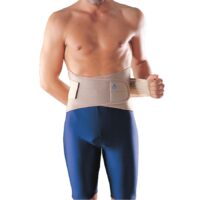
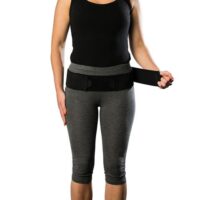
Back Support Products

These back support products are commonly used by our physiotherapists to help reduce back pain, improve comfort, and support your recovery at home.

View all back support products

Follow PhysioWorks

Get free physiotherapy tips, exercise videos, recovery advice, and blog updates.

Facebook Instagram YouTube B X Email PhysioWorks

References

  1. Evans L, Henschke N, O'Connell N, et al. The role of spinal surgery in the treatment of low back pain. Med J Aust. 2023;218(1):37-43.
  2. Manni T, Ferri N, Vanti C, Ferrari S, Cuoghi I, Gaeta C, Sgaravatti I, Pillastrini P. Rehabilitation after lumbar spine surgery in adults: a systematic review with meta-analysis. Arch Physiother. 2023;13(1):21. doi:10.1186/s40945-023-00175-4
  3. Yu H, Cancelliere C, Mior S, et al. Effectiveness of postsurgical rehabilitation following lumbar disc herniation surgery: A systematic review. Brain Spine. 2024;4:102806. doi:10.1016/j.bas.2024.102806
  4. Özden F, et al. The effect of early rehabilitation after lumbar spine surgery: a systematic review and meta-analysis. Egypt J Neurosurg. 2024;39:16. doi:10.1186/s41984-024-00270-z
  5. Barbosa TP, et al. Rehabilitation after cervical and lumbar spine surgery. EFORT Open Rev. 2023;8(8):597-613. doi:10.1530/EOR-23-0015
  6. NSW Agency for Clinical Innovation. Spinal fusion surgery for isolated low back pain. Updated 2025.

What Causes Lower Back Pain?

Physiotherapist explaining spine injury using model during consultation in Brisbane clinic

Understanding the common causes of lower back pain

The most common causes of lower back pain are muscle strain, joint irritation, disc injury, and nerve irritation. However, lower back pain is often multifactorial, which means more than one structure or movement issue may be contributing at the same time.

Many episodes settle well with the right advice, sensible activity, and guided rehabilitation. If you want a broader overview, see our guide to lower back pain or explore other common causes of back pain.

Common lower back pain causes at a glance

What causes lower back pain most often?

Most lower back pain comes from relatively common musculoskeletal causes rather than a dangerous spinal problem. The biggest groups are muscle and soft tissue injuries, disc-related irritation, spinal joint pain, nerve irritation, and referred pain from nearby regions such as the hip or pelvis.

Muscle and soft tissue causes of lower back pain

Muscle and soft tissue overload is one of the most common causes of lower back pain. It often develops after lifting, repeated bending, sport, gardening, poor load tolerance, or a sudden increase in activity.

These problems often respond well to temporary load reduction, gradual return to movement, and progressive strengthening. In some cases, a physiotherapist may also prescribe core stability training to improve spinal control and load tolerance.

Can discs cause lower back pain?

Yes. A lumbar disc can become irritated, bulge, or herniate and cause lower back pain. Some disc injuries stay local to the back, while others irritate a nearby nerve and create pain, tingling, or numbness into the buttock or leg.

Disc-related pain can be aggravated by prolonged sitting, bending, lifting, coughing, or repeated flexion movements.

Physiotherapist assessing lower back pain with lumbar spine palpation and movement testing

Assessing the source of lower back pain

Joint and spinal causes of lower back pain

Not all lower back pain comes from muscles or discs. The joints and bones of the lumbar spine can also become painful, especially when movement control, posture, loading, or age-related change is involved.

These causes can become more noticeable with standing, walking, arching backward, or longer periods of activity.

Why does nerve irritation cause lower back pain and leg symptoms?

Nerve-related lower back pain happens when a spinal nerve becomes irritated or compressed. This often causes pain that spreads into the buttock, thigh, calf, or foot rather than staying only in the lower back.

If your symptoms travel below the knee, feel electric, or include pins and needles, nerve irritation becomes more likely.

Can the hip or pelvis cause lower back pain?

Yes. Pain from the pelvis, sacroiliac joint, deep gluteal region, or hip can feel very similar to lower back pain. That is why a thorough assessment often looks beyond the lumbar spine alone.

Other possible causes of lower back pain

Some lower back pain has a less common but still important cause. These presentations deserve extra thought when symptoms do not fit the usual pattern or recovery is not progressing as expected.

When should you worry about lower back pain?

Most lower back pain is not serious, but a few features deserve prompt review. You should seek professional advice if your pain follows significant trauma, causes progressive weakness, includes numbness that is worsening, spreads strongly into the leg, or is not settling as expected.

Red flags that deserve urgent medical attention

  • Loss of bladder or bowel control
  • Numbness around the saddle area
  • Rapidly worsening leg weakness
  • Severe pain after a fall, crash, or other trauma
  • Fever, unexplained weight loss, or feeling systemically unwell

What is the best treatment for lower back pain?

The best treatment depends on the cause of lower back pain, symptom behaviour, and how long it has been there. For many people, treatment includes a clear diagnosis, reassurance, movement advice, progressive exercise, pain management strategies, and a sensible return to work, sport, or daily activity.

  • Back pain physiotherapy
  • Strength and mobility exercises
  • Load management and pacing
  • Postural, lifting, and ergonomic advice
  • Guided return to bending, walking, work, or sport

A physiotherapist may also help you work out whether your symptoms fit a muscle, disc, joint, or nerve pattern and then tailor treatment accordingly. For broader public guidance, the World Health Organization also outlines key facts about low back pain.

What should you do next if your lower back hurts?

If you are unsure what is causing your lower back pain, the next step is to get the right assessment early. That helps identify the main pain drivers, rule out more serious causes, and build a practical recovery plan that suits your goals and daily life.

In the meantime, avoid complete rest, keep moving within reason, and change positions regularly. Gentle walking, easier movement, and gradual reloading are often more helpful than doing nothing.

FAQs about the causes of lower back pain

What is the most common cause of lower back pain?

The most common cause of lower back pain is usually a muscle or soft tissue strain, often combined with reduced load tolerance, joint irritation, or disc sensitivity. Many people do not have one single structure to blame.

Can stress cause lower back pain?

Stress does not directly injure your spine, but it can increase muscle tension, pain sensitivity, poor sleep, and reduced recovery. That can make lower back pain feel stronger or last longer.

Does a bulging disc always cause lower back pain?

No. Some bulging discs cause no symptoms at all, while others irritate nearby tissues or nerves and become painful. Scan findings need to match your symptoms and clinical assessment.

Why does lower back pain keep coming back?

Recurring lower back pain often reflects a combination of load spikes, deconditioning, stiffness, poor recovery, stress, and incomplete rehabilitation. Identifying the pattern usually matters more than chasing one label.

Do I need a scan for lower back pain?

Not always. Many people with lower back pain do not need imaging early on, especially if symptoms fit a straightforward musculoskeletal pattern and there are no red flags.

Patient bending and lifting comfortably after lower back pain physiotherapy with improved movement

Returning to bending and lifting with more confidence

Book your appointment – 24/7

Choose your preferred PhysioWorks clinic and book online.

Back Support Products

These back support products are commonly used by our physiotherapists to help reduce back pain, improve comfort, and support your recovery at home.

View all back support products

Follow PhysioWorks

Get free physiotherapy tips, exercise videos, recovery advice, and blog updates.

Facebook Instagram YouTube B X Email PhysioWorks

References

  1. Maher C, Underwood M, Buchbinder R. Non-specific low back pain. Lancet. 2017;389(10070):736-747. doi:10.1016/S0140-6736(16)30970-9
  2. Hartvigsen J, Hancock MJ, Kongsted A, et al. What low back pain is and why we need to pay attention. Lancet. 2018;391(10137):2356-2367. doi:10.1016/S0140-6736(18)30480-X
  3. Foster NE, Anema JR, Cherkin D, et al. Prevention and treatment of low back pain: evidence, challenges, and promising directions. Lancet. 2018;391(10137):2368-2383. doi:10.1016/S0140-6736(18)30489-6
  4. World Health Organization. Low back pain. Published June 19, 2023. Accessed April 14, 2026.
  5. Australian Commission on Safety and Quality in Health Care. Low Back Pain Clinical Care Standard. Accessed April 14, 2026.

Common Sources of Spinal Pain & Injury

Article by John Miller & Erin Runge

Common sources of spinal pain include muscles, joints, discs, nerves, bones, and inflammatory conditions affecting the neck, thoracic spine, lower back, or sacroiliac region. Physiotherapists commonly assess spinal pain by identifying whether symptoms arise from muscles, joints, discs, nerves, or underlying conditions. Although many flare-ups improve with time, the pattern of pain, stiffness, referral, and aggravating movements often points towards the most likely cause. If you want a broader overview first, start with our spinal pain conditions guide.

For many people, symptoms sit within one of four common regions: neck pain, thoracic pain, lower back pain, or sacroiliac joint pain (SIJ). However, spinal pain can also reflect nerve irritation, poor load tolerance, postural strain, degenerative change, or less common medical conditions.

Quick guide: common spinal pain patterns

  • Local neck or back pain often points to muscle, joint, or disc irritation.
  • Pain into the buttock or leg may suggest sciatica, disc irritation, or spinal stenosis.
  • Pain into the shoulder or arm can come from the neck, such as neck arm pain.
  • Morning stiffness or age-related flare-ups may fit spondylosis or degenerative disc disease.
  • Pain after trauma, fever, weight loss, or neurological change needs prompt medical review.

What are the common sources of spinal pain?

The most common sources of spinal pain are muscle overload, joint irritation, disc problems, nerve irritation, and age-related degenerative change. The likely source usually becomes clearer when you match the location of pain with referral patterns, stiffness, aggravating movements, and the way symptoms started.

Common sources of spinal pain by region

Your spine works as one linked system, yet the most likely causes often differ by region. Matching your symptoms to the right area can make the next step clearer and can help you find the most relevant condition page.

Neck and upper cervical region

Thoracic spine and upper back

Which tissues commonly cause spinal pain?

Spinal pain usually comes from a mix of tissues rather than one structure alone. Muscles may tighten or strain, joints can become stiff or irritated, discs can become sensitive, and nerves may become compressed or inflamed. Load, posture, sleep, stress, fitness, and previous injury can all influence how these tissues behave.

Joint-related sources

Spinal joints often become painful with twisting, arching backwards, prolonged standing, or repeated loading. Common examples include facet joint arthropathy, lumbar facet joint pain, and SIJ pain.

Muscle-related sources

Muscles may be a major contributor when pain starts after lifting, twisting, sudden activity, or repetitive postural loading. Examples include pulled back muscle, muscle pain, muscle cramps, and DOMS.

Disc-related sources

Discs can contribute to spinal pain when bending, lifting, coughing, sitting, or prolonged flexion aggravates symptoms. You may find these pages useful: bulging disc and degenerative disc disease.

Nerve-related or referred pain

Nerve irritation can create pain, tingling, numbness, heaviness, or burning that spreads beyond the spine. Depending on the region, that may include sciatica, neck arm pain, cervical radiculopathy, or thoracic outlet syndrome.

When should you worry about spinal pain?

You should worry about spinal pain if it follows significant trauma, causes progressive weakness, affects bladder or bowel control, creates saddle numbness, or comes with fever, unexplained weight loss, or feeling very unwell. These patterns are less common, but they need prompt medical review.

Red flags that need urgent medical review

  • new bladder or bowel problems
  • saddle numbness
  • progressive arm or leg weakness
  • severe pain after a fall, crash, or major trauma
  • fever, unexplained weight loss, or night pain that is worsening

How is spinal pain assessed?

A physiotherapist will usually assess your movement, symptom behaviour, strength, nerve signs, aggravating positions, and recent load changes. They will also consider posture and daily habits, which is why links such as posture correction and posture exercises can be useful when posture contributes to recurring flare-ups.

Many people do not need immediate scans. Instead, the first step is often to identify the most likely tissue source, calm symptoms, restore movement, and build strength and load tolerance. For a broad treatment overview, see back pain physiotherapy. For general Australian consumer guidance, Healthdirect also provides useful information on back pain and neck pain.

How physiotherapy usually helps spinal pain

Physiotherapy for spinal pain often focuses on settling irritated tissues, restoring movement, improving strength, and gradually rebuilding load tolerance. The program may include mobility work, targeted exercises, pacing advice, and return-to-activity progressions based on whether the main driver looks more muscular, joint-related, disc-related, nerve-related, or degenerative.

What to do next

If you are unsure what is driving your symptoms, use the region-based links above to compare the most likely causes. Book a physiotherapy assessment to identify the source and start the right treatment plan if your pain is severe, keeps returning, limits work or sleep, or travels into your arm or leg.

A clear diagnosis usually leads to a better plan. Your physiotherapist can help decide whether your spinal pain is more likely to be muscular, joint-related, disc-related, nerve-related, or part of a broader inflammatory or bone-health issue.

Common Sources of Spinal Pain: FAQs

Is spinal pain always caused by a disc problem?

No. Spinal pain can come from muscles, joints, ligaments, nerves, discs, or a mix of contributors. Disc irritation is common, but it is only one part of the spinal pain picture. Your symptom pattern and assessment findings usually help narrow down the likely source.

What is the most common source of spinal pain?

The most common source depends on the region and the person. In everyday practice, muscle overload, joint irritation, disc sensitivity, and nerve-related pain are frequent contributors. Load spikes, prolonged sitting, poor recovery, and stiffness can all make spinal pain more likely.

Can posture cause spinal pain?

Posture can contribute, yet it is rarely the whole story on its own. Symptoms usually build from a mix of sustained positions, low movement variety, reduced strength or endurance, stress, and repeated loading. That is why posture advice works best when paired with movement and strengthening.

When is spinal pain serious?

Spinal pain is more concerning if it comes with trauma, fever, unexplained weight loss, night pain that keeps worsening, saddle numbness, bladder or bowel change, or progressive weakness. These patterns need medical review rather than simple self-management.

Should I rest or keep moving with spinal pain?

For most people, gentle movement is better than prolonged rest. Short walks, easy mobility, and staying active within tolerable limits often help symptoms settle. If movement sharply worsens pain or you develop neurological symptoms, organise an assessment sooner.

Can physiotherapy help spinal pain?

Yes, physiotherapy may help by identifying the most likely pain source, calming symptoms, improving movement, and building strength and load tolerance. The best plan depends on whether your pain behaves more like muscle, joint, disc, nerve, inflammatory, or bone-related pain.

Book your appointment – 24/7

Choose your preferred PhysioWorks clinic and book online.

Back Support Products

These back support products are commonly used by our physiotherapists to help reduce back pain, improve comfort, and support your recovery at home.

View all back support products

Follow PhysioWorks

Get free physiotherapy tips, exercise videos, recovery advice, and blog updates.

Facebook Instagram YouTube B X Email PhysioWorks

References

  1. Healthdirect. Back pain. Healthdirect Australia. 2025.
  2. Healthdirect. Neck pain. Healthdirect Australia. Accessed March 27, 2026.
  3. Zhou T, Zhao Y, Xie M, et al. Recent clinical practice guidelines for the management of low back pain: a global comparison. Pain Pract. 2024.
  4. GBD 2021 Low Back Pain Collaborators. Global, regional, and national burden of low back pain, 1990-2021. Lancet Rheumatol. 2023.

Severe Back Pain: Causes, Symptoms and Treatment

Article by John Miller & Erin Runge

Severe back pain can come from a muscle strain, disc injury, joint irritation, nerve compression, fracture, infection, or another medical condition. Most episodes improve with the right advice and early management, but some symptoms need urgent review. If you are not sure where your pain fits, start with our guide to back pain.

From a physiotherapist’s viewpoint, the key questions are simple: what is causing the pain, are there any red flags, and what is the safest next step? Severe back pain can overlap with lower back pain, bulging disc, sciatica, or spinal stenosis, so a good assessment matters.

When should you worry about severe back pain?

You should worry about severe back pain if it comes with new bladder or bowel changes, saddle numbness, worsening leg weakness, fever, unexplained weight loss, major trauma, or severe night pain. These features can suggest a more serious problem and need urgent medical assessment.

  • New loss of bladder or bowel control
  • Numbness around the saddle or groin area
  • Progressive leg weakness or difficulty walking
  • Fever, chills, or feeling unwell
  • Recent significant trauma or suspected fracture
  • History of cancer, infection risk, or unexplained weight loss
Urgent red flag: If severe back pain is paired with new bladder or bowel dysfunction, saddle numbness, or rapidly worsening leg weakness, seek urgent medical care straight away.

What causes severe back pain?

Common causes of severe back pain include muscle or ligament strain, acute pulled back muscle, disc irritation, lumbar facet joint pain, sacroiliac joint irritation, and nerve-related pain such as sciatica. However, severe pain does not always mean severe damage, so symptoms need to be interpreted carefully.

Mechanical back pain often starts after lifting, bending, twisting, sport, prolonged sitting, or a sudden increase in load. In other cases, the pain may build more gradually due to repeated strain, poor recovery, or reduced trunk strength and control.

Less common but important causes

Some cases of severe back pain come from conditions outside the usual muscle-and-joint group. These can include fracture, inflammatory arthritis such as ankylosing spondylitis, spinal infection, kidney stones, abdominal aortic aneurysm, or gynaecological causes. That is why severe symptoms should not be self-diagnosed.

Severe back pain patterns at a glance

Muscle or joint pain

Usually stays in the back or buttock area. Often worse with bending, lifting, twisting, or staying in one position too long.

Disc-related pain

May feel sharp, deep, or catching. Often worsens with sitting, bending, coughing, or repeated flexion.

Nerve-related pain

More likely to spread into the buttock, thigh, calf, or foot and may include pins and needles, numbness, or weakness.

How is severe back pain assessed?

Severe back pain is assessed by asking how it started, where it spreads, what movements change it, and whether any red flags are present. A physiotherapist or doctor will also assess movement, strength, reflexes, sensation, and walking pattern to judge whether the problem is muscular, joint-related, disc-related, or nerve-related.

Most people do not need immediate scans. Imaging is usually reserved for suspected serious pathology, significant neurological loss, or symptoms that are severe and not improving as expected. In the meantime, a thorough clinical assessment usually guides the first stage of management well.

What does your severe back pain pattern suggest?

  • Pain mostly in the back: often points towards a muscle, ligament, or joint source.
  • Pain travelling into the leg: may suggest nerve irritation such as sciatica.
  • Pain with numbness or weakness: needs earlier assessment.
  • Pain with bladder, bowel, or saddle symptoms: seek urgent medical care.

How can physiotherapy help severe back pain?

Physiotherapy may help severe back pain by calming the irritated tissues, improving movement confidence, reducing protective spasm, and guiding a safe return to normal activity. Treatment is based on your symptoms, the likely source of pain, and whether your presentation behaves like a strain, disc irritation, joint pain, or nerve involvement.

Your management plan may include manual physiotherapy techniques, graded activity, deep core muscle rehabilitation, pain management strategies, pacing, and advice on sitting, lifting, sleeping, and work setup. Where appropriate, your physiotherapist may also discuss ergonomic workstation assessment, posture advice, heat, or short-term activity modification.

How much should you move?

In most cases, severe back pain improves better with sensible movement than with complete rest. While you may need to ease off the activities that sharply increase pain, staying gently mobile often helps reduce stiffness, maintain confidence, and support recovery.

  • Keep moving within a tolerable pain range
  • Avoid prolonged bed rest unless specifically advised
  • Use short walks and regular position changes through the day
  • Build activity back up gradually as symptoms settle
  • Use pacing to avoid the boom-and-bust cycle

This approach is often called load management. It means matching your activity level to what your back can currently tolerate, then increasing that load steadily as your symptoms improve.

What should you do if you have severe back pain?

If you have severe back pain, stay as calm and as mobile as you safely can, avoid the obvious aggravating tasks, and get assessed early if the pain is intense, spreading, or not settling. Urgent symptoms such as new numbness in the saddle area, bladder changes, or major weakness need immediate medical review.

  1. Stop or modify the activity that sharply increases your pain.
  2. Use brief walks, position changes, and comfortable movement rather than prolonged bed rest.
  3. Try heat or cold if it gives short-term relief.
  4. Arrange a physiotherapy or medical assessment if the pain is severe, persistent, or travelling into the leg.
  5. Seek urgent care if you notice red-flag symptoms.

Related information

Severe Back Pain FAQs

Is severe back pain always serious?

No. Severe back pain can feel alarming, but many cases come from painful yet manageable problems such as muscle strain, disc irritation, or joint inflammation. The key issue is whether red flags or significant neurological symptoms are present.

Can severe back pain come from a disc injury?

Yes. A disc injury can cause strong local back pain and sometimes leg pain, numbness, or tingling if a nerve becomes irritated. Not every disc injury needs imaging straight away, but progressive neurological symptoms should be assessed promptly.

Should I rest in bed with severe back pain?

Usually no. Short periods of comfort are fine, but prolonged bed rest often slows recovery. Gentle movement, pacing, and early guided activity tend to be more helpful unless a doctor advises otherwise.

When should I go to hospital for severe back pain?

Go to hospital urgently if you develop bladder or bowel changes, saddle numbness, rapidly worsening weakness, fever with severe back pain, or pain after major trauma. These symptoms need urgent medical assessment.

Do I need a scan for severe back pain?

Not always. Many people with severe back pain improve without imaging. Scans are usually most useful when serious pathology is suspected, symptoms are not following the expected pattern, or surgery is being considered.

Can physiotherapy start while the pain is still severe?

Yes, often it can. Early physiotherapy may help you explain the likely pain source, reduce fear, keep moving safely, and begin the right exercises and pacing strategies. However, red-flag symptoms still need urgent medical review first.

What to do next

If your severe back pain is limiting daily activity, radiating into your leg, or not settling as expected, book an assessment. A physiotherapist can help identify the likely pain source, screen for red flags, and guide the safest next step.

Book your appointment – 24/7

Choose your preferred PhysioWorks clinic and book online.

Short-term support options: these back care products may help some people manage symptoms more comfortably during flare-ups, especially when combined with the right advice, pacing, and exercise progression.

Back Support Products

These back support products are commonly used by our physiotherapists to help reduce back pain, improve comfort, and support your recovery at home.

View all back support products

Follow PhysioWorks

Get free physiotherapy tips, exercise videos, recovery advice, and blog updates.

Facebook Instagram YouTube B X Email PhysioWorks

References

  1. Pirotta M, Traeger AC, McAuley JH, et al. Best practice care for acute low back pain. Aust J Gen Pract. 2024;53(9).
  2. Royal Australian College of General Practitioners. Imaging in adults with acute low back pain. RACGP. 2022.
  3. World Health Organization. Low back pain. WHO. 2023.
  4. Stuart MJ, Ackland HM, Rosenfeld JV. Cauda equina syndrome and severe lumbar sacral radiculopathy. Aust J Gen Pract. 2025;54(7).

What Causes Pins and Needles?

physiotherapist assessing hand tingling and pins and needles nerve symptoms

A physiotherapist checks sensation to help identify the cause of pins and needles.

Pins and needles usually happen when nerve signals are disrupted by pressure, irritation, or reduced blood flow around a nerve. Symptoms may feel like tingling, buzzing, prickling, burning, or an “electric” sensation.

Many episodes settle after you move position. However, repeated tingling may involve a pinched nerve, spinal nerve irritation, local nerve compression, or a broader nerve condition.

Quick answer: what causes pins and needles?

  • Brief pressure: common after sitting, sleeping, or leaning awkwardly.
  • Spinal nerve irritation: may cause tingling down an arm or leg.
  • Local nerve compression: can affect the hand, wrist, elbow, foot, or ankle.
  • Medical nerve conditions: may cause ongoing tingling in both feet or hands.

What Causes Pins and Needles?

Pins and needles occur when a nerve cannot send signals normally. This may happen from temporary compression, irritation near the spine, pressure on a nerve in the limb, or a wider condition affecting nerve health.

The pattern matters. Tingling in one hand may suggest a different driver from tingling down one leg or tingling in both feet.

Common Causes of Pins and Needles

Most causes fit into four broad groups. Some are simple and short-lived. Others need a clear assessment, especially when symptoms repeat or worsen.

1) Temporary Pressure on a Nerve

Simple pressure can cause short-lived tingling. Examples include sleeping on your arm, leaning on your elbow, sitting with crossed legs, or staying in one position too long.

Once pressure eases, sensation often returns within minutes. This type is usually not concerning if it fully settles and does not keep returning.

2) Neck or Back Nerve Irritation

Nerves exit the spine through small openings. If spinal joints, discs, or surrounding tissues irritate a nerve root, symptoms may travel into the arm, hand, leg, or foot.

Common examples include cervical radiculopathy from the neck and sciatica from the lower back. A bulging disc may also contribute to nerve irritation.

3) Local Nerve Compression in the Arm or Leg

Nerves can become compressed away from the spine. This may occur around the wrist, elbow, shoulder, hip, ankle, or foot.

Repetitive gripping, keyboard work, vibration exposure, awkward tool use, and sustained positions may increase irritation. If symptoms link with work or repeated loading, repetitive strain injury (RSI) may be part of the picture.

4) Broader Nerve Conditions

Some tingling reflects a wider nerve health issue. This may start in the toes or fingers and slowly progress. It may affect both sides rather than one clear pathway.

Potential causes include diabetes, vitamin B12 deficiency, thyroid conditions, alcohol-related nerve irritation, some medications, and peripheral neuropathy. Healthdirect provides a helpful Australian overview of peripheral neuropathy.

neck movement test assessing nerve irritation causing pins and needles symptoms

Specific neck movements may reproduce nerve symptoms and help identify their source.

When Are Pins and Needles Normal?

Short-lived pins and needles after an awkward position are common. They usually settle soon after you move, change posture, or remove pressure from the nerve.

However, symptoms deserve attention when they persist, return often, spread, or follow the same pathway through the arm, hand, leg, or foot.

When Should You Worry About Pins and Needles?

You should book an assessment if pins and needles last longer than expected, keep returning, spread, or occur with numbness, weakness, grip changes, or balance changes.

Book an assessment if you notice:

  • tingling lasting more than 30–60 minutes after changing position
  • symptoms returning in the same fingers, toes, arm, or leg
  • tingling spreading up or down the limb
  • reduced feeling, reduced grip, or muscle weakness
  • symptoms after a fall, collision, or significant injury

When Should You Seek Urgent Medical Care?

Seek urgent medical care if pins and needles occur with sudden neurological symptoms. These signs may indicate a serious medical condition that needs immediate assessment.

Seek urgent help for pins and needles with:

  • face drooping, speech changes, or one-sided weakness
  • new severe headache, confusion, or sudden vision changes
  • loss of bladder or bowel control
  • numbness in the saddle area
  • rapidly worsening weakness in an arm or leg

Can Physiotherapy Help Pins and Needles?

Physiotherapy may help when pins and needles relate to posture, movement, spinal irritation, local nerve compression, or nerve sensitivity linked with loading.

Your physiotherapist may check sensation, strength, reflexes, spinal movement, limb movement, posture, and symptom behaviour. Treatment may include education, activity changes, nerve mobility work, spinal movement exercises, load management, and graded strengthening.

Activity and Load Considerations

Small changes can reduce nerve irritation. The best approach depends on whether symptoms come from posture, spinal irritation, local compression, or repeated loading.

  • Change posture regularly: avoid staying in one position too long.
  • Modify gripping and tool use: reduce sustained clenching and vibration where possible.
  • Check sleep posture: avoid prolonged neck rotation or sleeping with a bent wrist.
  • Build tolerance gradually: increase training, lifting, and work demands in stages.

What Should You Do if Pins and Needles Keep Coming Back?

Track where the tingling occurs, how long it lasts, and what triggers it. Then book an assessment if symptoms repeat, spread, or affect strength, sensation, coordination, walking, or grip.

If symptoms suggest a broader medical cause, your physiotherapist may recommend GP review. For a deeper overview, start with our Nerve Pain and Pinched Nerve guides.

Frequently Asked Questions

What causes pins and needles in hands?

Pins and needles in the hands may come from temporary pressure, neck nerve irritation, or local nerve compression around the wrist, elbow, or shoulder. Repetitive tasks, sleeping posture, and sustained gripping can also contribute.

What causes pins and needles in feet?

Pins and needles in the feet may come from pressure on a local nerve, lower back nerve irritation, footwear pressure, circulation issues, or peripheral neuropathy. Repeated or spreading symptoms should be assessed.

Is pins and needles a sign of a pinched nerve?

It can be. A pinched or irritated nerve may cause tingling, numbness, burning, or electric sensations down an arm or leg. Assessment can help identify whether symptoms come from the spine or a local compression point.

Can posture cause pins and needles?

Yes. Sustained postures can increase pressure or tension around nerves, especially in the neck, shoulder, elbow, wrist, back, or hip. Regular position changes often help reduce short-lived symptoms.

Can repetitive work cause pins and needles?

Yes. Repetitive gripping, tool use, keyboard work, or vibration exposure can irritate nerves over time. Symptoms may appear in the hand, wrist, forearm, or fingers depending on the affected nerve.

When should pins and needles be checked?

Pins and needles should be checked if symptoms persist, return often, spread, or occur with numbness or weakness. You should also seek assessment if symptoms start after trauma or affect walking, balance, grip, or coordination.

What to Do Next

Pins and needles often reflect nerve irritation rather than permanent nerve damage. Still, repeated or spreading tingling needs a clear plan.

If your symptoms keep returning, spread, or come with weakness or numbness, book a physiotherapy assessment. Your clinician can help clarify whether the driver is spinal irritation, local nerve compression, or a broader issue needing medical review.

Book your appointment – 24/7

Choose your preferred PhysioWorks clinic and book online.

Pain Products

These pain products are commonly used by our physiotherapists to provide comfort and pain relief.

View all pain relief products

Follow PhysioWorks

Get free physiotherapy tips, exercise videos, recovery advice, and blog updates.

Facebook Instagram YouTube B X Email PhysioWorks

Related Information

References

  1. Borrella-Andrés S, Marqués-García I, Lucha-López MO, et al. Manual therapy as a management of cervical radiculopathy: a systematic review. Biomed Res Int. 2021;2021:9936981. doi:10.1155/2021/9936981.
  2. Kuligowski T, Skrzek A, Cieślik B. Manual therapy in cervical and lumbar radiculopathy: a systematic review of the literature. Int J Environ Res Public Health. 2021;18(11):6176. doi:10.3390/ijerph18116176.
  3. Mauermann ML, Staff NP. Peripheral neuropathy: a review. JAMA. 2026;335(3):255-266. doi:10.1001/jama.2025.19400.

Back Pain Relief Physiotherapy

Article by John Miller & Erin Runge
physiotherapist assessing lower back pain during physiotherapy consultation

Identifying the cause to guide effective back pain recovery

Back Pain Relief Physiotherapy: What Helps Most?

Back pain relief physiotherapy focuses on reducing pain, restoring movement, and helping you return to normal activity safely. For many people, the most helpful approach includes staying as active as possible, understanding what is driving the pain, and following a tailored plan rather than relying on rest alone.

Because back pain can come from several structures, a good assessment matters. Some people have a simple flare-up of lower back pain, while others may have symptoms linked to sciatica, a bulging disc, or lumbar facet joint pain. The right plan depends on your presentation, not just your pain location.

Quick signs this page may help

  • your back has flared up and you are unsure what to do first
  • pain is limiting work, walking, exercise, sleep, or sitting
  • you want practical relief strategies, not just temporary rest
  • you want to know when physiotherapy is useful and when urgent care is needed

What Is Back Pain Relief Physiotherapy?

Back pain relief physiotherapy is a structured approach that aims to settle pain, improve movement, build strength, and reduce the risk of repeat flare-ups. It usually combines assessment, education, guided exercise, pacing advice, and hands-on treatment where appropriate.

What Should You Do First for a Back Pain Flare-Up?

For most back pain flare-ups, the best first step is to keep moving gently rather than stopping completely. Short walks, changing positions often, and avoiding prolonged bed rest are usually more helpful than staying still for days.

Early care should stay practical. Modified activity, simple pain-relief strategies, and a clear plan often work better than guessing. Current Australian guidance also supports early assessment, active management, and appropriate referral when needed through the Low Back Pain Clinical Care Standard.

Early Back Pain Relief Steps That Often Help

  • Keep moving: Gentle movement usually helps more than prolonged rest.
  • Use heat or ice: Choose the option that feels more comfortable for your flare-up.
  • Change positions often: Avoid staying in one posture for too long.
  • Use medication carefully: Discuss options with your doctor or pharmacist.
  • Consider short-term support: A temporary back brace may help some people during a short flare-up.
  • Book early advice: Early back pain physiotherapy can help you choose the right next step.
physiotherapist guiding core stability exercise for lower back pain

Rebuilding strength and control to support your recovery

How Does Physiotherapy Help Back Pain Relief?

Physiotherapy helps by identifying what is driving your symptoms and then matching treatment to that pattern. That may include movement advice, gradual exercise, lifting or posture changes, manual therapy, and a staged plan to get you back to work, sport, and daily life.

For many people, exercise becomes a key part of recovery. This can include mobility work, trunk control, hip strength, walking progression, and sometimes core stability training. Others do well with a guided back pain exercises program or more advanced back exercises once pain settles.

Benefits of Physiotherapy for Back Pain Relief

  • clearer diagnosis and direction
  • faster return to normal movement
  • less fear about bending, lifting, or exercising
  • better strength, control, and load tolerance
  • strategies to reduce recurrent flare-ups

Why Does Early Treatment Matter?

Early treatment matters because long periods of avoidance, stiffness, and reduced activity can make recovery slower. The longer pain disrupts sleep, work, walking, or confidence with movement, the more helpful it becomes to have a clear plan rather than hoping it settles on its own.

That does not mean every episode is serious. It means earlier guidance can help you avoid unhelpful patterns, progress safely, and understand when you can keep loading and when you should slow down.

When Should You Worry About Back Pain?

You should seek urgent medical review if back pain is linked to loss of bladder or bowel control, saddle numbness, progressive leg weakness, fever, unexplained weight loss, or major trauma. These signs are uncommon, but they need prompt attention.

You should also book a physiotherapy assessment if pain keeps returning, travels into the leg, limits normal activity, or leaves you unsure whether the issue is muscular, joint-related, or nerve-related. Related pages that may help include common causes of back pain and best back pain treatment.

Is Physiotherapy Better Than Rest for Back Pain Relief?

For most people, yes. Physiotherapy usually helps more than prolonged rest because it gives you a plan to restore movement, build confidence, and progress activity safely. Rest may calm symptoms briefly, but too much rest often leads to more stiffness and deconditioning.

Is Back Pain Relief Physiotherapy Right for You?

If your pain is stopping you from working comfortably, exercising normally, sleeping well, or moving with confidence, physiotherapy is often a sensible next step. It gives you clearer answers, a practical recovery plan, and guidance on what you should keep doing instead of what you should avoid.

You do not need to wait until the pain becomes severe or persistent. Early advice can help settle a flare-up faster, reduce uncertainty, and lower the risk of the same pattern returning.

Related Information

Back Pain Physiotherapy FAQs

Can physiotherapy help lower back pain?

Yes. Physiotherapy can help lower back pain by improving movement, reducing stiffness, guiding exercise, and helping you return to normal activity with more confidence. The best plan depends on whether your symptoms behave like a simple flare-up, a loading problem, or a nerve-related issue.

What is the best exercise for back pain relief?

There is no single best exercise for everyone. Some people improve with walking and gentle mobility, while others need trunk control, hip strengthening, or graded loading. A physiotherapist helps match the exercise choice to your symptoms, irritability, and goals.

Should I rest or keep moving with back pain?

Most people do better when they keep moving gently rather than resting completely. Long bed rest often increases stiffness and makes you lose confidence. Gentle walking, changing positions, and using tolerable movement usually work better for recovery.

Do core exercises help back pain relief?

Core exercises can help when trunk control or spinal support is part of the problem. However, they are only one option. Some people need broader back, hip, or functional strengthening instead of a narrow core-only program.

Can back pain come back if I do nothing?

Yes, it can. Some flare-ups settle on their own, but repeated episodes are common when the underlying movement, strength, loading, or work demands are not addressed. Early advice often reduces the chance of the same pattern repeating.

When should I book physiotherapy for back pain?

Book physiotherapy if pain lasts more than a few days, keeps returning, travels into the leg, limits normal tasks, or makes you avoid movement. Earlier guidance is often the easiest way to reduce uncertainty and start the right plan.

What to Do Next

If your back pain is recent, start with gentle movement, sensible activity changes, and simple pain-relief strategies. If it is not settling, keeps returning, or is affecting work, sleep, walking, or exercise, book an assessment so you can get the right diagnosis and a practical recovery plan.

Back pain relief physiotherapy works best when it matches your symptom pattern, activity goals, and stage of recovery. The sooner you understand what is driving your pain, the easier it is to move forward with confidence and get back to normal activity.

patient standing pain free after back pain physiotherapy recovery

Returning to normal movement after back pain

Book your appointment – 24/7

Choose your preferred PhysioWorks clinic and book online.

Back Support Products

These back support products are commonly used by our physiotherapists to help reduce back pain, improve comfort, and support your recovery at home.

View all back support products

Follow PhysioWorks

Get free physiotherapy tips, exercise videos, recovery advice, and blog updates.

Facebook Instagram YouTube B X Email PhysioWorks

References

  1. George SZ, Fritz JM, Silfies SP, et al. Interventions for the Management of Acute and Chronic Low Back Pain: Revision 2021. J Orthop Sports Phys Ther. 2021;51(11):CPG1-CPG60. doi:10.2519/jospt.2021.0304
  2. World Health Organization. WHO guideline for non-surgical management of chronic primary low back pain in adults in primary and community care settings. Published December 7, 2023.
  3. Zhou T, Salman D, McGregor AH. Recent clinical practice guidelines for the management of low back pain: a global comparison. BMC Musculoskelet Disord. 2024;25:344. doi:10.1186/s12891-024-07468-0

Back Pain Tips: 7 Evidence-Based Ways to Move Better, Hurt Less & Recover Faster

A Physiotherapist’s Guide to a Stronger, Healthier Back

Discover practical, research-based strategies to ease back pain, move with confidence, and build long-term strength. Written by physiotherapist John Miller, this concise guide blends science and decades of clinical experience to help you recover faster and stay active for life.

  • Clear, actionable advice grounded in current research
  • Whole-person approach: movement, sleep, mindset and care team
  • Includes a quick flare-up plan, FAQs and daily habits

Is Ultrasound Retraining the Whole Cure for Lower Back Pain?

Ultrasound retraining lower back pain assessment with abdominal muscle feedback in physiotherapy clinic

Real-time ultrasound helps guide deep muscle retraining.

No, ultrasound retraining is usually not the whole cure for lower back pain. Real-time ultrasound physiotherapy can help some people improve deep muscle activation and movement control, but most lower back pain needs a broader rehabilitation plan based on symptom behaviour, strength, mobility, load tolerance, and daily function.

This page supports our broader back pain and real-time ultrasound physiotherapy pathways. In most cases, ultrasound retraining works best as one useful tool inside a full physiotherapy program rather than as a stand-alone fix.

Key takeaway: Real-time ultrasound retraining may improve exercise accuracy and muscle control, but lasting lower back pain relief usually needs broader rehabilitation.

Why is ultrasound retraining not the whole cure for lower back pain?

Lower back pain is usually multifactorial. Even when poor activation of the deep trunk muscles contributes, symptoms can also relate to joint irritation, disc problems, nerve sensitivity, reduced strength, poor load tolerance, stiffness, fear of movement, work demands, sleep, or repeated overload. That is why a broader rehabilitation plan often works better than one technique alone.

Real-time ultrasound can help your physiotherapist assess and retrain muscles such as the transversus abdominis and multifidus. However, the bigger goal is not simply to make these muscles switch on. The goal is to help you bend, lift, sit, walk, exercise, and live with better comfort and confidence.

What does ultrasound retraining actually help with?

Ultrasound retraining mainly helps with assessment, feedback, and motor control retraining. It lets you and your physiotherapist see whether specific muscles are activating well during an exercise or movement task. That can be useful if you struggle to feel the right contraction, have poor coordination, or need clearer visual feedback early in rehabilitation.

You can read more about what real-time ultrasound physiotherapy may help with and what to expect from ultrasound retraining. If your main issue is strength, endurance, mobility, or repeated flare-ups during activity, your program will usually need more than ultrasound feedback alone.

Ultrasound retraining lower back pain exercise with guided deep core activation feedback

Ultrasound can guide early deep muscle control exercises.

Ultrasound retraining vs general lower back pain rehabilitation

Ultrasound retraining is mainly a feedback tool, while lower back pain rehabilitation is the bigger recovery plan. Many people do best when ultrasound-guided motor control work is combined with mobility, strength, load management, and gradual return to normal activity.

Ultrasound Retraining General Lower Back Pain Rehabilitation Helps assess and retrain deep muscle activation Addresses the broader causes of pain and reduced function Useful for exercise feedback and motor control Includes strength, mobility, endurance, and load progression Often most useful early in retraining Usually needed across the full recovery journey May improve exercise accuracy Aims to improve pain, confidence, and daily function Rarely enough as a stand-alone treatment Usually provides the more complete long-term solution

What else may be needed for lower back pain recovery?

Most people do better when treatment is matched to the source of their lower back pain. Your physiotherapist may combine ultrasound retraining with core stability exercises, core stability training, gym back exercises, mobility work, walking, manual therapy, and gradual strength progression.

Depending on your assessment, treatment may also include movement retraining, lumbopelvic control work, hip and leg strengthening, activity modification, and a return-to-work or return-to-sport plan. A structured plan is usually more important than any single modality.

Can Pilates help after ultrasound retraining?

Yes, Pilates may help some people after ultrasound retraining when it is used as part of a broader progression plan. Once deep muscle control improves, some people move on to Pilates for back pain, Pilates and core stability guidance, or physiotherapist-guided group exercise to build confidence and function.

The key is matching the exercise level to your diagnosis, irritability, and goals. Pilates is not the same as core stability, and neither is automatically right for everyone with lower back pain.

When does it help most? Ultrasound retraining is often most useful when you need better feedback to learn deep muscle control early in rehabilitation, not as the only treatment for persistent lower back pain.

How can physiotherapy help lower back pain beyond ultrasound retraining?

Physiotherapy helps by identifying why your pain is persisting and then building a plan around your presentation. That may involve symptom relief, strength, endurance, movement quality, confidence, and progressive return to normal activity. Ultrasound retraining can support this process, but it rarely replaces the rest of the program.

Many people improve when treatment combines education, graded exercise, and practical movement advice. You can also explore related pages on back pain FAQs, common causes of lower back pain, and posture correction where relevant to your presentation.

If you want a general Australian overview of symptoms, red flags, and self-management, Healthdirect also provides practical information on back pain.

When should you consider ultrasound retraining for lower back pain?

You should consider ultrasound retraining when your physiotherapist thinks better muscle timing, exercise accuracy, or movement control is an important part of your rehabilitation. It is usually most helpful when paired with a broader plan rather than used in isolation.

If you are unsure whether it suits your presentation, a physiotherapy assessment can clarify whether ultrasound feedback is likely to add value or whether your recovery should focus more on general strengthening, mobility, walking tolerance, or graded activity progression.

Common questions about ultrasound retraining and lower back pain

Can ultrasound retraining fix lower back pain on its own?

Usually, no. Ultrasound retraining can improve muscle awareness and exercise accuracy, but lower back pain often needs a broader plan that addresses mobility, strength, load management, and the specific structures involved.

Is real-time ultrasound the same as therapeutic ultrasound?

No. Real-time ultrasound physiotherapy is mainly an assessment and exercise-feedback tool. Therapeutic ultrasound is a different modality and is used for a different clinical purpose.

Does everyone with lower back pain need deep core retraining?

No. Some people benefit from it, while others improve more from walking, graded strength work, mobility exercises, or general activity progression. Your assessment should guide the plan.

Can weak transversus abdominis or multifidus muscles be the only cause of back pain?

Not usually. These muscles can be part of the picture, but back pain is often influenced by several factors such as joint irritation, disc sensitivity, deconditioning, posture, stress, sleep, and activity load.

How long does it take to see results from ultrasound-guided retraining?

That depends on the cause of your pain, how long it has been present, and how well your full rehabilitation program matches your needs. Early improvements in control can occur quickly, but lasting change usually takes consistent progression.

Where is real-time ultrasound physiotherapy available?

PhysioWorks currently lists real-time ultrasound physiotherapy at Ashgrove PhysioWorks and Sandgate PhysioWorks. Clinic availability can change, so it is worth checking the latest clinic information when booking.

Lower back pain rehabilitation progress with guided functional exercise in physiotherapy clinic

Lasting recovery usually needs broader rehabilitation progression.

What to do next

If you have lower back pain and are wondering whether ultrasound retraining is right for you, start with a proper assessment rather than guessing. A physiotherapist can work out whether deep muscle retraining is relevant and whether you would benefit more from strength work, Pilates-based progression, posture strategies, or load-management support.

PhysioWorks physiotherapists regularly assess lower back pain and can guide you through a program that matches your symptoms, goals, and activity level. You can also explore Pilates for back pain, back exercises, and lower back pain support before booking.

Book your appointment – 24/7

Choose your preferred PhysioWorks clinic and book online.

Back Support Products

These back support products are commonly used by our physiotherapists to help reduce back pain, improve comfort, and support your recovery at home.

View all back support products

Follow PhysioWorks

Get free physiotherapy tips, exercise videos, recovery advice, and blog updates.

Facebook Instagram YouTube B X Email PhysioWorks

References

  1. George SZ, Fritz JM, Silfies SP, et al. Interventions for the Management of Acute and Chronic Low Back Pain: Revision 2021. J Orthop Sports Phys Ther. 2021;51(11):CPG1-CPG60. doi:10.2519/jospt.2021.0304.
  2. Smrcina Z, Woelfel S, Burcal C. A Systematic Review of the Effectiveness of Core Stability Exercises in Patients with Non-Specific Low Back Pain. Int J Sports Phys Ther. 2022;17(5):766-774. doi:10.26603/001c.37251.
  3. Henry SM, Teyhen DS. Ultrasound Imaging as a Feedback Tool in the Rehabilitation of Trunk Muscle Dysfunction for People With Low Back Pain. J Orthop Sports Phys Ther. 2007;37(10):627-634. doi:10.2519/jospt.2007.2555.
  4. Mannion AF, Caporaso F, Pulkovski N, Sprott H. Spine Stabilisation Exercises in the Treatment of Chronic Low Back Pain: A Good Clinical Outcome Is Not Associated with Improved Abdominal Muscle Function. Eur Spine J. 2012;21(7):1301-1310. doi:10.1007/s00586-012-2155-9.

What Are the Best Core Exercises?

physiotherapist guiding front plank core exercise with correct technique

Front plank with physiotherapy guidance

The best core exercises are the ones that retrain your deep stabilising muscles before you move to harder drills. Good core training may improve spinal support, trunk control, and lower back protection. It also works best when matched to your symptoms, technique, and current strength level rather than copied from a generic fitness program.

If you are looking into this because of poor control, repeated flare-ups, or lower back pain, it helps to begin with accurate muscle retraining instead of advanced abdominal work. Many people do better when guided by a physiotherapist, especially if faulty movement patterns or repeated pain episodes are already present.

Quick Guide

  • Start with deep core activation before harder exercises.
  • Technique matters more than intensity early on.
  • Progress too quickly, and you may overload your spine.
  • A physiotherapist can help match exercises to your pain, control, and goals.

What Are the Best Core Exercises?

The best core exercises usually start with low-load activation of the deep core stability muscles, including the transverse abdominis, multifidus, diaphragm, and pelvic floor. These muscles act like an internal support system for your spine. Once they are working well, you can safely progress to more functional exercises such as bridging, bird dog, side plank progressions, and controlled standing balance work.

Why do deep core muscles matter?

Your deep core muscles help provide segmental support to the spine and assist with trunk control during lifting, walking, running, and sport. When they are not working well, your body often compensates by overusing the outer abdominal muscles, hip flexors, or back extensors. This pattern may contribute to repeated back pain, poor exercise tolerance, and reduced control during activity.

If you want more detail on this system, read the deep core muscles guide. You can also browse the broader back pain hub.

How do you start core exercises safely?

You should start with exercises that teach correct activation rather than fatigue. That often means practising breathing control, abdominal drawing-in, pelvic floor co-contraction, and gentle limb movement while maintaining trunk stability.

One useful progression tool is real-time ultrasound physiotherapy.

Helpful tip

A core exercise is only useful if you can control your breathing, pelvis, and spine while doing it.

Core stability training dead bug exercise guided by physiotherapist

Dead bug progression with physiotherapy guidance

Best beginner core exercises

  • abdominal bracing
  • pelvic floor activation
  • heel slides
  • bent knee fall-outs
  • dead bug progressions
  • supine marching

What exercises can you progress to next?

Once control improves, you can move to more functional exercises such as bridges, bird dog, and plank variations.

Be careful with these signs

  • pain worsens during or after exercise
  • loss of pelvic control
  • holding your breath
Physiotherapist coaching goblet squat to support safe exercise and body awareness

Functional movement control matters

When should you get help?

If symptoms persist, a physiotherapist can assess and guide your progression.

Core Exercises FAQs

What is the most effective core exercise?

The one that activates deep stabilising muscles correctly.

Are planks good?

Yes, when done with proper alignment and breathing.

How often should you train?

3–5 times per week is typical.

Can it help back pain?

Yes, when matched to the cause.

What to do next

If your core exercises are not helping, have your technique assessed.

Book your appointment – 24/7

Choose your preferred PhysioWorks clinic and book online.

Deep Core Muscles: What They Are and Why They Matter

Physiotherapist guide to core stability, spinal support and safe retraining.

deep core muscles lower abdominal wall assessment supporting lumbar spine control
Assessing deep core muscle control.

Deep Core Muscles and Spinal Health

Deep core muscles help support your spine, pelvis and trunk during everyday movement. They include the transversus abdominis, multifidus, pelvic floor muscles and diaphragm. When these muscles coordinate well, they help you breathe, lift, walk, sit, exercise and recover from back pain with better control.

Many people only think about their spine when back pain starts. However, your deep core muscles can play an important role before pain appears, during rehabilitation, and when returning to sport, gym or physical work. They sit close to the spine and pelvis, creating a stable base for movement.

Quick Summary

  • Key muscles: transversus abdominis, multifidus, pelvic floor and diaphragm.
  • Main role: support spinal control, pressure management and movement efficiency.
  • Common issue: these muscles can become delayed, weak or poorly coordinated after pain, pregnancy, surgery or inactivity.
  • Useful options: physiotherapy assessment, core stability exercises, Pilates and real-time ultrasound retraining.

What Are Deep Core Muscles?

Deep core muscles are the deeper stabilising muscles of your trunk and pelvis. They include the transversus abdominis, multifidus and pelvic floor muscles. The diaphragm also contributes by helping manage breathing and pressure inside the trunk.

When these muscles work well, they support spinal alignment, share load through the trunk and help reduce strain on sensitive joints, discs and nerves. They also help your body prepare for movement before your arms or legs move.

Understanding Deep Core Stability Muscles

The Vital Trio: Transversus Abdominis, Multifidus and Pelvic Floor

Deep within the lower trunk, several muscles work constantly to support your body. These deep core stability muscles work with the more superficial trunk muscles and form the base for many core stability exercises used in physiotherapy programmes.

Transversus Abdominis

The transversus abdominis is often described as the body’s natural corset. It wraps around the abdomen from the spine to the front of the pelvis. Its horizontal fibre direction means it can tighten like a belt.

When it contracts, the transversus abdominis gently compresses the abdomen and helps stabilise the pelvis and lower back before your arms or legs move. This feed-forward action is important for posture, balance, lifting and sport. Good activation of this muscle may help people with low back pain improve trunk control.

Multifidus Muscle

The multifidus is a series of short, deep muscles running along the spine from the sacrum to the neck. Each small segment attaches between neighbouring vertebrae.

These muscles provide fine control at each spinal level. They make constant, subtle adjustments as you change position, breathe, twist or bend. This helps spread load evenly through the spine and reduces local overload.

After an episode of back pain, the multifidus often becomes smaller or slower to activate. Without specific retraining, it may not automatically return to normal. That is one reason why some people continue to feel unstable or vulnerable in their back even after their pain settles.

Pelvic Floor Muscles

The pelvic floor muscles form a supportive sling across the base of the pelvis. They support the bladder, bowel and reproductive organs and help control continence.

These muscles work together with the transversus abdominis and multifidus. When they co-contract, they assist with spinal and pelvic stability, especially during tasks that increase intra-abdominal pressure such as lifting, coughing and sneezing.

For women, the pelvic floor plays a key role during pregnancy, childbirth and recovery afterwards. Poor pelvic floor function can contribute to incontinence, pelvic organ prolapse and feelings of instability through the lower back and pelvis. Gentle, targeted training is often a useful part of a broader physiotherapy plan.

How Do Deep Core Muscles Support Spinal Health?

Deep core muscles rarely work in isolation. In healthy movement, the transversus abdominis, multifidus, pelvic floor and diaphragm activate in a coordinated way with the larger abdominal and back muscles. Together they form a dynamic cylinder of support around the spine.

This system may help:

  • maintain neutral spinal alignment
  • share load between joints, discs and muscles
  • assist breathing and pressure control
  • support posture during sitting, standing and walking
  • improve trunk control during lifting, sport and gym training

When any part of this system is weak, delayed or poorly coordinated, you may notice stiffness, fatigue, recurrent back pain or a sense that your back “gives way” with certain tasks.

How Physiotherapists Assess Deep Core Muscles

A physiotherapist will usually start with a detailed history and movement assessment. They may look at posture, breathing patterns, balance and how your spine moves during everyday tasks such as bending, lifting or stepping.

Palpation, cueing and simple activation tests help identify whether the transversus abdominis, multifidus and pelvic floor are switching on at the right time and at an appropriate level. Your physiotherapist may also check hip strength, flexibility and leg alignment to understand the bigger picture.

deep core muscles ultrasound retraining showing transversus abdominis activation
Ultrasound feedback for core activation.

The Role of Real-Time Ultrasound Retraining

Real-time ultrasound retraining allows you and your physiotherapist to see these deep muscles working on a screen. Ultrasound imaging provides live feedback about timing and quality of contraction.

This can help you:

  • learn how to gently activate the correct muscles
  • avoid over-bracing or breath-holding
  • see whether the transversus abdominis, multifidus or pelvic floor is working as intended
  • progress from low-load positions to functional tasks with confidence

Core Stability Exercises for a Stronger Back

Simple Yet Effective Routines

Core stability programmes usually start with low-load exercises that focus on awareness and control. Over time, they progress to more challenging positions and functional movements such as squats, lunges and lifting tasks.

Common exercises include:

  • gentle transversus abdominis activation in lying or sitting
  • pelvic tilts and bridging
  • four-point kneeling stability exercises
  • side planks and front planks, adjusted to your level
  • Pilates-based mat or equipment work
  • light lifting retraining once control improves

Your physiotherapist can show you how to combine these with flexibility work and general strengthening to suit your goals, job and sport.

The Pilates Connection

A Fusion of Core Stability and Movement

Pilates is a movement approach that focuses on control, alignment and breathing. It fits well with core strength and core stability training principles used in physiotherapy.

Pilates can:

  • improve awareness of spinal position
  • support deep core activation during whole-body movements
  • build strength and endurance in a low-impact way
  • help manage and prevent back pain when integrated into a broader programme

Measuring Your Core Stability

Understanding Your Core Stability Score

Your core stability score reflects how well your deep and superficial trunk muscles work together. Physiotherapists may use endurance holds, balance tasks, movement control tests and, where appropriate, ultrasound imaging to create a starting point.

Retesting at regular intervals helps track progress and fine-tune your exercises. Many people find that improvements in core stability link with better confidence, fewer flare-ups and easier daily tasks.

Addressing Core Stability Deficiencies

Causes and Solutions

A lack of core stability can develop for many reasons. These include previous back or pelvic injuries, pregnancy and childbirth, surgery, prolonged sitting, deconditioning or pain-related muscle inhibition.

A personalised physiotherapy plan may include:

  • education about posture and movement habits
  • graded core stability and strengthening exercises
  • breathing retraining and relaxation strategies
  • activity modification or workplace changes
  • advice about returning to sport, gym or work safely

If you notice recurrent back pain, a feeling of “giving way”, pelvic floor symptoms or difficulty activating your deep core muscles, a physiotherapy assessment is a sensible next step.

When Should You Book a Physiotherapy Assessment?

You may benefit from a physiotherapy assessment if your back pain keeps returning, your trunk control feels poor, or you are unsure how to start core training safely.

Assessment is also useful if you have pelvic floor symptoms, postnatal concerns, recent surgery, sport goals, or difficulty progressing gym exercises without flare-ups.

deep core muscles hip hinge retraining for lumbar spine control
Progressing core control into lifting.

What to Do Next

If you want to improve your deep core muscles, start with a clear assessment. Your physiotherapist can check how your trunk, pelvis, hips and breathing pattern work together, then guide a programme that matches your body and goals.

For many people, the best plan combines education, graded core stability exercises, movement retraining and regular progressions. Some people also benefit from real-time ultrasound feedback to improve activation accuracy.

Book your appointment – 24/7

Choose your preferred PhysioWorks clinic and book online.

Back Support Products

These back support products are commonly used by our physiotherapists to help reduce back pain, improve comfort, and support your recovery at home.

View all back support products

Deep Core Muscles FAQ

What are the deep core muscles?

Deep core muscles include the transversus abdominis, multifidus, pelvic floor muscles and diaphragm. They sit close to the spine and pelvis and help control movement, breathing pressure and spinal stability.

How do deep core muscles help back pain?

Deep core muscles help stabilise the spine, support posture and share load through the trunk. This may reduce stress on irritated joints, discs and nerves in people with back pain.

How can I strengthen my deep core muscles?

Gentle activation work can progress to bridging, four-point kneeling, side planks, front planks, Pilates and light lifting retraining. Guidance from a physiotherapist helps match the exercise to your symptoms and goals.

What are signs of weak deep core muscles?

Signs can include recurrent back pain, poor trunk control, fatigue with sitting or standing, breath-holding during exercise, difficulty lifting confidently, or a feeling that your back may “give way”.

Can Pilates help deep core muscles?

Pilates may help improve body awareness, breathing control, spinal alignment and deep core activation. It works best when the programme is matched to your current ability and progressed gradually.

What is real-time ultrasound core training?

Real-time ultrasound retraining uses imaging to show your deep core muscles on a screen. This feedback can help you see when you are activating the right muscles and adjust in real time.

Should I brace hard when doing core exercises?

Not always. Many deep core exercises start with gentle activation, relaxed breathing and controlled movement. Over-bracing or breath-holding can increase pressure and may reduce exercise quality.

When should I see a physiotherapist for core stability?

Consider seeing a physiotherapist if back pain keeps returning, your exercises flare symptoms, you have pelvic floor concerns, or you are unsure how to safely return to lifting, sport or gym training.

Related Articles

Core Stability

Back Pain and Exercise

Pelvic Floor, Pilates and Ultrasound

Follow PhysioWorks

Get free physiotherapy tips, exercise videos, recovery advice, and blog updates.

Facebook Instagram YouTube B X Email PhysioWorks
You've just added this product to the cart: