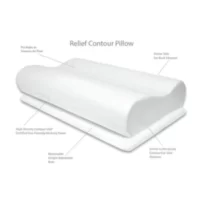
Waking with neck pain may indicate that your pillow no longer supports you well.
Unsupportive pillow signs include waking with neck pain, morning stiffness, headaches, restless sleep or repeatedly folding your pillow to gain more height. These signs may develop gradually as a pillow loses its shape, height or firmness.
A suitable pillow should support your head and neck in a comfortable position without forcing them too far forwards, backwards or sideways. A pillow that has become flat, uneven, lumpy or sagging may aggravate an existing neck pain pattern.
How Can You Test Whether Your Pillow Still Supports You?
Start by considering how your neck feels when you wake. Morning pain or stiffness that eases after you move may suggest that your overnight position is contributing to your symptoms. However, these symptoms can also arise from an underlying neck condition.
Next, check whether the pillow returns to its usual shape after use. A pillow may no longer provide reliable support if it remains flattened, develops firm lumps or leaves your head noticeably tilted.
Other practical signs include repeatedly repositioning the pillow, placing an arm underneath it, adding a second pillow or sleeping better when you stay elsewhere. If several signs apply, consider reviewing both your pillow and your neck health with a physiotherapist.
How Can an Unsupportive Pillow Contribute to Neck Pain?
An unsupportive pillow may contribute to neck pain by holding your head and neck in an uncomfortable position for several hours. This position may increase sustained load through the cervical joints, muscles and other sensitive neck structures.
A pillow that is too high may bend the neck forwards or sideways. Conversely, a pillow that is too low may allow the head to drop towards the mattress. Either position may contribute to morning stiffness, muscle tension or pain extending towards the shoulders.
The pillow may not be the only cause. Daytime posture, previous injury, stress, sleep quality, arthritis and other neck conditions can also influence morning symptoms.
Suitable pillow height supports a comfortable head and neck position.
Why Can the Wrong Pillow Contribute to Morning Headaches?
An unsuitable pillow may contribute to morning headaches by increasing sustained muscle tension around the upper neck and base of the skull. These structures can refer pain into the back, side or front of the head.
This pattern may be more noticeable in people with recurring neck stiffness or cervicogenic headache. However, headaches have many possible causes, and a pillow change should not replace an appropriate assessment when symptoms are persistent, severe or unusual.
Pillow height, shape, firmness, mattress firmness, body size and sleep position all influence comfort. Therefore, a pillow that suits one person may not suit another.
When Should You Replace Your Pillow?
There is no fixed replacement timetable that suits every pillow. Materials, construction, nightly use, body weight, care and moisture exposure can all affect how quickly a pillow loses support.
Consider replacing your pillow when it becomes flat, uneven, lumpy or sagging, or when it no longer supports your neck comfortably. A pillow may also need review if you regularly need to fold, bunch or stack it before you can settle.
Your needs can change even when the pillow still looks intact. A previous pillow may no longer suit you after a neck injury, shoulder problem, change in mattress, change in body size or change in sleeping position.
How Can a Physiotherapist Help With Pillow-Related Neck Pain?
A physiotherapist can assess your neck movement, symptom pattern, shoulder mobility, sleep position and pillow setup. This assessment may help distinguish a simple pillow mismatch from an underlying neck condition that also requires attention.
Management may include advice about pillow height, neck exercises, movement strategies, manual therapy or daytime posture. Your physiotherapist may also discuss a broader neck pain relief plan.
A suitable pillow should support the natural space between your head, neck, shoulder and mattress. It should feel comfortable without forcing your head into a clearly elevated, dropped or rotated position.
Side sleepers often need more pillow height than back sleepers because the pillow must fill the space created by the shoulder. When lying on your side, your nose and breastbone should remain roughly aligned rather than your head tilting towards or away from the mattress.
Back sleepers usually need enough support to maintain the natural neck curve without pushing the chin strongly towards the chest. Stomach sleeping commonly places the neck in prolonged rotation and may be less comfortable for people with neck pain.
Mattress firmness also matters. Your shoulder may sink further into a softer mattress, which can change the effective pillow height you need.
Listen to this ABC Radio interview for practical guidance about pillow selection and sleeping comfort.
Frequently Asked Questions
What are the main signs of an unsupportive pillow?
Main signs include waking with neck pain, morning stiffness or headaches, constantly adjusting your pillow, needing to fold or stack it, and sleeping more comfortably on a different pillow.
Can a bad pillow cause neck pain?
An unsuitable pillow may contribute to neck pain when it holds your head and neck in an uncomfortable position for long periods. However, persistent pain may also involve an underlying neck condition.
How often should you replace your pillow?
There is no fixed replacement schedule for every pillow. Replace or review it when it becomes flat, uneven, lumpy or sagging, or when it no longer supports your neck comfortably.
Can an unsuitable pillow cause headaches?
An unsuitable pillow may contribute to neck-related headaches by increasing sustained tension around the upper neck and base of the skull. Persistent, severe or unusual headaches require appropriate medical assessment.
Who can help me choose the right pillow?
A physiotherapist can assess your neck, shoulder width, sleeping position, mattress interaction and symptoms. They can then suggest pillow features and a height range that may better suit you.
What to Do Next
If neck pain, headaches or disturbed sleep keep returning, consider booking a physiotherapy assessment. Your physiotherapist can examine your neck, review your sleeping position and help determine whether your pillow may be contributing.
Combining suitable pillow support with appropriate neck care and practical sleep advice may improve comfort and reduce repeated morning symptoms.
A suitable pillow supports comfortable sleep without forcing the neck sideways.
Choose your clinic and appointment pathway
Select a PhysioWorks clinic to continue to live booking, an appointment request or reception assistance.