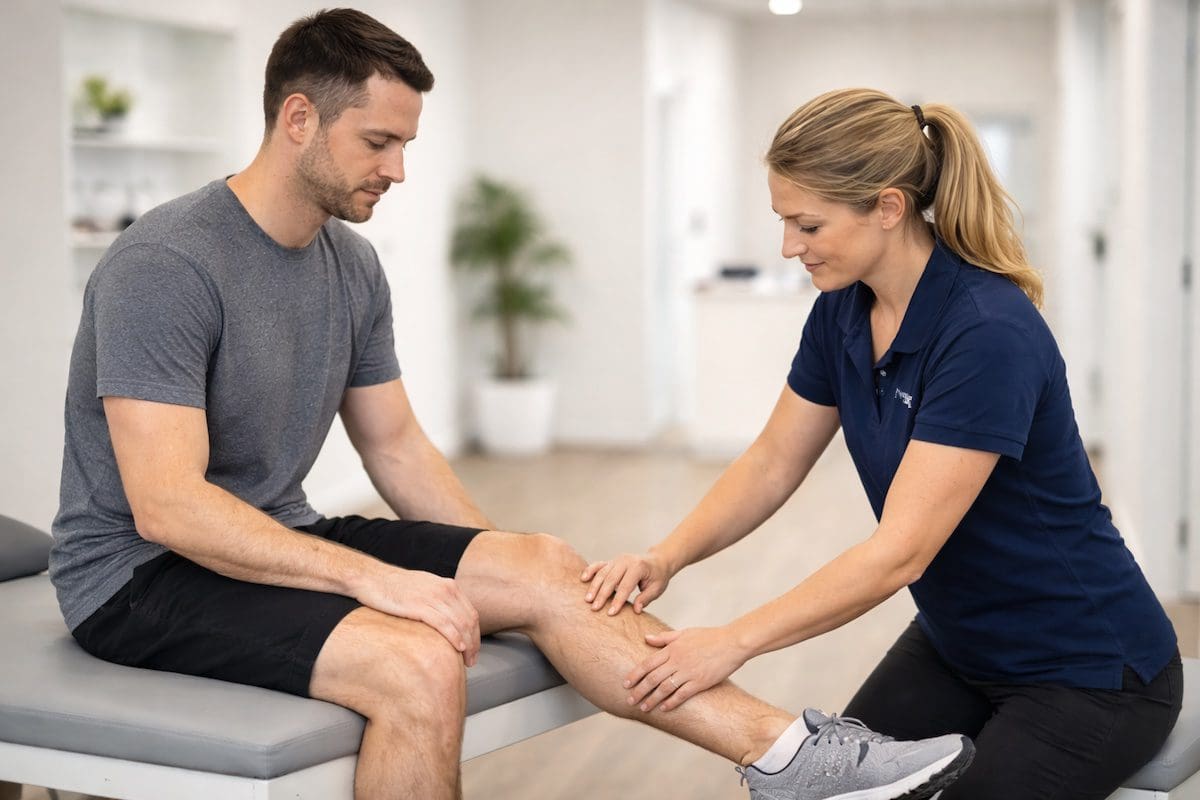
Shin pain is diagnosed by combining your symptom history, training load, pain location, and a physical assessment. A physiotherapist looks for signs of bone stress, tendon overload, muscle injury, mobility loss, strength deficits, and running or loading errors.
Your assessment may include:
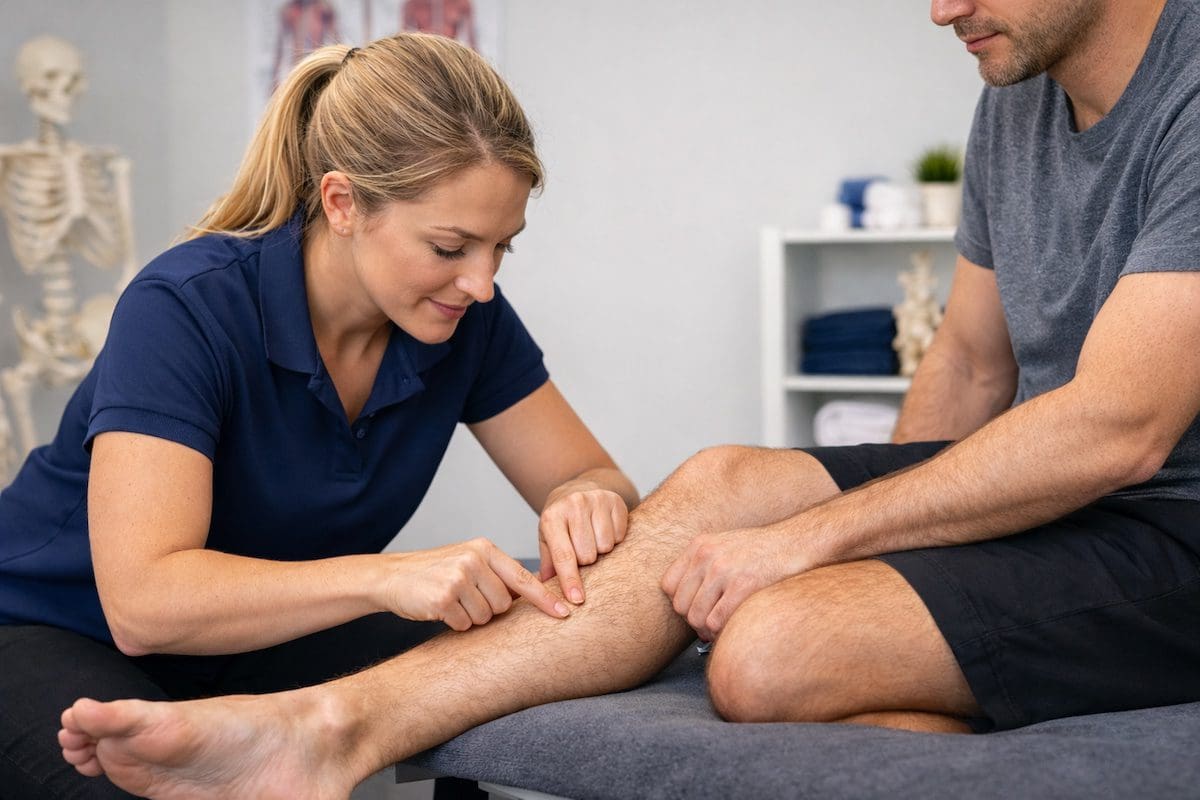
- pain mapping along the tibia and lower leg
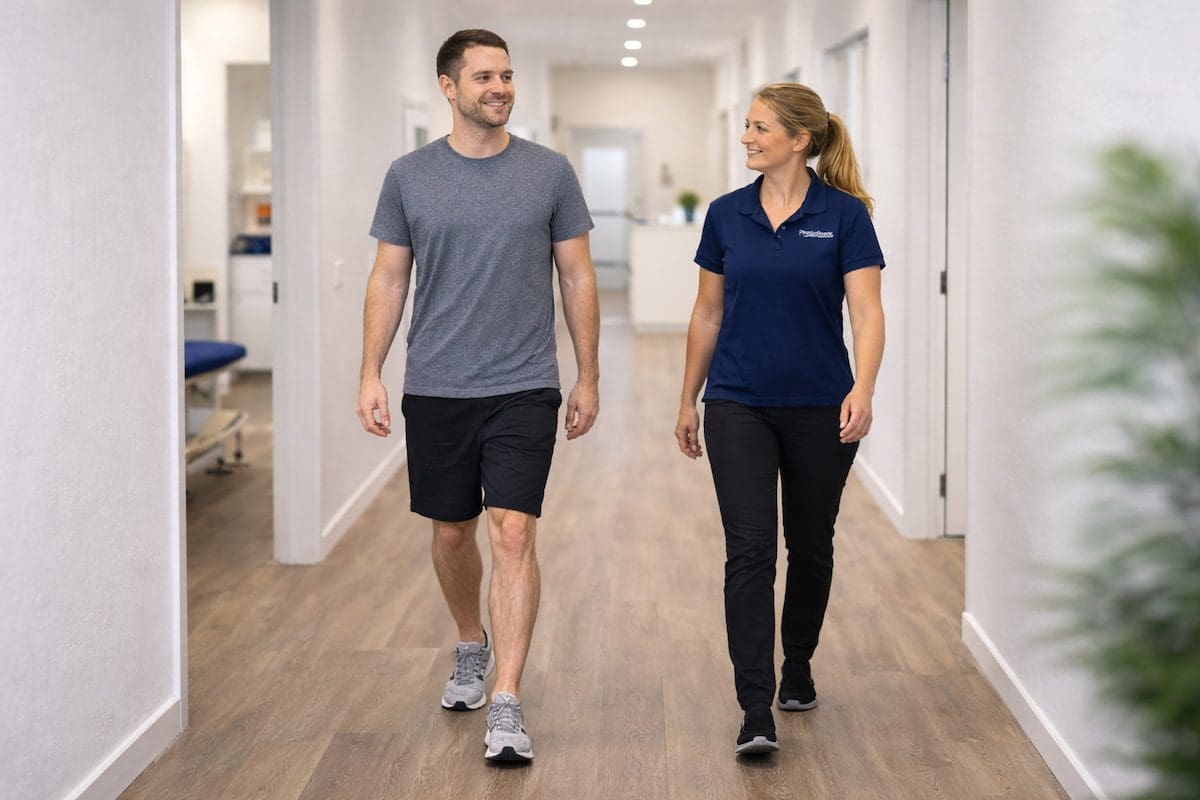
- walking, hopping, and single-leg loading tests
- ankle, calf, and foot strength checks
- review of footwear, surfaces, and recent training changes
- screening for referred symptoms from the back or nerve system
In some cases, imaging may be recommended when a bone stress injury is suspected or symptoms are not behaving like a simple overload pattern.
How can physiotherapy help shin pain?
Physiotherapy for shin pain aims to identify the pain source, reduce aggravation, rebuild lower-leg capacity, and guide a graded return to sport or exercise. Good rehab usually combines load management, strength work, movement correction, and progressive impact exposure.
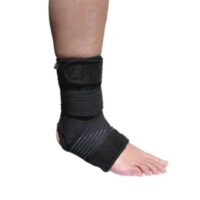
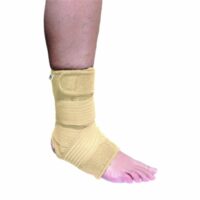
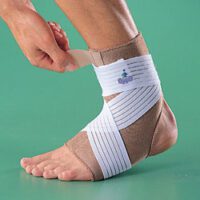
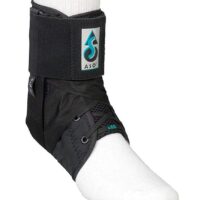
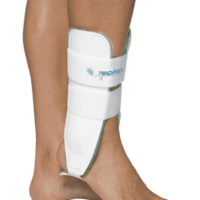
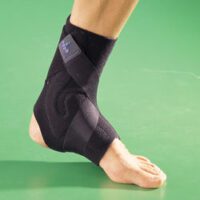
Treatment may include temporary reduction of aggravating load, calf and foot strengthening, ankle mobility work, running or walking progression, taping or support advice, and technique or footwear review. If your symptoms relate more to a muscle injury or sub-acute lower-leg issue, a staged rehab plan similar to sub-acute soft tissue injury management may help.
For recurring overload patterns, a physiotherapist may also use principles from exercise load management, gait analysis, or running analysis to guide a safer return to impact.
For a general Australian overview, Healthdirect also provides public health information about shin splints.
Common shin pain treatment options
The best shin pain treatment depends on the diagnosis. Many people improve with the right combination of relative rest, guided exercise, and a gradual return to activity rather than complete inactivity for long periods.
When should you seek help for shin pain?
You should seek help for shin pain if symptoms are worsening, becoming more localised, or stopping you from walking, running, or training normally. Early assessment may help distinguish overload from bone stress injury and shorten the path back to activity.
If your pain is mild and settles quickly after activity, a short period of load reduction may be enough. If it keeps returning, shifts from diffuse to focal, or spreads with nerve-like symptoms, it is worth getting it checked properly.
Common Questions About Shin Pain
What are the first signs of shin splints?
The first signs of shin splints often include a dull ache along the shin during or after running, jumping, or hill work. Early on, the pain may ease during rest but return when training load increases again. The pain is usually broader and less pinpoint than a tibial stress fracture.
How do I know if shin pain is a stress fracture?
Stress fracture pain is usually more focal and easier to point to with one finger. It often hurts more with impact, hopping, or walking, and may stay painful after exercise rather than settling quickly. Night pain, rest pain, or increasing tenderness over a small spot are stronger reasons to get assessed sooner.
Can you still run with shin pain?
Some mild overload-related shin pain can settle with a short reduction in running volume and intensity. However, you should stop impact and seek review if pain becomes sharp, localised, or lasts into everyday walking. Running through more serious bone stress pain can slow recovery.
Does footwear matter for shin pain?
Footwear can matter when it changes how load is distributed through your lower leg. Worn shoes, abrupt footwear changes, or shoes that do not match your current training demands may contribute to shin pain in some people. However, shoes are usually only one part of the bigger load-management picture.
How long does shin pain take to improve?
Recovery time depends on the diagnosis and how early you modify load. Mild overload cases may settle over a few weeks, while bone stress injuries or longer-standing symptoms often take much longer and need a more cautious progression. Earlier assessment often helps reduce delays and repeated flare-ups.
Can tight calves cause shin pain?
Tight or overloaded calf muscles can contribute to shin pain by changing how force is transferred through the lower leg. Calf stiffness often sits alongside weakness, reduced ankle mobility, or training spikes rather than acting alone. Rehab usually works better when it also addresses strength, load, and running progression.
Can compartment syndrome feel like shin splints?
Yes. Exercise-related compartment syndrome can sometimes feel similar early on, especially when pain builds with repeated running or impact. However, compartment syndrome more often causes pressure, tightness, cramping, or altered sensation that settles after rest, rather than the broader aching pattern commonly seen with shin splints.
What to do next
If shin pain is interfering with walking, running, sport, or gym training, the next step is to reduce the aggravating load and get the problem assessed properly. The earlier you identify whether the issue is shin splints, bone stress, tendon overload, or another lower-leg condition, the easier it is to choose the right rehab plan.
You should book an assessment sooner if the pain is very localised, hurts with hopping or walking, wakes you at night, or keeps returning each time you increase training. Those patterns are more likely to need a more specific diagnosis and a more cautious return-to-impact plan.
A physiotherapist can help you work out the source of your shin pain, guide treatment, and plan a safer return to activity.