
TMJ Headache
TMJ Headache


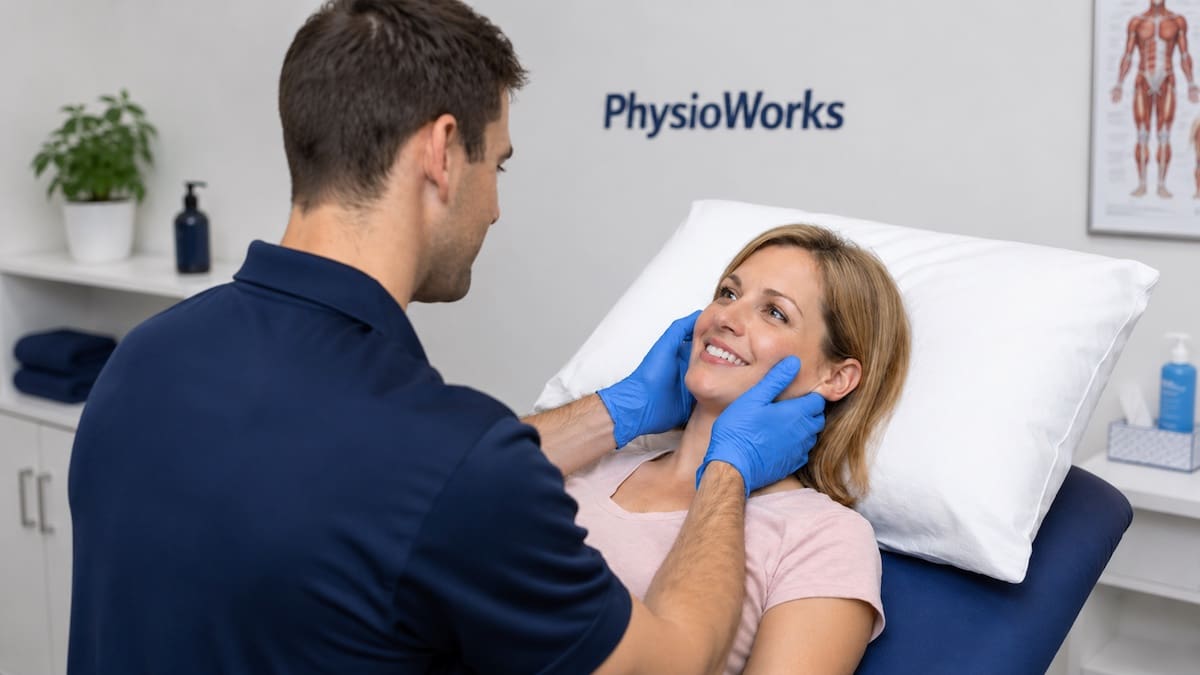
TMJ headache is head pain associated with the temporomandibular joint, jaw muscles or nearby neck structures. Symptoms often affect the temple, cheek, ear region or jaw and may worsen with chewing, clenching, grinding, yawning or prolonged talking.
The temporomandibular joints, commonly called the TMJs, sit just in front of each ear. They help you chew, speak, yawn and open your mouth. The jaw joints, facial muscles and upper neck also share closely connected nerve pathways. Therefore, irritation in one area can sometimes feel like pain in another.
TMJ headache sits within the broader group of temporomandibular disorders. You can also explore the wider jaw pain information hub when jaw locking, clicking or chewing pain is your main concern.
What Does a TMJ Headache Feel Like?
TMJ-related headache commonly affects the temple or side of the head. However, symptoms may also spread towards the cheek, ear, forehead, jawline or upper neck.
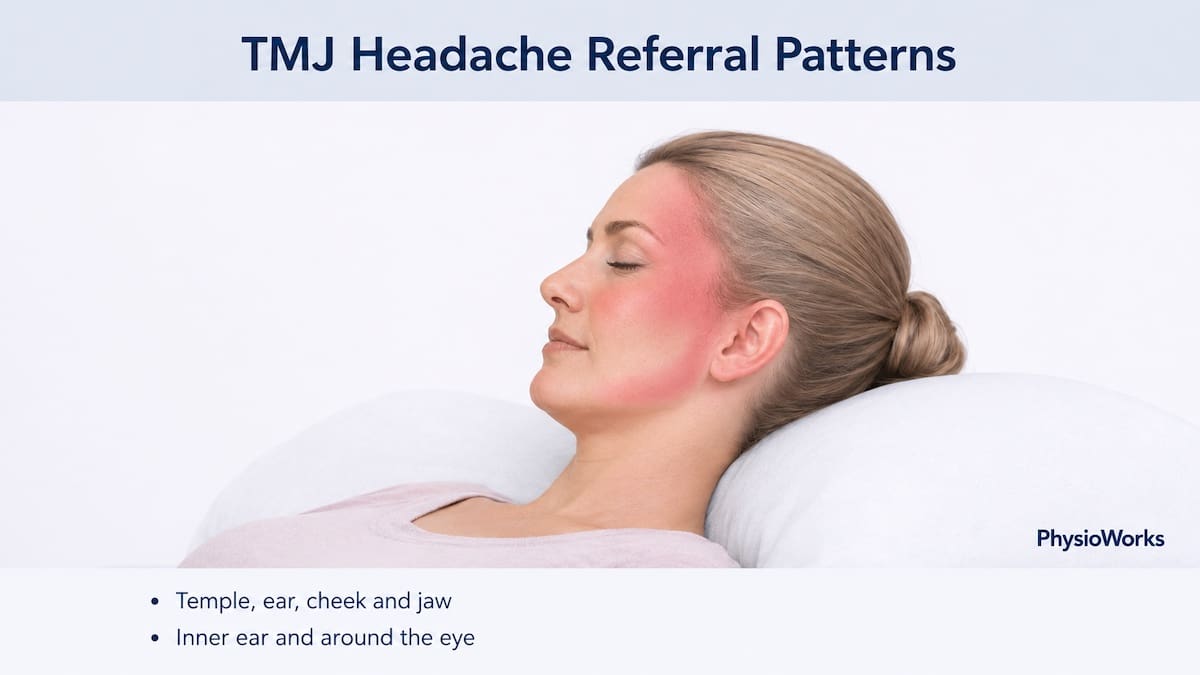
People may notice one or several of the following symptoms:
Head pain
Temple pressure, aching or headache on one or both sides.
Jaw symptoms
Jaw tightness, tiredness, tenderness, clicking, locking or limited opening.
Chewing sensitivity
Symptoms that increase after chewing, talking, yawning or eating hard foods.
Morning symptoms
Headache or jaw tightness after overnight clenching or grinding.
Ear-region pain
Aching or pressure near the ear without an obvious ear infection.
Neck overlap
Neck stiffness or muscle tension that adds to the headache pattern.
Jaw clicking on its own does not always indicate a painful disorder. However, clicking with pain, reduced mouth opening, catching or locking deserves closer assessment. Our TMJ treatment and jaw pain FAQs explain these symptoms in more detail.
Does Your Headache Follow a Jaw-Loading Pattern?
A headache is more likely to have a jaw contribution when several symptoms change together.
- Your headache increases after chewing, talking, yawning or clenching.
- Your temple, cheek or jaw muscles feel tender.
- Your jaw feels tired, tight or stiff.
- You wake with jaw tightness or a morning headache.
- Your mouth opening feels limited, uneven or difficult to control.
- Stress, poor sleep or prolonged concentration increases jaw bracing.
- Your headache overlaps with neck stiffness or upper-back tension.
These features do not confirm the cause by themselves. Migraine, dental problems, ear conditions, sinus symptoms and other headache disorders can produce overlapping symptoms.
Why Do TMJ Headaches Happen?
A TMJ headache may develop when jaw load rises faster than the joints and muscles can tolerate. This does not always mean that the joint is damaged. Symptoms can reflect temporary overload, muscle sensitivity, altered movement control or several contributing factors working together.
Clenching and Grinding
Frequent clenching or grinding can keep the jaw muscles active for long periods. Some people clench during sleep, while others brace their jaw during work, driving, exercise or stressful situations without noticing.
Repeated or Prolonged Jaw Loading
Gum chewing, hard foods, prolonged talking, repeated wide yawning and long dental appointments may irritate a sensitive jaw. A sudden increase in these activities may also trigger a flare.
Jaw Movement and Muscle Control
The jaw may open with a sideways shift, uneven muscle effort or reduced control. These patterns can increase load around the joint and facial muscles, particularly when the area is already sensitive.
Neck and Upper-Back Contribution
The jaw, head and upper neck have closely related muscles and nerve pathways. Neck stiffness or prolonged head positioning may add to headache sensitivity in some people. Compare this pattern with a cervicogenic headache or tension headache.
Posture is rarely the only cause. However, changing position and reducing long periods of jaw or neck bracing may help. Our posture correction guide explains practical ways to vary your working position.
How Is a TMJ Headache Assessed?
Assessment aims to determine whether the jaw is likely to contribute to your headache and whether another source needs consideration. Your physiotherapist will usually ask about your headache pattern, jaw symptoms, chewing, clenching, grinding, sleep, dental history, neck symptoms and activities that change your pain.
Your physical assessment may include:
- jaw opening and closing movement;
- mouth-opening range and comfort;
- side-to-side jaw movement;
- jaw joint and muscle tenderness;
- movement control and clicking or locking;
- neck movement and upper-neck sensitivity; and
- activities or positions that reproduce your usual symptoms.
The aim is not simply to find a tender muscle or clicking joint. Your assessment should connect the physical findings with your usual headache and jaw symptoms.
How Is a TMJ Headache Treated?
Treatment depends on the findings from your assessment. A useful plan usually combines education, temporary changes to aggravating jaw loads and exercises or treatment matched to your presentation.
Education and Jaw-Load Management
Understanding which activities increase symptoms can help you reduce unnecessary irritation without avoiding normal jaw use for too long. Advice may cover chewing load, yawning, talking, resting jaw posture and gradual return to normal foods.
Jaw Movement Retraining
Gentle exercises may help improve jaw opening, closing and side-to-side control. The exercise should match your movement pattern and symptom level rather than forcing the jaw through pain or clicking.
Manual Physiotherapy
Depending on your assessment, treatment may include techniques directed towards the jaw muscles, jaw joint, neck or upper back. Manual treatment should support a broader plan rather than act as the only treatment.
Neck and Upper-Back Treatment
Neck treatment may help when neck stiffness, movement or muscle sensitivity contributes to the headache. This may include movement exercises, strength work, pacing and advice about sustained positions.
Dry Needling or Acupuncture
Dry needling or acupuncture may suit selected people when muscle sensitivity is part of the presentation. It does not suit every person or replace movement and load management.
Dental Assessment and Splints
Dental input may be useful when symptoms include tooth pain, bite changes, tooth wear, dental disease or strong overnight grinding. A dentist may discuss an occlusal splint, commonly called a night guard.
A splint does not suit every TMJ headache. It should match the dental findings, symptoms and jaw movement pattern rather than be used automatically for all jaw pain.
Medication and Medical Options
A doctor, dentist or pharmacist can advise whether short-term medicine is suitable. Medication may help settle a flare while you restore more comfortable jaw use, but it may not address the factors that keep symptoms returning.
Botulinum toxin injections are sometimes discussed for selected cases involving jaw muscle overactivity. Research findings remain mixed. Therefore, this option should be considered carefully alongside education, dental assessment, load management and movement retraining.
What Can You Do During a TMJ Headache Flare?
-
Relax your resting jaw position
Keep your lips together or gently relaxed while your teeth remain apart. Avoid holding the jaw tightly closed.
-
Reduce heavy chewing briefly
Choose easier-to-chew foods during a strong flare. Then return towards your normal diet as symptoms settle.
-
Pause gum and repeated jaw habits
Avoid gum, nail biting, pen chewing and repeated jaw testing while the area is sensitive.
-
Support wide yawns
Keep yawning comfortable rather than forcing your mouth to its widest range.
-
Try gentle warmth
A warm pack over tight jaw muscles may feel soothing. Protect your skin and stop if heat increases symptoms.
-
Change sustained positions
Take regular breaks from prolonged phone, computer or driving positions that increase jaw or neck bracing.
Avoid repeatedly pressing, stretching or testing a painful jaw. Frequent checking may keep the area irritated.
How Is a TMJ Headache Different From Migraine?
TMJ headache commonly links with jaw tenderness, chewing, clenching, morning jaw tightness or restricted mouth movement. In comparison, migraine commonly includes features such as nausea, light sensitivity, sound sensitivity, throbbing pain or worsening with physical activity.
However, symptom patterns can overlap. Some people experience both migraine and a painful jaw disorder. Treating the jaw may help the jaw-related part of the presentation without replacing appropriate migraine care.
TMJ headache pattern
Often changes with chewing, clenching, jaw tenderness or mouth movement.
Migraine pattern
May include nausea, light or sound sensitivity and activity-related worsening.
Neck headache pattern
Often changes with neck movement, sustained position or upper-neck tenderness.
Related TMJ and Headache Guides
TMJ Headache FAQs
What is a TMJ headache?
A TMJ headache is head pain associated with irritation or overload of the jaw joint, jaw muscles or nearby structures. It often changes with chewing, clenching, yawning, talking or jaw movement.
Can TMJ problems cause headaches every day?
TMJ-related symptoms can occur frequently when clenching, grinding or repeated jaw loading keeps the area sensitive. However, daily headache can have several causes, so persistent symptoms should be assessed rather than assumed to come from the jaw.
Can a TMJ headache cause ear pain?
TMJ problems can cause pain or pressure near the ear because the jaw joint and nearby muscles sit close to the ear. Ear pain may also have other causes, particularly when it occurs with hearing change, discharge, fever or infection symptoms.
Is clicking in the jaw always a problem?
No. Jaw clicking can occur without pain or loss of function. Arrange an assessment when clicking occurs with pain, catching, locking, reduced mouth opening or a worsening change in jaw movement.
Can physiotherapy help a TMJ headache?
Physiotherapy may help when jaw movement, muscle sensitivity, jaw loading or neck factors contribute to the headache. Treatment may include education, movement retraining, exercises, load management and manual treatment based on your assessment.
Should I see a dentist or physiotherapist for a TMJ headache?
A physiotherapist may be useful when headache changes with jaw movement, muscle tenderness, chewing or neck symptoms. Dental assessment may be appropriate when tooth pain, dental disease, bite changes, tooth wear or significant grinding is present. Some people benefit from both.
When should I seek urgent help for a headache?
Seek urgent medical care for a sudden severe headache, new weakness or numbness, speech difficulty, confusion, fainting, fever, sudden vision change, significant facial swelling or symptoms following a major injury.
What Should You Do Next?
Arrange an assessment when jaw pain or headache keeps returning, normal chewing triggers symptoms, or jaw tightness affects eating, sleep, work or exercise. A physiotherapist can assess the jaw, neck and headache pattern and help you choose a suitable treatment and self-management plan.
Consider dental input when symptoms include tooth pain, tooth wear, bite changes, dental disease or strong overnight grinding. Seek medical advice when your headache pattern is new, unusual, worsening or accompanied by other concerning symptoms.
Choose your clinic and appointment pathway
Select a PhysioWorks clinic to continue to live booking, an appointment request or reception assistance.
References
- Quilghini C, Lefflot J, Buchholtz K. The effectiveness of physiotherapy for chronic headaches in patients with temporomandibular disorders: a systematic review. Frontiers in Rehabilitation Sciences. 2025;6:1647927. doi:10.3389/fresc.2025.1647927.
- González-Sánchez B, García-Monterey P, Ramírez-Durán MV, Garrido-Ardila EM, Rodríguez-Mansilla J, Jiménez-Palomares M. Temporomandibular joint dysfunctions: a systematic review of treatment approaches. Journal of Clinical Medicine. 2023;12(12):4156. doi:10.3390/jcm12124156.
- Saini RS, Almoyad MAA, Binduhayyim RIH, et al. The effectiveness of botulinum toxin for temporomandibular disorders: a systematic review and meta-analysis. PLoS One. 2024;19(3):e0300157. doi:10.1371/journal.pone.0300157.
- National Institute of Dental and Craniofacial Research. TMD: temporomandibular disorders. Updated 2024. Accessed 1 July 2026.
