
Gerontology Physiotherapy


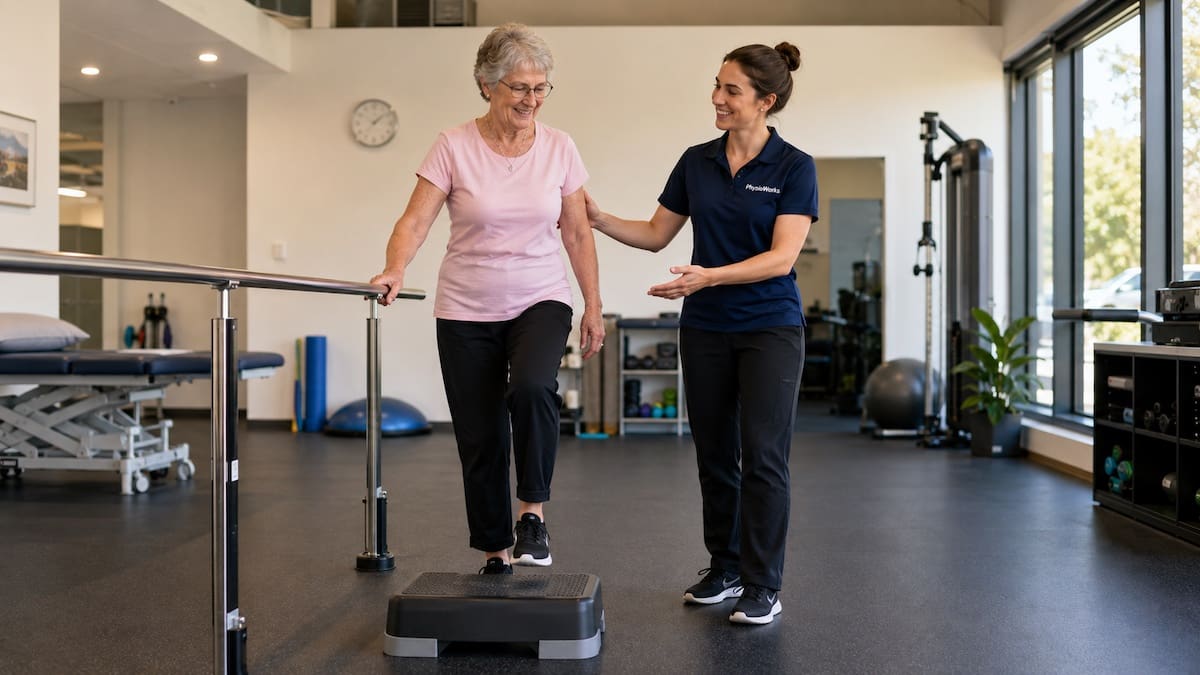
Gerontology physiotherapy helps older adults improve strength, balance, mobility and confidence with daily life. It may help if ageing, illness, surgery, pain, dizziness, reduced fitness or falls risk is making walking, stairs, transfers or independence harder.
At PhysioWorks, care may include physiotherapy assessment, balance retraining, falls-prevention strategies, walking practice, strength progression and referral to Exercise Physiology where a longer-term exercise plan is the better fit.
Quick Summary
- Gerontology physiotherapy supports mobility, balance, strength and independence.
- It may help after falls, illness, surgery, deconditioning or reduced confidence.
- Older adults may benefit from physiotherapy, exercise physiology or a combined plan.
- Strength and balance training are key parts of healthy ageing and falls prevention.
What Is Gerontology Physiotherapy?
Gerontology physiotherapy is physiotherapy care for older adults. It focuses on movement, strength, balance, walking, confidence, safety and independence. A physiotherapist may assess how you stand, walk, transfer, climb stairs, recover balance and manage everyday tasks.
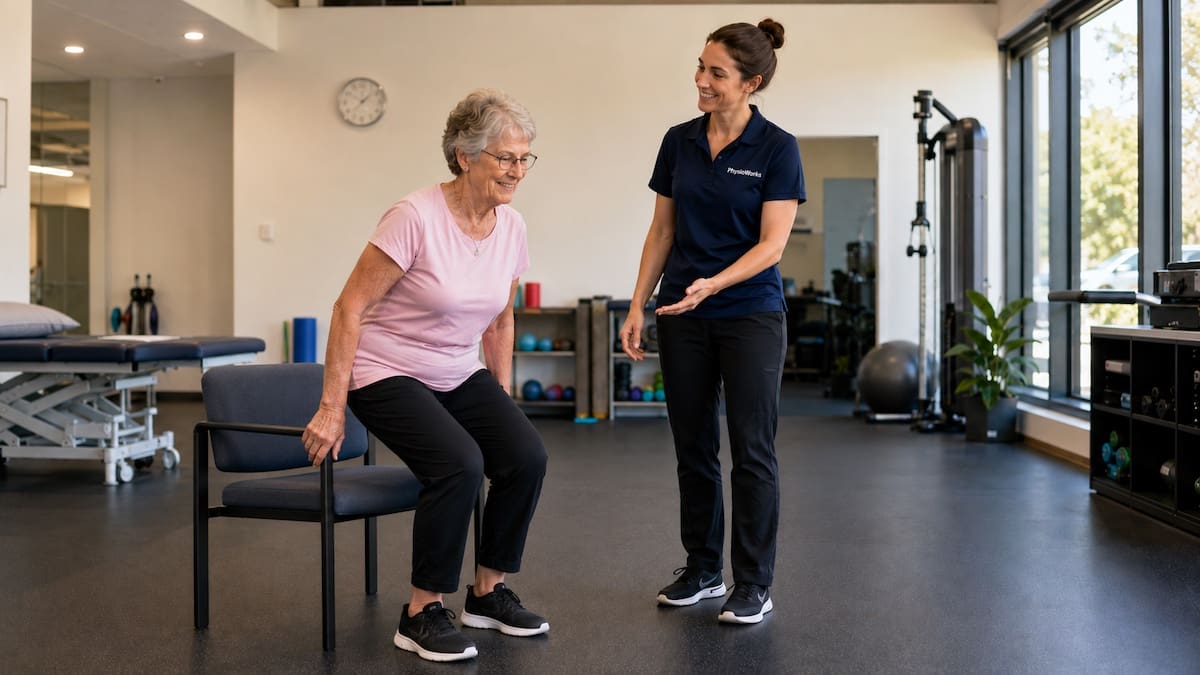
The goal is practical function. This may include getting out of a chair more easily, walking outdoors, reducing near-falls, returning after hospital, or building confidence after a period of inactivity.
Who May Benefit From Elderly Physiotherapy?
Older adults may consider physiotherapy if they notice changes in mobility, strength, balance or confidence. This is especially relevant if symptoms are affecting independence, exercise, household tasks or social activity.
- reduced leg strength or slower walking
- difficulty rising from chairs, climbing stairs or walking outside
- recent falls, near-falls or fear of falling
- loss of confidence after illness, surgery or hospitalisation
- pain or stiffness from conditions such as arthritis
- bone health concerns such as osteoporosis
- age-related muscle loss such as sarcopenia
How Can Physiotherapy Help Older Adults?
A physiotherapist may assess your strength, joint mobility, balance reactions, walking pattern, pain, falls history and confidence. They may then recommend a plan matched to your health, goals and starting point.
Treatment may include:
- progressive strength exercises
- balance training and stepping practice
- falls prevention strategies
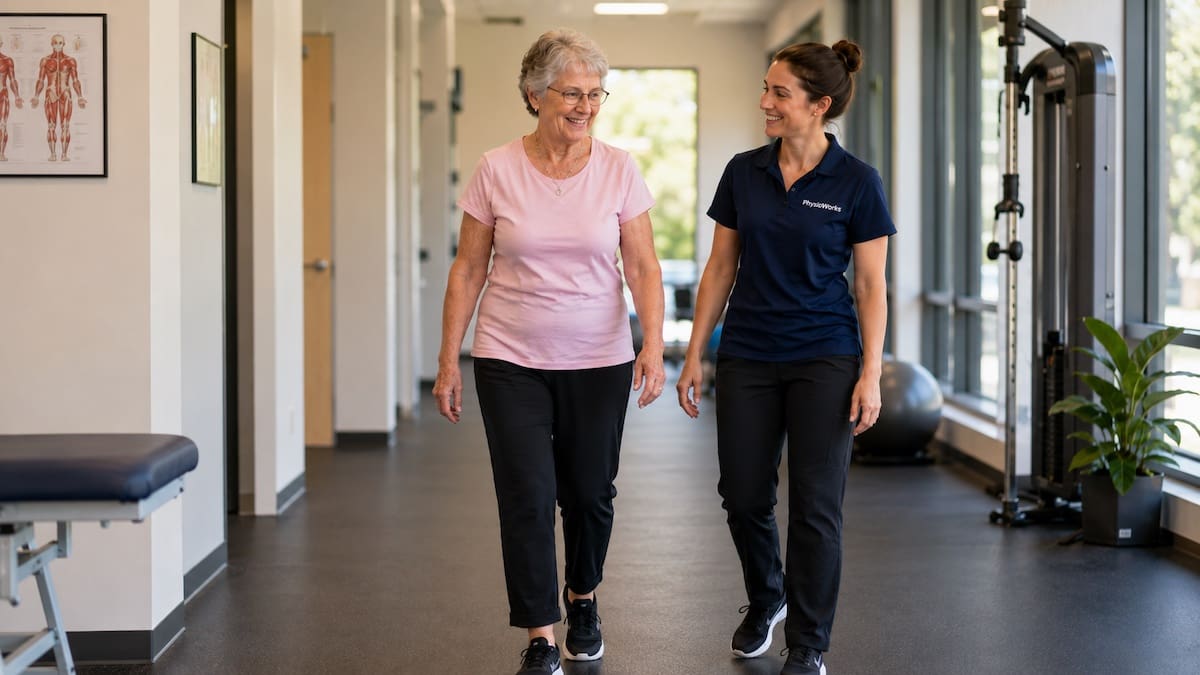
- walking and stair retraining
- mobility and flexibility work
- safe home exercise planning
- walking aid advice where needed
- graded return to community activity
Where Does Exercise Physiology Fit?
Exercise physiology may suit older adults who need a structured longer-term exercise program. This can be helpful for strength, bone health, chronic disease, fitness, diabetes, deconditioning, neurological conditions and general healthy ageing.
Physiotherapy often helps with assessment, pain, movement problems, falls risk and early-stage rehabilitation. Exercise physiology often helps with supervised exercise progression, conditioning and long-term capacity. Many people benefit from both at different stages.
Healthy Ageing Exercise Across the Decades
Healthy ageing exercise should change with your starting point, confidence, symptoms and goals. A good plan usually includes aerobic activity, strength work, balance training, mobility and regular light movement through the day.
You may find these age-specific guides useful:
- Healthy ageing exercise over 50
- Healthy ageing exercise over 60
- Healthy ageing exercise over 70
- Healthy ageing exercise over 80
Practical starting point: many older adults do best with simple, regular movement first. Strength, balance and walking tolerance can then be progressed in small steps.
Falls Prevention and Balance Confidence
Falls can affect independence, confidence and quality of life. Falls risk often involves several factors, including leg weakness, slower reactions, dizziness, medication changes, vision, footwear, home hazards and reduced activity.
Structured strength and balance work may help reduce falls risk. A physiotherapist may also review walking, turning, stairs, chair transfers, footwear, home safety and walking aid use. For suitable patients, a supervised Balance & Falls Prevention Class may provide a helpful next step.
Rehabilitation After Illness, Surgery or Hospitalisation
Recovery after illness, surgery or hospital admission can be frustrating. Some people notice reduced walking tolerance, weaker legs, slower transfers or a loss of confidence with community activity.
Gerontology physiotherapy may include gait retraining, chair-rise practice, stair practice, strength progression, balance drills and pacing advice. Where dizziness contributes to unsteadiness, vestibular physiotherapy may be appropriate.
Support for Chronic and Neurological Conditions
Older adults often manage more than one health condition. Physiotherapy and exercise physiology may support mobility and function for people with osteoarthritis, osteoporosis, diabetes, Parkinson’s disease, stroke recovery, dementia, frailty or reduced fitness.
For exercise-based support after stroke, Parkinson’s disease, multiple sclerosis or other neurological concerns, neurological rehabilitation may be a useful pathway.
Bone Health, Strength and Confidence
Low bone density can increase fracture risk, especially when falls risk is also present. A safe plan may include strength training, balance work, posture advice, impact or loading options where suitable, and practical falls-prevention strategies.
Some people with osteoporosis or osteopenia may also suit a supervised Bone Density Class after an appropriate assessment.
Is Physiotherapy Safe for Elderly People?
Yes, physiotherapy is commonly used with older adults when it is individually assessed and progressed appropriately. Your physiotherapist will consider your medical history, symptoms, medications, balance risk, falls history, fitness level and personal goals.
Exercise should feel purposeful, not random. It should also be safe enough to practise, but challenging enough to build capacity over time.
Related PhysioWorks Guides
- Balance Training
- Fall Prevention
- Balance & Falls Prevention Class
- Exercise Physiology
- Neurological Rehabilitation
- Sarcopenia
Gerontology Physiotherapy FAQs
What does gerontology physiotherapy involve?
Gerontology physiotherapy may involve strength training, balance exercises, walking retraining, falls-prevention advice, mobility work and rehabilitation after illness, injury or surgery. The plan should match your health, goals and current function.
Can physiotherapy reduce falls risk?
Physiotherapy may help reduce falls risk by improving strength, balance, stepping reactions, walking confidence and safe movement habits. Falls risk can have several causes, so assessment helps guide the right plan.
Should older adults see a physiotherapist or an exercise physiologist?
Physiotherapy may be the better first step for pain, balance concerns, falls risk, injury, surgery recovery or walking problems. Exercise physiology may suit longer-term supervised exercise, strength, conditioning, chronic disease support and healthy ageing goals.
How often should older adults do strength and balance exercise?
Many older adults benefit from strength work at least twice per week and balance practice several times per week. The best frequency depends on health, falls risk, current fitness and confidence.
When should an older adult seek help urgently?
Seek urgent medical care for sudden weakness, facial drooping, slurred speech, fainting, chest pain, sudden severe dizziness, new confusion, severe headache or a sudden inability to walk safely.
What to Do Next
If strength, balance, walking or confidence are limiting daily life, a physiotherapy assessment may help identify the main causes and guide a safe plan.
Your physiotherapist can explain your options and may recommend physiotherapy, exercise physiology, group classes, home exercise or further medical review depending on your needs.
Choose your clinic and appointment pathway
Select a PhysioWorks clinic to continue to live booking, an appointment request or reception assistance.
Balance Products
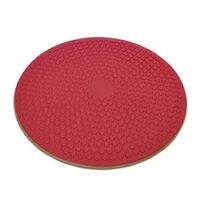
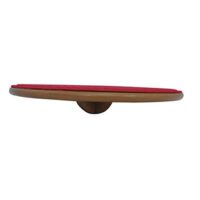
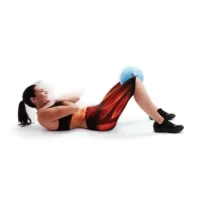
These balance products are commonly used by our physiotherapists to improve strength, balance, prevent injuries falls or injuries, plus assist home exercise programs.
-
-
-
-
- Gift Ideas, Back, Christmas Gift Ideas, Exercise Balls, Exercise Equipment, Knee, Pelvic Floor, Product Search
66fit Pilates Balls
$14.95 – $16.95Select optionsQuick View






References
- Sherrington C, Fairhall NJ, Wallbank GK, et al. Exercise for preventing falls in older people living in the community. Cochrane Database Syst Rev. 2019;1(1):CD012424. doi:10.1002/14651858.CD012424.pub2
- Montero-Odasso M, van der Velde N, Martin FC, et al. World guidelines for falls prevention and management for older adults: a global initiative. Age Ageing. 2022;51(9):afac205. doi:10.1093/ageing/afac205
- Sadaqa M, Shubert TE, Levine BJ, et al. Effectiveness of exercise interventions on fall prevention in community-dwelling older adults: a systematic review and meta-analysis. Age Ageing. 2023;52(9):afad157. doi:10.1093/ageing/afad157
- Shen Y, Shi Q, Nong K, et al. Exercise for sarcopenia in older people: a systematic review and network meta-analysis. J Cachexia Sarcopenia Muscle. 2023;14(3):1199-1211. doi:10.1002/jcsm.13225
- World Health Organization. Falls. Updated April 26, 2021.