
Hip Arthritis
Hip Arthritis (Osteoarthritis)
Hip arthritis commonly causes groin pain, stiffness and difficulty with walking, stairs or everyday movement. Exercise, education and a tailored physiotherapy plan can help many people manage symptoms and remain active.


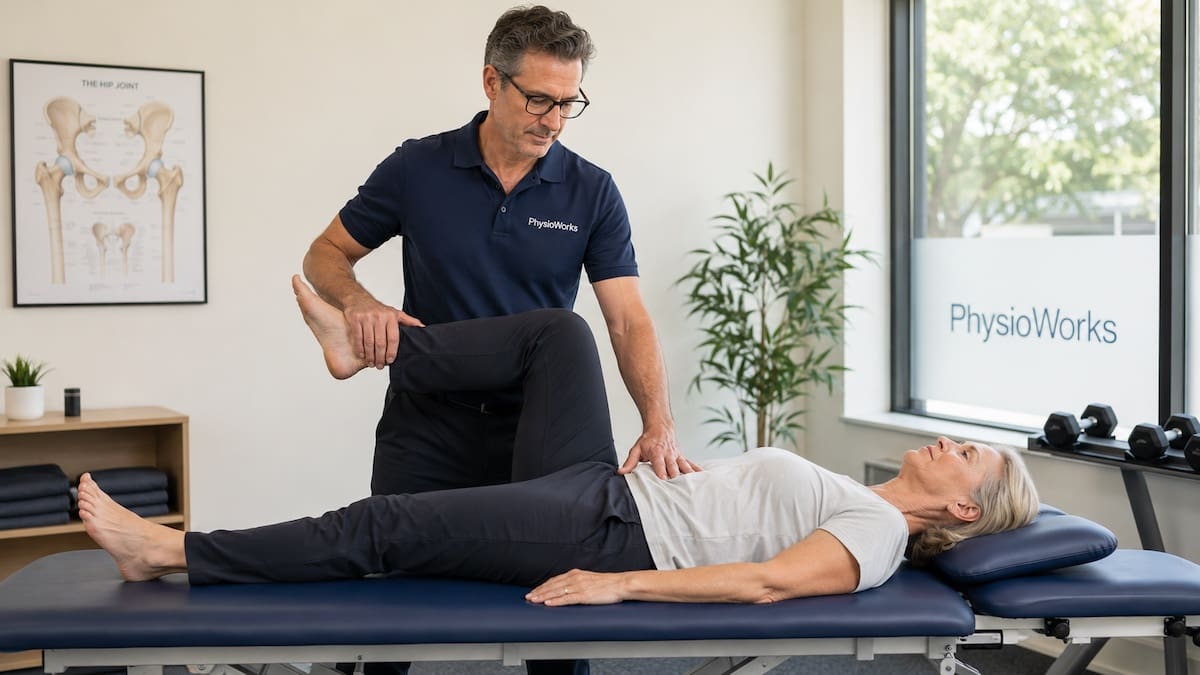
Symptoms alone cannot confirm hip arthritis. Other hip, groin and lower-back conditions can cause similar pain. Read our broader hip pain guide if you are unsure where your symptoms originate.
What Is Hip Osteoarthritis?
The hip is a ball-and-socket joint. Smooth cartilage, surrounding tissues and muscles help the joint move and tolerate load. In osteoarthritis (OA), changes can affect cartilage, bone, the joint lining and surrounding tissues. Symptoms do not always match the amount of joint change seen on an X-ray.
Hip osteoarthritis can affect people differently. Some remain active with only occasional stiffness. Others have persistent pain or reduced movement that makes daily tasks harder. For an overview of OA in other joints, see our osteoarthritis guide.
What Does Hip Arthritis Feel Like?
Common symptoms include:
- Deep groin or front-of-hip pain, sometimes spreading into the thigh, buttock or knee.
- Stiffness after sitting or on getting out of bed, often easing as you begin to move.
- Reduced ability to turn the hip, put on socks or shoes, or get in and out of a car.
- Pain or fatigue during longer walks, stairs, hills or other weight-bearing activities.
- Occasional clicking, grinding or a sense that the hip is not moving smoothly.
No single symptom proves hip osteoarthritis. The pattern, examination and your wider health history matter more than one isolated sign.
What Else Can Feel Like Hip Arthritis?
Not all groin, thigh or outer-hip pain comes from arthritis. Identifying the main pain source helps you choose appropriate treatment.
Deep groin pain and stiffness
These may fit hip OA, but femoroacetabular impingement (FAIS) and a hip labral tear can produce overlapping symptoms.
Pain on the outside of the hip
Pain when lying on the affected side or climbing stairs may suggest gluteal tendinopathy or greater trochanteric pain syndrome.
Pain travelling from the back
Lower-back or nerve-related pain may travel into the buttock, thigh or leg. A hip and spinal assessment can help identify the likely contributors.
A sudden groin pain episode during sport may instead involve a groin muscle strain. If symptoms are unclear, a clinician can assess hip movement, strength, neurological signs and functional tasks.
What Contributes to Hip Arthritis?
Hip OA usually develops through a combination of factors rather than one specific cause. Age, previous joint injury, some hip-shape or developmental differences, family history and higher body weight can affect the likelihood of developing OA. These factors do not predict an individual’s symptoms or future function with certainty.
Low activity levels and reduced hip strength are better considered modifiable influences on pain, capacity and daily function rather than proven direct causes of arthritis. Building strength and activity tolerance can help even when joint changes remain visible on imaging.
How Is Hip Arthritis Diagnosed?
A clinician considers your symptom history, age, hip range, strength, walking pattern and the way symptoms respond to movement. Reduced hip rotation and groin pain may support the diagnosis, but a single physical test cannot confirm it.
Imaging is not always required. Your GP may request an X-ray when the diagnosis is uncertain, the presentation is atypical or surgical advice is being considered. MRI is usually reserved for selected situations rather than routine hip OA assessment. Importantly, people with similar X-ray findings may experience very different levels of pain.
What Helps Hip Arthritis?
For most people, initial treatment focuses on maintaining movement and building capacity for meaningful daily activities. Exercise and education are the foundation of non-surgical hip OA management. Your plan may include:
- Education and pacing: adjust the amount of walking, stair climbing and other activities during symptom flare-ups.
- Progressive strengthening: train the hip, gluteal and thigh muscles with exercises suited to your ability.
- Aerobic activity: use walking, cycling or water-based exercise to improve general fitness and function.
- Mobility and functional training: work on comfortable hip movement, sit-to-stand, stairs and balance.
- Additional symptom relief: use selected hands-on treatment where helpful, alongside exercise rather than instead of it.
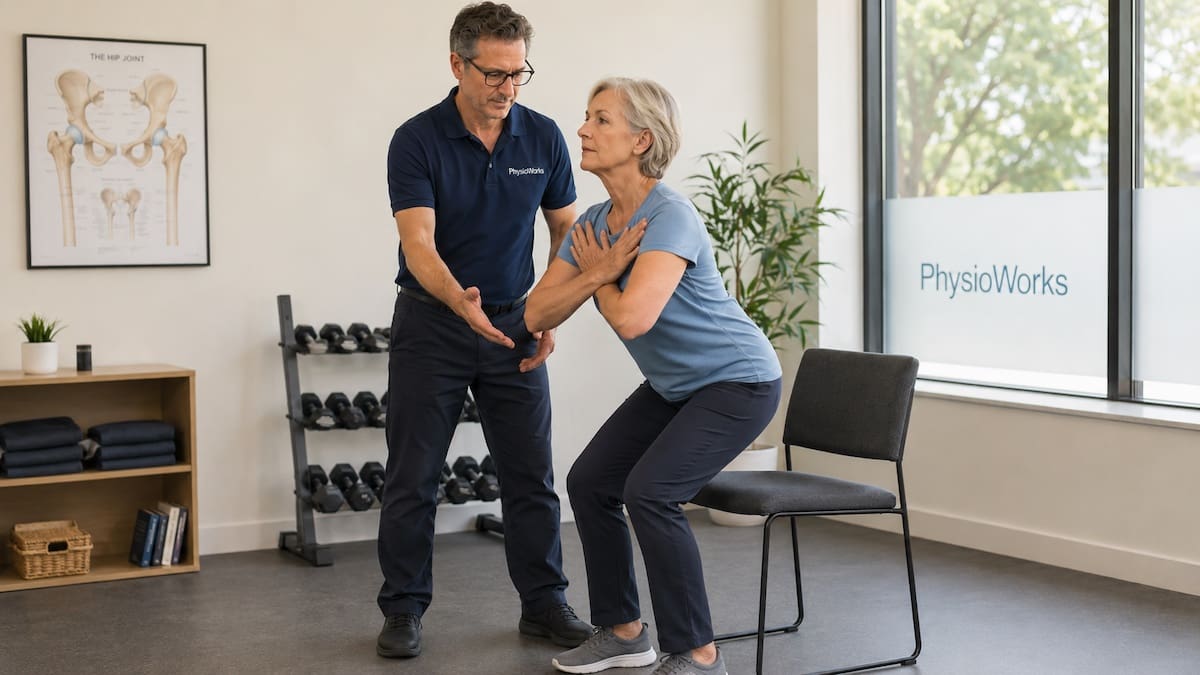
Exercises such as closed kinetic chain strengthening can support tasks performed while standing, including getting out of a chair and stepping up.
Which Exercises Are Useful for Hip Osteoarthritis?
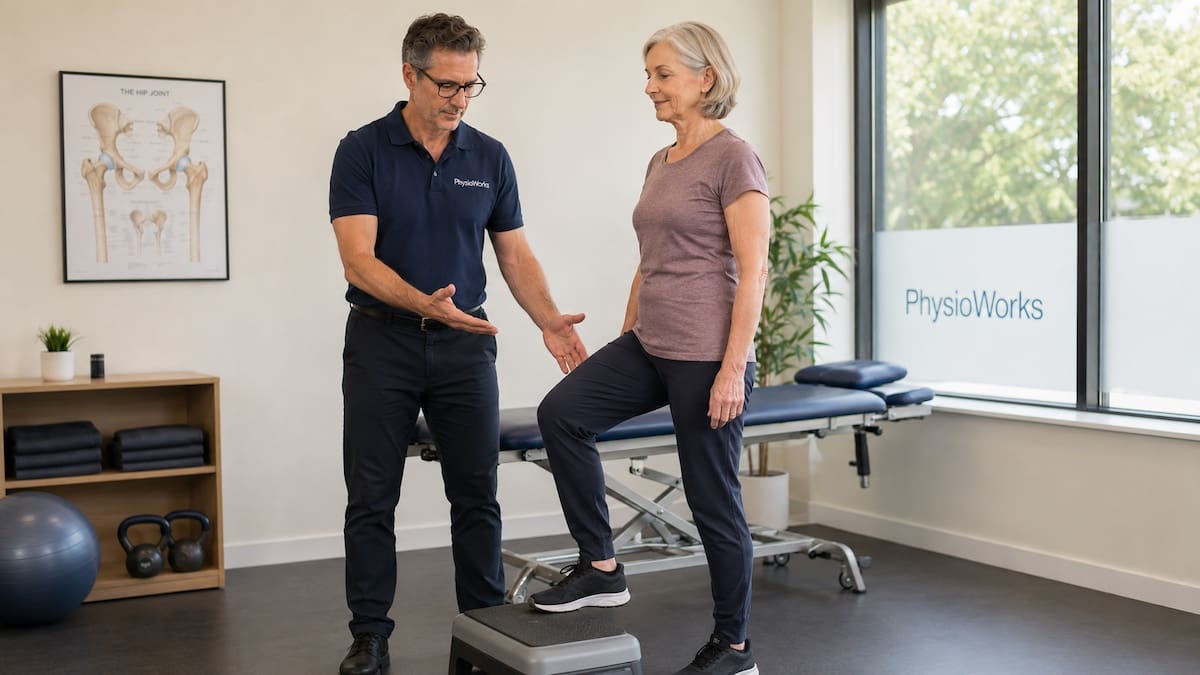
There is no single best exercise for everyone. A useful program combines manageable aerobic activity with progressive strength work. Options may include shorter regular walks, a stationary bike, swimming or water walking, sit-to-stand, step-ups and targeted hip strengthening.
Start at a level you can recover from and increase the challenge as your hip tolerates it. An individual program is particularly useful if you have marked stiffness, poor balance, another health condition or repeated pain flare-ups. The GLA:D® Australia program offers structured education and supervised exercise for people with hip and knee OA.
Is Walking Good for Hip Arthritis?
Walking is often a useful part of hip OA management. However, longer distances, hills or sudden increases in pace can sometimes increase symptoms. Rather than stopping activity completely, consider shorter walks on flatter ground and gradually increase your total walking time.
How Can Hip Exercise Progress Over Time?
-
Settle a flare-up
Keep moving in comfortable doses. Use shorter walks, gentle mobility exercises and lighter strength work where tolerated.
-
Build strength and confidence
Progress sit-to-stand, hip and thigh strengthening, balance and step exercises based on symptoms and ability.
-
Return to meaningful activities
Gradually increase walking distance, hills, stairs, gardening, gym activity or other personal goals.
What Other Treatments May Help?
Some people benefit from discussing pain relief medicines or other treatment options with their GP. The choice depends on their general health, existing medicines, symptom severity and treatment goals. Injections may be considered in selected cases, but they are not a substitute for long-term exercise and activity management.
For an independent overview, see Healthdirect’s information on osteoarthritis.
When Might Hip Replacement Be Considered?
Hip replacement may be an option when pain, stiffness and loss of function substantially affect your quality of life despite an appropriate period of non-surgical management. Your GP can help you discuss the benefits, risks and timing of an orthopaedic review.
Physiotherapy cannot reverse osteoarthritis or guarantee that surgery will be avoided. However, strengthening, general fitness and education may help you remain active while deciding on the next step. If surgery becomes appropriate, see our hip replacement rehabilitation guide.
What Should You Do Next?
Keep up manageable daily movement, build hip and leg strength, and adjust your activity during flare-ups. If pain persists, walking becomes difficult or you are uncertain whether arthritis is causing your symptoms, a physiotherapy assessment can help clarify the problem and guide a practical plan.
Choose your clinic and appointment pathway
Select a PhysioWorks clinic to continue to live booking, an appointment request or reception assistance.
Hip Arthritis FAQs
What are the first signs of hip arthritis?
Common early signs include groin or front-of-hip pain, stiffness after rest, reduced hip movement and discomfort with walking or stairs. These symptoms can have other causes, so an assessment may be useful.
How do I know if groin pain is caused by hip arthritis?
Hip arthritis can cause deep groin pain and reduced hip rotation, but hip impingement, labral problems and muscle injuries may feel similar. A clinician considers your history, examination and, where useful, imaging.
Does walking help hip arthritis or make it worse?
Walking often helps maintain fitness and function when the distance and pace are manageable. Shorter walks and gradual increases are useful if longer or hillier walks trigger sustained flare-ups.
What exercises can help hip osteoarthritis?
Progressive hip and leg strengthening, sit-to-stand, step exercises, cycling, swimming and walking may help. The right starting level depends on your pain, strength, mobility and personal goals.
Can physiotherapy prevent hip replacement?
Physiotherapy cannot reverse joint changes or guarantee that surgery will be avoided. Exercise, education and activity management may improve function and help some people manage well without surgery.
When should I consider hip replacement?
Hip replacement may be considered when pain and loss of function substantially affect daily life despite appropriate non-surgical care. Your GP and orthopaedic surgeon can discuss suitability, risks and timing.
References
- Teirlinck CH, et al. Effect of exercise therapy in patients with hip osteoarthritis: a systematic review and cumulative meta-analysis. Osteoarthritis Cartilage Open. 2023.
- Monfort J, et al. Effect of exercise and/or educational interventions on physical activity and pain in patients with hip/knee osteoarthritis: systematic review with meta-analysis. 2022.
- Bieler T, et al. Exercise in patients with hip osteoarthritis: a randomised trial comparing progressive resistance training, Nordic walking and home exercise. 2022.