FAQs

Frequently Asked Questions


Will My Physiotherapist Refer Me for X-Rays or Scans?

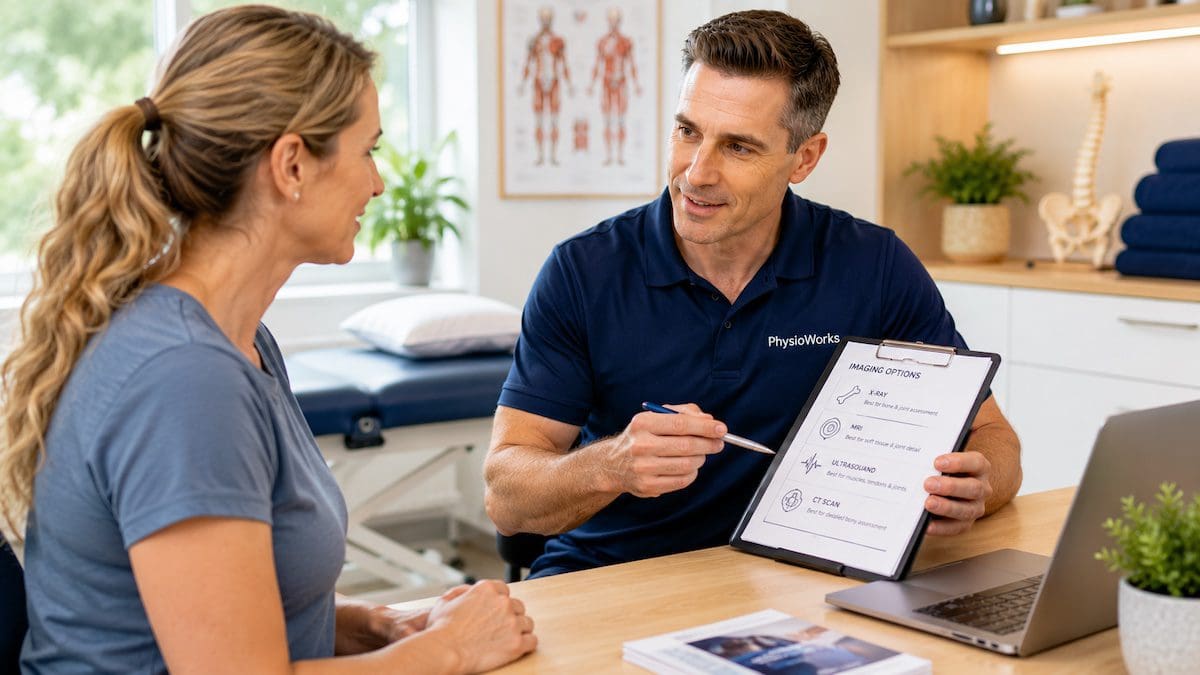
Physiotherapist X-ray referral discussion reviewing musculoskeletal scan results with patient
Discussing whether imaging changes treatment

Can a physiotherapist refer you for an X-ray or scan?

Yes. In Australia, physiotherapists can request some diagnostic imaging for musculoskeletal problems. This may include selected X-rays, ultrasound scans and MRI scans. However, Medicare rebates depend on the scan type, the clinical reason, and who requests the imaging.

In many cases, your physiotherapist will assess you first, explain whether imaging is likely to change your treatment, and advise whether a GP request may reduce your out-of-pocket cost. This is especially relevant for MRI, where Medicare funding usually requires a GP or medical specialist pathway.

Quick answer: A physiotherapist can request some scans, but you may need a GP referral or request for Medicare-funded imaging. Most muscle, joint and spinal problems do not need imaging at the first appointment unless warning signs are present.

For common problems such as back pain, knee pain, shoulder pain or nerve pain, a clinical assessment often gives more useful early information than a scan alone.

When is imaging actually needed?

Imaging is most useful when it answers a clear clinical question or changes your treatment plan. Your physiotherapist will screen for warning signs and consider whether the scan result is likely to improve decision-making.

A scan may be considered when there is:

  • suspected fracture after trauma
  • significant swelling, deformity or loss of function
  • progressive weakness, numbness or nerve signs
  • unrelenting night pain or unusual symptoms
  • poor progress after a reasonable trial of treatment
  • a need to clarify surgical, medical or injection planning

Do I need a scan now?

  • Often no: mild pain, improving symptoms, no trauma and no major weakness.
  • Maybe: symptoms are not improving, function is limited, or swelling is significant.
  • More urgent: trauma, suspected fracture, progressive weakness, severe night pain or concerning neurological signs.

Routine early imaging does not always improve outcomes for common musculoskeletal pain. Instead, education, exercise, load management and hands-on care often remain the main first steps.

How do Medicare rebates work for physiotherapy imaging?

Medicare rules can be confusing because diagnostic imaging uses a request system, and rebates depend on the Medicare Benefits Schedule item. Physiotherapists may request some imaging services that attract Medicare benefits, but Medicare does not cover every physiotherapist-requested scan.

Some physiotherapist-requested X-rays may attract a Medicare rebate. Many ultrasound scans requested by a physiotherapist are billed privately. MRI scans almost always require a GP or medical specialist request to access Medicare funding.

Medicare rebate facts for physiotherapy imaging

X-rays: Some X-rays requested by physiotherapists may attract a Medicare rebate, depending on the body area and item number.

Ultrasound: Many physiotherapist-requested diagnostic ultrasound scans are privately billed by radiology clinics.

MRI: Medicare usually does not cover MRI scans ordered by physiotherapists. A GP or medical specialist request is commonly needed for Medicare-funded MRI access.

Cost tip: If imaging is needed, your physiotherapist can advise whether seeing your GP first may reduce your out-of-pocket cost.

How do physiotherapists decide if you need a scan?

Your physiotherapist considers your symptoms, injury history, physical findings, goals and previous imaging. They also consider whether the result would change your treatment.

The decision usually depends on three practical questions:

  • Safety: Are there warning signs that need imaging or medical review?
  • Value: Will the scan add useful information beyond the assessment?
  • Action: Will the result change your treatment, referral or recovery plan?

If imaging is required, your physiotherapist may request it directly, coordinate with your GP, or recommend medical specialist review in more complex cases.

Common imaging options

Scan type Often used for Medicare pathway note
X-ray Fractures, joint changes and some spinal presentations Some physiotherapist-requested X-rays may attract rebates
Ultrasound Tendons, bursae, swelling and some soft tissue concerns Often privately billed when requested by a physiotherapist
MRI Ligaments, cartilage, discs, nerves and complex soft tissue concerns Usually needs a GP or medical specialist request for Medicare funding
CT Complex bone, trauma or spinal questions Usually coordinated through medical referral pathways

Physiotherapists may also use real-time ultrasound retraining. This is different from diagnostic imaging. It helps assess muscle activation and guide exercise technique during rehabilitation.

Do scans always explain pain?

No. Imaging findings such as disc bulges, tendon changes and mild joint wear can appear in people who have no pain. This is one reason your symptoms, movement, strength and function matter.

Your physiotherapist can help interpret imaging in context. The goal is to connect the scan result with your clinical picture, not treat every finding on a report as the main problem.

Before arranging a scan, ask these questions

  • Will this scan change my treatment?
  • Is there a warning sign that makes imaging important now?
  • Would a GP request reduce my out-of-pocket cost?
  • Has my physiotherapist assessed whether imaging is needed at this stage?
  • What will we do differently if the scan shows a particular finding?

Related articles

Physiotherapist scan referral FAQs

Can a physiotherapist refer me for an X-ray?

Yes. Physiotherapists in Australia can request some X-rays for musculoskeletal problems. Some X-rays may attract a Medicare rebate, depending on the body area and item number. Your physiotherapist can explain whether direct imaging or a GP pathway is more suitable.

Can a physiotherapist refer me for an MRI?

A physiotherapist may request an MRI, but Medicare usually does not fund MRI scans requested by physiotherapists. If MRI is clinically needed, your physiotherapist may recommend GP or medical specialist involvement to help with Medicare-funded access where appropriate.

Can a physiotherapist refer me for an ultrasound?

Physiotherapists can request some ultrasound scans, especially for soft tissue concerns such as tendon injury, swelling or bursitis. However, many physiotherapist-requested ultrasound scans are privately billed. Ask the imaging clinic about costs before your appointment.

When is imaging needed for pain?

Imaging is most useful when trauma, warning signs, significant weakness, severe swelling or poor progress suggest that scan results may change your care. Many common muscle, joint and spinal problems improve with physiotherapy without needing early imaging.

Can scans always explain pain?

No. Many imaging findings are common in people without pain. Your physiotherapist interprets scan results alongside your symptoms, movement, strength and function. This helps avoid over-focusing on findings that may not be driving your current problem.

Should I see a physiotherapist or GP first?

Either can be appropriate. A physiotherapist can assess musculoskeletal pain and advise whether imaging is needed. A GP may be the better first step if you feel unwell, have broader medical symptoms, need medication review, or require Medicare-funded imaging access.

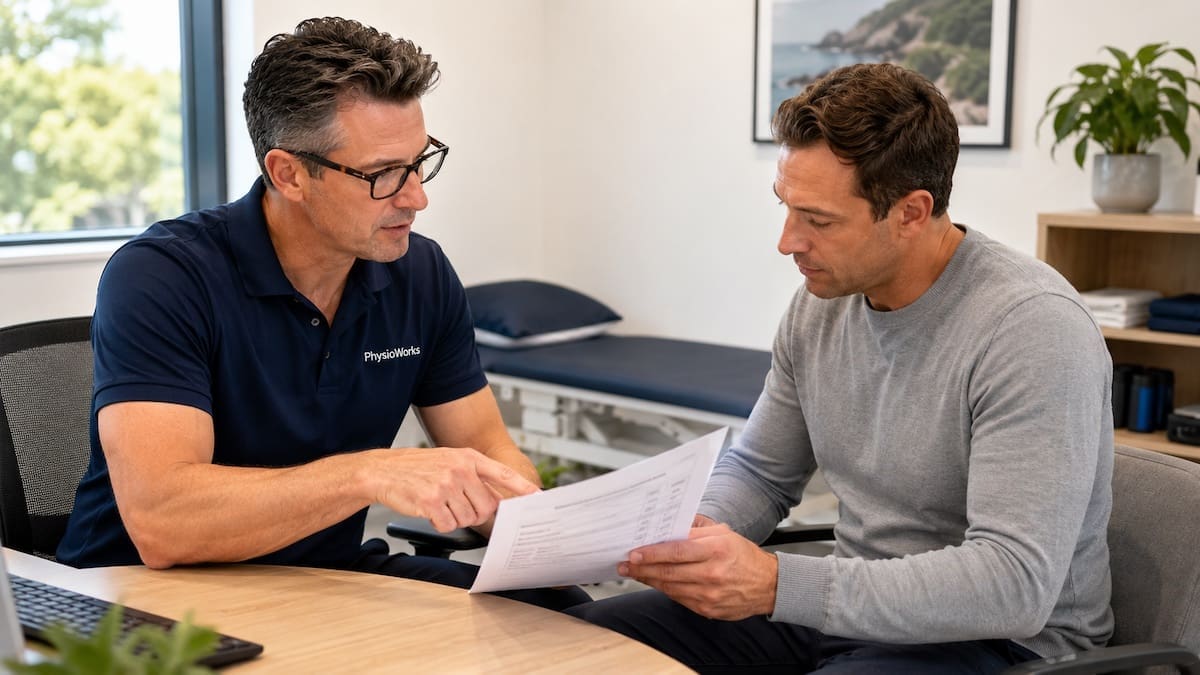
Physiotherapist scan referral pathway discussion with reassured adult patient
Planning the right imaging pathway

What to do next

If you are unsure whether an X-ray or scan is needed, a physiotherapy assessment is a sensible starting point. Your physiotherapist can screen for serious problems, assess movement and function, and explain whether imaging is likely to change your care.

Most people with common problems such as back pain, knee pain and rotator cuff injuries do not need a scan before starting treatment. When imaging is needed, your physiotherapist can help coordinate the right pathway with your GP, radiology provider or medical specialist.

Book your appointment – 24/7

Choose your preferred PhysioWorks clinic and book online.

Follow PhysioWorks

Get free physiotherapy tips, exercise videos, recovery advice, and blog updates.

Facebook Instagram YouTube B X Email PhysioWorks

References

  1. Australian Physiotherapy Association. Physiotherapy scope and diagnostic imaging FAQs. Australian Physiotherapy Association. Accessed May 28, 2026.
  2. Services Australia. Refer or request Medicare services. Services Australia. Accessed May 28, 2026.
  3. Department of Health and Aged Care. Medicare Benefits Schedule Note IN.0.6: Requests for R-type Diagnostic Imaging Services. Medicare Benefits Schedule. Accessed May 28, 2026.
  4. Crowell MS, Mason JS, McGinniss JH. Musculoskeletal imaging for low back pain in direct access physical therapy compared to primary care: an observational study. Int J Sports Phys Ther. 2022;17(2):237-246. doi:10.26603/001c.31720
  5. Cattrysse E, Swinnen E, Kossi O, et al. Impact of direct access on the quality of primary care musculoskeletal physiotherapy: a scoping review from a patient, provider, and societal perspective. Archives of Physiotherapy. 2024.

Sick Leave Certificates from Your Physiotherapist

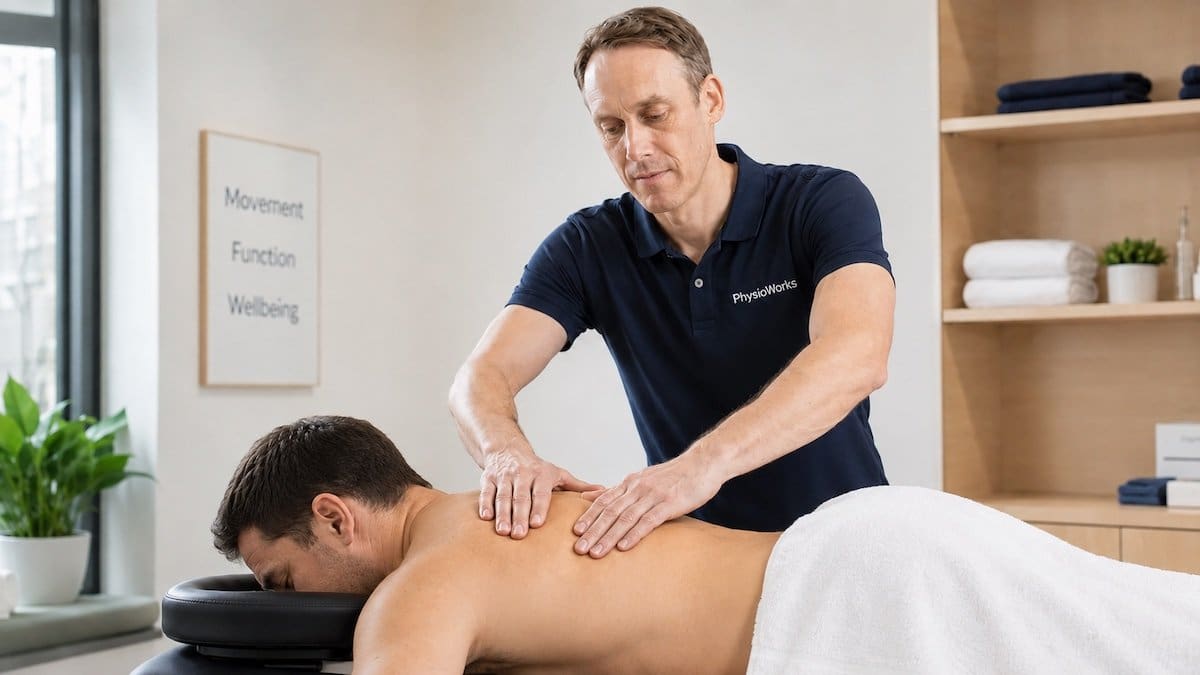
sick leave certificate physiotherapist discussing work capacity and return-to-work duties

Planning safe work duties after injury.

Can My Physiotherapist Provide a Sick Leave Certificate?

Yes. A physiotherapist may provide a sick leave certificate for an injury or movement-related condition within their scope of practice. This usually applies when pain, injury, reduced movement, or physical restrictions affect your ability to work, study, drive, lift, sit, stand, or perform normal duties safely.

A sick leave certificate issued by your physiotherapist can help you manage work duties safely after an injury. It may also outline whether you are unfit for work, fit for modified duties, or ready for a staged return to normal duties.

Quick answer: A physiotherapist can assess your physical capacity and issue a certificate when your injury affects safe work or study duties. For general illness, fever, respiratory symptoms, medication needs, or broader medical concerns, see your GP.

These certificates may be used for employers, schools, sporting organisations and return-to-work programs. Some people also call them “medical certificates”, “sick notes” or “fit notes”.

When Can a Physiotherapist Issue a Sick Leave Certificate?

Your physiotherapist can issue a certificate when your injury or condition:

  • involves muscles, joints, bones, nerves, movement, or physical function
  • limits normal work, school, sport, or daily duties
  • requires temporary rest, modified duties, or staged return-to-work planning
  • needs clear work restrictions, such as lifting, sitting, standing, driving, or walking limits

Common reasons include back pain, neck pain, sprains, muscle injuries, post-surgery recovery, sports injuries, nerve pain, headaches, jaw pain and other musculoskeletal conditions.

A physiotherapist may also provide functional information for WorkCover physiotherapy, CTP physiotherapy, insurance claims, and workplace rehabilitation planning.

What Conditions Are Not Suitable for a Physio Certificate?

Physiotherapists work within a defined clinical scope. If your main issue is a general medical condition, your physiotherapist will recommend seeing your GP or another suitable medical practitioner.

See your GP if you have fever, flu-like symptoms, respiratory illness, infection, medication needs, chest symptoms, unexplained illness, or another non-musculoskeletal concern. A GP is also more suitable when your employer, insurer, award, or workplace policy specifically requests a doctor’s certificate.

Physio Certificate or GP Certificate?

  • Physio: injury, pain, movement limits, lifting limits, work capacity, modified duties.
  • GP: general illness, fever, infection, medication, medical investigations, broader health concerns.
  • Workplace policy: check HR if your employer has specific certificate rules.

What Will My Sick Leave Certificate Include?

Your certificate outlines what you can and cannot safely do. It should focus on your work capacity rather than unnecessary medical detail.

It may include:

  • whether you are unfit for work or fit for light or modified duties
  • specific restrictions, such as lifting limits, sitting tolerance, standing tolerance, driving limits, or walking limits
  • the recommended time frame for these restrictions
  • a review date
  • a staged plan for your safe return to normal duties

Your privacy is protected. A diagnosis is not usually required for a certificate to be useful. In many cases, capacity, restrictions, and review timing are more relevant to the workplace.

How Do I Get a Sick Leave Certificate from My Physiotherapist?

You need an appointment so your physiotherapist can assess you and document your condition. During the session, explain your injury, symptoms, normal duties, and the tasks you cannot currently perform safely.

Bring useful information, such as:

  • your job title and usual duties
  • lifting, standing, driving, walking, sitting, or computer requirements
  • which tasks increase your symptoms
  • any current restrictions from your employer, doctor, insurer, or case manager
  • your preferred return-to-work goal

If appropriate, your physiotherapist may issue your sick leave certificate during the same appointment. Remote sessions may be suitable via TeleHealth physiotherapy in some cases. However, some injuries require an in-person assessment.

Legal Requirements: What Does Fair Work Say?

Fair Work Ombudsman guidance states that an employer can ask for evidence to confirm that an employee was unfit for work. Medical certificates and statutory declarations are examples of acceptable evidence. Fair Work also states that the evidence needs to convince a reasonable person that the employee was genuinely entitled to sick or carer’s leave.

The Fair Work guidance does not say evidence must always come from a doctor. However, workplace policy, awards, enterprise agreements, employment contracts, insurers, or HR processes may set extra requirements. If you are unsure, check with your workplace before booking.

Fair Work Ombudsman guidance: Notice and medical certificates.

How Long Can a Physio Sign Me Off For?

Physiotherapists commonly issue certificates for short time frames after assessment. This may cover a few days, a short period of modified duties, or a staged return-to-work plan. Longer periods may need review appointments, updated assessment findings, GP input, or insurer involvement.

Will My Employer Accept a Physiotherapist Certificate?

Many workplaces may accept a physiotherapist sick leave certificate for physical injuries and musculoskeletal conditions. However, acceptance depends on your workplace policy, award rules, enterprise agreement, insurer requirements, and the reason for leave.

If you are unsure, check your workplace policy or speak with HR. This is especially important for longer absences, non-injury illness, complex claims, or certificates linked to insurance or compensation.

WorkCover, CTP and Insurance Certificates

Physiotherapists can provide functional information for WorkCover, CTP and other insurance claims. This may include:

  • capacity for work and recommended duties
  • rehabilitation goals and expected timelines
  • progress updates
  • return-to-work planning
  • recommendations for modified duties

These details may sit alongside reports from your GP, specialist doctor, insurer, employer, or case manager for coordinated injury management.

How Physiotherapy Helps You Return to Work

A sick leave certificate is only one part of your recovery. Your physiotherapist can assess your injury, treat symptoms, guide safe movement, and plan a graded return to work.

Your physiotherapy plan may include hands-on physiotherapy techniques, targeted exercise for strength and mobility, staged return-to-work planning, and ergonomic advice to reduce repeat strain.

Good Certificate Planning Should Answer

  • What work tasks are currently unsafe?
  • Which duties can you perform safely?
  • How long should restrictions apply?
  • When should your capacity be reviewed?
  • What treatment or exercise plan supports your return?

When Should I See My GP Instead?

See your GP if:

  • you feel unwell with fever, chest symptoms, infection, or general illness
  • you need medication, imaging, blood tests, or medical investigations
  • your symptoms are not clearly injury-related
  • your employer or insurer specifically requests a doctor’s certificate
  • your condition needs broader medical care

Frequently Asked Questions

Can a physiotherapist issue a sick leave certificate?

Yes. A physiotherapist can issue a sick leave certificate for musculoskeletal, injury-related, and movement-related conditions within their scope of practice. They need to assess you first and decide whether a certificate is clinically appropriate for your work or study demands.

What conditions can a physiotherapist provide a sick leave certificate for?

Physiotherapists may provide certificates for muscle, joint, bone, nerve, post-operative, or movement-related problems that limit your ability to perform normal tasks safely. Common examples include back pain, neck pain, sprains, strains, nerve pain, headaches, jaw pain, and sports injuries.

How do I get a sick leave certificate from my physiotherapist?

Book a physiotherapy appointment and explain your injury, symptoms, work duties, and current restrictions. Your physiotherapist will assess your condition and decide whether a certificate is appropriate. If suitable, the certificate may be issued during the appointment.

Do employers accept sick leave certificates from physiotherapists?

Many workplaces may accept physiotherapist certificates for physical injuries. However, workplace policy, awards, enterprise agreements, HR rules, and insurer requirements may vary. Check with your employer if you are unsure, especially for longer absences or non-injury-related illness.

Why choose a physiotherapist for a sick leave certificate?

A physiotherapist can assess your physical capacity and provide practical work restrictions. This may help your employer understand what duties are safe, what tasks should be modified, and when your capacity should be reviewed.

Can a physiotherapist help me return to work?

Yes. Your physiotherapist can help plan treatment, exercises, modified duties, and a graded return-to-work pathway. This can support safer recovery and reduce the risk of aggravating the injury when you resume normal duties.

Related Articles

What Should I Do Next?

If an injury is affecting your work capacity, book a physiotherapy assessment. Your physiotherapist can assess your condition, explain safe work options, and issue a sick leave certificate when it is appropriate.

If your symptoms are not injury-related, or your employer requires a GP certificate, book with your GP instead.

Book your appointment – 24/7

Choose your preferred PhysioWorks clinic and book online.

Follow PhysioWorks

Get free physiotherapy tips, exercise videos, recovery advice, and blog updates.

Facebook Instagram YouTube B X Email PhysioWorks

Source

Massage Satisfaction Guarantee

Inviting massage therapy room with a comfortable massage table, soft lighting, and a female therapist in a navy polo standing behind the table with a sign that reads 'PhysioWorks Massage Satisfaction Guarantee.'

Our massage satisfaction guarantee is designed to help you book with more confidence. If you are considering massage services in Brisbane but feel unsure about what to expect, this page explains how the policy works and why many people find it reassuring.

At PhysioWorks, if you are not satisfied within the first 30 minutes of your massage, you may stop the session and leave without paying. That gives first-time clients and hesitant bookers a clear, practical safety net.

Ashgrove · Clayfield · Sandgate

Massage appointments available this week. Early booking is recommended.

What Is the Massage Satisfaction Guarantee?

The massage satisfaction guarantee means you can start your session with less uncertainty. If the treatment is not meeting your expectations within the first 30 minutes, you can end the appointment and leave without paying. It is a simple promise, but it matters because many people delay booking massage due to uncertainty rather than cost alone.

Is Massage Worth It?

For many people, massage is worth it when the treatment matches their goals. Some people book for muscular tightness, training recovery, stress reduction, or general wellbeing. Others want help with postural tension, desk-related stiffness, or soreness after physical activity. A suitable massage plan may help you feel looser, more comfortable, and more relaxed, although results vary between individuals.

If you are unsure whether massage will suit you, the guarantee lowers the risk of trying it. Instead of wondering whether you will be stuck in a session that does not feel right, you know there is an early decision point built into the appointment.

Why Do Some People Hesitate to Book Massage?

Many first-time clients are unsure about pressure, technique, modesty, comfort, or whether the therapist will understand what they need. Some worry the pressure may be too firm. Others worry the treatment may be too gentle to feel worthwhile. Those concerns are common, especially if you have never booked remedial massage or deep tissue massage before.

The guarantee helps reduce that hesitation. It encourages open communication early in the session and gives you more confidence to speak up if the treatment is not matching your goals.

What Should You Expect at Your First Massage?

Your first session should begin with a short discussion about your symptoms, goals, health background, and preferred pressure. That helps your therapist decide which style of massage is more suitable and where to focus. During the session, you should feel comfortable giving feedback about pressure, sore spots, positioning, and areas you would like the therapist to avoid.

If you prefer a gentler approach, a therapist may suggest a more calming style such as Swedish massage. If your main concern is a tighter, more localised muscular issue, they may recommend a more targeted approach.

Symptoms Massage May Help

People often book massage to help manage muscular tightness, stress, training soreness, headaches related to tension, and aches linked with posture or repetitive activity. Some also seek massage support for symptoms associated with lower back pain, neck pain, or delayed onset muscle soreness.

Massage is not the right answer for every presentation, but many people use it as part of a broader plan for comfort, recovery, or stress management.

Who May Benefit From the Massage Satisfaction Guarantee?

This policy is particularly useful for first-time massage clients, people returning after a disappointing previous experience, and anyone comparing treatment options before booking. It can also help people who are choosing between different services such as relaxation-focused massage, deeper tissue work, or more targeted remedial care.

When Massage May Not Be Appropriate

Massage may not suit every person or every stage of recovery. Some infections, acute injuries, unexplained swelling, skin conditions, vascular concerns, or medical issues may need a different approach first. If you are uncertain, it is sensible to discuss your symptoms before booking so the most suitable next step can be recommended.

Can Private Health Insurance Help With Massage Costs?

Many private health extras policies include benefits for remedial massage. Your rebate depends on your level of cover, annual limits, and insurer rules. For some people, that can reduce the out-of-pocket cost enough to make regular massage more practical.

Is This Massage Right for You?

If you want a hands-on option that may help with muscular tightness, stress, stiffness, or recovery, massage may be a reasonable choice. If your main hesitation is uncertainty about whether the appointment will feel worthwhile, the massage satisfaction guarantee gives you a more comfortable way to try it.

What to Do Next

If you have been thinking about booking massage but have not yet committed, this may be the right time to start. You can book online, choose the service that best matches your goals, and attend knowing the guarantee is in place.

For more information, you can also read how massage may benefit your health and explore our full range of massage services in Brisbane.

Massage Satisfaction Guarantee FAQs

What is the PhysioWorks massage satisfaction guarantee?

If you are not satisfied within the first 30 minutes of your massage, you may stop the session and leave without paying.

Does the massage satisfaction guarantee apply to first-time clients?

It is especially helpful for first-time clients or anyone who feels unsure about booking massage for the first time.

Can I still claim private health insurance on massage?

Many private health extras policies include remedial massage benefits. The rebate depends on your insurer and cover details.

Which massage style should I choose?

That depends on your goals. Remedial massage is often chosen for more targeted muscular issues, deep tissue massage for firmer pressure, and Swedish massage for a gentler experience.

What if massage is not the right option for me?

If massage does not sound suitable, PhysioWorks may be able to guide you towards a different care option depending on your needs.

References

  1. Mak SS, Mak S, Wan L, Farberov S, Bhandari M. Use of Massage Therapy for Pain, 2018-2023. JAMA Netw Open. 2024;7(7):e2420773. doi:10.1001/jamanetworkopen.2024.20773
  2. Bervoets DC, Luijsterburg PAJ, Alessie JJN, et al. Massage therapy has short-term benefits for people with common musculoskeletal disorders compared to no treatment: a systematic review. J Physiother. 2015;61(3):106-116. doi:10.1016/j.jphys.2015.05.018
  3. Field T. Massage therapy research review. Complement Ther Clin Pract. 2014;20(4):224-229. doi:10.1016/j.ctcp.2014.07.002

Book a Massage Appointment

Choose your preferred clinic to book online, call, or view clinic details.

Massage Products

These muscle and soft tissue products are commonly used by our remedial massage therapists and physiotherapists to relax or loosen muscles.

View all massage products

Remedial Massage Therapists

Our remedial massage therapists help relieve muscle tension, improve flexibility, reduce soft tissue pain, and support recovery from training loads, desk posture, and everyday physical stress.

Follow PhysioWorks

Get free physiotherapy tips, exercise videos, recovery advice, and blog updates.

Facebook Instagram YouTube B X Email PhysioWorks

Non-Attendance Policy

Our non-attendance policy is designed to keep appointment times fair and available for everyone. When a booking is cancelled late or missed, that time is often difficult to refill, which affects both our clinicians and other patients waiting for care.

If you need to change an appointment, please give us as much notice as possible. You can also view our contact options if you need help rescheduling.

Why Do We Have a Non-Attendance Policy?

Our non-attendance policy helps protect appointment availability, supports fair clinic scheduling, and recognises the time set aside for your care. It also helps us offer cancelled appointments to other patients who may need treatment sooner.

What Counts as a Late Cancellation or Non-Attendance?

A late cancellation or non-attendance may include:

  • not attending a scheduled appointment
  • cancelling with insufficient notice
  • arriving too late for the appointment to go ahead properly

What Is the Standard Cancellation Notice Period?

For most appointments, we ask that you provide at least 24 hours’ notice if you need to cancel or reschedule. This gives us the best chance of offering the appointment time to someone else.

What Happens if You Cancel Late or Miss Your Appointment?

If less than 24 hours’ notice is provided, or if you do not attend your appointment, a fee may apply. In many cases, this may be the full scheduled consultation fee.

However, we understand that unexpected circumstances can occur. Where appropriate, we may consider the reason for the cancellation.

NDIS Cancellation Policy

For NDIS-funded appointments, cancellations made within 48 hours may be charged at the full scheduled fee where this is permitted under the participant’s service agreement and current NDIS rules. This aligns with NDIS short-notice cancellation arrangements for allied health services when cancellation terms have been agreed in advance. :contentReference[oaicite:3]{index=3}

Can Exceptions Be Considered?

Yes. We recognise that illness, emergencies, and other unforeseen events can happen. If something unexpected affects your appointment, please let our team know as soon as possible so we can consider the circumstances fairly.

How Can You Cancel or Reschedule?

You can cancel or reschedule your appointment by contacting PhysioWorks by phone, SMS, or email as early as possible. Early notice helps us assist you and helps another patient access care sooner.

What Should You Do Next?

If you need to change your booking, please contact the clinic as soon as you can. Early notice is the best way to avoid fees and helps us keep appointment times available for everyone.

Book your appointment – 24/7

Choose your preferred PhysioWorks clinic and book online.

Non-Attendance Policy FAQs

Will I be charged if I miss my appointment?

If you miss your appointment or cancel with insufficient notice, a fee may apply. In many cases, this may be the full scheduled fee, depending on the appointment type and funding arrangement.

How much notice do I need to give?

For most appointments, we ask for at least 24 hours’ notice. NDIS-funded appointments may have different cancellation terms if these are included in the service agreement.

Do NDIS participants have a different cancellation policy?

Yes. NDIS-funded appointments may be charged at the full scheduled fee if cancelled within 48 hours, where this is allowed under the participant’s service agreement and current NDIS rules.

Can a late cancellation fee be waived?

Sometimes. We understand that unexpected events can happen, so genuine emergencies or sudden illness may be considered on a case-by-case basis.

What if I arrive late?

If you arrive too late, your appointment may need to be shortened or rescheduled. Depending on the circumstances, a fee may still apply.

Why is this policy necessary?

It helps keep appointment times fair, supports efficient scheduling, and allows cancelled appointments to be offered to other patients who may need care.

Follow PhysioWorks

Get free physiotherapy tips, exercise videos, recovery advice, and blog updates.

Facebook Instagram YouTube B X Email PhysioWorks

What to Do If Your Treatment Experience Falls Short

If your treatment experience falls short, contact PhysioWorks promptly so we can review your concerns, clarify what happened, and discuss the most suitable next step. In many cases, an early conversation helps resolve the issue quickly and supports better ongoing care through our physiotherapy service or the most appropriate clinic pathway.

At PhysioWorks, we aim to provide clear advice, respectful care, and practical treatment plans across our Brisbane clinics. However, healthcare does not always go exactly as expected. If you leave an appointment feeling unsure, disappointed, or concerned, please contact us or speak with your nearest PhysioWorks clinic as soon as possible.

What should you do right away?

  • Contact PhysioWorks promptly.
  • Explain what concerned you about your appointment.
  • Tell us the clinic location and appointment date.
  • Let us know what outcome you would like reviewed.

What should you do if your treatment experience falls short?

If your treatment experience falls short, contact us early so we can review your care and help decide the most appropriate next step. That may include a follow-up discussion, a reassessment, a second opinion within PhysioWorks, or guidance towards another suitable care option.

Please do not wait for the issue to become more frustrating. Early feedback gives us the best chance to respond well and support your recovery. Depending on your situation, that may also involve reviewing related concerns such as pain management, back pain, neck pain, or another injury or condition pathway.

Our commitment to your satisfaction

We take patient feedback seriously. If you are unhappy with any part of your consultation, we aim to listen carefully, review the circumstances fairly, and discuss a reasonable way forward.

  • We may arrange a follow-up conversation to clarify your concerns.
  • We may recommend a reassessment if your symptoms, goals, or treatment response need another review.
  • Where appropriate, we may organise a complimentary re-evaluation and treatment with another experienced physiotherapist.
  • If needed, we may suggest further investigations or referral to another suitable healthcare practitioner.

Our goal is to help you feel heard, supported, and clear about your next step.

What happens after you contact us?

Once you contact us, we will usually review your concerns with the relevant team member and decide the most appropriate response. We aim to keep the process respectful, practical, and focused on what helps you most.

  1. We listen to your feedback and confirm the main issue.
  2. We review your treatment notes and the clinical situation.
  3. We discuss options with you, which may include reassessment, treatment review, referral, or another suitable pathway.
  4. We explain the agreed next step clearly so you know what happens next.

Can you ask to see a different practitioner?

Yes. If another clinician is more suitable, we may recommend a review with a different physiotherapist or another appropriate healthcare provider. This can be helpful if you would feel more comfortable with a fresh perspective or a different treatment approach.

We may also guide you towards a more suitable service pathway, such as physiotherapy, another clinic location through our clinics page, or further information via our FAQ articles.

When should you raise a formal concern?

Most concerns can be managed directly with the clinic first. However, if your concern relates to patient safety, professional conduct, privacy, or a matter that has not been resolved after speaking with the provider, you may wish to use a formal complaints pathway.

For PhysioWorks-related enquiries, start with our contact page or your nearest clinic. If you need an external pathway in Queensland, you can review the Office of the Health Ombudsman. If your concern relates to a registered health practitioner, Ahpra also explains how to raise a concern about a health practitioner.

How can you help us resolve the issue quickly?

Clear details help us review your concern properly. When you contact us, it helps to include:

  • your full name and best contact details
  • the clinic location and date of your appointment
  • the main concern you would like reviewed
  • what outcome or next step you would like us to consider

This helps our team assess the situation efficiently and respond more usefully.

What if your symptoms became worse after treatment?

Some symptoms can flare briefly after treatment, especially after hands-on care, exercise progression, or a change in activity. However, a stronger-than-expected reaction, a new concern, or worsening symptoms should be reviewed promptly. Contact us today so we can discuss what happened and guide your next step.

If you are looking for more information while waiting for review, you may also find our advice pages on lower back pain, neck pain, or injuries and conditions helpful.

Can you still book if you feel unsure?

Yes. If you are uncertain about whether to rebook, contact our team first. We can help you decide whether a review with the same practitioner, another clinician, or a different service is the better fit for your situation.

If you are ready to move forward, use the booking options below or visit our clinic directory to choose the location that suits you best.

Common questions about treatment feedback

Will PhysioWorks listen if I was unhappy with my appointment?

Yes. We encourage patients to tell us when something did not feel right. Clear feedback helps us review your experience, explain your options, and decide on a practical next step.

Can I ask to see a different practitioner?

Yes. If another clinician is more suitable, we may recommend a review with a different physiotherapist or another appropriate healthcare provider.

What if my symptoms became worse after treatment?

Some symptoms can flare briefly after treatment, but a stronger-than-expected reaction or a new concern should be reviewed promptly. Please contact your clinic so we can discuss what happened and advise the next step.

Where should I start if I am not sure who to contact?

The best place to start is the PhysioWorks contact page or the main clinic list. Our team can then direct you to the right clinic or person.

What to do next

If you were dissatisfied with your consultation, contact PhysioWorks promptly so we can review your concern and guide the most appropriate next step. Early feedback often makes it easier to clarify the issue, support your care plan, and help you feel more confident about what happens next.

If you are ready to arrange a follow-up appointment, book with your preferred clinic below.

Book your appointment – 24/7

Choose your preferred PhysioWorks clinic and book online.

Follow PhysioWorks

Get free physiotherapy tips, exercise videos, recovery advice, and blog updates.

Facebook Instagram YouTube B X Email PhysioWorks

References

  1. Office of the Health Ombudsman. Office of the Health Ombudsman. Accessed March 27, 2026.
  2. Australian Health Practitioner Regulation Agency. Concerned about a health practitioner?. Accessed March 27, 2026.

What to Expect with Your Physio Bike Fit

A physio bike fit assesses both you and your bike to improve cycling comfort, efficiency, and control. Small position changes can make a meaningful difference, especially if you ride regularly, have recurring discomfort, or want a setup that better suits your body.

At PhysioWorks, a physio bike fit looks beyond simple measurements. Your physiotherapist may assess your riding goals, posture, flexibility, strength, symptoms, and current bike setup before recommending practical adjustments. For broader service information, visit our Bike Fit Physio page.

What happens during a physio bike fit?

A physio bike fit usually starts with a discussion about your riding style, training volume, goals, and any current or previous injuries. Your physiotherapist then assesses how your body and bike work together.

Depending on the level of bike fit you choose, your assessment may include:

  • reviewing your riding style and skill level, such as recreational, road, track, mountain bike, or performance riding
  • discussing your injury history, including knee pain, back pain, hip pain, neck pain, or post-surgical issues
  • measuring your body proportions
  • checking likely frame size suitability
  • reviewing your current bike setup
  • assessing flexibility, joint mobility, muscle control, and functional strength
  • observing your riding posture and pedalling pattern
  • using movement or slow-motion video analysis where appropriate
  • working with you to improve your position, setup, and pedalling efficiency

Some riders also request a detailed bike fit report, which may outline recommended setup changes, exercises, or self-management strategies.

Who may benefit from a bike fit?

A physio bike fit may help a wide range of cyclists. It can suit competitive riders, recreational riders, and anyone who feels sore, restricted, or inefficient on the bike.

You may benefit if you have:

  • knee, back, hip, shoulder, neck, hand, or wrist discomfort when cycling
  • saddle pressure, perineal discomfort, numbness, or pins and needles
  • hand numbness on longer rides
  • fatigue cramps or poor pedalling efficiency
  • difficulty reaching the drops comfortably
  • knees that drift or wobble while pedalling
  • saddle sliding or tilting issues
  • locked-out arms or excessive upper body tension
  • a goal to improve power, efficiency, or long-ride comfort

If your symptoms are already affecting your riding, you may also find these pages useful: Cycling Injuries, Cycling Tips, Knee Pain, and Lower Back Pain.

Bike size vs bike fit

Bike size and bike fit are not the same thing. Bike size refers to the general frame dimensions that may suit your height and proportions. Bike fit goes further by adjusting your position to better match your body, symptoms, flexibility, and cycling goals.

Many bike shops can estimate a suitable frame size and make basic setup changes. That may work well for some riders. However, riders spending longer in the saddle, chasing more comfort, or trying to improve efficiency often need a more individual assessment.

Can the right bike size still feel wrong?

Yes. Even if your bike is the correct size, the fit may still feel uncomfortable. That can happen when flexibility is limited, muscle control is reduced, pain is already present, or past injuries affect how you tolerate a riding position.

For example, a rider with short legs, a longer trunk, restricted hip mobility, or a previous surgery may need position changes that go beyond standard sizing rules. A physio bike fit aims to balance comfort, control, and sustainable performance.

Can a physio bike fit help cycling pain?

A physio bike fit may help reduce cycling-related pain when your symptoms are linked to posture, alignment, repeated overload, or poor setup. That said, some cyclists also need a broader physiotherapy assessment, exercise program, or load-management advice.

Research suggests that professional bike fitting is associated with improved comfort and lower odds of pain during cycling, while saddle height, reach, and other setup factors can influence both performance and injury risk.1-4

What to do next

If you are getting recurring cycling pain, numbness, fatigue, or poor comfort on the bike, a physio bike fit is a sensible next step. A physiotherapist may help determine whether the main issue is your setup, your body’s current capacity, or a combination of both.

To learn more, visit Bike Fit Physio, compare the Professional Bike Fit Options, or book at Sandgate PhysioWorks.

Book your appointment – 24/7

Choose your preferred PhysioWorks clinic and book online.

Follow PhysioWorks

Get free physiotherapy tips, exercise videos, recovery advice, and blog updates.

Facebook Instagram YouTube B X Email PhysioWorks

References

  1. Quesada JIP, Kerr ZY, Bertucci W, Carpes FP. The association of bike fitting with injury, comfort, and pain during cycling: an international retrospective survey. Eur J Sport Sci. 2019;19(6):842-849. doi:10.1080/17461391.2018.1556738
  2. Bini RR, Hume PA, Croft JL. Effects of bicycle saddle height on knee injury risk and cycling performance. Sports Med. 2011;41(6):463-476. doi:10.2165/11588740-000000000-00000
  3. Johnston TE, Scholes RL. The influence of extrinsic factors on knee biomechanics during cycling: a systematic review of the literature. Int J Sports Phys Ther. 2017;12(7):1023-1034.
  4. Bini RR, Flores N, Hume PA. Methods to determine saddle height in cycling and implications of changes in saddle height in performance and injury risk: a systematic review. J Sports Sci. 2022;40(4):386-400. doi:10.1080/02640414.2021.1994727

Shoe Size Conversion Chart

Shoe size conversion chart for men and women showing US, UK, Australian and European sizes with stylish shoes at the top corners.

Use this shoe size conversion chart as a starting point before checking fit.

This shoe size conversion chart helps you compare Australian, US, UK, European and centimetre shoe sizes. It is useful when you buy shoes online, travel overseas, or compare brands that use different sizing systems.

Shoe sizing is a guide only. A better fitting shoe should feel comfortable through the heel, midfoot and toe box. Correct footwear can also help reduce unwanted pressure on your feet, ankles, knees and lower back.

Quick Fit Checklist

  • Leave a thumb-width of space in front of your longest toe.
  • Check that your heel feels secure and does not slip.
  • Make sure the toe box is wide enough for your foot shape.
  • Try shoes later in the day when feet may be slightly larger.
  • Use brand-specific sizing charts when available.

What Do You Need Help With?

How Do You Use a Shoe Size Conversion Chart?

Use a shoe size conversion chart by finding your usual size in one system, then following the row across to compare other systems. For example, an Australian men’s size 8 usually aligns closely with a UK 8, US men’s 9 and European 42.

However, sizing varies between brands, shoe styles and foot shapes. Running shoes, work shoes, school shoes and fashion shoes may all fit differently. If pain persists despite changing shoes, a physiotherapist may assess your walking pattern, foot posture and load tolerance.

Common Shoe Sizing Mistakes

  • Choosing size based only on the number, not fit.
  • Ignoring width and toe box shape.
  • Buying shoes early in the day when feet may be smaller.
  • Assuming all brands fit the same.
  • Not accounting for foot swelling during sport or long walks.

International Shoe Size Conversion Chart

The table below compares common adult shoe sizes. On mobile, scroll sideways to view the full chart.

Sizing system Size 1 Size 2 Size 3 Size 4 Size 5 Size 6 Size 7 Size 8 Size 9
Australian Men’s 4 5 6 7 8 9 10 11 12
Australian / US Women’s 6 7 8 9 10 11 12 13 14
US Men’s 5 6 7 8 9 10 11 12 13
European 37 38 39.5 40.5 42 43 44.5 46 47
UK 4 5 6 7 8 9 10 11 12
Foot length in cm 22.8 23.7 25.1 25.4 26.3 27.1 28.0 28.8 29.6

Tip: Scroll sideways on mobile to view all sizes.

Important: conversion charts provide an estimate only. Shoe width, arch shape, toe box space and heel hold often matter as much as the number printed inside the shoe.

Do Different Shoes Fit Differently?

Yes. Shoe fit varies depending on purpose, brand and design. A size that feels right in one shoe may feel too narrow, loose or short in another.

  • Running shoes: often need extra toe room for swelling and repeated impact.
  • Work shoes: usually need support, durability and a secure heel fit.
  • Dress shoes: may feel narrower or firmer through the forefoot.
  • Sports shoes: should match the movement demands of the sport.
  • School shoes: need enough room for growth without slipping.

Why Does Correct Shoe Size Matter?

Correct shoe size matters because tight, loose or poorly shaped shoes can increase pressure on the foot and alter how you move. This may contribute to blisters, toe pain, bunions, plantar fasciitis, heel pain or lower limb discomfort.

Incorrect shoe size can contribute to specific symptoms such as:

Research on occupational footwear also links inappropriate footwear with pain in the foot, ankle, knee, hip and lower back. For general footwear advice, Better Health Channel notes that correctly fitted, supportive shoes can help protect foot health and comfort.

How Should Shoes Fit?

A well-fitting shoe should feel secure at the heel, comfortable across the midfoot and roomy enough around the toes. Your toes should not feel squeezed, and the shoe should match the activity you plan to use it for.

  • Toe room: leave space for your longest toe, not just your big toe.
  • Width: avoid shoes that press across the forefoot.
  • Heel fit: avoid excessive slipping at the back of the shoe.
  • Support: choose support based on your foot shape, activity and symptoms.
  • Activity match: running, walking, work and dress shoes have different demands.

If you run regularly, also see our guide to choosing running shoes and our article on running pain versus running injuries.

When Should You Seek Help for Shoe-Related Foot Pain?

Seek help if foot, ankle, knee or back pain continues after changing shoes, reducing load or checking your size. Persistent symptoms may relate to footwear, strength, mobility, walking pattern, training load or an underlying foot condition.

A physiotherapist can assess your movement, discuss footwear choices and guide a plan for pain, activity and exercise. This may include advice about orthotics, calf strength, foot posture, load management or footwear changes.

Still Not Sure About Your Shoe Size?

If your shoes feel uncomfortable or your pain continues, a physiotherapist can assess your foot shape, walking pattern and footwear to guide the right choice.

What To Do Next

If your shoes fit well but pain continues, book a physiotherapy assessment. We can check whether your symptoms are coming from your foot, ankle, knee, hip or lower back, then guide your next steps.

Book your appointment – 24/7

Choose your preferred PhysioWorks clinic and book online.

Feet Products

These feet products are commonly used by our physiotherapists to improve support, comfort, strength, balance, flexibility, and home exercise programs.

View all feet products

Follow PhysioWorks

Get free physiotherapy tips, exercise videos, recovery advice, and blog updates.

Facebook Instagram YouTube B X Email PhysioWorks

FAQs About Shoe Size Conversion

How do I convert US shoe size to UK?

For many adult shoes, subtract 1 from a US men’s size to estimate the UK size. For women’s shoes, the difference is often about 2 sizes. However, always check the brand’s own sizing chart because sizing can vary.

Are Australian shoe sizes the same as UK sizes?

Australian men’s shoe sizes are often close to UK men’s sizes. Australian women’s sizing often follows US women’s sizing. Use the shoe size conversion chart as a guide, then confirm comfort by checking length, width and heel fit.

What does EU shoe size mean in Australia?

EU shoe size refers to the European sizing system. To compare it with Australian sizing, find the EU size in the conversion chart and follow the same row across to the Australian men’s or women’s size.

How do I measure my feet for shoes?

Place your foot on paper, trace around it, then measure from the heel to the longest toe. Measure both feet and use the longer foot as your guide. Also check width, as length alone may not give a comfortable fit.

Can the wrong shoe size cause foot pain?

Yes. Shoes that are too tight, loose, narrow or poorly shaped may contribute to pressure areas, blisters, heel pain, bunions or changes in walking pattern. Persistent pain should be assessed rather than managed by shoe changes alone.

Should running shoes be a bigger size?

Many runners choose slightly more toe room because feet can swell during longer runs. The shoe should still feel secure around the heel and midfoot. Avoid excessive movement inside the shoe, as this may increase rubbing or instability.

Related Articles

  1. Choosing the Right Running Shoes - Compare footwear choices for running comfort and injury prevention.
  2. Running Pain Versus Running Injuries - Learn when running discomfort may need assessment.
  3. Foot Pain Conditions - Review common foot problems and treatment pathways.
  4. Plantar Fasciitis - Read about common causes of heel and arch pain.
  5. Bunions - Learn how bunions can affect footwear comfort.
  6. Orthotics - See when shoe inserts may support foot comfort.
  7. Heel Pain Causes - Review common reasons for heel pain.
  8. Achilles Tendinopathy - Learn how footwear and load may affect Achilles pain.
  9. Diabetes and Foot Health - Read about foot care considerations for people with diabetes.
  10. Active Foot Posture Exercises - Build better foot control and strength.

References

  1. Pereira-Barriga MC, Borrero-Hernández JM, García-Sanz-Calcedo J, et al. A review of the injuries caused by occupational footwear. Occupational Medicine. 2024;74(3):218-225.
  2. Orr RM, Maupin D, Palmer R, Canetti EFD, Simas V, Schram B. The impact of footwear on occupational task performance and musculoskeletal injury risk: a scoping review to inform tactical footwear. International Journal of Environmental Research and Public Health. 2022;19(17):10703.
  3. Better Health Channel. Choosing the right shoe. Victorian Government.
  4. Better Health Channel. Footwear for healthy feet. Victorian Government.
  5. Healthdirect Australia. Foot care. Australian Government-funded health information service.

Professional Bike Fit Options

bike fit physio analysing female cyclist posture and joint angles
A physiotherapist analyses a cyclist’s riding position using joint angle assessment during a bike fit.

What Are the Professional Bike Fit Options?

A professional bike fit helps improve comfort, riding efficiency, and cycling performance. Many cyclists experience neck pain, lower back pain, knee discomfort, or saddle pressure because their bike position does not match their body, flexibility, or riding style.

At PhysioWorks, our physiotherapists assess your posture, flexibility, strength, and cycling mechanics before adjusting your bike position. The goal is to help you ride more comfortably, produce power more efficiently, and reduce unnecessary strain. If you are also dealing with repeated niggles, our guides to cycling injuries and cycling tips may help.

We offer three levels of professional bike fitting to suit different cyclists: Platinum, Gold, and Silver.

Which Bike Fit Option Should You Book?

Gold suits most cyclists who want a practical bike fit to improve comfort and efficiency. Platinum suits riders who want the most detailed review because it combines bike fit and musculoskeletal screening. Silver suits cyclists who want their body assessed first to see whether flexibility, strength, or movement limits may be affecting riding comfort or performance.

Quick guide

  • Choose Platinum if you want the most complete assessment.
  • Choose Gold if you want the most popular bike fit option.
  • Choose Silver if you want rider screening more than bike adjustments.

Platinum Bike Fit

The most comprehensive bike fit experience.

The Platinum Bike Fit combines a full Gold Standard Bike Fit with a Silver Cyclist Musculoskeletal Screening. This allows your physiotherapist to assess both your bike setup and the physical factors that influence your riding position.

This option suits competitive cyclists, elite riders, and serious recreational cyclists who want the most detailed assessment possible.

  • Comprehensive musculoskeletal screening
  • Detailed cycling posture assessment
  • Optimisation of saddle height, reach, and positioning
  • Advice on flexibility and strength limitations affecting cycling

Allow approximately 2.5 hours.

Note: We no longer fit TT bikes.

Gold Bike Fit

The most popular option for cyclists.

The Gold Bike Fit focuses on optimising your riding position to improve comfort, efficiency, and power transfer. Many cyclists choose this option when experiencing riding discomfort, after buying a new bike, or when preparing for longer rides or events.

Your physiotherapist assesses your riding position and adjusts key components such as saddle height, saddle setback, reach, and handlebar positioning.

  • Professional cycling position assessment
  • Optimised bike setup for comfort and efficiency
  • Position adjustments to reduce unnecessary strain

Allow approximately 1.5 hours.

Silver Cyclist Musculoskeletal Screening

Assess the cyclist rather than the bike.

The Silver option focuses on identifying physical factors that may affect your cycling performance or comfort. Your physiotherapist assesses flexibility, strength, and movement patterns to determine whether limitations in your body may influence your riding position.

This option is helpful for cyclists experiencing recurring discomfort or wanting to improve their physical capacity for riding. Riders with repeated symptoms may also benefit from pages on knee pain, neck pain, and lower back pain.

  • Flexibility assessment
  • Strength and movement screening
  • Advice on exercises to improve cycling performance

Allow approximately 1 hour.

Why a Professional Bike Fit Matters

Even small changes to your riding position can influence comfort, efficiency, and performance. A professional bike fit may help you ride longer with better comfort, improve pedalling efficiency, reduce repeated strain on joints and muscles, and identify flexibility or strength limitations affecting cycling.

Current cycling research supports structured bike setup assessment and rider-specific changes rather than relying on generic settings alone. For broader background, this systematic review on saddle height, performance, and injury risk explains why measured bike-fit changes matter.

Can You Get a Report After Your Bike Fit?

Yes. After reviewing your cycling footage and assessment findings, we can provide a detailed report outside of your consultation. This report summarises your bike setup, recommended adjustments, and key findings from the assessment.

An additional fee applies for written reports.

Bike Fit Gift Vouchers

Looking for a gift for a cycling enthusiast? Bike fit gift vouchers are available.

Please call Sandgate PhysioWorks on (07) 3269 1122 for more information.

Frequently Asked Questions

Is a professional bike fit worth it for recreational cyclists?

For many riders, yes. A professional bike fit may help improve comfort, reduce repeated strain, and make longer rides feel more sustainable. It can also help recreational cyclists work out whether discomfort is coming from the bike, the rider, or training load.

What is the difference between a bike fit and bike sizing?

Bike sizing focuses on choosing the right frame size based on your body measurements. A bike fit goes further by assessing your riding position, setup, movement, comfort, and how the bike interacts with your body while riding.

Can a bike fit help with cycling pain?

A bike fit may help if pain is linked to your riding position, contact points, or setup. However, some symptoms are also driven by flexibility limits, strength deficits, injury history, or load errors, which is why musculoskeletal screening can add value.

How often should you get a bike fit?

You may want another bike fit if you change bikes, shoes, cleats, saddle, handlebars, or riding goals. A review can also be useful after injury, a major training change, or if pain starts to build during regular riding.

More Bike Fit Information

What to Do Next

If you are unsure which professional bike fit option suits you, start with Gold if you want a practical fit for comfort and efficiency, or Platinum if you want the most detailed review. If you suspect your body limitations are the main issue, Silver may be the best first step.

To book, visit Sandgate PhysioWorks bookings or call (07) 3269 1122 for help choosing the right appointment.

Book your appointment – 24/7

Choose your preferred PhysioWorks clinic and book online.

Follow PhysioWorks

Get free physiotherapy tips, exercise videos, recovery advice, and blog updates.

Facebook Instagram YouTube B X Email PhysioWorks

References

  1. Bini R, Hume P, Croft J, Kilding A. Methods to determine saddle height in cycling and implications of changes in saddle height in performance and injury risk: A systematic review. J Sports Sci. 2022;40(4):386-400. doi:10.1080/02640414.2021.1994727
  2. Dias Scoz R, de Oliveira PR, Chamorro Pelegrina C, et al. Effectiveness of a 3D bikefitting method in riding pain, fatigue, and comfort: a randomized controlled clinical trial. Sports Biomech. 2025;24(3):624-637. doi:10.1080/14763141.2022.2140701
  3. Priego-Quesada JI, Arkesteijn M, Bertucci W, et al. Bicycle Set-Up Dimensions and Cycling Kinematics: A Consensus Statement Using Delphi Methodology. Sports Med. 2024;54(11):2701-2715. doi:10.1007/s40279-024-02100-6

Hip Impingement

Hip impingement physiotherapy hip flexion internal rotation assessment during groin pain examination

Hip impingement is a common cause of deep front-of-hip or groin pain, pinching with movement, and stiffness during squatting, twisting, running, or prolonged sitting. It often overlaps with other causes of hip pain and groin pain, so a clear assessment is important.

Clinicians often use the term Femoroacetabular Impingement Syndrome (FAIS). This describes a motion-related hip problem where the ball and socket do not move together as freely as they should, which may irritate the labrum, joint surfaces, and nearby tissues.

What Is Hip Impingement?

Hip impingement happens when the shape of the hip joint or the way it moves causes abnormal contact between the femoral head-neck junction and the socket rim. This can create pinching pain, stiffness, clicking, or catching, especially during deep hip flexion, twisting, sport, or gym-based movements.

Common Signs of Hip Impingement

  • deep groin or front-of-hip pain
  • pinching with squatting, lunging, or sitting low
  • reduced hip range of motion, especially flexion or rotation
  • clicking, catching, or a sense of blockage in the hip
  • pain during running, kicking, pivoting, or gym training

What Causes Hip Impingement?

Hip impingement usually relates to a combination of hip shape, repeated loading, and movement demands. Some people have bony features that make pinching more likely, especially in deep flexion or rotation. Others develop symptoms when training loads rise, movement control drops, or a related joint problem increases stress through the hip.

Primary causes often relate to hip development and long-term loading patterns, which is why active people and athletes can be more prone to symptoms. Secondary causes may follow previous hip problems or structural change, such as Perthes disease, Slipped Capital Femoral Epiphysis (SCFE), or previous fracture around the hip.

Because hip impingement can overlap with a hip labral tear, early hip and groin pain assessment is helpful when symptoms keep returning.

How Is Hip Impingement Diagnosed?

Hip impingement is diagnosed using a combination of symptoms, physical examination, and imaging. In practice, clinicians do not rely on scans alone because some people show bony changes on imaging without pain, while others have clear symptoms during loaded hip movement.

Your physiotherapist will ask what movements provoke pain, whether the hip clicks or catches, and whether sport, stairs, sitting, or gym work makes symptoms worse. Examination often includes hip range-of-motion testing, strength testing, and provocation tests designed to reproduce familiar symptoms.

If hip impingement is suspected, X-rays are commonly used to assess hip shape. MRI may be helpful if a labral tear, cartilage injury, or another joint problem is also being considered. For a broader evidence-based overview of non-arthritic hip assessment, see this clinical practice guideline for hip pain and movement dysfunction.

Hip Impingement Treatment

Most people start with non-surgical treatment. Physiotherapy aims to reduce pain, improve hip mobility where appropriate, restore muscle strength, and improve hip, pelvis, and trunk control so the joint handles load more efficiently. Activity modification is often useful as well, especially if deep squats, pivoting, kicking, or repeated sitting flare symptoms.

A rehabilitation plan may include manual therapy, strength work, movement retraining, and gradual return to sport or gym tasks. Your physio may also help you adjust training volume, exercise depth, and technique so the hip is not being repeatedly compressed into painful positions. If you would like a broader overview of how this fits together, see our physiotherapy and common physiotherapy treatment techniques pages.

Medication may sometimes help settle pain and inflammation in the short term. In selected cases, a doctor may also discuss injection options, especially when symptoms are persistent or the diagnosis remains unclear.

When Is Surgery Considered for Hip Impingement?

Surgery may be considered when symptoms remain limiting despite a well-guided period of rehabilitation and load modification. This is more likely when pain continues to affect work, sport, daily function, or sleep, and when clinical findings and imaging support hip impingement as the main driver.

Hip arthroscopy is the most common surgical approach. It may be used to address the bony impingement pattern and, where needed, repair associated labral or cartilage problems. Surgery is not the first step for most people, so conservative care is usually tried first.

When Should You Worry About Hip Impingement?

You should organise an assessment if groin or hip pain keeps returning, the hip catches or locks, pain is stopping you from training, or you are losing range of motion. Ongoing symptoms can also mimic or overlap with hip arthritis, outer hip pain, or hip clicking and labral-related problems, so guessing is rarely the best approach.

What to Do Next

If your hip feels pinchy, stiff, or painful with loaded movement, a physiotherapy assessment can help confirm whether hip impingement is the likely source or whether another hip or groin condition is contributing. A clear diagnosis matters because treatment should match the structure involved, your activity goals, and the movements that trigger symptoms.

Many people improve with the right mix of education, load modification, hip strength work, movement retraining, and a graded return to activity. Early guidance often helps you avoid unhelpful exercises and repeated flare-ups.

Related Hip Pain Information

Book your appointment – 24/7

Choose your preferred PhysioWorks clinic and book online.

Hip Products

These hip products are commonly used by our physiotherapists to improve strength, posture, movement, plus assist home exercise programs.

View all hip products

Follow PhysioWorks

Get free physiotherapy tips, exercise videos, recovery advice, and blog updates.

Facebook Instagram YouTube B X Email PhysioWorks

References

  1. Enseki KR, Bloom NJ, Harris-Hayes M, Cibulka MT, Disantis A, Di Stasi S, et al. Hip Pain and Movement Dysfunction Associated With Nonarthritic Hip Joint Pain: A Revision. J Orthop Sports Phys Ther. 2023;53(7):CPG1-CPG70. doi:10.2519/JOSPT.2023.0302
  2. Gómez-Verdejo F, Alvarado-Solorio E, Suarez-Ahedo C. Review of femoroacetabular impingement syndrome. J Hip Preserv Surg. 2024;11(4):315-322. doi:10.1093/jhps/hnae034
  3. Griffin DR, Dickenson EJ, O'Donnell J, Agricola R, Awan T, Beck M, et al. The Warwick Agreement on femoroacetabular impingement syndrome (FAI syndrome): an international consensus statement. Br J Sports Med. 2016;50(19):1169-1176. doi:10.1136/bjsports-2016-096743

Common Causes of SIJ & Buttock Pain

Article by John Miller & Erin Runge
Common causes of SIJ and buttock pain assessed during pelvic weight-shift movement

Assessing pelvic control and buttock pain patterns.

What are the common causes of SIJ and buttock pain?

Common causes of SIJ and buttock pain include sacroiliac joint pain, sciatica, piriformis syndrome, gluteal tendinopathy, pregnancy-related pelvic pain, and less commonly bone stress or fracture problems. Because several conditions can refer pain into the buttock, an accurate assessment is important before choosing treatment.

Buttock pain is often blamed on the SIJ, but the true source may come from the lower back, deep buttock muscles, hip tendons, irritated nerves, or the pelvic bones. This page outlines the main patterns so you can better judge what may be contributing to your symptoms and when to seek help.

Quick summary

Quick Pattern Check

Buttock pain can come from several nearby structures. Your symptom pattern can give useful clues, but it does not replace an assessment.

  • SIJ pain: often one-sided, close to the low back dimples or upper buttock.
  • Sciatica: more likely when pain travels below the knee with tingling or numbness.
  • Piriformis syndrome: often feels deep in the buttock and may worsen with sitting.
  • Gluteal tendinopathy or GTPS: usually affects the outer hip and can spread into the buttock.
  • Bone stress or fracture: more concerning when pain is constant, severe, or affects walking.

Common causes of SIJ & buttock pain

1. Sacroiliac joint pain

The sacroiliac joints sit between the sacrum and pelvis. When irritated, they can produce one-sided buttock pain, lower back pain, groin discomfort, or pain that feels like a “catch” when turning in bed, climbing stairs, or standing after sitting. Read more about sacroiliac joint pain and our related page on SIJ pain treatment options.

2. Pregnancy-related pelvic or buttock pain

Hormonal changes, altered load through the pelvis, and changing trunk control can all increase stress across the SIJ and surrounding tissues during pregnancy. This can lead to deep buttock pain, pelvic aching, and pain with walking, stairs, or turning in bed. See pregnancy back pain for more detail.

3. Deep buttock muscle pain

Several muscles can refer pain into the buttock. Piriformis syndrome may irritate the sciatic nerve and cause deep buttock pain with sitting or walking. Reduced hip core control or poor trunk control may also overload the buttock region. Some people also notice temporary soreness after unaccustomed exercise due to delayed onset muscle soreness (DOMS).

4. Lateral hip conditions that spread into the buttock

Not all buttock pain comes from the SIJ. Gluteal tendinopathy, greater trochanteric pain syndrome, and trochanteric bursitis commonly cause pain over the outer hip that may spread into the upper buttock. This pattern often worsens with lying on the sore side, walking, hills, or stairs.

5. Nerve-related causes

If your pain shoots down the leg, burns, tingles, or causes numbness, the pain may be nerve-related rather than purely joint-based. Common examples include sciatica, general nerve pain, and a pinched nerve. Healthdirect also provides a helpful overview of sciatica symptoms and causes.

6. Bone-related causes

Bone pain is less common, but it is important to exclude when symptoms are severe or do not settle. Relevant causes include osteoporosis, fractures, and stress fractures involving the pelvis or sacrum. These causes are more concerning when pain is constant, night pain is present, or walking becomes difficult.

SIJ and buttock pain movement screen comparing lower back hip and pelvic control

Checking how the lower back, pelvis and hip work together.

Why can SIJ and buttock pain feel similar?

The lower back, SIJ, hip, deep buttock muscles, and nearby nerves sit close together and can refer pain into similar areas. That is why one-sided buttock pain does not always mean the SIJ is the true source. A physiotherapist may assess your back, pelvis, hip movement, strength, load tolerance, and nerve signs to narrow the cause and guide the right management plan.

When should you seek help for buttock pain?

Seek assessment if your pain lasts more than a few days, keeps returning, travels below the knee, causes pins and needles, or makes walking, sitting, stairs, or sleep difficult. Urgent medical review is sensible if pain follows a significant fall, you cannot weight-bear, you have marked weakness, bladder or bowel changes, fever, or unexplained weight loss.

Not Sure If It Is SIJ Pain?

That is common. SIJ pain, sciatica, piriformis syndrome, gluteal tendinopathy, hip pain and lower back pain can all overlap.

A physiotherapist may assess your lower back, pelvis, hip movement, nerve signs, strength and load tolerance. This helps match treatment to the most likely cause.

SIJ and buttock pain recovery with supported step-up pelvic control exercise

Building confident pelvic control during recovery.

Related articles

Common questions about SIJ and buttock pain

What are the common causes of SIJ and buttock pain?

Common causes include sacroiliac joint pain, sciatica, piriformis syndrome, gluteal tendinopathy, pregnancy-related pelvic pain, and less commonly bone stress or fracture problems. The lower back, pelvis, hip, buttock muscles and nearby nerves can refer pain into similar areas.

Can SIJ pain cause buttock pain?

Yes. SIJ pain commonly causes one-sided buttock pain and may also refer into the lower back, groin, or upper thigh. However, several other conditions can copy this pattern, so an assessment helps separate SIJ pain from hip, back, or nerve-related causes.

Is buttock pain always sciatica?

No. Sciatica is only one possible cause. Buttock pain can also come from the SIJ, piriformis, gluteal tendons, bursitis, pregnancy-related pelvic pain, or bone stress. Sciatica becomes more likely if pain travels down the leg with tingling, numbness, or nerve-type pain.

What is the difference between SIJ pain and piriformis syndrome?

SIJ pain often feels close to the dimples of the low back or upper buttock and may worsen with rolling, stairs, or standing from sitting. Piriformis syndrome usually causes deeper buttock pain and may irritate the sciatic nerve, especially with sitting or prolonged walking.

When is buttock pain more serious?

Buttock pain deserves prompt review if it follows trauma, causes major walking difficulty, is associated with fever, unexplained weight loss, severe night pain, major weakness, or bladder and bowel changes. These patterns need quicker medical assessment.

What to do next

If you are unsure whether your pain is coming from the SIJ, lower back, buttock muscles, or hip, a clear assessment can help. The aim is to identify the real pain source, rule out the more serious possibilities, and match treatment to your symptoms, movement pattern, and daily loads.

Depending on the cause, treatment may include load modification, mobility work, strength and control exercises, nerve symptom management, taping or support, and a staged return to walking, work, exercise, or sport.

Book your appointment – 24/7

Choose your preferred PhysioWorks clinic and book online.

SIJ Support Products

These SIJ support products are commonly used by our physiotherapists to help reduce SIJ pain, improve comfort, and support your recovery at home.

View all SIJ support products

Follow PhysioWorks

Get free physiotherapy tips, exercise videos, recovery advice, and blog updates.

Facebook Instagram YouTube B X Email PhysioWorks

References

  1. Al-Subahi M, Alayat M, Alshehri MA, et al. The effectiveness of physiotherapy interventions for sacroiliac joint dysfunction: a systematic review. J Phys Ther Sci. 2019;31(12):1018-1024.
  2. Probst D, Stout A, Hunt D. Piriformis Syndrome: A Narrative Review of the Anatomy, Diagnosis, and Treatment. PM&R. 2019;11(S1):S54-S63.
  3. Mellor R, Grimaldi A, Wajswelner H, et al. Exercise and load modification versus corticosteroid injection versus wait and see for gluteal tendinopathy: a randomised clinical trial. BMJ. 2018;361:k1662.
  4. Lee A, Gupta M, Boyinepally K, Stokey PJ, Varlotta G. Sacroiliitis: A Review on Anatomy, Diagnosis, and Treatment. Pain Res Manag. 2022;2022:3283296.
  5. Newman DP, Soto AT. Sacroiliac Joint Dysfunction: Diagnosis and Treatment. Am Fam Physician. 2022;105(3):239-248.
You've just added this product to the cart: