
Temporomandibular Disorder (TMD)
Jaw pain, clicking, locking, headaches and TMJ symptoms explained.



Jaw movement assessment for TMD symptoms.
Temporomandibular disorder (TMD), sometimes called TMJ dysfunction or TMJ disorder, affects the jaw joint, chewing muscles and nearby neck or head structures. It may cause jaw pain, stiffness, clicking, locking, headaches, ear symptoms or difficulty chewing.
TMD is often multifactorial. This means jaw symptoms may come from several linked factors, including jaw load, clenching, neck function, stress, sleep and dental contributors. A careful assessment can help identify which factors matter most for you.
Read more: Jaw pain | TMJ headache | TMJ physiotherapy treatment
What Is Temporomandibular Disorder?
Temporomandibular disorder describes pain or dysfunction affecting the jaw joint, chewing muscles and related neck or head structures. Some people notice pain mainly when chewing. Others notice clicking, locking, headaches, ear symptoms or jaw fatigue.
The temporomandibular joint works closely with the muscles of chewing, the upper neck and the nervous system. For this reason, TMD assessment should usually look beyond the jaw joint alone.
Quick Self-Check for TMD
TMD symptoms can vary. Consider an assessment if several of these sound familiar:
- Jaw pain or stiffness when chewing, talking or yawning
- Clicking, popping or grinding noises in the jaw
- Jaw locking or catching when opening or closing
- Headaches, ear pain, facial pain or neck tension
- Teeth grinding or clenching at night
- Jaw tightness that worsens with stress or poor sleep
Why Does TMD Happen?
TMD often has more than one contributor. Common factors include:
- Jaw overuse, such as clenching or teeth grinding
- Neck and upper back posture that increases jaw and muscle load
- Joint irritation, disc changes or arthritis
- Previous jaw, dental or facial trauma
- High stress, reduced sleep and increased pain sensitivity
- Gum chewing, nail biting or repeated wide mouth opening
Read more: Neck pain | Dry needling
How Is TMD Diagnosed?
A physiotherapist or dentist will usually assess jaw movement, mouth opening, jaw tracking, muscle tenderness, neck movement and habits that may overload the jaw. They may also screen for dental, ear, nerve or medical conditions that need referral.
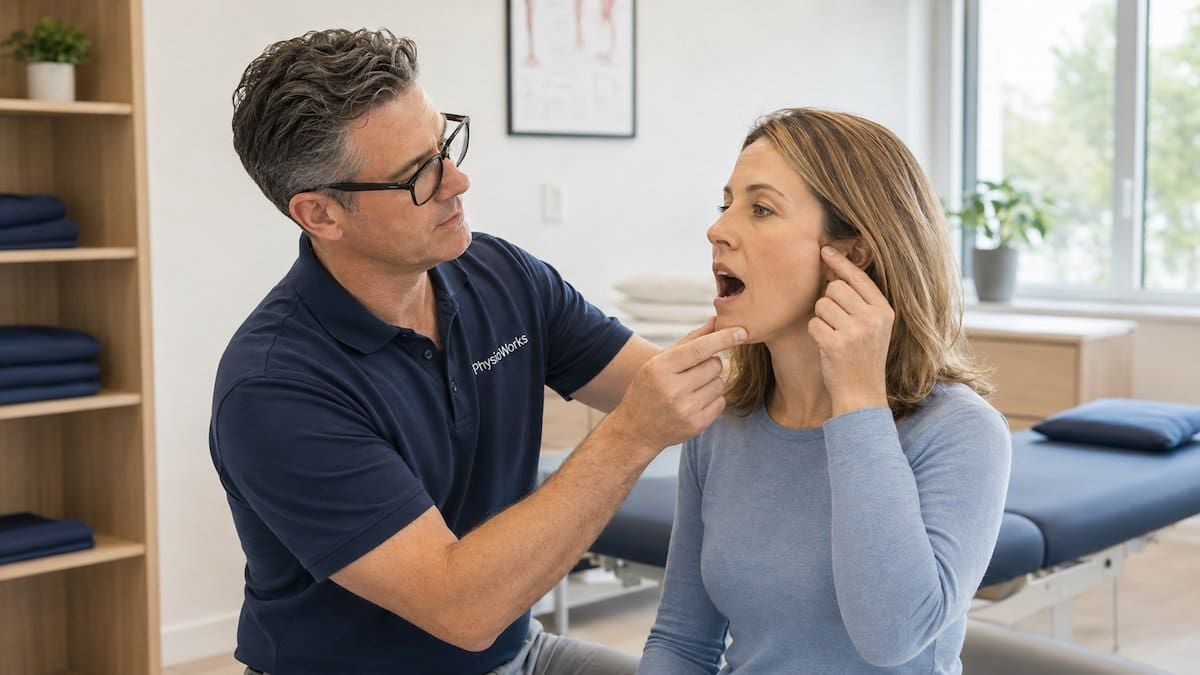
Checking jaw movement and chewing muscle tenderness.
Assessment may include:
- Checking mouth opening, closing and side-to-side jaw movement
- Watching whether the jaw tracks evenly or deviates
- Checking jaw, neck and shoulder muscle tenderness
- Reviewing clenching, gum chewing, nail biting and sleep-related habits
- Referring for imaging or dental review when locking persists or symptoms do not settle
People also ask: Can TMD cause ear pain or ear fullness? Yes. Jaw and neck structures may refer symptoms around the ear. However, severe, worsening or unusual ear symptoms should be checked to rule out ear infection or other causes.
TMD Treatment Options
Physiotherapy
Physiotherapy may help some people with TMD by improving jaw and neck movement, reducing muscle sensitivity, changing habits that overload the jaw and guiding exercises. Treatment should match the person’s symptoms, triggers and goals.
- Jaw and neck mobility drills
- Jaw control and coordination exercises
- Progressive strengthening where appropriate
- Habit and load changes, including clenching awareness
- Manual therapy to settle joint or muscle sensitivity
- Stress, sleep and pacing strategies when relevant
Self-Care During a Flare-Up
- Choose softer foods for a short period
- Avoid chewing gum
- Avoid prolonged wide mouth opening, such as large yawns
- Use heat or ice for comfort, depending on what feels better
- Keep the jaw relaxed, with lips together and teeth apart
Dental Support
Dental support may be useful when tooth wear, bite issues, night clenching or dental pain contribute to symptoms. Some people may benefit from a night splint, but this decision should follow dental assessment.
Medication and Medical Support
Short-term anti-inflammatory medication or muscle relaxants may be used under GP or dentist advice. Medication should support the recovery plan rather than replace assessment of the underlying contributors.
Advanced Options
Botulinum toxin injections may reduce overactive jaw muscle activity for some people, but research findings vary. Dental or medical practitioners may consider injections or procedures when conservative care has not helped enough. Surgery is uncommon and usually reserved for severe joint pathology.
Published clinical practice guidance supports matching chronic TMD pain care to the person’s presentation rather than using a one-size-fits-all plan. Read the BMJ clinical practice guideline on chronic pain associated with TMD for further detail.
When Should You Seek Urgent Care?
Seek urgent medical or dental care if you have:
- Sudden jaw locking that will not release
- Significant trauma with suspected jaw fracture
- Severe swelling, fever or signs of infection
- Rapidly worsening pain or unexplained neurological symptoms
Read more: TMJ physiotherapy treatment
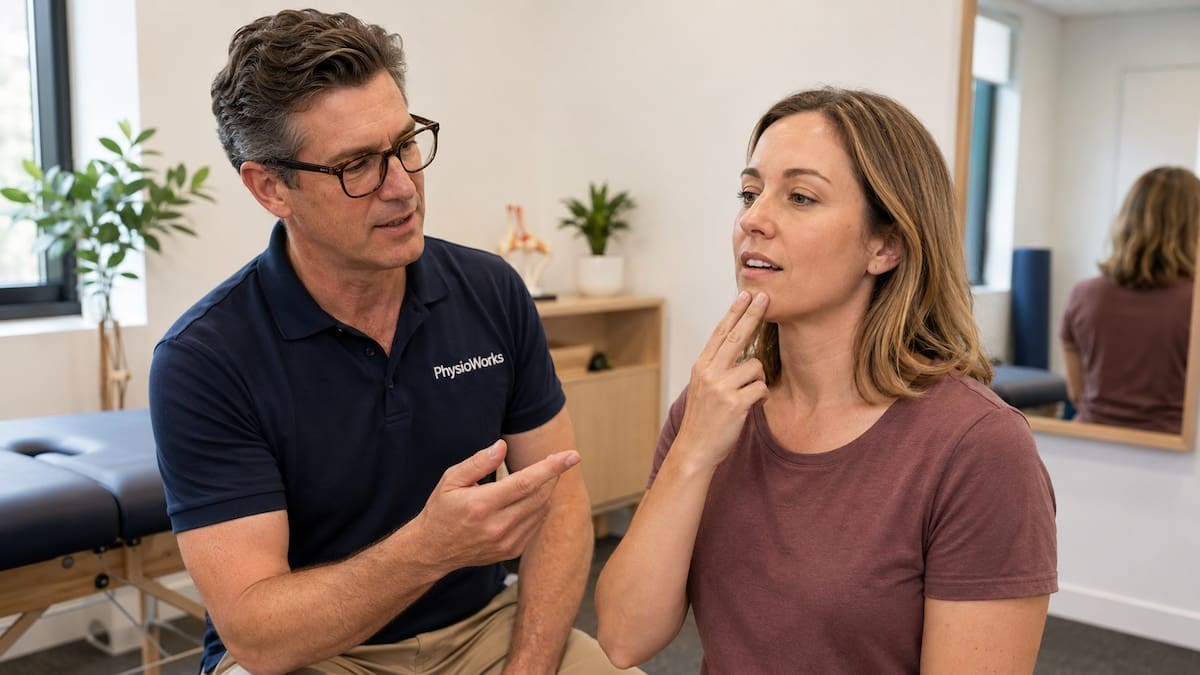
Guided jaw control exercise for TMD recovery.
What to Do Next
If jaw pain, clicking, locking, headaches or ear symptoms keep returning, book an assessment. Your physiotherapist can check your jaw, neck and upper back together, then guide a plan to reduce symptoms, improve movement and manage triggers.
- Book an assessment to check jaw and neck contributors.
- Follow a targeted plan for pain, movement and daily function.
- Coordinate care with your dentist or GP if needed.
Book your appointment – 24/7
Choose your preferred PhysioWorks clinic and book online.
Follow PhysioWorks
Get free physiotherapy tips, exercise videos, recovery advice, and blog updates.
 |  |  | B |  |  |
FAQs About Temporomandibular Disorder
What causes TMJ dysfunction?
Common contributors include clenching, grinding, jaw overuse, stress, sleep disruption and neck posture. Joint irritation, disc changes, arthritis or previous trauma can also play a part. Many people have several contributing factors rather than one single cause.
How do I know if I have TMD?
Jaw pain, clicking, stiffness, headaches, facial pain, ear symptoms or locking can point to TMD. A physiotherapist or dentist can assess jaw movement, chewing muscles, neck function and habits that may be increasing jaw load.
Can TMD cause headaches or ear pain?
Yes. TMD can refer pain into the temples, head, face, neck or around the ear. Some people also notice ear fullness or pressure-like symptoms. Severe, unusual or worsening ear symptoms should still be checked to rule out other causes.
Can stress cause jaw pain?
Yes. Stress can increase clenching, grinding and chewing muscle tension. It may also affect sleep and pain sensitivity. Stress management alone may not fix TMD, but it can form part of a sensible treatment plan.
What foods should I avoid during a flare-up?
Hard, chewy, crunchy or sticky foods can increase jaw load during a flare-up. Many people find softer foods easier for a short period. Avoid chewing gum until symptoms settle, then return to normal chewing gradually.
Should I see a dentist or physiotherapist for TMD?
Both may help, depending on your symptoms. A dentist can assess teeth, bite, splints and dental contributors. A physiotherapist can assess jaw movement, chewing muscles, neck function and movement habits. Persistent or complex symptoms often benefit from coordinated care.
How long does TMD last?
Some flare-ups settle within weeks, especially when jaw load is reduced early. Persistent symptoms may last longer when clenching, neck pain, stress, sleep issues or joint irritation remain active. A structured plan may help guide recovery.
Related Articles
References
- Alqutaibi AY, Alhammadi MS, Hamadallah HH, et al. Global prevalence of temporomandibular disorders: a systematic review and meta-analysis. J Oral Facial Pain Headache. 2025.
- Busse JW, Casassus R, Carrasco-Labra A, et al. Management of chronic pain associated with temporomandibular disorders: a clinical practice guideline. BMJ. 2023;383:e076227. doi:10.1136/bmj-2023-076227
- Saini RS, Almoyad MAA, Binduhayyim RIH, et al. The effectiveness of botulinum toxin for temporomandibular disorders: a systematic review and meta-analysis. PLoS One. 2024;19(3):e0300157. doi:10.1371/journal.pone.0300157
- Tavares LF, Calixtre LB, et al. Effectiveness of manual therapy and exercise therapy on otological symptoms of individuals with temporomandibular disorders: a systematic review. 2025.