
Gym Back Exercises


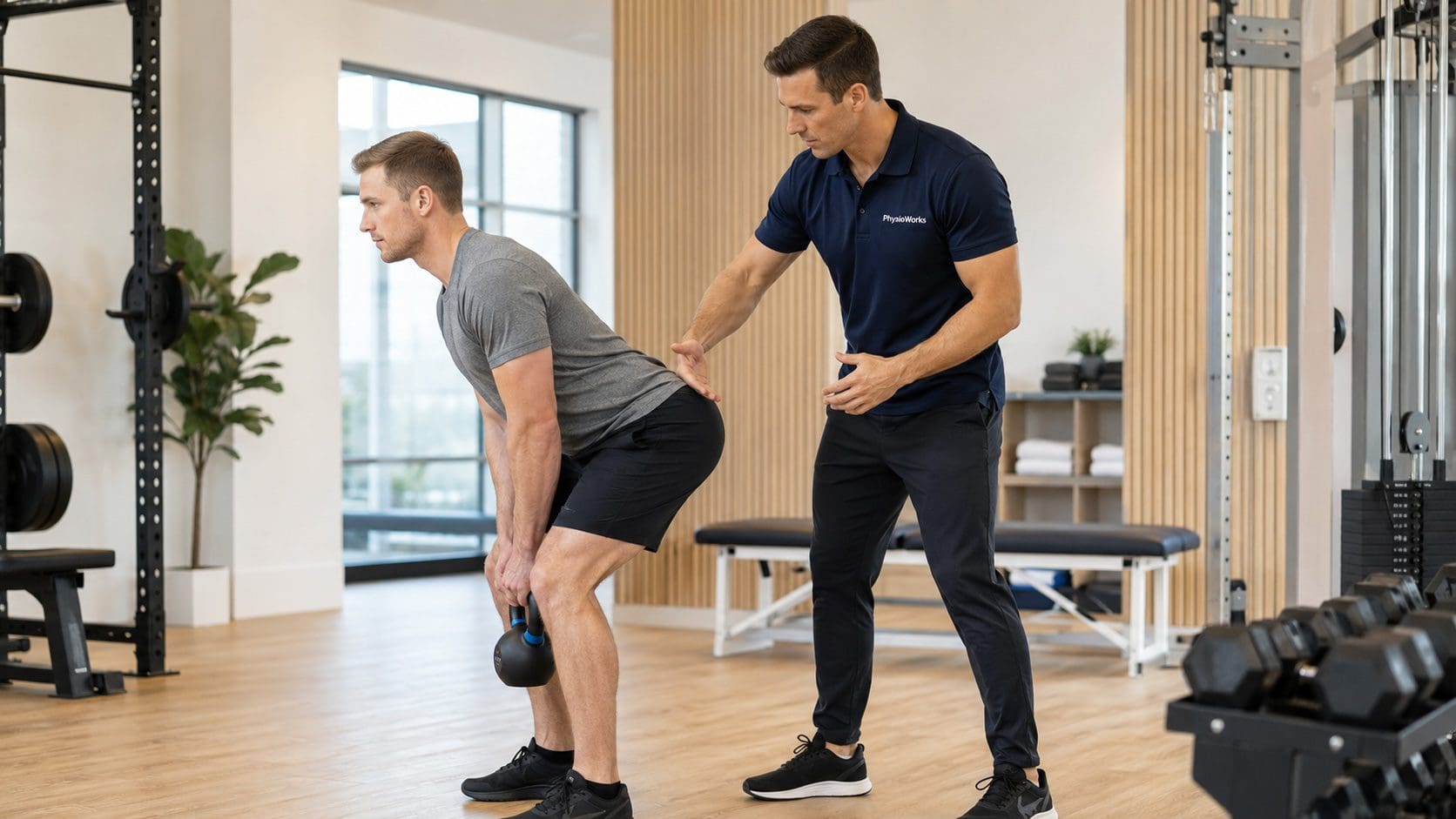
Guided hip hinge technique for safer gym loading.
Gym back exercises can help improve strength, control, and confidence when chosen well and matched to your current capacity. If you already have back pain, the right program should build tolerance gradually rather than simply load your spine harder. Many people also benefit from combining gym work with guided back exercises, mobility work, and technique correction.
Not sure where to start? Your starting point depends on your symptoms, training history, lifting technique, confidence, and whether pain spreads into your leg. A physiotherapist can help you choose the right load and progression rather than guessing.
What Are Gym Back Exercises?
Gym back exercises are strengthening and control-based movements used to improve how your spine, trunk, hips, and shoulders work together under load. They may help reduce pain, improve function, and lower recurrence risk when they are progressed sensibly and matched to your symptoms, movement quality, and training history.
Well-chosen programs usually focus on:
- building trunk and hip strength
- improving lifting and pulling mechanics
- restoring confidence with bending, carrying, and loading
- improving endurance for work, sport, and daily life
Good exercise selection still matters. Some people with lower back pain, recent flare-ups, nerve irritation, or poor control may need a simpler starting point before heavy gym work.
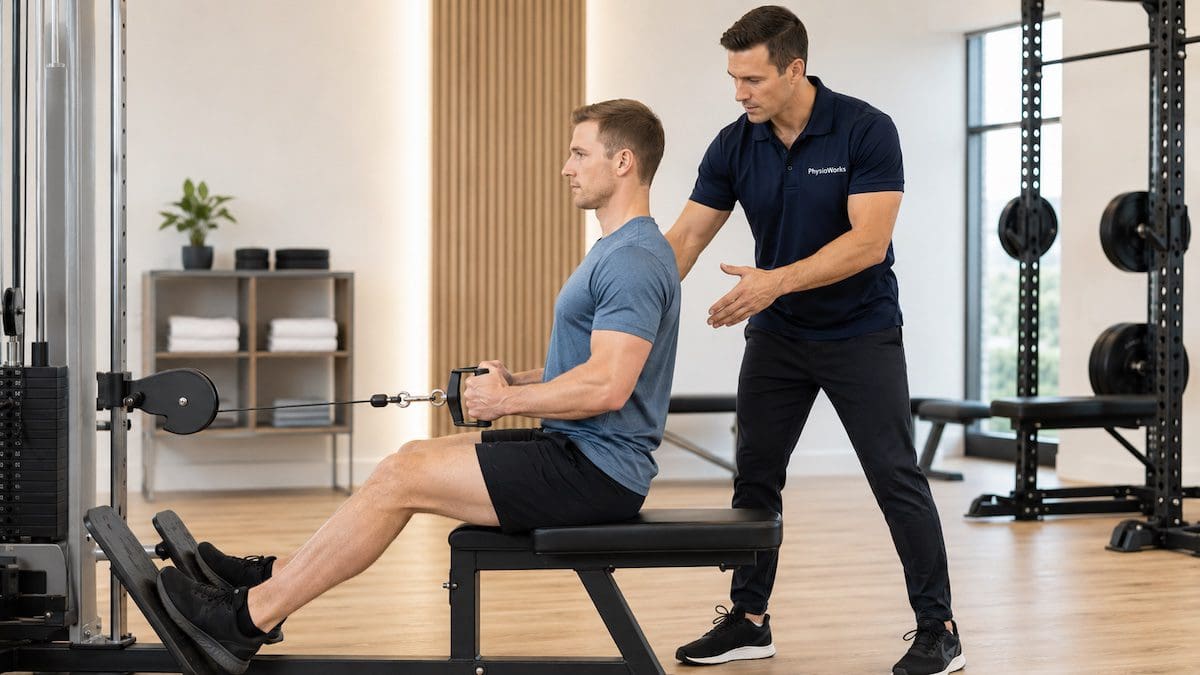
Controlled rows help build trunk and upper-back strength.
Which Gym Back Exercises Help Back Pain?
The most useful gym back exercises are usually the ones you can perform with good technique, controlled symptoms, and steady progression. Instead of chasing the hardest lift, most people do better when they improve movement quality first, then increase load over time. A physiotherapist may also combine gym work with core stability exercises, flexibility training, and advice on posture and lifting mechanics.
Deadlifts
Deadlifts can be excellent for building strength through the posterior chain, including the glutes, hamstrings, spinal extensors, and upper back. However, they are not the first choice for everyone. Start with a variation that matches your symptoms and skill level, such as a kettlebell deadlift, rack pull, or Romanian deadlift. Prioritise a controlled hip hinge, steady trunk position, and smooth bar path.
Rows
Rows strengthen the upper back and help improve pulling control, shoulder positioning, and postural endurance. Seated cable rows, chest-supported rows, and single-arm dumbbell rows are often easier places to start than heavier unsupported options. Focus on controlled shoulder blade movement rather than jerking the weight.
Lat Pulldowns
Lat pulldowns can help develop the latissimus dorsi and supporting shoulder muscles, which assist trunk control during many gym and daily tasks. Keep the movement smooth, avoid leaning back excessively, and stop short of positions that reproduce spinal pain or symptoms into the leg.
Farmer’s Carry
Loaded carries are useful because they train your trunk, grip, shoulders, and walking control at the same time. They can be a practical way to build whole-body strength for carrying shopping, equipment, or work loads. Start light, walk tall, and keep your breathing relaxed rather than bracing excessively.
Squat Variations
Squats can help when they are matched to your mobility, control, and symptom behaviour. Goblet squats, box squats, or supported split squats often work well early on. Keep the movement controlled and use a depth you can manage comfortably.
Bird-Dog, Planks, and Anti-Rotation Work
These are useful foundation exercises for people who need better trunk control before progressing into heavier lifting. They are often appropriate during earlier rehabilitation, after a pain flare, or when returning from conditions such as lumbar disc bulge or sciatica, depending on the individual presentation.
Which Exercises Should You Avoid at First?
Some exercises may need to wait until your back symptoms, strength, and control improve. This does not mean those movements are unsafe forever. It usually means they need the right timing, variation, and load.
- heavy deadlifts if your hip hinge is poorly controlled
- loaded flexion movements that sharply increase pain
- high-volume back extensions during a recent flare-up
- heavy squats if bracing or depth control is poor
- any exercise that increases leg pain, numbness, or weakness
How Should You Start Gym Back Exercises Safely?
Start with exercises that feel manageable, repeatable, and technically sound. In most cases, symptoms should stay acceptable during exercise and settle reasonably soon afterwards. Large pain spikes, increasing leg symptoms, or loss of confidence with movement usually mean the exercise needs to be modified.
| Stage | Main Goal | Example Exercises |
|---|---|---|
| Beginner | Build control and confidence | bird-dog, modified plank, hip hinge drill, bodyweight squat, supported row |
| Intermediate | Add load with good technique | goblet squat, cable row, kettlebell deadlift, pulldown, light carry |
| Advanced | Return to heavier gym loading | barbell deadlift, heavier rows, pull-ups or pulldowns, loaded carries, higher-demand squat variations |
Do You Need Mobility Work As Well?
Usually, yes. Strength is important, but mobility and movement quality also matter. Tight hips, poor thoracic movement, reduced hamstring flexibility, or stiff loading patterns can all make gym work feel harder on the back than it needs to. Simple mobility drills, graded warm-ups, and sensible recovery can complement your strengthening program and support long-term progress.
Current evidence supports exercise as an important part of non-surgical low back pain management, and Australian clinical guidance also supports evidence-based early assessment, management, review, and referral pathways. For a broader public health overview, see the Australian Commission on Safety and Quality in Health Care’s Low Back Pain Clinical Care Standard.
When Should You Get Help?
Consider a physiotherapy assessment if your back pain keeps returning, your gym program regularly flares symptoms, or you feel unsure about lifting technique. Seek medical advice promptly if you develop worsening leg weakness, numbness in the saddle region, changes to bladder or bowel control, fever, unexplained weight loss, or major trauma.
Related PhysioWorks Guides
These related guides may help you choose the right next step:
- Back Pain Physiotherapy
- Back Exercises
- Back Pain Exercises
- Lower Back Pain
- How Do You Prevent Back Pain?
Frequently Asked Questions
Can gym back exercises make back pain worse?
They can if the exercise is too heavy, too advanced, poorly controlled, or not suited to your condition. That does not always mean the movement is harmful. It often means the exercise needs to be changed by reducing load, range, speed, or volume, or by choosing a better starting variation.
Are deadlifts bad for back pain?
Not automatically. Deadlifts can be helpful for some people, but they need good technique and appropriate progression. If standard deadlifts are too provocative, a physiotherapist may start you with simpler hinge patterns or supported lifting variations first.
How often should I do gym back exercises?
That depends on your current capacity, pain behaviour, and training goals. Many people start with two to three sessions per week, plus lighter mobility or walking on other days. Recovery matters just as much as loading.
What gym exercises are safest after a back pain flare-up?
Safer starting options often include walking, hip hinge drills, bird-dog, modified planks, supported rows, light cable work, and bodyweight squats. The right choice depends on your symptoms. Keep the load light, move slowly, and progress only when symptoms remain settled.
Should I train through back pain at the gym?
Mild discomfort that stays stable and settles soon after exercise may be acceptable for some people. Sharp pain, worsening pain, increasing leg symptoms, or pain that escalates after each session usually means the program needs to be changed.
Is walking useful as well as strengthening?
Yes. Walking is a simple way to build activity tolerance and general conditioning. For many people, it works well alongside gym back exercises, especially when returning from a back pain episode or trying to reduce recurrence risk.
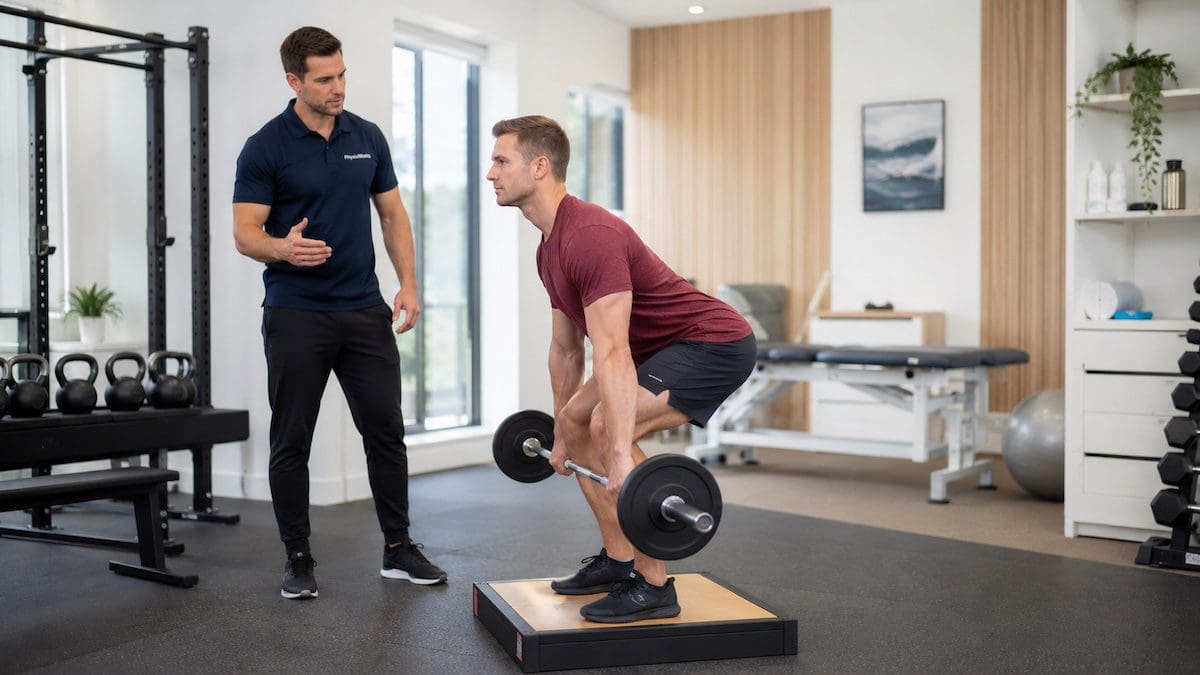
Confident lifting starts with controlled progression.
What to Do Next
If you are unsure which gym back exercises suit you, start with an assessment rather than guessing. The right program depends on your diagnosis, irritability, training background, goals, and confidence with movement. A physiotherapist can help you choose the right exercises, improve your technique, and progress your loading safely.
You can also explore our guides on back pain, back exercises, and how to prevent back pain for more support.
Choose your clinic and appointment pathway
Select a PhysioWorks clinic to continue to live booking, an appointment request or reception assistance.
Back Support Products
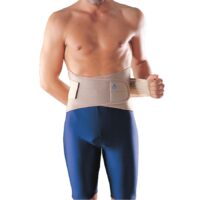
These back support products are commonly used by our physiotherapists to help reduce back pain, improve comfort, and support your recovery at home.
-
-
-
-
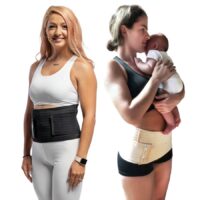
 Back, Braces & Supports, Maternity, Posture
Pregnancy Belly Band & C-Section 3-in-1
$94.99Select optionsQuick View -
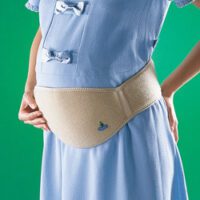 Braces & Supports, Back, Maternity, SIJ
Maternity Support Belt – OPPO 4062
$37.00Select optionsQuick View -
 Back, Braces & Supports, Maternity, Posture
Maternity Back Support – OPPO 2062
$60.00 – $64.00Select optionsQuick View -
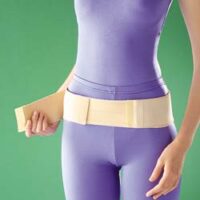 Back, Braces & Supports, Maternity, SIJ
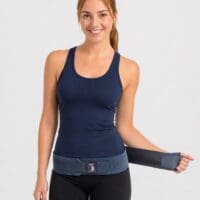
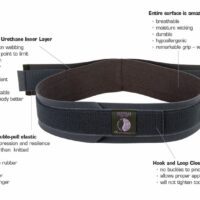
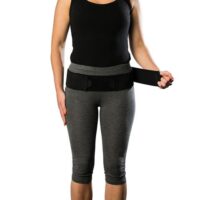
Core Stability Support – OPPO 3462
$54.00Select optionsQuick View - Braces & Supports, Back, Maternity, SIJ
AOM38 AllCare Ortho Core Stability Belt
$49.95Select optionsQuick View


References
- Hayden JA, Ellis J, Ogilvie R, Malmivaara A, van Tulder MW. Exercise therapy for chronic low back pain. Cochrane Database Syst Rev. 2021;9(9):CD009790. doi:10.1002/14651858.CD009790.pub2
- Li Y, Yan L, Hou L, et al. Exercise intervention for patients with chronic low back pain: a systematic review and network meta-analysis. Front Public Health. 2023;11:1155225. doi:10.3389/fpubh.2023.1155225
- Pocovi NC, Lin CWC, French SD, et al. Effectiveness and cost-effectiveness of an individualised, progressive walking and education intervention for the prevention of low back pain recurrence in Australia (WalkBack): a randomised controlled trial. Lancet. 2024;404(10448):134-144. doi:10.1016/S0140-6736(24)00755-4
- World Health Organization. WHO guideline for non-surgical management of chronic primary low back pain in adults in primary and community care settings. Published 2023.
