
Guided balance exercises can help build control, steadiness and trust.
Balance Exercises


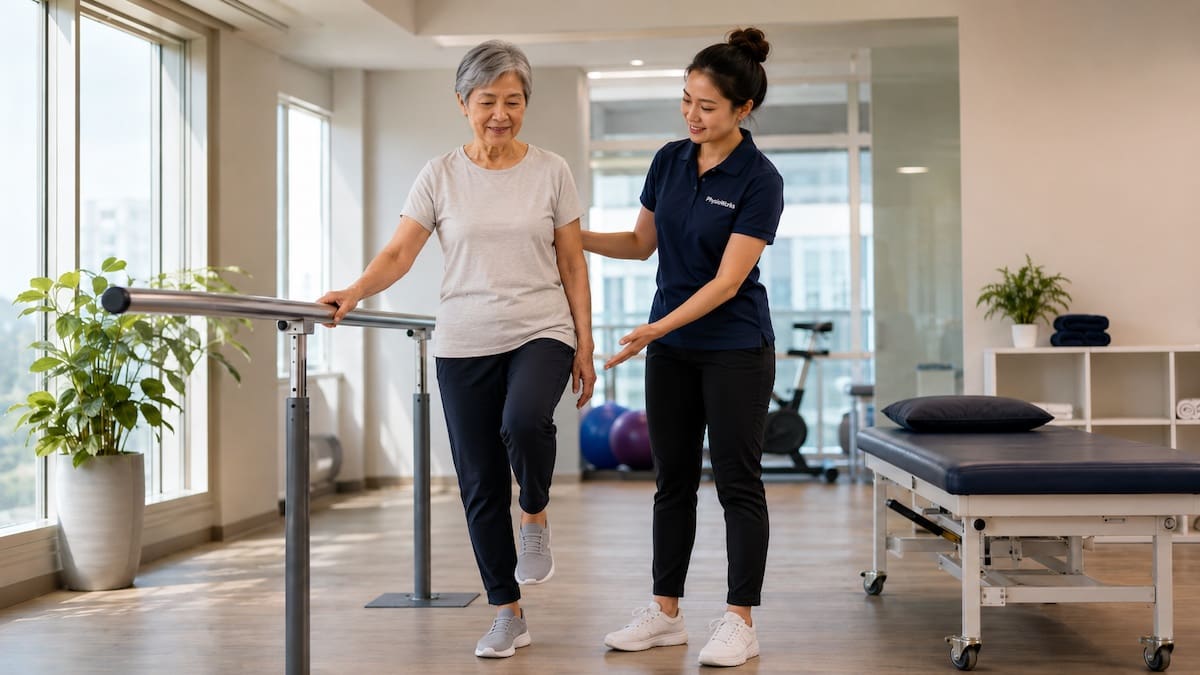
Balance exercises train your body to stay steady when you stand, walk, turn, step or reach. They may help with balance training, falls risk, sport rehab and return after a leg injury.
A physio can help you start safely, find why you feel less steady and build a plan that matches your goals.
Quick answer: Balance exercises help your legs, trunk, eyes, inner ear and brain work together.
- They may improve steadiness and quick steps.
- They often help after ankle, knee or hip injury.
- They work best when tasks progress in small steps.
- They are stronger when paired with leg strength work.
What Are Balance Exercises?
Balance exercises are simple tasks that train you to stay steady. They can include standing drills, step work, reaching tasks, turns and controlled single-leg tasks.
Most plans start with support nearby. You may use a bench, rail or wall. Then the task becomes harder as your control improves.
- Stand with better control
- Turn and step with more trust
- Feel safer on stairs and uneven ground
- Rebuild confidence after a sprain, fall or injury
- Lower falls risk when paired with strength training
Who May Benefit From Balance Exercises?
Balance work may help older adults, active adults, athletes and people who feel less steady after a fall or injury.
It is often used after ankle sprains, knee injury, hip pain and dizzy spells. It can also form part of a broader physio care plan.
If you have near-falls, new unsteadiness or low trust when you walk, a balance assessment can help find the likely causes.
Common Types of Balance Exercises
A physio may choose drills based on your health, past injury, strength, confidence and goals.
Two-Foot Stance Drills
These drills start with both feet on the ground. You may narrow your stance, stand heel-to-toe or shift your weight from side to side.
One-Leg Balance
Standing on one leg trains your ankle, knee, hip and trunk. It can help with leg rehab and sport preparation.
Step and Reach Drills
Step and reach drills train you to move while you stay steady. They can help with turns, stairs and uneven ground.
Balance Pad or Wobble Board Work
These tasks train joint sense and foot control. They are often used in injury prevention programs and ankle rehab.
How Should Balance Exercises Progress?
| Start | Use support, slow tasks and a steady surface. |
| Build | Add reaches, turns, steps or less hand support. |
| Challenge | Add sport, stairs, speed or uneven ground when ready. |
Why Can Balance Feel Worse?
Balance can change for many reasons. Common causes include weak legs, slower steps, stiff joints, pain, reduced foot sense, medicine effects or inner ear problems.
If dizzy spells are part of the problem, read more about vertigo and dizziness.
Can Balance Exercises Help Prevent Falls?
Balance exercises may help reduce falls risk, mainly when they are paired with strength work and practised often.
This can matter if you feel unsafe on stairs, rough ground or fast turns. Healthdirect also explains broader falls prevention steps for older adults.
If falls are your main concern, see our guide on fall prevention or the Balance & Falls Prevention Class.
How Do You Start Safely?
Start with a task that suits your current level. Practise near a bench, rail or wall.
You can make it harder by changing your foot position, adding arm movement, using less hand support or adding steps.
A physio may change your plan if you have joint pain, nerve signs, dizzy spells, a recent fall or low trust in your balance.
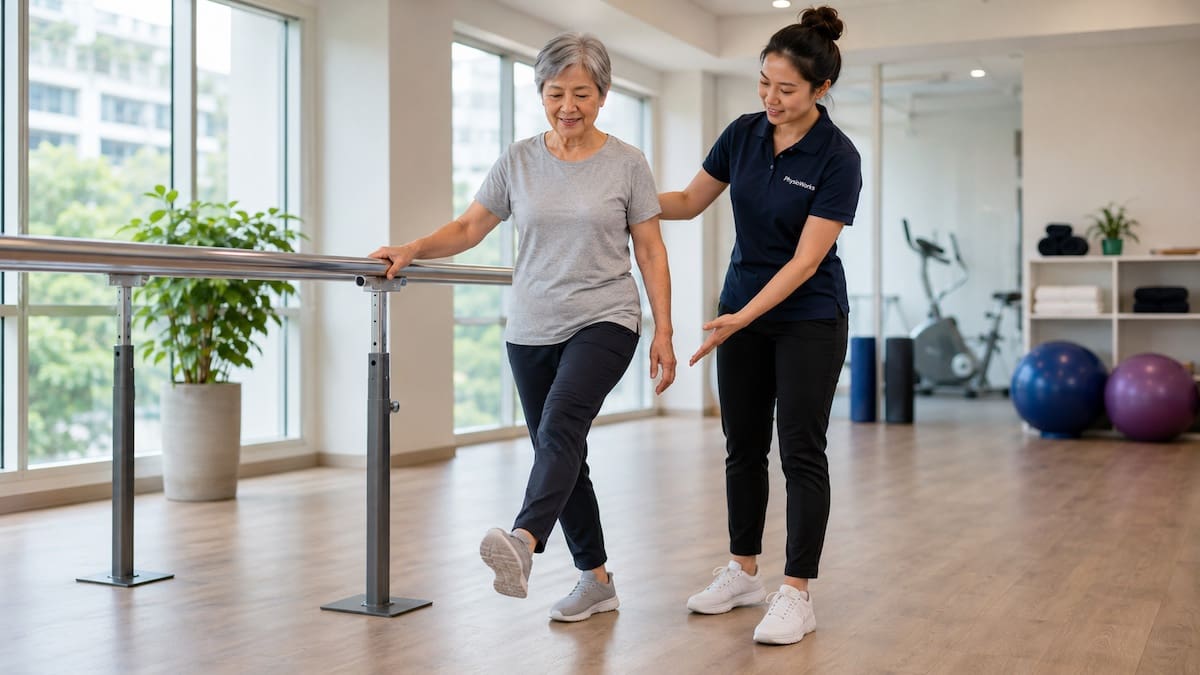
Step and reach drills train safer movement.
Book a check sooner if you notice:
- recent falls or near-falls
- new dizzy spells or loss of trust
- poor balance on stairs, rough ground or turns
- balance trouble after an ankle, knee, hip or head injury
- symptoms that limit work, sport or daily life
When Should You See a Physio?
See a physio if you have fallen, avoid tasks, feel unsafe on stairs or feel less steady when walking.
A check can help work out if strength, joint control, pain, the inner ear or more than one factor is involved.
Can Exercise Physiology Help Balance?
Yes, it may help when you need a longer strength, fitness or falls-confidence plan. Exercise physiology can support safe, supervised exercise for strength, balance and daily function.
This can suit people who need steady progress after injury, illness, loss of strength or reduced activity.
Balance Exercises FAQs
What is the best balance exercise to start with?
Start with a simple standing task near firm support. Try feet-together stance, heel-to-toe stance or small weight shifts. The right choice depends on how steady you feel.
How often should you do balance exercises?
Short practice, done often, can work well. Many people do a few short sessions each week. Your physio can guide the dose and progress.
Can balance exercises help after an ankle sprain?
Yes. They can help rebuild joint sense, quick steps and leg control. They are often paired with strength work and a staged return to activity.
Are balance exercises only for older adults?
No. They can help older adults, athletes and people after injury. They are often used to improve movement control and lower re-injury risk.
Can balance exercises help dizziness?
They may help some people, but dizzy spells need assessment first. The cause may involve the inner ear, neck, nerves, medicine or other health issues.
How long does it take to improve balance?
Some people feel better within a few weeks. Others need longer. It depends on the cause, your practice and how the tasks are progressed.
Related Information
What To Do Next
If you want to feel safer and move with more trust, start with an assessment.
A physio can test your balance, find the key issues and give you a plan that suits your goals.
Choose your clinic and appointment pathway
Select a PhysioWorks clinic to continue to live booking, an appointment request or reception assistance.


References
- Sherrington C, Fairhall NJ, Wallbank GK, et al. Exercise for preventing falls in older people living in the community: an abridged Cochrane systematic review. Br J Sports Med. 2020;54(15):885-891. doi:10.1136/bjsports-2019-101512
- Sluga SP, Kozinc Ž. Sensorimotor and proprioceptive exercise programs to improve balance in older adults: a systematic review with meta-analysis. Eur J Transl Myol. 2024;34(1):12010. doi:10.4081/ejtm.2024.12010
- Cui Z, Xiong J, Li Z, Yang C. Tai chi improves balance performance in healthy older adults: a systematic review and meta-analysis. Front Public Health. 2024;12:1443168. doi:10.3389/fpubh.2024.1443168
