Healthy Ageing Exercise Over 80s FAQs


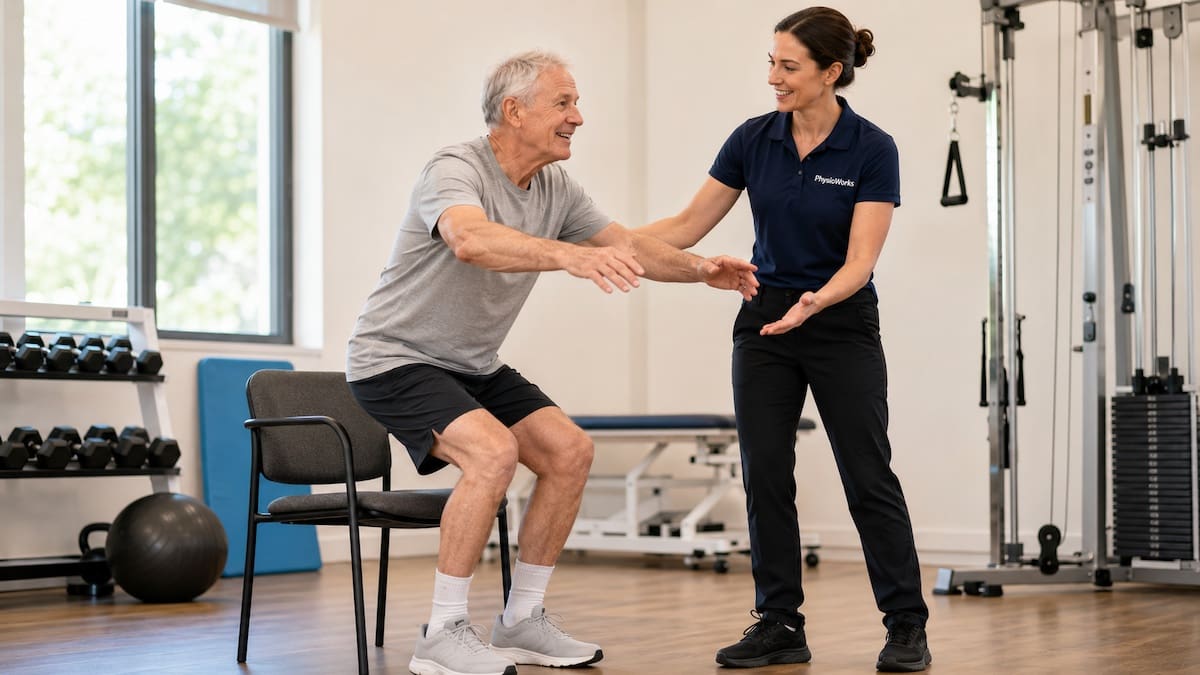
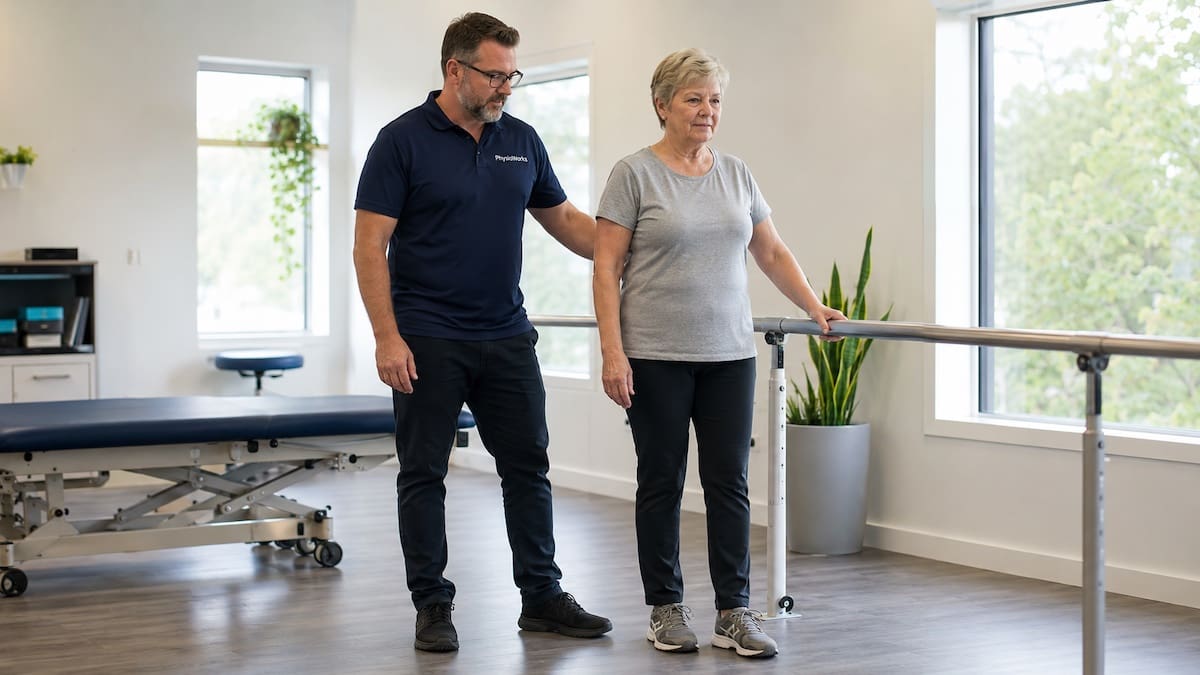
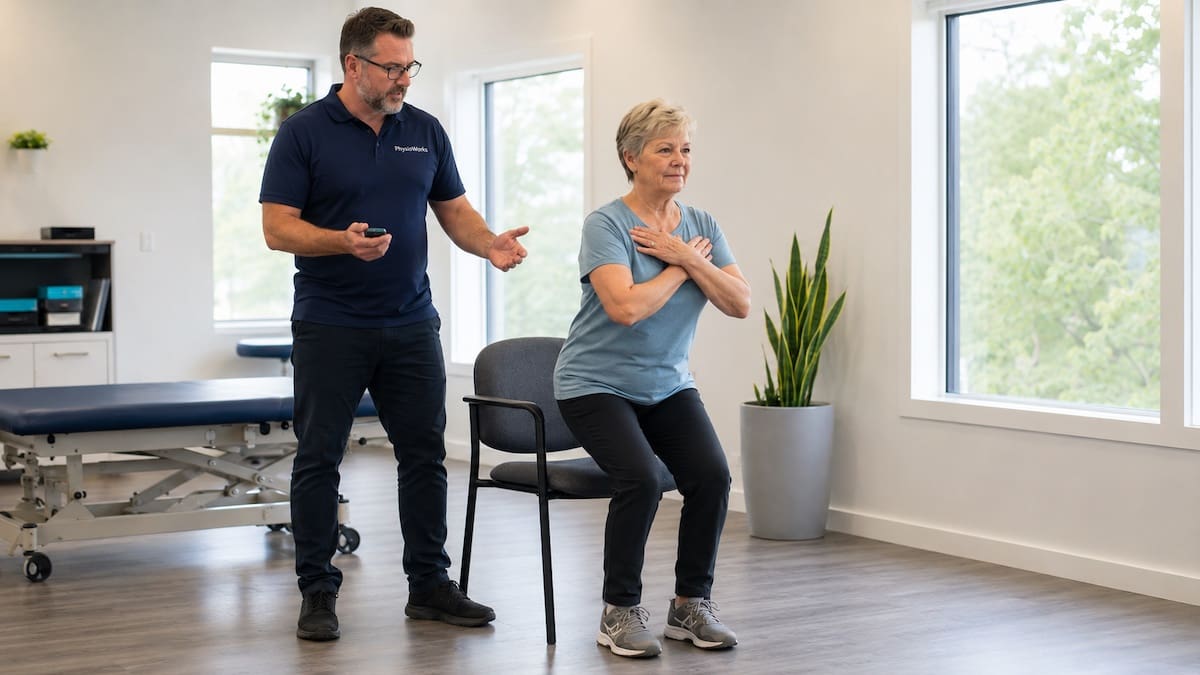
Supervised strength exercise can help rebuild confidence and function.
Healthy ageing exercise over 80 can help you stay strong, steady, mobile, and independent. A good program may improve leg strength, balance, walking confidence, posture, and daily function. It can also help if arthritis, chronic pain, stiffness, low fitness, fear of falling, or age-related muscle loss has slowed you down.
You do not need hard exercise to get benefit. Many adults in their 80s and beyond do best when they start gently, use support where needed, and build up in small steps. A safe mix often includes walking, strength work, balance practice, mobility, and less sitting.
For a more personal starting point, see our exercise programs, exercise physiology, and physiotherapy services.
Healthy Ageing Exercise Priorities Over 80
- Move on most days, even if sessions are short.
- Do strength work at least twice each week.
- Practise balance, mobility, and coordination at least three times weekly.
- Add light movement through the day.
- Break up long sitting periods.
What Is Healthy Ageing?
Healthy ageing means keeping as much strength, mobility, steadiness, and confidence as possible as you get older. For many adults over 80, that means getting out of a chair, walking safely, carrying light shopping, doing housework, getting to appointments, and staying active with family and friends.
What Should Healthy Ageing Exercise Over 80 Include?
Healthy ageing exercise over 80 should include low-impact cardio, strength training, balance work, mobility, and regular light movement. This mix helps your heart, muscles, bones, joints, posture, and day-to-day function more than walking or stretching alone.
A good week may include walking, cycling, swimming, or pool exercise on most days. Add strength training twice weekly. If balance feels less steady, our Balance and Falls Prevention Class may be a useful pathway after an assessment.
What Should You Focus On First Over 80?
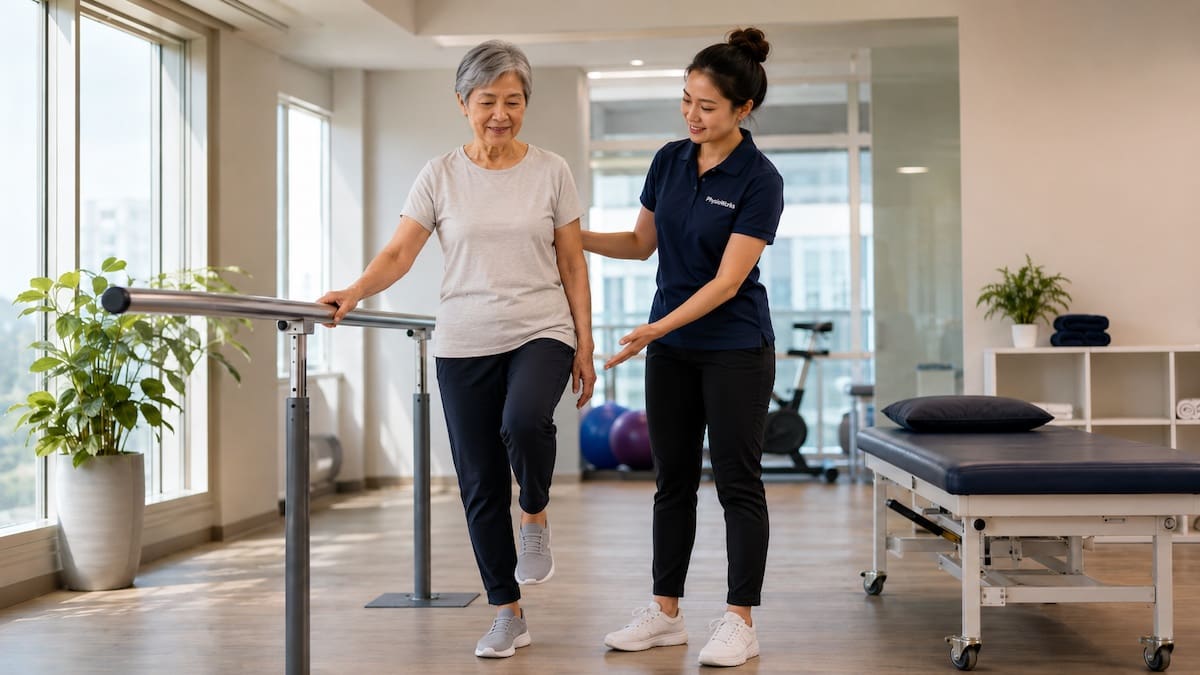
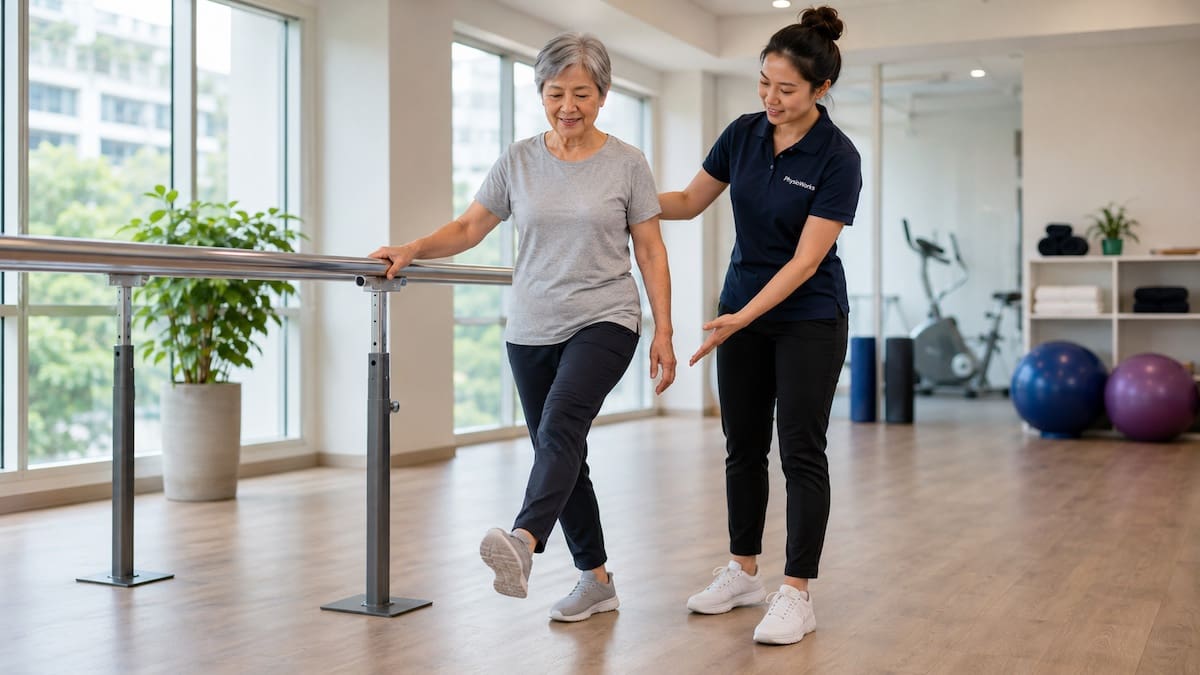
Start with supported walking, shorter walks, and guided balance practice.
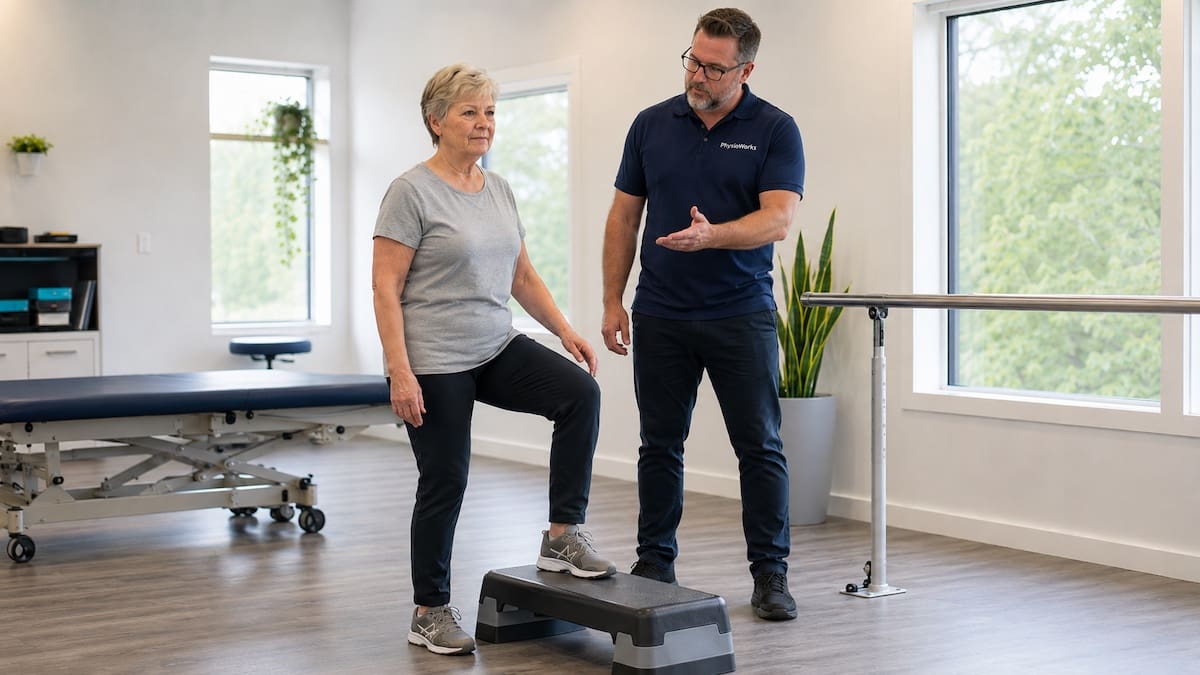
Use sit-to-stands, heel raises, step-ups, and band work.
Start with supported balance drills and safe stepping practice.
Add mobility, stretching, posture work, and gentle control drills.
Use lower-load exercise and slower progress. A tailored plan often helps.
Top 5 Exercise Priorities Over 80
| Priority | Why It Matters | Simple Examples |
|---|---|---|
| Walking fitness | Builds stamina and daily confidence. | Short walks, pool walking, cycling. |
| Leg strength | Helps with chairs, stairs, and carrying. | Sit-to-stands, heel raises, step-ups. |
| Balance | Helps steadiness and falls confidence. | Supported stands and stepping drills. |
| Mobility | Helps movement feel easier. | Stretching and posture drills. |
| Less sitting | Supports joints and circulation. | Standing breaks and light housework. |
Why Does Exercise Feel Harder After 80?
Exercise can feel harder after 80 because muscle strength, power, joint range, bone density, balance reactions, and recovery can change with age. Past injuries, pain, illness, less activity, and lower confidence can also make movement feel harder.
However, age alone does not stop progress. Many adults over 80 improve their strength, walking, balance, and confidence when they start at the right level and build slowly.
Good load management matters. A small amount done often is usually better than doing too much, flaring up, and stopping again.
How Can Exercise Improve Healthy Ageing Over 80?
Regular exercise can help with fitness, strength, balance, bone health, sleep, mood, mobility, and independence. It can also help you keep doing daily tasks such as chair transfers, stairs, walking, gardening, shopping, and travel.
Exercise is also useful for common age-related issues such as osteoporosis and osteopenia, joint stiffness, poor balance, and deconditioning. Balance and strength work are often the two key areas to build.
Can You Start Exercising Over 80 If You Have Pain or Arthritis?
Yes, many people can start exercising over 80 even if they have pain or arthritis. The key is to choose the right type and dose. Do not push through strong flare-ups.
Some people start with walking, cycling, hydrotherapy, chair-based strength work, or guided mobility. Helpful starting guides include warming up, safe exercise warning signs, and posture.
A Simple Weekly Exercise Plan Over 80
This is a general starting point. It needs changing if you have pain, poor balance, recent illness, osteoporosis, dizziness, or health concerns.
| Day | Suggested Focus |
|---|---|
| Monday | Short walk, sit-to-stands, and heel raises. |
| Tuesday | Mobility, posture, and light movement. |
| Wednesday | Short strength session with bands or light weights. |
| Thursday | Supported balance plus walking, cycling, or pool work. |
| Friday | Second strength session plus easy cardio. |
| Weekend | Walking, gardening, swimming, or a safe class. |
Which PhysioWorks Class Pathway May Suit You?
The right class depends on your balance, strength, pain, confidence, and health history. An assessment helps confirm the safest starting point.
| Your Main Goal | Possible Pathway | Why It May Help |
|---|---|---|
| Feel steadier and reduce falls worry | Balance & Falls Prevention Class | Works on balance, leg strength, stepping, mobility, and walking confidence. |
| Build strength and confidence | Physiotherapy Group Exercise Classes | Supports guided strength, posture, mobility, and movement control. |
| Support bone health | Bone Density Class pathway | May suit people with osteopenia, osteoporosis, weakness, or falls worry. |
| Exercise with less joint load | Hydrotherapy | Warm water exercise may help when land work feels too sore or hard. |
Important: group classes require an assessment first. Some people should start with one-to-one care before joining a class.
When Should You Slow Down or Get Checked?
Slow down or book advice if exercise causes sharp pain, major swelling, repeated giving way, dizziness, chest pain, unusual breathlessness, or symptoms that keep getting worse. Pain that lasts for days after light exercise may also mean your plan needs changing.
Get Advice Sooner If:
- Pain keeps getting worse with simple exercise.
- You feel unsteady or worried about falling.
- You have osteoporosis, recent injury, or major weakness.
- You feel dizzy, unusually breathless, or unwell with exercise.
- You do not know which exercise is safe to start.
- You have stopped and restarted several times.
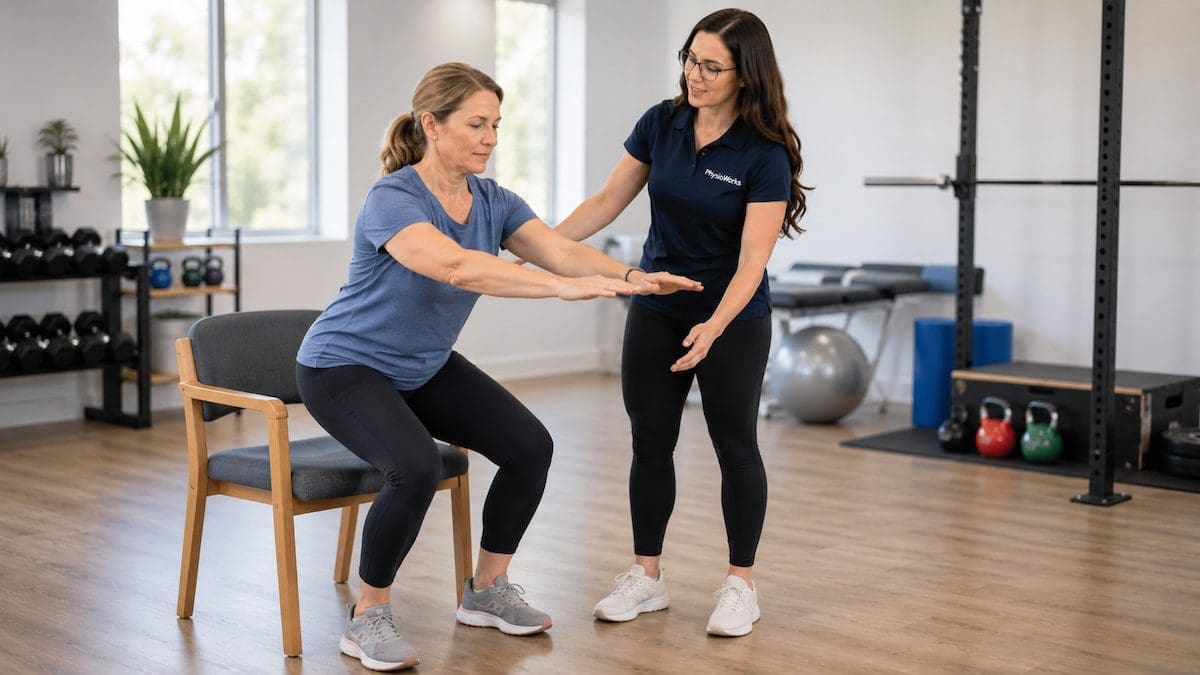
Strength progressions can be matched to your current capacity.
How Can a Physiotherapist Help?
A physiotherapist can assess your starting point, check pain triggers, and build a plan that suits your goals. Your plan may include strength, balance, walking, mobility, posture, and confidence work.
This can help if you have old injuries, arthritis, back pain, poor balance, low confidence, or repeated setbacks. A clear plan can make exercise feel safer and easier to follow.
Related Articles
- Exercise and arthritis
- Strength training
- Managing osteoporosis with exercise
- What is chronic pain?
- How to improve your posture
- How to start exercising safely
- Balance and Falls Prevention Class
- Balance and falls prevention physiotherapy
- Physiotherapy Group Exercise Classes
- Hydrotherapy
Healthy Ageing Exercise Over 80 FAQs
How much exercise should a healthy adult over 80 do?
Most adults over 80 should move on most days, do strength work twice weekly, and practise balance often. It also helps to break up long sitting periods.
What exercise is best for over 80s?
A mix of walking or other cardio, strength training, balance work, and mobility is usually best. This mix supports strength, steadiness, fitness, and function.
Is walking enough exercise over 80?
Walking is a strong start, but it is usually not enough alone. Strength, balance, and mobility work also matter.
Can strength training be safe after 80?
Yes. Strength training can be safe after 80 when it matches your current ability and builds slowly.
What if I have not exercised for years?
You can still start. Begin with simple movements, short sessions, and low loads. Then build as your body adapts.
Should I exercise if I have arthritis?
In many cases, yes. Well-chosen exercise can help stiffness, movement, and strength. The right dose matters.
When should I see a physiotherapist before starting exercise?
Book an assessment if you have pain, poor balance, falls worry, recent injury, osteoporosis, major weakness, or low confidence.
Is it too late to get fit at 80?
No. Many people improve strength, balance, mobility, and fitness after 80 when they start gently and stay consistent.
How many steps per day should you aim for over 80?
There is no single perfect number. A realistic target depends on your fitness, pain, balance, and health. Gradual increases are safest for most people.
What to Do Next
Start with exercise that feels safe and achievable now. Small steps done often can build confidence and reduce the stop-start cycle.
If you want help choosing the right pathway, a PhysioWorks physiotherapist or exercise physiologist can guide you. Your pathway may include one-to-one care, a home plan, Balance & Falls Prevention Class, Physiotherapy Group Exercise Classes, Bone Density Class pathways, or hydrotherapy.
Choose your clinic and appointment pathway
Select a PhysioWorks clinic to continue to live booking, an appointment request or reception assistance.
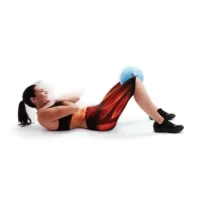
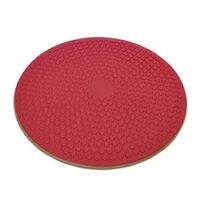
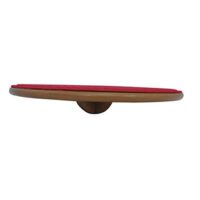
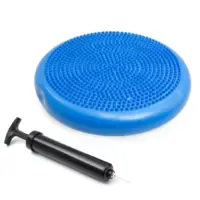
Balance Products
These balance products are commonly used by our physiotherapists to improve strength, balance, prevent injuries falls or injuries, plus assist home exercise programs.
-
- Gift Ideas, Back, Christmas Gift Ideas, Exercise Balls, Exercise Equipment, Knee, Pelvic Floor, Product Search
66fit Pilates Balls
$14.95 – $16.95Select optionsQuick View -
-
-





References
- Australian Government Department of Health, Disability and Ageing. Recommendations for older adults (65 years and over). Updated March 16, 2026.
- Izquierdo M, de Souto Barreto P, Arai H, et al. Global consensus on optimal exercise recommendations for enhancing healthy longevity in older adults (ICFSR). J Nutr Health Aging. 2025;29(1):100401. doi:10.1016/j.jnha.2024.100401
- Bull FC, Al-Ansari SS, Biddle S, et al. World Health Organization 2020 guidelines on physical activity and sedentary behaviour. Br J Sports Med. 2020;54(24):1451-1462. doi:10.1136/bjsports-2020-102955
- Healthdirect Australia. Physical activity guidelines for older adults. Reviewed 2025.