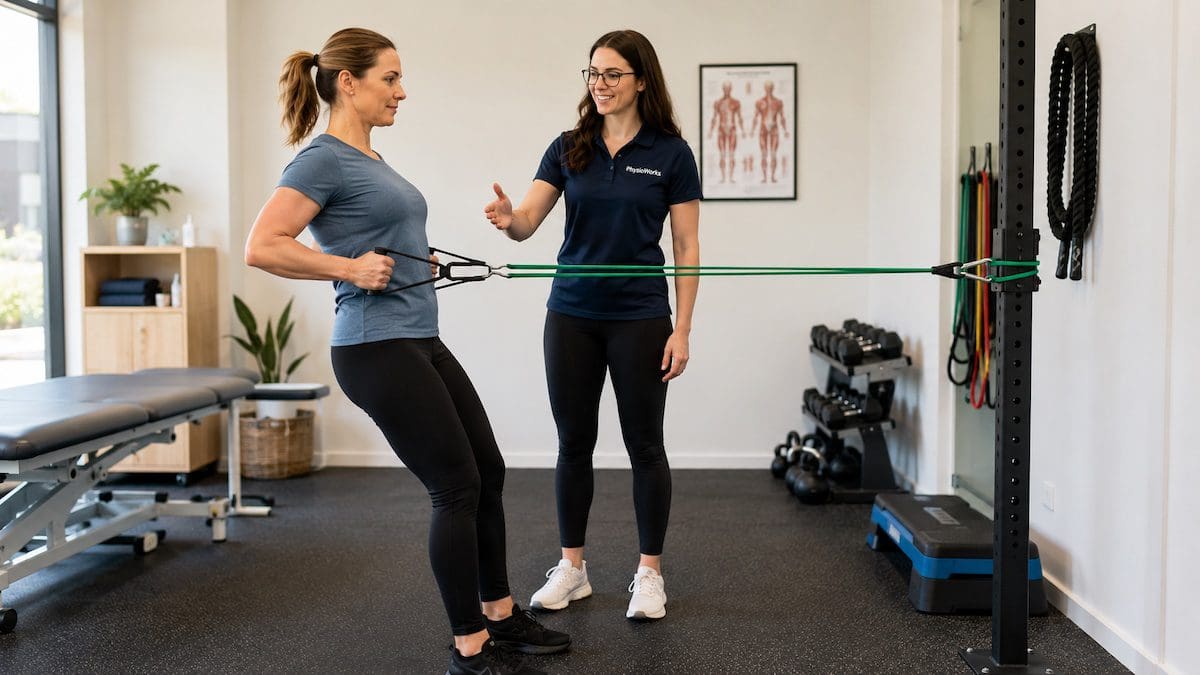
When should you get personalised advice?
Get personalised advice if you keep feeling flat, dizzy, cramp-prone, slow to recover, or unable to progress despite training consistently. Advice is also useful if you are preparing for endurance events, changing body composition, returning to sport, or managing a health condition.
A physiotherapist can help you assess exercise load, movement tolerance, injury recovery, and training structure. If your main concern is diet, hydration, low energy availability, gut symptoms, or supplements, a sports dietitian or doctor may be the better first step.
Related PhysioWorks Articles
Nutrition and Hydration FAQs
What are the best foods to support exercise performance?
The best foods are usually simple, balanced choices that match your training load. Carbohydrate-rich foods support exercise energy. Protein-rich foods support repair. Fruit, vegetables, wholegrains, dairy or alternatives, and lean protein foods usually provide a stronger base than relying on supplements alone.
Should you eat before exercise?
Yes, most people benefit from eating before exercise, especially before longer or harder sessions. A balanced meal two to three hours before training often works well. If time is short, a light snack may feel more comfortable.
What should you eat after exercise?
After exercise, aim for a meal or snack that includes both carbohydrate and protein. This can help replace energy stores and support muscle repair. Timing does not need to be perfect, but eating within the next hour or two is often practical after harder sessions.
How much water should you drink when exercising?
There is no single amount that suits everyone. Sweat rates vary. Start well hydrated, drink to thirst during many sessions, and replace fluid after exercise. Hot weather, longer sessions, and heavy sweating usually increase your fluid needs.
Can dehydration slow your fitness progress?
Yes. Dehydration can make exercise feel harder, reduce concentration, and slow recovery. That can affect how well you train across the week. If you often finish sessions exhausted, thirsty, or headachy, your fluid plan may need work.
Do you need electrolytes for every workout?
No. Water is often enough for shorter or lower-intensity sessions. Electrolytes may become more useful during long sessions, hot-weather training, heavy sweating, or repeated sessions close together.
Is fasted training a good idea?
Fasted training may suit some short, low-intensity sessions, but it does not suit everyone. Many people train better with some fuel beforehand. If fasted training leaves you dizzy, flat, or unable to train well, it may not be the right option.
How much protein do active people need?
Protein needs vary with body size, training load, age, and goals. Most active people benefit from including protein-rich foods across the day rather than relying on one large serving at night. A sports dietitian can help set a more tailored target.
What are signs that you may be under-fuelling?
Common signs include low energy, poor recovery, fading late in sessions, irritability, increased soreness, and stalled progress. Repeated dizziness, poor concentration, or frequent training setbacks can also suggest that your intake is too low for your load.
When should you seek more personalised nutrition advice?
Seek personalised advice if you are not progressing, keep fading in sessions, struggle with recovery, or have complex goals. These may include endurance events, body composition changes, return to sport after injury, or training with a medical condition.
What to Do Next
If your training plan feels harder than it should, review the basics first. Check whether you are eating regularly, drinking enough, and progressing exercise load gradually rather than trying to do everything at once.
If you are unsure where the problem sits, a PhysioWorks physiotherapist or accredited exercise physiologist can help you review your training load, recovery habits, and exercise plan. If your main concern is nutrition, we may suggest seeing a sports dietitian or your GP.