
Facet Joint Arthropathy
Spinal facet joint pain, stiffness and movement-related back or neck symptoms.


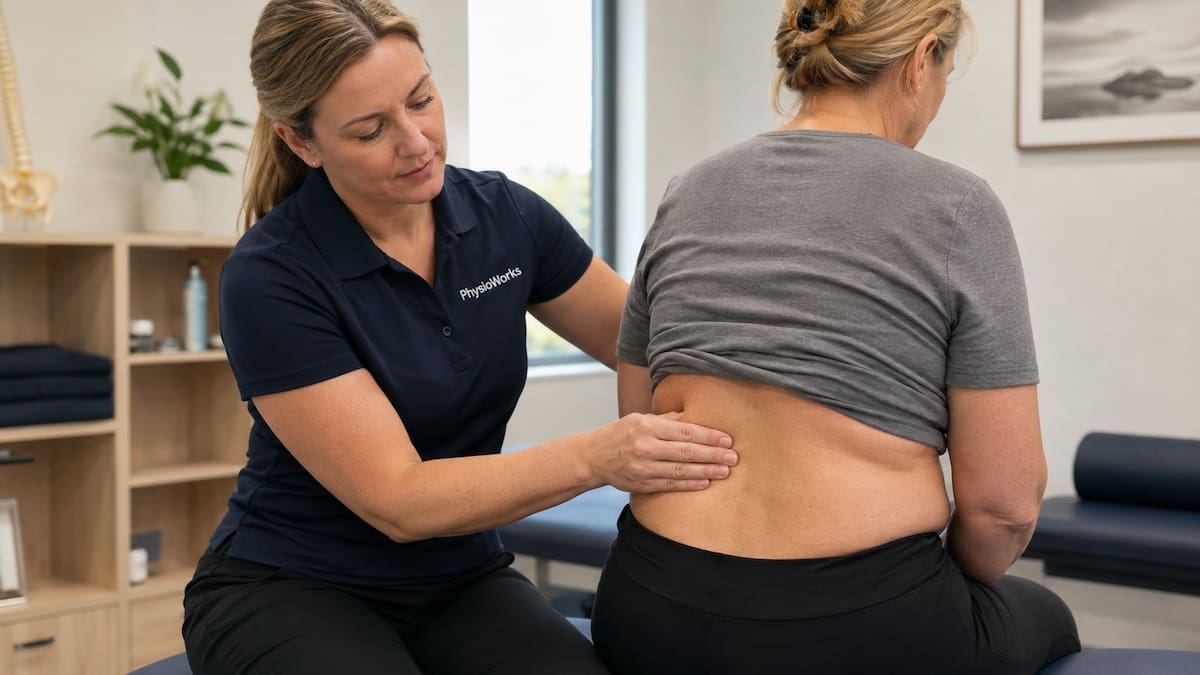
Facet Joint Arthropathy: Quick Answer
Facet joint arthropathy means the small joints at the back of the spine are sore, stiff, irritated, or affected by wear and tear. These joints help guide neck, mid-back and lower back movement.
Symptoms often feel worse with arching back, twisting, long standing, or moving after sitting. Pain may stay near the spine. It may also spread into the shoulder, buttock, hip, or thigh.
For broader spinal pain context, see our guides to back pain and spondylosis.
Key Points
- Facet joints help guide spinal movement.
- Pain may come from stiffness, overload, injury, or arthritis.
- Scans can show joint change, but they do not always explain pain.
- A physiotherapy assessment checks movement, strength, nerve signs and pain behaviour.
- Treatment often blends movement advice, hands-on care where useful, and graded exercise.
What Is Facet Joint Arthropathy?
Facet joint arthropathy means the facet joints are not moving or coping with load well. The problem may involve joint irritation, cartilage change, joint capsule sensitivity, muscle spasm, or poor muscle control around the spine.
Facet joints are small moveable joints. They sit between nearby vertebrae. They help guide bending, twisting, side-bending and extension.
You may also hear this condition called facet joint pain, facet joint syndrome, facet joint disease, or zygapophyseal joint pain.
Where Does Facet Joint Pain Occur?
Facet joints are found at each spinal level. The symptom area depends on which part of the spine is involved.
- Cervical facet joint pain may cause neck pain, shoulder blade pain, headaches, or pain with turning.
- Thoracic facet joint pain may cause mid-back stiffness, rib-region pain, or pain with rotation.
- Lumbar facet joint pain may cause lower back pain, buttock pain, hip pain, or thigh referral.
For a general medical overview of back pain and warning signs, MedlinePlus provides a helpful back pain overview.
What Does Facet Joint Pain Feel Like?
Facet joint pain often has a clear movement pattern. This means certain movements or postures can change the pain.
- pain with arching back or twisting
- stiffness after sitting, driving, sleeping, or standing still
- tenderness beside the spine
- sharp, catching, or blocked movement
- muscle spasm near the painful area
- pain that spreads into the shoulder, buttock, hip, or thigh
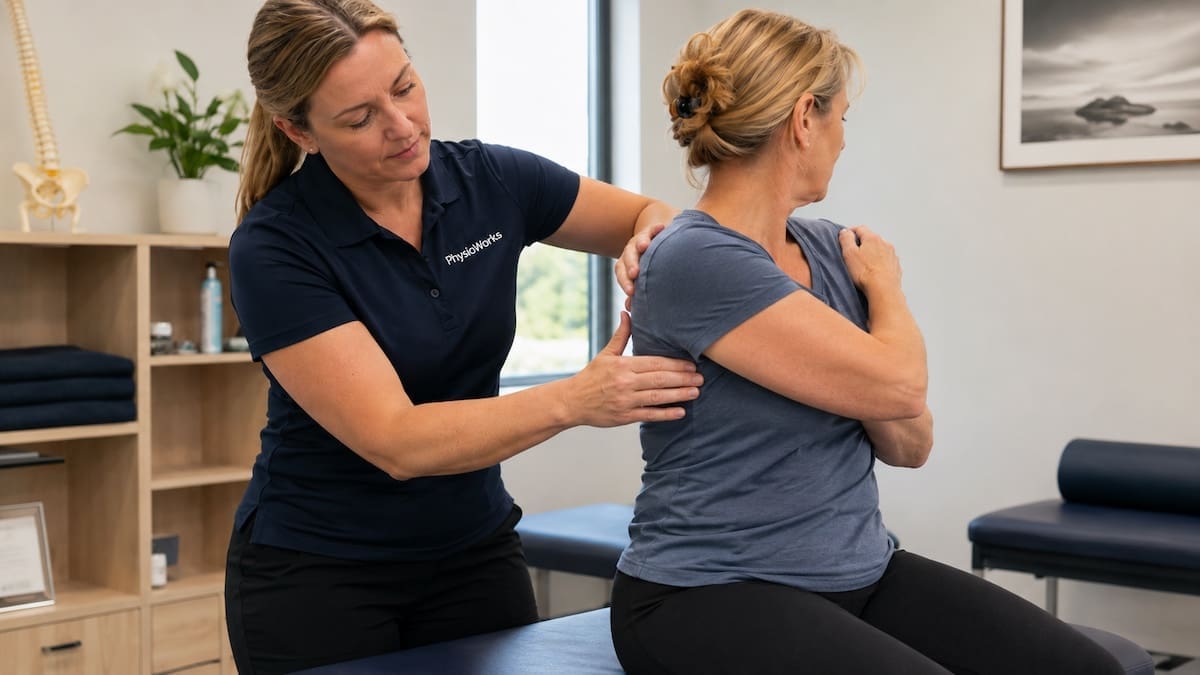
Is It Arthritis or a Locked Joint?
Facet joint arthropathy can involve arthritis. However, pain does not always match scan changes. Some people have arthritis on scans with little pain. Others have a stiff, sore, or irritated joint with only mild scan changes.
A physiotherapy assessment helps link your pain to movement, posture, strength, joint sensitivity and daily load.
What Causes Facet Joint Arthropathy?
Facet joint arthropathy usually develops when joint load, movement control, or tissue tolerance changes. It may build slowly. It may also follow a fall, lift, twist, awkward sleep, or sudden movement.
Common Contributing Factors
- age-related joint change
- repeated arching or twisting load
- long periods of sitting or standing
- reduced spinal movement
- reduced trunk or neck muscle endurance
- past spinal injury
- joint hypermobility or poor segment control
- inflammatory joint disease in selected cases
Can a Facet Joint Become Too Stiff?
Yes. A stiff facet joint can feel locked, blocked, or hard to move in one direction. This is often called hypomobility.
Common causes include joint capsule tightness, muscle spasm, joint change, bony change, or too little movement variety. In the neck, a sudden stiff facet joint may add to acute wry neck.
Can a Facet Joint Move Too Much?
Yes. Some facet joints move too much or lack control. This is called hypermobility. It can follow trauma, repeated strain, ligament injury, or weak muscle control.
In these cases, repeated joint loosening may not be the best plan. Care often focuses on strength, control, endurance, pacing and confidence with movement.
How Is Facet Joint Arthropathy Diagnosed?
A physiotherapist matches your history with a physical exam. This may include spinal movement tests, joint assessment, muscle testing, strength checks, functional movement and nerve screening.
Scans such as X-ray, CT, or MRI may show arthritis, fracture, disc change, or other findings. However, scans do not always show whether a facet joint is the main pain source. Symptoms, movement and safety checks still matter.
Assessment Usually Checks
- which movements worsen or ease symptoms
- whether pain is local or referred
- spinal movement and joint sensitivity
- muscle guarding, endurance and control
- nerve signs such as numbness, tingling, or weakness
- work demands, training load, sleep and daily triggers
Facet Joint Arthropathy Treatment
Facet joint arthropathy treatment should match the main driver. The joint may be stiff, irritated, unstable, inflamed, or overloaded.
For a Stiff or Locked Facet Joint
A physiotherapist may use gentle joint techniques, soft tissue care, heat advice and guided movement. Once movement improves, exercise can help reduce repeat flare-ups.
For an Irritated or Overloaded Facet Joint
Early care usually aims to calm symptoms and keep you moving safely. This may include pacing, posture changes, gentle mobility and a graded return to normal activity.
For a Hypermobility-Driven Joint
Exercise often becomes the main treatment. Your plan may include deep spinal muscle control, hip and trunk strength, balance, endurance and task-specific loading. For lower back symptoms, core stability training may form part of the plan.
What Other Treatment Options May Help?
Some people also consider massage, dry needling, injections, or radiofrequency procedures. These options have different roles. They should match the diagnosis, symptom stage and response to active care.
- Massage: may help reduce muscle spasm around the painful area.
- Dry needling: may help short-term muscle sensitivity in selected cases.
- Facet joint injections: may help with diagnosis or short-term relief in persistent cases.
- Radiofrequency procedures: may help selected long-term cases, but results can vary.
For care pathway detail, see back pain physiotherapy.
Can You Keep Moving With Facet Joint Pain?
Often, yes. Gentle movement can help. Complete rest may increase stiffness and reduce confidence. The key is to find the right movement dose, then build slowly.
Movement Decision Guide
- Keep it gentle: start with walking, light mobility and short posture changes.
- Reduce clear triggers: limit repeated arching, twisting, or long static postures if they flare pain.
- Build back slowly: add range, load and time as symptoms settle.
- Get assessed: seek help if pain spreads, persists, returns often, or affects sleep, work, or walking.
When Should You Seek Urgent Medical Review?
Most facet joint pain is not dangerous. However, seek urgent medical review if symptoms suggest a more serious problem.
- new bladder or bowel changes
- saddle numbness
- progressive arm or leg weakness
- fever, unexplained weight loss, or feeling very unwell
- severe pain after major trauma
- new balance problems or widespread numbness
Related PhysioWorks Guides
These pages may help you understand related spinal pain patterns and common overlap.
- Neck pain — stiffness, headaches, shoulder blade pain and arm symptoms.
- Thoracic pain — mid-back, rib-region and upper-back pain patterns.
- Lower back pain — common causes, red flags and treatment options.
- Sacroiliac joint pain — buttock and pelvic pain that can mimic lower back pain.
- Spinal stenosis — narrowing around spinal nerves and walking limits.
- Degenerative disc disease — disc-related stiffness, pain and flare-ups.
Facet Joint Arthropathy FAQs
What is facet joint arthropathy?
Facet joint arthropathy means the small joints at the back of the spine are stiff, sore, irritated, overloaded, or affected by joint change. These joints guide movement between vertebrae. Symptoms often change with twisting, arching, standing, sitting, or moving after rest.
Is facet joint arthropathy the same as arthritis?
Not always. It can involve arthritis, but pain may also come from stiffness, irritation, muscle guarding, or poor control. Some people have arthritic scan changes with little pain. Assessment findings and symptom behaviour still matter.
Can facet joint pain refer into the leg or shoulder?
Yes. Neck facet pain may refer into the shoulder blade, shoulder, or head. Lumbar facet pain may refer into the buttock, hip, or thigh. Pain below the knee, numbness, or weakness needs careful assessment for nerve involvement.
Do scans show a locked facet joint?
Scans may show arthritis, fracture, narrowing, or other changes. They do not reliably show a locked or irritated facet joint. A physiotherapist uses symptom behaviour, movement tests, touch assessment and safety screening to help find the likely pain source.
What exercises help facet joint arthropathy?
The right exercise depends on whether the joint is stiff, irritable, or poorly controlled. Many plans start with gentle mobility and walking. They often progress to trunk, hip, or neck strength work as comfort improves.
When should I see a physiotherapist for facet joint pain?
Book an assessment if pain lasts more than a few days, keeps returning, limits work or sleep, affects walking or driving, or refers into the shoulder, buttock, hip, or thigh. Early assessment can guide a safer plan.
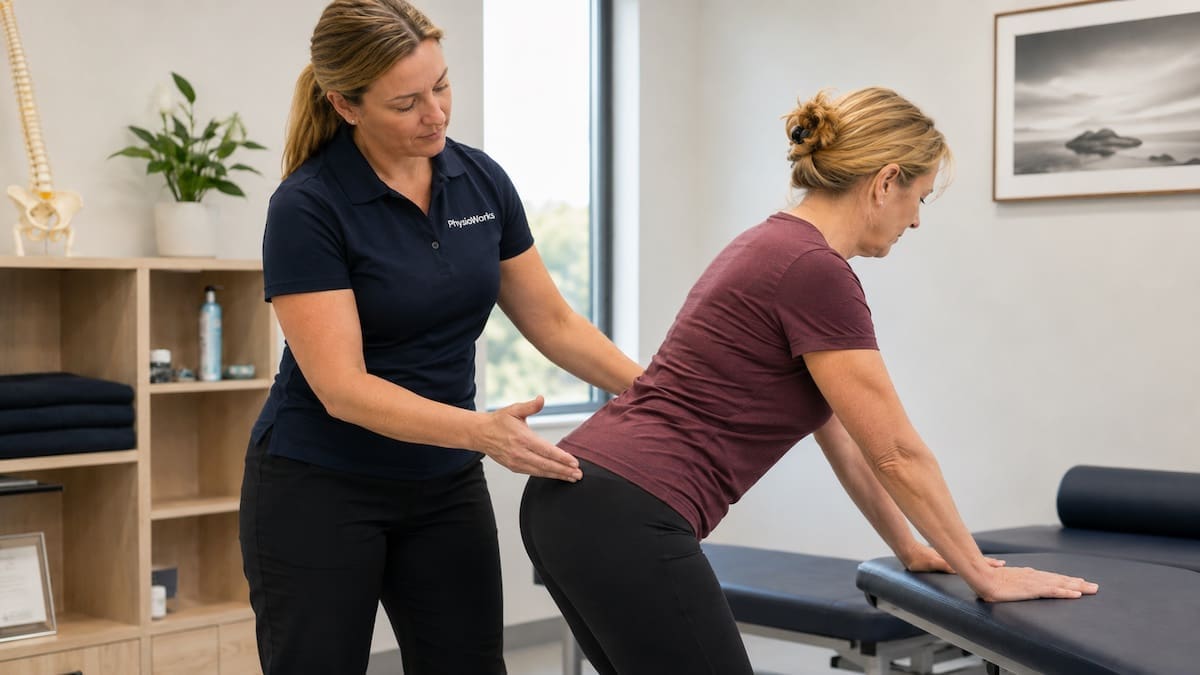
What To Do Next
If facet joint arthropathy is limiting movement, sleep, work, walking, or exercise, a physiotherapy assessment can help identify the likely pain driver and guide a practical plan.
Your plan may include symptom relief, movement retraining, strength work, posture and load advice, and a graded return to normal activity.
Book your appointment – 24/7
Choose your preferred PhysioWorks clinic and book online.
Back Support Products
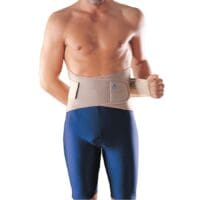
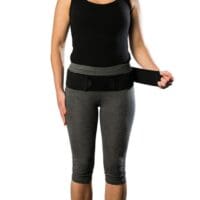
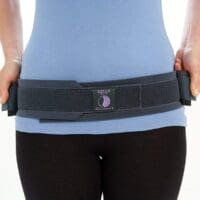
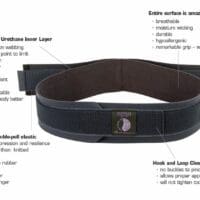
These back support products are commonly used by our physiotherapists to help reduce back pain, improve comfort, and support your recovery at home.
-
 Back, Braces & Supports, Maternity, Posture
Maternity Back Support – OPPO 2062
$60.00 – $64.00Select optionsQuick View -
 Braces & Supports, Back, Maternity, SIJ
Maternity Support Belt – OPPO 4062
$37.00Select optionsQuick View -
 Back, Braces & Supports, Maternity, SIJ
Core Stability Support – OPPO 3462
$54.00Select optionsQuick View - Braces & Supports, Back, Maternity, SIJ
AOM38 AllCare Ortho Core Stability Belt
$49.95Select optionsQuick View -
-
-

 Back, Braces & Supports, Maternity, Posture
Pregnancy Belly Band & C-Section 3-in-1
$94.99Select optionsQuick View -
Follow PhysioWorks
Get free physiotherapy tips, exercise videos, recovery advice, and blog updates.
 |  |  | B |  |  |
References
- Cohen SP, Bhaskar A, Bhatia A, et al. Consensus practice guidelines on interventions for lumbar facet joint pain from a multispecialty, international working group. Reg Anesth Pain Med. 2020;45(6):424-467. doi:10.1136/rapm-2019-101243
- Hurley RW, Adams MCB, Barad M, et al. Consensus practice guidelines on interventions for cervical spine (facet) joint pain from a multispecialty international working group. Reg Anesth Pain Med. 2022;47(1):3-59. doi:10.1136/rapm-2021-103031
- Van Oosterwyck W, Famaey N, Van Boxem K, et al. Lumbar facet joint disease: what, why, and when? Life (Basel). 2024;14(11):1480. doi:10.3390/life14111480