
Plantar Fasciitis
Plantar Fasciitis
Plantar fasciitis is a common cause of pain under the heel, especially with your first steps in the morning or after rest.


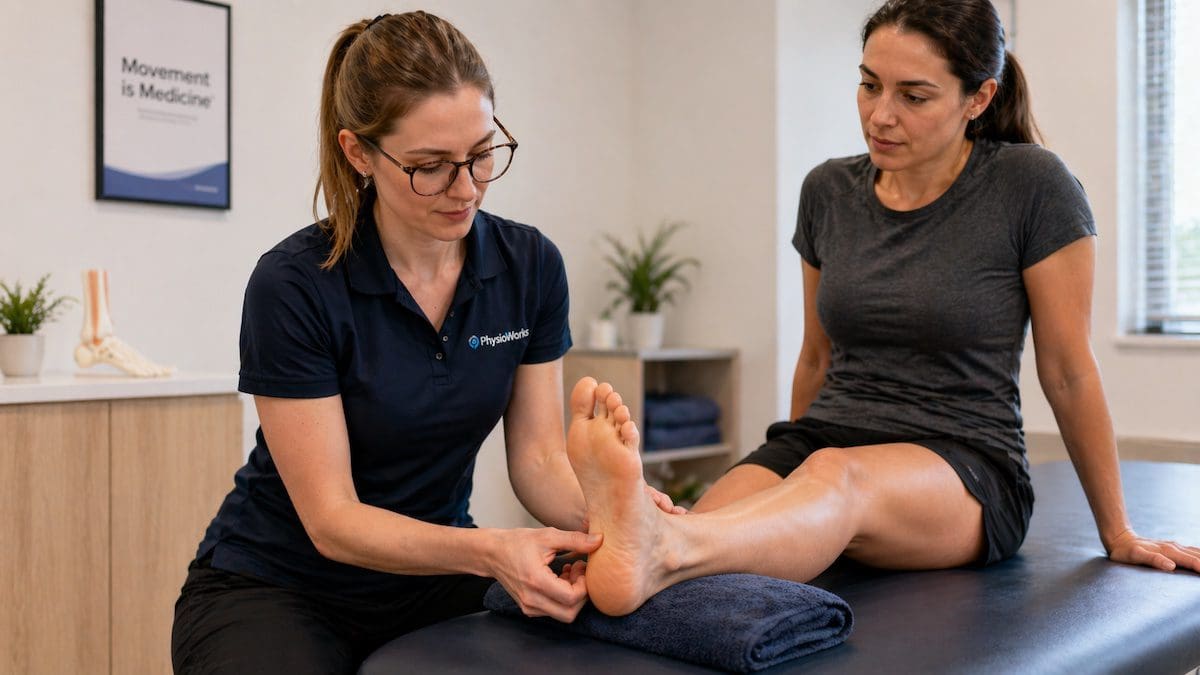
Plantar fasciitis is a common cause of pain under the heel. Symptoms are often most noticeable with the first few steps after getting out of bed or standing after sitting or resting.
The plantar fascia is a strong band of connective tissue that supports the arch under your foot. Pain can develop when repeated walking, running, standing or other loading exceeds the tissue’s current capacity.
Plantar fasciitis is one of several causes of foot pain. Assessment can help determine whether your symptoms fit plantar fascia-related heel pain or another condition requiring different management.
What Does Plantar Fasciitis Feel Like?
First-step pain
Heel pain is often most noticeable during your first few steps in the morning or when standing after rest.
Heel tenderness
Pain commonly occurs under the heel, often towards the inside edge where the plantar fascia attaches.
Pain after loading
Symptoms may increase after prolonged standing, walking, running or a busy day on your feet.
Pain after rest
Symptoms can return when you start walking after sitting, driving or another period of reduced movement.
Barefoot discomfort
Hard floors and unsupported footwear can aggravate heel pain for some people.
Activity limits
Persistent symptoms can reduce comfortable walking, running, work or sport tolerance.
What Is Plantar Fasciitis?
Plantar fasciitis is a common form of plantar heel pain involving the plantar fascia and its attachment around the heel. The plantar fascia runs along the sole of your foot and helps support the arch while managing load during standing, walking and running.
Symptoms commonly develop when the demands placed on the plantar fascia increase faster than the tissue can adapt. Pain can affect walking, work, exercise and sport.
Although the name suggests inflammation, persistent plantar fasciitis often behaves more like a load-related tissue problem than a simple inflammatory condition. You may also hear longer-standing plantar fascia pain described as plantar fasciopathy.
Why Does Plantar Fasciitis Cause First-Step Heel Pain?
First-step heel pain is a characteristic symptom pattern. The plantar fascia and surrounding tissues may become less comfortable while resting, then become painful when suddenly loaded again as you stand and walk.
Symptoms can ease as you move and the foot warms up. However, pain may return after prolonged standing, walking, running or other activity that exceeds the heel’s current load tolerance.
Why Does Plantar Fasciitis Develop?
Plantar fasciitis usually develops when repeated load exceeds the plantar fascia’s current capacity. There is rarely one single cause.
Factors that may contribute include:
- a sudden increase in walking, running or standing
- changes in training volume, hills, speed or walking surfaces
- limited ankle movement or calf tightness
- reduced calf or foot strength
- changes in footwear
- long periods barefoot on hard floors
- reduced foot arch control
- changes in work or daily activity demands
- higher overall loading through the foot and heel
Related problems such as heel spurs and Achilles tendinopathy may produce nearby symptoms or occur alongside plantar heel pain.
How Is Plantar Fasciitis Diagnosed?
A physiotherapist will usually assess plantar fasciitis from your history, symptom pattern and physical examination. The location of your pain, first-step symptoms and response to walking or other loading can provide useful clues.
Your assessment may include:
- the location and behaviour of your heel pain
- tenderness around the heel and plantar fascia
- ankle and foot movement
- calf and foot strength
- walking or functional loading
- footwear
- recent changes in work, walking, running or sport
Imaging is not routinely required for a typical presentation. However, ultrasound, X-ray or other imaging may be considered when symptoms persist, the diagnosis remains uncertain or another cause of heel pain needs investigation.
Imaging findings should be interpreted alongside your symptoms and examination. For general Australian consumer health information, see Healthdirect’s plantar fasciitis guide.
How Is Plantar Fasciitis Treated?
There is no single treatment that suits everyone. Management usually combines education, appropriate load modification, stretching and progressive strengthening. Other treatments can be added when they match your symptoms and assessment findings.
Education and Load Management
Early management usually involves reducing activities that repeatedly aggravate your heel while maintaining as much comfortable movement as practical. This may involve temporarily changing walking distance, running volume, hills, step count or prolonged standing.
Complete rest is rarely the long-term solution. Instead, the aim is to find a tolerable level of activity and progressively rebuild the capacity required for walking, work, exercise or sport.
Plantar Fascia and Calf Stretching
Plantar fascia-specific stretching and calf stretching may help reduce pain and improve movement, particularly when first-step pain is prominent.
Stretching generally works best as one part of a broader rehabilitation program rather than as the only treatment.
Progressive Strengthening
Progressive strengthening can help your calf, foot and plantar fascia manage repeated loading. Your exercise program should match your current symptoms and gradually become more demanding as your tolerance improves.
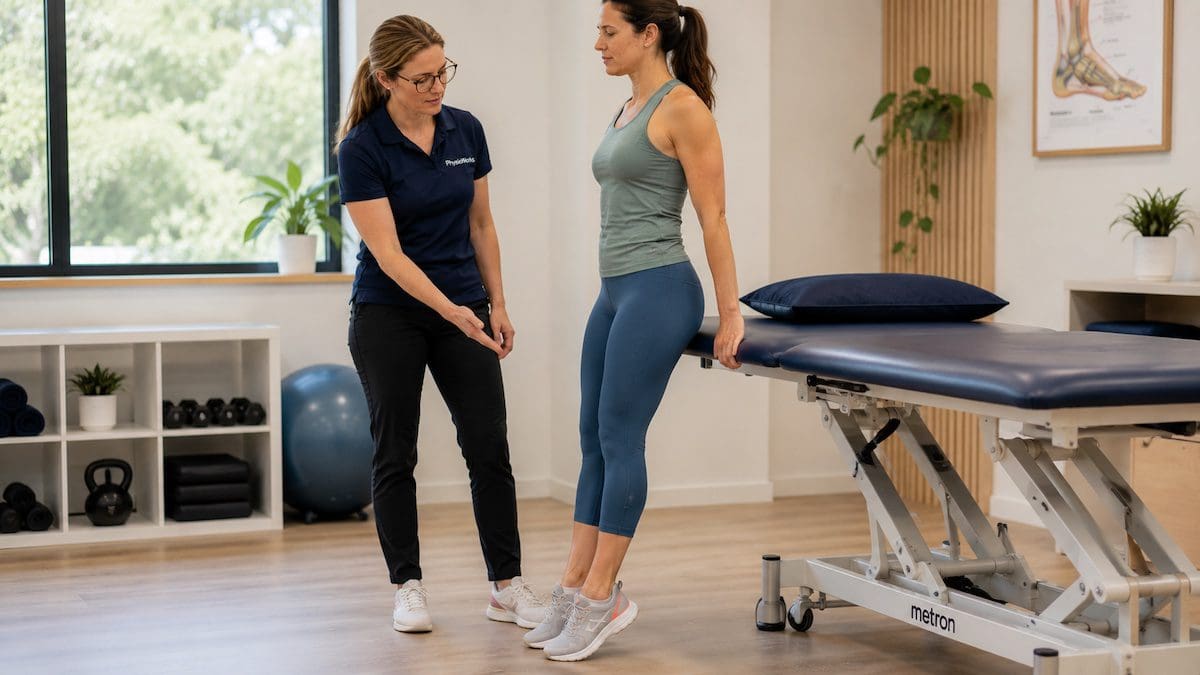
Building plantar fascia and calf load tolerance.
Exercises may include progressive heel raises, calf strengthening and foot-control work. Some people may also benefit from active foot posture correction exercises.
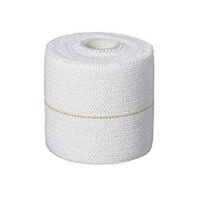
Taping
Foot taping may provide short-term pain relief for some people. It can sometimes make walking or daily activity more comfortable while strength and load tolerance improve.
Footwear and Orthoses
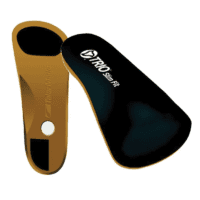
Comfortable footwear with suitable cushioning and support may help reduce symptoms during walking and standing. There is no single shoe that is best for everyone, so footwear advice should consider your foot, activities and work demands.
Foot orthoses may improve comfort for some people. They are generally used as one part of a broader management plan rather than as a stand-alone treatment.
Gait and Running Assessment
If heel pain repeatedly returns with walking or running, a gait analysis or running assessment may help identify loading patterns that are relevant to your symptoms.
The findings can guide changes to walking or running load, footwear and rehabilitation priorities. Not every person with plantar fasciitis needs gait modification.
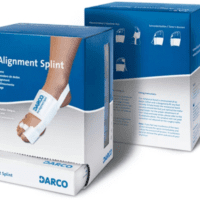
Night Splints
A night splint may be considered when first-step morning pain remains prominent. Suitability depends on your symptoms, comfort and response to other management.
Shockwave Therapy
Shockwave therapy may be considered for persistent plantar heel pain that has not improved sufficiently with an appropriate rehabilitation program. It is an adjunct rather than a replacement for addressing load, strength and other contributing factors.
Injections and Other Medical Options
Injection treatments such as corticosteroid or platelet-rich plasma may sometimes be discussed for persistent symptoms. Their potential benefits, risks and alternatives should be considered carefully with an appropriate healthcare professional.
How Long Does Plantar Fasciitis Take to Recover?
Recovery varies. Recent, less irritable plantar heel pain may improve over several weeks, while symptoms that have persisted for months can take considerably longer.
Your recovery time can depend on symptom duration, daily walking and standing demands, tissue irritability, strength and how consistently activity and rehabilitation can be progressed.
Useful signs of progress include less first-step pain, increasing walking tolerance and improved capacity for work, exercise or sport. Progress is often more useful than aiming for an exact recovery deadline.
Why Can Plantar Fasciitis Keep Coming Back?
Symptoms can recur when activity increases faster than the foot and calf can tolerate or when rehabilitation stops as soon as pain settles.
Common triggers include:
- rapid increases in walking or running
- returning to prolonged standing too quickly
- large changes in work or training demands
- reduced calf or foot capacity
- changes in footwear
- stopping useful strengthening when symptoms improve
- repeated cycles of doing too much followed by prolonged rest
Maintaining useful calf and foot strength and progressing activity gradually can help reduce unnecessary load spikes, although no strategy can guarantee that plantar heel pain will never recur.
When Should Heel Pain Be Checked?
Arrange an assessment if your heel pain is not settling, keeps recurring or begins limiting normal walking, work, exercise or sport.
Persistent pain
Symptoms are not improving despite sensible changes to aggravating activity.
Walking changes
You are limping or changing how you walk because of heel pain.
Falling tolerance
Your comfortable walking, standing, work or exercise capacity continues to decrease.
Unclear symptoms
You are unsure whether your pain is plantar fasciitis, heel spur pain or another foot problem.
Heel pain can arise from several structures. Nerve irritation, heel fat-pad pain, inflammatory conditions and a foot stress fracture may require different management.
Related Foot and Heel Information
Plantar Fasciitis FAQs
Is plantar fasciitis an inflammation problem?
Not always. Although the name suggests inflammation, persistent plantar fasciitis often behaves more like a load-related tissue problem. This is why management commonly focuses on appropriate loading, strength, flexibility and footwear rather than rest alone. Longer-standing plantar fascia pain may also be called plantar fasciopathy.
How long does plantar fasciitis take to recover?
Recovery varies. Some people improve over several weeks, while persistent cases may take several months. Symptom duration, daily walking and standing demands, tissue irritability and rehabilitation progression can all affect recovery.
Should I stop walking with plantar fasciitis?
Complete rest is usually unnecessary. Many people can continue walking at a tolerable level while temporarily reducing distances or activities that cause a sustained increase in symptoms. The aim is to maintain comfortable movement and gradually rebuild capacity.
Do orthotics help plantar fasciitis?
Orthoses may improve comfort for some people with plantar heel pain. They generally work best as part of a broader program that may include load management, strengthening, stretching and suitable footwear rather than as the only treatment.
When might shockwave therapy be considered?
Shockwave therapy may be considered for persistent plantar heel pain that has not improved sufficiently with an appropriate rehabilitation program. Your physiotherapist can assess whether it is suitable and how it should fit within your broader management plan.
Are heel spurs the same as plantar fasciitis?
No. A heel spur is a bony change visible on imaging, while plantar fasciitis involves the plantar fascia and its heel attachment. The two can occur together, but many heel spurs are painless and the imaging finding does not necessarily identify the source of heel pain.
What Should You Do Next?
If first-step heel pain is not settling, keeps returning or is reducing your walking, work or exercise tolerance, consider a physiotherapy assessment. You do not need to know whether the problem is definitely plantar fasciitis before booking.
Your physiotherapist can assess the likely source of your heel pain, identify relevant loading and physical factors, and develop a practical plan for returning to normal activity.
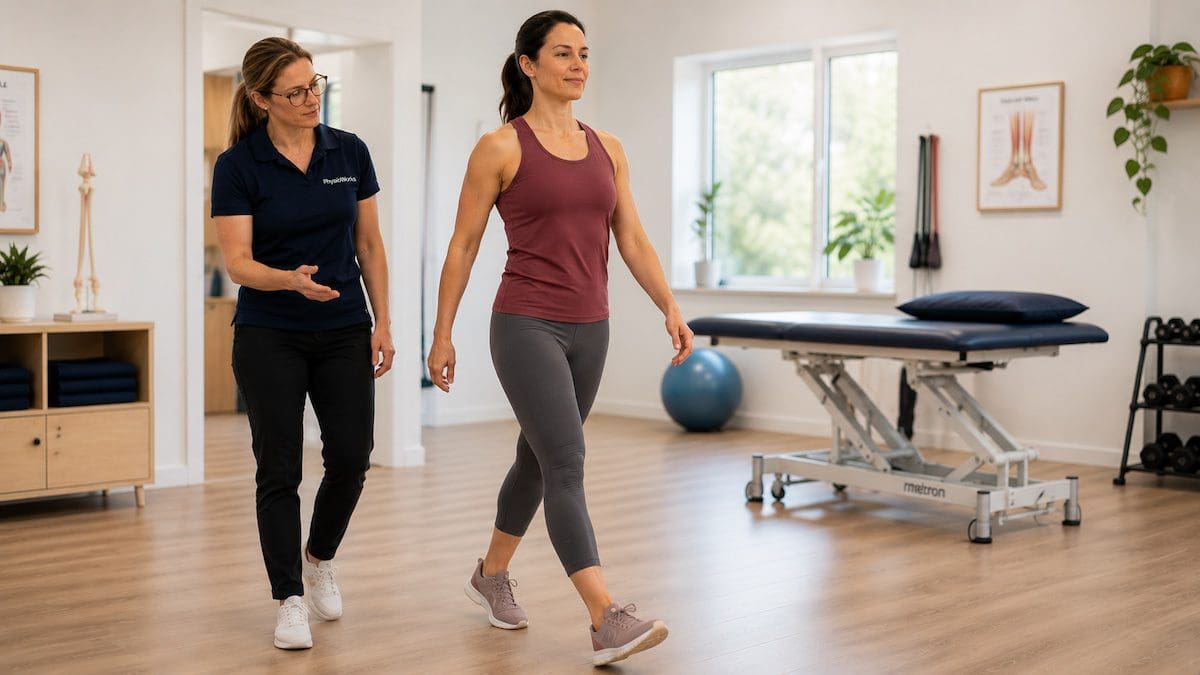
Building comfortable heel-to-toe walking tolerance.
Choose your clinic and appointment pathway
Select a PhysioWorks clinic to continue to live booking, an appointment request or reception assistance.
Feet Products
These feet products are commonly used by our physiotherapists to improve support, comfort, strength, balance, flexibility, and home exercise programs.
-
-


-
 Ankle, Braces & Supports, Foot, Walking
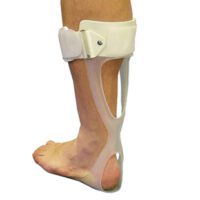
Victor Moonboot 1.0 Air or No Air
$77.00 – $79.00Select optionsQuick View -
-
-
-
 Ankle, Braces & Supports, Calf, Foot
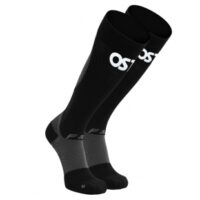
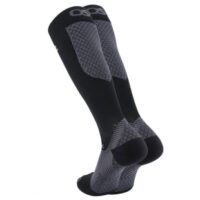
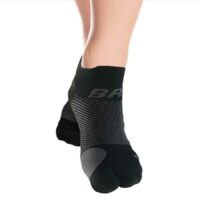
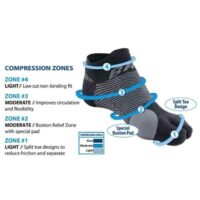
Orthosleeve Compression Bracing Socks
$49.00Select optionsQuick View -

-
-
- EMS Machines, Pain Management, TENS Machine, TENS Machine & EMS
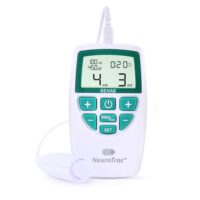
NeuroTrac Rehab (TENS Machine + EMS)
$285.00Add to cartQuick View -

- Liniments & Gels, Massage Liniments, Pain Management
Fisiocrem
$16.95 – $39.95Select optionsQuick View -
-
-







References
- Martin RL, Davenport TE, Reischl SF, et al. Heel Pain–Plantar Fasciitis: Revision 2023. J Orthop Sports Phys Ther. 2023;53(12):CPG1–CPG39. doi:10.2519/jospt.2023.0303.
- Morrissey D, Cotchett M, Said J, et al. Management of plantar heel pain: a best practice guide informed by a systematic review, expert clinical reasoning and patient values. Br J Sports Med. 2021;55(19):1106–1118. doi:10.1136/bjsports-2019-101970.
- Drake C, Whittaker GA, Munteanu SE, et al. Medical imaging for plantar heel pain: a systematic review and meta-analysis. J Foot Ankle Res. 2022;15(1):4. doi:10.1186/s13047-021-00507-2.
- Heide M, Mølgaard CM, Lund H, et al. Is radial extracorporeal shock wave therapy, sham-rESWT or a standardised exercise programme with advice plus customised foot orthoses more effective than advice plus customised foot orthoses alone in plantar fasciopathy? Br J Sports Med. 2024;58(16):910–918. doi:10.1136/bjsports-2024-108139.


