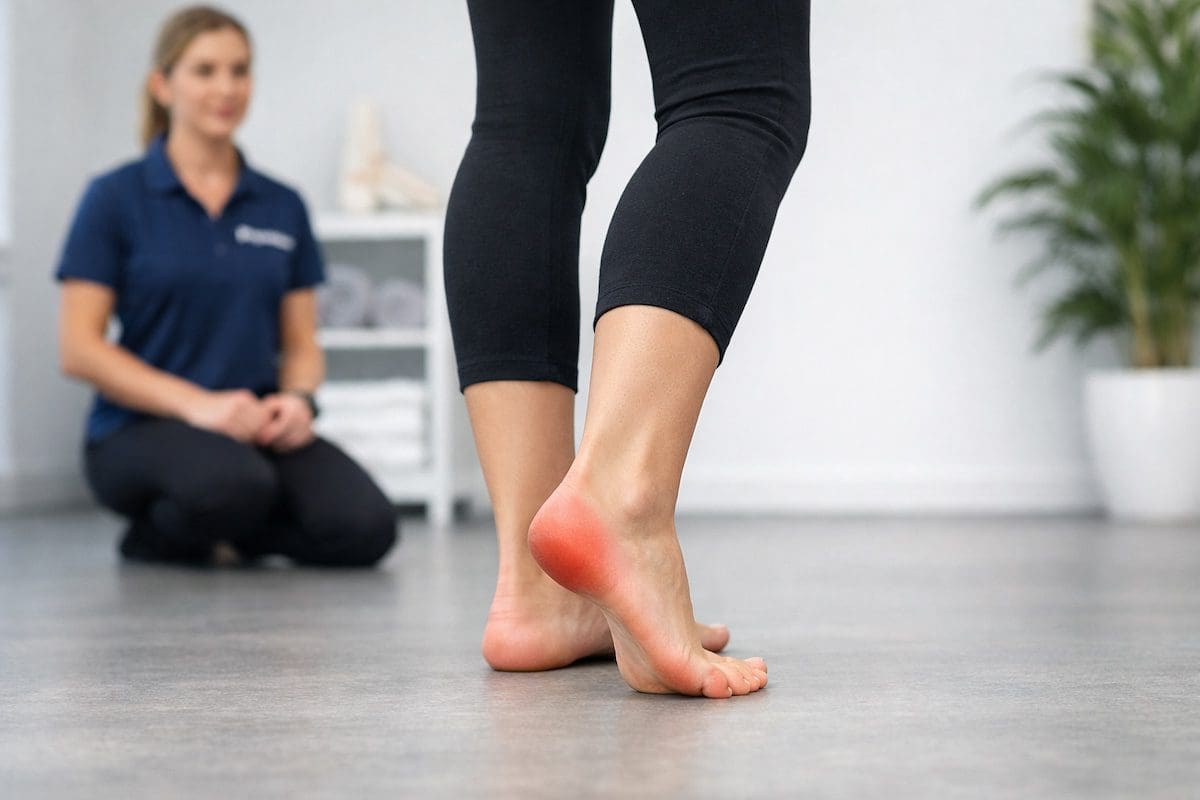
How can you get rid of plantar fasciitis?
The best way to get rid of plantar fasciitis is to treat the factors that caused it in the first place. For many people, that means settling the irritated heel tissue, improving ankle and calf mobility, restoring strength, and reducing overload from walking, running, sport, or prolonged standing.
If there has been a recent increase in activity, time on your feet, hill walking, court sport, or time spent on hard surfaces, it is often worth temporarily reducing that load. Complete rest is not always necessary, but a short period of smarter loading can help calm symptoms faster.
Supportive shoes, arch taping, and temporary pressure-relieving options such as heel cups can also make daily walking more comfortable while your rehabilitation progresses.
Why plantar fasciitis keeps coming back
Plantar fasciitis often returns when the painful tissue settles but the original driver remains unchanged. Common contributors include tight calf muscles, limited ankle movement, weak calf or foot muscles, poor load progression, unsupportive footwear, and long hours of standing or walking.
That is why short-term pain relief alone is usually not enough. A lasting result often depends on improving the way your foot and lower limb handle load. Some people may also have overlapping causes of heel pain such as a heel spur, Achilles tendinopathy, or another source of foot pain.
What treatment works best for plantar fasciitis?
Good plantar fasciitis treatment usually combines several strategies rather than relying on one quick fix. Research-based care commonly includes stretching, taping, manual therapy, progressive strengthening, activity modification, footwear advice, and orthotic support when appropriate.
A physiotherapist may recommend:
- plantar fascia-specific stretching
- calf stretching if ankle stiffness is contributing
- hands-on treatment to improve foot and ankle mobility
- foot taping to unload the sore tissue
- progressive calf and foot strengthening
- footwear advice for work, sport, and daily activities
- orthotic or arch support advice where appropriate
- a graded return to walking, work, exercise, or sport
If poor foot control is contributing, guided rehabilitation such as Active Foot Posture Correction Exercises may also help as part of a broader rehabilitation plan.
Common mistake: Many people either push through sharp first-step heel pain every day or stop all activity for too long. A better approach is to calm the irritation, keep symptoms manageable, and rebuild load tolerance step by step.
What can you do at home for plantar fasciitis?
At home, it often helps to reduce painful overload, avoid going barefoot on hard floors, wear supportive shoes, stretch your calf and plantar fascia, and begin simple strengthening exercises as pain settles. Ice may help after aggravating activity, but most long-term improvement comes from gradual tissue loading rather than short-term pain relief alone.
Many people improve faster when they avoid two common mistakes: pushing through severe heel pain every day, or stopping all activity for too long. A measured approach usually works best.
When should you get plantar fasciitis checked?
You should seek help if your heel pain is not improving after a few weeks, keeps returning, limits work or exercise, or does not behave like classic first-step plantar heel pain. It is also worth getting assessed if you have swelling, numbness, burning pain, night pain, or trouble walking.
A physiotherapist can help confirm whether you have plantar fasciitis or another heel condition, then guide the treatment that best suits your symptoms, mobility, footwear, and activity demands. You may also find our Foot, Ankle & Heel Pain FAQs page useful.
Plantar fasciitis FAQs
How long does plantar fasciitis take to heal?
Mild plantar fasciitis may improve within a few weeks, while more persistent cases can take several months. Recovery often depends on how long symptoms have been present and whether the main load, flexibility, and strength contributors are being addressed properly.
Should you keep walking with plantar fasciitis?
Usually yes, but in a modified way. Walking is often fine if pain stays manageable and does not flare significantly afterwards. You may need to temporarily reduce distance, pace, hills, or time spent on hard surfaces.
Do orthotics help plantar fasciitis?
Orthotics can help some people, especially when foot posture, arch support, or repeated loading are contributing factors. They usually work best alongside stretching, strengthening, footwear advice, and sensible load management.
Is plantar fasciitis the same as a heel spur?
No. Plantar fasciitis involves irritation of the plantar fascia, while a heel spur is a bony growth at the heel. Some people have both, and some people have a heel spur with no pain at all.
Can a physiotherapist help plantar fasciitis?
Yes. A physiotherapist can assess why your heel pain developed, confirm the diagnosis, identify aggravating factors, and guide the right treatment plan to settle pain and reduce the risk of it returning.
What should you do next?
If you think you have plantar fasciitis, act early. Small changes to load, footwear, flexibility, and strength can make a big difference before the problem becomes stubborn.
If your heel pain is lingering or keeps returning, book a PhysioWorks appointment for a proper assessment and a treatment plan tailored to your needs.