
Elbow Pain
Elbow Pain


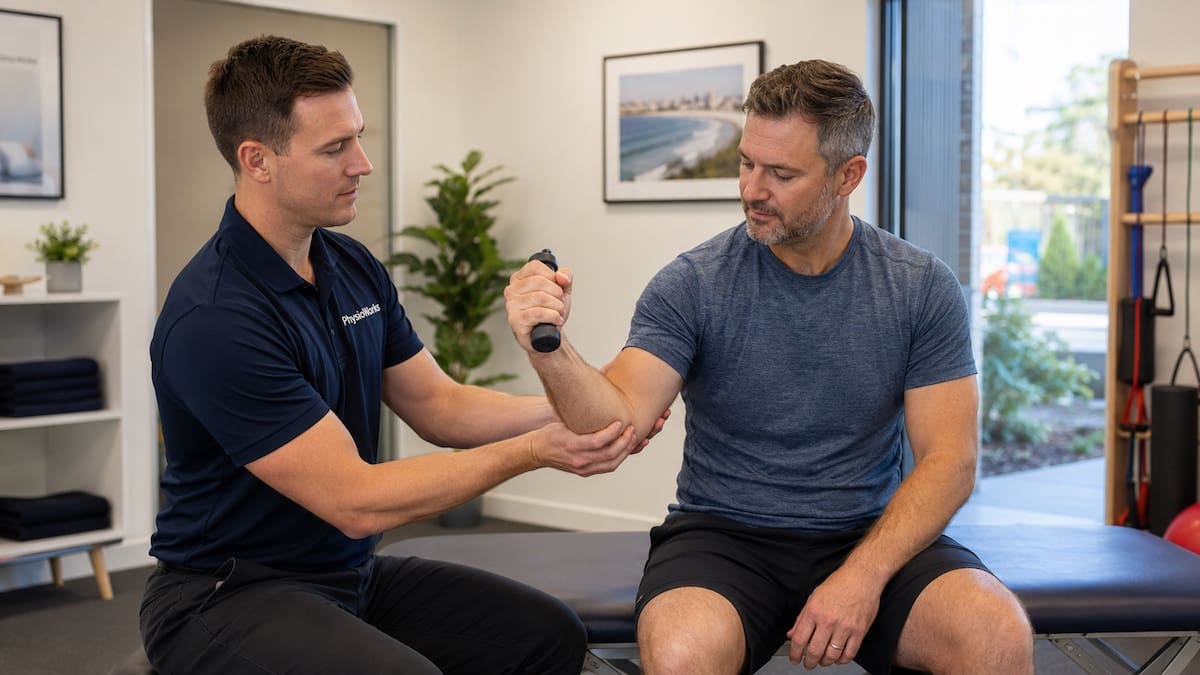
Elbow pain can make gripping, lifting, typing, carrying, gym training, work and sport difficult. Symptoms may arise from tendons, joints, muscles, a swollen bursa, irritated nerves or pain referred from the neck.
The location of your pain provides useful clues, but it does not confirm the diagnosis by itself. An assessment considers how the problem started, which activities trigger it, whether symptoms travel and how the arm responds to movement and loading.
Where is your elbow pain?
Use the pattern below to find the most relevant information. Several conditions can overlap, so arrange an assessment when symptoms remain unclear, severe or persistent.
Pain outside the elbow
Often aggravated by gripping, lifting, pouring, racquet sports, pulling exercises or repeated wrist use.
Pain inside the elbow
May increase with carrying, climbing, gripping, wrist bending or repeated manual work.
Swelling behind the elbow
A soft or tender swelling may follow direct pressure, a knock, irritation or inflammation of the elbow bursa.
Spreading or tingling pain
Burning, pins and needles, numbness or hand weakness may involve a nerve pathway or referred neck pain.
Pain through the arm
Symptoms extending above or below the elbow may require assessment of the shoulder, neck, forearm and wrist.
Unsure what is causing it?
Review the common tendon, joint, bursal, muscle and nerve-related causes of elbow pain.
What causes elbow pain?
Elbow pain may develop after a sudden injury or build gradually through repeated loading. Common causes include tendon overload, joint irritation, muscle strain, bursitis, nerve irritation and symptoms referred from another area.
In many cases, the demands placed on the arm have increased faster than its current capacity. This may follow heavier gym training, more racquet or throwing activity, repetitive tool use, long periods at a computer or a rapid return to work or sport.
Tendons
Repeated gripping, lifting or wrist loading may irritate the tendons attached near the inside or outside of the elbow.
Bursa
Pressure, impact or inflammation may cause pain and visible swelling over the point at the back of the elbow.
Joint
Trauma, stiffness, arthritis or loose structures can affect movement and may cause catching, locking or deeper pain.
Muscles
Forearm or upper-arm muscles may become painful after an unfamiliar load, sudden force or repeated use.
Nerves
Nerve irritation may cause burning, tingling, numbness, weakness or pain that travels into the forearm and hand.
Referred pain
The neck or another upper-limb region may produce symptoms felt around the elbow even when the elbow is not the main source.
What does elbow pain feel like?
The symptoms depend on the affected structure and the activity loading it. Elbow pain may feel sharp, aching, stiff, weak, swollen, burning or difficult to localise.
- Outside elbow pain may worsen with gripping, pouring, carrying, pulling exercises or racquet sports.
- Inside elbow pain may flare with wrist bending, climbing, throwing or repetitive manual work.
- Back-of-elbow pain may worsen when leaning on the elbow or fully bending or straightening it.
- Forearm pain may overlap with muscle strain, tendon overload or repetitive strain injury.
- Burning, tingling or weakness may suggest nerve irritation or symptoms referred from the neck.
- Locking or catching may require assessment for a joint or mechanical problem.
Can elbow pain come from your neck?
Yes. Irritated neck joints or upper-limb nerves can refer pain into the upper arm, elbow, forearm or hand. The elbow may feel painful even when local elbow tissues are not the main source.
Neck or nerve involvement becomes more likely when pain travels, burns or tingles, or when you notice numbness, hand weakness, clumsiness or changes linked to neck movement. Relevant conditions include neck and arm pain and cervical radiculopathy.
How is elbow pain assessed?
Assessment usually starts with a discussion about how the symptoms began, what aggravates them and how they affect daily activity, work or sport.
Your physiotherapist may then examine:
- elbow movement and joint behaviour;
- the location of tenderness or swelling;
- grip and upper-limb strength;
- pain during controlled tendon loading;
- forearm and wrist movement;
- nerve sensitivity and hand function; and
- the neck and shoulder when symptoms may be referred.
Most elbow problems do not require immediate imaging. An X-ray, ultrasound, MRI or medical review may become relevant after significant trauma, when the diagnosis remains uncertain or when symptoms do not follow the expected pattern.
How is elbow pain treated?
Treatment depends on the likely diagnosis, symptom severity, activity demands and your goals. No single treatment suits every type of elbow pain.
Physiotherapy management may include:
- education about the likely cause and expected progression;
- temporary modification of painful tasks;
- workstation, lifting, sport or training-load changes;
- graded forearm, grip and upper-limb strengthening;
- joint or soft-tissue treatment when clinically appropriate;
- taping or brace advice for selected presentations;
- nerve-related movement and loading strategies; and
- a planned return to work, gym training or sport.
You can also review the broader physiotherapy treatment options used across musculoskeletal conditions.
Why does load management matter?
Complete rest may reduce pain briefly, but prolonged avoidance can reduce strength and tolerance. A better approach often involves lowering the most aggravating loads while keeping the arm moving within a manageable range.
Load management may involve changing:
- the amount of gripping or carrying;
- the weight, volume or frequency of exercise;
- wrist and forearm position;
- tool, racquet or keyboard setup;
- lifting technique; or
- recovery time between demanding tasks.
Once symptoms become more stable, a graded exercise load-management plan can rebuild capacity without repeatedly provoking a major flare-up.
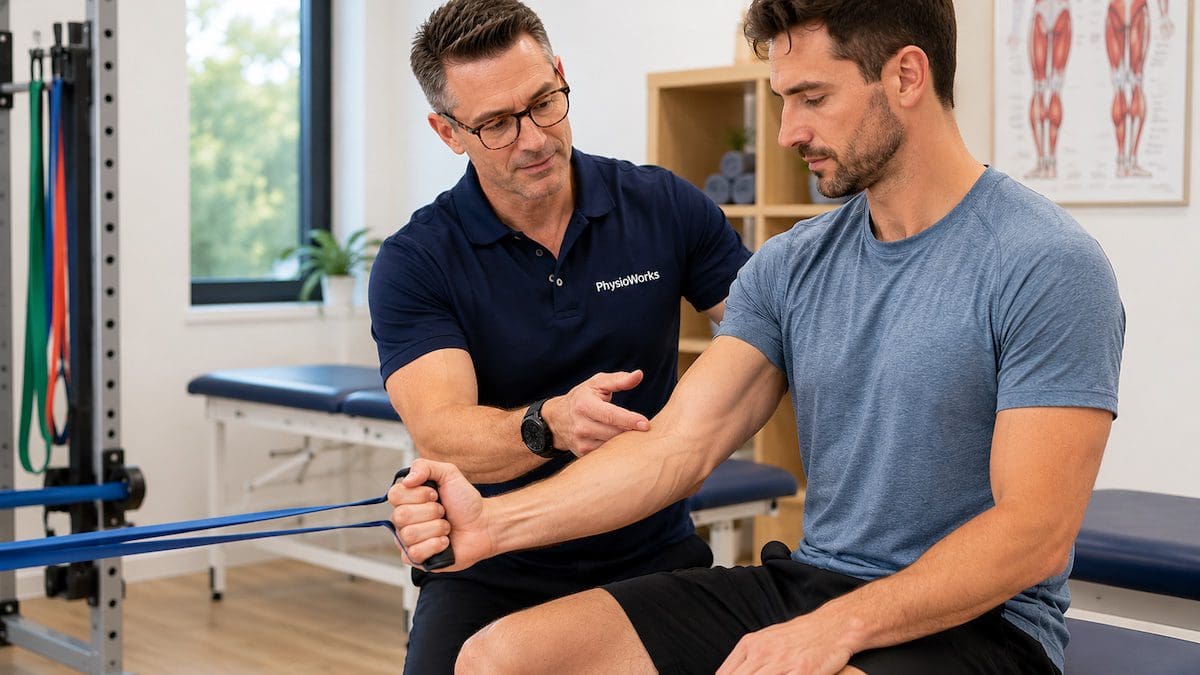
Graded strengthening can rebuild grip, forearm and elbow load tolerance.
What can you do at home?
Early care should reduce irritation without allowing the arm to become unnecessarily stiff or weak.
-
Identify the main trigger
Notice which grip, lift, exercise, work task or position repeatedly increases your symptoms.
-
Modify rather than stop everything
Reduce the weight, repetition, speed or duration of the aggravating task while continuing comfortable daily movement.
-
Keep the elbow moving
Gently bend, straighten and rotate the forearm within a comfortable range unless a clinician has advised protection after an injury.
-
Review your setup
Check your workstation, tools, grip width, lifting method, racquet setup and recent changes in training load.
-
Progress loading gradually
Avoid repeatedly testing the painful task at full effort. Build strength and tolerance in planned stages.
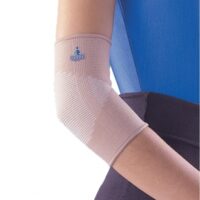
An elbow brace or support may help selected tendon-related presentations. However, it should not replace assessment when the cause remains uncertain or symptoms include swelling, locking, numbness or marked weakness.
When should you see a physiotherapist?
Consider physiotherapy when elbow pain persists, returns repeatedly or affects grip, lifting, work, sleep, sport or gym training.
An assessment may also help when:
- the cause remains unclear;
- symptoms spread into the forearm or hand;
- you have reduced grip or arm strength;
- pain returns whenever activity increases;
- you need to continue physical work or sport; or
- reasonable activity changes have not produced steady improvement.
Elbow pain FAQs
What are the most common causes of elbow pain?
Tendon overload is common, particularly around the outer or inner elbow. Other causes include bursitis, joint irritation, muscle strain, trauma, nerve irritation and pain referred from the neck.
Does the location of elbow pain identify the cause?
Location provides useful clues but does not confirm the diagnosis. Outside pain often relates to the wrist-extensor tendons, inside pain may involve the wrist-flexor tendons, and back-of-elbow swelling may involve the olecranon bursa. Several problems can overlap.
Should I stop using my arm?
Usually not. Relative rest and activity modification are often more useful than stopping all arm use. Reduce the tasks that repeatedly increase symptoms while maintaining comfortable movement and gradually rebuilding capacity.
Can an elbow brace help?
A brace may reduce painful load for some tendon-related conditions. It usually works best as one part of a plan that includes appropriate activity changes and graded strengthening.
How long does elbow pain take to improve?
Recovery varies with the cause, severity, duration and ongoing activity demands. A minor flare may settle over days or weeks, while tendon, bursal or nerve-related problems can take longer and may require gradual rehabilitation.
When might elbow pain need imaging?
Imaging may be considered after significant trauma, when the elbow is deformed or locked, when severe swelling or weakness is present, or when the diagnosis remains unclear after assessment. Many elbow problems can initially be assessed without a scan.
What to do next
For mild and recent symptoms, reduce the main aggravating task, keep the elbow moving within comfort and avoid repeatedly testing it with sharp or increasing pain.
Book an assessment when pain persists, returns or affects your work, grip strength, training or confidence using the arm. Your physiotherapist can assess the elbow and related areas, explain the likely cause and develop a staged management plan.
Choose your clinic and appointment pathway
Select a PhysioWorks clinic to continue to live booking, an appointment request or reception assistance.
Elbow Products
These elbow support products are commonly used by our physiotherapists to help reduce strain, improve strength, and support your elbow recovery at home.
-

-
-
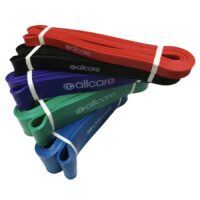
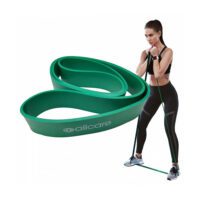 Exercise Equipment, Resistance Band
AllCare Powerloop Bands
$22.00 – $65.00Select optionsQuick View -

-
- Liniments & Gels, Massage Liniments, Pain Management
Fisiocrem
$16.95 – $39.95Select optionsQuick View -

 Calf, Elbow, Ice & Heat, Knee, Pain Management
Victor Elastic Cold Sleeve
$44.00 – $60.00Select optionsQuick View -
-
-
-

-
-
- EMS Machines, Pain Management, TENS Machine, TENS Machine & EMS
NeuroTrac Rehab (TENS Machine + EMS)
$299.95Add to cartQuick View








References
- Javed M, Mustafa S, Boyle S, Scott F. Elbow pain: a guide to assessment and management in primary care. Br J Gen Pract. 2015;65(640):610–612. doi:10.3399/bjgp15X687625.
- Lucado AM, Day JM, Vincent J, et al. Lateral elbow pain and muscle function impairments. J Orthop Sports Phys Ther. 2022;52(12):CPG1–CPG111. doi:10.2519/jospt.2022.0302.
- Wallis JA, Bourne AM, Jessup RL, et al. Manual therapy and exercise for lateral elbow pain. Cochrane Database Syst Rev. 2024;5(5):CD013042. doi:10.1002/14651858.CD013042.pub2.
- Nchinda NN, Wolf JM. Clinical management of olecranon bursitis: a review. J Hand Surg Am. 2021;46(7):597–604. doi:10.1016/j.jhsa.2021.02.026.