
Acute Injury Treatment
Acute Injury Treatment


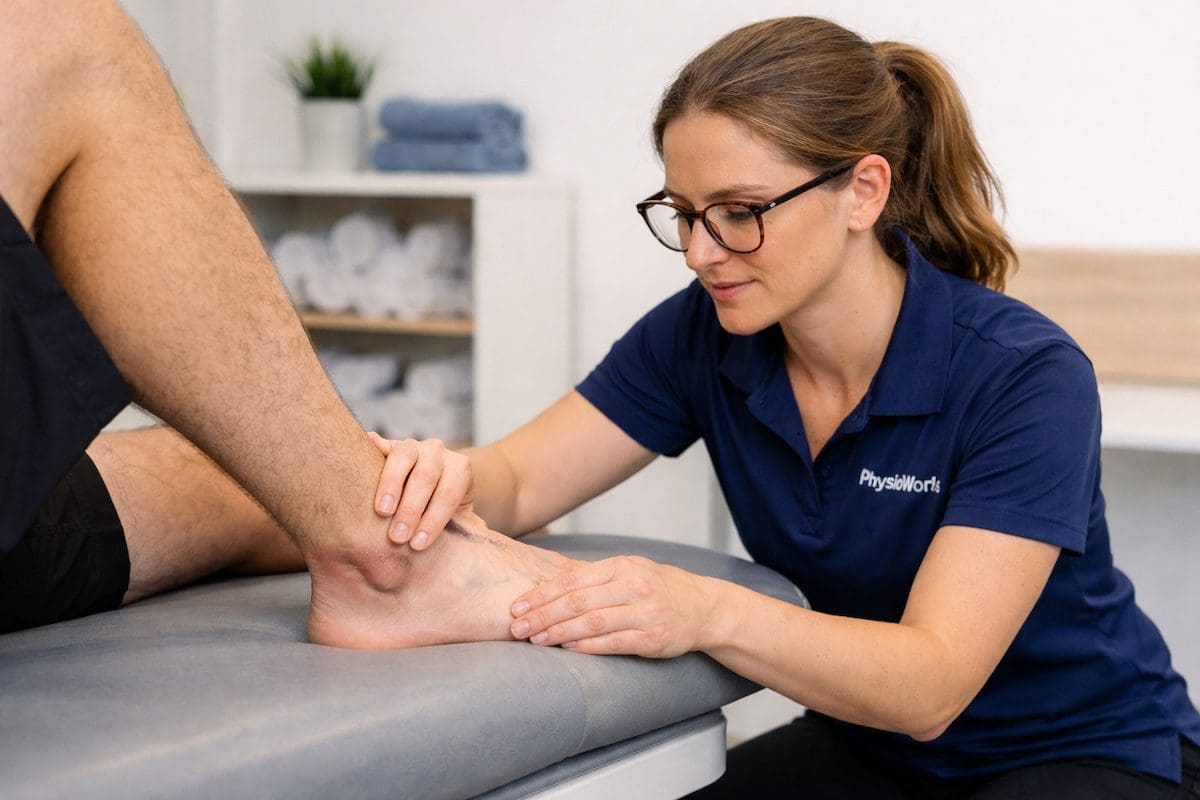
Early physiotherapy assessment following an ankle injury.
Acute injury treatment focuses on the first few days after a new muscle, ligament or joint injury. Early care usually involves protecting the injured area from excessive load, managing pain and swelling, maintaining comfortable movement and gradually increasing activity as symptoms allow.
Acute injuries can happen during sport, work, lifting, exercise or a simple misstep. Common examples include muscle strains, ligament sprains and joint injuries.
What Is an Acute Injury?
An acute injury occurs suddenly, often following a fall, twist, impact, unexpected movement or excessive force. It may affect muscles, tendons, ligaments, joints or bones.
Common symptoms include pain, swelling, bruising, reduced movement and difficulty using the injured area. Their severity depends on the structures involved and the extent of the injury.
Not every acute injury is a minor soft tissue problem. A fracture, dislocation or significant tendon or ligament injury may require urgent medical assessment, imaging or additional protection.
First 24–72 hours
Protect the area from excessive load, manage symptoms and check for signs of a more serious injury.
First week
Maintain suitable movement and gradually resume activity as symptoms and injury severity allow.
After the early stage
Progress strength, mobility and activity tolerance according to the injury and your goals.
What Should You Do in the First 0–7 Days?
Early management aims to protect injured tissue while avoiding unnecessary inactivity. The appropriate amount of movement, support and loading depends on the injury.
-
Protect the Injury Without Complete Rest
Temporarily reduce movements and activities that significantly aggravate symptoms. For many uncomplicated soft tissue injuries, comfortable movement can begin early.
Gentle movement may help maintain joint mobility and prevent unnecessary stiffness. However, suspected fractures, major tears or unstable joints need appropriate assessment before loading.
-
Consider Compression and Support
Compression may help control swelling after some acute injuries. Depending on the body region, a suitable bandage, brace, tape or walking aid may provide short-term support.
Compression should feel supportive rather than excessively tight. Remove or loosen it if you develop increasing pain, tingling, numbness or changes in skin colour.
For example, a sprained ankle may benefit from suitable support and a guided return to weight-bearing.
-
Elevate the Injured Area When Appropriate
Short periods of elevation may help manage swelling, particularly after activity. Support the injured limb comfortably and change position regularly.
Elevation is one part of symptom management. It does not replace appropriate assessment or progressive movement.
-
Use Ice for Short-Term Pain Relief if Helpful
Ice or a cold pack may provide temporary pain relief after some acute injuries. Wrap the cold pack in a towel and avoid applying it directly to the skin.
Ice is optional and has not been shown to reliably accelerate tissue healing. Use particular caution if you have reduced sensation or circulation problems.
Heat is generally best avoided over a fresh injury when marked swelling or bruising is developing. Read more about the HARM precautions after an acute injury.
-
Seek Advice About Pain-Relief Medication
Pain-relief and anti-inflammatory medicines are not suitable for everyone. Ask your GP or pharmacist which options are appropriate for your health, medications and injury.
Medication may help with symptoms, but it does not replace suitable protection, assessment or rehabilitation.
When Does an Acute Injury Need Urgent Medical Assessment?
Some injuries require medical care rather than routine physiotherapy as the first step.
If the injury is less severe but pain, swelling or movement limitations persist, a physiotherapist can assess the problem and advise on appropriate activity and rehabilitation.
How Can Physiotherapy Help After an Acute Injury?
Physiotherapy can help identify the likely injured structures, assess movement and function, and determine whether medical review or further investigation is needed.
Your physiotherapist may recommend:
- Advice about safe movement and activity modification.
- Support or protection appropriate to the injury.
- Exercises to restore comfortable movement.
- Progressive strengthening and controlled loading.
- Balance or movement retraining where relevant.
- A gradual return to work, exercise, daily activities or sport.
The approach depends on the injury, its severity and your individual circumstances. Treatment aims to improve function and guide a suitable progression rather than promise a particular recovery time.
For a more detailed explanation of muscles, ligaments and tendons, see our acute soft tissue injury guide.
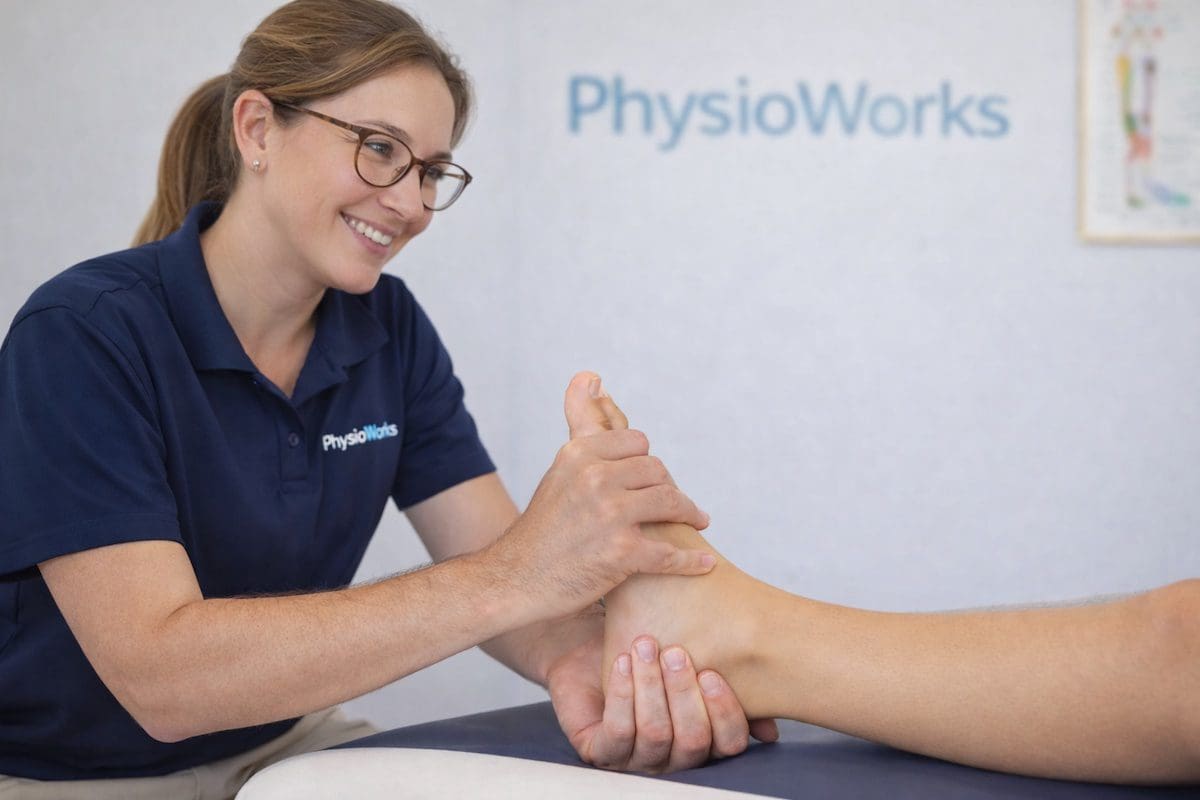
Controlled movement may form part of early rehabilitation when appropriate for the injury.
What Happens as an Acute Injury Starts to Settle?
As symptoms improve, rehabilitation usually shifts from early protection towards rebuilding movement, strength and confidence.
Progress is not always linear. Some discomfort during suitable activity may be acceptable, but marked symptom increases, worsening swelling or a sustained loss of function may indicate that the activity needs adjusting.
Recovery depends on the affected tissues, injury severity, previous injuries, general health and activity demands. More significant injuries often require a longer and more structured rehabilitation process.
Learn how healing progresses in our soft tissue injury healing guide, or read about sub-acute soft tissue injury rehabilitation.
When Should You See a Physiotherapist?
Consider physiotherapy assessment when a new injury limits walking, lifting, work, exercise or other normal activities, particularly if you are uncertain about safe movement or loading.
Assessment may also be useful when symptoms persist, movement remains restricted, or you want guidance about returning to a physically demanding activity.
Common presentations include ankle sprains, knee ligament injuries and calf strains.
A physiotherapist can help determine whether rehabilitation is appropriate or whether medical assessment should come first.
Common Questions About Acute Injury Treatment
What is acute injury treatment?
Acute injury treatment focuses on the early management of a new injury. It may involve protecting the injured area, managing pain and swelling, maintaining suitable movement and gradually increasing activity as symptoms allow.
Should I rest completely after an acute injury?
Complete rest is not usually necessary for uncomplicated soft tissue injuries. Comfortable movement and gradual activity may help maintain function. However, fractures, significant tears and unstable injuries may require additional protection or temporary immobilisation.
Should I use ice or heat after an acute injury?
Ice may provide short-term pain relief but is not essential for tissue healing. Heat is generally avoided over a fresh injury when substantial swelling or bruising is developing. Your choice should consider the injury, symptoms and any circulation or sensation problems.
When does an acute injury need urgent medical attention?
Seek urgent medical assessment for suspected fracture or dislocation, severe or rapidly worsening pain or swelling, new numbness, marked weakness, loss of circulation or inability to use the injured area after significant trauma. Call 000 for a serious emergency.
When should I see a physiotherapist?
Consider physiotherapy when an injury limits normal movement or activity, symptoms are not improving as expected, or you need guidance about rehabilitation. Significant injuries or concerning warning signs require medical assessment first.
What to Do Next
If a new injury is affecting your movement, work or sport, a physiotherapist can assess your condition and help you develop a suitable rehabilitation plan.
PhysioWorks provides physiotherapy services across Brisbane. Choose a convenient clinic using the booking options below. Seek urgent medical care first if your injury has any serious warning signs.
Choose your clinic and appointment pathway
Select a PhysioWorks clinic to continue to live booking, an appointment request or reception assistance.
References
- Dubois B, Esculier JF. Soft-tissue injuries simply need PEACE and LOVE. Br J Sports Med. 2020;54(2):72-73.
- Fousekis K, Tsepis E. Minor soft tissue injuries may need PEACE in the acute phase, but moderate and severe injuries require CARE. J Sports Sci Med. 2021;20(4):799-800.
- Ruiz-Sánchez FJ, Gómez-Chiguano GF, Ceballos-Laita L, et al. Management of ankle sprain: a systematic review. Int J Environ Res Public Health. 2022;19(19):12369.