TMJ FAQs



TMJ FAQs: Understanding Jaw Pain and TMD
TMJ FAQs usually focus on jaw pain, clicking, headaches, stiffness, and difficulty opening the mouth. In most cases, these symptoms relate to temporomandibular disorder (TMD), which affects the jaw joint and surrounding muscles. For a broader overview, start with our jaw pain guide, or compare common patterns such as TMJ headache and TMJ treatment.
This page answers the most common questions about TMJ symptoms, causes, diagnosis, and treatment. It also explains when self-care may help, when a dentist or physiotherapist may be useful, and when you should seek further assessment.
Quick answers
- TMJ refers to the temporomandibular joint, while TMD refers to the disorder affecting it.
- Common symptoms include jaw pain, clicking, locking, headaches, ear-area pain, and stiff chewing.
- Jaw overload, clenching, arthritis, trauma, posture, and stress can all contribute.
- Most people improve with conservative care rather than surgery.
- Physiotherapy and dental input are often used together when needed.
What is TMJ?
The temporomandibular joint, or TMJ, connects your lower jaw to your skull on each side of your face. TMJ problems are more accurately called temporomandibular disorders (TMD). These conditions affect the jaw joint, chewing muscles, and nearby structures, which can make eating, speaking, yawning, or opening wide uncomfortable.
Importantly, “TMJ” describes the joint itself, while “TMD” describes the condition. Public health sources such as the National Institute of Dental and Craniofacial Research guide to TMD also make this distinction clear.
What symptoms can TMJ disorders cause?
TMJ disorders can cause a mix of joint and muscle symptoms. Common complaints include jaw pain, pain in front of the ear, clicking or popping, jaw locking, stiffness, reduced mouth opening, chewing pain, and tenderness through the face or temples.
Some people also notice TMJ headaches, neck tension, or combined headache, neck and jaw pain. Functionally, the key problem is often poor jaw load tolerance. In other words, the jaw may cope poorly with chewing, clenching, wide opening, singing, dental work, or long conversations.
What causes TMJ disorders?
The exact cause is not always simple. TMJ disorders often develop from several contributing factors rather than one single event. These may include clenching or grinding, jaw overload, trauma, arthritis, poor posture, stress-related muscle tension, missing teeth, bite changes, or altered neck and jaw movement control.
Disc irritation can also contribute to painful clicking or locking. If you want a deeper explanation of contributors, read why TMJ dysfunction occurs. Some people with mixed headache symptoms may also benefit from comparing tension headache and neck-related headache patterns.
How are TMJ disorders diagnosed?
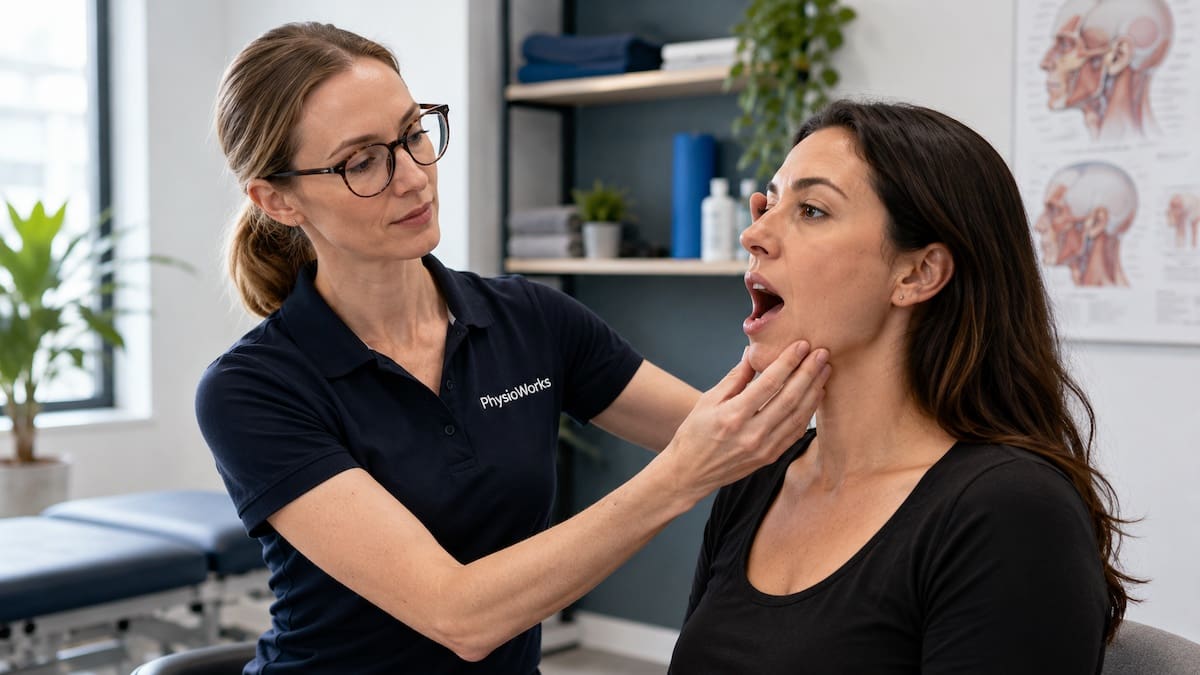
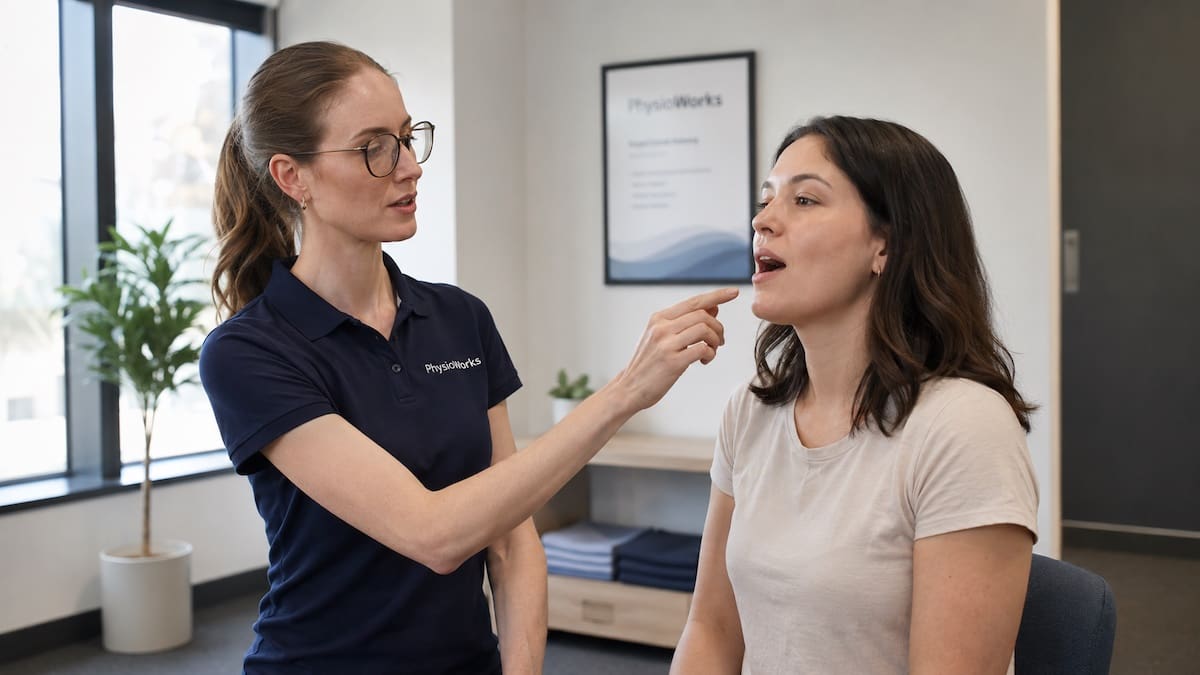
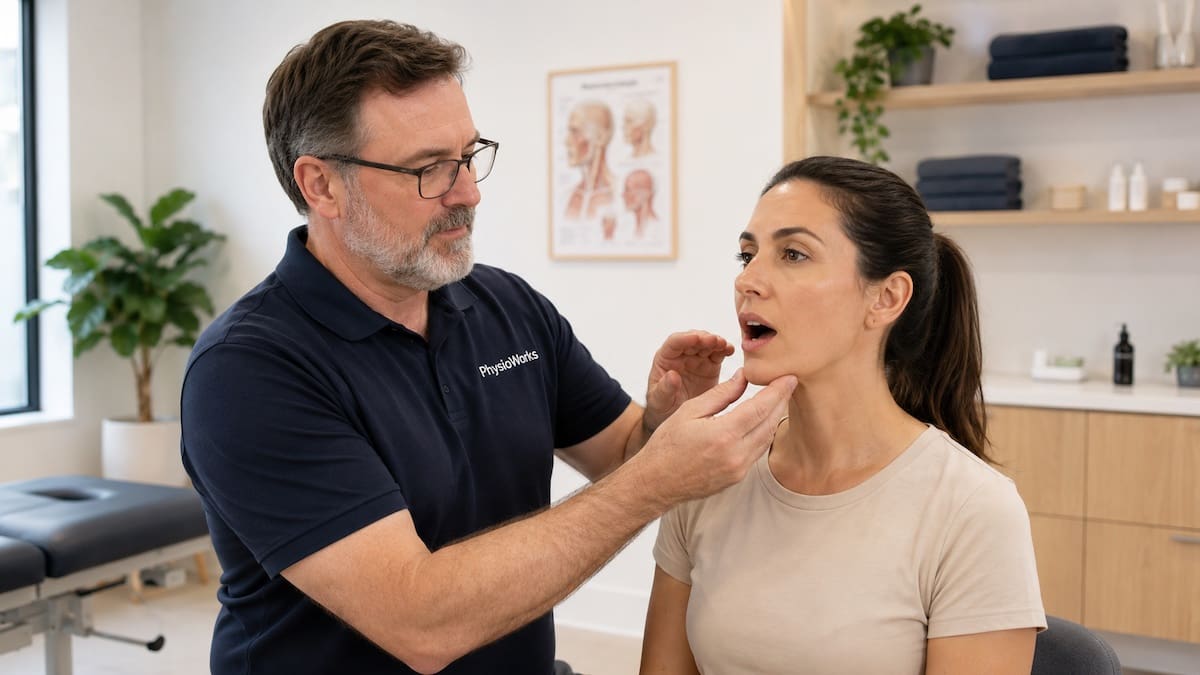
Diagnosis usually starts with a clinical assessment. A dentist, doctor, or physiotherapist will ask about your symptoms, chewing tolerance, clenching habits, headaches, neck pain, and what movements aggravate the problem. They will also assess jaw opening, closing symmetry, side-to-side movement, muscle tenderness, joint sounds, and related neck function.
Scans are not always required. X-rays, CT, or MRI may be considered if the presentation is persistent, severe, locking is significant, trauma is involved, or structural change needs clarification. However, many TMJ presentations can be assessed well from your history and movement findings before imaging is considered.
What can I do at home for TMJ pain?
Simple self-care often helps settle an irritated jaw. Try softer foods for a short period, avoid chewing gum, reduce wide yawning where possible, and stop habits such as pen chewing or resting your jaw in your hand. Moist heat over the jaw muscles may ease muscle guarding for some people.
In addition, many people benefit from learning how to reduce daytime clenching, improving posture, and using gentle jaw-opening or control exercises. If symptoms keep returning, self-care works best when matched to a clear diagnosis rather than used randomly.
What treatment may help TMJ pain?
Most TMJ treatment starts conservatively. Depending on the main driver, treatment may include education, habit change, mouth-opening exercises, jaw and neck exercises, manual therapy, load modification, pain relief advice, dental splints, or selected dental treatment when bite or tooth wear is relevant.
A TMJ treatment plan usually works best when it addresses both short-term symptom settling and longer-term control of overload, clenching, posture, and movement quality. Most cases do not need surgery, although specialist review may be needed in severe or persistent cases.
How can a physiotherapist help with TMJ issues?
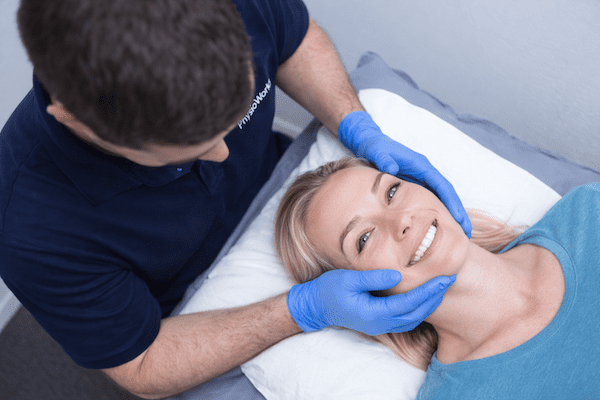
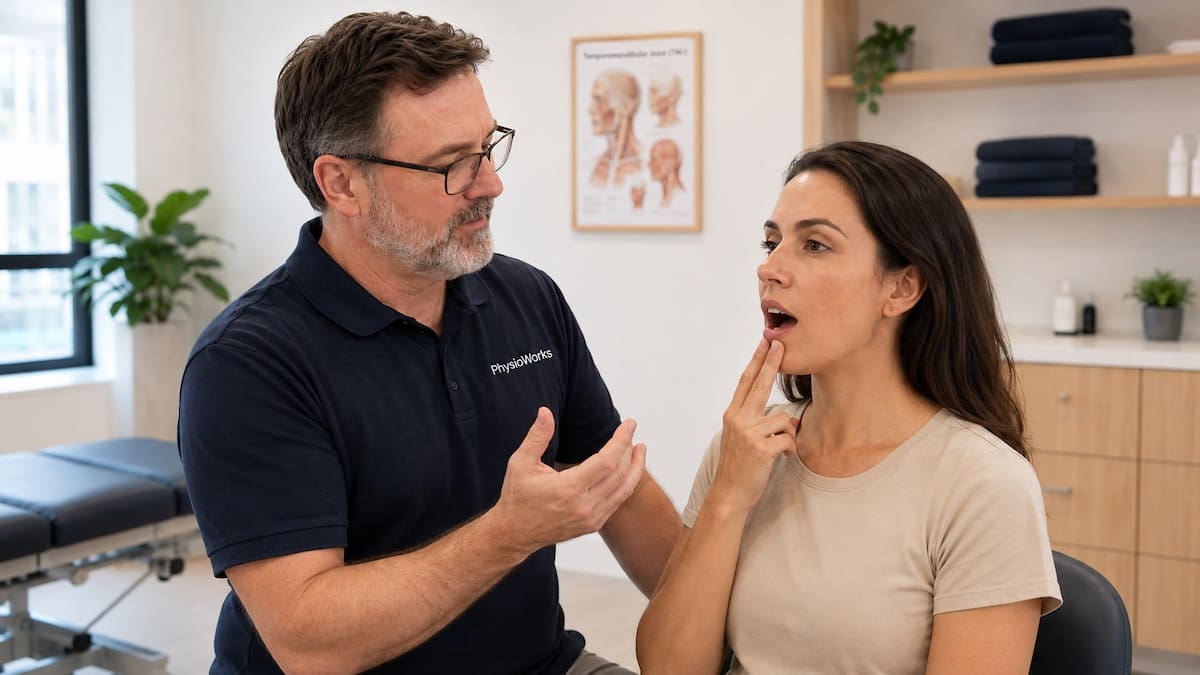
A physiotherapist may help by improving jaw movement quality, reducing muscle guarding, and addressing related neck and postural contributors. Treatment may include jaw joint mobilisation, soft tissue techniques, targeted exercises, posture retraining, relaxation strategies, and practical advice to reduce daily jaw strain.
Physiotherapy is often most useful when your symptoms link with muscle tension, movement asymmetry, neck involvement, or poor load tolerance. Importantly, physiotherapists also help guide rehabilitation, which means gradually improving mobility, strength, control, and confidence in everyday jaw use rather than relying only on passive symptom relief.
How can a dentist help with TMJ issues?
Dentists help assess tooth wear, bite factors, oral appliances, and dental contributors such as bruxism. In some cases, a stabilisation splint or night guard may reduce joint and muscle loading. Dental care can be especially useful when clenching, grinding, or bite-related factors are prominent.
For some people, the best results come from combined care. A dentist may help manage tooth or bite-related loading, while a physiotherapist improves jaw movement, muscle function, and neck-related contributors.
When should I seek professional help for TMJ issues?
You should seek assessment if jaw pain persists, worsens, repeatedly locks, limits eating or speaking, or is linked with frequent headaches, neck pain, swelling, trauma, or major difficulty opening your mouth. It is also sensible to get checked if symptoms keep recurring despite rest or home care.
If you are unsure whether the main driver is dental, muscular, joint-related, or neck-related, an assessment can help clarify the cause and guide the right next step.
Related TMJ and jaw pain pages
- Jaw Pain
- Temporomandibular Disorder (TMD)
- TMJ Headache
- TMJ Treatment
- Headache, Neck and Jaw Pain
- Tension Headache
What to do next
If your jaw pain, clicking, headaches, or locking keep returning, do not just wait for it to settle on its own. A proper assessment can help identify whether the main problem relates to joint irritation, muscle overload, clenching, bite factors, neck involvement, or a combination of these.
Bring a short history of what triggers your symptoms, what eases them, whether you wake with jaw tension, and whether headaches or neck pain occur at the same time. That gives your clinician a much clearer starting point and helps guide the most appropriate treatment plan.
Choose your clinic and appointment pathway
Select a PhysioWorks clinic to continue to live booking, an appointment request or reception assistance.


References
- Busse JW, Riva JJ, Pollock R, et al. Management of chronic pain associated with temporomandibular disorders: a clinical practice guideline. BMJ. 2023;383:e076227. doi:10.1136/bmj-2023-076227
- Idáñez-Robles AM, de la Torre Canales G, Martín-Casas P, et al. Exercise therapy improves pain and mouth opening in temporomandibular disorders: a systematic review with meta-analysis. Clin Rehabil. 2023;37(4):443-461. doi:10.1177/02692155221133523
- González-Sánchez B, Infante-Cossío P, Bravo-Zúñiga J, et al. Temporomandibular joint dysfunctions: a systematic review of treatment approaches in physiotherapy. J Clin Med. 2023;12(13):4302. doi:10.3390/jcm12134302
- Ooi K, Matsuka Y, Fushima K, et al. Clinical practice guidelines in primary treatment for temporomandibular disorders: The Japanese Society for the Temporomandibular Joint, 2023 edition. J Oral Rehabil. 2025. doi:10.1111/joor.13907